Improve Your Supply Chain Management

Select a process
Choose a process to continue working in your connected workspace.
Optimize Your Microsoft Dynamics 365 SCM Supply Chain
Complex supply chains often hide inefficiencies that impact performance. Our platform helps you uncover bottlenecks, delays, and rework, from procurement through delivery. Pinpoint exactly where processes can be optimized to achieve smoother operations and significant cost savings. Transform your supply chain with data-driven insights.
Download our pre-configured data template and address common challenges to reach your efficiency goals. Follow our six-step improvement plan and consult the Data Template Guide to transform your operations.
Show detailed description
Why Optimize Your Supply Chain Management?
Modern Supply Chain Management is a complex orchestration of numerous activities, from demand forecasting and procurement to production, warehousing, and final delivery. For organizations leveraging Microsoft Dynamics 365 SCM, the system provides a robust platform for managing these intricate processes. However, even with advanced systems, inefficiencies can accumulate over time, leading to significant business challenges.
Unoptimized supply chains often manifest as increased operational costs due to excess inventory or expedited shipping, longer lead times that impact customer satisfaction, and a higher risk of non-compliance with industry regulations. Bottlenecks can appear at any stage, slowing down the entire process and making it difficult to meet market demands. Without clear visibility into the actual execution of your processes, identifying the root causes of these issues and implementing effective process optimization strategies becomes a daunting task. Understanding the true flow of your logistics orders is paramount to reducing overall cycle time and improving profitability.
How Process Mining Unlocks Supply Chain Efficiency
Process mining offers a revolutionary approach to understanding and improving your Supply Chain Management operations within Microsoft Dynamics 365 SCM. Instead of relying on assumptions or aggregated data, process mining uses the event logs generated by your system to reconstruct the complete, end-to-end journey of every logistics order. This perspective allows you to visualize the real process flow, uncovering deviations, reworks, and hidden bottlenecks that traditional reporting might miss.
By focusing on the 'Logistics Order' as the central case identifier, you gain a holistic view from the initial 'Demand Forecast Generated' or 'Customer Order Received' all the way through to 'Proof of Delivery Signed'. This granular insight helps you see exactly where delays occur, such as unexpected waiting times between 'Goods Produced' and 'Quality Control Performed', or frequent re-routing after 'Shipment Scheduled'. Process mining provides an objective, data-driven map of your operations, making it clear where your Supply Chain Management processes are performing well and where critical intervention is needed to boost efficiency and reduce cycle time.
Key Areas for Supply Chain Improvement
Leveraging process mining in your Microsoft Dynamics 365 SCM environment enables targeted improvements across several critical areas:
- Lead Time Reduction: Identify and eliminate unnecessary delays between key activities, like 'Purchase Order Issued' and 'Raw Materials Received', or 'Goods Picked and Packed' and 'Goods Loaded for Transport', to significantly reduce your overall order fulfillment cycle time.
- Inventory Optimization: Analyze the actual demand patterns versus production and procurement schedules. This helps to minimize holding costs associated with excess inventory while ensuring sufficient stock to prevent costly shortages.
- Supplier Performance Enhancement: Gain clear visibility into supplier lead times and adherence to delivery schedules by tracking the flow from purchase order to material receipt, enabling data-backed negotiations and better supplier selection.
- Transportation and Logistics Efficiency: Pinpoint inefficiencies in routing, carrier performance, or unloading processes. Understand the actual time spent in 'Goods In Transit' and at 'Goods Unloaded at Destination' to optimize logistics networks.
- Compliance and Risk Management: Verify that all regulatory and internal compliance steps, such as 'Quality Control Performed', are executed correctly and within required timeframes, minimizing compliance risks.
- Resource Utilization: Discover where resources are over- or under-utilized within your supply chain, allowing for better allocation and capacity planning.
Expected Outcomes of Process Optimization
Implementing process mining for your Microsoft Dynamics 365 SCM supply chain translates into tangible, measurable benefits:
- Reduced Operational Costs: Achieve significant savings through optimized inventory levels, minimized expediting fees, and more efficient transportation routes.
- Faster Order Fulfillment: Drastically cut down on your supply chain cycle time, leading to quicker deliveries and improved responsiveness to market changes.
- Enhanced Customer Satisfaction: Meet or exceed customer expectations for delivery dates more consistently, building stronger customer relationships and loyalty.
- Improved Compliance and Reduced Risk: Ensure your operations consistently adhere to all relevant policies and regulations, mitigating potential fines and reputational damage.
- Data-Driven Strategic Planning: Make informed decisions based on factual process execution data rather than assumptions, leading to more effective long-term strategies for your supply chain.
Getting Started with Your Supply Chain Transformation
Optimizing your Supply Chain Management with Microsoft Dynamics 365 SCM through process mining is a powerful step towards operational excellence. This approach simplifies the complex task of identifying and resolving inefficiencies, making it accessible even without prior process mining expertise. By leveraging the comprehensive insights gained, you can actively reduce your Supply Chain Management cycle time, cut costs, and build a more resilient, compliant, and customer-focused supply chain. Begin your journey to unlock the full potential of your SCM operations today.
The 6-Step Improvement Path for Supply Chain Management
Download the Template
What to do
Get the Excel data extraction template tailored for Supply Chain Management to ensure your data structure is optimized for analysis.
Why it matters
A standardized template streamlines data preparation, ensuring all necessary information is captured consistently for accurate process mapping.
Expected outcome
A pre-formatted Excel template ready for your Supply Chain Management data.
Export Your Data
What to do
Extract 3-6 months of historical Supply Chain Management transaction data from Microsoft Dynamics 365 SCM, then populate the downloaded Excel template.
Why it matters
Sufficient historical data provides a comprehensive view of process variations, enabling robust analysis and identification of recurring patterns.
Expected outcome
A populated data template containing a significant period of your SCM process history.
Upload Your Dataset
What to do
Securely upload your completed data template to ProcessMind. The system will automatically prepare and analyze your Supply Chain Management process.
Why it matters
This step initiates the automated process mining, transforming raw data into an interactive visual map, saving time and eliminating manual data processing errors.
Expected outcome
Your SCM data securely processed and ready for visualization and deep analysis.
Analyze Your Process
What to do
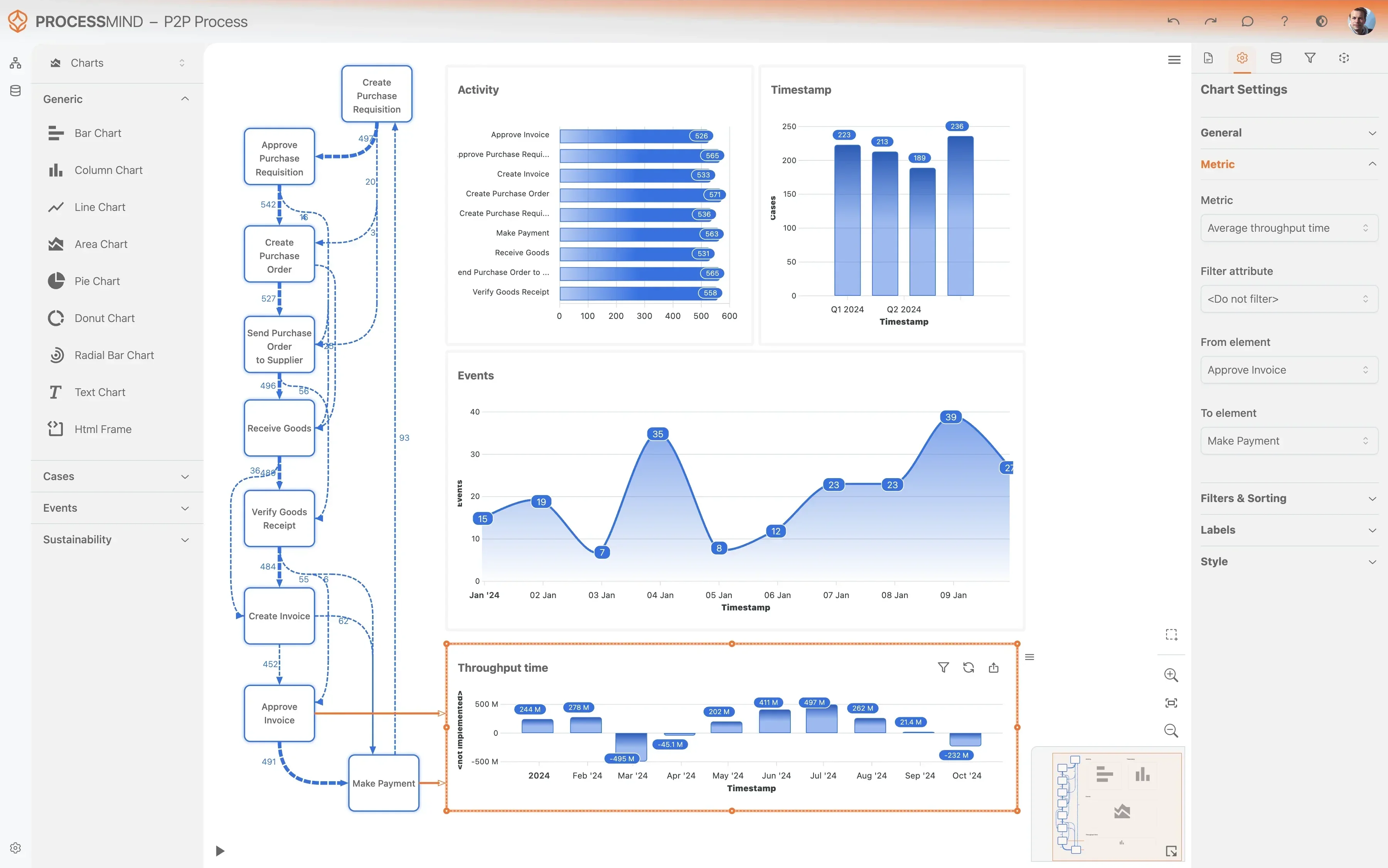
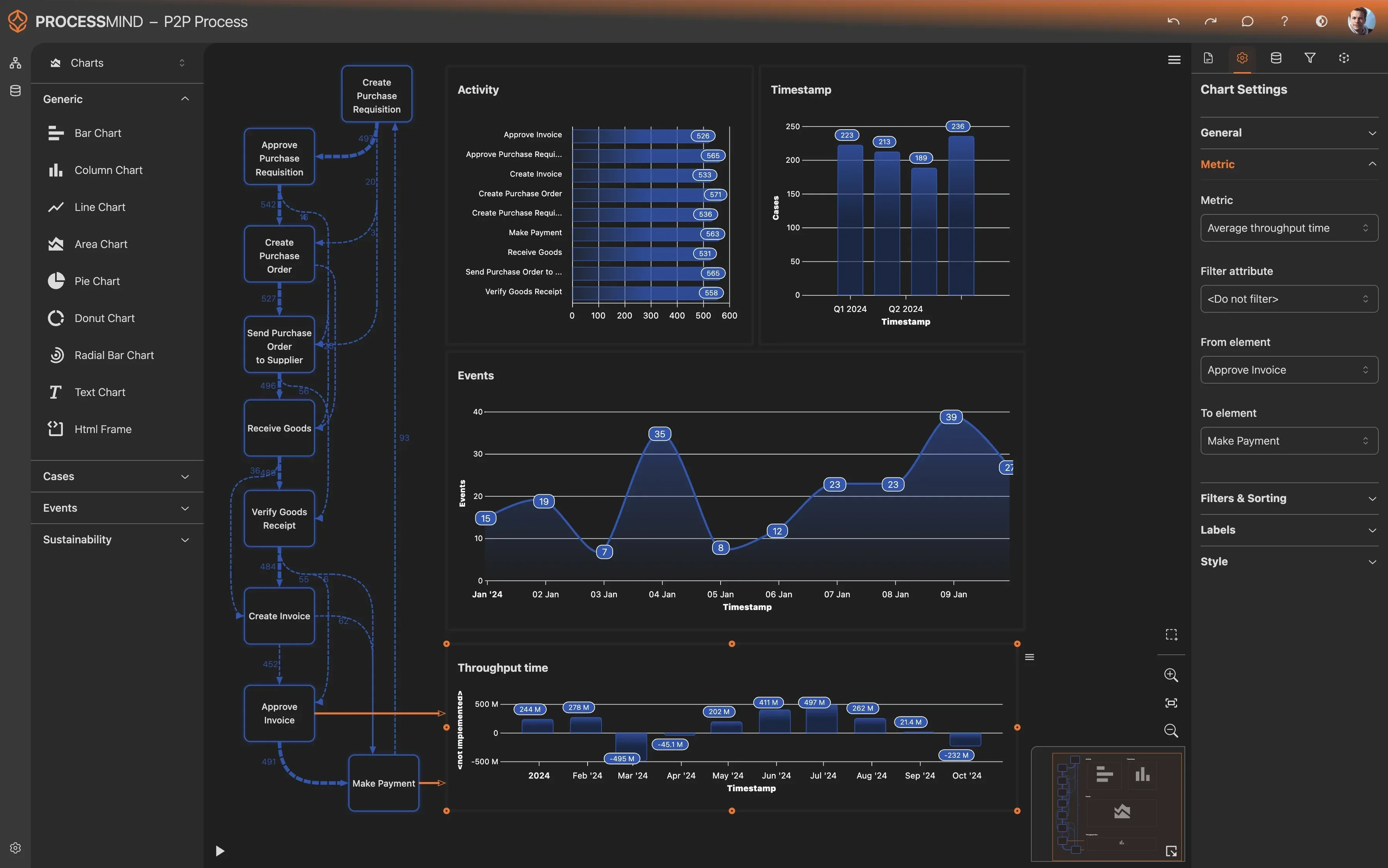
Explore the auto-generated dashboards, process maps, and insights for your Supply Chain Management. Leverage AI-driven recommendations to pinpoint bottlenecks.
Why it matters
Visualize the actual end-to-end flow of your logistics orders, uncovering hidden delays, compliance issues, and deviations from the ideal process.
Expected outcome
Clear understanding of your SCM process, including inefficiencies and specific areas for improvement.
Implement Improvements
What to do
Prioritize the identified improvement opportunities, such as optimizing inventory flows or refining supplier interactions, and implement actionable changes within Dynamics 365 SCM.
Why it matters
Translating insights into action directly addresses inefficiencies, leading to tangible enhancements in lead times, resource utilization, and overall operational costs.
Expected outcome
Targeted process changes deployed in your SCM operations based on data-driven insights.
Monitor Your Process
What to do
Periodically re-upload updated Supply Chain Management data to ProcessMind to track the impact of implemented changes and measure KPI improvements over time.
Why it matters
Continuous monitoring ensures that improvements are sustained, new issues are promptly detected, and the supply chain remains resilient and optimized.
Expected outcome
A system for ongoing performance tracking and sustained optimization of your SCM processes.
WHAT YOU WILL GET
Uncover Supply Chain Bottlenecks in Dynamics 365 SCM
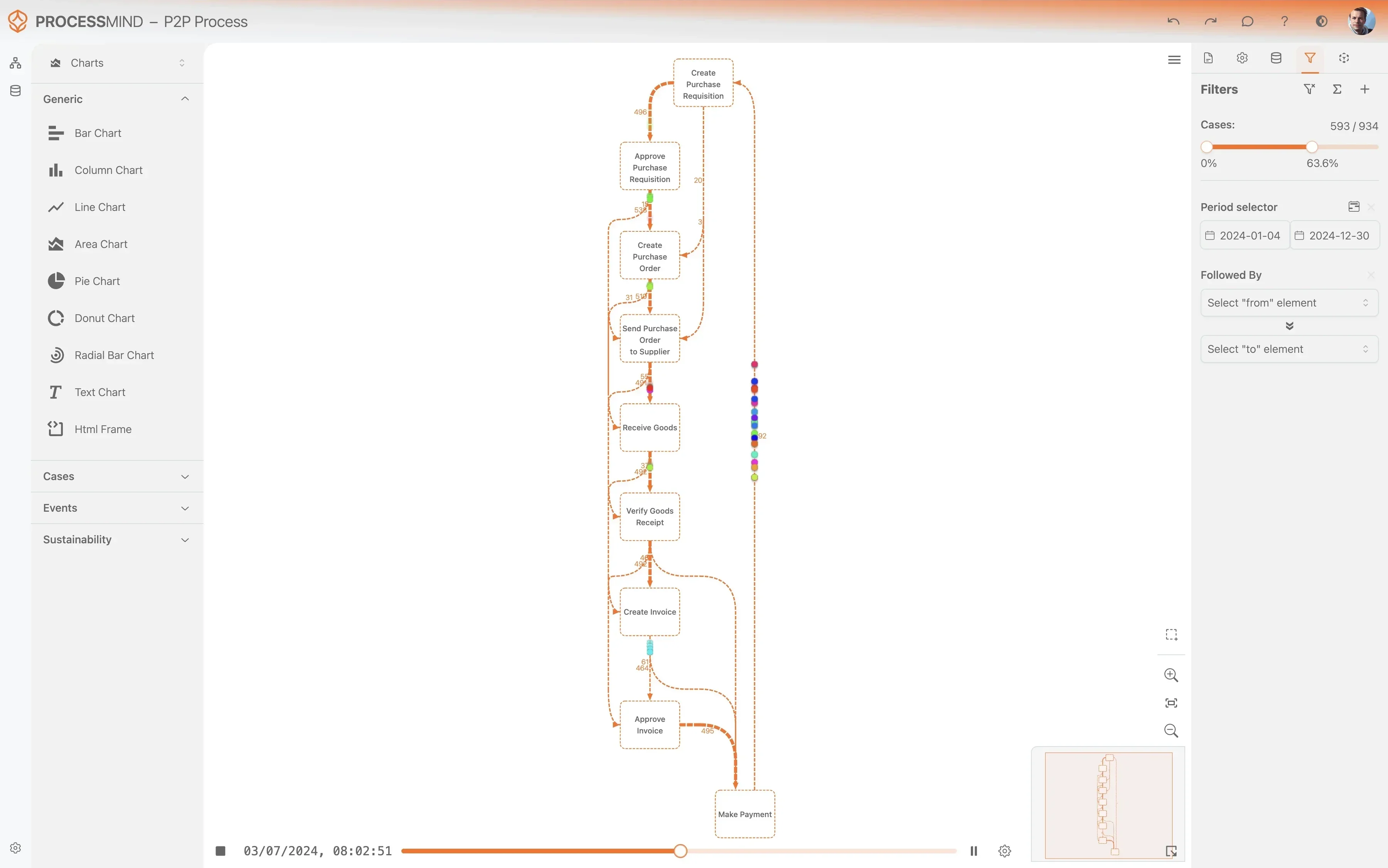
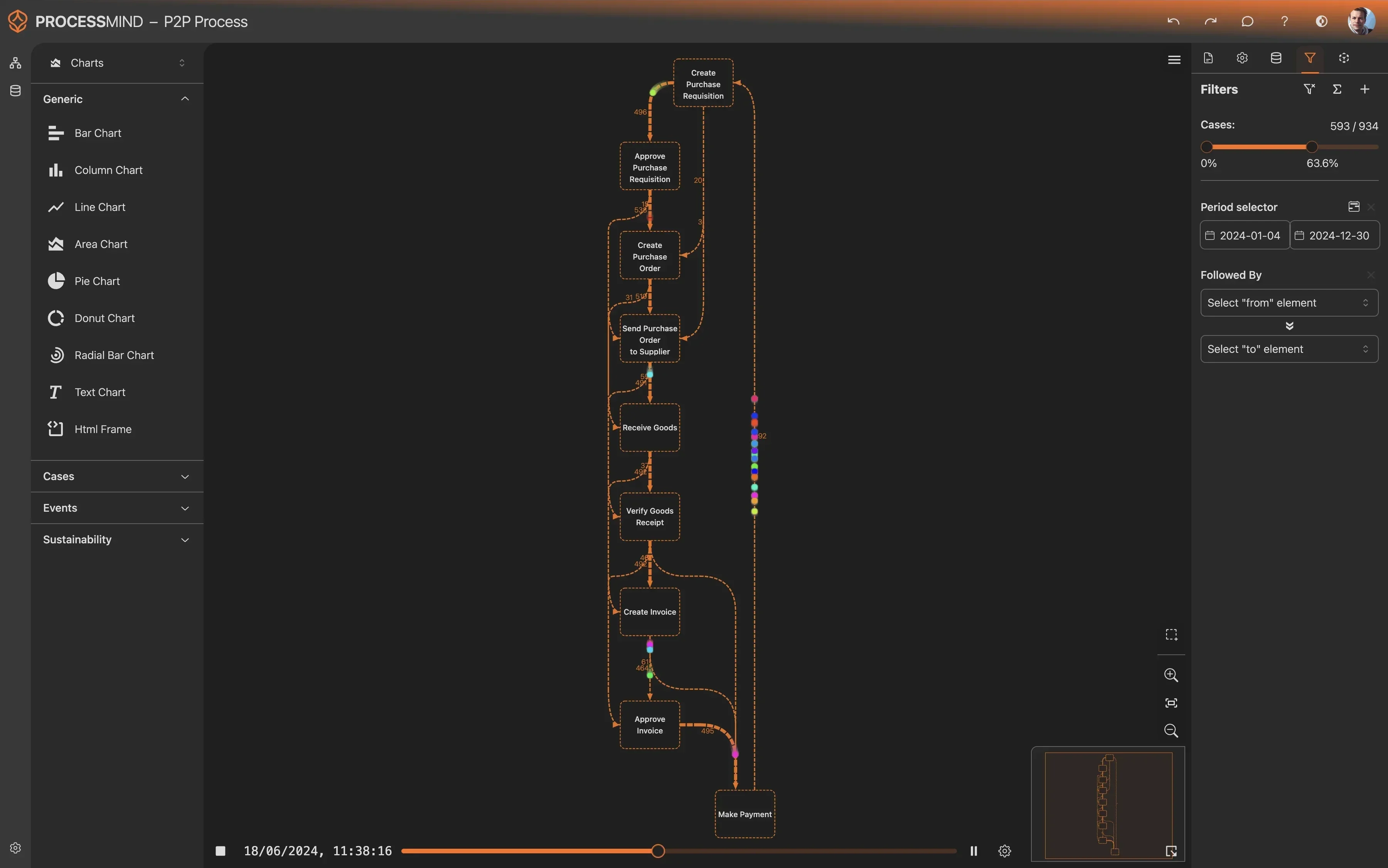
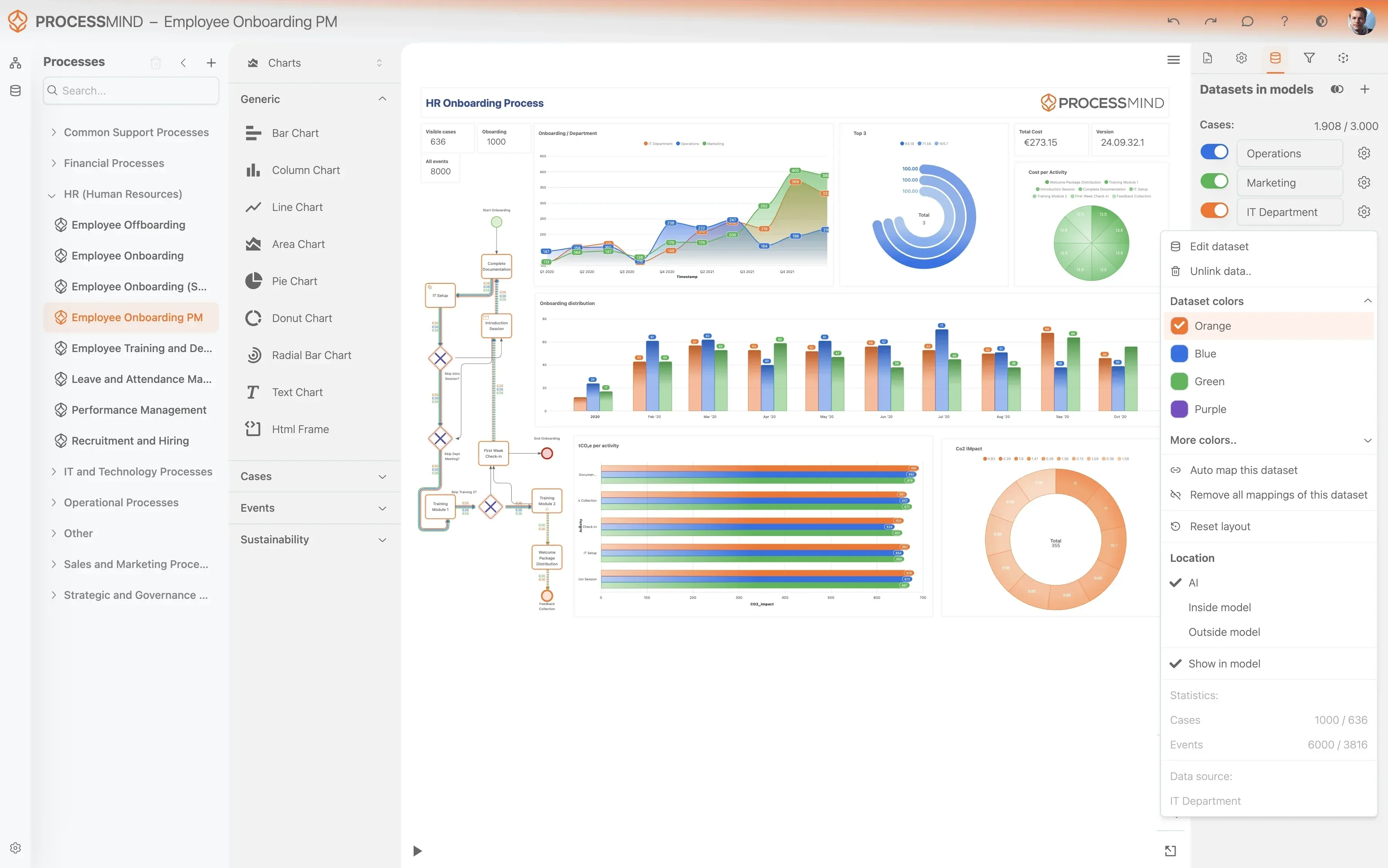
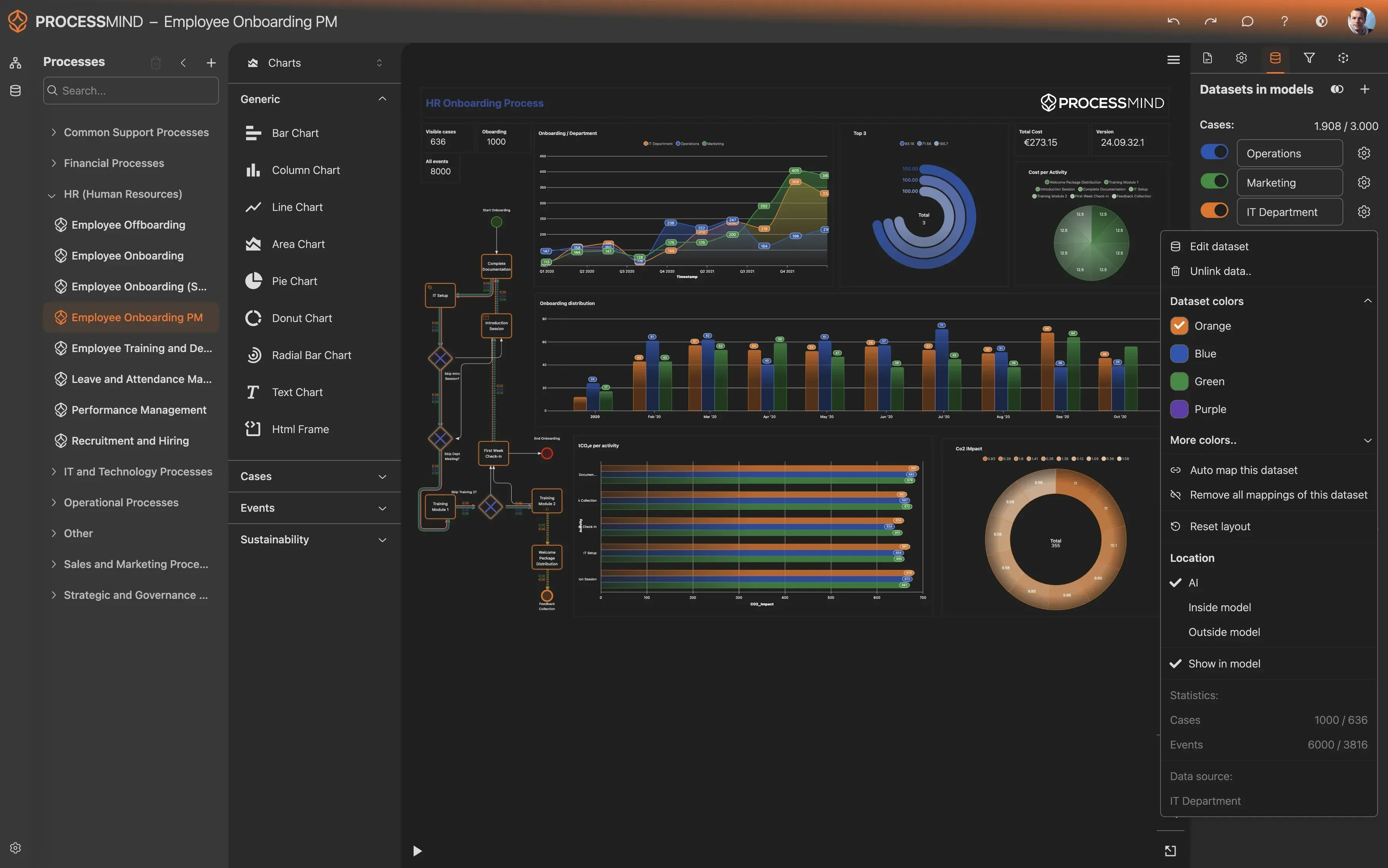
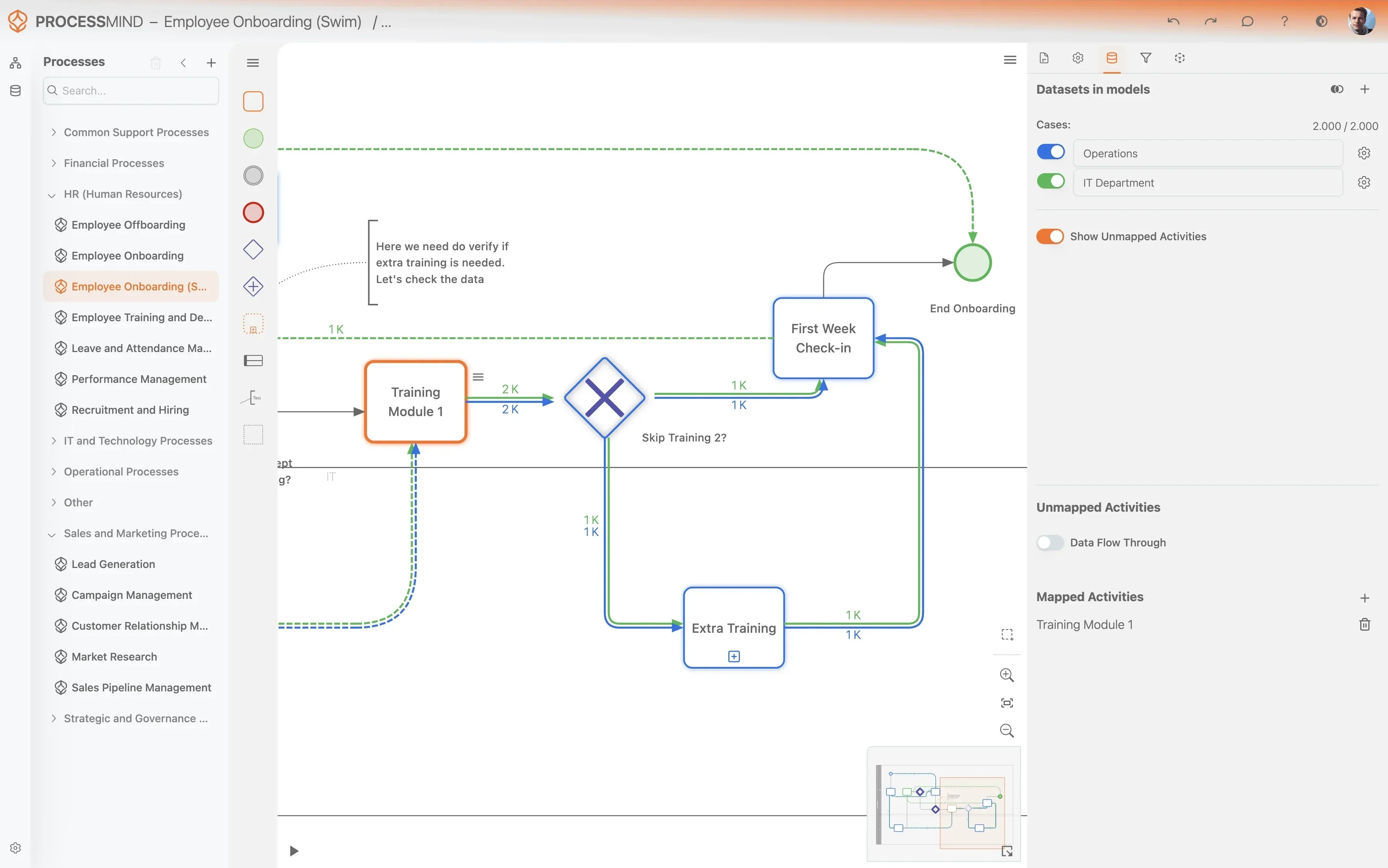
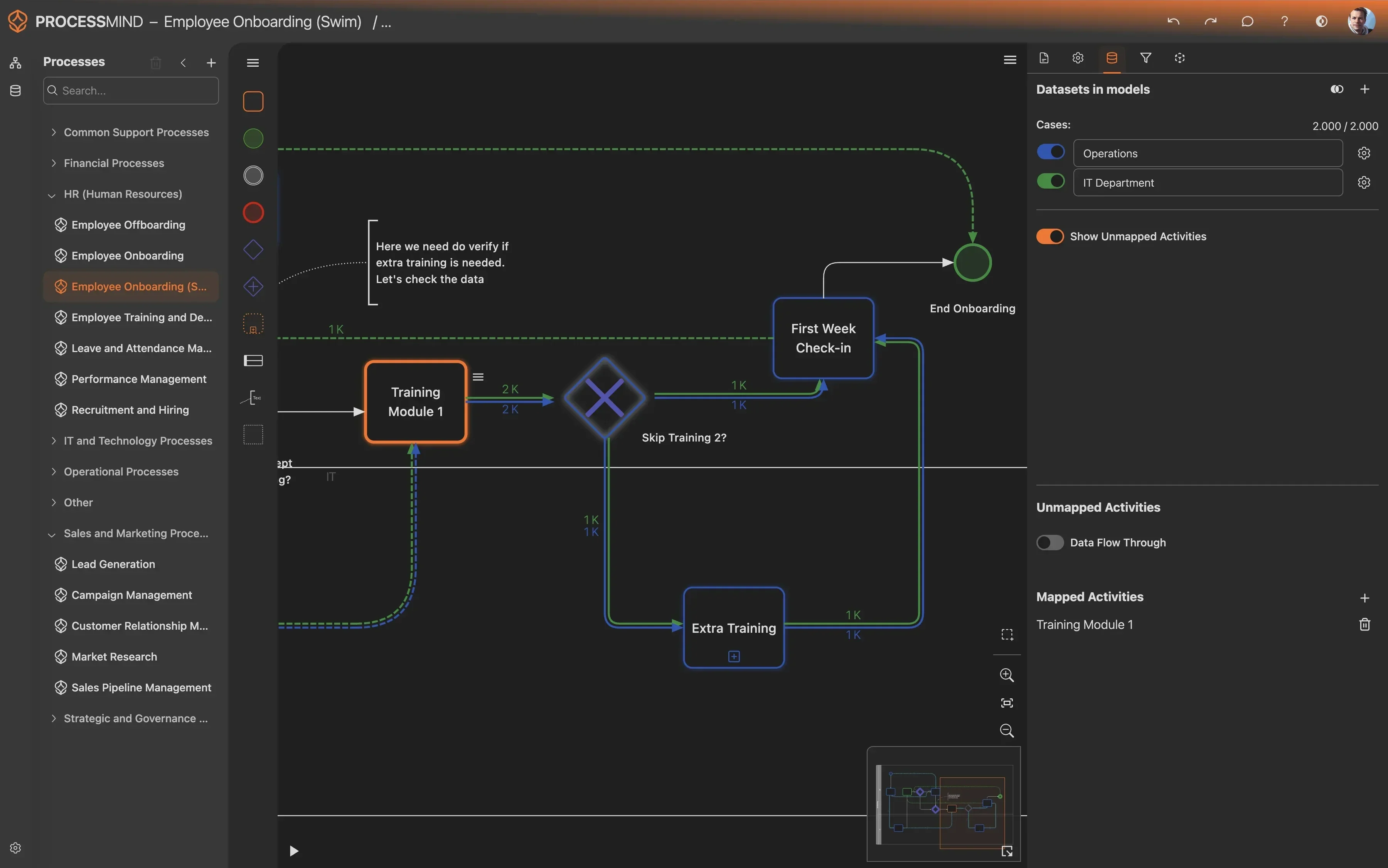
- Visualize end-to-end SCM processes
- Identify hidden delays in procurement to delivery
- Pinpoint bottlenecks in Dynamics 365 SCM
- Optimize routes for cost savings and efficiency
TYPICAL OUTCOMES
Achieve Operational Excellence in Supply Chain Management
Our process mining solution for Microsoft Dynamics 365 SCM reveals inefficiencies within your Logistics Order processes, enabling data-driven improvements that lead to significant operational gains and cost reductions.
Reduction in late logistics orders
By identifying and addressing root causes of delays, organizations can significantly improve their delivery reliability, leading to higher customer satisfaction.
Average reduction in end-to-end time
Streamline purchase requisition to raw materials received, accelerating critical supply chain inputs and reducing lead times for production.
Savings from optimized routes and processes
Process mining reveals inefficiencies in goods transit, allowing for route optimization, carrier performance improvements, and reduced demurrage fees, directly cutting logistics expenses.
Decrease in post-production errors
By pinpointing the sources of order fulfillment deviations and rework, businesses can enhance quality control, minimize wasted effort, and improve customer satisfaction.
Shorter raw material holding times
Identify bottlenecks causing excessive inventory holding between receipt and production scheduling, freeing up capital and reducing warehousing costs.
Results vary based on process complexity, data quality, and specific implementation strategies. These figures represent typical improvements observed across similar supply chain implementations.
Recommended Data
FAQs
Frequently asked questions
Process mining analyzes your Dynamics 365 SCM event logs, mapping the actual flow of your logistics orders. This helps identify inefficiencies, compliance gaps, and bottlenecks that slow down your operations. By visualizing the true process, you gain data-driven insights to optimize various aspects of your supply chain.
You primarily need event logs that capture activities related to your "Logistics Order" case identifier. This includes information such as activity names, timestamps for when each activity occurred, and the unique case ID for each logistics order. Often, this data can be extracted from relevant tables within Dynamics 365 SCM, like order headers, lines, and related transaction logs.
The initial setup and data extraction phase can vary depending on your system's complexity and data cleanliness. However, once the data is extracted and transformed, initial insights and process maps can often be generated within a few weeks. This allows for quick identification of major deviations and improvement opportunities.
Yes, process mining precisely identifies the root causes of late deliveries by analyzing the full lifecycle of your logistics orders. It uncovers bottlenecks and delays at specific stages, such as order processing, warehousing, or transportation. Addressing these insights can significantly reduce delivery times and consequently boost customer satisfaction.
Data security is a top priority for process mining solutions. Reputable tools employ robust encryption and access controls to protect your sensitive operational data throughout the analysis process. Data is typically anonymized or pseudonymized where appropriate, ensuring compliance with data privacy regulations.
Process mining constructs a visual map of your actual processes by analyzing timestamps from your Dynamics 365 SCM event logs. It highlights paths with longer-than-average durations or frequent rework loops, pinpointing exact bottlenecks. This deep dive reveals where resources are stalled or tasks are delayed, impacting efficiency.
While business domain knowledge is crucial, some technical understanding of data extraction and basic SQL or similar query languages can be beneficial for initial data preparation. Many modern process mining tools offer user-friendly interfaces, reducing the need for advanced programming skills once the data is structured. Collaboration between IT and business teams is key.
Yes, by analyzing the order fulfillment process and correlating it with inventory levels and sales data, process mining can identify inefficiencies. It can reveal patterns leading to excess inventory, slow-moving items, or stages where stockouts frequently occur due to process delays. These insights enable better forecasting and inventory management strategies.
Master Supply Chain Management: Start Optimizing Today
Gain end-to-end visibility and improve forecast accuracy to 90%, reducing costs.
No credit card required, set up in minutes.