Improve Your Payroll Processing

Select a process
Choose a process to continue working in your connected workspace.
Optimize Payroll Processing for Efficiency and Compliance
ProcessMind helps you uncover hidden inefficiencies and bottlenecks in your payroll processing. Identify late payments, manual reworks, and compliance risks that impact your operations. Our platform reveals deviations from the ideal process, ensuring timely and accurate payroll. Understand where improvements can be made to streamline your entire workflow.
Download our pre-configured data template and address common challenges to reach your efficiency goals. Follow our six-step improvement plan and consult the Data Template Guide to transform your operations.
Show detailed description
Optimize Payroll Processing: Boost Efficiency, Ensure Compliance
Payroll processing is a critical, highly sensitive function within any organization, directly impacting employee satisfaction, regulatory compliance, and overall financial health. Despite its importance, many organizations struggle with opaque processes, hidden inefficiencies, and persistent compliance risks that can lead to costly errors and delays. Process mining for Payroll Processing with ProcessMind offers unprecedented transparency, revealing the complete, end-to-end flow of activities from the initial time sheet submission and approval through complex gross-to-net calculations, tax deductions, benefits administration, and ultimately, accurate payment execution. By meticulously analyzing event logs generated by your source system, ProcessMind uncovers the actual journey each payroll record takes. This means we highlight every single step, every decision point, every handover, and every deviation from the intended process path. This deep, granular visibility allows you to pinpoint exactly where delays accumulate, identify recurring instances of rework or manual intervention, and understand the true cost and effort associated with your current payroll operations. Crucially, this understanding is gained regardless of the specific software, ERP, or setup you currently utilize. You gain an objective, data-driven perspective on how your payroll process truly functions, enabling you to move beyond assumptions and anecdotal evidence to make truly informed decisions for optimizing this vital function.
Common challenges in payroll processing are numerous, pervasive, and often result in significant financial and reputational costs. These issues are frequently exacerbated by manual touchpoints, complex and constantly evolving regulatory requirements, and fragmented data spread across various systems within your organization. Consequently, businesses frequently grapple with critical problems such as late payments, incorrect deductions, complex reconciliation efforts, unexpectedly high processing costs, and the constant, looming threat of non-compliance with labor laws and tax regulations. Such challenges not only lead to employee dissatisfaction and potential regulatory fines but also create a substantial administrative burden on your finance and HR teams. With ProcessMind, analyzing your payroll process transforms these daunting challenges into tangible opportunities for strategic improvement. You can dramatically improve payroll accuracy by identifying and systematically eliminating the root causes of errors, accelerate payroll cycle times by pinpointing and resolving even the most subtle bottlenecks, and significantly reduce manual effort through targeted automation initiatives. Our platform helps you ensure strict, auditable adherence to local and international regulations, strengthen internal controls, and streamline workflows within your existing system, whether it is an ERP or a specialized payroll application. The comprehensive benefits extend to more efficient resource allocation, substantial cost savings, and the establishment of a more reliable, compliant, and ultimately more efficient payroll operation that consistently supports your entire workforce effectively.
ProcessMind's powerful analytics capabilities go far beyond mere process visualization, offering deep, actionable insights that drive real change. You can discover precisely where delays accumulate between critical approval stages, identify which specific roles or departments are consistently experiencing workload imbalances, and understand exactly where manual interventions introduce unnecessary risk or inefficiency into the process. The platform also allows you to pinpoint and analyze patterns of rework, such as repeated data entries, frequent corrections, or re-submissions, and precisely quantify their impact on time and resources. Crucially, you can detect and rectify non-compliant process paths, ensuring that every payment adheres rigorously to company policies, union agreements, and all legal and tax obligations. By extracting and analyzing the event data, typically available in your ERP, HRIS, or other transactional source systems, ProcessMind provides an undeniable, data-backed representation of your "as-is" payroll process. These granular insights empower your team to identify the most impactful candidates for automation, standardize best practices across all payroll operations, and continuously monitor process performance against key KPIs over time. Getting started with ProcessMind is straightforward and designed for rapid value realization: simply extract your payroll event data using our easy-to-follow [data template], upload it securely to ProcessMind, and begin your journey towards a perfectly optimized, highly compliant, and exceptionally efficient payroll processing system that delivers accuracy and peace of mind.
The 6-Step Path to Optimize Payroll Processing
Connect & Discover Data
What to do
Extract event logs from your payroll system, including case IDs, activity names, and timestamps. Ensure data quality and completeness for accurate analysis.
Why it matters
Laying a solid data foundation is crucial for any meaningful process analysis, revealing the true execution of your payroll process.
Expected outcome
A comprehensive dataset ready for process mining, reflecting actual payroll activities.
Map Your Process Flow
What to do
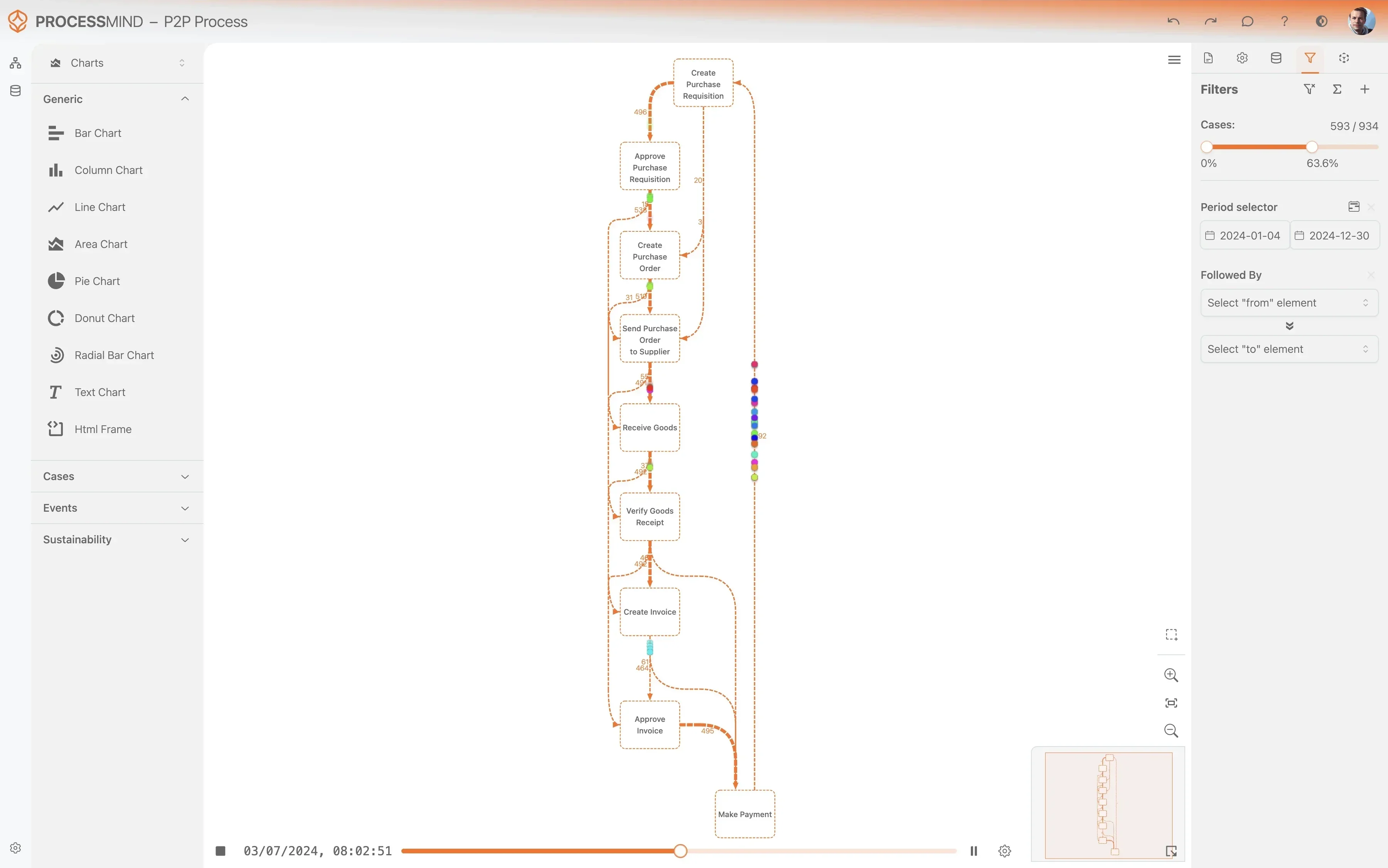
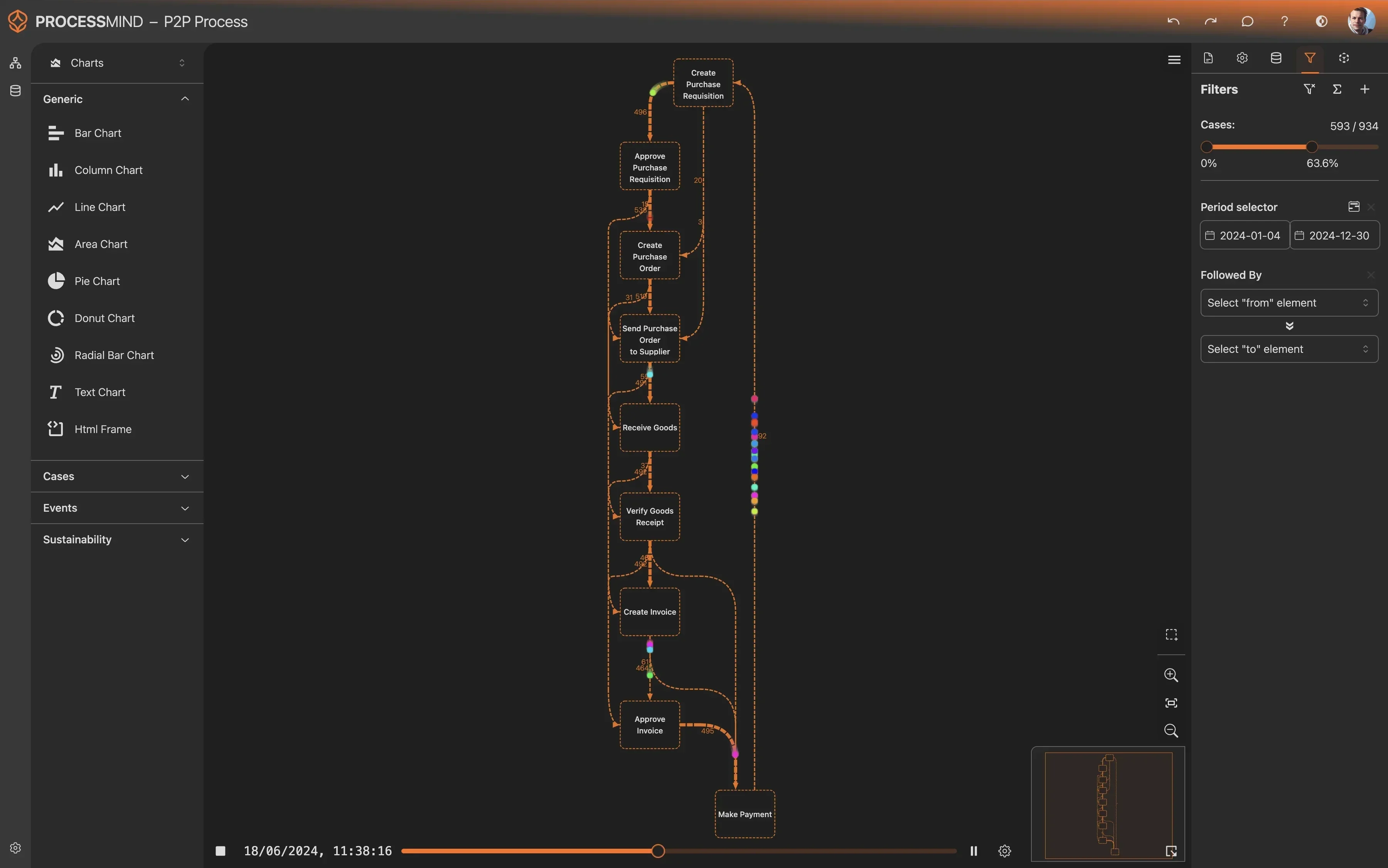
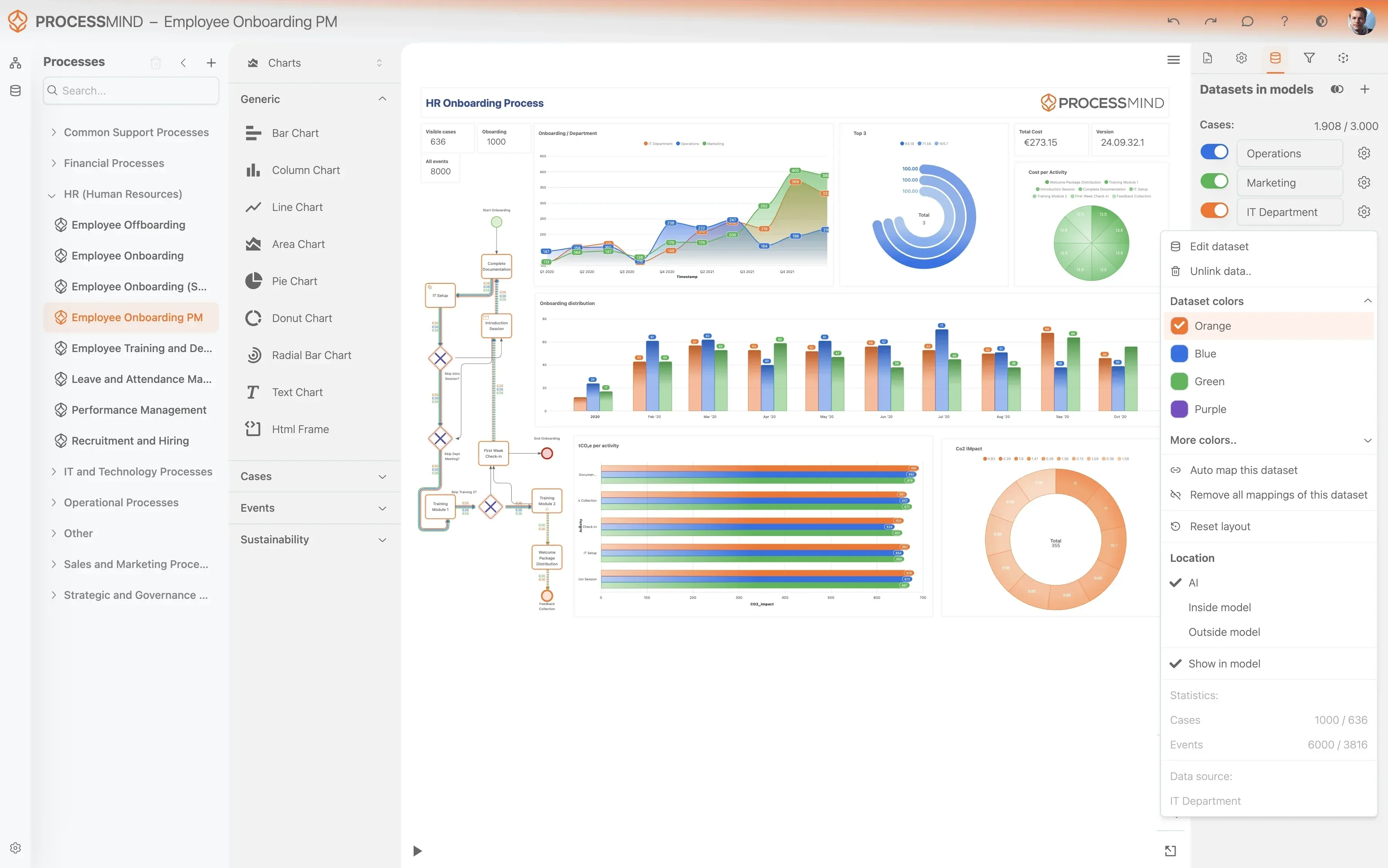
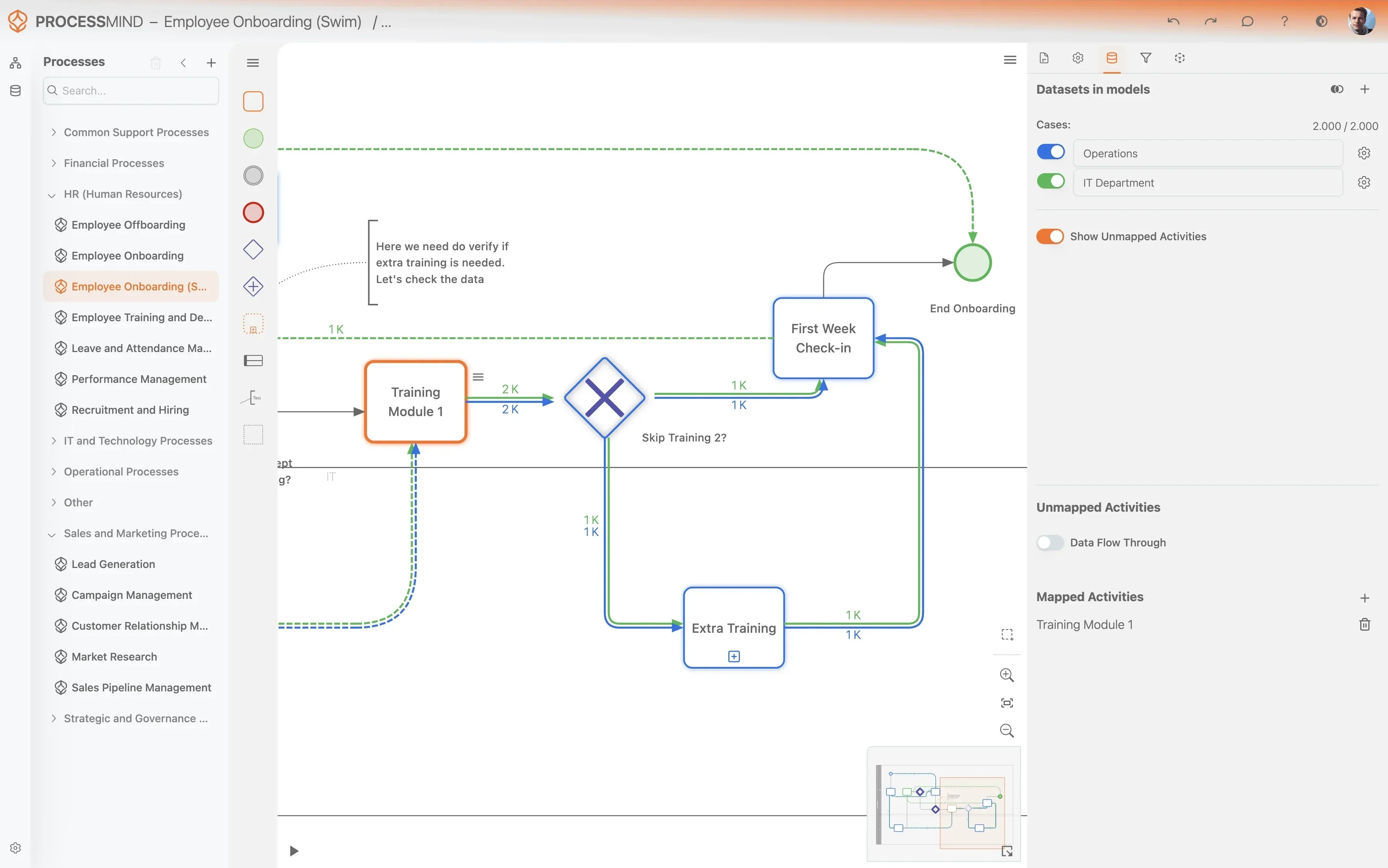
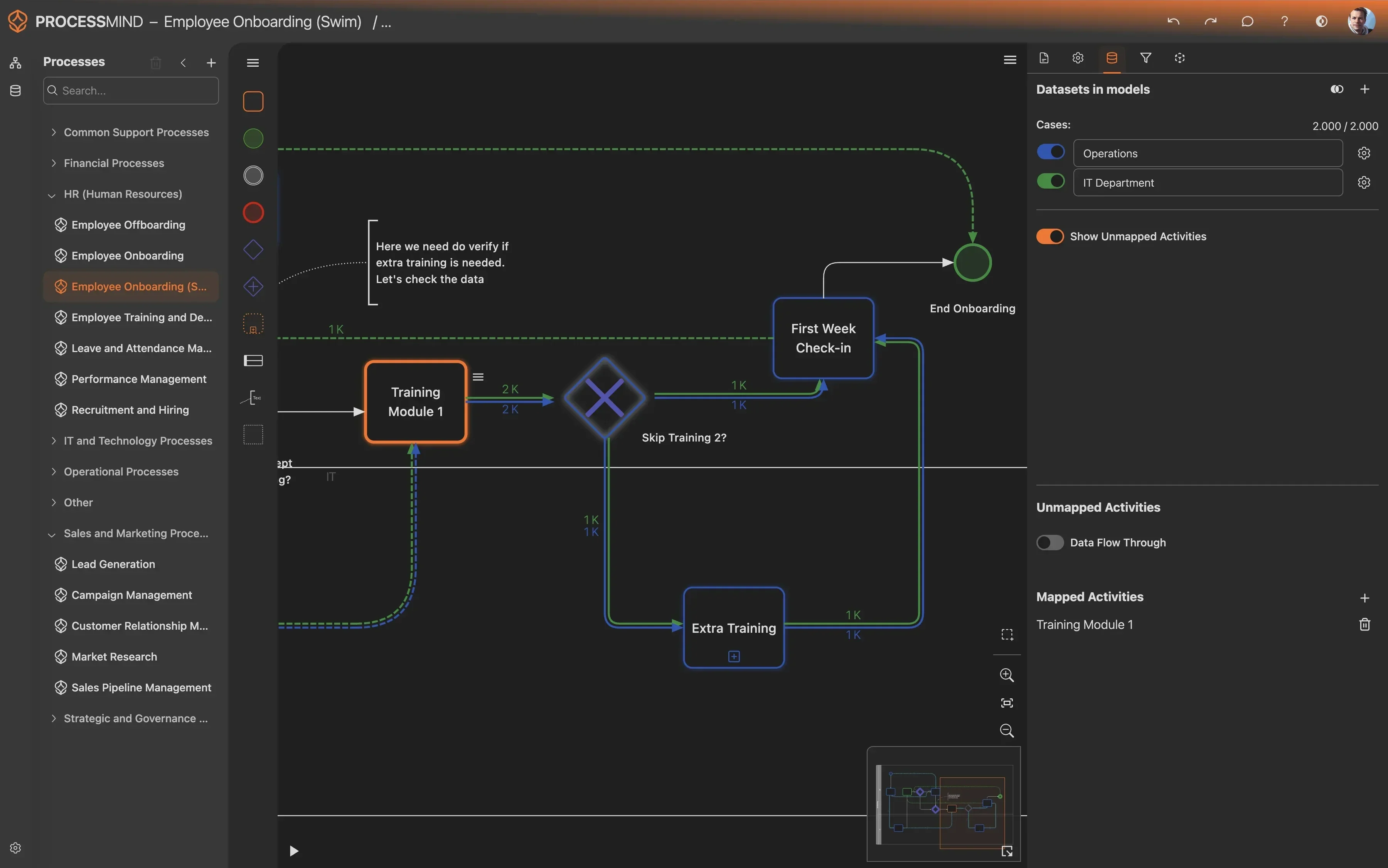
Use the extracted data to visualize the end-to-end payroll process. Understand the actual sequence of activities and common variations.
Why it matters
A visual map demystifies complex process execution, allowing stakeholders to grasp the current state and identify deviations from standard operating procedures.
Expected outcome
A clear, data-driven visual representation of your payroll process flow.
Identify Process Bottlenecks
What to do
Pinpoint specific activities or sequences where delays frequently occur. Quantify these delays to prioritize areas needing improvement.
Why it matters
Focusing on bottlenecks yields the most significant improvements in efficiency, reducing cycle times and improving overall process performance.
Expected outcome
A prioritized list of identified process bottlenecks with quantified impact on payroll processing time.
Analyze Root Causes
What to do
Investigate the underlying reasons for identified bottlenecks and deviations. Look for patterns, resource constraints, or data quality issues.
Why it matters
Understanding the 'why' behind problems enables targeted and sustainable solutions, preventing recurrence and addressing systemic issues.
Expected outcome
A clear understanding of the root causes contributing to process inefficiencies and delays.
Design & Implement Improvements
What to do
Based on root cause analysis, design specific process changes. Consider automation, re-sequencing, or resource allocation adjustments.
Why it matters
Proactive design leads to measurable gains in efficiency, compliance, and employee satisfaction, transforming payroll operations.
Expected outcome
A detailed plan for process optimization, including proposed changes and expected benefits.
Monitor & Iterate Progress
What to do
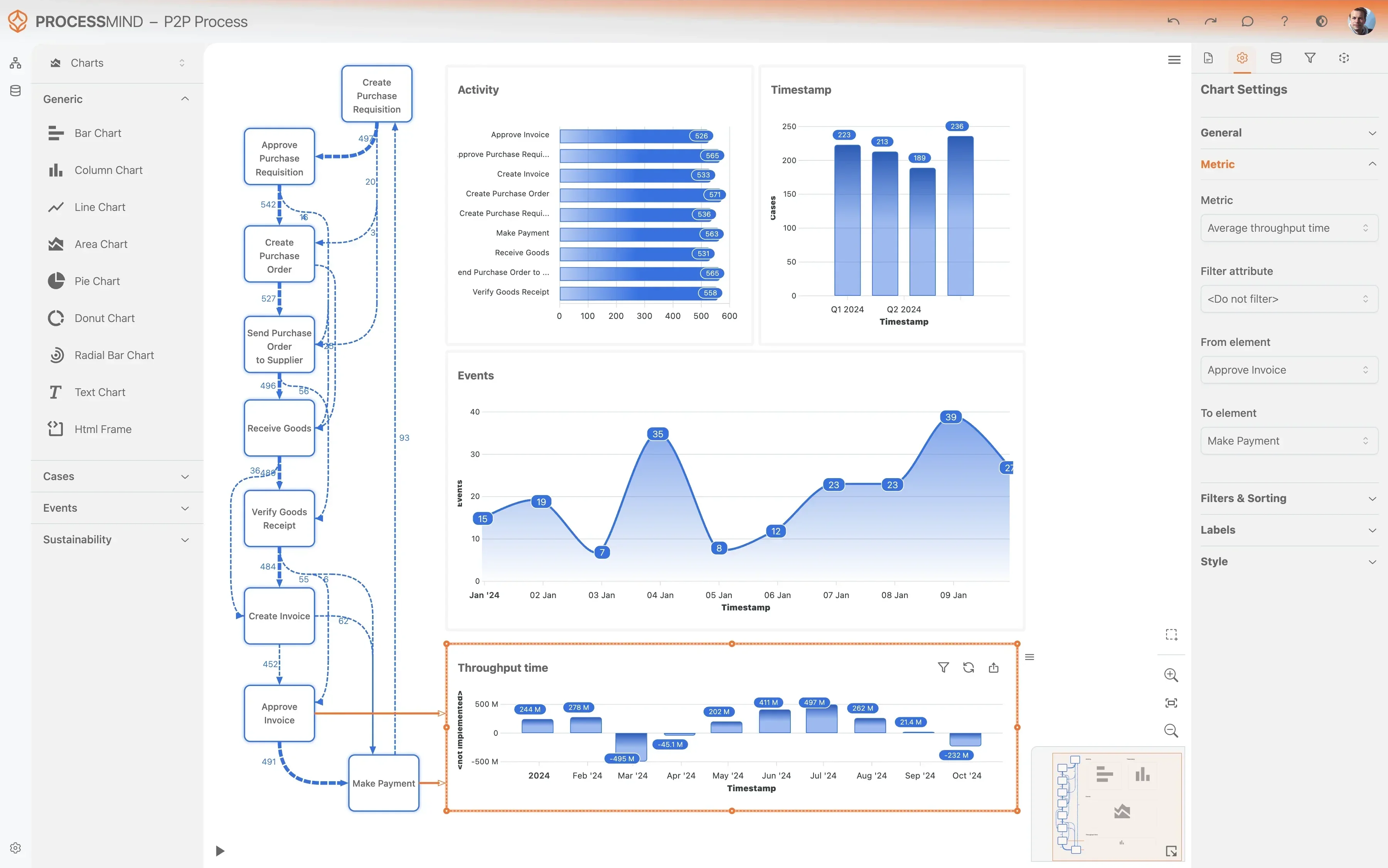
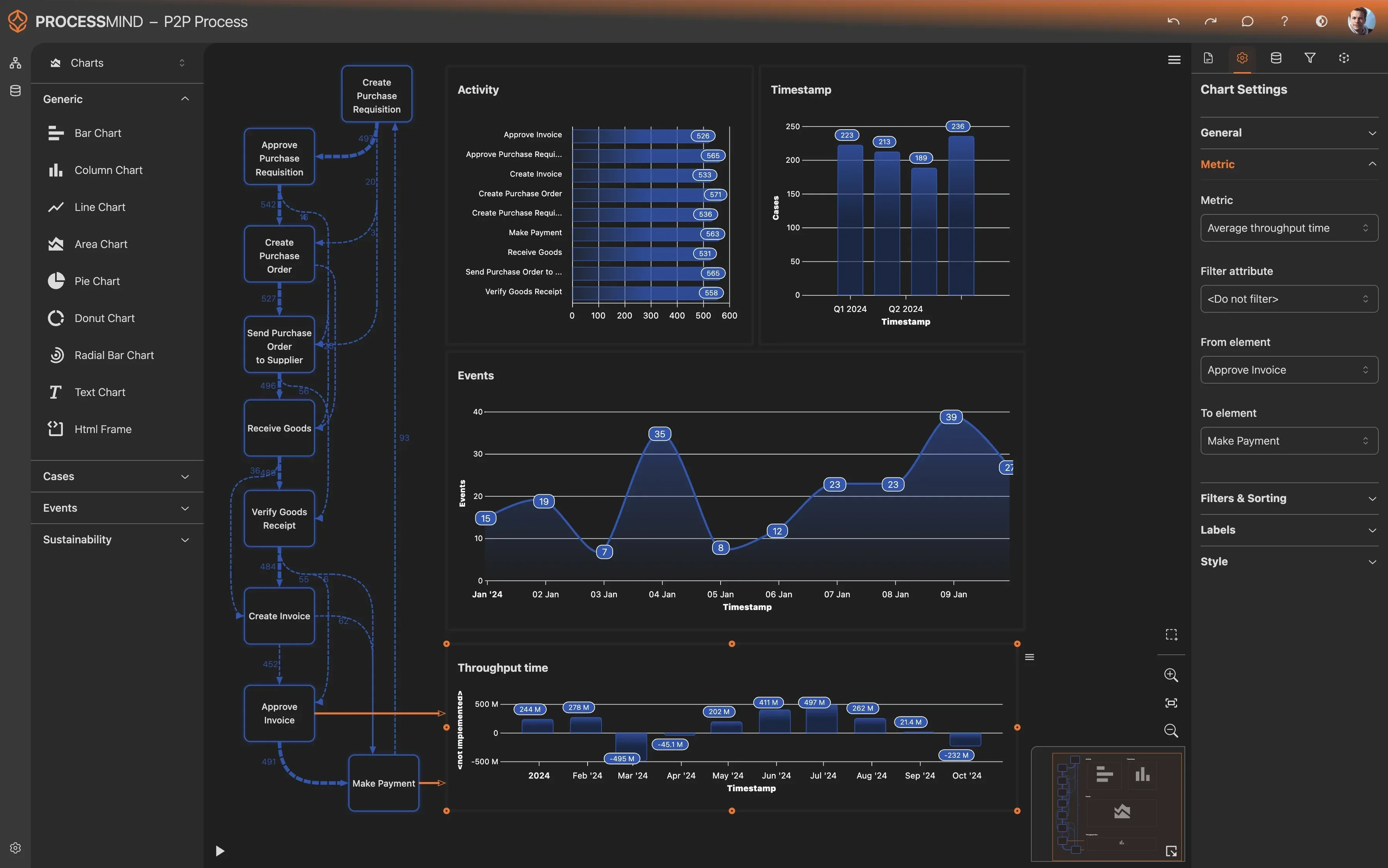
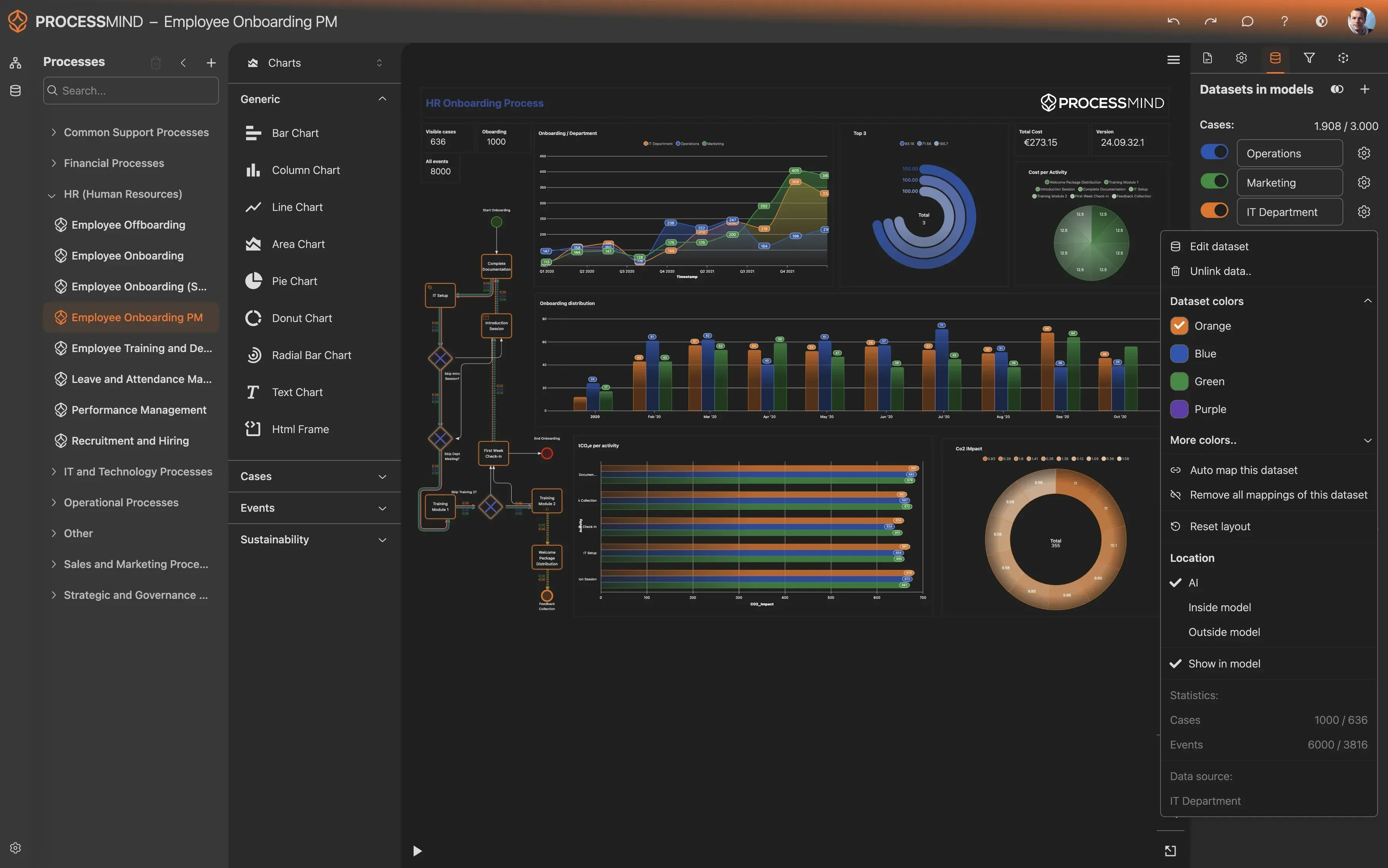
Continuously track the performance of your improved payroll process. Use dashboards to monitor KPIs and identify new areas for refinement.
Why it matters
Ongoing monitoring ensures that improvements are sustained and allows for continuous adaptation to changing business needs and regulations.
Expected outcome
A continuously optimized payroll process with sustained improvements and a framework for ongoing refinement.
TYPICAL OUTCOMES
Elevating Your Payroll Efficiency
Process mining for payroll processing reveals common bottlenecks and inefficiencies, leading to significant improvements in accuracy, compliance, and processing speed. These outcomes are achieved by optimizing workflows and automating repetitive tasks.
Average reduction in time to approve payroll inputs
Streamlining the approval process for timesheets and other payroll inputs prevents bottlenecks, ensuring that the payroll calculation schedule begins on time and payments are processed without delay.
Lower volume of manual corrections and recalculations
By identifying and addressing the root causes of data errors and calculation discrepancies, organizations can significantly decrease the need for manual adjustments and repetitive payroll result previews, saving time and effort.
Decrease in records requiring manual intervention or flags
Process mining helps pinpoint systemic issues and data discrepancies early, leading to a substantial reduction in audit flags and exceptions, improving regulatory compliance and reducing associated risks.
Expedited availability of payment documentation to employees
By optimizing the post-payment processes, organizations can significantly reduce the lag between payment execution and the availability of digital pay slips, enhancing employee satisfaction and reducing inquiries to HR.
Reduced frequency of unscheduled payment runs
Minimizing the root causes of errors in the primary payroll run decreases the necessity for costly and labor-intensive off-cycle payments, optimizing operational efficiency and reducing administrative overhead.
Higher percentage of error-free initial payment runs
Ensuring that payment files are generated correctly the first time minimizes downstream errors, reduces the need for costly corrections, and maintains high employee trust by consistently delivering accurate and timely payments.
Results vary based on the specifics of an organization's payroll process, system configurations, and data quality. The figures presented illustrate common benefits realized across successful implementations.
Recommended Data
For customized data recommendations, choose your specific process.
FAQs
Frequently asked questions
Process mining analyzes event logs from your payroll system to visualize every step of the payroll cycle. It highlights where bottlenecks occur, such as slow approval steps or repetitive manual adjustments, allowing you to target specific areas for optimization and automation.
You need to extract event logs that include a unique Payroll Record ID, activity timestamps, and the specific actions performed. This typically involves connecting to your system's API or exporting system logs that capture status changes from timesheet submission to final bank transfer generation.
Yes, by mapping out every instance where a payroll record is modified, process mining identifies the root causes of rework. This allows you to see if corrections stem from specific data entry points or late input, enabling targeted training or automation to minimize costly off-cycle adjustments.
Most organizations can expect to see an initial process map and key bottlenecks identified within two to four weeks after data connection. Once this baseline is established, specific opportunities to reduce manual rework and accelerate final payment generation become visible immediately.
Data privacy is maintained by pseudonymizing sensitive fields like social security numbers or individual pay rates before the data is analyzed. The focus of process mining is on the timestamps and status changes of the Payroll Record, rather than the personal details of individual employees.
No, process mining is a non-intrusive technology that works by reading the existing audit trails and logs already generated by your payroll system. You do not need to change how your payroll team operates to begin the analysis, though you may choose to update configurations later based on the findings.
By providing a complete, transparent view of every action taken within a payroll cycle, process mining acts as a digital audit trail. It helps ensure that all audit exceptions are handled according to protocol and provides proof of compliance for various regulatory filings.
The system tracks the time elapsed between various activities, such as timesheet submission and its final approval. By highlighting specific departments or pay groups where delays are frequent, management can intervene to standardize processing times and streamline workflows across the organization.
While many organizations start with a retrospective audit of past cycles, you can set up continuous monitoring through API integrations. This allows you to receive alerts when a specific department lags in processing times or when an unusual volume of manual interventions occurs before payroll is finalized.
Boost Payroll Efficiency and Compliance Now
Streamline operations, reduce errors, and ensure audit readiness quickly.
No credit card required. Go live in days.