Improve Your Record to Report - Period Close & Reconciliation

Select a process
Choose a process to continue working in your connected workspace.
Streamline Record to Report Period Close and Reconciliation
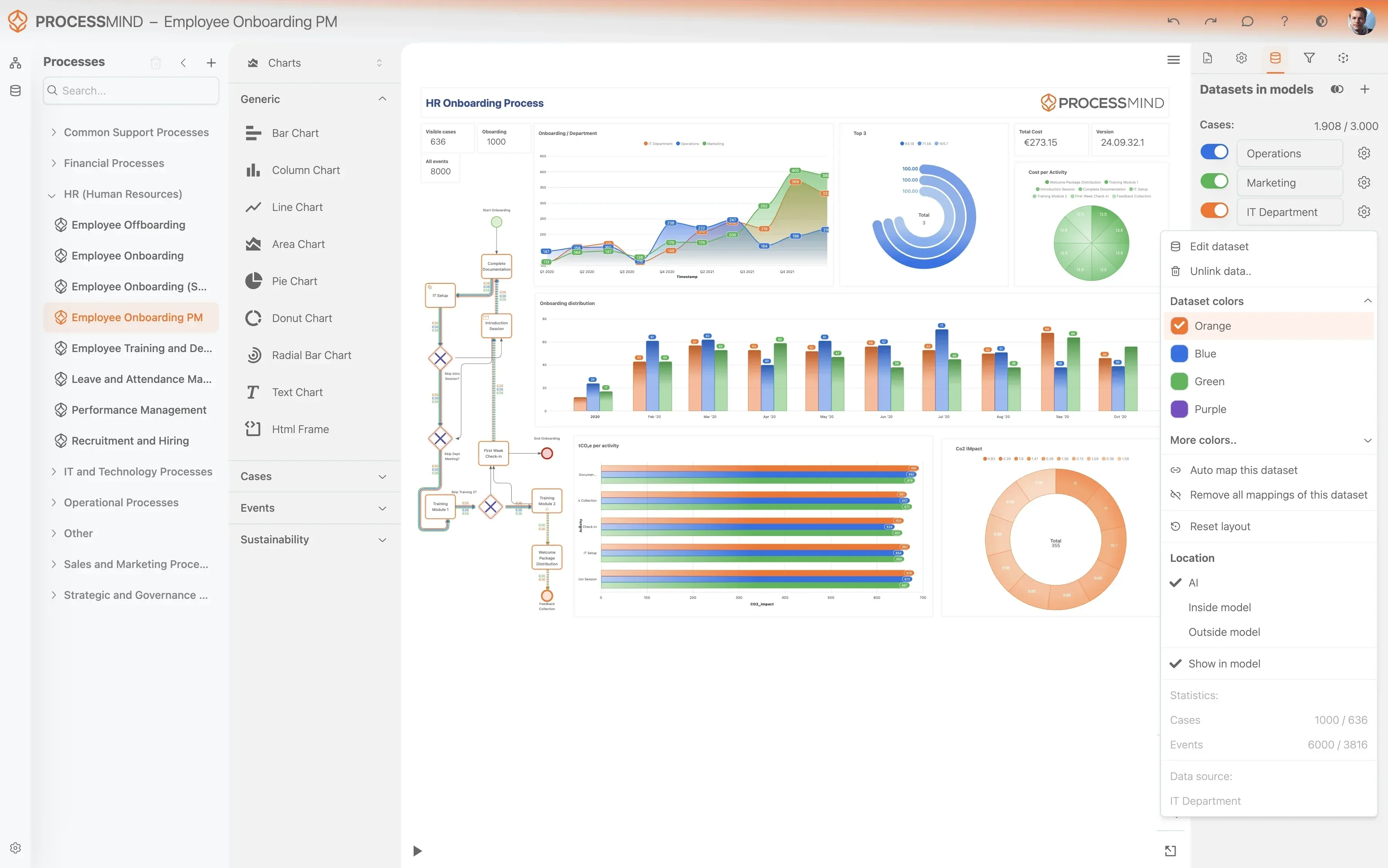
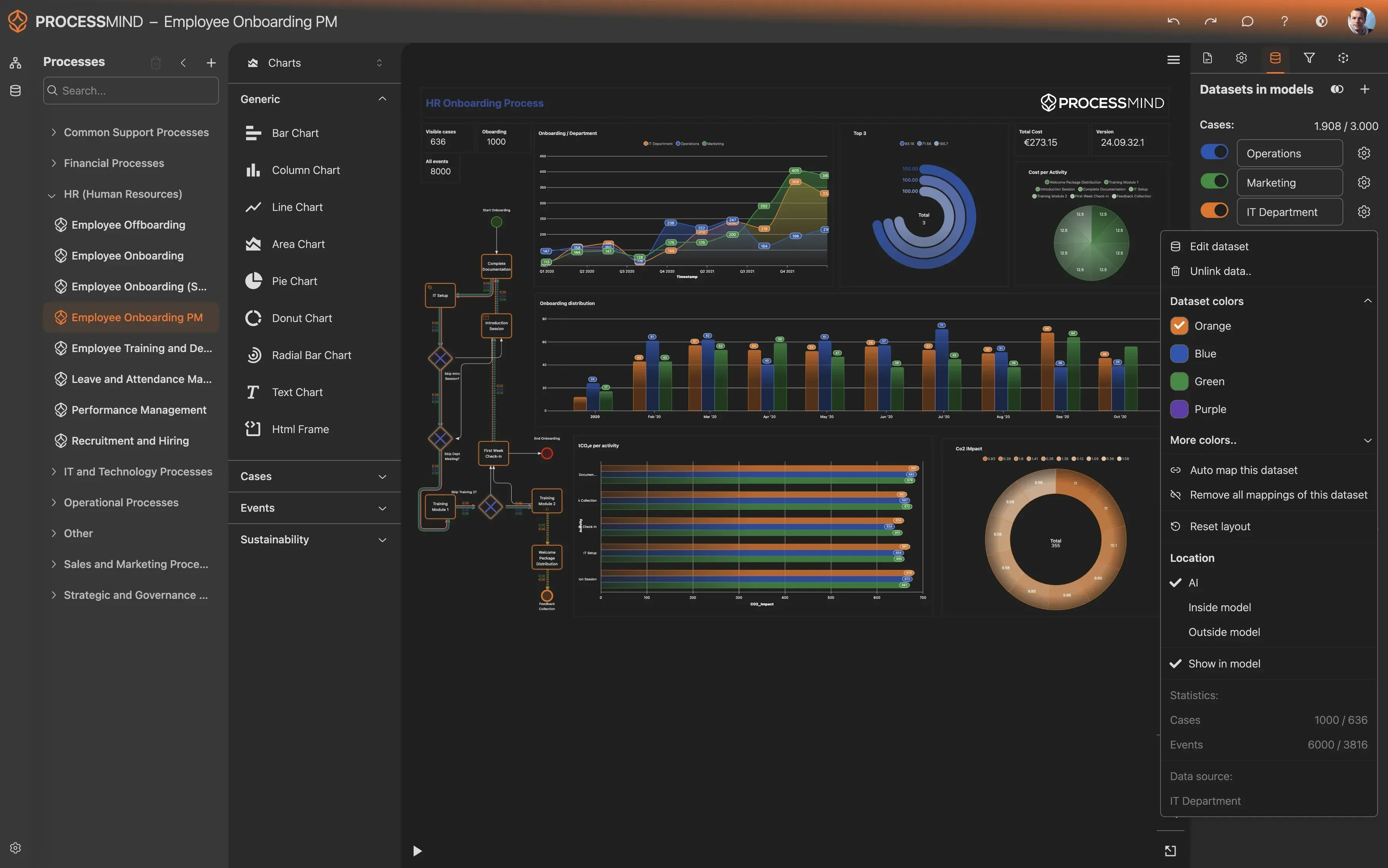
ProcessMind helps you uncover hidden inefficiencies and bottlenecks in your Record to Report process. Pinpoint delays in reconciliations, identify manual journal entry errors, and reduce compliance risks across your financial period close activities. By analyzing your system data, you can quickly visualize process variations and opportunities for automation.
Download our pre-configured data template and address common challenges to reach your efficiency goals. Follow our six-step improvement plan and consult the Data Template Guide to transform your operations.
Show detailed description
The Record to Report, Period Close, and Reconciliation process is a cornerstone of financial integrity, ensuring that your organization's financial statements are accurate, compliant, and delivered on time. However, managing the complexities of data aggregation, journal entries, intercompany reconciliations, and final reporting often presents significant challenges. Process mining with ProcessMind offers a transformative approach, providing an objective, data-driven view into the actual execution of your R2R period close. It reveals the true process flow across all involved departments and systems, highlighting where delays occur, identifying the root causes of rework, and uncovering deviations from your ideal process. By analyzing every event, from initial transaction recording to final ledger close, ProcessMind helps you pinpoint exactly where your process deviates from the most efficient path, regardless of your existing ERP or source systems.
Organizations commonly face hurdles such as manual intervention causing errors, extended cycle times due to bottlenecks in approval workflows, inconsistent reconciliation procedures, and a lack of transparency into the end-to-end process. These challenges not only delay your financial close but also increase compliance risks and consume valuable resources. ProcessMind directly addresses these pain points by visualizing every step and variation of your Record to Report process. You can identify which activities take the longest, understand why certain reconciliations are delayed, and see the impact of different data sources on overall efficiency. This granular insight empowers you to move beyond assumptions and make data-backed decisions to streamline operations, reduce human error, and accelerate your period close without compromising accuracy or control. ProcessMind works with any of your systems, providing a unified view of your financial operations.
Analyzing your Record to Report, Period Close, and Reconciliation process with ProcessMind delivers tangible benefits, including significantly faster closing cycles, improved data accuracy, and enhanced compliance readiness. You can identify opportunities to automate repetitive tasks, optimize the sequencing of activities, and ensure that all steps adhere to internal policies and regulatory requirements. Our platform helps you uncover hidden dependencies and rework loops that drain resources and introduce risk, ultimately leading to a more robust and efficient financial closing process. Ready to transform your financial close operations and achieve unparalleled visibility? ProcessMind seamlessly integrates with your existing ERP or source systems. To begin your journey toward an optimized Record to Report process, simply utilize our comprehensive data template, which provides a clear guide on how to extract the necessary information from your systems and upload it to ProcessMind for immediate insights.
The 6-Step Improvement Path for Record to Report Period Close
Connect & Discover Data
What to do
Extract detailed event logs from your ERP and other financial systems, ensuring each event has a case ID, activity, and timestamp. Prepare data for analysis.
Why it matters
Accurate and complete data extraction is foundational for any meaningful process analysis, providing the raw material to reveal the true process flow.
Expected outcome
A unified, granular dataset ready for process mining analysis, reflecting all period close activities.
Map Your Current Process
What to do
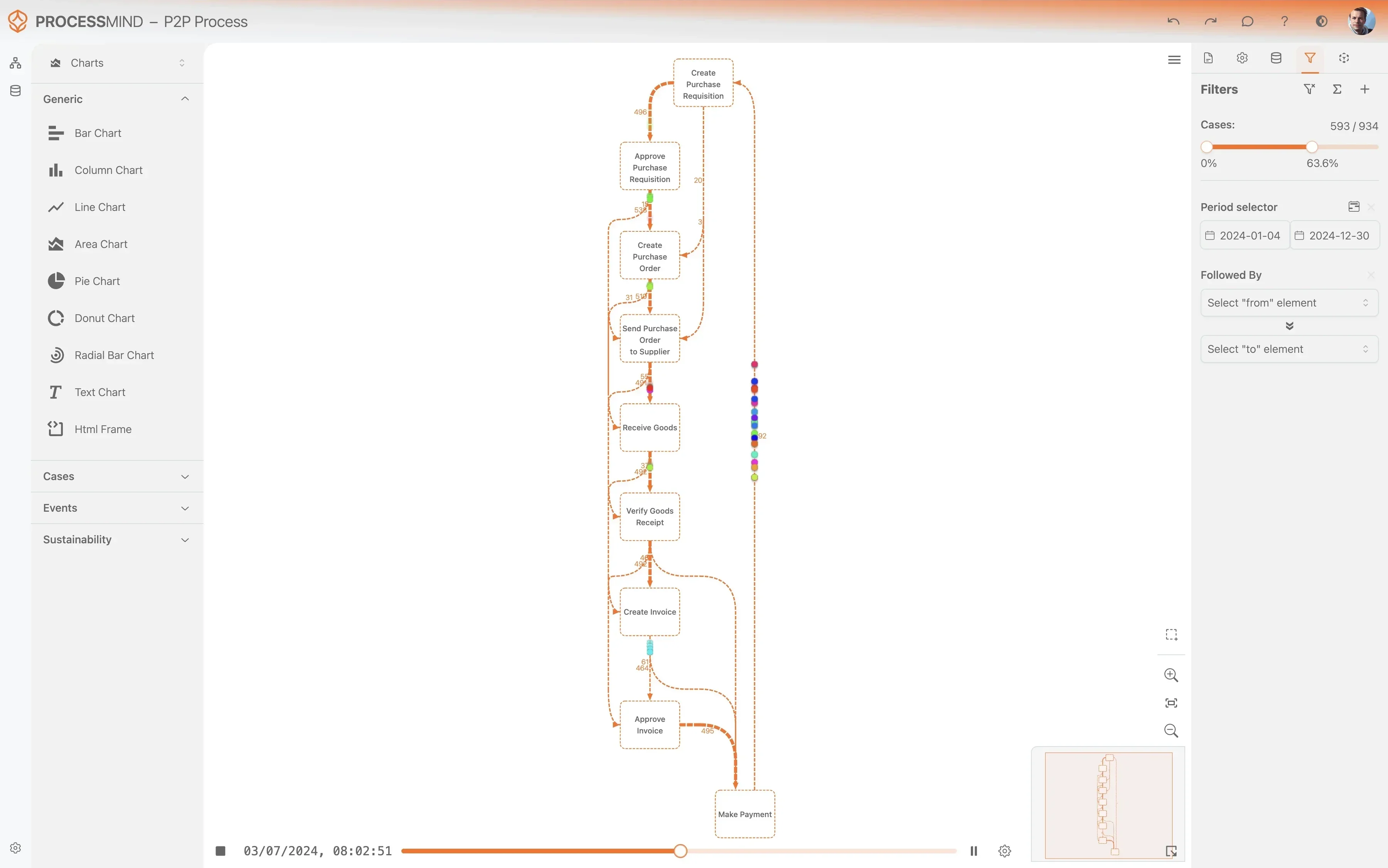
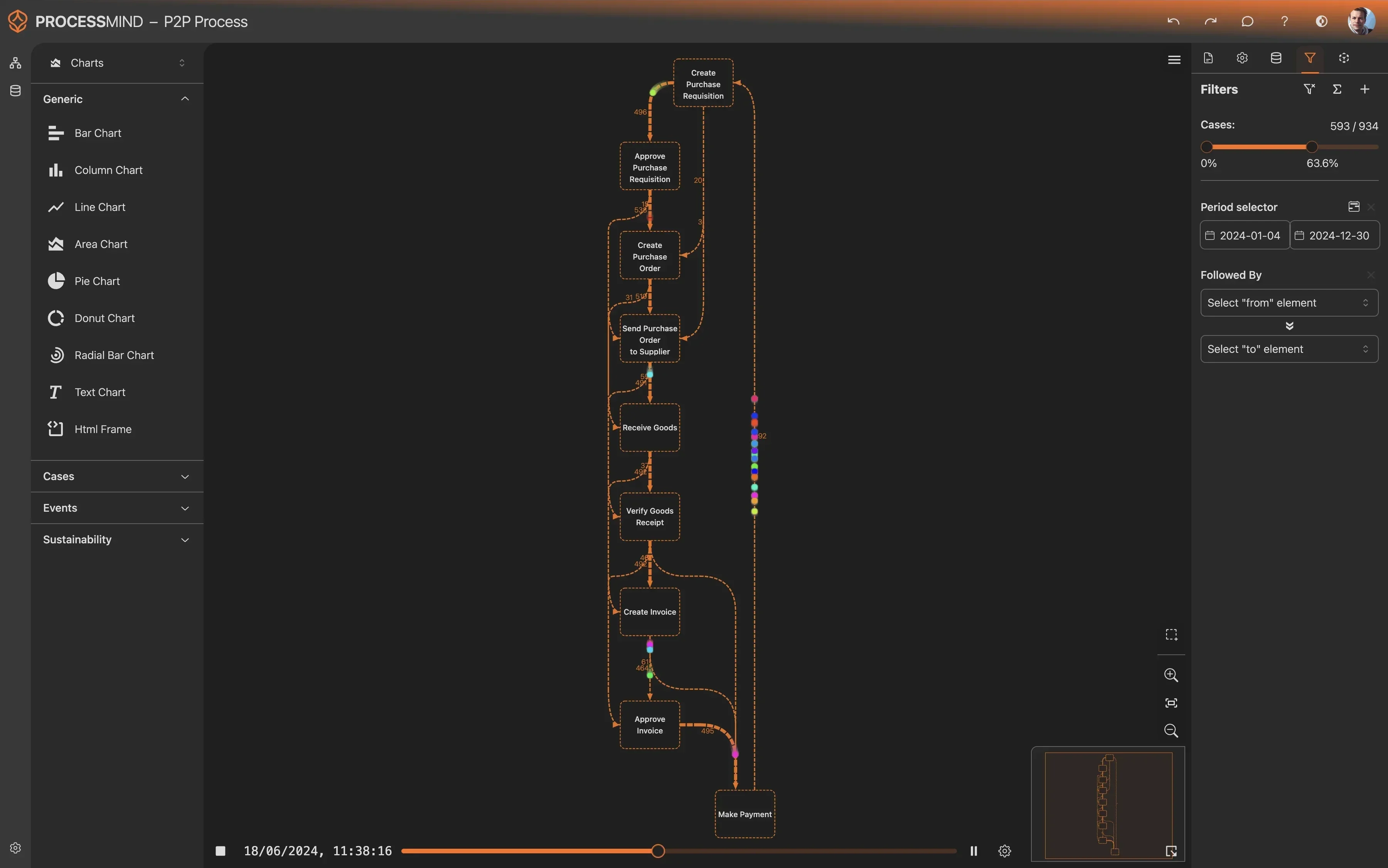
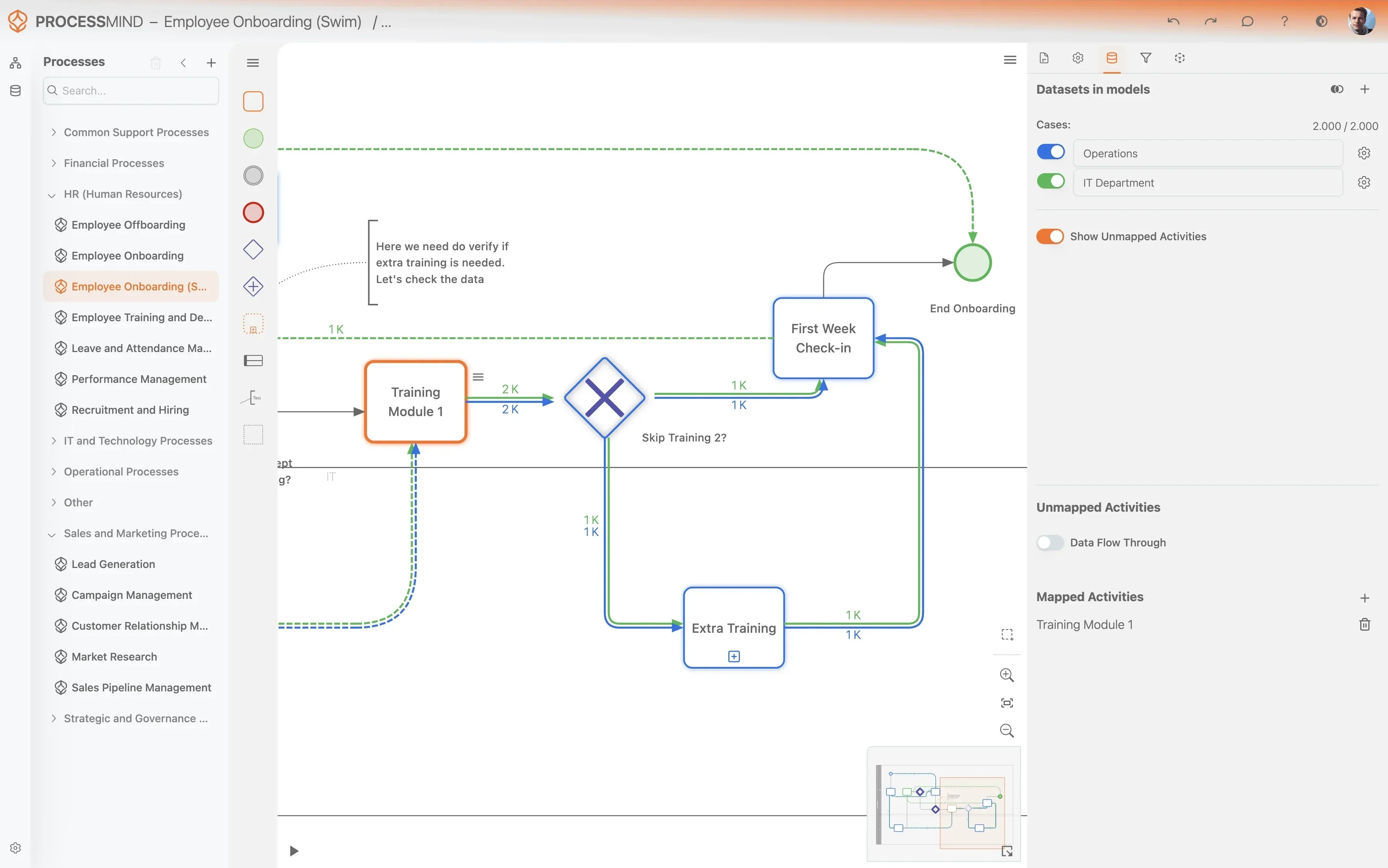
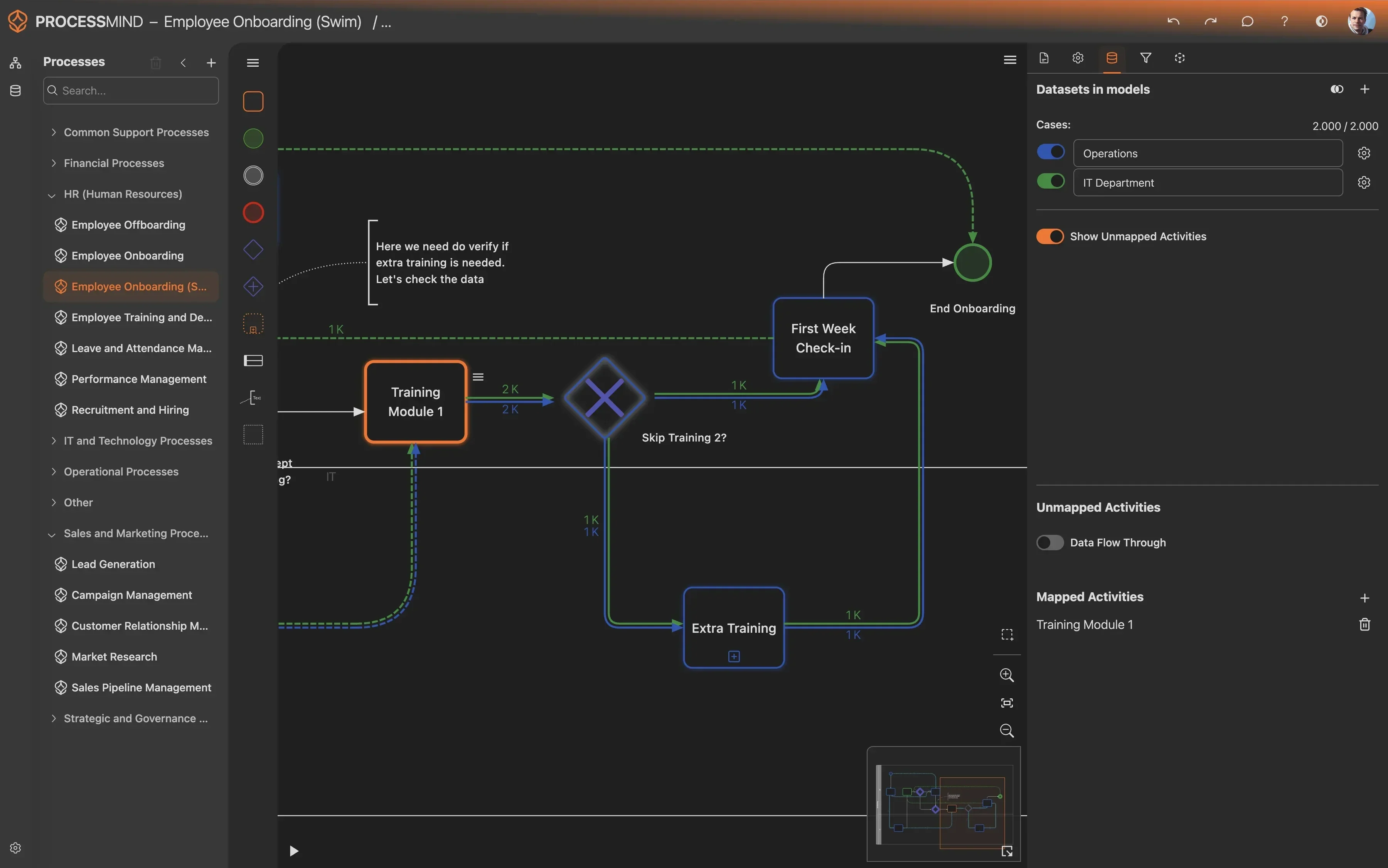
Utilize process mining to automatically reconstruct the end-to-end period close process flow based on your extracted event data, visualizing all variants.
Why it matters
Gaining an objective, data-driven view of your actual process, rather than relying on documented 'as-is' models, is crucial for identifying hidden deviations.
Expected outcome
A visual process map detailing all steps, variations, and key performance indicators for period close activities.
Identify Bottlenecks
What to do
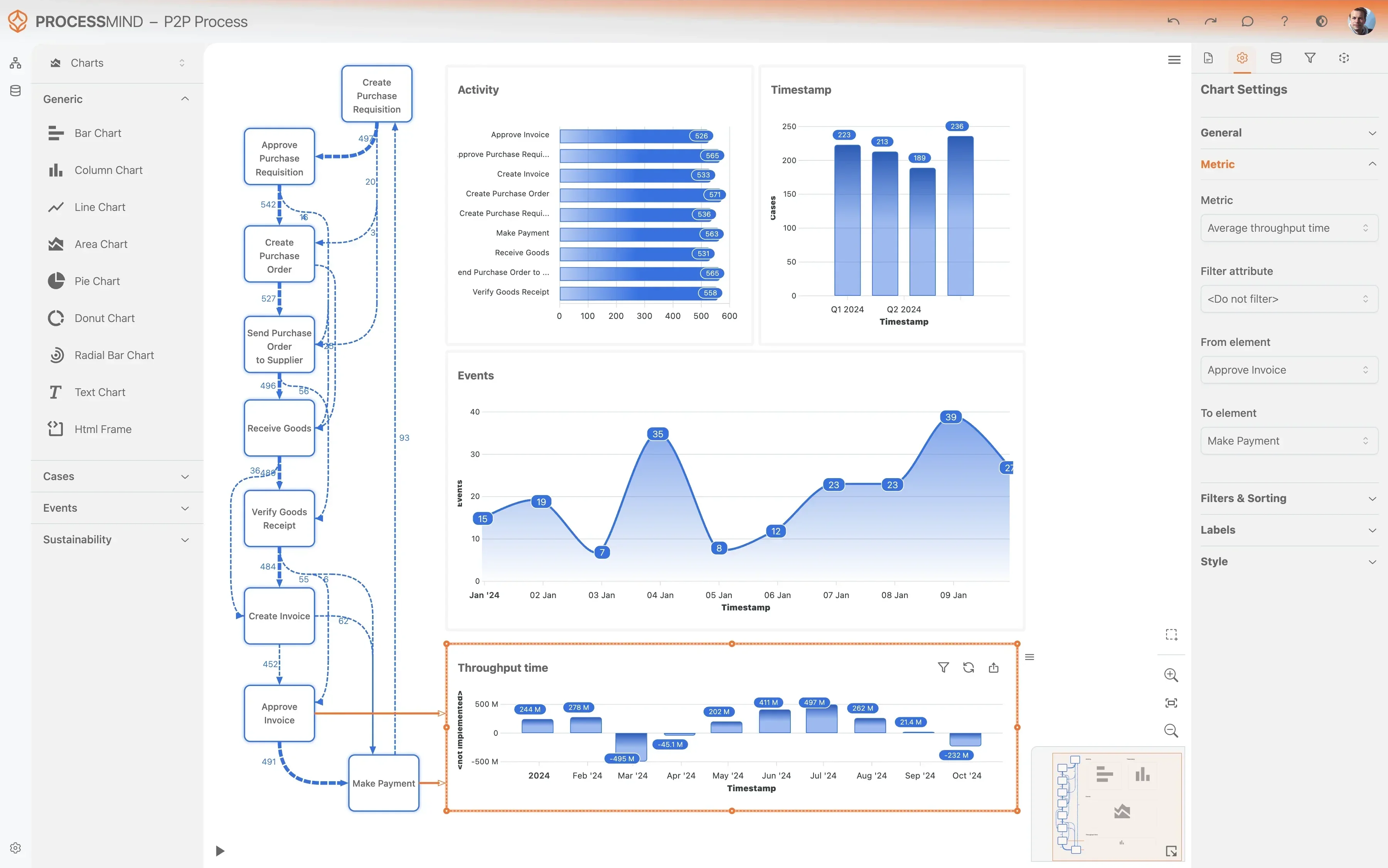
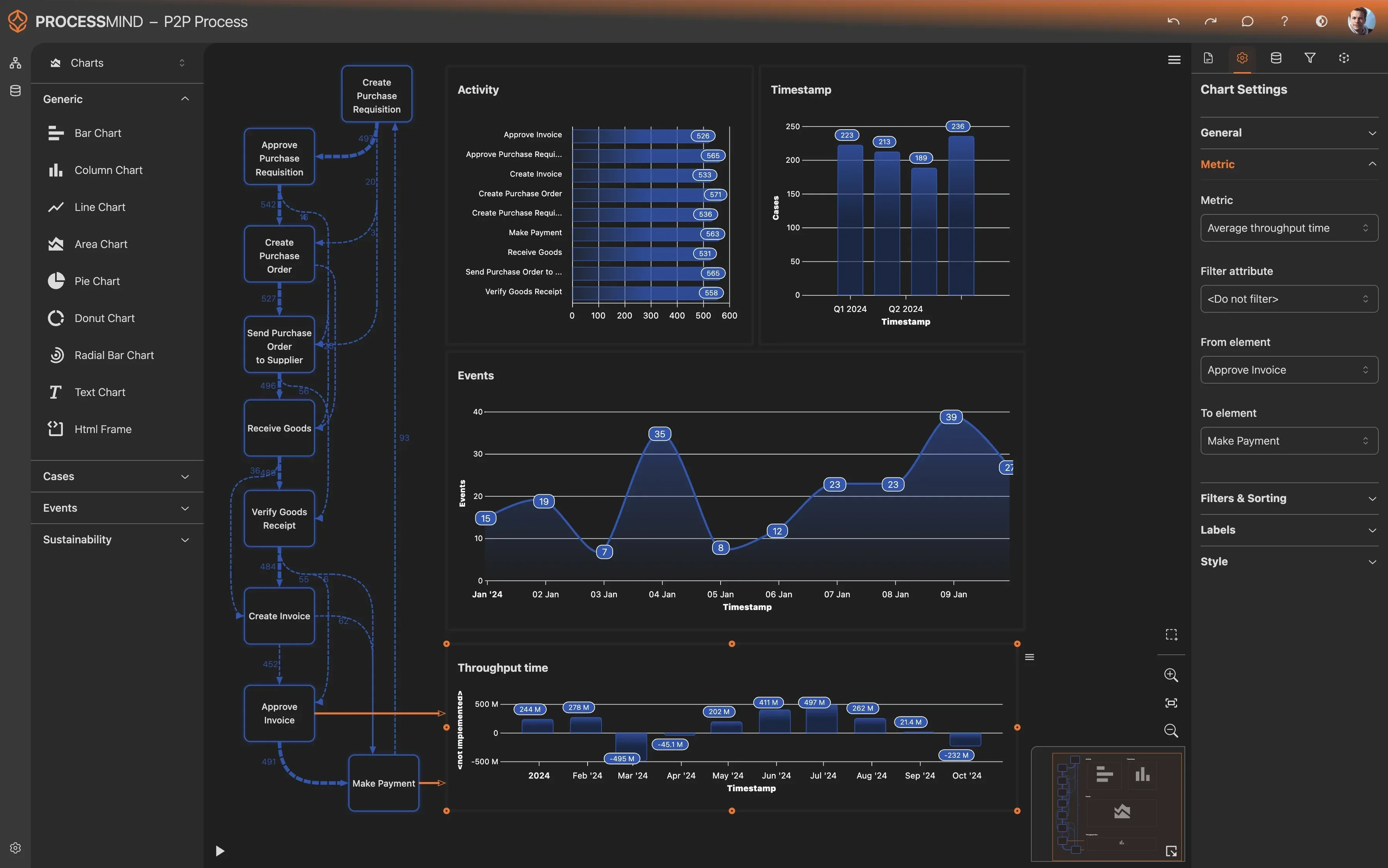
Analyze the process map for frequent delays, reworks, and loops. Focus on activities with high waiting times or multiple repetitions across different financial periods.
Why it matters
Pinpointing exact areas of delay and inefficiency allows for targeted interventions, reducing the time and effort spent on period close activities.
Expected outcome
Clear identification of specific process steps causing delays, rework, or non-compliance, quantified by their impact.
Analyze Root Causes
What to do
Drill down into identified bottlenecks, correlating delays with responsible departments, specific transaction types, or data quality issues in your ERP.
Why it matters
Understanding the underlying reasons for process inefficiencies is critical to developing sustainable solutions, rather than just treating symptoms.
Expected outcome
Root causes of delays and inefficiencies uncovered, linking them to specific operational or system-related factors.
Design Process Improvements
What to do
Based on root cause analysis, design targeted improvements such as automation opportunities, process standardization, or system configuration adjustments.
Why it matters
Strategic design of improvements ensures that changes directly address identified issues, leading to quantifiable benefits in efficiency and compliance.
Expected outcome
A clear, actionable plan outlining specific interventions to optimize the Record to Report period close process.
Monitor & Iterate
What to do
Continuously monitor the impact of implemented changes using process mining, tracking key metrics like cycle time and rework rates to ensure improvements are sustained.
Why it matters
Ongoing monitoring is essential to confirm the effectiveness of changes, adapt to evolving business needs, and foster a culture of continuous process optimization.
Expected outcome
Demonstrable improvements in period close efficiency and accuracy, with a mechanism for ongoing performance tracking.
TYPICAL OUTCOMES
Transforming Your Financial Close
These outcomes showcase how organizations apply process intelligence to pinpoint inefficiencies, streamline reconciliation workflows, and accelerate their Record to Report process, leading to a faster and more accurate financial close.
Average reduction in close time
Identify and eliminate bottlenecks in the Record to Report process, significantly shortening the overall time needed to complete financial period close activities. This enables quicker reporting and analysis.
Decrease in adjusting journal entries
Pinpoint the root causes of errors leading to manual journal adjustments, reducing the need for post-close intervention and improving financial data quality and auditability.
Improved adherence to standard procedures
Understand deviations from the ideal period close process, enabling standardization efforts that improve predictability, reduce errors, and ensure consistent execution across all financial periods.
Speed-up in reconciliation approvals
Process mining reveals bottlenecks in reconciliation and other close-related approval workflows, allowing for targeted improvements that accelerate review and sign-off processes.
Decrease in re-executed reconciliations
Minimize the need for re-executing reconciliations by identifying process gaps and improving upstream data quality and approval handoffs, leading to more accurate first-pass completion.
Results vary based on process complexity, data quality, and existing system landscape. These figures represent common improvements observed across successful implementations of process mining for Period Close & Reconciliation.
Recommended Data
For customized data recommendations, choose your specific process.
FAQs
Frequently asked questions
Process mining uses event log data from your financial system to visualize the actual end-to-end flow of your Record to Report, Period Close, and Reconciliation process. It identifies deviations, bottlenecks, and rework, showing exactly where inefficiencies occur. This data-driven approach helps you understand how your process truly runs versus how it is designed to run.
By analyzing event logs, process mining pinpoints the exact activities causing delays and bottlenecks in your period close. It reveals rework loops and non-standard steps that prolong the cycle. This insight allows you to prioritize specific areas for improvement, such as optimizing account reconciliation or reducing adjusting entries.
You primarily need event log data related to financial postings, account reconciliations, journal entries, and task completion from your financial system. This includes activity names, user IDs, timestamps, and relevant document or case identifiers. The key is to extract detailed activity logs that capture the sequence and timing of events within the period close.
Initial data extraction and setup can typically be completed within a few weeks, depending on data availability and system access. Once the data is loaded and models are built, you can often see initial process insights and identify major bottlenecks within the first 4-6 weeks. Comprehensive analysis and optimization initiatives follow this discovery phase.
You can expect a reduction in period close cycle times, elimination of reconciliation backlogs, and minimized rework from errors. Process mining also enhances real-time visibility into close progress and helps standardize global close procedures. Ultimately, this leads to faster financial statement approvals and stronger compliance.
Yes, process mining can highlight deviations from standard operating procedures and segregation of duties. It visualizes all process variants, making it easy to spot non-compliant steps or unauthorized actions. This capability strengthens your internal controls and reduces compliance risk exposures.
No, process mining is a non-invasive analytical technique. It operates on historical data extracted from your financial system without interfering with live operations. Implementation focuses on data analysis and insight generation, not direct system changes, ensuring business continuity during the process.
Yes, by visualizing the actual execution of closing activities across various entities, process mining can highlight inconsistencies and deviations, enabling standardization. It also identifies uneven workload distribution, supporting more balanced resource allocation and improved efficiency during peak periods.
Process mining identifies the root causes of adjustments by analyzing the process leading up to them, highlighting where data inconsistencies originate or where reconciliations are performed incorrectly. For backlogs, it pinpoints exact stages and reasons behind delays, revealing inconsistent practices and specific accounts or teams causing issues. This enables targeted interventions for a more streamlined reconciliation process.
Start Optimizing Your Record to Report Process Today
Automate period close and reconciliation, reduce errors, and accelerate insights.
No credit card required, see results in days