Improve Your Service Request Management

Select a process
Choose a process to continue working in your connected workspace.
Optimize Zendesk Support Service Requests for Faster Resolution
Service request management often faces delays and inefficiencies, impacting customer satisfaction and operational costs. Our platform helps identify precise bottlenecks and redundant steps within your workflow. We provide clear, actionable insights to help you reduce resolution times and improve overall service delivery. This leads to better customer experiences and lower operational overhead.
Download our pre-configured data template and address common challenges to reach your efficiency goals. Follow our six-step improvement plan and consult the Data Template Guide to transform your operations.
Show detailed description
Why Optimizing Service Request Management Matters
Service Request Management is a critical function for any organization, serving as the primary channel for users to get the support they need. When managed efficiently, it fosters high customer satisfaction, boosts agent productivity, and ensures smooth operational flow. However, inefficiencies within your Service Request Management process, particularly when using a powerful platform like Zendesk Support, can lead to significant drawbacks. Delays in resolution, repeated escalations, and inconsistent handling of requests directly impact your customers' experience, potentially eroding trust and loyalty. Internally, these inefficiencies translate into higher operational costs due to wasted agent time, increased re-work, and a reactive, rather than proactive, approach to service delivery. Understanding "how to improve Service Request Management" is not just about fixing individual incidents, it's about transforming your entire service delivery pipeline to be more responsive and cost-effective. Organizations often struggle to identify the root causes of these issues, relying on anecdotal evidence or basic reporting. This is where a data-driven approach becomes indispensable for uncovering true opportunities for process optimization.
How Process Mining Enhances Zendesk Support Workflows
Process mining offers a revolutionary way to truly understand and improve your Service Request Management workflows within Zendesk Support. Instead of relying on assumptions or idealized process maps, process mining extracts event data directly from your Zendesk logs, such as when a Service Request Created or Service Request Assigned to Agent event occurs. This data allows you to reconstruct the actual, end-to-end journey of every service request. By visualizing these real process flows, you can immediately identify common paths, as well as hidden deviations and re-work loops that might be extending "Service Request Management cycle time". For instance, you might discover that a significant number of requests repeatedly go through Information Requested from Requestor or Internal Review Performed steps before reaching Resolution Proposed, indicating a need for clearer initial information gathering or streamlined internal collaboration. Process mining helps answer critical questions like: where do requests spend most of their time? Which agents or teams have the most efficient resolution paths? Are your Service Level Agreements, SLAs, being met consistently across all service types, or are there specific stages where adherence breaks down? This analytical power provides the evidence needed to make informed decisions for process optimization.
Key Areas for Service Request Improvement
With a clear view of your Service Request Management process flow, process mining shines a light on several key areas ripe for improvement. You can precisely locate bottlenecks that cause delays, such as specific triage steps, agent assignment queues, or external vendor engagements that take longer than expected. By comparing different process variants, you might uncover that requests for certain Service Type categories consistently experience longer "Service Request Management cycle time" or require more Information Requested from Requestor steps, suggesting a need for dedicated forms or FAQs. Furthermore, you can analyze the impact of Priority or Severity on the process, ensuring that critical requests genuinely follow an accelerated path. Process mining also highlights opportunities for automation, for example, by identifying repetitive manual tasks that could be handled by a bot or automated routing rules in Zendesk Support. It helps in assessing compliance by showing if all mandatory steps are followed and if hand-offs occur as per policy. Understanding these patterns enables you to streamline workflows, eliminate redundant steps, and standardize best practices across your entire service team, leading to a more efficient and predictable service delivery experience.
Expected Outcomes of Process Optimization
Implementing improvements based on process mining insights for your Service Request Management in Zendesk Support yields tangible and measurable benefits. Firstly, you will experience a significant reduction in "Service Request Management cycle time", meaning requests are resolved faster and customers receive quicker responses. This directly translates into increased customer satisfaction and loyalty. Secondly, by eliminating bottlenecks and optimizing workflows, your operational efficiency will dramatically improve, allowing agents to handle more requests effectively and reducing the need for costly overtime or additional staffing. This translates to a direct reduction in operational costs. Thirdly, enhanced visibility into your processes ensures better compliance with internal policies and external regulations, reducing risks. You will also see improved SLA adherence, as you can proactively address areas where service level targets are frequently missed. Ultimately, "how to reduce Service Request Management cycle time" effectively becomes a strategic advantage, allowing for better resource allocation, a higher quality of service, and a more positive working environment for your support teams.
Getting Started with Service Request Process Analysis
Embarking on a data-driven journey to optimize your Service Request Management within Zendesk Support doesn't require complex data science expertise. By applying process mining principles, you can transform raw event data into clear, actionable insights that guide your improvement efforts. This approach empowers you to move beyond guesswork, making data-backed decisions to enhance efficiency, reduce costs, and elevate the customer experience. Start exploring your service request processes today and unlock their full potential for optimization.
The 6-Step Improvement Path for Service Request Management
Download the Template
What to do
Obtain the pre-structured Excel template designed for Service Request Management data. This template ensures your data is ready for analysis, aligning with ProcessMind's requirements.
Why it matters
A standardized data format is crucial for accurate process mining. It prevents common data ingestion issues and ensures a smooth start to your improvement journey.
Expected outcome
An empty, but correctly formatted, Excel template ready for your Zendesk Support data.
Export Your Zendesk Data
What to do
Extract 3-6 months of historical service request data from your Zendesk Support instance. Populate the downloaded template using this real-world operational data.
Why it matters
Using recent historical data provides a realistic view of your current service request process. This forms the foundation for discovering inefficiencies and areas for improvement.
Expected outcome
A completed Excel template filled with 3-6 months of your Zendesk Support service request data.
Upload Your Dataset
What to do
Securely upload your populated Excel template to the ProcessMind platform. Our system will automatically process and prepare your service request data for analysis.
Why it matters
A quick and secure upload ensures your data is rapidly transformed into actionable insights. This minimizes setup time and accelerates your path to process improvement.
Expected outcome
Your Zendesk Service Request data securely processed and ready for in-depth process analysis within ProcessMind.
Analyze Service Requests
What to do
Explore the automatically generated dashboards and interactive visualizations of your Service Request Management process. Leverage AI-driven recommendations to pinpoint bottlenecks and deviations.
Why it matters
Visualizing your end-to-end process reveals hidden inefficiencies, compliance gaps, and root causes of delays. This empowers data-driven decisions for optimization.
Expected outcome
A clear understanding of your service request process flow, identifying key bottlenecks and potential areas for improvement.
Implement Changes
What to do
Prioritize the identified improvement opportunities based on their potential impact and feasibility. Develop and implement concrete action plans to address these inefficiencies within Zendesk workflows.
Why it matters
Acting on insights translates directly into tangible benefits, such as reduced cycle times, improved agent efficiency, and higher customer satisfaction in your service delivery.
Expected outcome
Specific operational changes and workflow adjustments deployed within your Zendesk Support environment, targeting key inefficiencies.
Monitor & Refine
What to do
Periodically re-upload updated service request data from Zendesk Support to ProcessMind. Continuously track the impact of your implemented changes and identify new areas for optimization.
Why it matters
Ongoing monitoring ensures sustained improvements and adapts your process to evolving business needs. It transforms your operations into a cycle of continuous optimization.
Expected outcome
Measurable improvements in key performance indicators for Service Request Management and a framework for continuous process optimization.
WHAT YOU WILL GET
Uncover Key Delays in Your Service Request Workflow
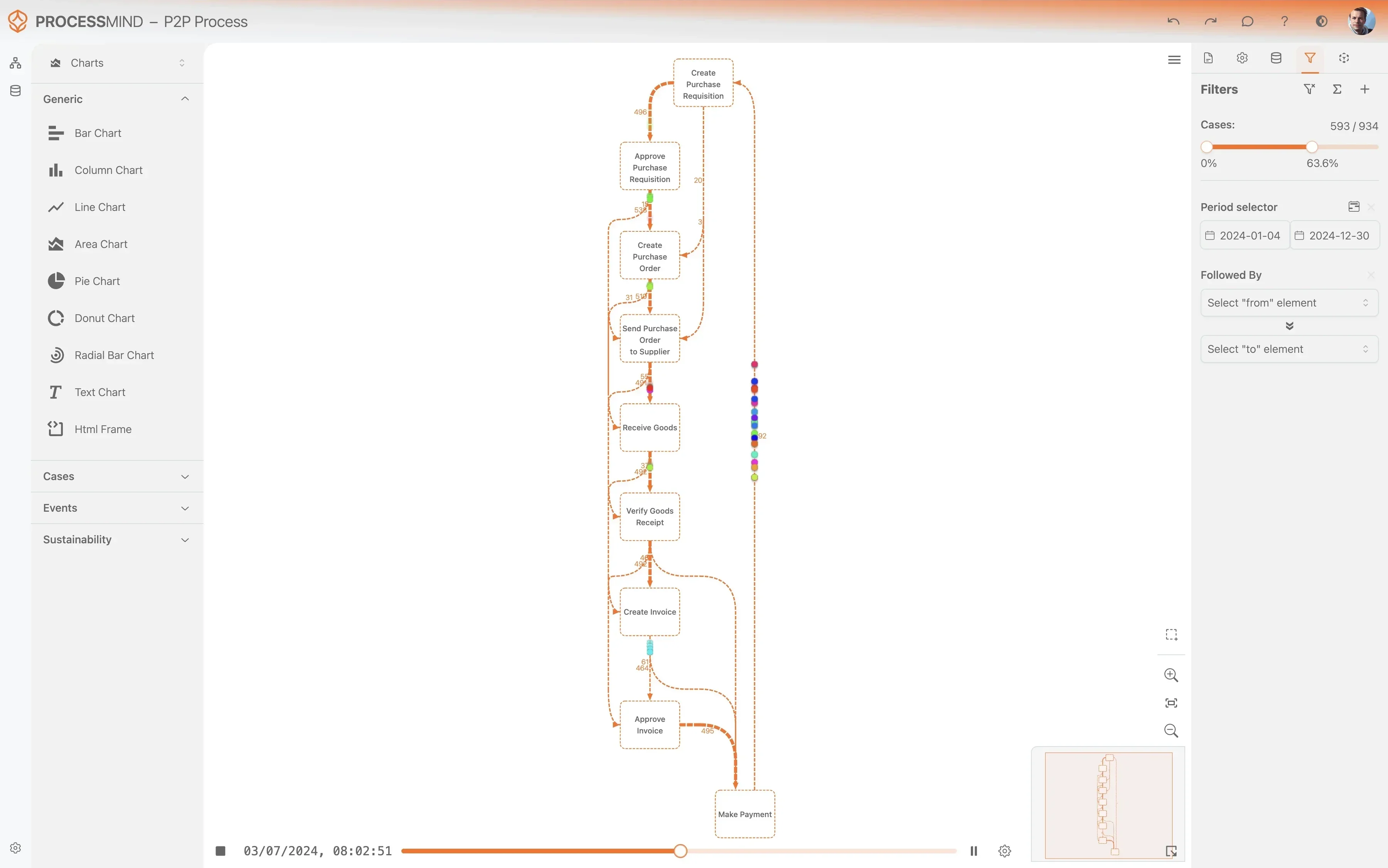
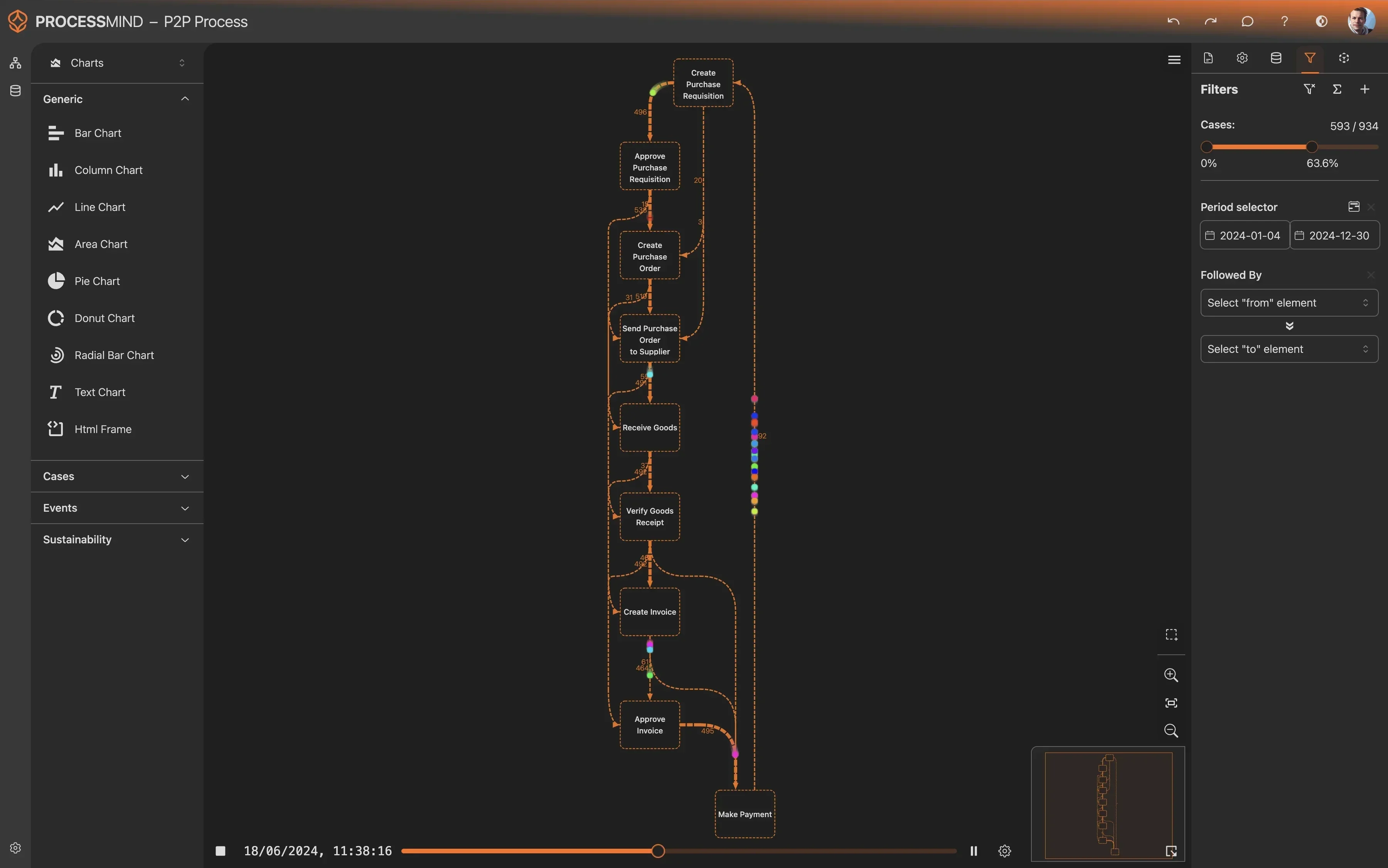
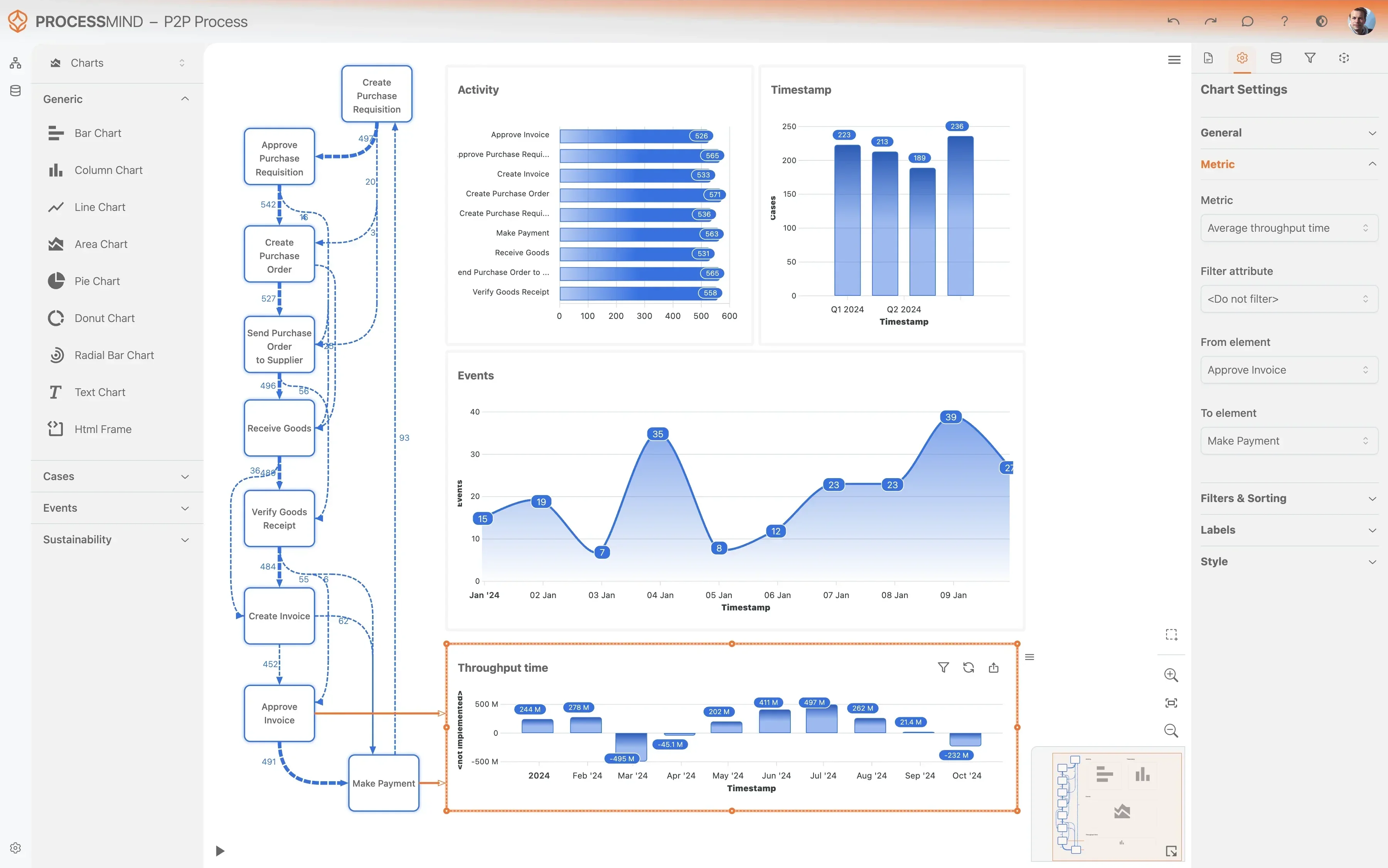
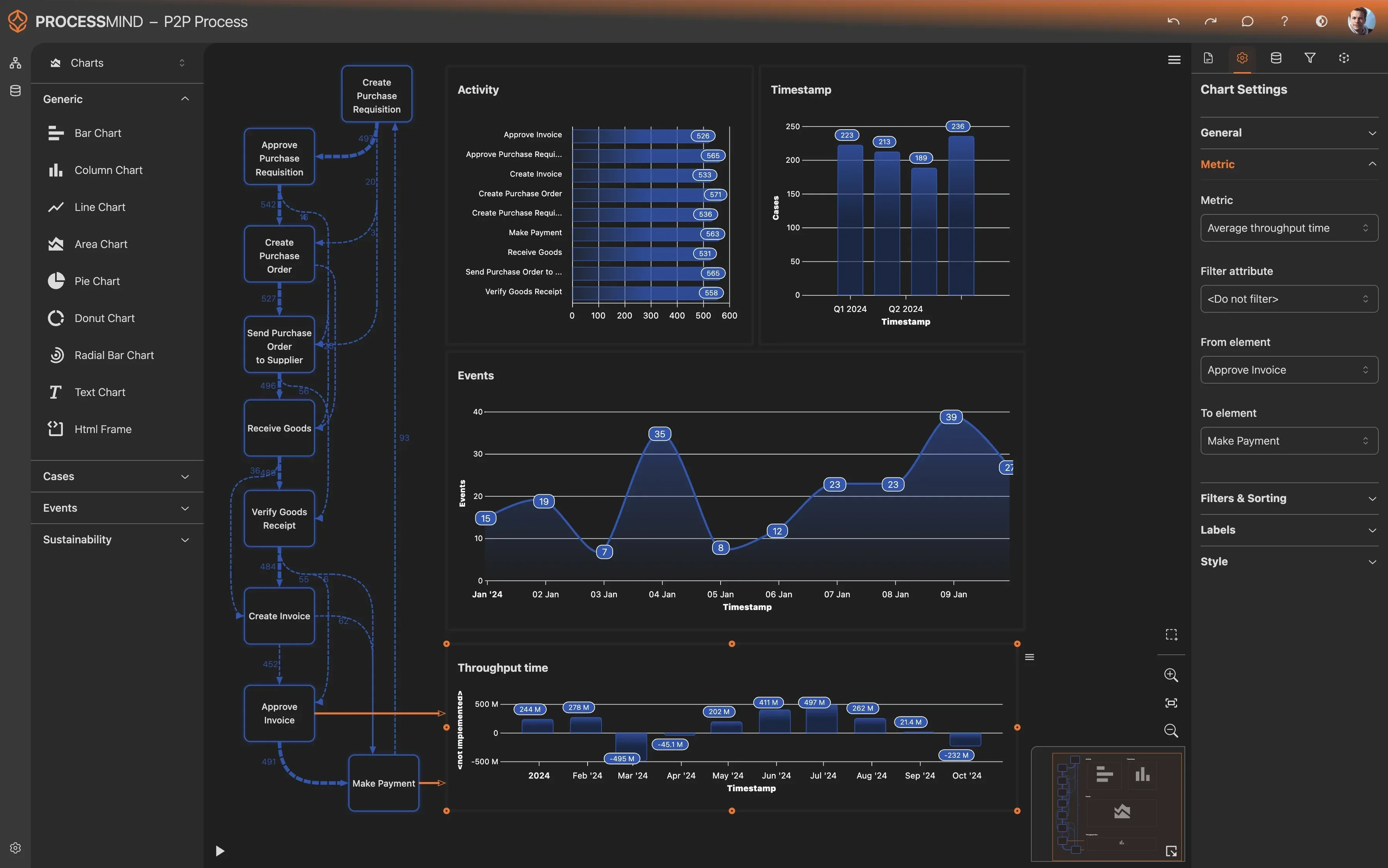
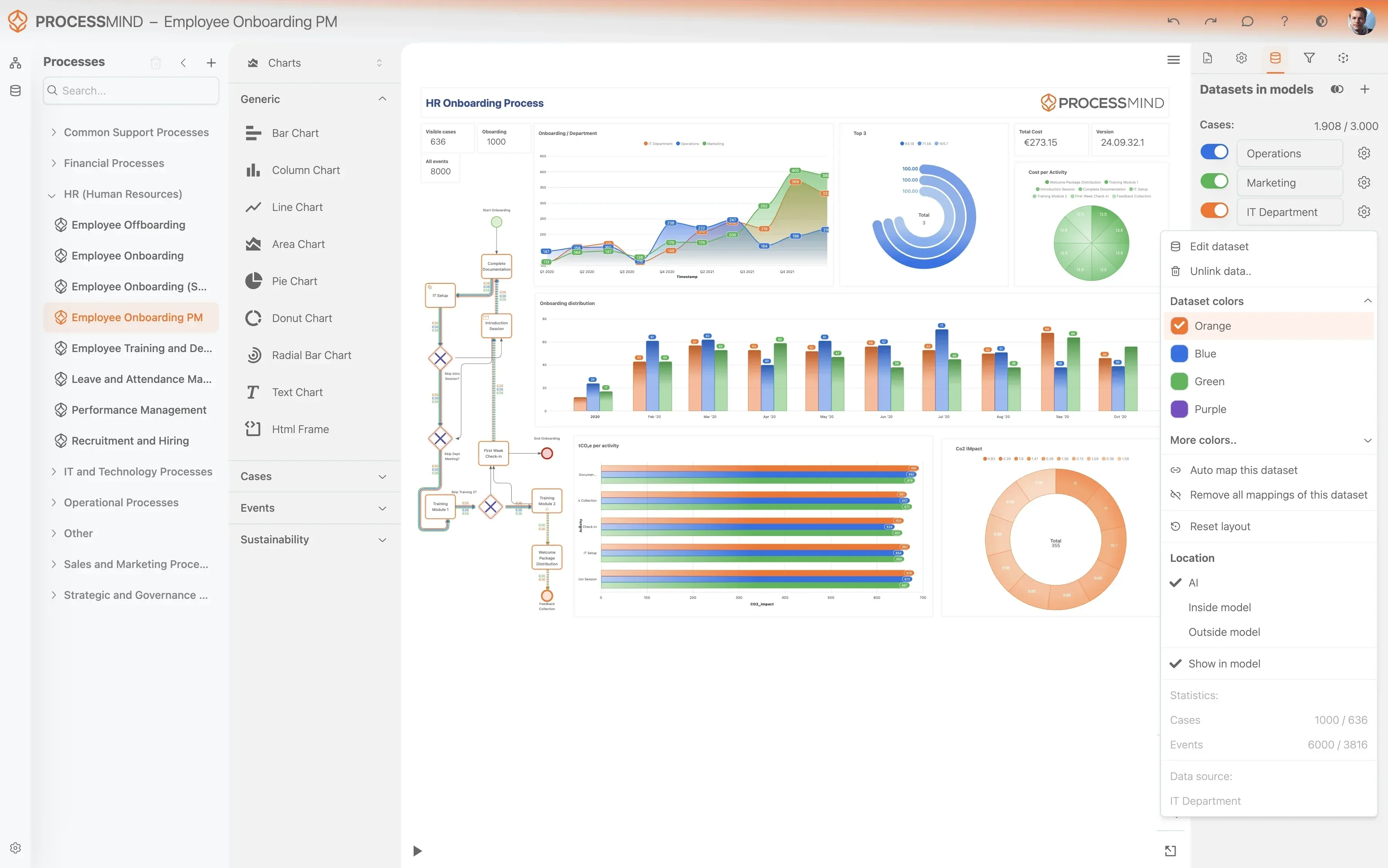
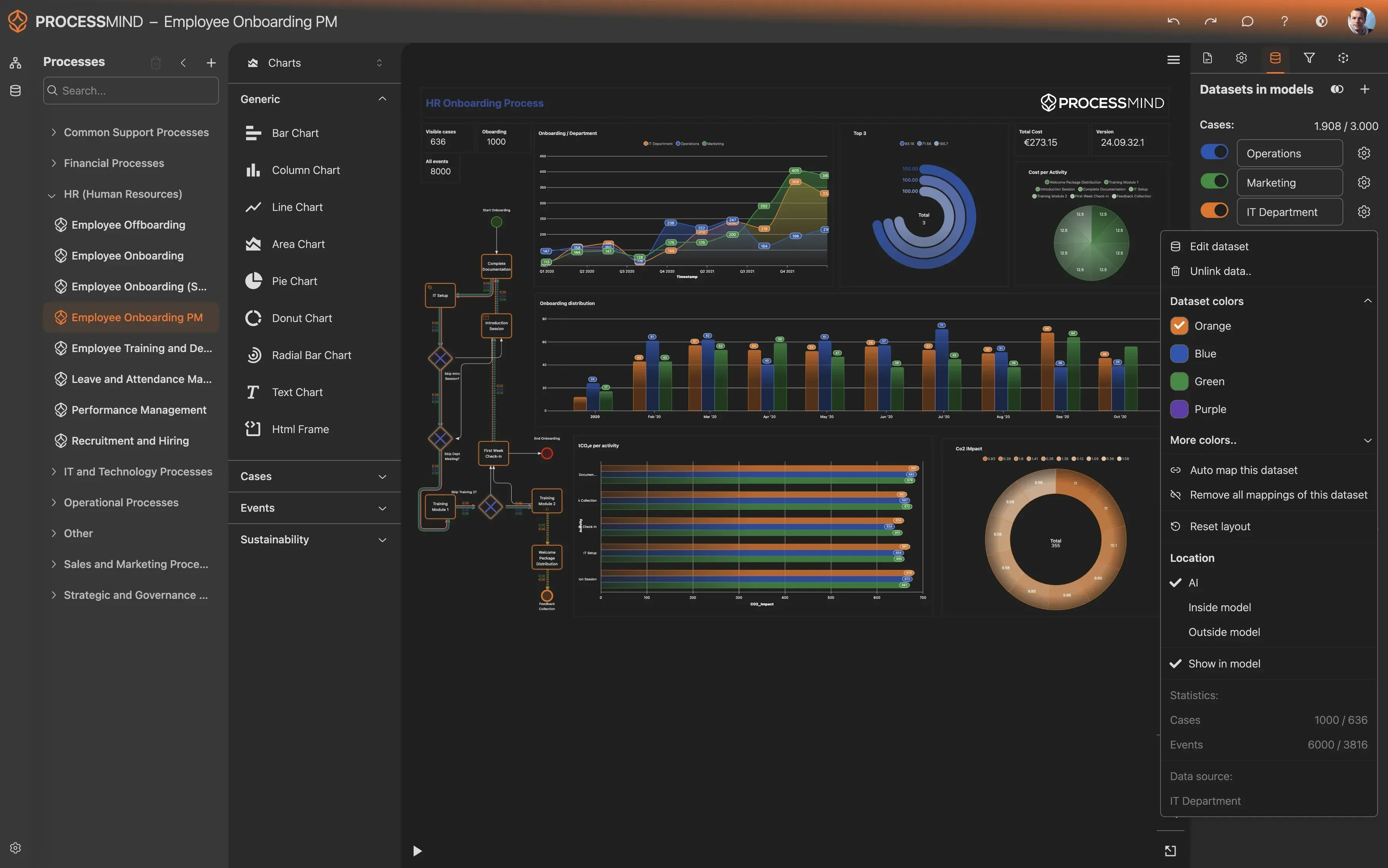
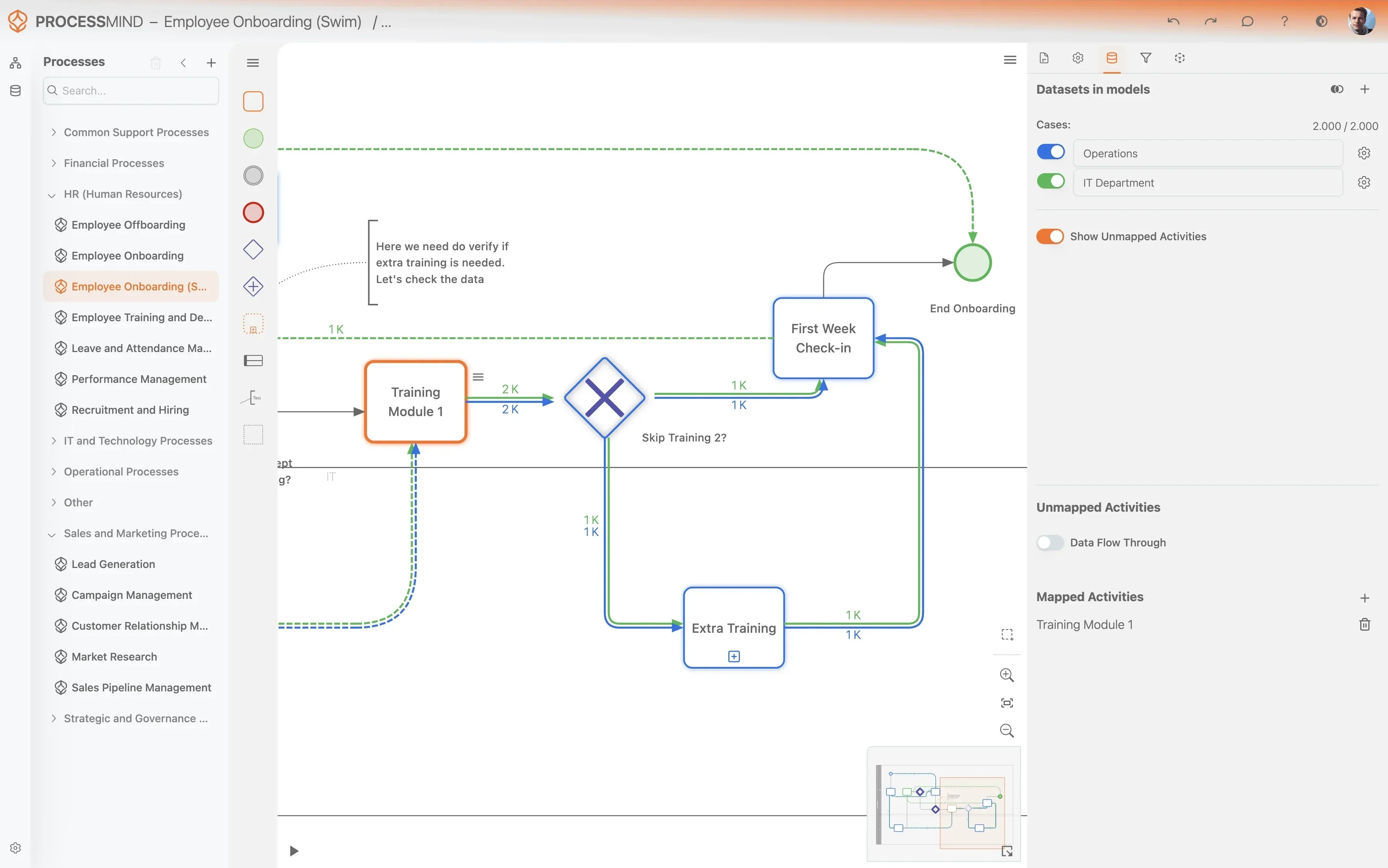
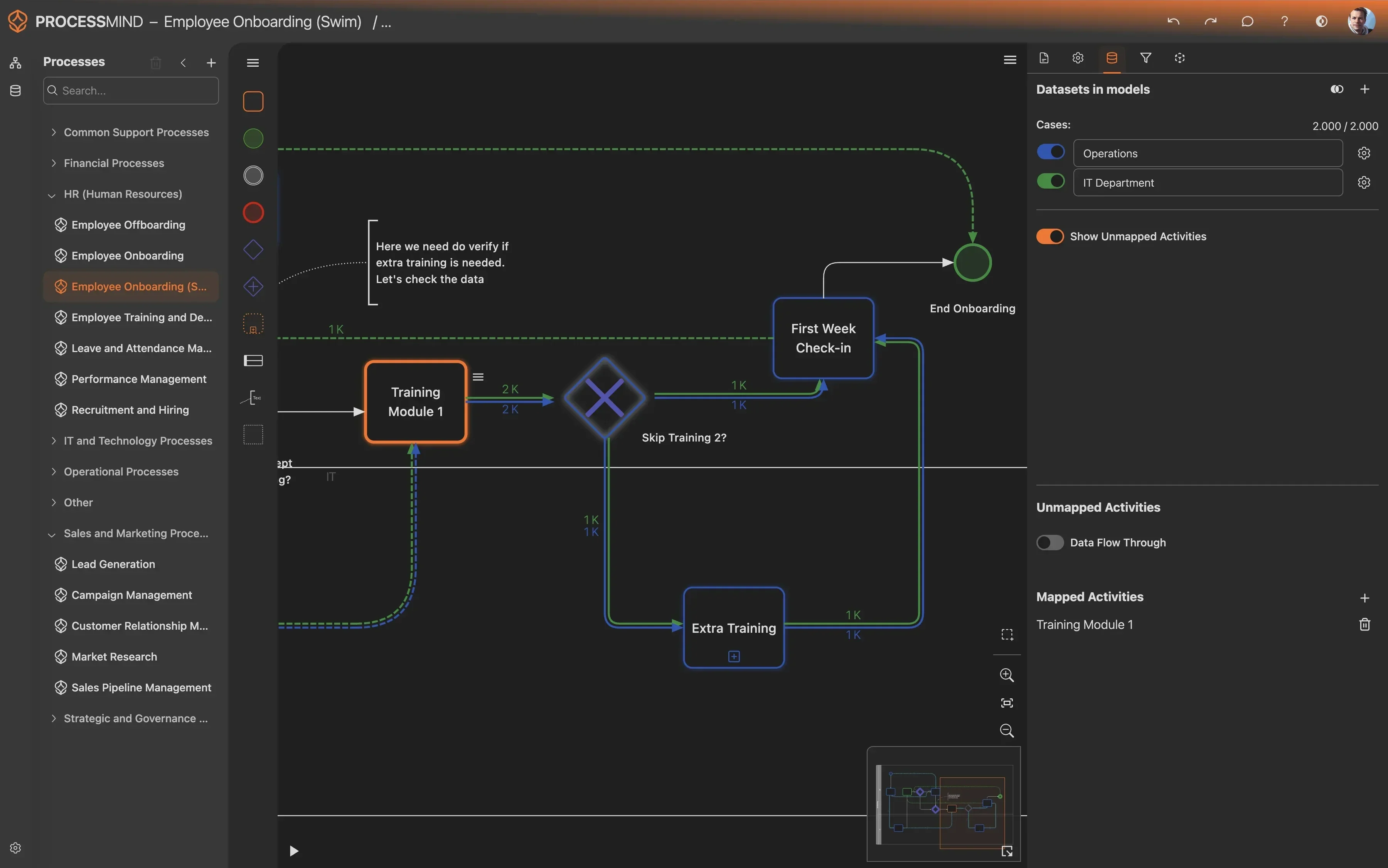
- Visualize your service request process flow
- Pinpoint bottlenecks causing delays
- Discover hidden rework and inefficient steps
- Optimize resolution times for happier customers
TYPICAL OUTCOMES
What Organizations Achieve in Service Request Management
These outcomes represent common improvements observed by organizations that optimize their Service Request Management processes using process mining, leading to enhanced efficiency and customer satisfaction.
Average service request cycle time
Process mining identifies bottlenecks in service request workflows, leading to significantly faster end-to-end resolution. This means customers receive solutions more quickly.
Decrease in reopened service requests
By pinpointing the root causes of reopened cases, process mining helps improve initial resolution quality and completeness. This reduces wasted effort for agents.
Improved service level adherence
Process mining reveals deviations from target SLAs, allowing proactive adjustments to processes and resource allocation. This ensures more requests are resolved within timelines.
Standardized request handling
Uncover and eliminate unnecessary process variants and reassignments, leading to more predictable and efficient service request journeys. This reduces operational complexity.
Fewer customer follow-ups
Identify why multiple information requests are needed or why first contact resolution fails. Process mining helps create smoother customer interactions and happier customers.
Results vary based on process complexity and data quality. These figures represent typical improvements observed across implementations.
Recommended Data
FAQs
Frequently asked questions
Process mining visualizes the actual flow of your service requests in Zendesk Support, revealing bottlenecks, rework loops, and non-compliant paths. This helps you identify root causes for long resolution times, SLA breaches, and low customer satisfaction. By understanding these issues, you can implement targeted improvements to increase efficiency and service quality.
You will primarily need historical data on service request tickets. Key information includes the Case Identifier, Service Request ID, timestamps for all status changes, agent assignments, comments, and resolution events. Event logs detailing the complete lifecycle of each request are crucial for building an accurate process model.
Data can typically be extracted from Zendesk Support using its reporting features, API, or data export tools. We recommend a structured export of historical ticket event logs, ensuring all relevant fields like timestamps, agent IDs, and status changes are included. This data is then prepared and ingested into the process mining tool.
Process mining helps achieve concrete improvements such as reduced service request resolution times, better SLA adherence, and minimized rework. You can also expect more optimized request routing, more efficient agent resource allocation, and a higher first contact resolution rate. These lead to enhanced customer and agent satisfaction.
Implementing process mining for Zendesk Service Requests is streamlined due to the structured nature of ticket data. While initial data extraction and preparation require attention, the analytical tools are designed for user-friendly exploration. We guide you through the setup, making the process efficient and manageable.
The primary technical requirement is access to your Zendesk Support instance to export historical ticket event data. Beyond that, a process mining software platform is needed, which can be cloud-based or on-premise. No complex custom integrations are typically required, as most tools can ingest standard CSV or database exports.
While process mining reveals the overall process flow and identifies inefficiencies, its primary focus is on systemic issues within the process, not individual performance. It highlights where the process itself creates bottlenecks or rework. Insights can then be used to improve training or routing rules, benefiting all agents.
After initial data extraction and ingestion, actionable insights can often be generated within weeks, sometimes even days, depending on data complexity and project scope. The initial analysis quickly pinpoints major deviations and bottlenecks. Continuous monitoring then helps track the impact of implemented changes over time.
Optimize Service Request Management. Reduce Delays Now.
End slow fulfillment and user frustration. Achieve 70% automation.
No credit card required. Quick setup.