Improve Your Incident Management

Optimize Incident Management in BMC Helix ITSM
Complex processes often lead to inefficiencies and delays. Our platform helps you identify bottlenecks, rework loops, and non-compliant steps in your process flow. By pinpointing exactly where issues occur, you can implement targeted improvements. This leads to reduced operational costs and increased user satisfaction.
Download our pre-configured data template and address common challenges to reach your efficiency goals. Follow our six-step improvement plan and consult the Data Template Guide to transform your operations.
Show detailed description
The Imperative of Efficient Incident Management
Effective Incident Management is the backbone of reliable IT services, directly impacting user satisfaction, operational costs, and business continuity. In today's fast-paced environment, organizations using robust systems like BMC Helix ITSM rely on their incident processes to quickly restore normal service operations and minimize disruption. However, the inherent complexity of these processes, often involving multiple teams, handoffs, and external dependencies, can inadvertently introduce inefficiencies. Unseen bottlenecks can prolong cycle time, leading to missed service level agreements, frustrated users, and escalating operational expenses. Moving beyond a reactive approach to incident resolution requires a deep understanding of the actual process flow, not just the designed one. This detailed insight allows organizations to proactively address systemic issues, transforming their Incident Management from a challenge into a competitive advantage.
Unlocking Insights with Process Mining for Incident Resolution
Process mining offers a powerful lens to peer into the real-world execution of your Incident Management process within BMC Helix ITSM. By analyzing event logs, where each incident is traced by its unique Case Identifier: Incident ID, process mining constructs an objective, data-driven visual map of every step an incident takes from Incident Reported to Incident Closed. This comprehensive view allows you to:
- Discover Actual Process Flows: Uncover deviations from standard operating procedures, identifying where incidents take unexpected or inefficient paths. You can see precisely how many times an incident is Transferred to Specialized Team or if Workaround Implemented occurs before Diagnosis Initiated, revealing rework loops or unnecessary steps.
- Identify Bottlenecks and Delays: Pinpoint exactly where incidents stall, whether it's during Initial Assignment to Support Group, Investigation Conducted, or the Resolution Applied/Tested phase. This helps you understand the true cycle time for various incident types and identify critical choke points impacting your Time to Resolution Target.
- Analyze Performance and Compliance: Evaluate adherence to SLA Status by tracking the duration of each activity and the overall incident journey. You can identify specific incident categories or Assigned Groups that consistently miss their targets, enabling targeted improvements.
- Quantify Rework and Inefficiency: Clearly see how often incidents are reopened, re-prioritized, or passed back and forth between teams, quantifying the hidden costs of inefficiency in your BMC Helix ITSM environment. This evidence supports initiatives to how to reduce Incident Management cycle time by eliminating redundant actions.
Key Areas for Process Improvement in BMC Helix ITSM
Leveraging process mining on your Incident Management data in BMC Helix ITSM unveils specific opportunities for process optimization. Typical improvement areas include:
- Streamlining Initial Triage and Categorization: Analyze the flow from Incident Reported to Incident Categorized and Prioritized. Are incidents consistently miscategorized, leading to delays in Initial Assignment to Support Group? Optimizing this initial phase can drastically improve resolution times.
- Optimizing Handoffs and Transfers: Investigate transitions between Assigned Groups. High volumes of Transferred to Specialized Team activities, especially within short periods, often indicate a lack of initial expertise or unclear escalation paths. Process mining highlights these patterns for a more efficient Assigned Agent workflow.
- Accelerating Diagnosis and Resolution: Examine the duration and sequence of Diagnosis Initiated, Investigation Conducted, Workaround Implemented, and Resolution Identified. Are there specific types of incidents or Affected Services that consistently take longer to diagnose? This insight can inform better training or knowledge base articles.
- Improving User Communication and Confirmation: Analyze the steps User Notification Sent and User Confirmation Received. Delays here can unnecessarily extend the incident's lifecycle, impacting reported Time to Resolution Target. Streamlining these interactions can lead to faster Incident Verified and Incident Closed states.
- Addressing Root Causes Systemically: While incident management is reactive, identifying common pathways for high-severity or high-frequency incidents can point to underlying Root Cause Category issues that require proactive problem management, thereby reducing future incident volumes.
Realizing Tangible Benefits: Outcomes of Optimized Incident Management
Implementing process improvements identified through process mining yields significant, measurable benefits for your organization. By focusing on how to improve Incident Management, you can expect:
- Faster Incident Resolution: Directly impact your Time to Resolution Target by eliminating bottlenecks and reducing cycle time, leading to quicker restoration of services.
- Enhanced Service Level Adherence: Improve your SLA Status performance by proactively addressing the root causes of delays and ensuring incidents progress efficiently.
- Reduced Operational Costs: Minimize rework, optimize resource allocation for Assigned Groups, and reduce the overall effort expended on each incident, leading to significant cost savings.
- Improved User and Customer Satisfaction: Quicker resolutions and more transparent communication enhance the experience for Impacted User Departments and external customers, building trust and loyalty.
- Better Resource Utilization: Ensure your Assigned Agents and Assigned Groups are focused on value-adding activities, rather than administrative overhead or repetitive tasks.
- Proactive Problem Prevention: Leverage insights into recurring patterns to inform your problem management strategy, preventing future incidents and further enhancing service stability.
Embarking on Your Incident Management Optimization Journey
Optimizing Incident Management in BMC Helix ITSM with process mining is a strategic investment in your IT operations' efficiency and effectiveness. It provides the clarity and data-driven evidence needed to move beyond assumptions, pinpointing exactly where and why your process falters. By embracing this approach, you empower your teams to implement targeted, impactful changes that lead to superior service delivery, ultimately fostering a more resilient and responsive IT environment. Start your journey towards a truly optimized incident resolution process today, transforming challenges into opportunities for continuous improvement.
The 6-Step Improvement Path for Incident Management
Download the Template
What to do
Obtain the pre-formatted Excel template designed for Incident Management data. This template ensures your data is structured correctly for analysis.
Why it matters
Using the correct template streamlines data preparation, preventing errors and ensuring accurate insights from your BMC Helix ITSM incident records.
Expected outcome
A structured Excel template ready to receive your BMC Helix ITSM Incident Management data.
Export Your Incident Data
What to do
Extract 3-6 months of historical incident data from BMC Helix ITSM. Populate the downloaded template with your actual Incident ID, activities, and attributes.
Why it matters
Comprehensive historical data reveals recurring patterns and trends in incident resolution, providing a solid foundation for identifying improvement areas and root causes.
Expected outcome
A populated Excel template containing your BMC Helix ITSM Incident Management data, ready for analysis.
Upload Your Dataset
What to do
Securely upload your filled Incident Management data template to ProcessMind. The system will automatically prepare your data for process discovery and analysis.
Why it matters
A quick and secure upload initiates the automated analysis, reducing manual effort and accelerating your journey to actionable insights on incident resolution.
Expected outcome
Your Incident Management dataset successfully uploaded and processed, ready for visualization and exploration.
Analyze Incident Process
What to do
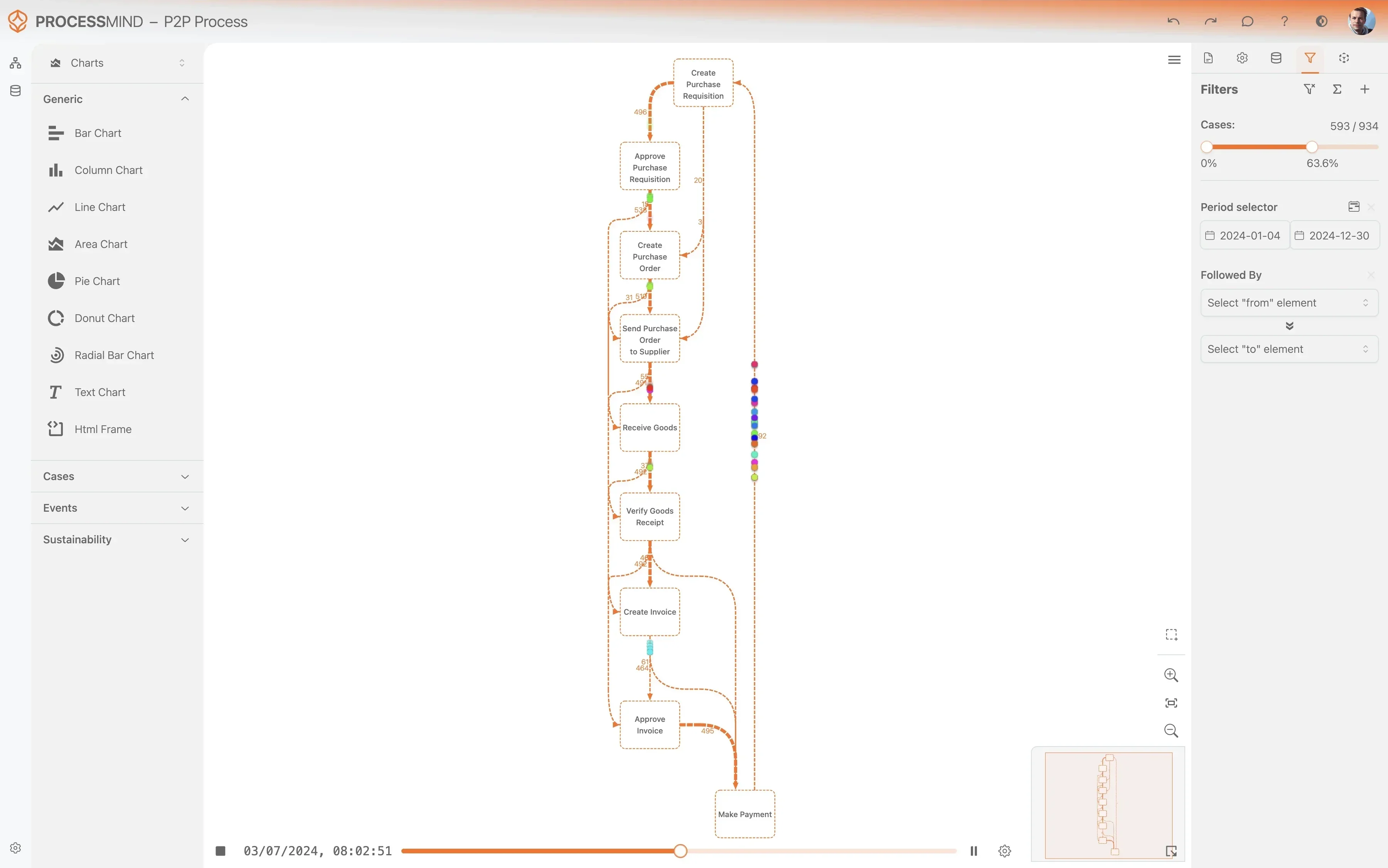
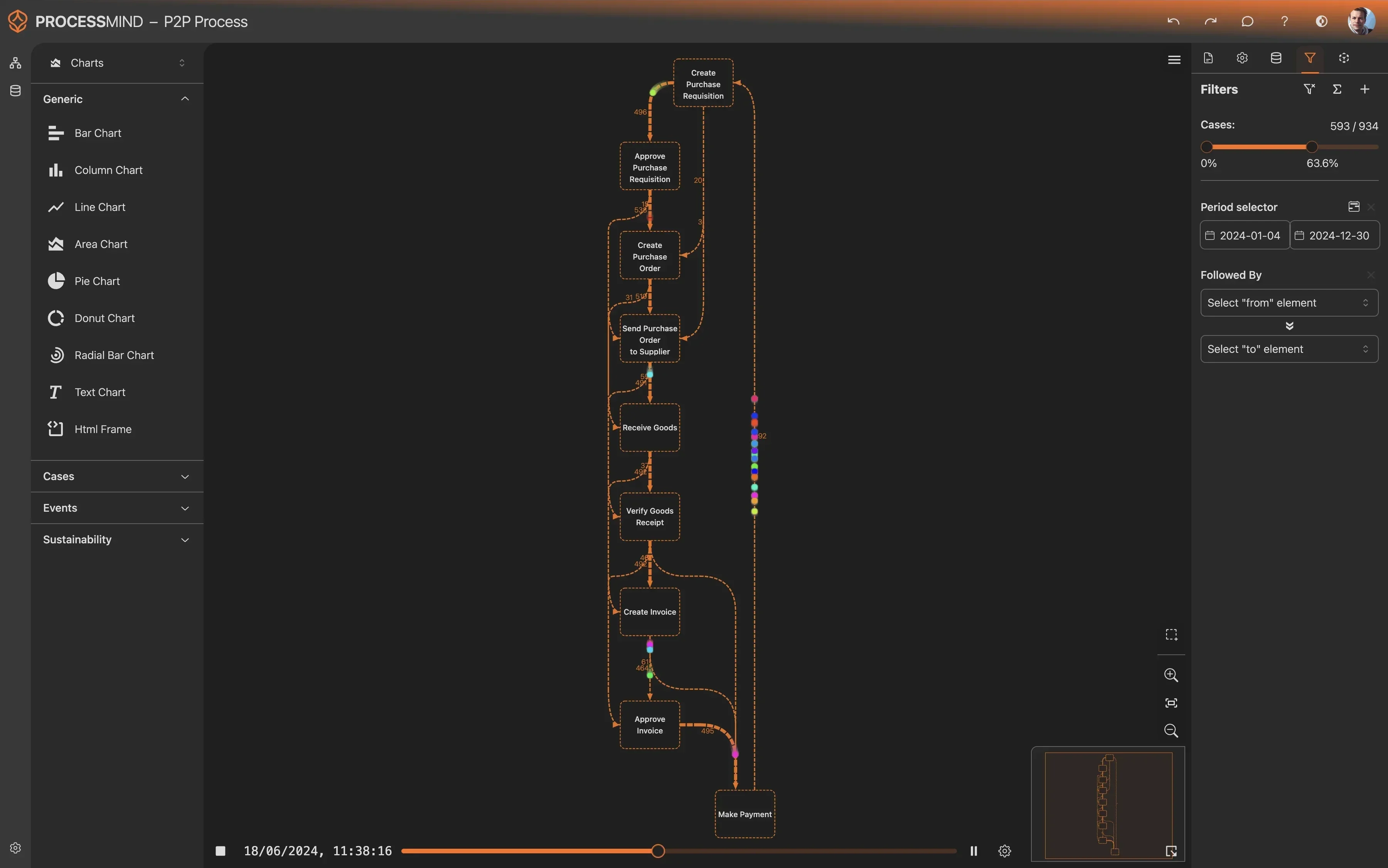
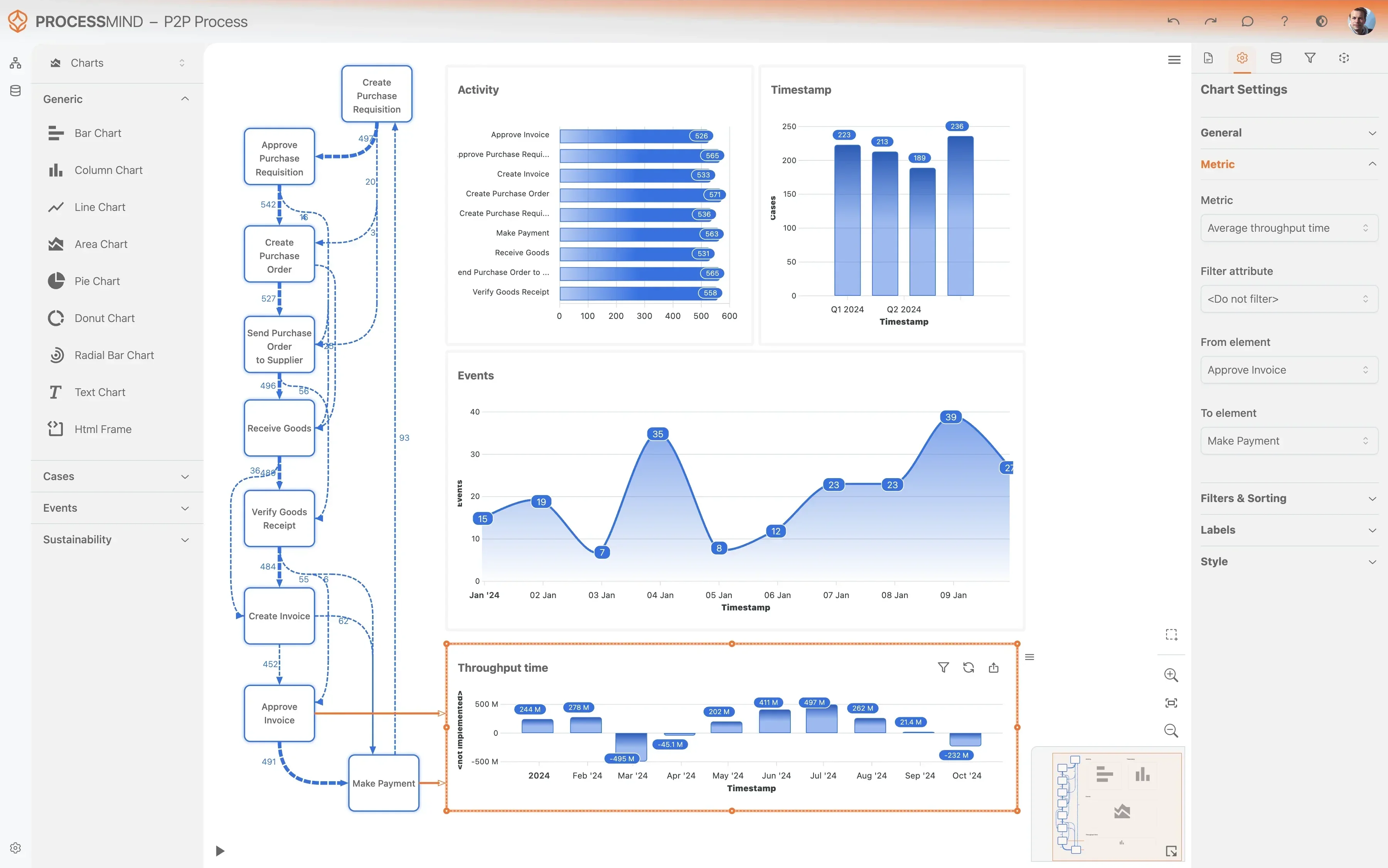
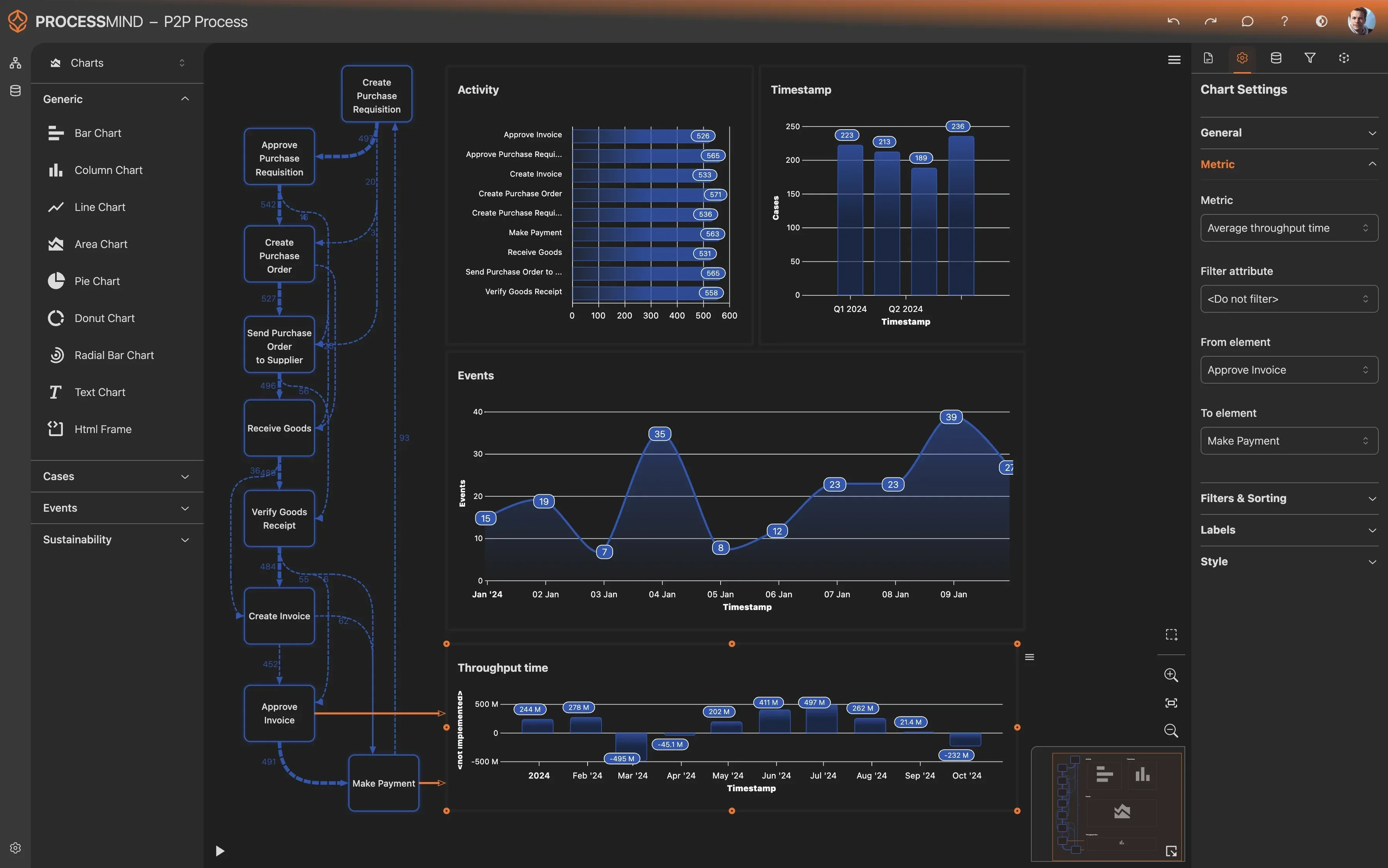
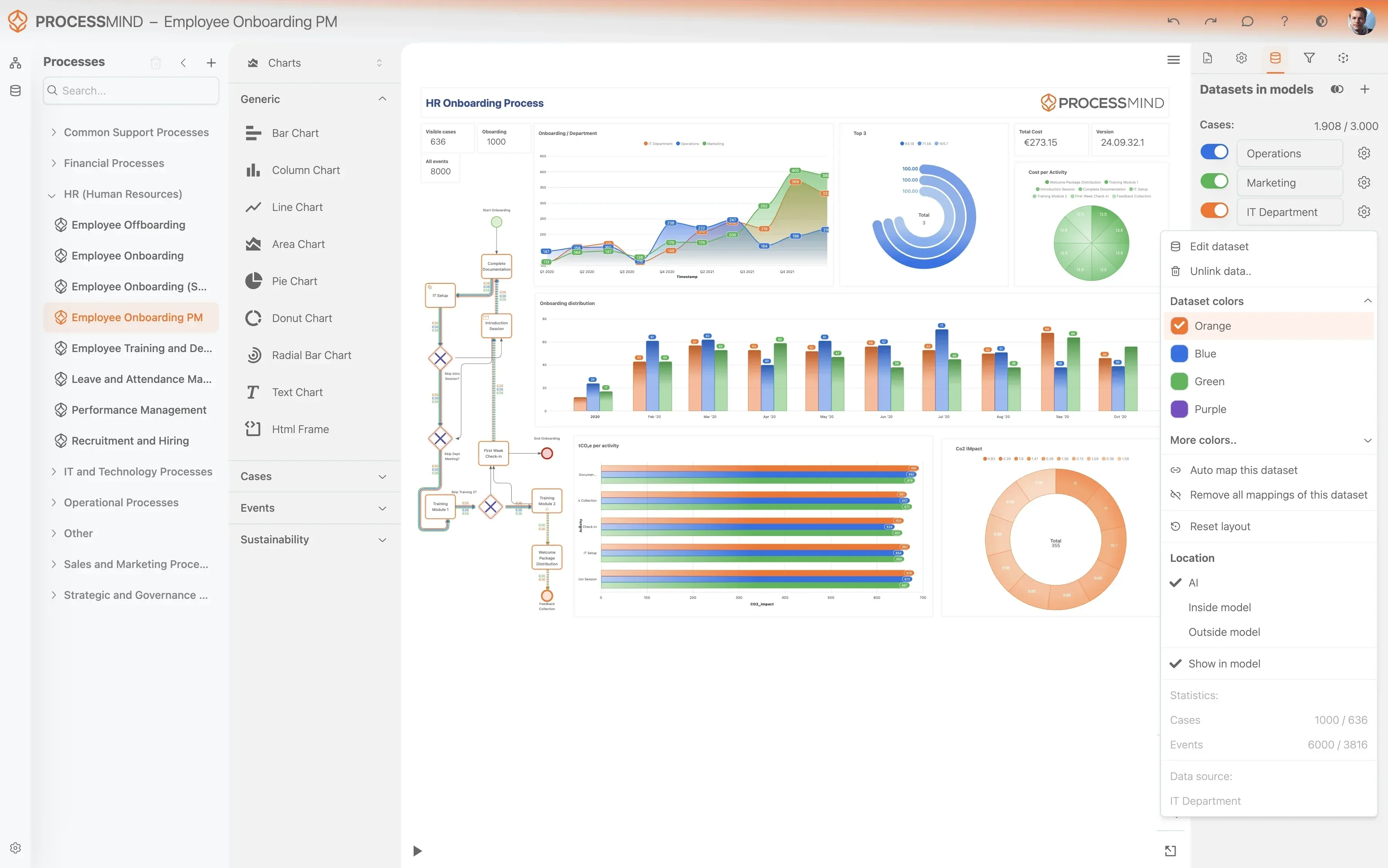
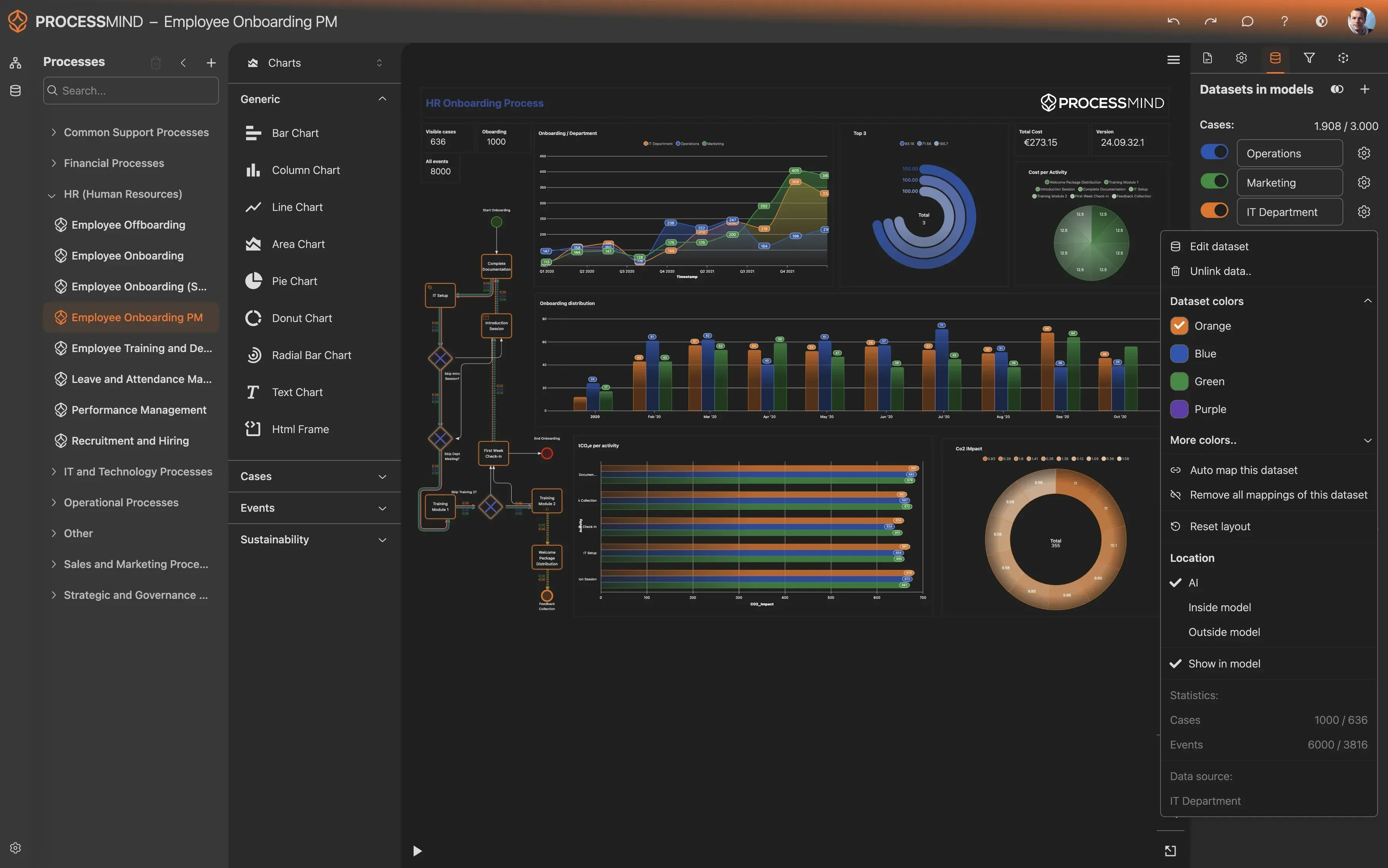
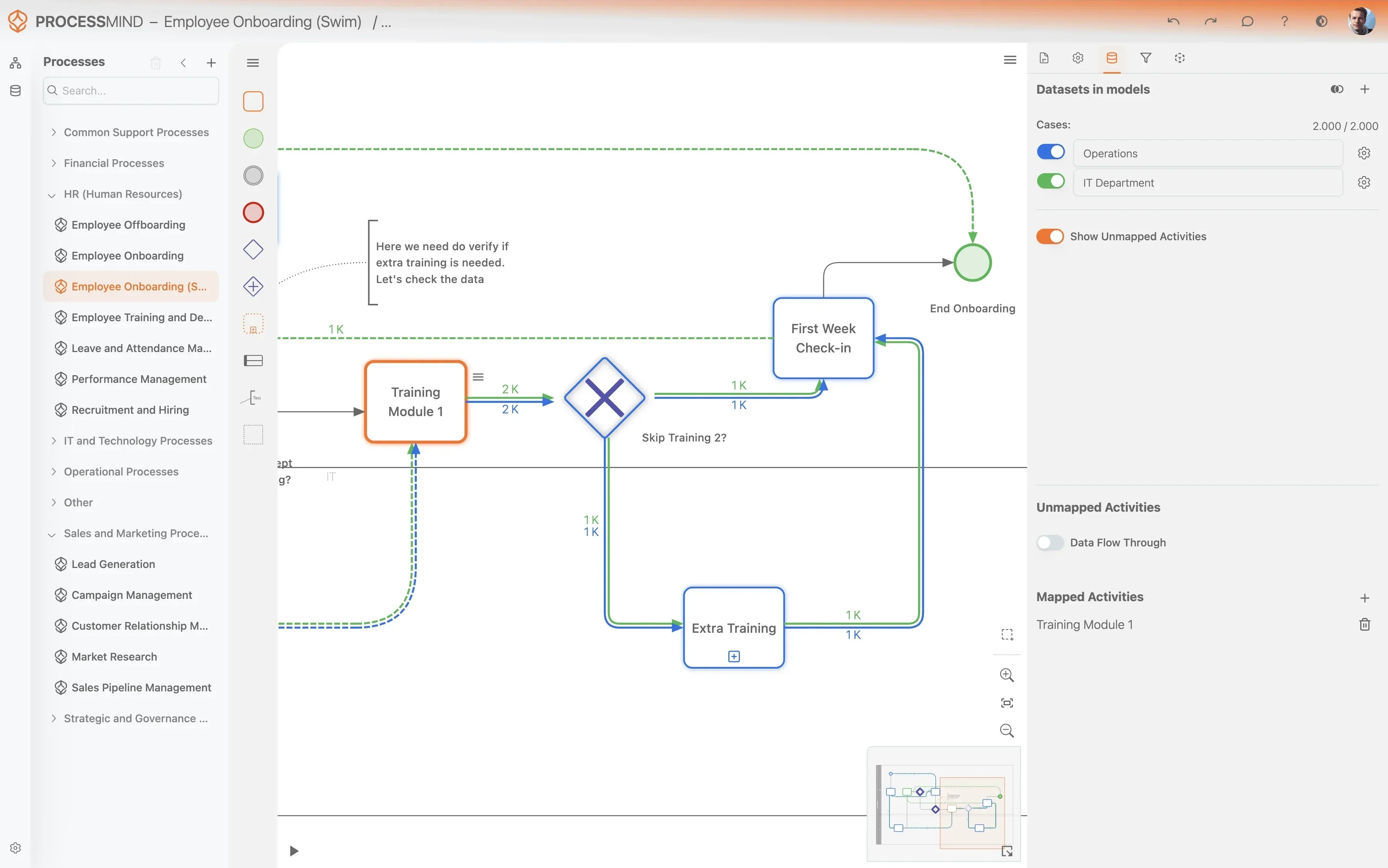
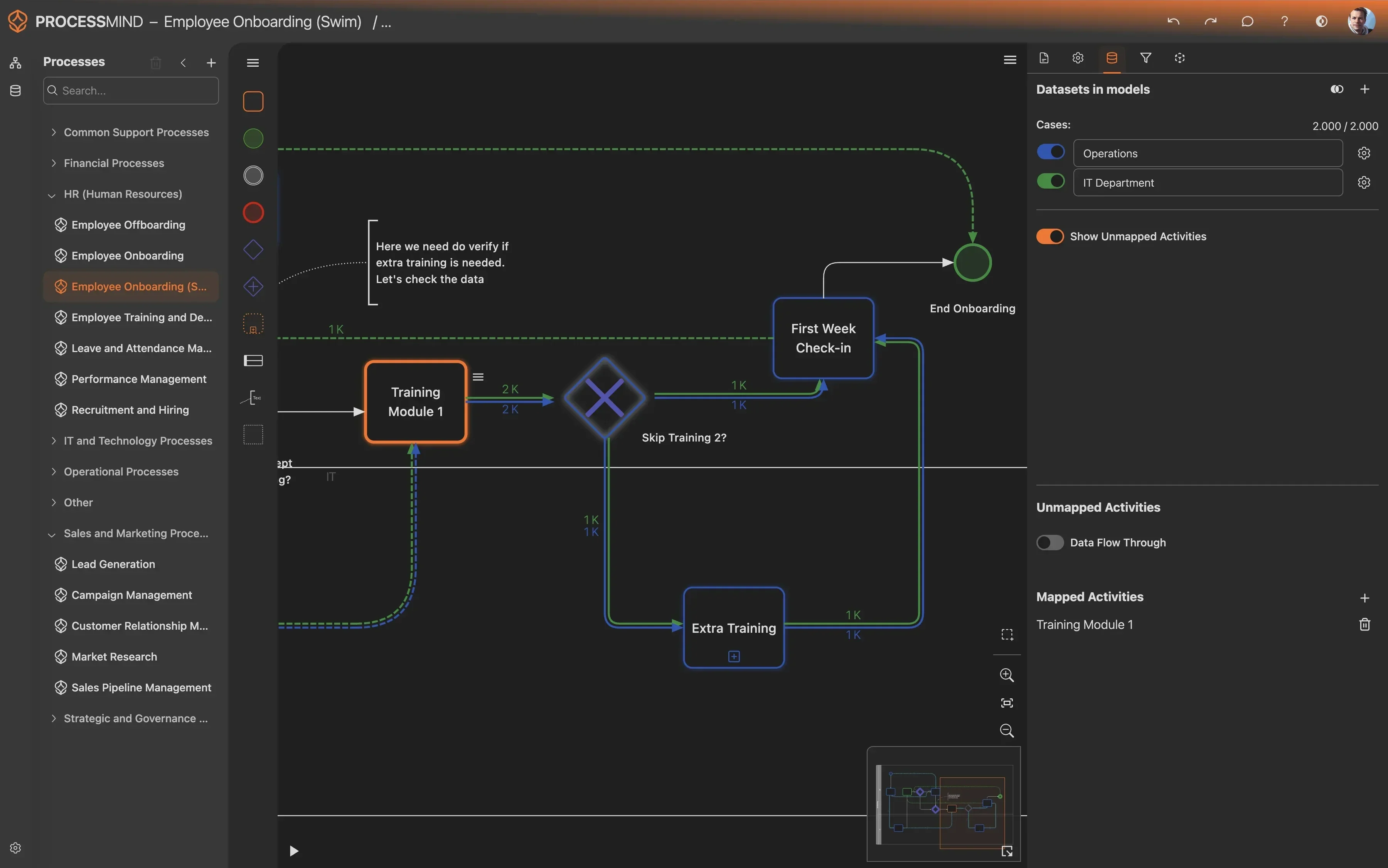
Explore auto-generated dashboards and process maps for Incident Management. Use AI recommendations to pinpoint bottlenecks and deviations in incident flows.
Why it matters
Visualizing the actual incident journey uncovers hidden inefficiencies and non-compliance, allowing you to prioritize changes that will have the biggest impact on resolution.
Expected outcome
Clear understanding of Incident Management bottlenecks, compliance gaps, and AI-suggested improvements.
Implement Improvements
What to do
Based on your analysis, prioritize and implement changes to optimize incident handling procedures within BMC Helix ITSM. Focus on areas identified for efficiency gains.
Why it matters
Taking action on data-driven insights directly translates into faster incident resolution times, improved service levels, and reduced operational costs.
Expected outcome
Streamlined incident workflows, resulting in measurable improvements to Incident Management in BMC Helix ITSM.
Monitor Process Performance
What to do
Periodically re-upload updated incident data from BMC Helix ITSM to ProcessMind. Continuously track key performance indicators to measure the impact of your improvements.
Why it matters
Ongoing monitoring ensures that improvements are sustained and allows for proactive identification of new issues, fostering a culture of continuous optimization.
Expected outcome
Continuous monitoring system for Incident Management KPIs, showing long-term value of changes.
TYPICAL OUTCOMES
What Organizations Achieve with Optimized Incident Management
By analyzing incident workflows in BMC Helix ITSM using process mining, organizations gain insights into bottlenecks and inefficiencies. These outcomes represent the typical improvements in resolution times, service quality, and operational costs that can be realized.
Shorter time to close incidents
Streamline workflows by identifying bottlenecks in diagnosis, investigation, or approval steps, significantly reducing the overall time to resolve incidents.
Higher adherence to service targets
Pinpoint and address process deviations or delays that lead to SLA breaches, ensuring more incidents are resolved within agreed-upon service levels.
Decreased transfers between teams
Identify and eliminate inefficient routing causing incidents to bounce between support groups, leading to faster initial resolution and reduced effort.
Fewer reopened or recurring incidents
Uncover the root causes of ineffective initial fixes or incomplete diagnoses, reducing the need for incidents to be reopened or escalated after initial resolution attempts.
Greater adherence to standard steps
Visualize actual incident paths to identify deviations from standard procedures, improving consistency and predictability in incident handling.
Results vary based on the specific incident management process complexity, data quality, and organizational context. These figures illustrate typical improvements observed across various implementations.
Recommended Data
FAQs
Frequently asked questions
Process mining analyzes your actual incident data from BMC Helix ITSM to visualize the true flow of every incident. It uncovers hidden bottlenecks, deviations from standard procedures, and rework loops that impact resolution times and service levels. This allows you to see exactly where efficiency is lost.
To begin, you typically need event logs containing the Incident ID, an activity name, and a timestamp for each step. Additional attributes, such as assignee, incident type, priority, and resolution codes, are highly beneficial for deeper analysis. This data helps reconstruct the complete journey of every incident.
Data extraction from BMC Helix ITSM can be achieved through various methods, including direct database queries, API integrations, or existing reporting capabilities. The goal is to obtain a comprehensive set of event logs that capture all relevant activities and their timestamps. Secure and compliant methods are always prioritized during this initial phase.
After data extraction and initial preparation, actionable insights can often be generated within weeks, sometimes even days, depending on data readiness and project scope. The initial analysis quickly highlights major deviations and performance issues, allowing teams to prioritize improvements. Continuous monitoring then supports ongoing optimization efforts.
Yes, absolutely. Process mining precisely maps out every reassignment and pinpoints exactly where incidents get stuck or are incorrectly routed, leading to delays and potential SLA breaches. By visualizing these inefficiencies, you can identify root causes like unclear roles, skill gaps, or flawed escalation paths. This enables targeted interventions to streamline the process.
Process mining typically utilizes specialized software platforms designed to ingest, transform, and visualize event data. While some tools offer cloud-based solutions, others may require on-premise installation. Key requirements often include sufficient processing power and storage for your historical incident data, along with secure data connectivity.
No, process mining goes far beyond traditional reporting. While reports show "what" happened, process mining reveals "how" and "why" it happened by mapping the actual end-to-end process flow, not just aggregated metrics. It provides a visual, data-driven understanding of process variations and their impact, offering deeper diagnostic capabilities.
Process mining identifies the exact points in the incident lifecycle where workarounds are frequently applied or where root cause analysis steps are skipped or ineffective. By tracing incident paths, it exposes patterns of recurring issues and highlights stages where proper diagnostic steps are missed. This visibility allows for focused training and process adjustments to strengthen problem resolution.
Fix Recurring Incidents in BMC Helix ITSM Today!
Reduce MTTR by 35% and eliminate SLA breaches, boosting user satisfaction.
No credit card required. Free 14-day trial.