Improve Your Returns & Refund Processing

Select a process
Choose a process to continue working in your connected workspace.
Improve Your Returns and Refund Process
Our platform helps you uncover hidden inefficiencies in your returns and refund processing. Easily identify bottlenecks, rework loops, and non-compliant steps that slow down operations. By analyzing your data, you can streamline processes, reduce costs, and improve customer satisfaction.
Download our pre-configured data template and address common challenges to reach your efficiency goals. Follow our six-step improvement plan and consult the Data Template Guide to transform your operations.
Show detailed description
The returns and refund process is a critical touchpoint for any business, directly impacting customer satisfaction, brand loyalty, and your bottom line. An inefficient or opaque process can lead to frustrated customers, increased operational costs, and potential compliance issues. ProcessMind for Returns & Refund Processing offers an unparalleled, unbiased view into every step of this complex journey. By extracting and analyzing event logs from your systems, ProcessMind reveals the true execution of your process, uncovering hidden bottlenecks, process deviations, and the root causes of delays and customer dissatisfaction. You can identify exactly where rework occurs, where policies are not followed, and where value is lost, all based on objective data from your day-to-day operations.
Many organizations struggle with common challenges in their returns and refund processes, regardless of the underlying technology or system. These often include manual handoffs between departments, inconsistent application of return policies, prolonged resolution times, and a lack of clear visibility into the end-to-end journey. High processing costs, the risk of fraud, and a failure to meet service level agreements further compound these issues, leading to a diminished customer experience and significant operational inefficiencies. Without a comprehensive understanding of process execution, it becomes incredibly difficult to pinpoint the exact areas for improvement, measure the impact of changes, or ensure consistent, compliant service delivery across all customer interactions.
Analyzing your returns and refund process with ProcessMind provides a wealth of benefits that translate directly into tangible business improvements. You gain the power to significantly accelerate resolution times, thereby enhancing customer loyalty and reducing the volume of customer support inquiries. ProcessMind helps you identify opportunities to streamline workflows, eliminate unnecessary steps, and automate manual tasks, leading to substantial reductions in operational costs. Furthermore, by visualizing process deviations, you can enforce stricter compliance with internal policies and external regulations, and even detect potential fraudulent activities with greater accuracy. This data-driven approach empowers your team to make informed decisions, drive continuous improvement, and transform a historically complex process into a seamless, efficient, and customer-centric operation.
Getting started with ProcessMind to optimize your returns and refund process is straightforward. We provide a comprehensive data template designed to help you easily extract the necessary event log data from your system, your ERP, or any other relevant source system. ProcessMind is inherently system-agnostic, meaning it is built to work seamlessly with data from any platform, allowing you to focus purely on process-level insights without worrying about specific integrations. Simply prepare your data according to our template, upload it to ProcessMind, and begin uncovering invaluable insights within minutes. Take the first step towards a more efficient, transparent, and customer-friendly returns and refund process today.
The 6-Step Path to Optimize Returns & Refund Processing
Connect & Discover
What to do
Integrate data from your various systems, such as your ERP and customer service platforms, to capture all activities related to return cases. Ensure complete event logs.
Why it matters
A comprehensive view of all return-related activities is crucial for accurate analysis. Without complete data, insights will be partial and potentially misleading.
Expected outcome
Full visibility into every step of your returns and refund processing, from initiation to closure.
Map Your Process
What to do
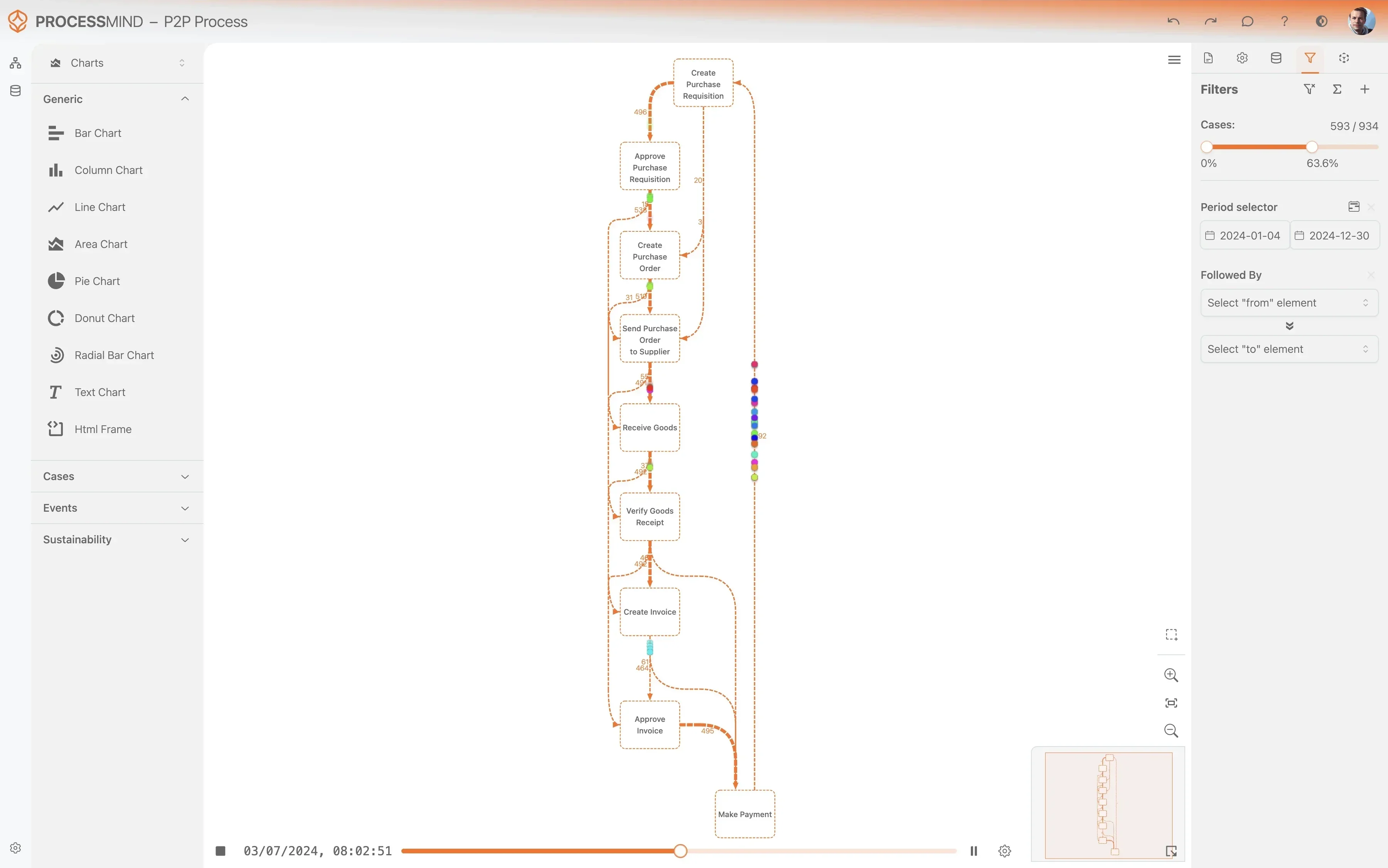
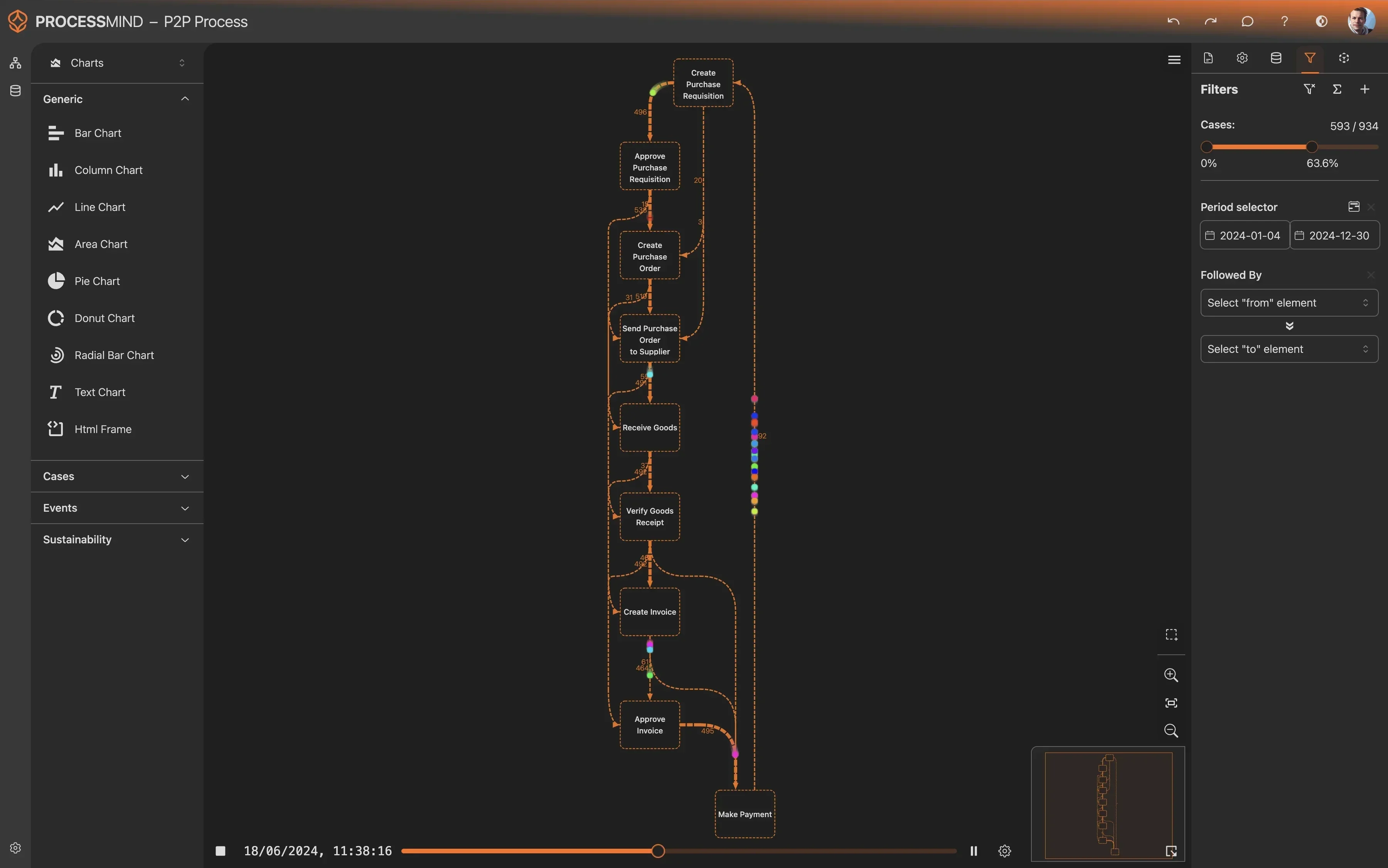
Utilize the connected data to automatically generate an end-to-end process map. Visualize actual process flows, including all variations and deviations from the ideal path.
Why it matters
Understanding the real-world execution of your returns and refund process, not just the documented one, is essential to identify hidden complexities and workarounds.
Expected outcome
A clear, data-driven visualization of your returns and refund process, revealing all paths taken.
Identify Bottlenecks
What to do
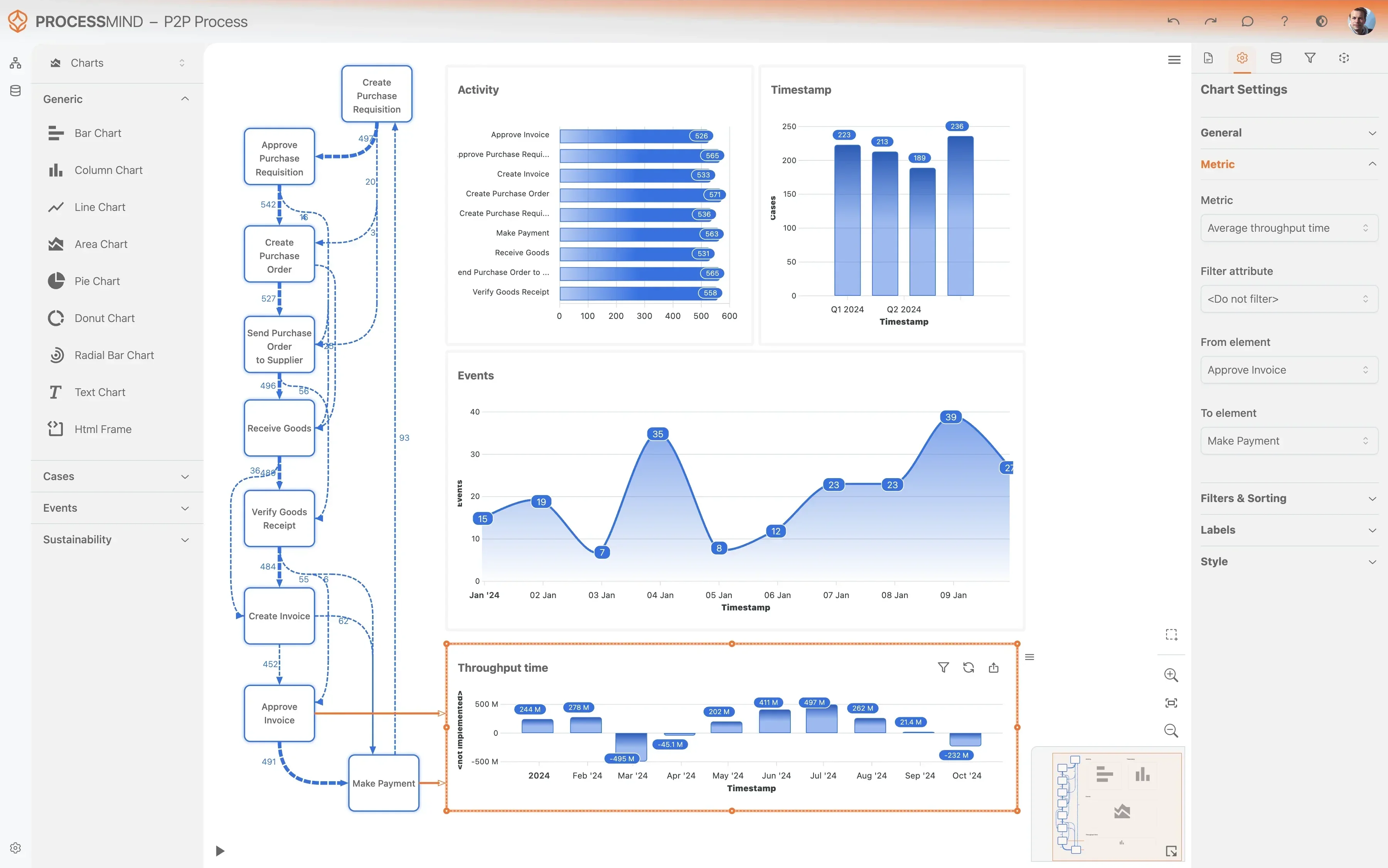
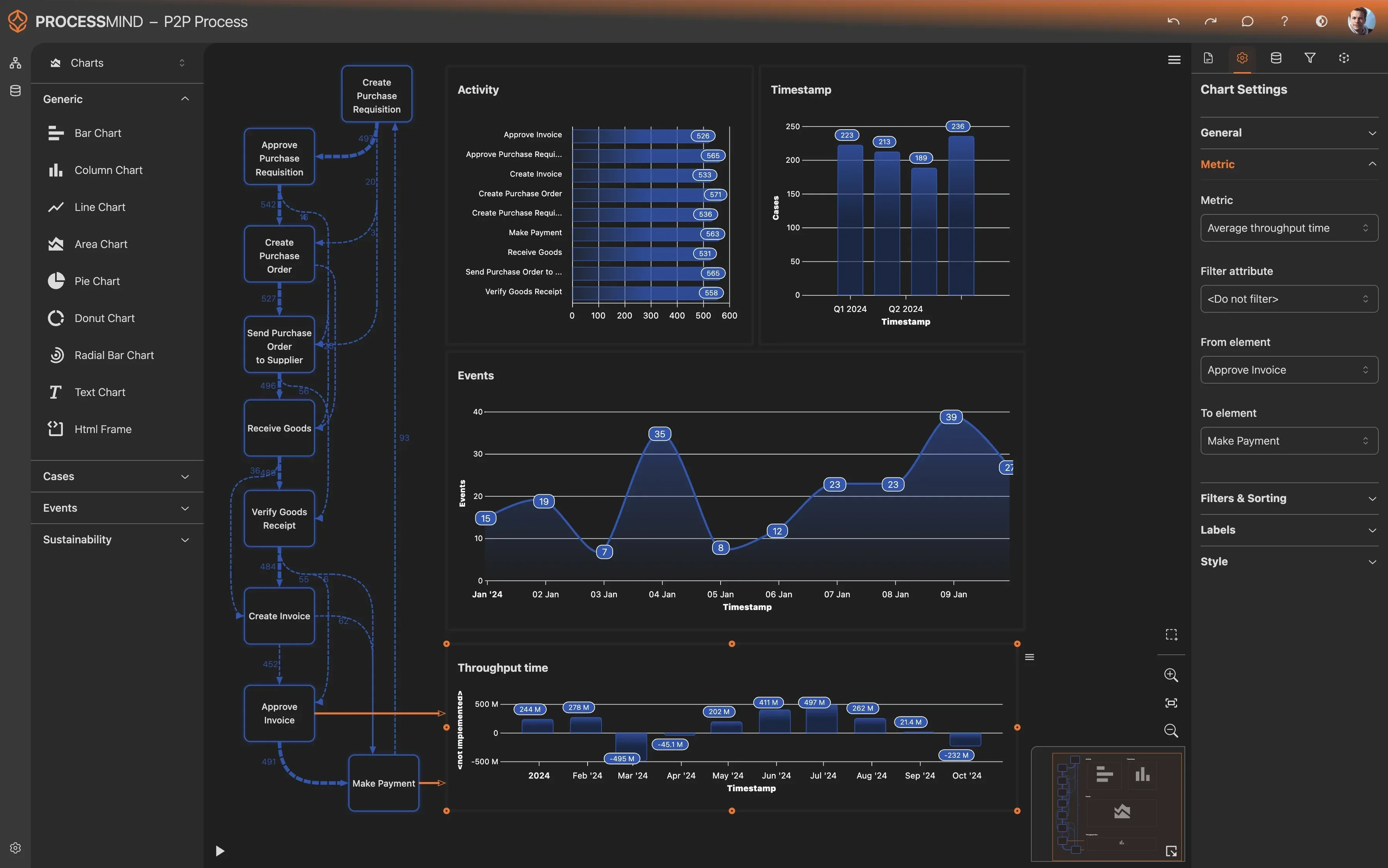
Analyze the process map and associated metrics to pinpoint areas where returns are delayed, re-processed, or take longer than expected, causing customer dissatisfaction.
Why it matters
Delays in returns and refunds directly impact customer satisfaction and operational costs. Identifying these specific points allows for targeted improvement efforts.
Expected outcome
A precise understanding of where the process slows down or deviates, impacting efficiency.
Analyze Root Causes
What to do
Deep dive into identified bottlenecks using filtering and drill-down capabilities. Examine specific attributes, resources, or conditions contributing to inefficiencies and delays.
Why it matters
Understanding the underlying reasons for problems, rather than just treating symptoms, leads to more sustainable and impactful process improvements.
Expected outcome
Clear insights into the specific factors, such as staffing or system issues, causing process inefficiencies.
Design Improvements
What to do
Based on your root cause analysis, formulate concrete improvement actions. This could involve process re-design, automation, or policy changes to streamline operations.
Why it matters
Translating insights into actionable strategies ensures that the analysis phase delivers tangible benefits, leading to a more efficient and customer-friendly process.
Expected outcome
A strategic plan detailing specific interventions to optimize the returns and refund process effectively.
Monitor & Iterate
What to do
Implement your designed improvements and continuously track key performance indicators to measure their impact. Be ready to adjust and refine as new data emerges.
Why it matters
Process improvement is an ongoing journey. Continuous monitoring ensures that changes deliver expected results and allows for agile adaptation to evolving needs.
Expected outcome
Sustained gains in efficiency, reduced processing times, and improved customer satisfaction through ongoing optimization.
TYPICAL OUTCOMES
Achieve Optimized Returns & Refunds
Process mining reveals the true performance of your returns and refund processing, identifying bottlenecks and inefficiencies. These outcomes represent the typical improvements organizations gain by streamlining their operations.
Average reduction in end-to-end processing time
Identify and remove bottlenecks in the refund process, drastically cutting down the time from request initiation to final refund, leading to happier customers and improved operational flow.
Decrease in repeated tasks and manual interventions
Pinpoint root causes of rework loops and unnecessary manual effort, eliminating wasteful activities and improving the quality and efficiency of return processing.
Increased conformity to established return policies
Uncover deviations from return and refund policies, enabling businesses to enforce consistent rules and improve the overall adherence rate for all return cases, mitigating risks.
Faster communication of return resolution status
Expedite the time it takes to notify customers of their return resolution, significantly improving customer satisfaction and building trust through timely and transparent communication.
Reduced expenses associated with each processed return
Identify and eliminate inefficient activities and resource allocation, directly lowering the operational cost associated with processing each return and improving overall financial efficiency.
Reduction in process variations and inconsistencies
By visualizing actual process flows, businesses can identify and eliminate unnecessary deviations from the standard return process, leading to a more predictable, efficient, and higher-quality operation.
Results vary based on the initial state of your process, data quality, and specific implementation efforts. These figures illustrate common improvements observed across various deployments.
Recommended Data
For customized data recommendations, choose your specific process.
FAQs
Frequently asked questions
Process mining visualizes the actual flow of your returns process, identifying bottlenecks, rework, and deviations. It helps pinpoint areas for efficiency gains and compliance improvements. This leads to data-driven decisions that streamline operations, reduce costs, and enhance customer satisfaction.
To perform process mining for returns, you primarily need event logs that include a unique case identifier, an activity name for each step, and a timestamp for when each activity occurred. This data is crucial for reconstructing the precise sequence of events. Additional attributes like handler, reason, or amount can enrich the analysis.
Data extraction typically involves using your system's built-in reporting tools, custom queries, or API integrations. The goal is to create an event log with the case ID, activity, and timestamp for each relevant action. Consulting your system administrator or a data specialist is recommended for this step to ensure secure and efficient retrieval.
You can expect to reduce refund processing cycle times, accelerate item inspection throughput, and improve compliance in approvals. Many organizations also see a significant reduction in rework, manual effort, and delays in customer notifications. These improvements lead to better customer satisfaction and cost savings.
The initial setup and data extraction phase can take a few days to a couple of weeks, depending on data availability and complexity. Once the data is loaded, initial process discoveries and insights can often be generated within hours or a few days. Significant improvement initiatives based on these insights might take longer to implement and show full impact.
Process mining tools typically analyze extracted, historical data and do not directly interact with your live operational system during analysis. Data extraction usually occurs during off-peak hours or via dedicated connectors, minimizing any potential performance impact. It is a read-only process from your source environment, ensuring no disruption to critical business processes.
Yes, process mining is excellent for compliance checks. It can automatically detect instances where return approvals deviate from defined rules or where steps are missed. By visualizing these non-compliant paths, you can quickly identify the root causes and enforce stricter adherence to policies, reducing risks and errors.
While both use data, process mining focuses on discovering the actual end-to-end process flow, including hidden paths and deviations. Unlike traditional business intelligence, which shows what happened, process mining reveals how and why process steps unfold in a certain sequence. It provides a visual map of your process, enabling deep dive analysis into inefficiencies.
While some basic understanding of data is helpful, modern process mining tools are often designed to be user-friendly and require minimal coding skills for analysis. The main effort lies in preparing and transforming your raw data into a suitable event log format. Having team members familiar with your system's data structure and business process owners is beneficial for validating findings.
Unlock Faster Returns & Refunds, Start Your Journey Today
Gain real-time insights, boost efficiency, and enhance customer loyalty.
No credit card required, set up and see results fast.