Improve Your Inventory Management

Select a process
Choose a process to continue working in your connected workspace.
Optimize Your Inventory Management Process
ProcessMind helps you uncover hidden inefficiencies in your inventory management processes. Easily identify bottlenecks, rework, and compliance issues that may be slowing down your operations and impacting costs. Our platform analyzes your data to reveal opportunities for optimization, helping you make informed decisions. Improve your workflows and ensure smoother, more efficient inventory control within your system.
Download our pre-configured data template and address common challenges to reach your efficiency goals. Follow our six-step improvement plan and consult the Data Template Guide to transform your operations.
Show detailed description
Efficient inventory management is the bedrock of operational excellence, directly impacting customer satisfaction, cash flow, and overall profitability. However, the true efficiency of these processes is often obscured by siloed data, manual workarounds, and a lack of real-time visibility across various touchpoints. ProcessMind provides an unparalleled, comprehensive view of your Inventory Management process, from the initial goods receipt to the final disposition of every inventory batch or lot. By analyzing event log data from any of your existing systems, ProcessMind illuminates the actual paths taken by your inventory, identifying hidden bottlenecks, revealing deviations from standard operating procedures, and pinpointing areas where compliance might be at risk. This deep dive into your operational data uncovers inefficiencies in stock movement, identifies root causes of delays, and highlights opportunities to reduce carrying costs and improve inventory turnover, regardless of the systems involved in tracking your assets.
Organizations commonly grapple with several system-agnostic challenges in inventory management. These include frequent stockouts or, conversely, overstocking leading to excessive carrying costs, prolonged goods receipt cycles, errors in data entry, difficulties in reconciling physical inventory with system records, and a general lack of transparency into the actual flow of goods through the supply chain. Traditional reporting often only shows the symptoms, not the underlying process inefficiencies causing them. ProcessMind transforms raw event data into clear, actionable insights, helping you to precisely identify where and why these issues occur. You can detect unauthorized process variants, understand the impact of manual interventions on cycle times, and optimize resource allocation. The benefits are substantial, encompassing improved demand forecasting accuracy, reduced waste, enhanced operational efficiency, and a significant boost in your ability to maintain optimal inventory levels, all powered by insights derived from your system data.
ProcessMind empowers you to move beyond reactive problem-solving, enabling proactive process optimization. You can analyze lead times for different product categories, identify the most efficient storage and retrieval methods, and ensure that inventory disposition processes are both timely and compliant. Our platform works seamlessly with data from your ERP, warehouse management system, or any other source system, transforming complex operational data into easy-to-understand process maps and performance metrics. This allows you to streamline operations from goods arrival to customer delivery, minimizing discrepancies and maximizing throughput. To begin unlocking these critical insights and optimizing your Inventory Management processes, simply provide your event log data. Refer to our [Inventory Management Data Template] for a detailed guide on the required data format, ensuring a smooth and efficient setup.
The 6-Step Improvement Path for Inventory Management
Connect & Discover Data
What to do
Extract inventory transaction data, including goods receipts, quality checks, movements, and issues, from your system. Capture all relevant attributes.
Why it matters
A complete and accurate dataset is the foundation for understanding your inventory processes, revealing true operational flows and potential improvements.
Expected outcome
A unified dataset representing all key inventory activities and related case information.
Map Your Process Flow
What to do
Visualize the end-to-end journey of inventory batches from receipt to issue using your extracted data. Identify standard paths, reworks, and deviations.
Why it matters
Gaining a clear visual understanding of your process reveals how inventory actually moves, highlighting complexities and unexpected pathways not documented.
Expected outcome
A comprehensive visual representation of your inventory management process with actual activity sequences.
Identify Bottlenecks
What to do
Pinpoint stages where inventory processing slows down, queues form, or delays occur. Analyze wait times between activities like put-away and picking.
Why it matters
Bottlenecks impact inventory turnover, increase holding costs, and can lead to stockouts or excess stock. Identifying them is crucial for efficiency gains.
Expected outcome
A prioritized list of process steps and pathways experiencing significant delays or performance issues.
Analyze Root Causes
What to do
Investigate the underlying reasons for identified bottlenecks and deviations. Explore factors like resource availability, data quality, or procedural adherence.
Why it matters
Understanding the 'why' behind process issues allows you to address the source problems, rather than just treating symptoms, ensuring sustainable improvements.
Expected outcome
Clear insights into the contributing factors for process inefficiencies, backed by data.
Design Improvements
What to do
Formulate specific, actionable strategies to mitigate root causes. This could involve process re-engineering, system configuration changes, or staff training.
Why it matters
Well-designed improvements directly tackle inefficiencies, leading to optimized inventory levels, reduced carrying costs, and enhanced operational flow.
Expected outcome
A concrete plan with proposed changes and expected impacts on your inventory management process.
Monitor & Iterate
What to do
Implement key performance indicators to track the impact of your changes over time. Continuously review process performance and adjust strategies as needed.
Why it matters
Ongoing monitoring ensures that improvements are sustained and that new issues are quickly identified, fostering a culture of continuous optimization.
Expected outcome
A dynamic, continuously improving inventory management process with measurable gains in efficiency and cost reduction.
WHAT YOU WILL GET
Discover the Real Dynamics of Inventory Management
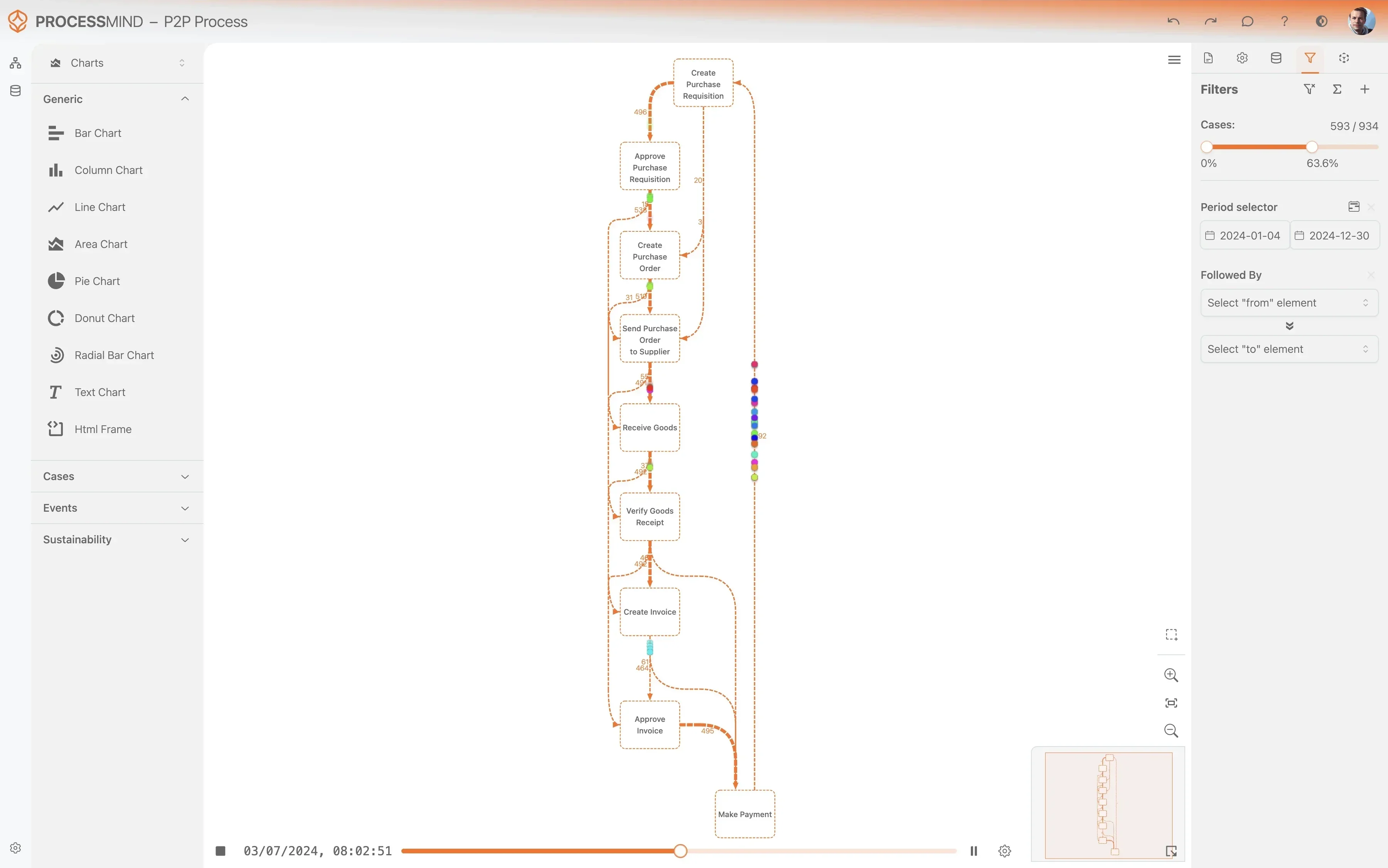
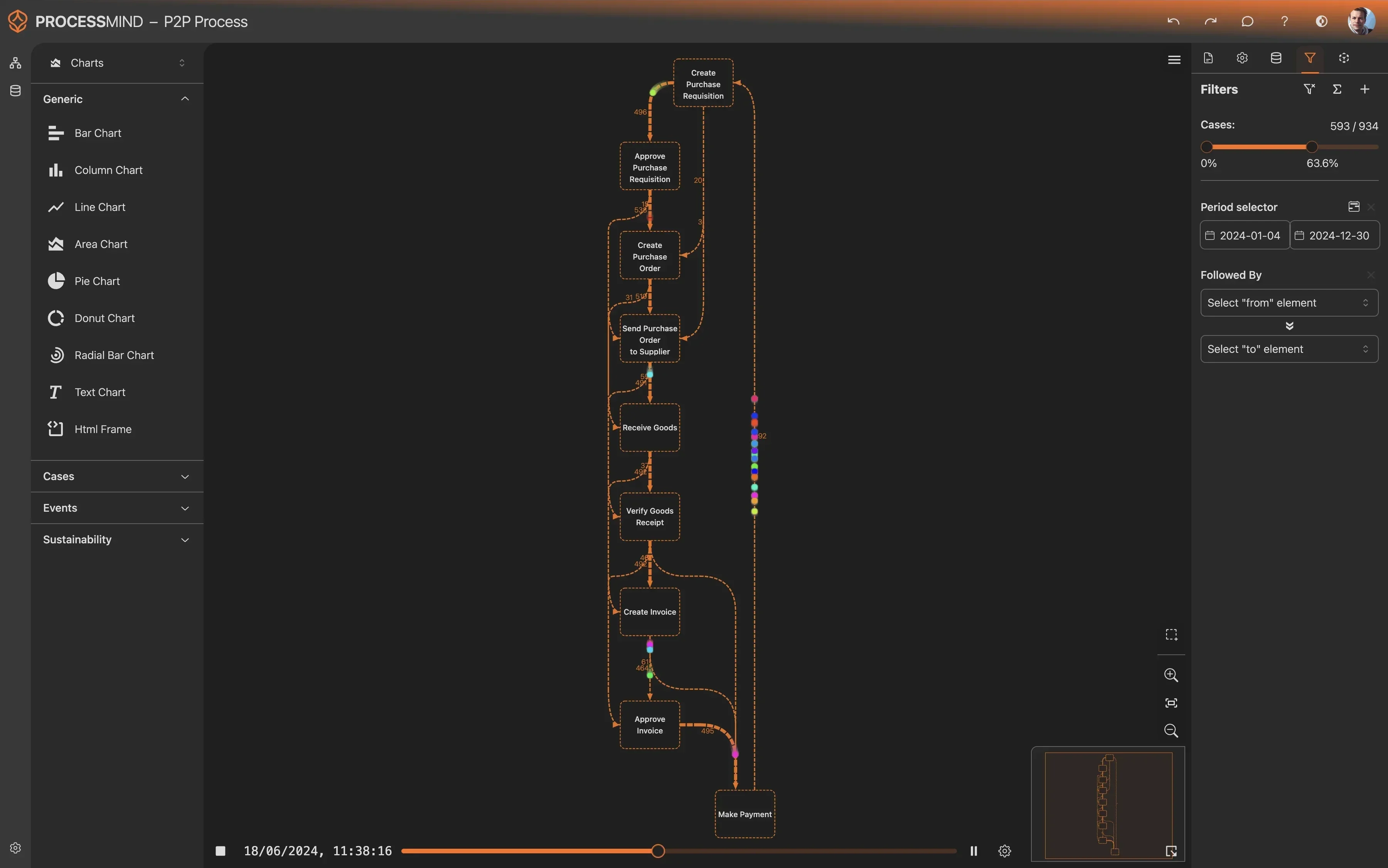
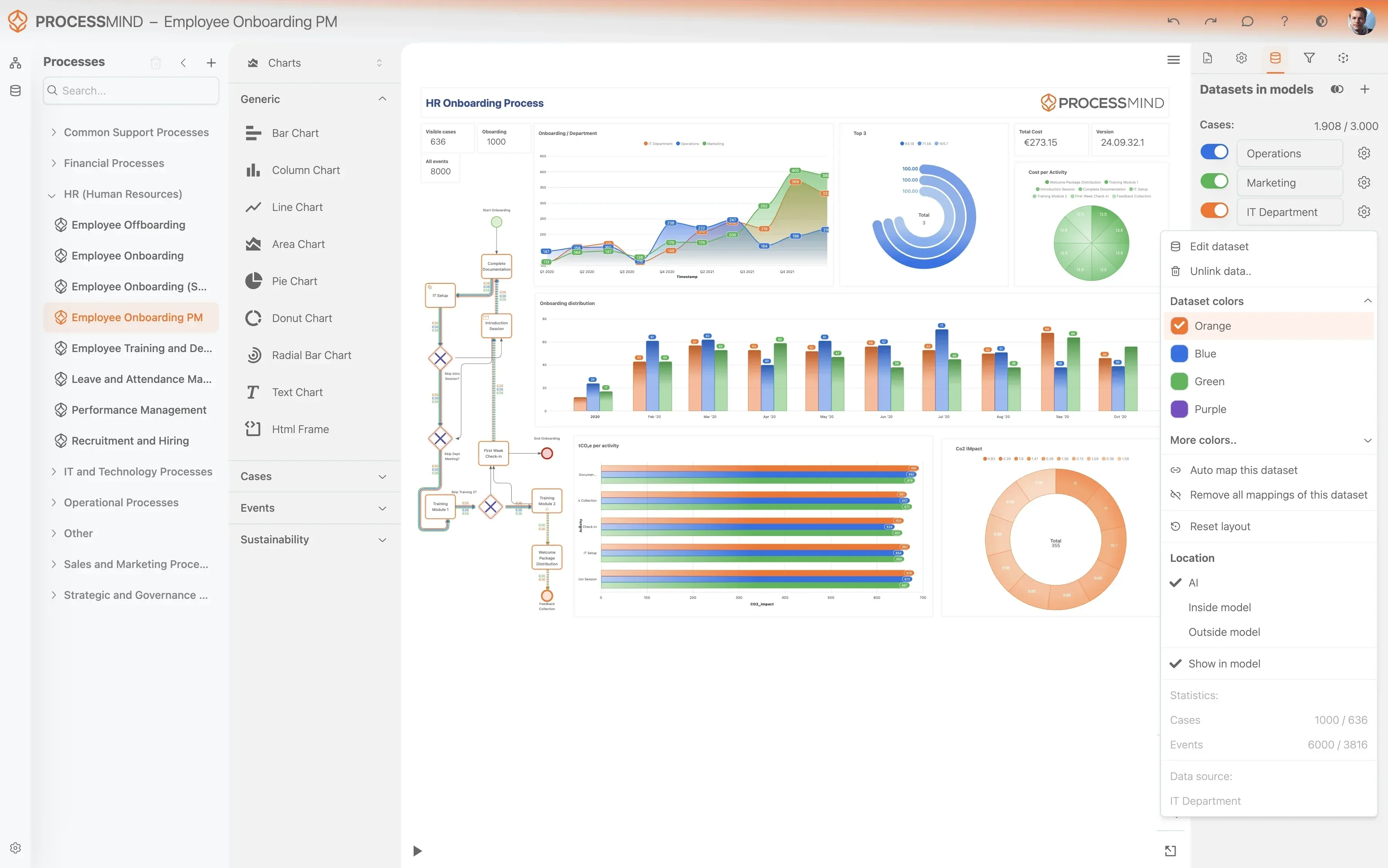
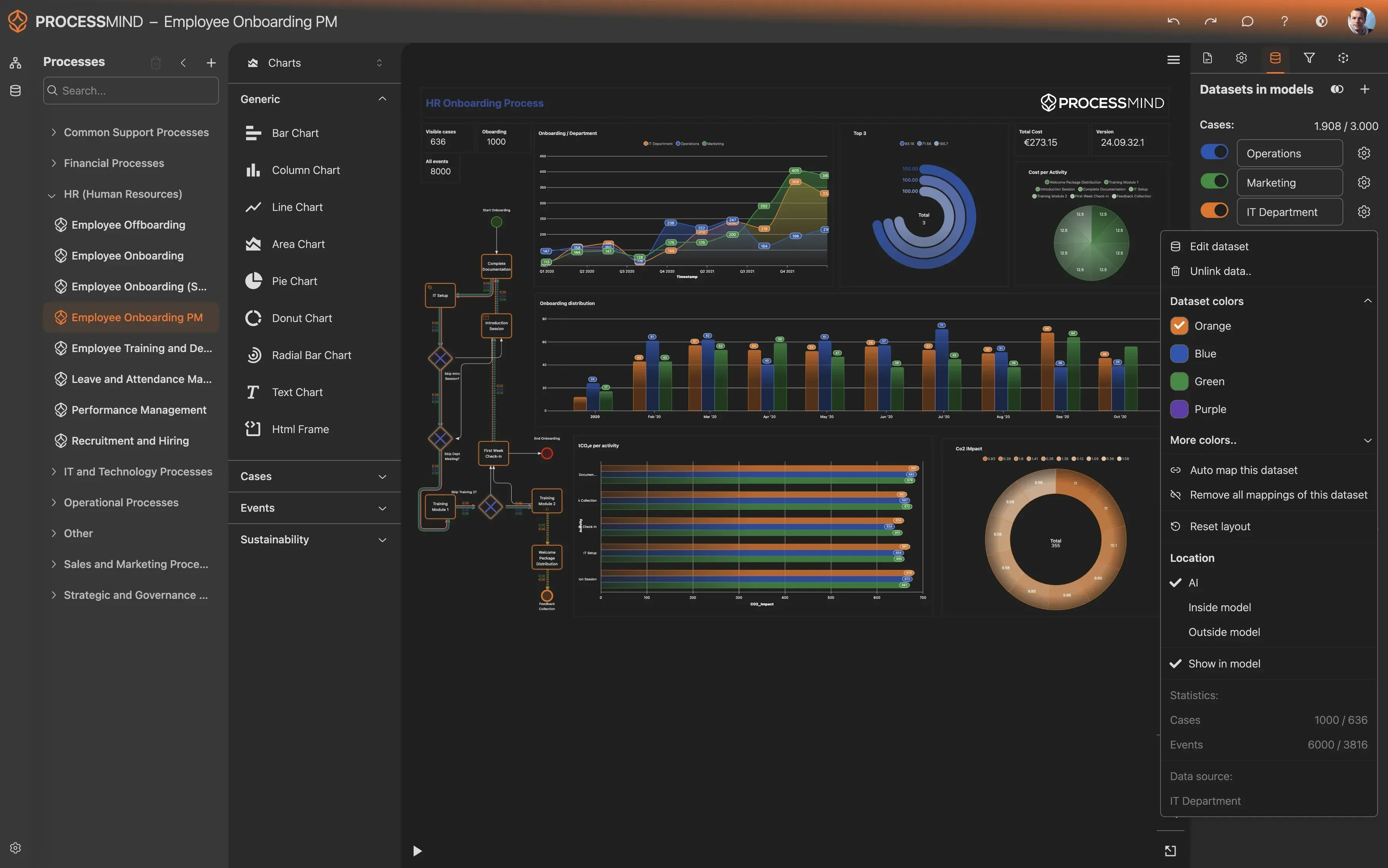
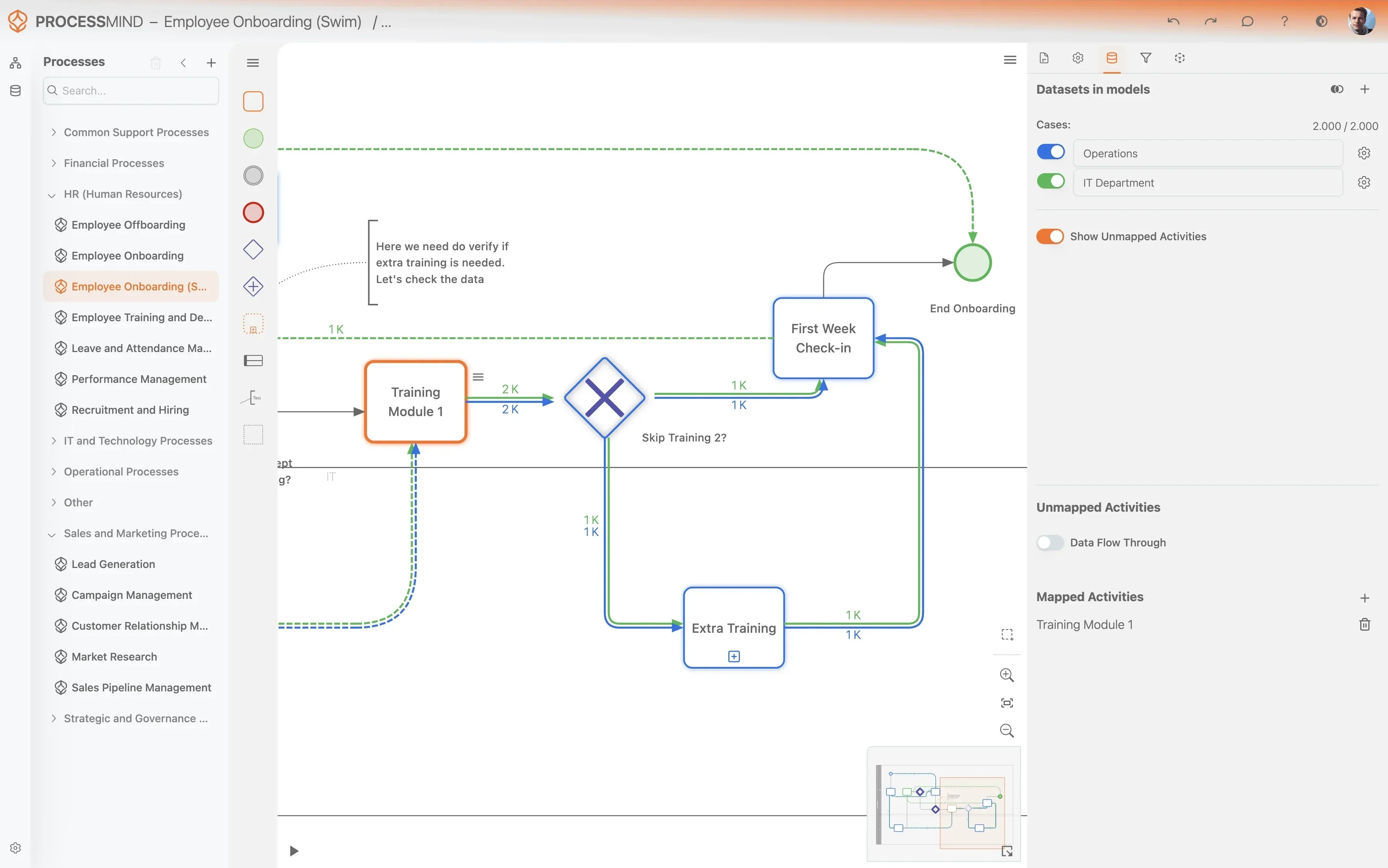
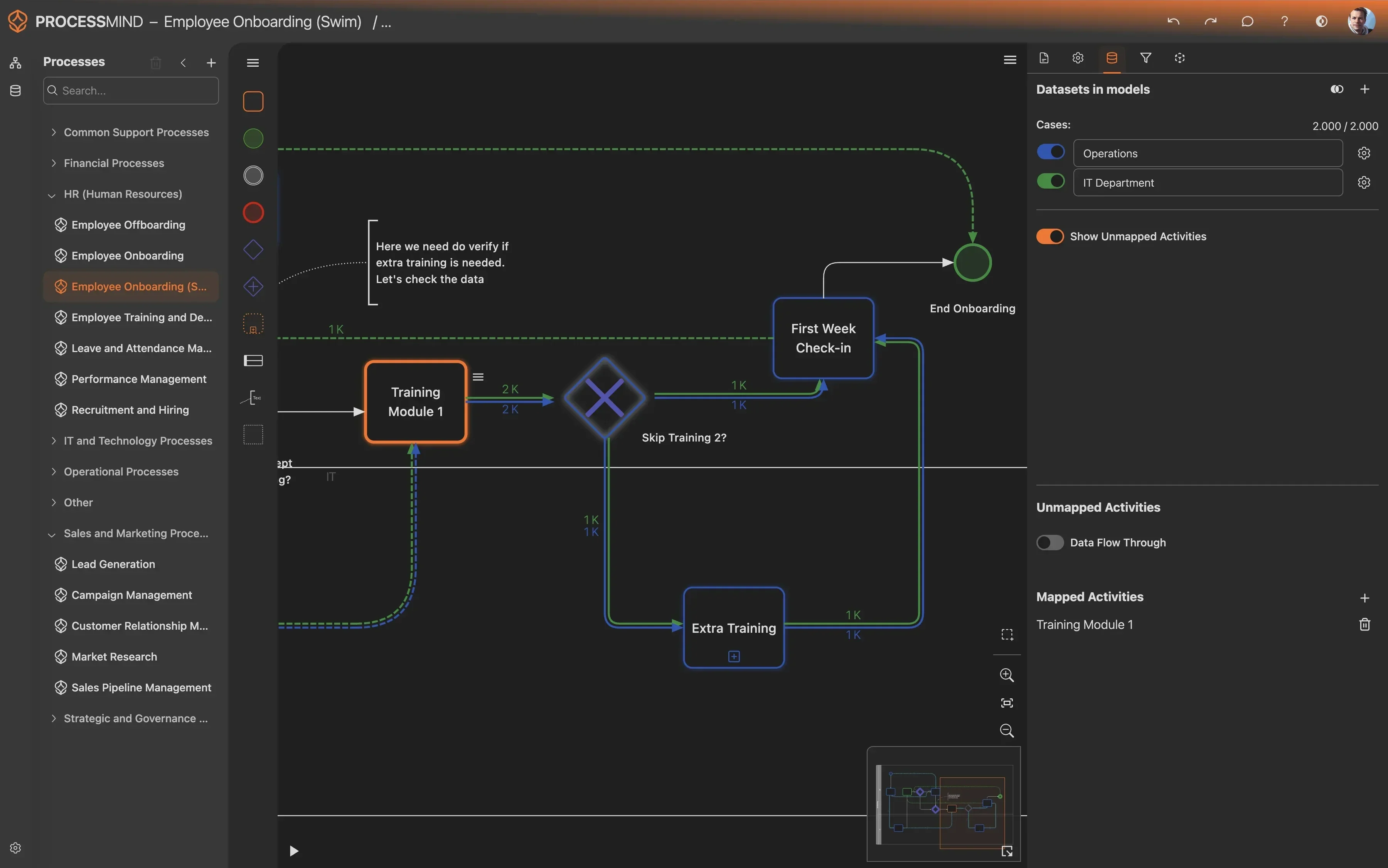
- Visualize your actual inventory process flow
- Identify bottlenecks and delays in goods movement
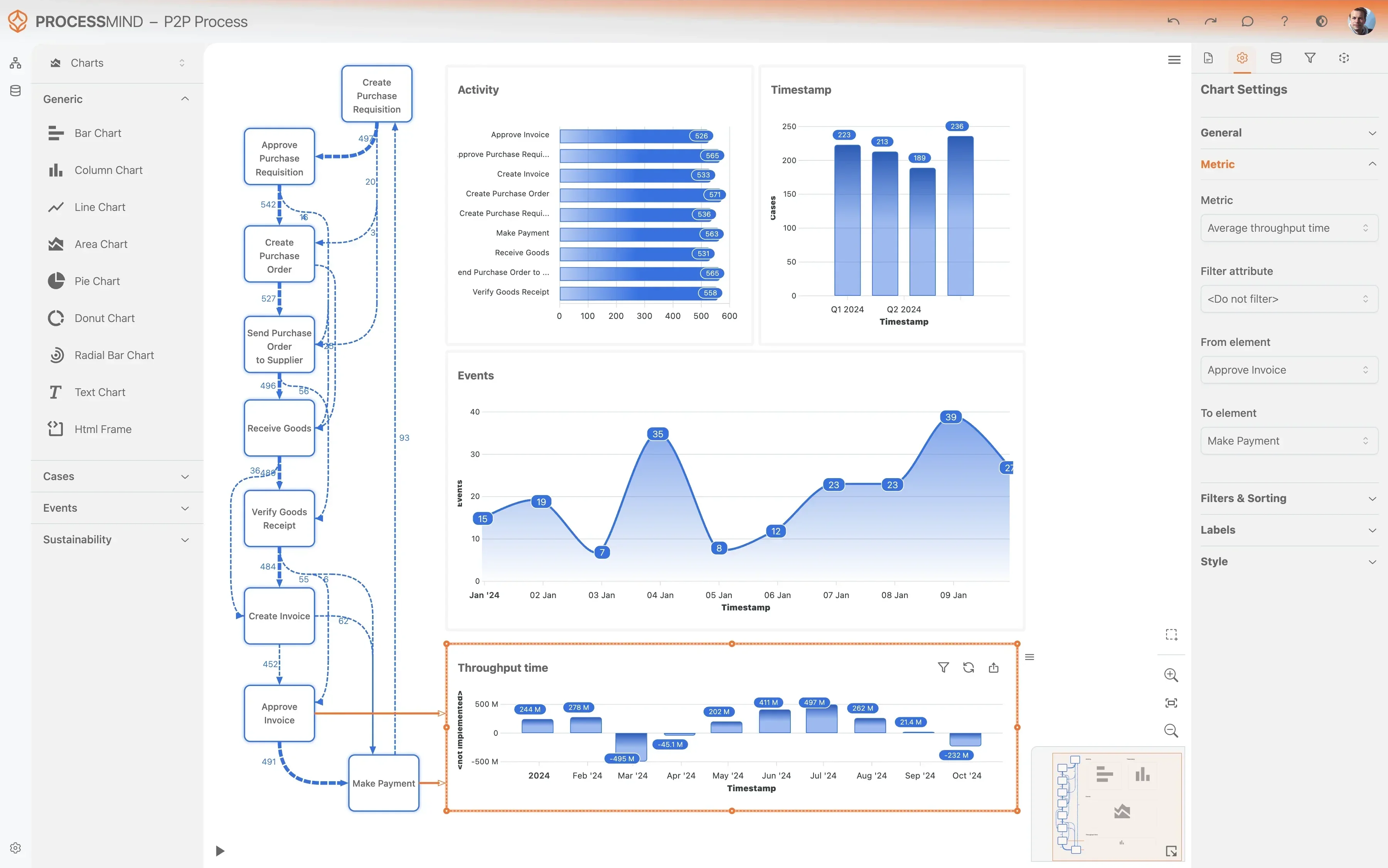
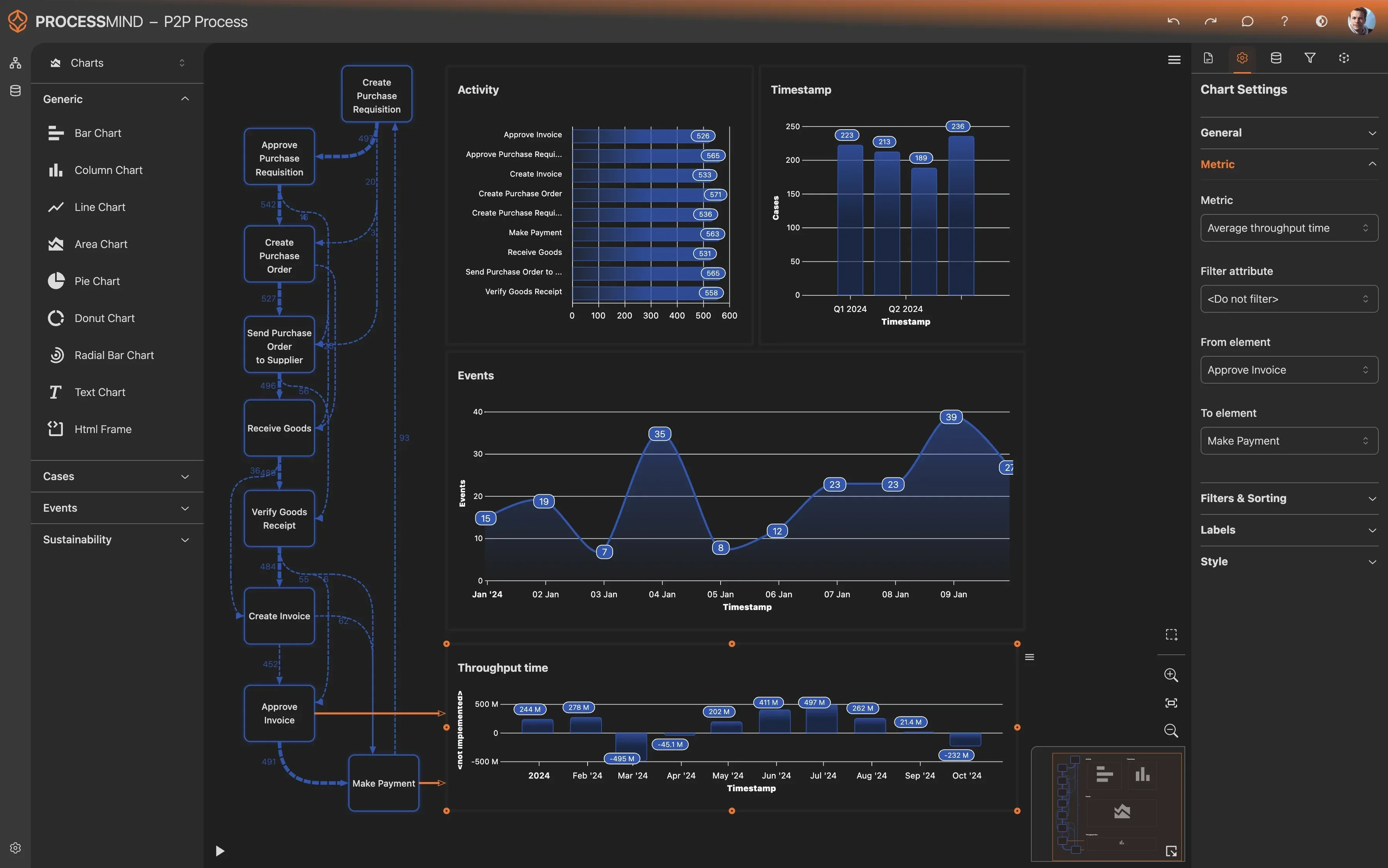
- Optimize stock levels and reduce carrying costs
- Enhance order fulfillment and delivery timelines
TYPICAL OUTCOMES
What Organizations Achieve in Inventory Management
These outcomes illustrate the significant improvements organizations typically realize by leveraging process mining to optimize their inventory management workflows. By identifying bottlenecks and inefficiencies, businesses can streamline operations and enhance stock accuracy and availability.
Average reduction in time to stock goods
Organizations can significantly reduce the time it takes to move incoming goods to their storage locations, decreasing staging area congestion and making inventory available sooner for orders.
Reduction in inventory discrepancies
By identifying and addressing the root causes of inventory errors, businesses can achieve more reliable stock counts, minimizing the need for manual adjustments and preventing operational disruptions.
Accelerated picking and packing cycles
Streamline picking and packing operations to eliminate delays and inefficiencies, leading to faster order dispatch, reduced labor costs, and enhanced customer satisfaction.
Reduction in costly write-offs and carrying costs
Gain insights into inventory lifecycle and movement to identify slow-moving or obsolete items proactively, minimizing write-offs, reducing storage expenses, and improving capital utilization.
Enhanced adherence to inventory procedures
Monitor and ensure that all inventory handling and reporting activities conform to established operational procedures and regulatory requirements, reducing audit risks and improving data integrity.
Improvement in product availability
By identifying patterns and causes of inventory shortages, organizations can optimize stock levels and replenishment strategies, ensuring product availability and improving customer satisfaction.
Individual results may vary based on the specific complexities of your inventory processes and the quality of your historical data. The figures presented here reflect common improvements observed in similar process mining implementations.
Recommended Data
For customized data recommendations, choose your specific process.
FAQs
Frequently asked questions
Process mining helps visualize the actual flow of your inventory operations, revealing hidden bottlenecks and inefficiencies. It identifies where delays occur, such as in stock put-away or quality inspection, and highlights deviations from ideal processes. This data-driven insight enables targeted improvements to accelerate operations and reduce costs.
To begin, you typically need event logs containing a case identifier, activity, and timestamp for each inventory event. For Inventory Management, a unique identifier like the "Inventory Batch/Lot" can serve as the case identifier. Relevant data includes movements, adjustments, put-aways, picks, and quality checks recorded in your source system.
You can expect significant improvements such as accelerated stock put-away, reduced inventory discrepancy adjustments, and optimized inventory holding levels. Process mining helps streamline picking routes, eliminate false stockout incidents, and minimize costly inventory write-offs. This leads to overall operational efficiency and substantial cost savings.
The initial setup and data connection phase can take a few weeks, depending on data availability and complexity in your source system. Once data is flowing, the first insights and actionable recommendations can often be generated within one to two months. Continuous monitoring then provides ongoing optimization opportunities and sustained value.
Yes, process mining excels at identifying the actual paths and deviations that lead to problems. By analyzing event data, it can pinpoint specific process steps or sequences contributing to discrepancies, stockouts, or delays. This provides a factual basis for root cause analysis and enables the implementation of targeted solutions.
The primary requirement is secure access to your system's data, typically via database exports, APIs, or data warehouse connections. You'll need a way to extract event logs in a structured format suitable for process mining tools. No direct integration with your operational system is usually needed for the analysis phase.
Absolutely, process mining can track the full journey of an inventory batch or lot through all stages. This includes put-away, picking, internal transfers, returns processing, and quality inspections. By visualizing the end-to-end flow, you can optimize interconnected processes and gain a holistic view of your inventory operations.
Yes, process mining provides the granular, data-driven evidence needed to understand why issues occur, directly informing and validating potential solutions. After initial improvements, it supports continuous monitoring to track the impact of changes. This enables ongoing optimization, ensures compliance, and allows your processes to adapt to evolving business needs.
Unlock Peak Inventory Efficiency Now
Works with any system, see tangible results in days.
No credit card required, setup in 5 minutes