Improve Your Purchase to Pay - Invoice Processing

Select a process
Choose a process to continue working in your connected workspace.
Optimize Invoice Processing in Oracle Fusion Financials
Many organizations struggle with slow invoice approvals, inconsistent matching, and compliance issues. Our platform helps you uncover these critical bottlenecks and inefficiencies within your invoice lifecycle. Gain insights to streamline operations, minimize manual effort, and ensure prompt payments.
Download our pre-configured data template and address common challenges to reach your efficiency goals. Follow our six-step improvement plan and consult the Data Template Guide to transform your operations.
Show detailed description
Why Optimize Purchase to Pay - Invoice Processing?
Effective management of the Purchase to Pay, or P2P, process, especially invoice processing, is crucial for any organization's financial health and operational efficiency. In the realm of Oracle Fusion Financials, where transactions are meticulously managed, delays or inefficiencies in invoice processing can lead to significant financial repercussions. These include missed early payment discounts, incurring late payment penalties, strained vendor relationships, and increased operational costs due to manual rework and dispute resolution. Beyond the direct financial impact, inefficient invoice processing can also create compliance risks and audit challenges, making it imperative to gain deep visibility into your P2P invoice lifecycle.
Optimizing Purchase to Pay - Invoice Processing goes beyond simply speeding up transactions. It involves understanding the intricate network of activities, decisions, and handovers that an invoice undergoes from its receipt to final payment. This complexity, often hidden within the standard functionalities of Oracle Fusion Financials, demands a robust approach to uncover true pain points and opportunities for improvement. The goal is not just faster processing, but smarter, more compliant, and cost-effective processing.
How Process Mining Enhances Invoice Processing in Oracle Fusion Financials
Process mining offers a revolutionary approach to understanding and improving your Purchase to Pay - Invoice Processing. Unlike traditional methods like interviews or workshops, which rely on subjective accounts, process mining leverages event logs directly from your Oracle Fusion Financials system. Each activity an invoice undertakes, from "Invoice Received" to "Payment Executed," is recorded with a timestamp and associated data, creating a digital footprint. Process mining tools use these footprints to reconstruct the actual end-to-end process flow of every single invoice.
This data-driven perspective provides an objective visualization of your invoice processing within Oracle Fusion Financials. You can precisely see how long each step takes, identify all variations in the process flow, and pinpoint exactly where bottlenecks occur. For example, process mining can reveal if invoices consistently stall in a particular approval stage, or if matching discrepancies are handled differently across departments, contributing to an extended Purchase to Pay - Invoice Processing cycle time. It transforms raw system data into actionable insights, showing you the real-world performance of your operations, not just how they are theoretically supposed to run.
Key Improvement Areas Identified Through Process Mining
By applying process mining to your Purchase to Pay - Invoice Processing, several critical areas for improvement become clear:
- Bottleneck Identification and Resolution: Pinpoint specific stages or resources causing delays, such as overloaded approvers, frequent matching exceptions requiring manual intervention, or inefficient data entry processes within your Oracle Fusion Financials environment. Reducing these bottlenecks is key to reducing Purchase to Pay - Invoice Processing cycle time.
- Cycle Time Reduction: Accurately measure the time taken for each activity and the overall invoice processing cycle. Identify opportunities to streamline workflows, eliminate unnecessary steps, and automate repetitive tasks to significantly reduce the time from invoice receipt to payment.
- Compliance and Risk Management: Detect deviations from standard operating procedures or regulatory requirements. Uncover instances of unauthorized approvals, non-compliant payment terms, or potential fraud patterns, ensuring your Purchase to Pay - Invoice Processing adheres to internal policies and external regulations.
- Automation Opportunities: Identify manual, repetitive tasks that are ideal candidates for robotic process automation (RPA) or other automation technologies, freeing up human resources for more strategic activities and increasing the efficiency of your Oracle Fusion Financials operations.
- Enhanced Vendor Relationships: Ensure timely and accurate payments, reducing disputes and fostering stronger, more reliable relationships with your suppliers.
Achieving Measurable Outcomes
The power of process optimization in Purchase to Pay - Invoice Processing, fueled by insights from process mining, translates into tangible and measurable outcomes. You can expect to achieve a significant reduction in your invoice processing cycle time, often by days or even weeks, leading to substantial cost savings. Organizations frequently see a decrease in the cost per invoice, an increase in the capture rate of early payment discounts, and a marked improvement in compliance and audit readiness. Furthermore, by streamlining operations and reducing manual effort, your team can reallocate resources to higher-value tasks, enhancing overall productivity and job satisfaction. These improvements directly impact your bottom line and strategic objectives.
Getting Started with Invoice Process Optimization
Embarking on the journey to optimize your Purchase to Pay - Invoice Processing with Oracle Fusion Financials begins with understanding your current state. Utilizing process mining allows you to move beyond assumptions and truly see the facts of your operation. By leveraging a structured approach, you can systematically identify, analyze, and implement improvements that drive real efficiency and cost savings. Start exploring how process mining can illuminate your P2P invoice process, helping you gain unparalleled control and achieve operational excellence.
The 6-Step Improvement Path for Purchase to Pay - Invoice Processing
Download the Template
What to do
Download the ProcessMind data extraction template, an Excel file, specifically designed for Purchase to Pay - Invoice Processing, to understand the required data structure.
Why it matters
A standardized template ensures your Oracle Fusion Financials data is prepared correctly, laying a solid foundation for accurate and comprehensive process analysis.
Expected outcome
A clear, pre-formatted Excel template ready to guide your data extraction efforts from Oracle Fusion.
Export Your Data
What to do
Extract 3 to 6 months of historical invoice processing data from your Oracle Fusion Financials system, then populate the downloaded Excel template with this real-world information.
Why it matters
Using recent, comprehensive data from Oracle Fusion Financials allows for an accurate snapshot of your current invoice processing performance and challenges.
Expected outcome
A complete dataset within the template, accurately reflecting your organization's Purchase to Pay invoice processing.
Upload Your Dataset
What to do
Securely upload your populated data template to the ProcessMind platform. The system will then automatically initiate its advanced analysis of your Oracle Fusion data.
Why it matters
This quick upload process instantly kicks off the analytical engine, translating raw data into actionable insights without manual effort or delay.
Expected outcome
Your Oracle Fusion invoice data securely processed and ready for in-depth process mining analysis.
Analyze Your Process
What to do
Explore the automatically generated dashboards and visualizations within ProcessMind. Review AI-driven recommendations to pinpoint bottlenecks and compliance issues in your invoice processing.
Why it matters
Gaining a clear, data-driven understanding of process variations and inefficiencies allows you to identify specific areas for immediate improvement and optimization.
Expected outcome
A comprehensive understanding of your invoice processing performance, with clear, prioritized improvement opportunities.
Implement Improvements
What to do
Based on the insights from ProcessMind, prioritize and implement targeted changes within your Oracle Fusion Financials configurations or operational workflows.
Why it matters
Translating analytical insights into concrete actions directly addresses inefficiencies, reduces costs, and enhances the overall speed and accuracy of invoice processing.
Expected outcome
An optimized Purchase to Pay invoice processing workflow in Oracle Fusion, leading to tangible operational gains.
Monitor Your Process
What to do
Periodically re-upload updated invoice processing data from Oracle Fusion Financials to ProcessMind to continuously track the impact of your improvements and measure KPI changes.
Why it matters
Ongoing monitoring ensures sustained performance, helps identify new deviations quickly, and fosters a culture of continuous improvement in your financial operations.
Expected outcome
A continuously optimized and high-performing Purchase to Pay invoice processing, with measurable KPI improvements.
WHAT YOU WILL GET
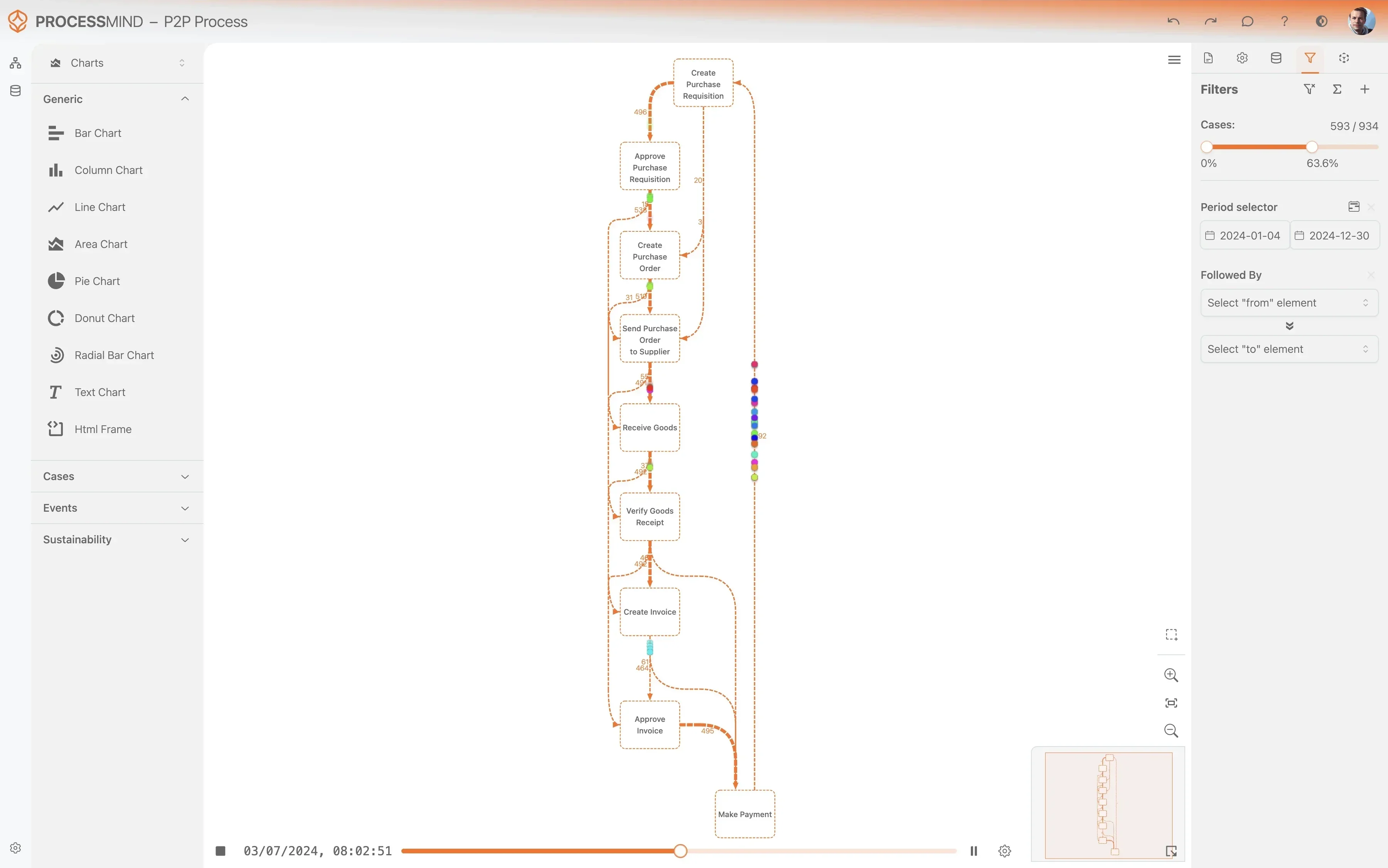
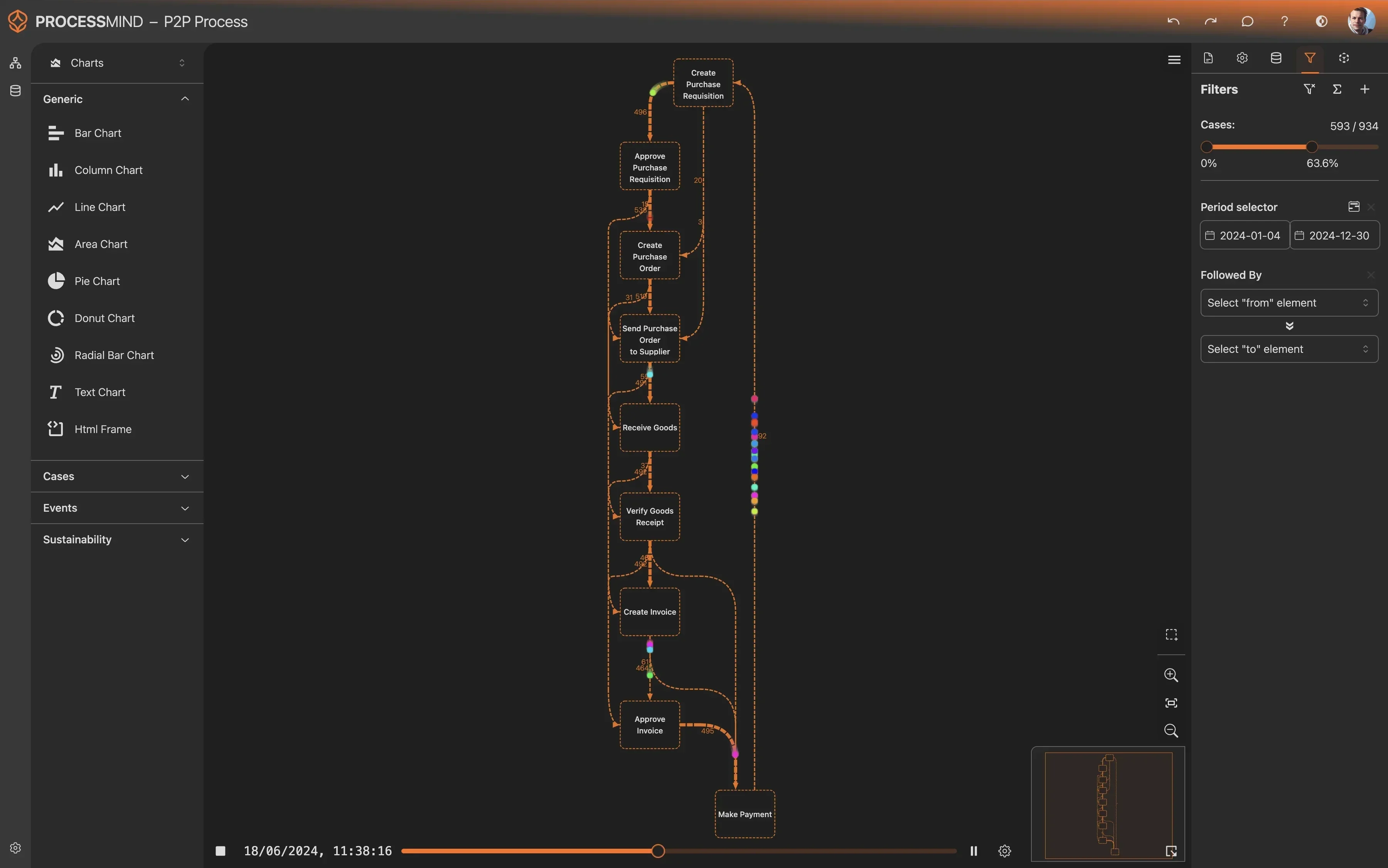
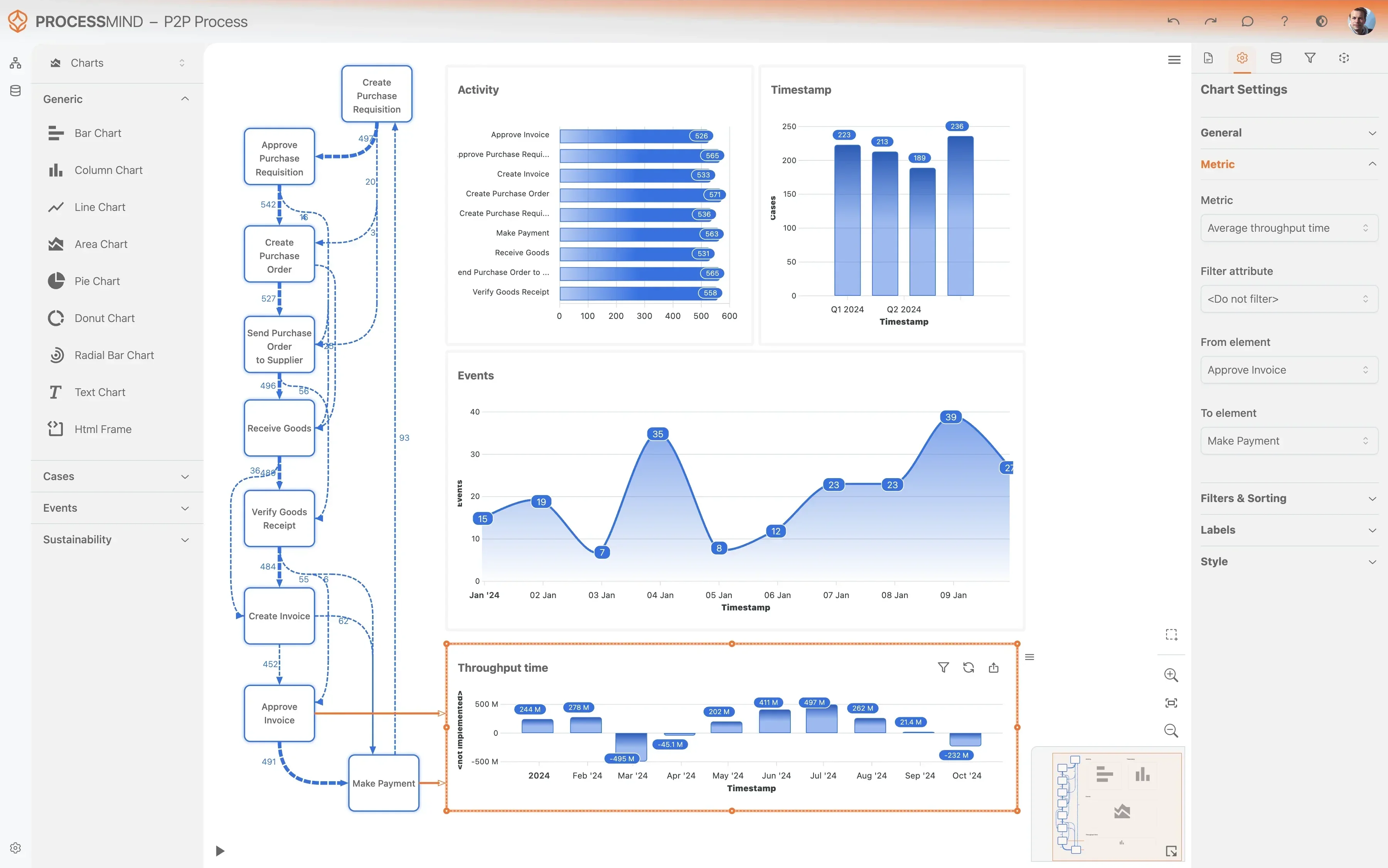
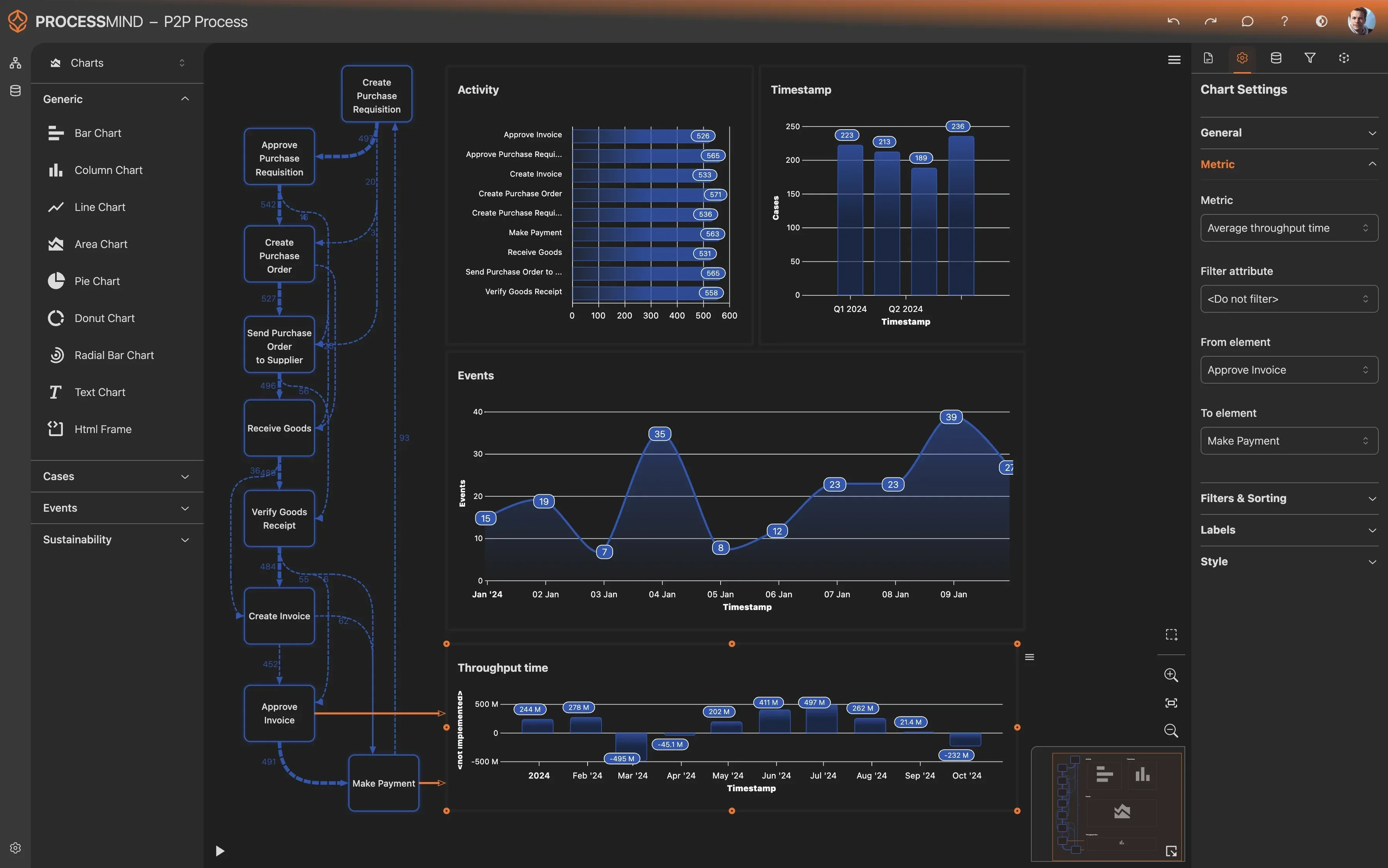
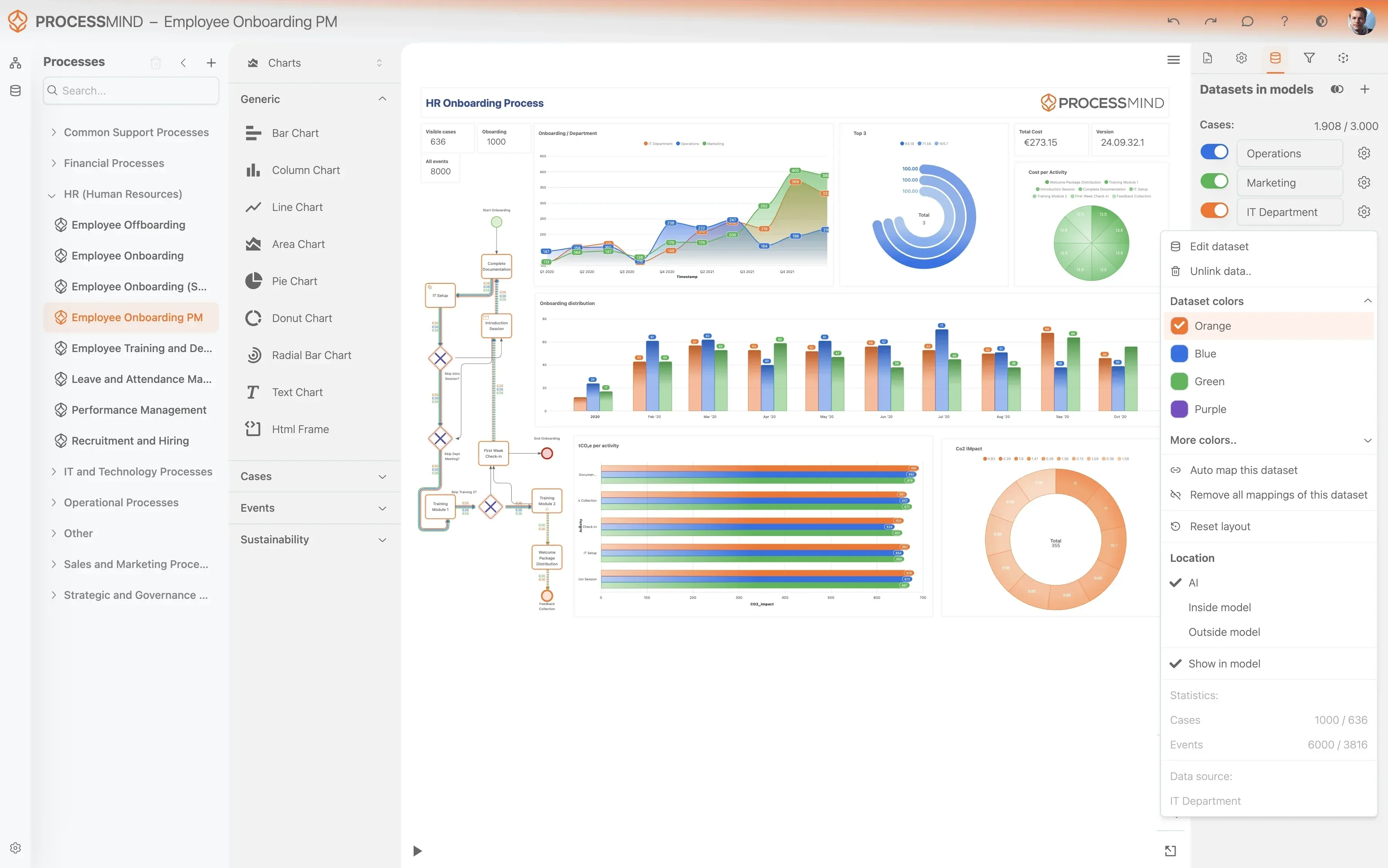
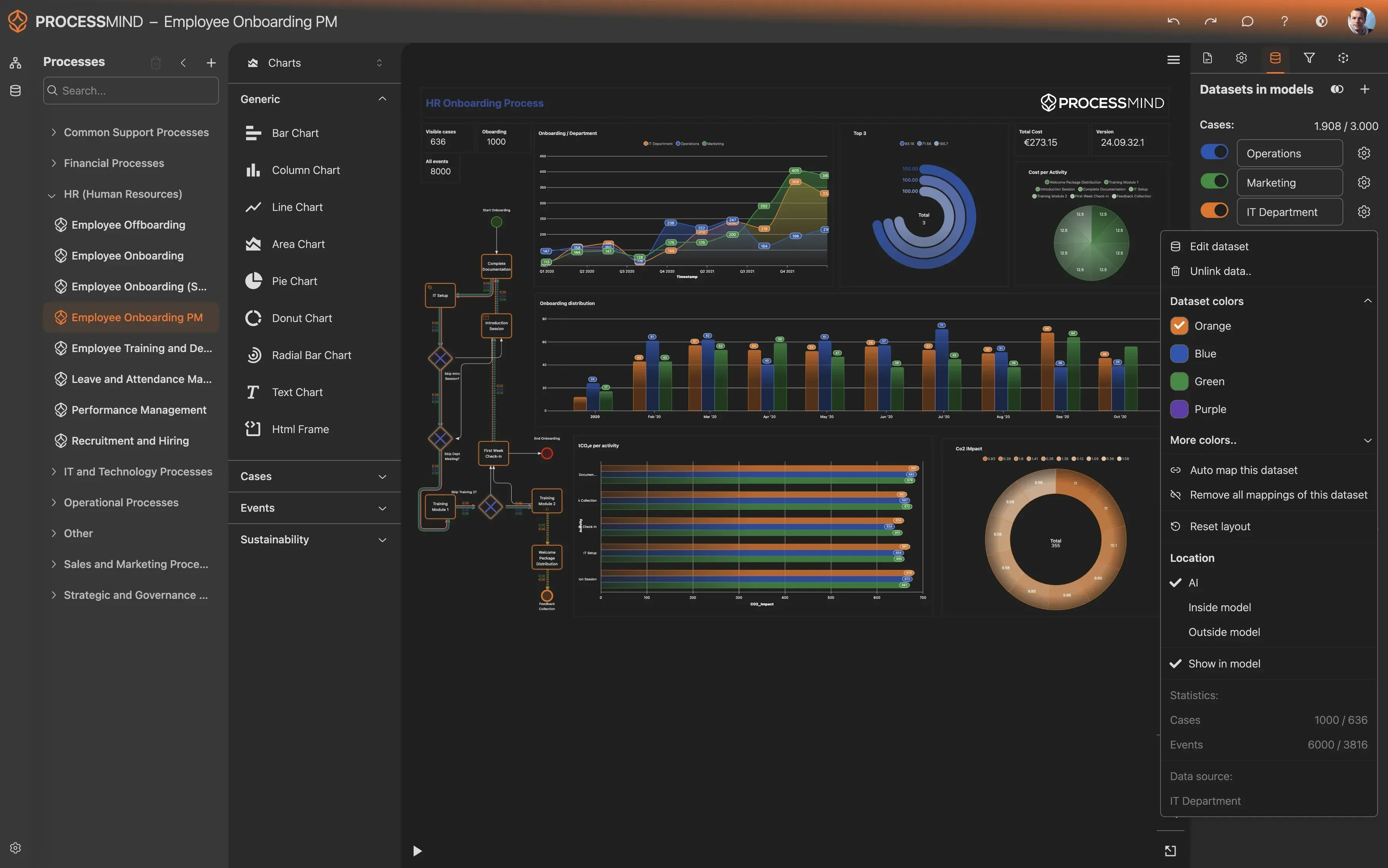
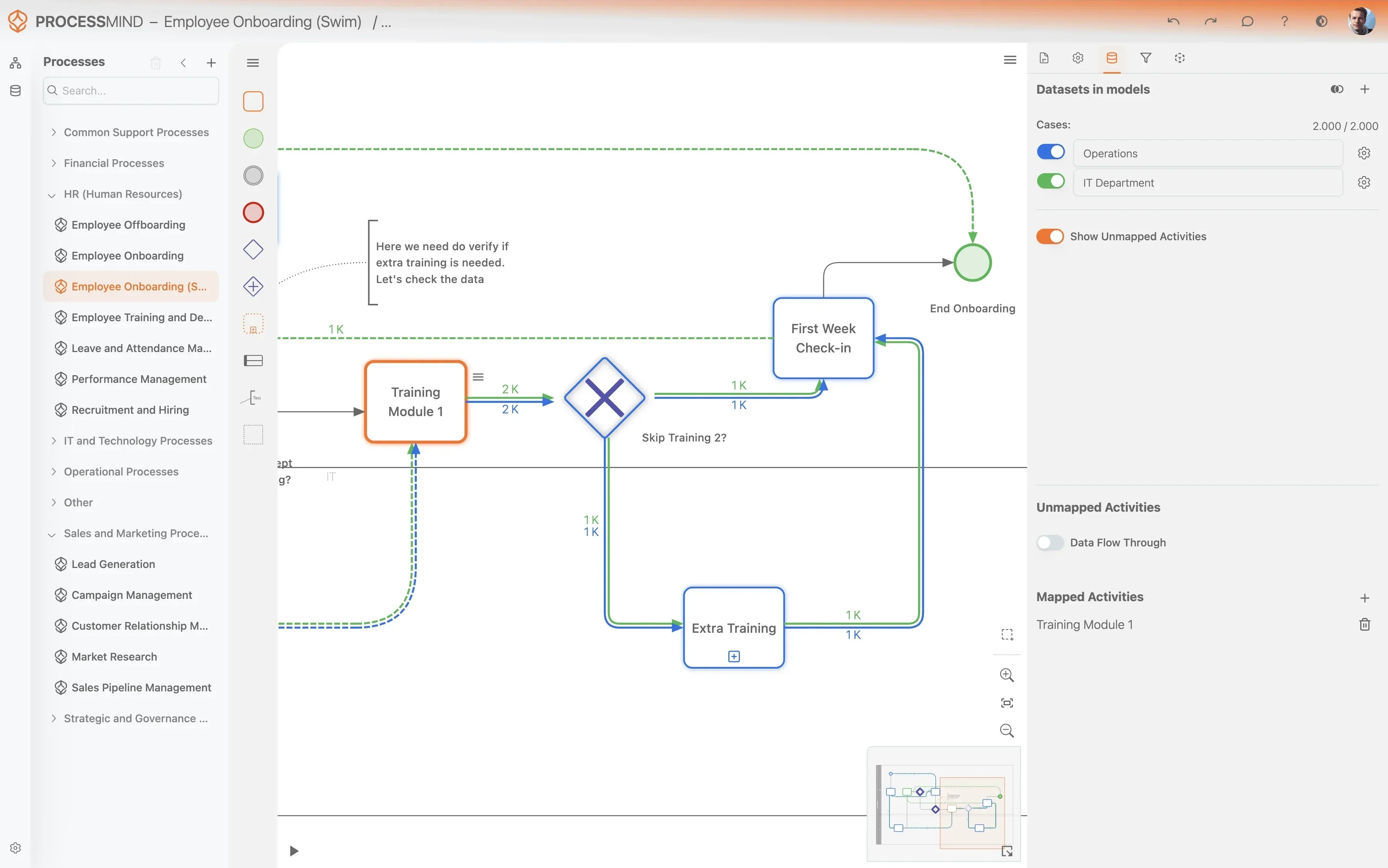
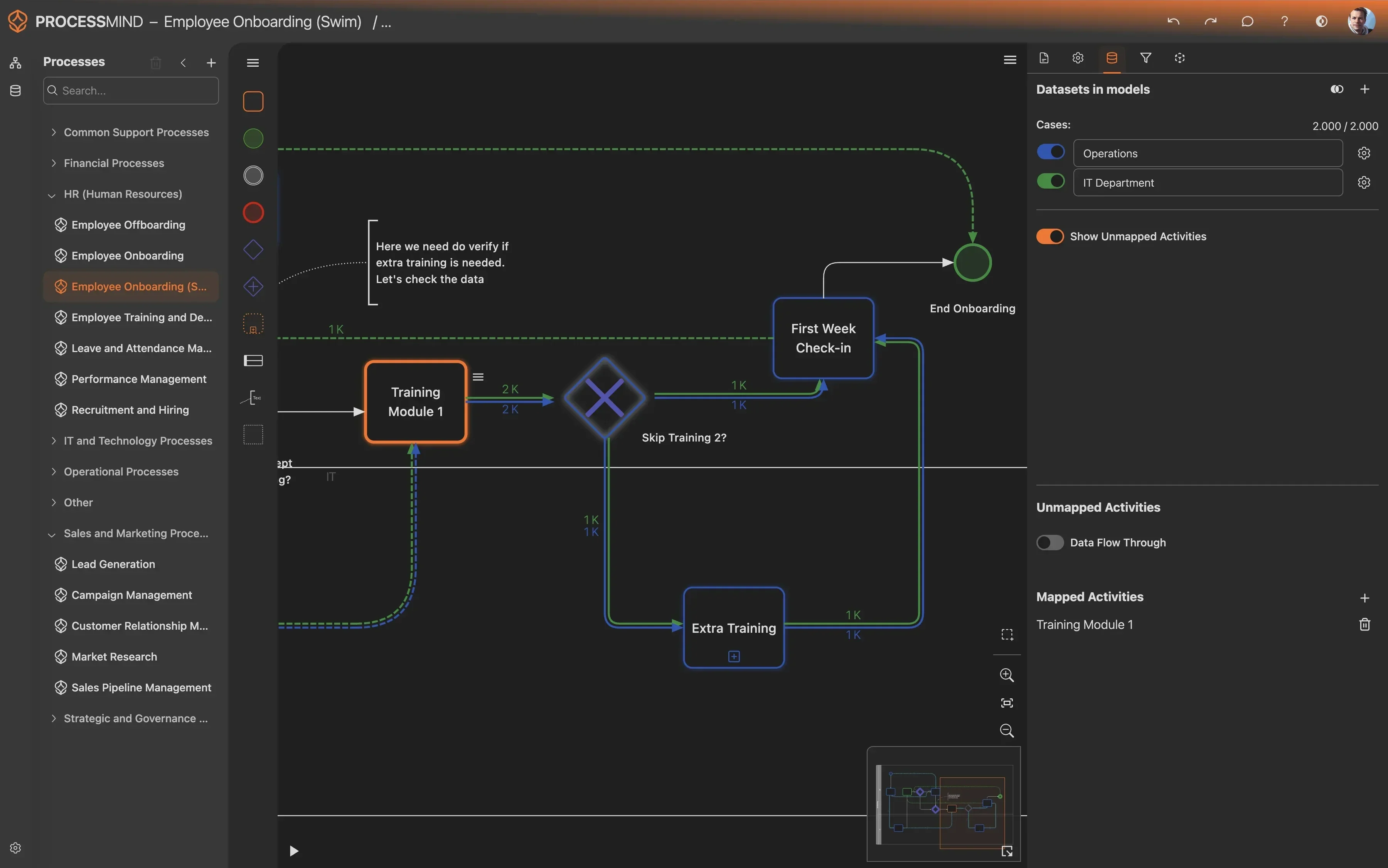
Uncover P2P Invoice Process Flows and Bottlenecks
- Visualize your P2P invoice process end-to-end
- Identify exact bottlenecks in approval flows
- Eliminate manual tasks and rework loops
- Accelerate invoice approvals and payments
TYPICAL OUTCOMES
What Organizations Achieve with Optimized Invoice Processing
These outcomes highlight the significant improvements organizations typically realize by optimizing their Purchase to Pay invoice processing workflows, leveraging insights derived from their Oracle Fusion Financials data.
Average reduction in approval time
Streamline approval workflows by identifying bottlenecks, leading to quicker invoice processing and happier vendors.
Decrease in matching discrepancy rate
Pinpoint root causes of invoice-to-PO discrepancies, reducing manual intervention and accelerating invoice matching.
Improved vendor payment rate
Ensure timely payments by resolving delays and optimizing scheduling, strengthening vendor relationships and avoiding late fees.
Improvement in approval policy adherence
Gain full transparency into approval paths, ensuring all invoices follow established policies and mitigate audit risks.
Reduction in unexpected payment blocks
Proactively address common reasons for payment blocks, ensuring smoother cash flow and uninterrupted vendor payments.
Near elimination of duplicate payments
Identify and prevent erroneous duplicate payments before they occur, protecting financial integrity and saving significant costs.
Results vary based on process complexity and data quality. These figures represent typical improvements observed across implementations.
Recommended Data
FAQs
Frequently asked questions
Process mining analyzes your P2P invoice data from Oracle Fusion Financials to reveal the actual process flow. It identifies bottlenecks like delayed approvals or high matching discrepancies, highlighting areas for efficiency gains and compliance improvements. This granular insight allows for targeted optimization efforts.
Process mining can pinpoint issues such as approval bottlenecks, high rates of matching discrepancies, unexpected payment blocks, and policy non-compliance. It helps visualize rework loops and inefficient exception handling, which commonly lead to delays and increased operational costs. By making these problems visible, you can address their root causes effectively.
You typically need event log data including invoice numbers as case identifiers, activity names, and timestamps for each step in the invoice processing workflow. Relevant fields often include invoice status changes, approval actions, and payment details. This data allows for reconstructing the complete process journey and its variations.
Expected outcomes include reduced invoice approval cycle times, decreased matching discrepancies, and improved on-time vendor payment rates. You can also achieve better policy compliance, increased transparency into invoice status, and significant reductions in manual rework. Ultimately, this leads to cost savings and enhanced operational efficiency.
Data can be extracted using standard reporting tools, SQL queries against the underlying database tables, or through integration APIs if available. The primary goal is to gather a comprehensive event log that captures all activities and their precise timing for each invoice. This ensures an accurate and complete representation of the process.
No, process mining is a read-only activity. It uses historical data extracted from your system and does not interact with or modify your live Oracle Fusion Financials environment. This ensures there is no impact on ongoing operations, system performance, or data integrity during the analysis phase.
After data extraction and preparation, initial insights can often be generated within a few weeks, depending on data quality and complexity. The first phase focuses on visualizing the as-is process and identifying obvious areas for improvement. Subsequent deeper analyses may take additional time for detailed root cause investigation.
Yes, process mining is highly effective at identifying deviations from predefined rules and policies within your invoice approval process. It can highlight instances where invoices are approved by unauthorized personnel or bypass required steps. This capability is crucial for maintaining compliance and reducing audit risks.
Optimize Your P2P Invoice Processing Now for 30% Faster Cycles
Eliminate bottlenecks in Oracle Fusion Financials, reduce cycle time by 30%.
No credit card required. See results in days.