Improve Your Purchase to Pay - Requisition

Your 6-step guide to optimize NetSuite requisitions
Improve Your Purchase to Pay - Requisition

Optimize NetSuite Purchase Requisitions for Faster Approvals

Managing purchase requisitions can be complex, often leading to delays in approvals and potential compliance issues. Our platform helps you pinpoint critical inefficiencies and bottlenecks within your requisition lifecycle. This ensures faster processing, reduced manual work, and improved operational control.

Download our pre-configured data template and address common challenges to reach your efficiency goals. Follow our six-step improvement plan and consult the Data Template Guide to transform your operations.

Show detailed description

Why Optimize Your NetSuite Purchase Requisition Process?

The purchase requisition is the foundational step in the broader Purchase to Pay cycle, acting as the initial trigger for procuring goods and services. In a robust system like NetSuite, managing these requisitions efficiently is paramount for organizational health. Inefficiencies here can cascade throughout the entire procurement chain, leading to significant business impacts. Delays in requisition approval can mean project postponements, stockouts, missed sales opportunities, and increased operational costs. Moreover, a poorly managed requisition process can result in non-compliant spending, budget overruns, and a lack of transparency, directly affecting financial governance and supplier relationships. Optimizing your NetSuite Purchase to Pay - Requisition process is not just about speed, it is about ensuring strategic alignment, cost control, and operational agility.

How Process Mining Unlocks Purchase Requisition Efficiency in NetSuite

Process mining offers a powerful, data-driven approach to understanding and improving your NetSuite Purchase to Pay - Requisition process. Instead of relying on anecdotal evidence or static process maps, process mining uses event logs from your NetSuite system, specifically tracking Purchase Requisition ID, to reconstruct the actual journey of every requisition. This allows you to visualize the real process flow, uncovering deviations, bottlenecks, and rework loops that might otherwise remain hidden. You can precisely see how requisitions move through activities such as "Requisition Created," "Requisition Submitted," "Approval Step 1 Started," "Approval Step 1 Approved," and ultimately "Purchase Order Created from Requisition" or "Requisition Rejected." By analyzing this detailed event data, you gain an objective view of where the process is lagging, where compliance is failing, and where opportunities for automation and standardization exist within your NetSuite environment.

Key Areas for Improving Your Purchase Requisition Lifecycle

Applying process mining to your NetSuite requisition data typically highlights several critical areas for improvement:

  • Approval Bottlenecks: Identify specific approval steps or individual approvers who are consistently causing delays. Analyze the duration of each approval stage and uncover why some requisitions get stuck. This might reveal needs for clearer approval matrixes, automated notifications, or workload rebalancing.
  • Rework and Rejection Patterns: Pinpoint stages where requisitions are frequently amended or rejected. Understanding the root causes, such as incomplete initial submissions, incorrect information, or policy violations, allows for targeted training or improvements to requisition forms and submission guidelines in NetSuite.
  • Compliance Adherence: Detect instances where requisitions deviate from established purchasing policies, for example, requisitions being approved without going through the required number of approval steps. This helps enforce compliance and reduce risk.
  • Cycle Time Reduction: Measure the end-to-end cycle time from "Requisition Created" to "Requisition Approved" or "Purchase Order Created from Requisition." Identify the specific activities or waiting times that contribute most to lengthy cycles and target them for optimization.
  • Automation Opportunities: Discover manual tasks or repetitive approval patterns that could be automated within NetSuite, reducing human error and accelerating the overall process.

Realizing Tangible Outcomes: Benefits of Optimized NetSuite Requisitions

By leveraging process mining to optimize your NetSuite Purchase to Pay - Requisition process, you can expect to achieve several measurable benefits:

  • Reduced Requisition Cycle Time: Significantly shorten the time it takes for a requisition to be approved and converted into a purchase order, leading to faster procurement and delivery of goods and services.
  • Increased Compliance: Ensure that all requisitions adhere strictly to company purchasing policies and regulatory requirements, minimizing financial risk and audit findings.
  • Lower Operational Costs: Decrease the manual effort involved in processing, chasing, and correcting requisitions, freeing up valuable staff time and reducing administrative overhead.
  • Improved Budget Control: Gain better visibility into spending patterns at the requisition stage, allowing for more proactive budget management and identification of potential cost savings.
  • Enhanced Stakeholder Satisfaction: Provide requesters with faster responses and greater transparency, while enabling procurement and finance teams to operate more efficiently and strategically.

Getting Started with Purchase Requisition Process Optimization

Improving your NetSuite Purchase to Pay - Requisition process through process optimization is an accessible and highly impactful endeavor. By focusing on your existing NetSuite data, you can move beyond assumptions to make data-driven decisions that genuinely transform your operations. This approach empowers you to proactively identify and resolve bottlenecks, enhance compliance, and ultimately drive greater efficiency and cost savings across your procurement functions. Start exploring how you can leverage these insights to optimize your NetSuite requisition workflows today and experience the tangible benefits of a streamlined Purchase to Pay - Requisition cycle. Discover how to improve Purchase to Pay - Requisition processes and how to reduce Purchase to Pay - Requisition cycle time using a proven methodology.

Purchase to Pay - Requisition P2P Requisition Procurement Workflow Requisition Approval Compliance Monitoring Cycle Time Reduction Purchasing Department Finance Operations Bottleneck Analysis

Common Problems & Challenges

Identify which challenges are impacting you

Requisitions often get stuck in multi-stage approval workflows, leading to extended cycle times and delayed procurement. This directly impacts project timelines, inventory levels, and operational efficiency, causing frustration for requesters and potential business disruptions.ProcessMind analyzes NetSuite event logs for your Purchase to Pay - Requisition process, pinpointing specific approval steps or individuals causing bottlenecks. It visualizes the actual flow, allowing you to identify deviations, quantify delays, and optimize the approval matrix for faster processing.

A high rate of rejected requisitions indicates underlying issues with initial request accuracy, incomplete information, or a mismatch with purchasing policies. This results in wasted effort, rework for requesters, and unnecessary delays in obtaining goods or services, increasing operational costs.Using ProcessMind, you can trace the journey of rejected Purchase to Pay - Requisition cases in NetSuite to uncover common reasons for rejection. It highlights specific points in the process where rejections occur most often, helping you refine requester training, improve form completeness, or clarify policy adherence.

Requisitions created outside established guidelines or lacking proper documentation pose compliance risks and can lead to unapproved spending or audit findings. Without clear visibility, organizations struggle to enforce purchasing policies, resulting in potential financial loss and regulatory penalties.ProcessMind provides an x-ray view into your NetSuite Purchase to Pay - Requisition process, comparing actual flows against defined compliance rules. It automatically flags requisitions that deviate from required approval paths or policy parameters, allowing proactive intervention and enforcement.

Requesters and department managers often lack real-time insight into the status of their purchase requisitions, leading to constant inquiries and manual follow-ups. This creates administrative overhead, reduces productivity, and hinders effective planning for project or operational needs.ProcessMind leverages the event data from your NetSuite Purchase to Pay - Requisition process to provide end-to-end transparency. It maps out the complete journey of each requisition, allowing all stakeholders to instantly see its current status, next steps, and potential delays without manual checks.

Requisitions for similar items or departments follow varied and unstandardized approval workflows, leading to unpredictable processing times and confusion. This inconsistency creates inefficiencies, increases training costs, and makes it difficult to scale operations or ensure fairness across departments.ProcessMind analyzes the 'Approval Workflow Path' attribute in your NetSuite Purchase to Pay - Requisition data to identify all actual process variants. It reveals where and why deviations occur, enabling you to standardize workflows, eliminate unnecessary steps, and enforce best practices across the organization.

The Purchase to Pay - Requisition process often involves significant manual intervention, such as data entry, chasing approvals, and correcting errors. This high level of manual effort increases operational costs, introduces human error, and diverts valuable resources from more strategic tasks.By mapping out every activity in your NetSuite Purchase to Pay - Requisition journey, ProcessMind highlights areas with redundant steps or high manual touchpoints. It quantifies the impact of rework and identifies opportunities for automation, process simplification, or improved data quality at the source.

Certain departments or individual requesters consistently experience longer requisition processing times compared to others. This imbalance can lead to resource strain in some areas, frustration, and uneven service levels across the organization, impacting overall productivity.ProcessMind segments your NetSuite Purchase to Pay - Requisition data by 'Department' and 'Requester', uncovering specific areas where delays are most pronounced. It identifies common patterns, such as an overloaded approver or a department with frequent amendments, to target improvement efforts effectively.

A significant time lag between an approved requisition and the creation of its corresponding purchase order can negate the benefits of fast approvals. This delay prolongs the entire procurement cycle, potentially leading to missed delivery dates, stockouts, or missed supplier discounts.ProcessMind tracks the complete lifecycle of your Purchase to Pay - Requisition in NetSuite, specifically measuring the time gap between 'Requisition Approved' and 'Purchase Order Created from Requisition'. It pinpoints the causes of this handover delay, whether process-related or system-related.

Urgent requisitions often bypass standard procedures, leading to chaotic processing, compliance breaches, or even slower overall cycle times due to ad-hoc interventions. Without a clear, efficient pathway, "urgent" becomes the norm, diminishing its true meaning and stressing resources.By analyzing the 'Urgency Level' attribute in your NetSuite Purchase to Pay - Requisition data, ProcessMind can reveal if urgent requests are truly expedited or if they get stuck. It helps evaluate the effectiveness of special workflows for urgent items and optimize their distinct processes.

Requisitions undergoing multiple amendments before approval indicate initial inaccuracies, unclear requirements, or a lack of proper review at early stages. Each amendment adds extra processing time and manual effort, delaying procurement and increasing the risk of errors.ProcessMind analyzes the 'Requisition Amended' activity within your NetSuite Purchase to Pay - Requisition process to identify how often and at what stage amendments occur. It helps uncover root causes, such as missing fields or ambiguous input requirements, to reduce rework.

Inconsistent requisition quality or frequent errors at the initial creation stage often point to a lack of adequate training or clear guidelines for requesters. This leads to downstream issues, increased rejections, and a reliance on tribal knowledge rather than standardized best practices.ProcessMind can correlate requester-specific patterns, such as higher rejection rates or more frequent amendments by certain requesters, with departmental or role-based attributes. This data-driven insight helps target specific training needs to improve initial requisition quality in NetSuite.

The overall time it takes from 'Requisition Created' to 'Requisition Closed' is excessive, leading to procurement bottlenecks and inability to meet business demands promptly. A long lifecycle masks specific inefficiencies across various stages, hindering overall operational agility.ProcessMind visualizes the end-to-end journey of every Purchase to Pay - Requisition in NetSuite, highlighting the average and maximum duration for each case. It allows for detailed analysis of each stage, identifying where time is disproportionately spent and providing concrete areas for optimization.

Typical Goals

Define what success looks like

This goal aims to significantly decrease the time it takes for a purchase requisition to move from submission to final approval in NetSuite. Shorter approval cycles directly lead to faster procurement, reducing delays in obtaining necessary goods and services, and improving operational efficiency across the organization. Achieving this can cut lead times by 20-30%, ensuring business needs are met promptly.ProcessMind helps by precisely mapping the "Requisition Submitted" to "Requisition Approved" journey for every Purchase Requisition ID. It identifies which approval steps and departments introduce the most delays, revealing critical bottlenecks. By analyzing duration metrics and variant flows, ProcessMind pinpoints opportunities to streamline workflows and implement faster approval processes, leading to measurable time savings.

Lowering the rate at which purchase requisitions are rejected means fewer rework loops and less wasted effort in the NetSuite Purchase to Pay - Requisition process. Frequent rejections indicate issues such as unclear policies, incorrect data entry, or inadequate training for requesters, leading to frustration and procurement delays. Reducing this rate by 15-25% improves process flow and resource utilization.ProcessMind analyzes the root causes behind "Requisition Rejected" activities associated with each Purchase Requisition ID. It correlates rejections with specific requesters, departments, item categories, or approval steps, identifying common reasons for non-compliance or incomplete information. This insight allows for targeted training, clearer guidelines, or workflow adjustments to prevent future rejections.

This goal focuses on guaranteeing that all purchase requisitions in NetSuite adhere strictly to established purchasing policies and internal controls. Non-compliant requisitions can lead to unauthorized spending, financial risks, and audit issues. Achieving 100% compliance minimizes fraud potential and strengthens governance within the Purchase to Pay - Requisition process.ProcessMind provides an X-ray view into every Purchase Requisition ID's journey, comparing actual process flows against predefined compliance models. It automatically flags deviations, such as requisitions bypassing required approval steps or exceeding spending limits without proper authorization, based on activities like "Approval Step N Approved" and attributes like "Estimated Amount" or "Approval Workflow Path". This allows for proactive identification and enforcement of policy adherence.

Establishing consistent and predictable approval workflows for purchase requisitions in NetSuite eliminates ambiguity and reduces processing variability. Inconsistent paths can cause confusion, delays, and expose the organization to compliance risks, especially when different departments or requesters follow ad-hoc processes. Standardizing these paths by 80-90% enhances efficiency and auditability.ProcessMind visually reconstructs all unique "Approval Workflow Path" variants observed for each Purchase Requisition ID, from "Requisition Submitted" to "Requisition Approved". It highlights unauthorized deviations and common detours from the intended 'golden path'. This capability helps identify areas where workflow rules are not enforced or understood, enabling a consistent and efficient approval structure.

This goal aims to significantly reduce the time gap between a purchase requisition being approved and the subsequent creation of a purchase order in NetSuite. Delays at this handover point directly impede the procurement cycle, affecting inventory levels, project timelines, and supplier relationships. Speeding up this transition by 20-30% ensures a more agile and responsive supply chain.ProcessMind specifically analyzes the time difference between the "Requisition Approved" activity and the "Purchase Order Created from Requisition" activity for each Purchase Requisition ID. It reveals where the handoff becomes a bottleneck, whether due to manual delays, system integration issues, or resource constraints. This insight enables targeted interventions to smooth the transition and ensure prompt PO generation.

Reducing the need for human intervention in routine or repetitive tasks within the NetSuite Purchase to Pay - Requisition process frees up valuable resources for more strategic activities. Excessive manual effort leads to higher operational costs, increased error rates, and slower processing times. Automating or streamlining manual steps can reduce processing costs by 10-15% and improve overall accuracy.ProcessMind identifies activities associated with manual work, such as frequent "Requisition Amended" events or delays between automated steps, by analyzing event logs for each Purchase Requisition ID. It quantifies the occurrence and impact of these manual touchpoints, highlighting prime candidates for automation or process simplification. This data-driven approach supports decisions on implementing robotic process automation (RPA) or workflow enhancements.

This goal focuses on creating a more efficient and responsive process for handling purchase requisitions marked as urgent in NetSuite. Ineffective urgent request handling can lead to critical business disruptions, missed opportunities, and increased costs due to expedited shipping or last-minute purchases. Optimizing this specific flow can reduce urgent requisition lead times by 10-20% without compromising controls.ProcessMind isolates Purchase Requisition IDs with an "Urgency Level" attribute indicating high priority. It then analyzes their end-to-end journey, identifying if they truly follow an expedited path or encounter the same delays as standard requisitions. This analysis pinpoints bottlenecks specific to urgent workflows, allowing for dedicated fast-track processes and resource allocation to ensure timely fulfillment.

Decreasing the number of times a purchase requisition needs to be amended after initial submission in NetSuite improves data quality and process efficiency. Frequent "Requisition Amended" events indicate initial errors, incomplete information, or changing requirements, leading to rework and extended cycle times. A 5-10% reduction in amendments can save significant administrative overhead.ProcessMind traces the lifecycle of each Purchase Requisition ID, specifically counting the occurrences of the "Requisition Amended" activity. It correlates these amendments with attributes like "Requester," "Department," or "Requested Item Category," identifying common sources of errors or misunderstandings. This insight helps target training programs or improve initial data capture forms to get it right the first time.

This goal aims to systematically identify and eliminate specific points in the NetSuite Purchase to Pay - Requisition process where work accumulates or significantly slows down. Bottlenecks cause delays, increase lead times, and can lead to resource overload, impacting overall process throughput. Removing critical bottlenecks can improve process speed by 15-20%.ProcessMind constructs a visual process map from event data, highlighting the true flow of every Purchase Requisition ID. It automatically identifies activities or transitions with unusually long average durations or high work-in-progress queues, such as specific approval steps or handoffs between departments. This visual and quantitative analysis pinpoints the exact locations and causes of bottlenecks, enabling targeted interventions for resolution.

Improving the accuracy and completeness of information provided by requesters in NetSuite purchase requisitions is crucial for smooth processing and reduced rework. Poor data quality leads to clarifications, amendments, and even rejections, adding unnecessary friction and delays to the Purchase to Pay - Requisition cycle. Achieving a 95% data accuracy rate at submission significantly improves downstream efficiency.ProcessMind indirectly supports this by identifying correlations between attributes like "Requester" or "Department" and downstream process issues, such as frequent rejections or amendments. By analyzing patterns of incomplete or incorrect data that lead to process deviations, ProcessMind highlights specific areas where requesters may need better guidance or training, ultimately improving initial data capture quality.

This goal focuses on increasing the total number of purchase requisitions that successfully complete their lifecycle in NetSuite within a given period. Higher throughput indicates a more efficient and scalable Purchase to Pay - Requisition process, capable of handling growing business demands without sacrificing speed or quality. Increasing throughput by 10-15% directly translates to faster fulfillment of business needs.ProcessMind measures the overall flow of Purchase Requisition IDs from "Requisition Created" to "Requisition Closed" or "Purchase Order Created from Requisition". It analyzes the volume of requisitions processed through various paths and identifies capacity constraints or blockages that limit the flow. By optimizing cycle times and removing delays, ProcessMind helps increase the rate at which requisitions are successfully processed.

The 6-Step Improvement Path for Purchase to Pay - Requisition

1

Download the Template

What to do

Obtain the pre-structured Excel template designed for Purchase to Pay Requisition data to ensure all necessary fields are captured for analysis.

Why it matters

This template guides you to collect the right data, ensuring a solid foundation for accurate process analysis and meaningful insights.

Expected outcome

A standardized Excel template ready to be populated with your NetSuite Purchase Requisition data.

YOUR PROCESS INSIGHTS

Discover Hidden Inefficiencies in Your NetSuite Requisitions

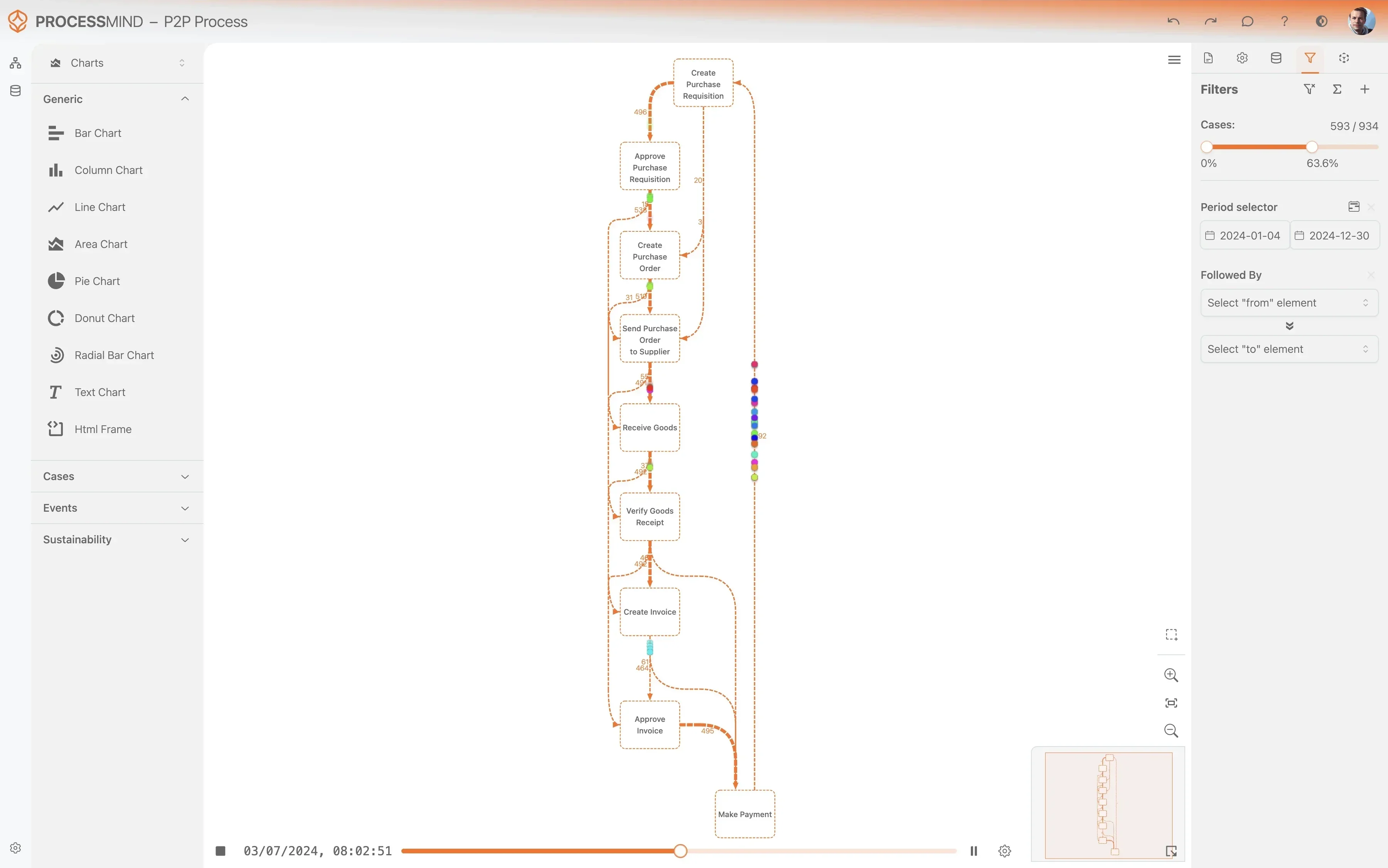
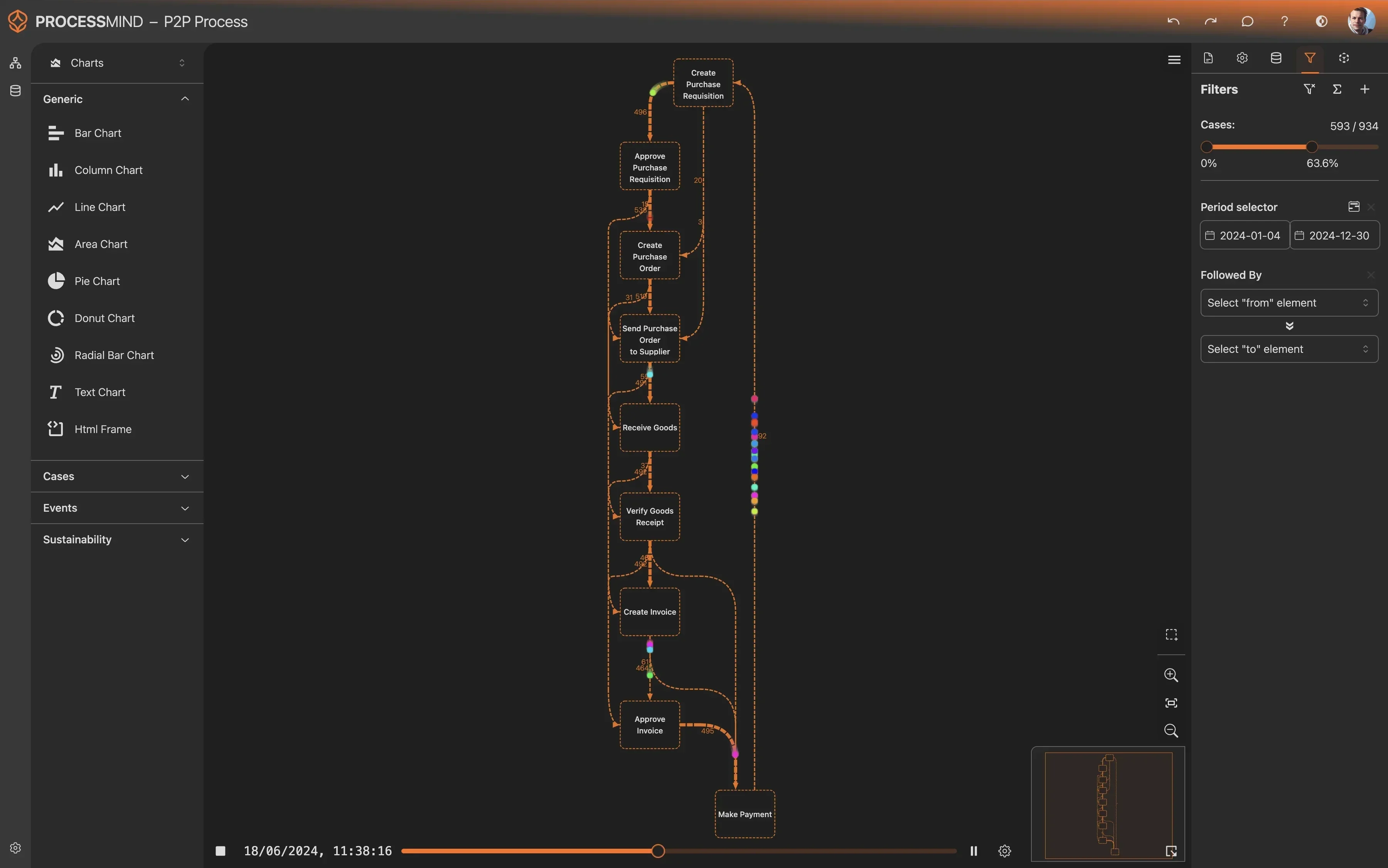
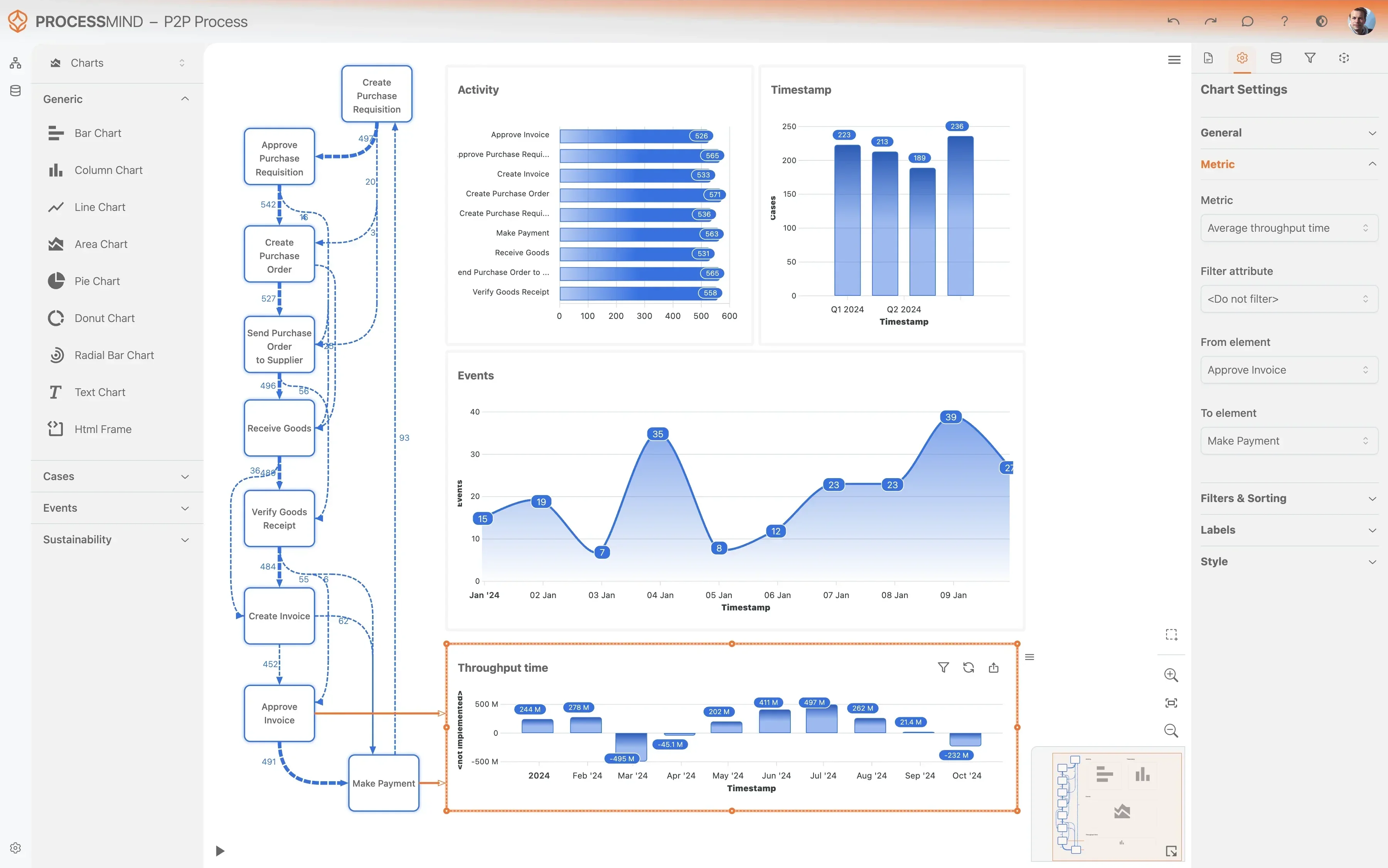
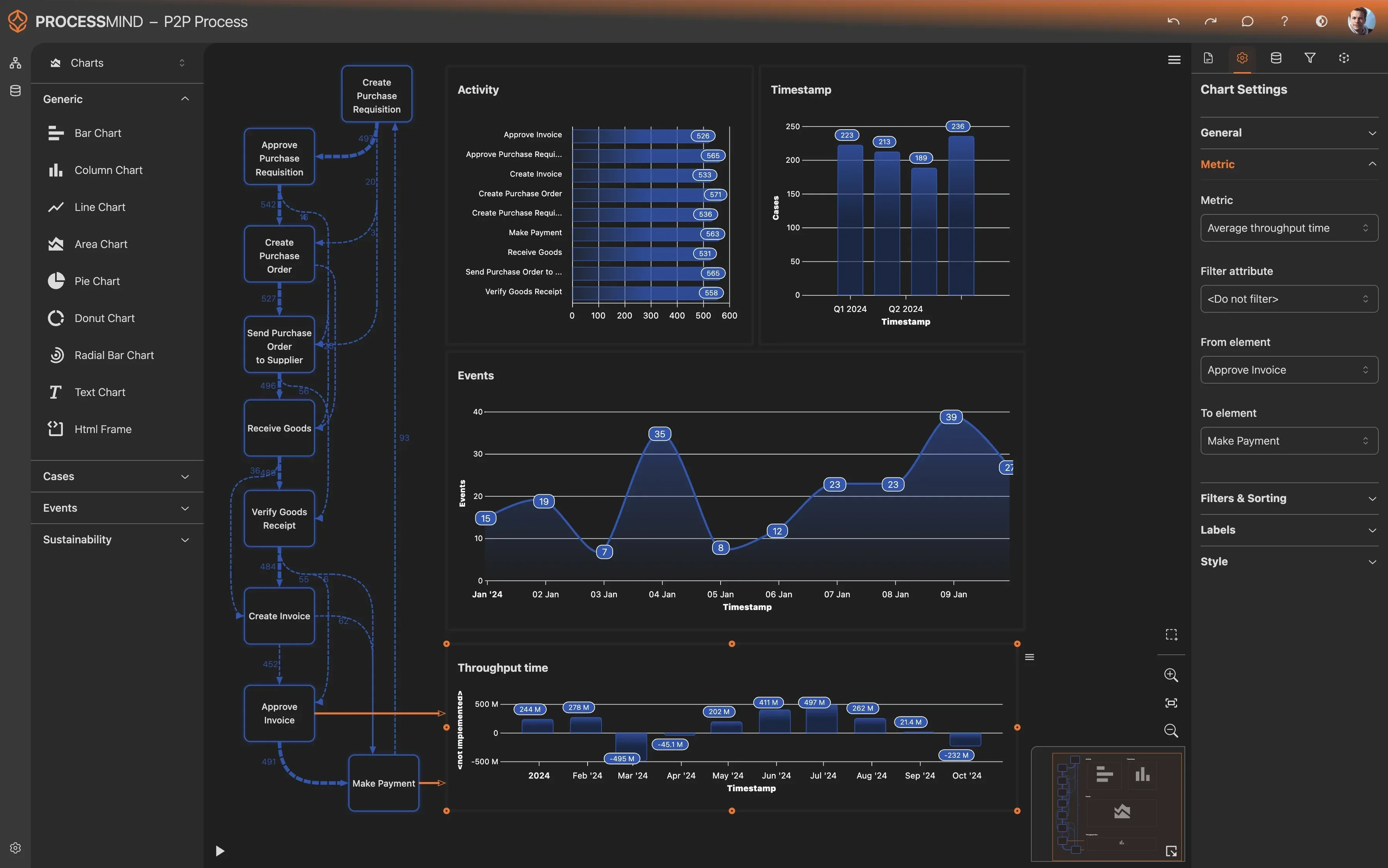
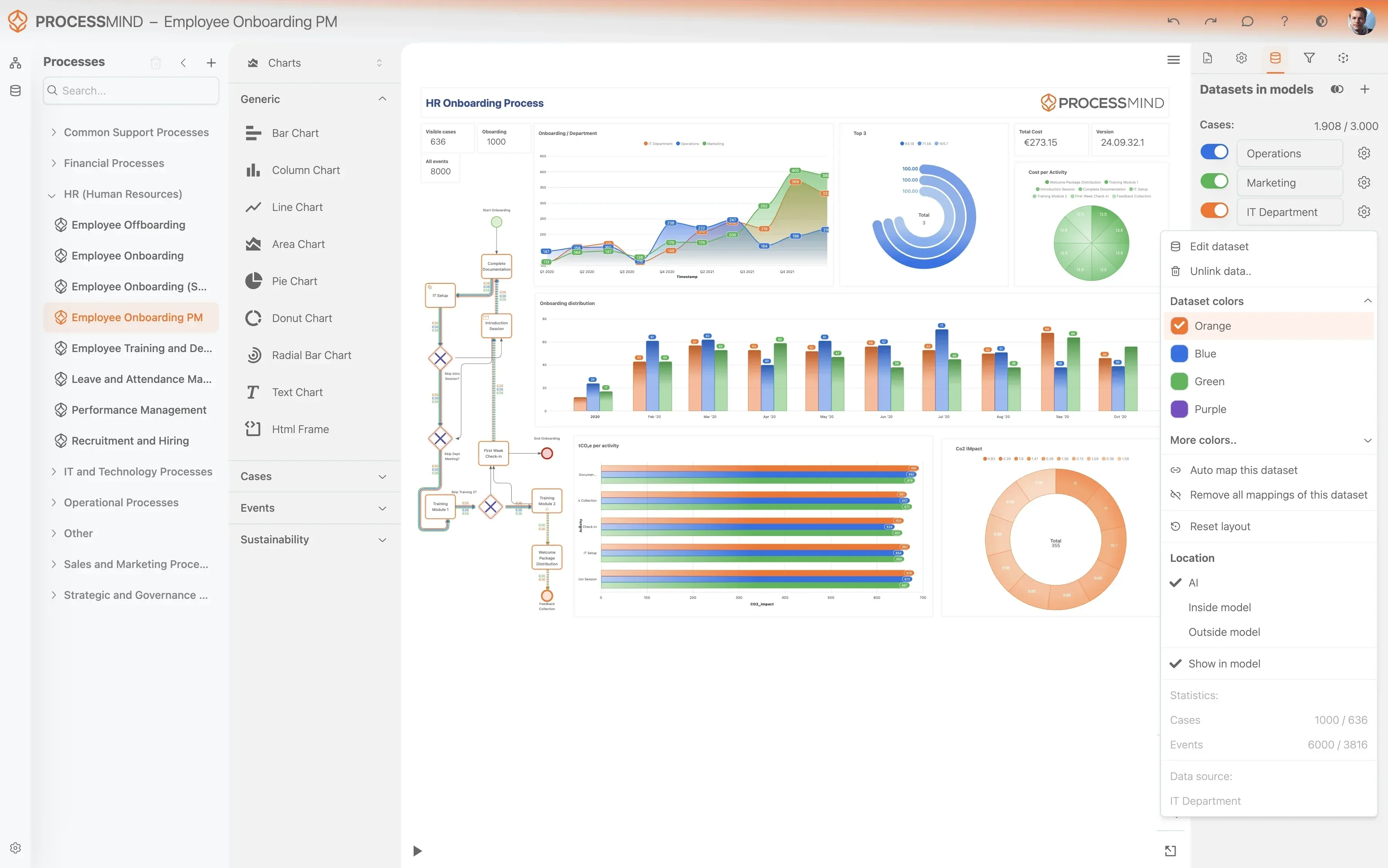
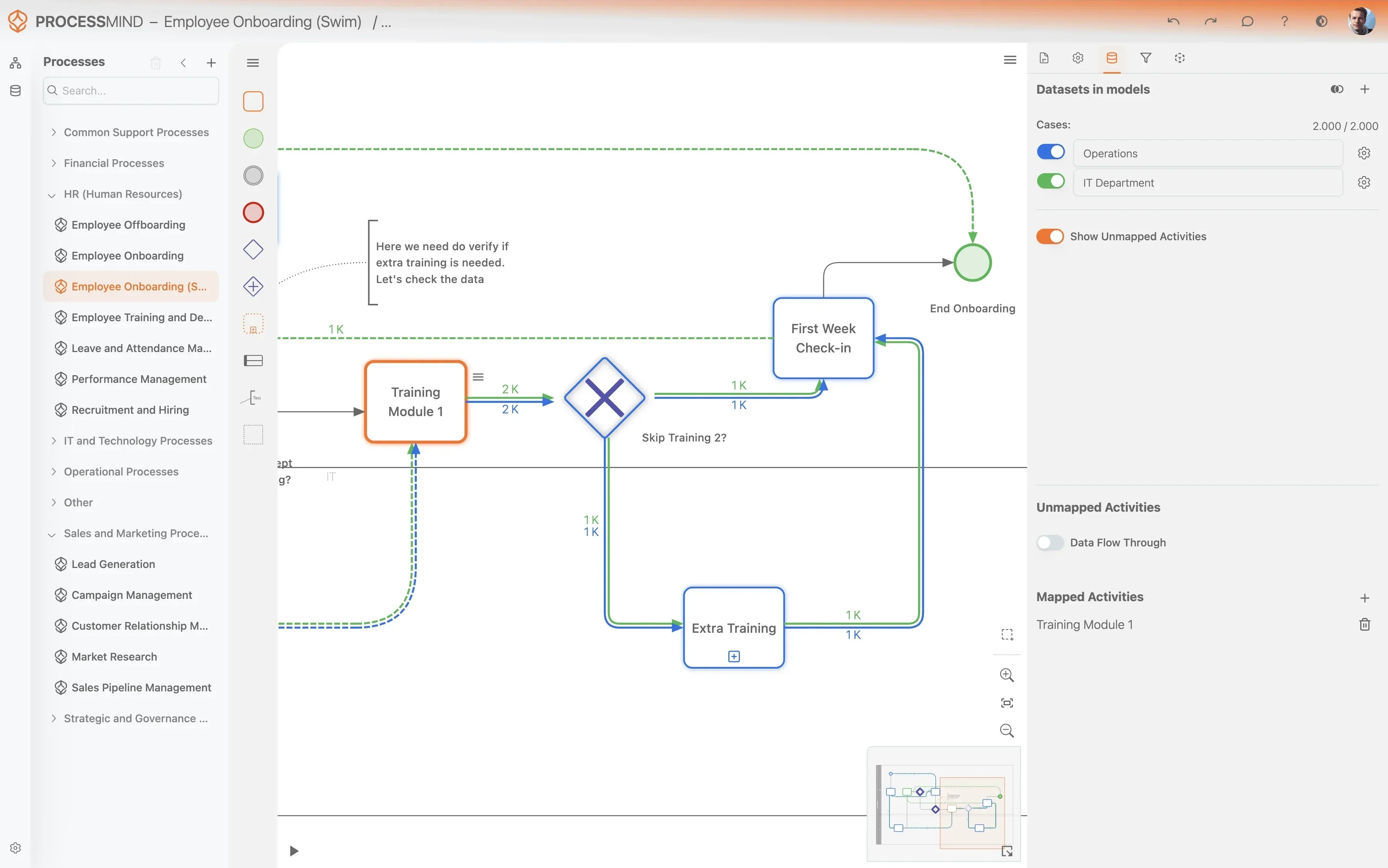
ProcessMind provides a clear visual map of your NetSuite purchase requisition process, highlighting every step and interaction. Instantly see where delays occur and how to achieve faster approvals and compliance.
  • Visualize end-to-end requisition flow
  • Pinpoint approval bottlenecks in NetSuite
  • Identify compliance deviations
  • Track cycle times for faster procurement
Discover your actual process flow
Identify bottlenecks and delays
Analyze process variants
Design your optimized process

TYPICAL RESULTS

What Organizations Achieve in Purchase Requisition

By analyzing your NetSuite Purchase Requisition data, organizations can uncover bottlenecks and non-compliant steps, leading to significant improvements in efficiency and cost control. These outcomes are realized by optimizing workflows and enforcing best practices.

0 %
Faster Requisition Approvals

Average reduction in approval time

Identify and remove bottlenecks in the approval process, significantly reducing the time from requisition submission to final approval. This speeds up procurement for critical business needs.

0 %
Lower Requisition Rejections

Decrease in initially rejected requisitions

Understand the root causes of requisition rejections and implement improvements to reduce rework. This leads to higher first-pass approval rates and less administrative overhead.

0 %
Higher Policy Compliance

Increased adherence to approval rules

Monitor and enforce predefined approval workflows, ensuring all requisitions follow company policies and regulatory requirements. This mitigates compliance risks and improves audit readiness.

0 days
Faster PO Generation

Reduced lead time to create Purchase Orders

Streamline the handover from approved requisitions to purchase order creation, drastically cutting down the time required. This ensures vendors are engaged faster and goods/services are acquired more promptly.

0 %
Reduced Requisition Rework

Decrease in post-submission amendments

Identify common reasons for requisition amendments after initial submission and address them proactively. This reduces manual rework and improves data accuracy, saving valuable employee time.

Results vary based on your specific process complexity, data volume, and the scope of implementation. The figures mentioned illustrate typical improvements observed across various organizations.

FAQs

Frequently asked questions

Process mining analyzes event logs from NetSuite to visualize the actual flow of your Purchase Requisition process. It identifies deviations, bottlenecks, and compliance issues by mapping every step from requisition creation to purchase order generation. This allows you to uncover inefficiencies and understand why delays or rejections occur.

By using your NetSuite transaction data, process mining reconstructs the precise sequence and timing of each step in the requisition lifecycle. It quantifies the time spent between activities and highlights paths that are slower or more complex than expected. This data-driven approach pinpoints specific stages or departments causing delays, enabling targeted improvements.

You primarily need event logs detailing activities related to your Purchase Requisition process. This includes the Case Identifier (Purchase Requisition ID), an Activity Name (e.g., Requisition Created, Approved, Rejected), and a Timestamp for each activity. Additional attributes like the User, Department, or Requisition Type can enrich the analysis.

You can expect a significant reduction in requisition approval cycle times and a decrease in rejection rates. Process mining helps ensure greater purchasing policy compliance and standardizes approval paths, leading to more efficient operations. Ultimately, it accelerates purchase order creation and minimizes manual processing efforts.

Extracting data from NetSuite typically involves standard reporting or database queries, which can be managed by your IT team or a NetSuite administrator. The specific tables and fields depend on your NetSuite configuration, but common data sources are usually accessible. Tools and connectors are available to streamline this extraction process.

Process mining is a non-invasive analytical technique. It works by analyzing historical data extracted from your NetSuite system, not by altering the system itself or interrupting ongoing operations. There are no direct changes required within your live NetSuite environment during the analysis phase.

Once the data is extracted, cleaned, and loaded, initial insights can often be generated within weeks, sometimes even days, depending on data quality and the complexity of the process. The first findings typically highlight the most apparent bottlenecks and deviations, providing immediate areas for improvement. Continuous monitoring then refines these insights over time.

Beyond access to your NetSuite data, the primary technical requirement is a process mining software platform. This platform will handle the data ingestion, modeling, and visualization. No specific NetSuite modules or customisations are typically required, as the analysis focuses on the existing transaction logs.

Optimize Your Purchase to Pay - Requisition, Start Today!

Achieve 30% faster requisition approvals and eliminate bottlenecks.

Start Your Free Trial

No credit card required. Start optimizing today.