Improve Your Customer Service

Select a process
Choose a process to continue working in your connected workspace.
Optimize Salesforce Customer Service for Peak Efficiency
Customer service operations often struggle with inconsistent resolution times and missed service level agreements. Our platform helps you precisely identify process bottlenecks and inefficiencies. It guides you to streamline agent workflows and significantly improve customer satisfaction. Transform your service delivery today.
Download our pre-configured data template and address common challenges to reach your efficiency goals. Follow our six-step improvement plan and consult the Data Template Guide to transform your operations.
Show detailed description
Why Optimize Customer Service in Salesforce Service Cloud?
Customer service is the heart of any successful business, directly impacting customer loyalty, brand reputation, and ultimately, your bottom line. In today's competitive landscape, merely responding to customer inquiries is no longer sufficient. Customers expect swift, consistent, and personalized experiences. However, managing these intricate interactions within a robust system like Salesforce Service Cloud can still present significant challenges. Without a clear, end-to-end view of your service processes, you might be struggling with inconsistent resolution times, frustrated agents, and escalating operational costs.
Inefficiencies in your Customer Service process can lead to serious consequences. Prolonged Customer Service cycle time, for instance, directly correlates with lower customer satisfaction. High agent turnover, missed Service Level Agreements (SLAs), and a lack of clear process visibility often stem from hidden bottlenecks and process deviations that go unnoticed. Optimizing your Customer Service isn't just about cutting costs, it's about delivering exceptional value, building lasting customer relationships, and ensuring your Salesforce Service Cloud investment truly pays off.
How Process Mining Unlocks Insights in Salesforce Service Cloud
Process mining offers a revolutionary approach to understanding and improving your Customer Service operations within Salesforce Service Cloud. Instead of relying on assumptions or anecdotal evidence, it uses the actual event data generated by your Salesforce system, particularly from Case, Knowledge, Entitlement, and Milestone objects, to reconstruct every customer service journey. This provides an unbiased, data-driven visualization of your entire service process, from the moment a customer contacts you to the final resolution and case closure.
By analyzing your service request data, process mining can precisely map out common process flows, identify variations from standard procedures, and highlight exactly where delays occur. This comprehensive perspective allows you to see, for example, how often cases are escalated, which communication channels lead to faster resolutions, or if certain agents are consistently overloaded. It's about transforming raw Salesforce data into actionable intelligence, allowing you to answer crucial questions like, "What truly drives our Customer Service cycle time?" and "Where are our most significant bottlenecks?".
Key Improvement Areas for Your Customer Service Process
With process mining, you can pinpoint specific areas for improvement that will yield tangible results in your Salesforce Service Cloud environment:
- Reducing Customer Service Cycle Time: Identify the specific steps or handovers that contribute most to delays in resolving customer issues. This could involve optimizing agent routing, streamlining internal approvals, or improving knowledge article accessibility within Salesforce.
- Optimizing Agent Workflows: Understand how agents interact with cases, knowledge articles, and customers. Discover inefficiencies in information gathering, task switching, or internal collaboration that may be slowing them down.
- Enhancing First-Contact Resolution: Analyze cases that require multiple interactions to resolve. Process mining can reveal common reasons for repeat contacts, helping you equip agents with better tools, training, or information for quicker solutions.
- Streamlining Escalation Procedures: Trace the path of escalated cases to identify why and when escalations occur. This insight can help refine your escalation matrix or empower front-line agents to handle more complex issues.
- Ensuring SLA Compliance: Monitor adherence to service level agreements in real time. Process mining helps uncover the root causes of missed SLAs, allowing you to proactively address systemic issues rather than just reacting to individual breaches.
Measurable Outcomes of Process Optimization
Implementing process optimization initiatives based on process mining insights delivers significant, measurable benefits across your Customer Service operations:
- Reduced Operational Costs: By eliminating redundant steps, optimizing resource allocation, and increasing agent efficiency, you can significantly lower the cost per service interaction.
- Improved Customer Satisfaction: Faster resolution times, more consistent service delivery, and a proactive approach to issue resolution directly translate to happier customers and stronger loyalty.
- Enhanced Compliance: Ensure your service processes consistently meet internal policies and external regulatory requirements, reducing risk and improving accountability.
- Increased Agent Productivity and Morale: Streamlined workflows and clear guidance empower agents to resolve issues more effectively, leading to reduced stress and higher job satisfaction.
- Better Resource Utilization: Identify where resources are over or underutilized, allowing for more intelligent staffing and workload distribution, especially across different departments or skill sets within your Salesforce setup.
Embarking on Your Customer Service Optimization Journey
Improving your Customer Service in Salesforce Service Cloud might seem daunting, but with the right tools and approach, it's a remarkably achievable goal. Process mining provides the clarity and actionable insights you need to move beyond guesswork. By focusing on the real data within your Salesforce Service Cloud, you can uncover the hidden truths about your operations and implement targeted changes that drive real business value. Start your journey today to transform your customer service from a cost center into a powerful differentiator. Discover how to improve Customer Service and how to reduce Customer Service cycle time effectively and sustainably.
The 6-Step Improvement Path for Customer Service
Download the Template
What to do
Obtain the pre-built Excel template specifically designed for Customer Service data from Salesforce Service Cloud to ensure correct structure.
Why it matters
This ensures your data is uniformly formatted, allowing for accurate and efficient analysis in ProcessMind without needing manual adjustments.
Expected outcome
A ready-to-use data template, perfectly structured for your Salesforce Service Cloud customer service process.
Export Your Data
What to do
Extract 3-6 months of historical customer service data, including Case, Knowledge, and Entitlement records from Salesforce Service Cloud, then populate the template.
Why it matters
Analyzing a substantial historical dataset reveals recurring patterns and long-term trends, providing a robust foundation for identifying improvement areas.
Expected outcome
A comprehensive dataset, filled with your actual customer service process information, ready for upload.
Upload Your Dataset
What to do
Securely upload your completed data template to the ProcessMind platform. The system will automatically prepare your customer service process for analysis.
Why it matters
This step initiates the automated processing of your data, transforming raw information into interactive dashboards and visual representations of your process.
Expected outcome
Your customer service process visualized within ProcessMind, ready for deep analysis and insight generation.
Analyze Your Process
What to do
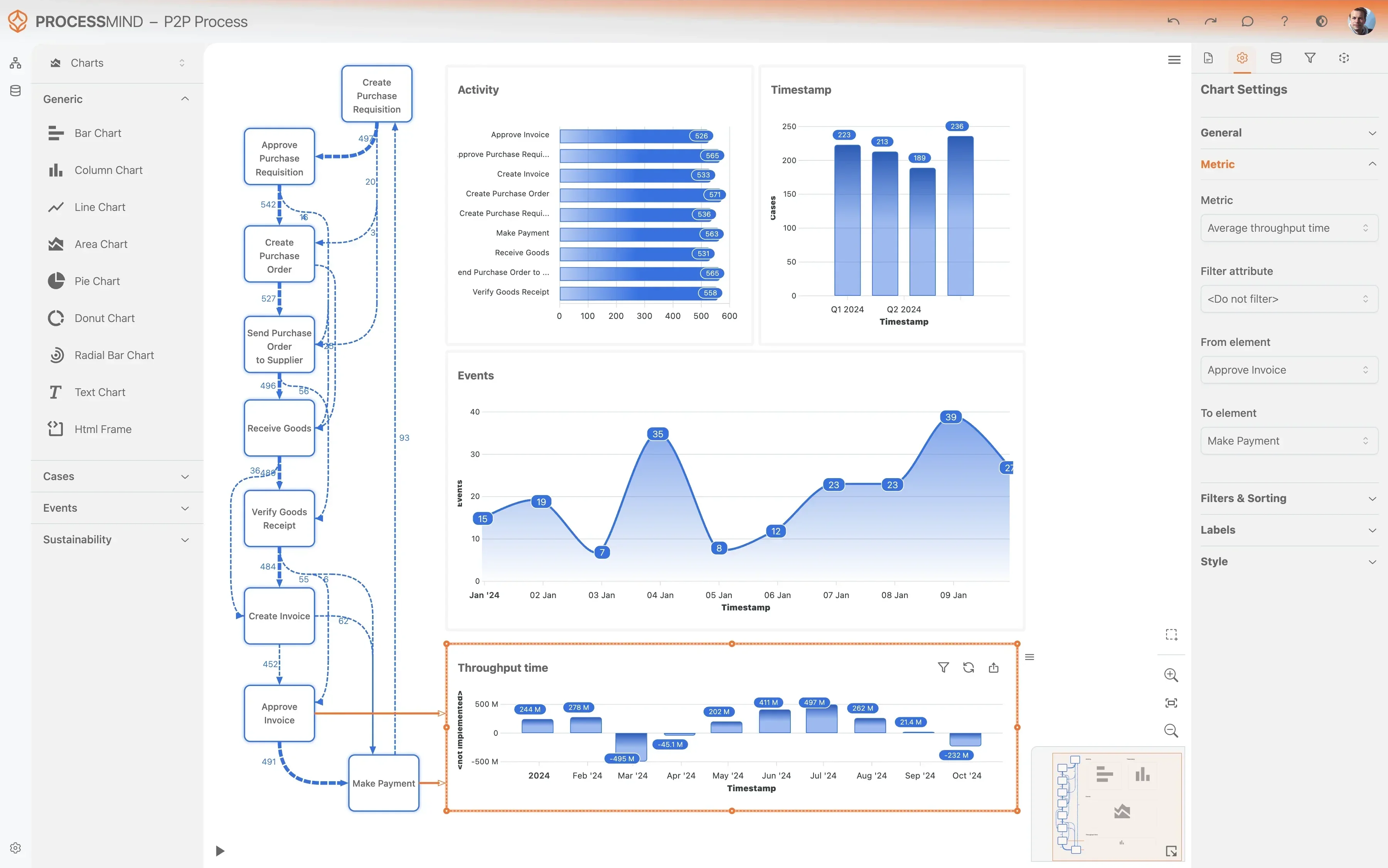
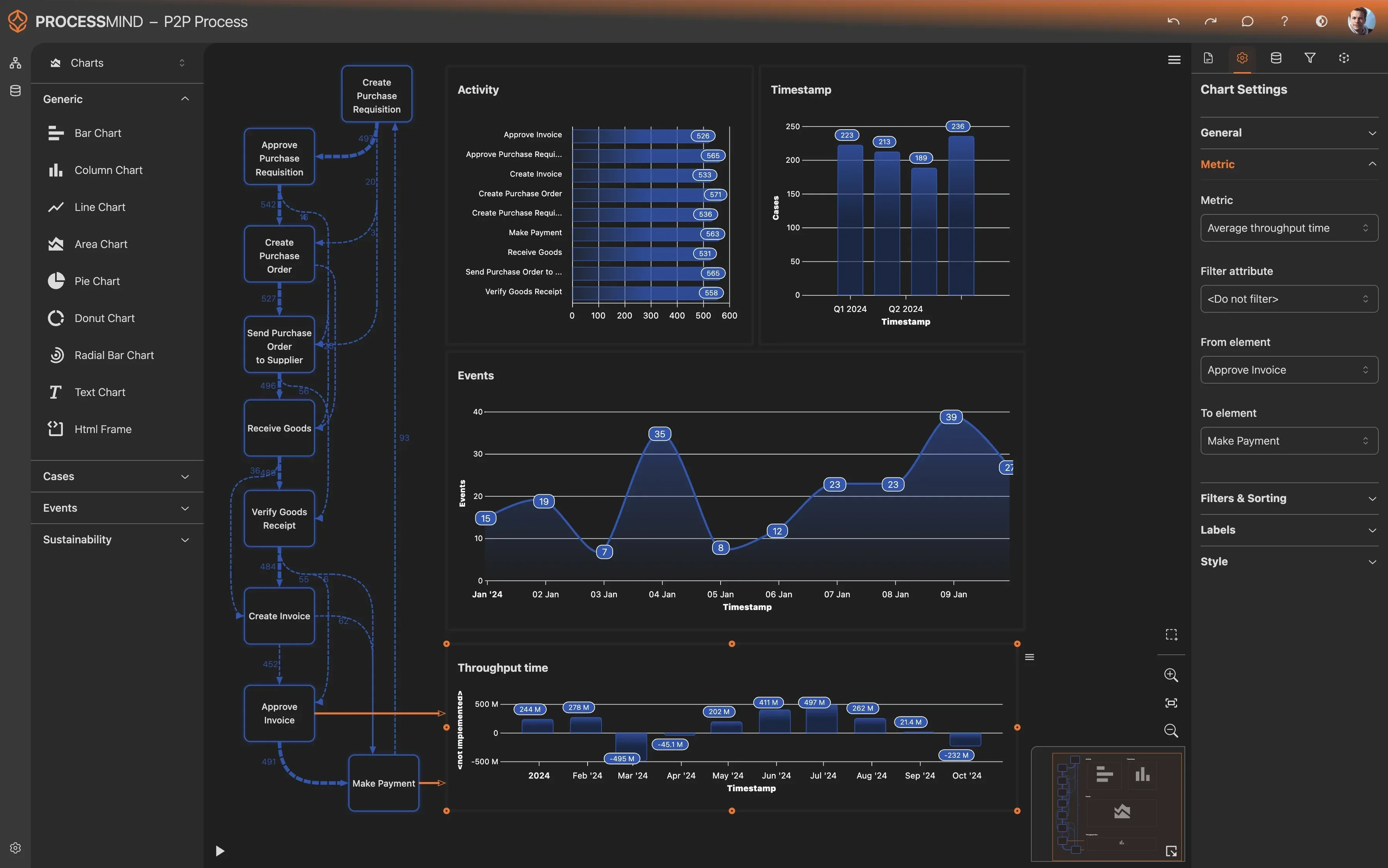
Explore the auto-generated dashboards and insights in ProcessMind to identify bottlenecks, non-compliance, and inefficiencies within your customer service operations.
Why it matters
Understand exactly where your customer service process falters, enabling data-driven decisions to enhance efficiency, compliance, and overall customer satisfaction.
Expected outcome
Clear insights into process performance, identified bottlenecks, and AI-driven recommendations for optimization.
Implement Improvements
What to do
Prioritize the identified improvement opportunities, such as streamlining Case resolution paths or optimizing agent workflows in Salesforce Service Cloud, and put them into action.
Why it matters
Translating insights into tangible actions directly addresses process weaknesses, leading to faster resolution times, reduced operational costs, and improved service quality.
Expected outcome
A refined customer service process with specific changes applied, targeting better efficiency and customer experience.
Monitor Your Process
What to do
Periodically re-upload updated data from Salesforce Service Cloud to ProcessMind. Continuously track key performance indicators to ensure sustained improvement.
Why it matters
Ongoing monitoring validates the impact of your changes, ensures compliance, and allows for continuous adaptation to maintain optimal customer service performance.
Expected outcome
Sustained improvements in customer service KPIs, with a clear view of the positive impact of your implemented changes.
WHAT YOU WILL GET
Uncover Your Salesforce Service Cloud's True Journey
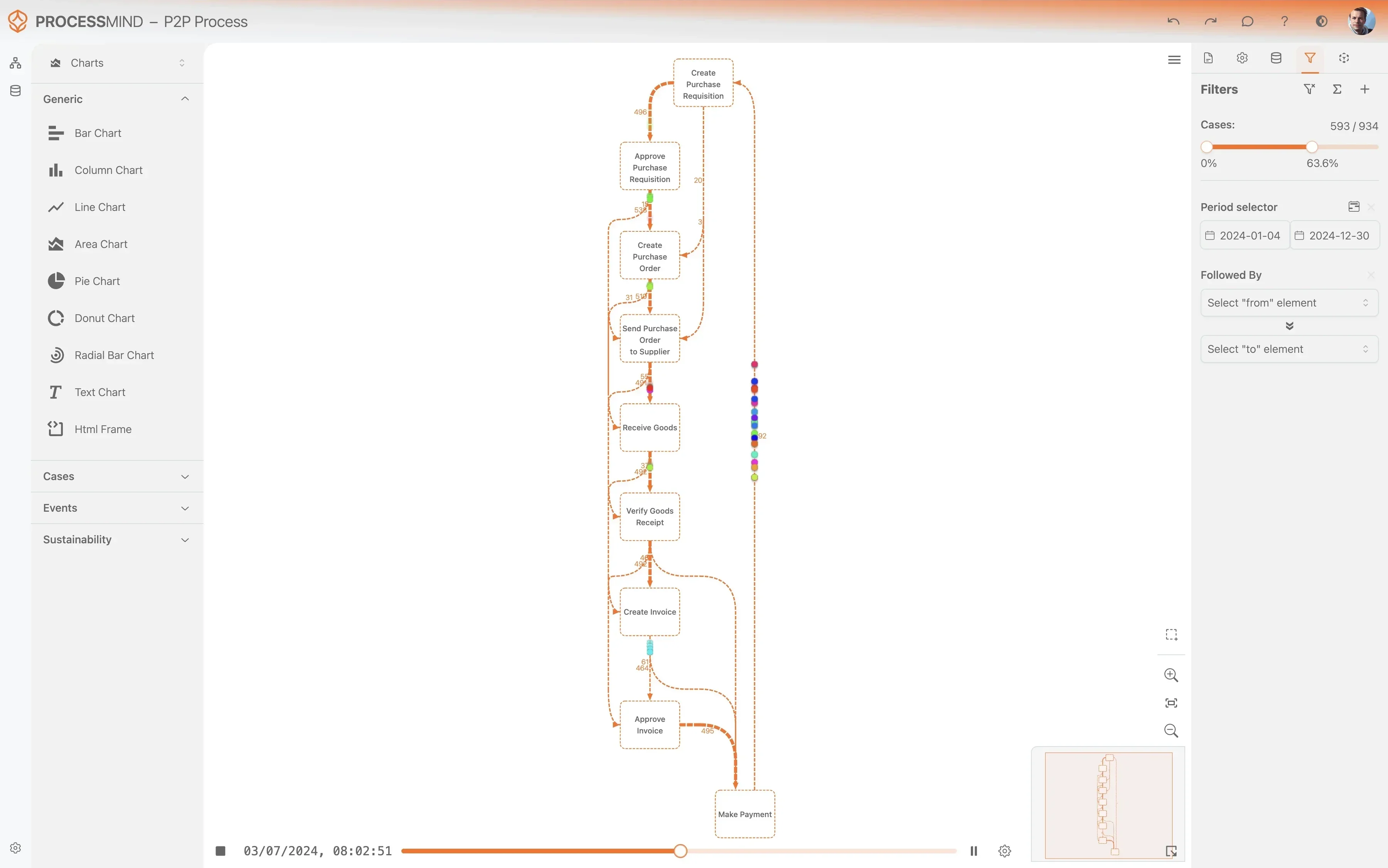
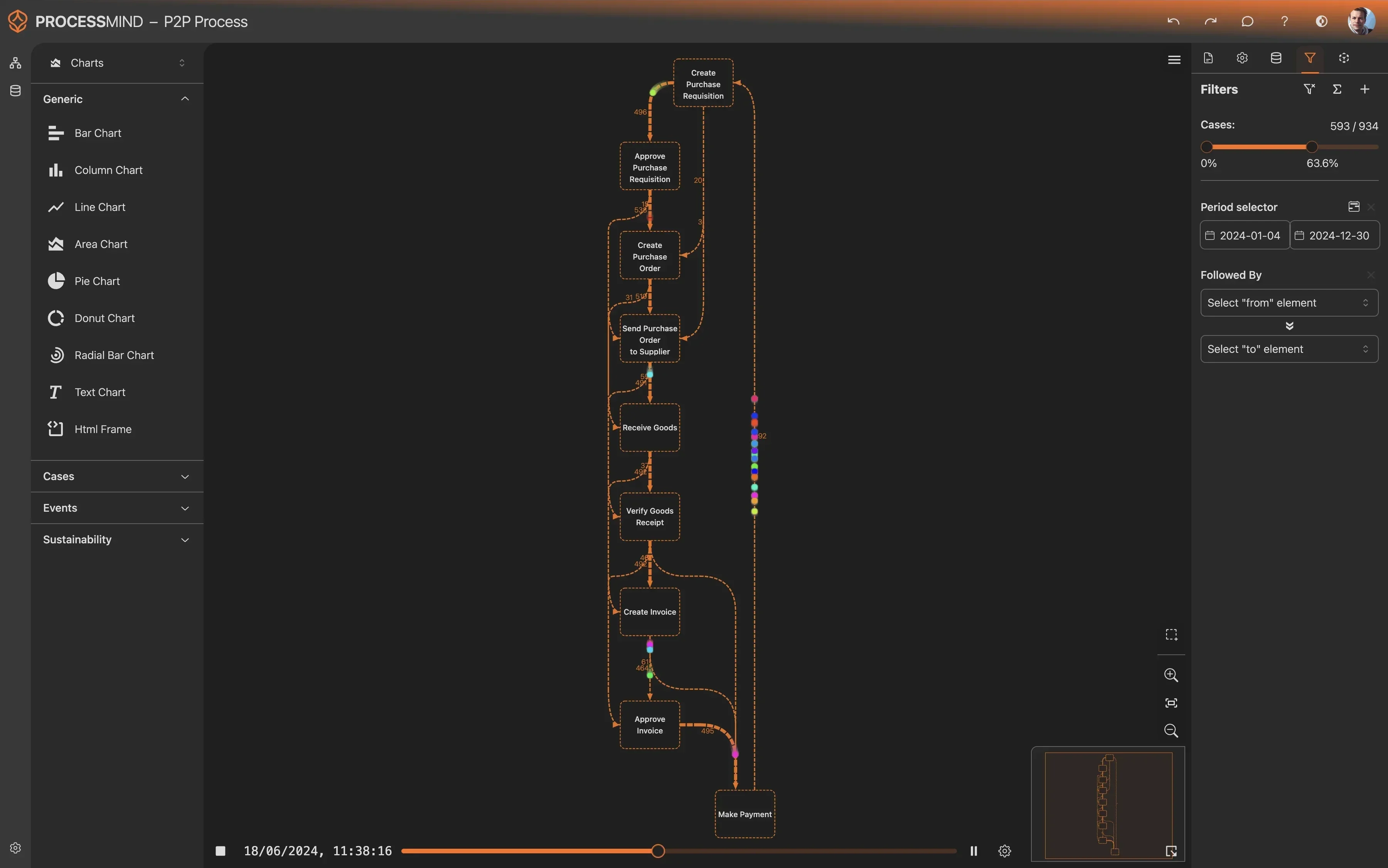
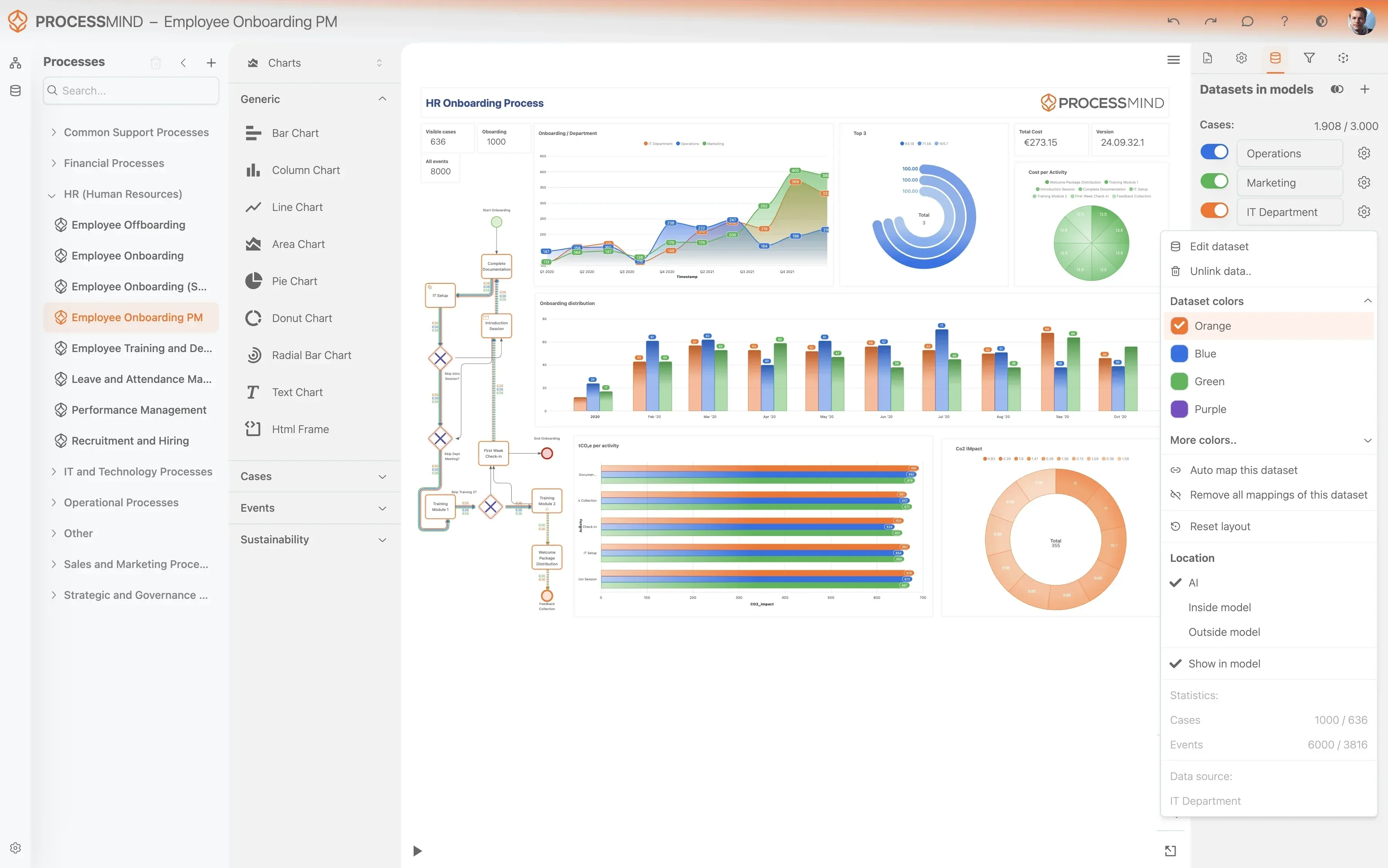
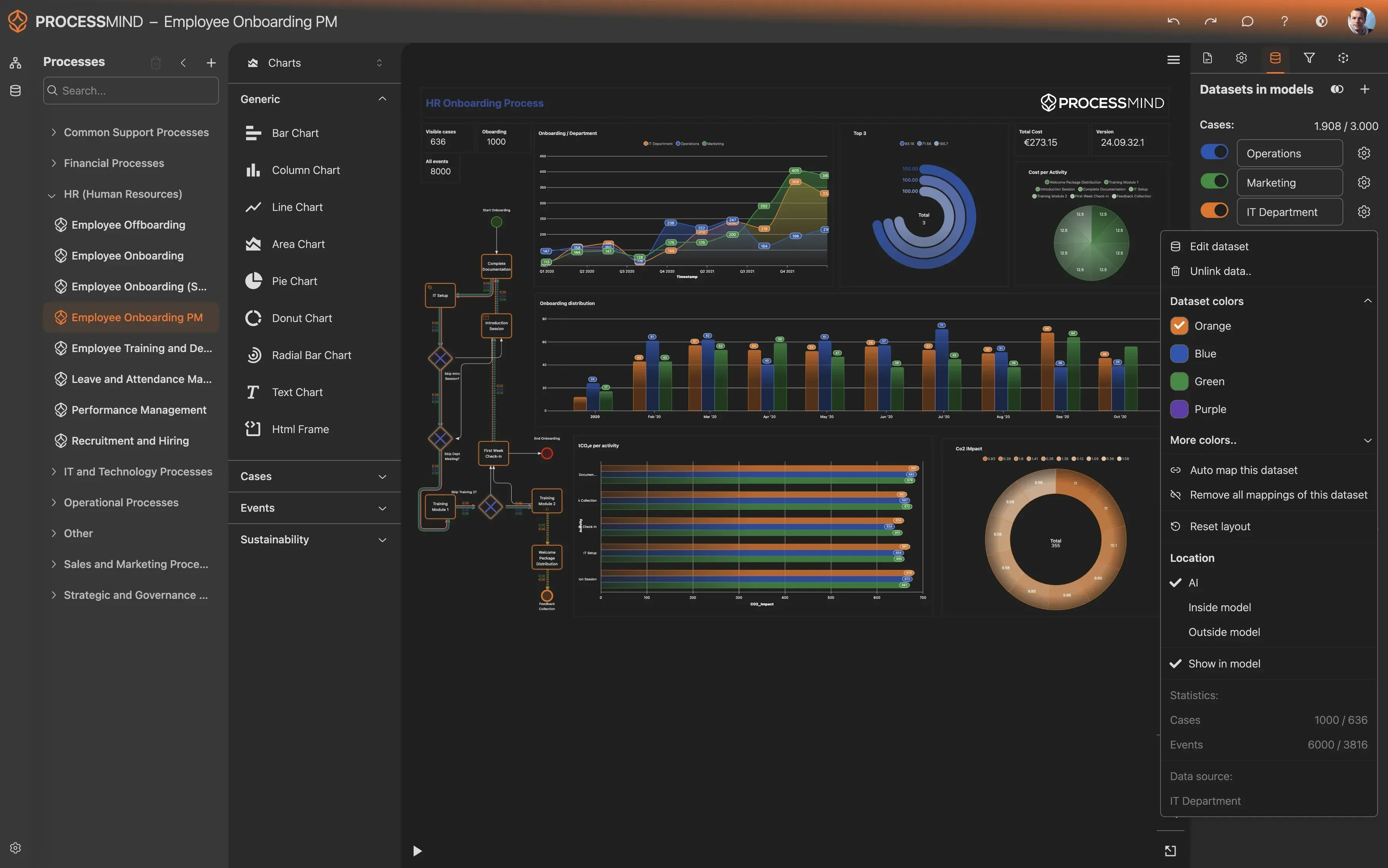
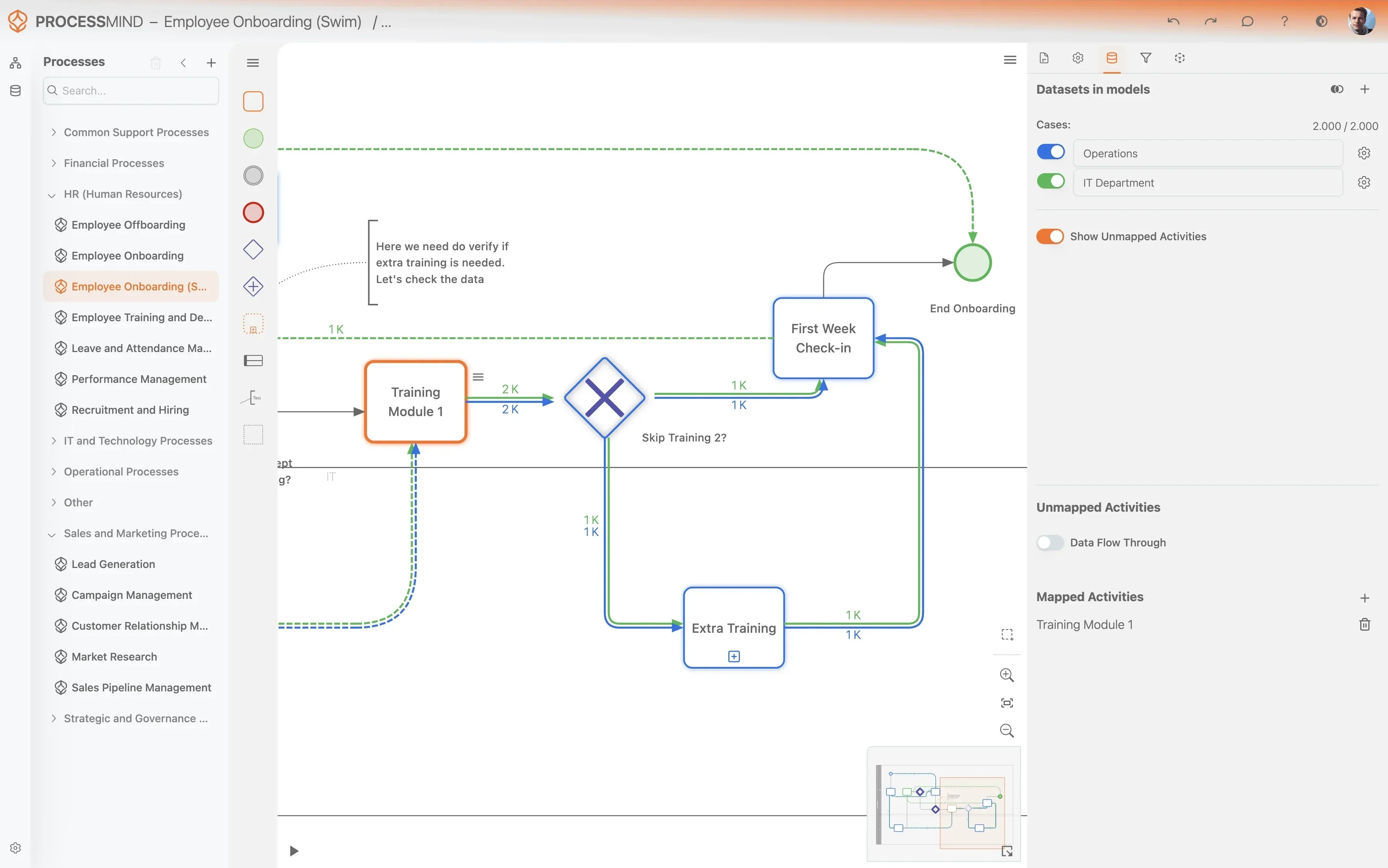
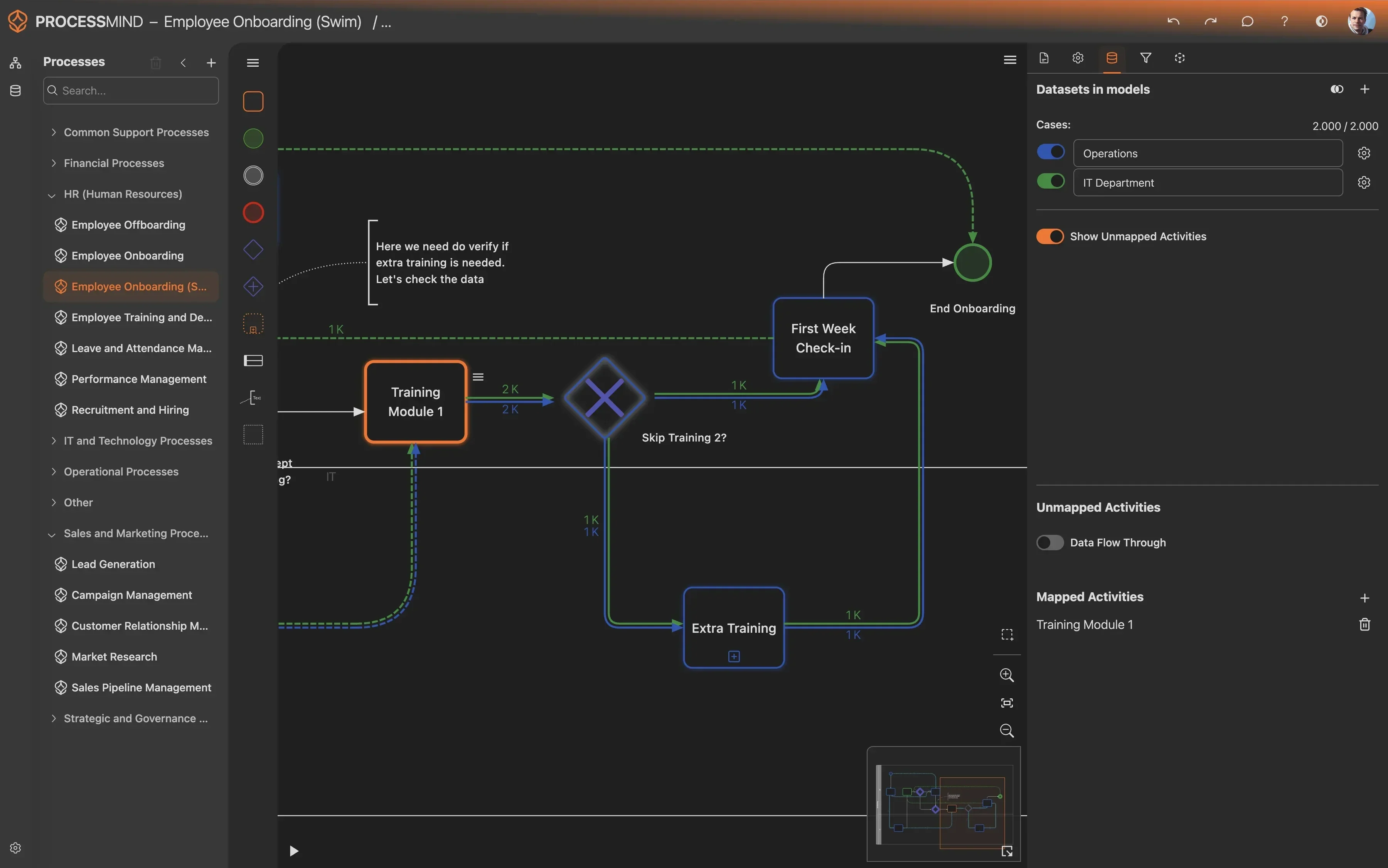
- Visualize actual service agent journeys
- Identify root causes of resolution delays
- Benchmark agent performance accurately
- Pinpoint SLA breaches and their origins
TYPICAL OUTCOMES
Driving Customer Service Excellence
These outcomes illustrate the tangible benefits organizations can realize by optimizing their Customer Service processes. By applying process mining to Salesforce Service Cloud data, especially Service Requests, businesses gain clear insights to streamline operations and enhance customer satisfaction.
Increase in cases resolved on time
Ensure more customer service requests meet their Service Level Agreement targets, enhancing customer trust and avoiding penalties. This demonstrates improved operational reliability and commitment.
Reduction in average time to resolve cases
Expedite the entire lifecycle of customer service requests, from creation to resolution, leading to quicker customer satisfaction and more efficient resource utilization.
Increase in cases resolved on first contact
Resolve a greater proportion of customer issues during their initial interaction, significantly improving customer satisfaction and reducing the need for follow-up contacts.
Reduction in transfers between agents
Decrease the number of times a customer service request is transferred between agents, streamlining the resolution path and improving customer experience by reducing repeated explanations.
Decrease in repeated non-value-added activities
Identify and eliminate instances where service requests involve repeated investigations or re-proposals of solutions, leading to significant efficiency gains and reduced operational costs.
Results vary based on process complexity and data quality. These figures represent typical improvements observed across implementations.
Recommended Data
FAQs
Frequently asked questions
It can pinpoint inefficiencies like inconsistent resolution times, excessive agent handoffs, and non-standard processes. Process mining visualizes the actual flow, exposing hidden bottlenecks and areas of rework that impact service quality and efficiency.
To perform process mining, you primarily need event logs from your Salesforce Service Cloud. This includes data points such as the Service Request ID, timestamps of each activity, and the activity name or description. Ideally, you also need the resource, agent, or role associated with each step.
Data extraction can be performed through standard Salesforce API integrations or by exporting reports. The goal is to collect event logs that capture the sequence of activities for each Service Request. Tools often connect directly or ingest CSV files.
You can expect improvements such as reduced average case resolution times and increased first contact resolution rates. Process mining helps standardize workflows, minimize agent handoffs, and optimize case prioritization logic, leading to better SLA adherence and customer satisfaction.
Initial setup, including data extraction and model creation, typically takes a few weeks, depending on data availability and complexity. You can begin seeing actionable insights and identifying process variations within the first month. Continuous monitoring then provides ongoing optimization opportunities.
While specific process mining software is used, many solutions offer user-friendly interfaces. Basic data understanding and analytical skills are beneficial for interpreting the results. Specialized technical skills are usually only needed for complex data integration or advanced model customization.
Process mining analyzes the timestamped event data to map the actual flow of every Service Request. By visualizing frequent deviations, loops, and delays, it highlights exactly where bottlenecks occur and identifies repeated steps or rework. This data-driven approach reveals efficiency gaps unseen in standard reports.
Yes, process mining can directly impact FCR by identifying the root causes of multiple contacts. It can reveal which types of cases, agent behaviors, or process paths lead to re-engagement, allowing you to target specific areas for improvement in training, knowledge bases, or workflow design.
Unlock Peak Customer Service Efficiency Now
Achieve 80% first-contact resolution and boost CSAT scores.
No credit card required