Improve Your Service Request Management

Select a process
Choose a process to continue working in your connected workspace.
Optimize Service Request Management in Freshservice
Service request processes often face bottlenecks, leading to delayed resolutions and frustrated users. Our platform helps you precisely identify these process inefficiencies. We then guide you through practical improvements to enhance efficiency and boost customer satisfaction. Discover how to transform your service delivery.
Download our pre-configured data template and address common challenges to reach your efficiency goals. Follow our six-step improvement plan and consult the Data Template Guide to transform your operations.
Show detailed description
Why Optimize Your Freshservice Service Request Management?
Effective Service Request Management is pivotal for maintaining high customer satisfaction, supporting business continuity, and controlling operational costs. In today's fast-paced environment, organizations rely heavily on efficient service delivery. When service requests, from password resets to software access, are handled slowly or inefficiently, the ripple effect can be significant. Delayed resolutions lead to frustrated users, reduced productivity, and potential financial losses due to prolonged downtimes or missed opportunities. Furthermore, inefficient processes consume valuable resources, diverting agents from more complex issues and increasing the overall cost of service delivery. Understanding the true end-to-end journey of each service request within Freshservice is the first step toward transforming your service desk from a cost center into a strategic enabler for your organization.
How Process Mining Enhances Service Request Insights
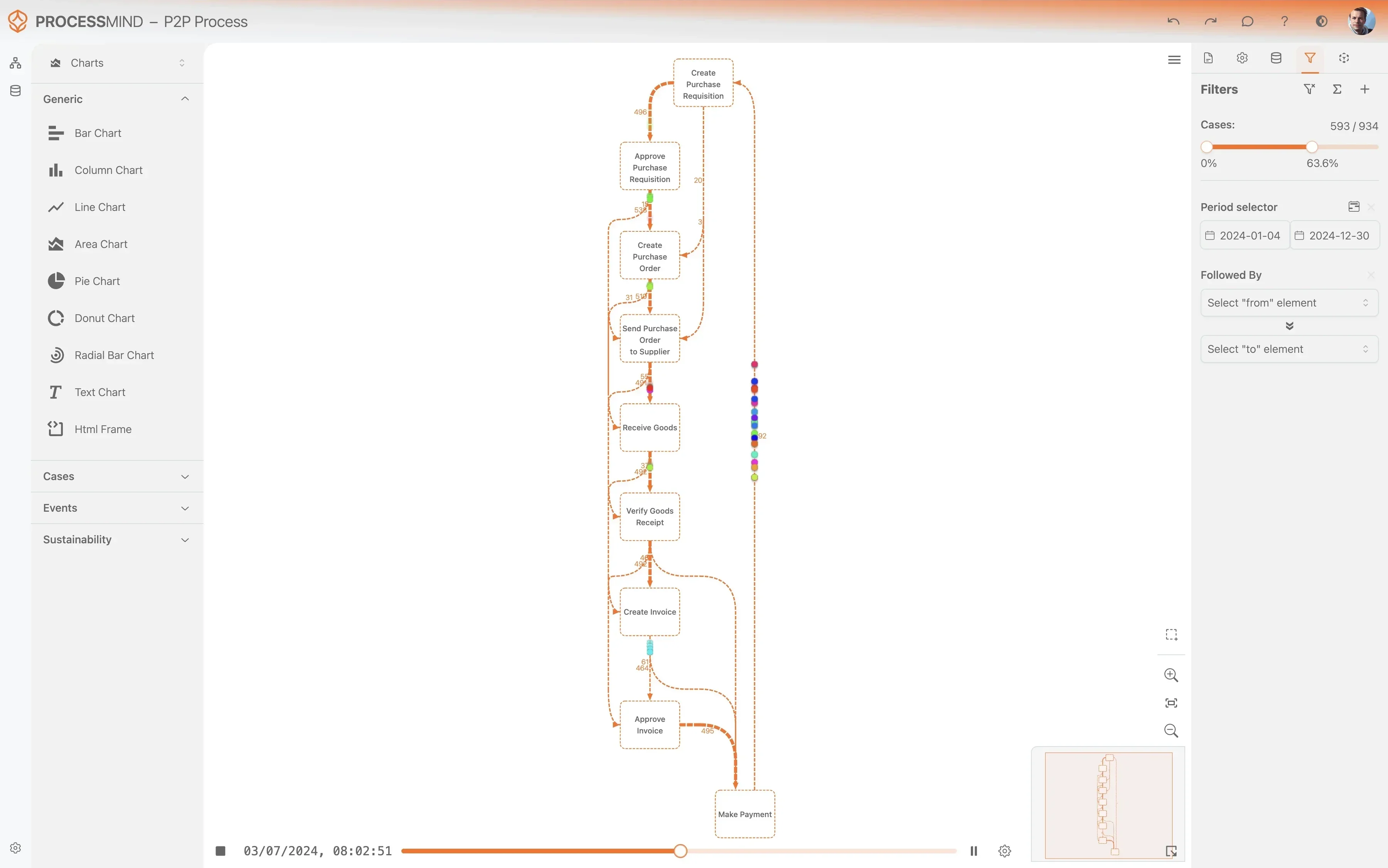
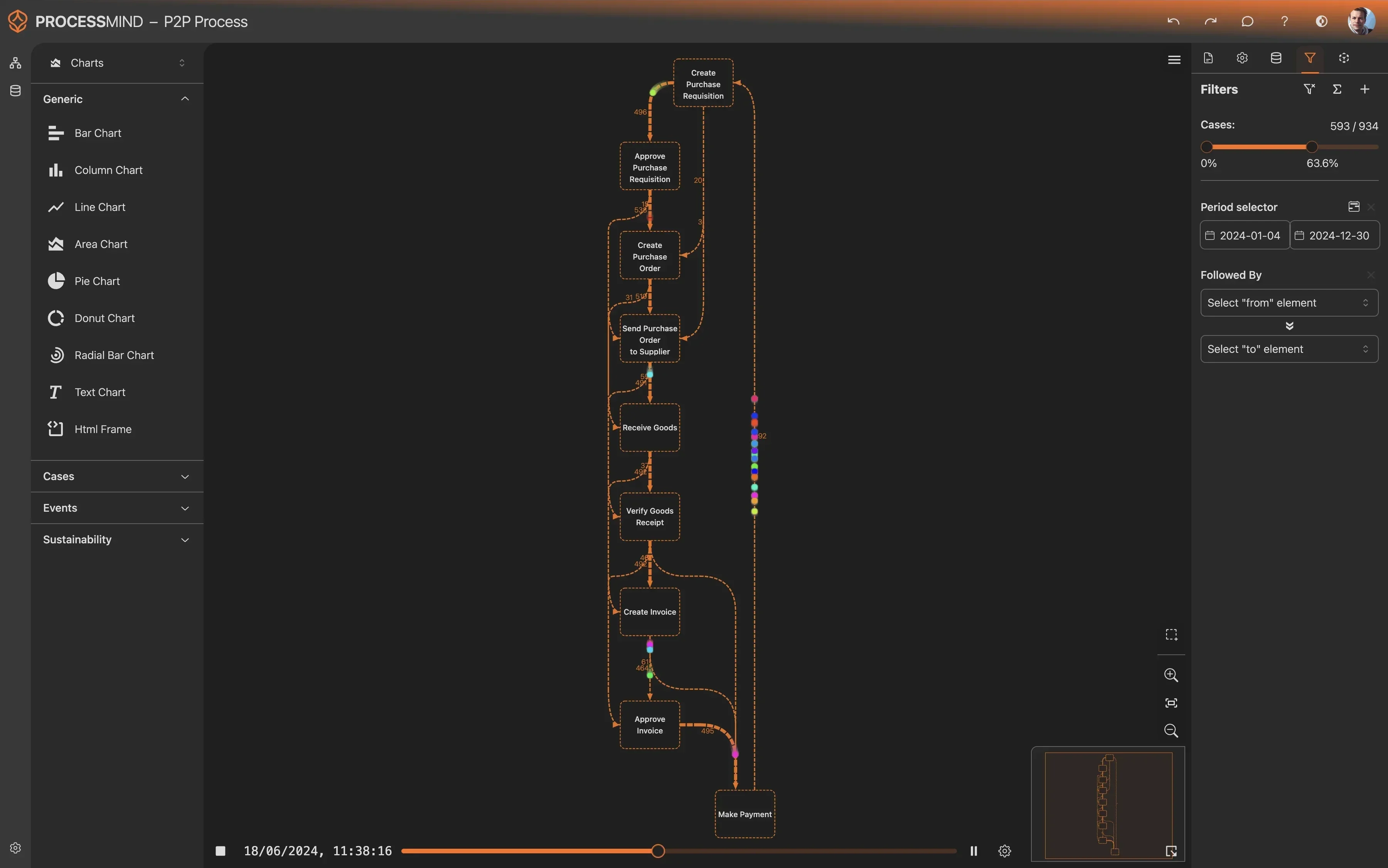
Process mining provides an unparalleled, objective view into your Freshservice Service Request Management process, transforming raw activity logs into visual, actionable insights. Unlike traditional reporting, which shows 'what' happened, process mining reveals 'how' and 'why' it happened by reconstructing the complete process flow from start to finish. This means tracking every event, from 'Service Request Created' to 'Service Request Closed', and every interaction in between. By analyzing the actual paths taken by service requests, you can precisely identify bottlenecks, deviations from standard operating procedures, and areas of unnecessary rework. You gain a comprehensive understanding of true cycle times, identify specific activities that cause delays, and assess the impact of various factors like 'Service Type' or 'Assigned Agent/Team' on resolution efficiency. This granular insight helps you answer critical questions about your Freshservice operations, such as how to improve Service Request Management and how to reduce Service Request Management cycle time.
Key Areas for Process Improvement
With process mining, you can uncover hidden inefficiencies and target specific areas for improvement within your Freshservice Service Request Management. Common improvement opportunities include:
- Bottleneck Identification: Pinpoint activities or agent queues where service requests frequently accumulate or experience significant delays. For example, identify if 'Information Requested from Requestor' or 'External Vendor Engaged' consistently prolongs resolution.
- Workflow Streamlining: Discover unnecessary steps, rework loops, or redundant activities in your service request fulfillment process. This could involve optimizing the triage process or reducing back-and-forth communications between teams.
- SLA Adherence: Analyze the root causes of SLA breaches, understanding exactly where requests fall out of compliance and why. This helps in proactive measures to meet crucial service level agreements consistently.
- Resource Allocation: Evaluate agent workload and efficiency, identifying opportunities to rebalance assignments or provide targeted training to improve response and resolution times for various 'Service Types' or 'Priorities'.
- Automation Opportunities: Identify manual tasks that are frequently repeated and suitable for automation, freeing up agents to focus on more complex issues.
Measurable Outcomes of Optimized Service Request Management
By leveraging process mining for Freshservice Service Request Management, you can achieve tangible, measurable benefits that directly impact your organization's bottom line and user satisfaction:
- Reduced Cycle Times: Significantly decrease the average time from service request submission to resolution, improving user experience and productivity.
- Improved SLA Compliance: Consistently meet or exceed your Service Level Agreements, enhancing reliability and trust in your service delivery.
- Lower Operational Costs: Optimize resource utilization, reduce manual effort, and eliminate rework, leading to substantial cost savings.
- Enhanced Customer Satisfaction: Faster, more efficient resolutions directly translate to happier users and improved perception of IT services.
- Increased Productivity: Empower your agents with streamlined processes and clearer guidelines, allowing them to handle more requests effectively and focus on value-added tasks.
Getting Started with Freshservice Service Request Optimization
Embark on your journey to optimize Service Request Management in Freshservice today. By applying process mining, you gain the clarity and data-driven insights needed to make informed decisions, implement effective changes, and continuously improve your service delivery. Start by connecting your Freshservice data to our analysis tools and let the insights guide your path to a more efficient, compliant, and user-centric service request process.
The 6-Step Improvement Path for Service Request Management
Download the Template
What to do
Get the pre-built Excel template specifically designed for Freshservice Service Request Management to ensure your data is structured correctly for analysis.
Why it matters
A standardized data structure is crucial for accurate process mapping and uncovering reliable insights into your service request workflows.
Expected outcome
A ready-to-use Excel template tailored for your Freshservice Service Request data.
Export Your Data
What to do
Extract 3-6 months of historical service request data from your Freshservice system, ensuring all relevant event logs and attributes are included. Fill the downloaded template with this real data.
Why it matters
Using a substantial historical dataset provides a comprehensive view of past performance, enabling identification of recurring issues and improvement areas.
Expected outcome
A populated data template containing several months of your Freshservice Service Request history.
Upload Your Dataset
What to do
Securely upload your completed data template to ProcessMind. The system will automatically prepare and analyze your Freshservice service request data.
Why it matters
Effortless data ingestion means you can quickly move from data collection to insight generation, accelerating your improvement efforts.
Expected outcome
Your Freshservice Service Request data securely processed and ready for visualization within ProcessMind.
Analyze Your Process
What to do
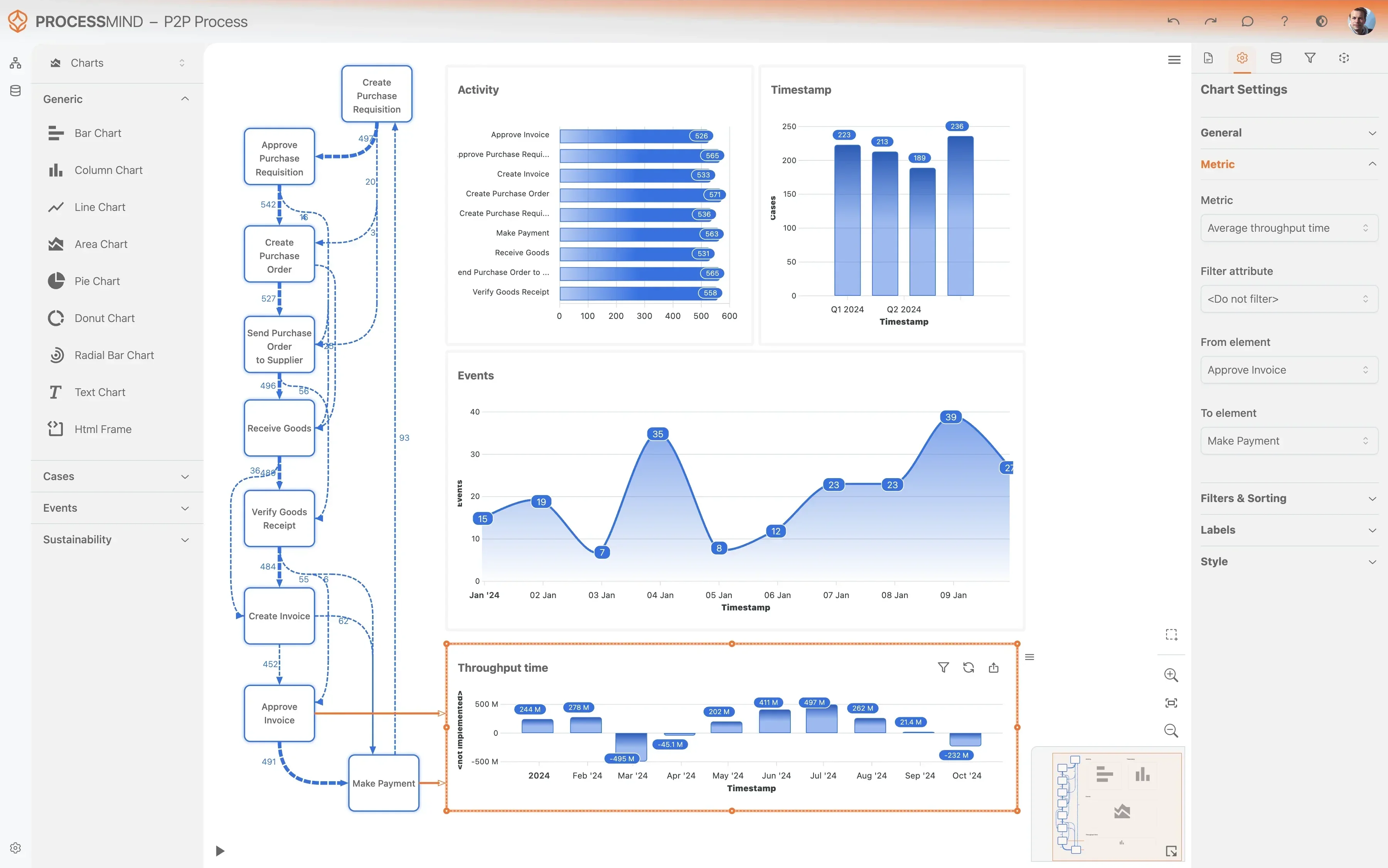
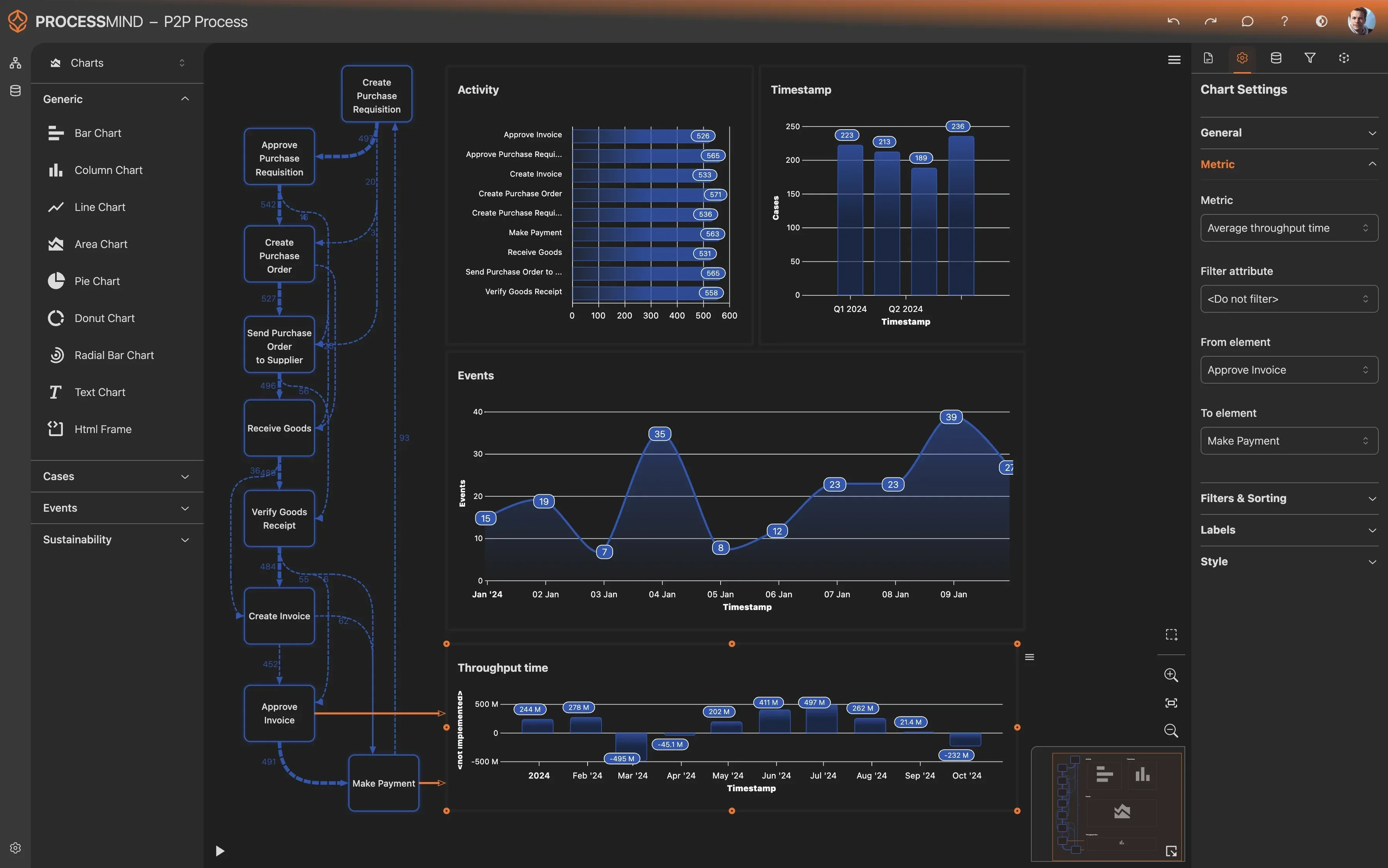
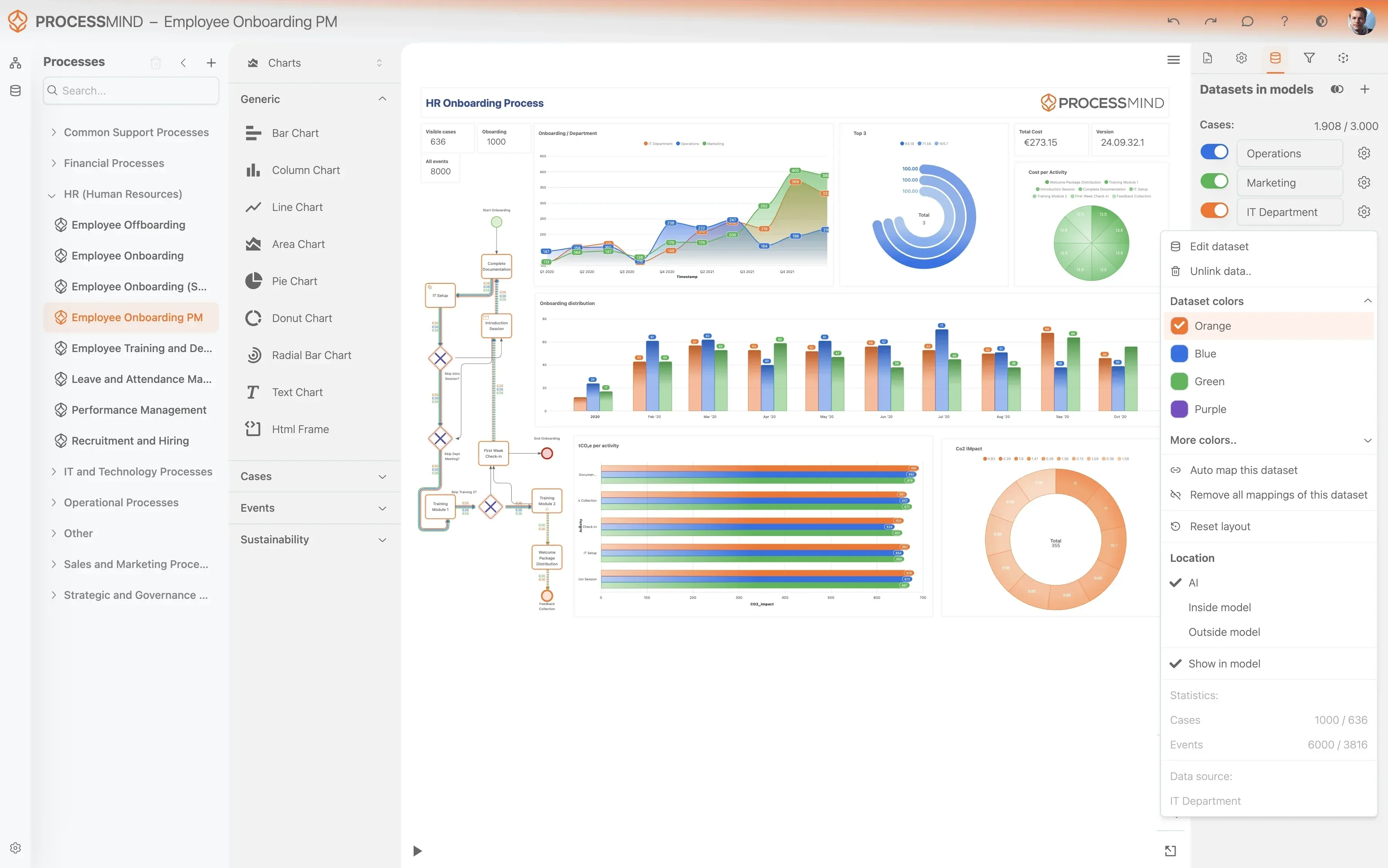
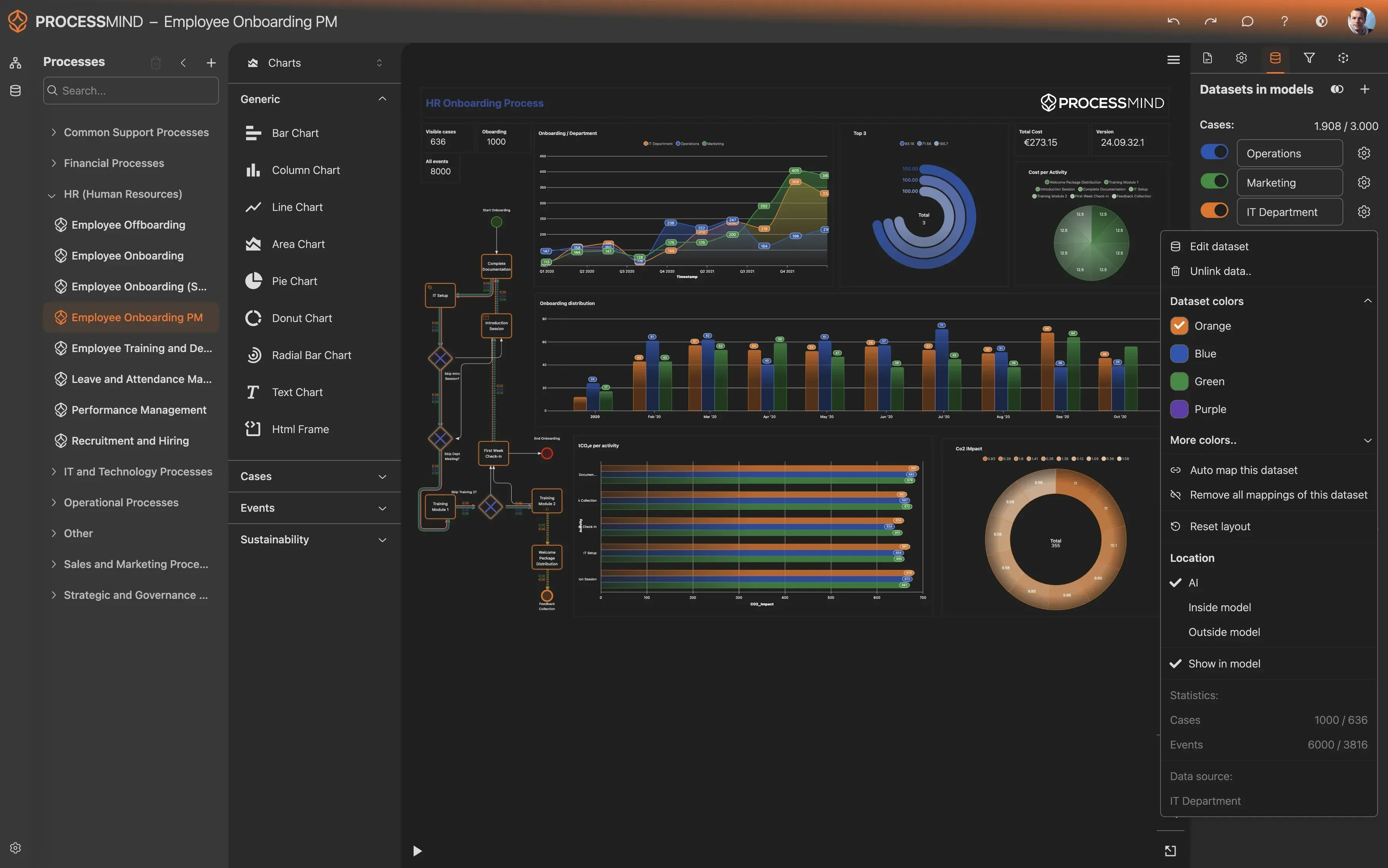
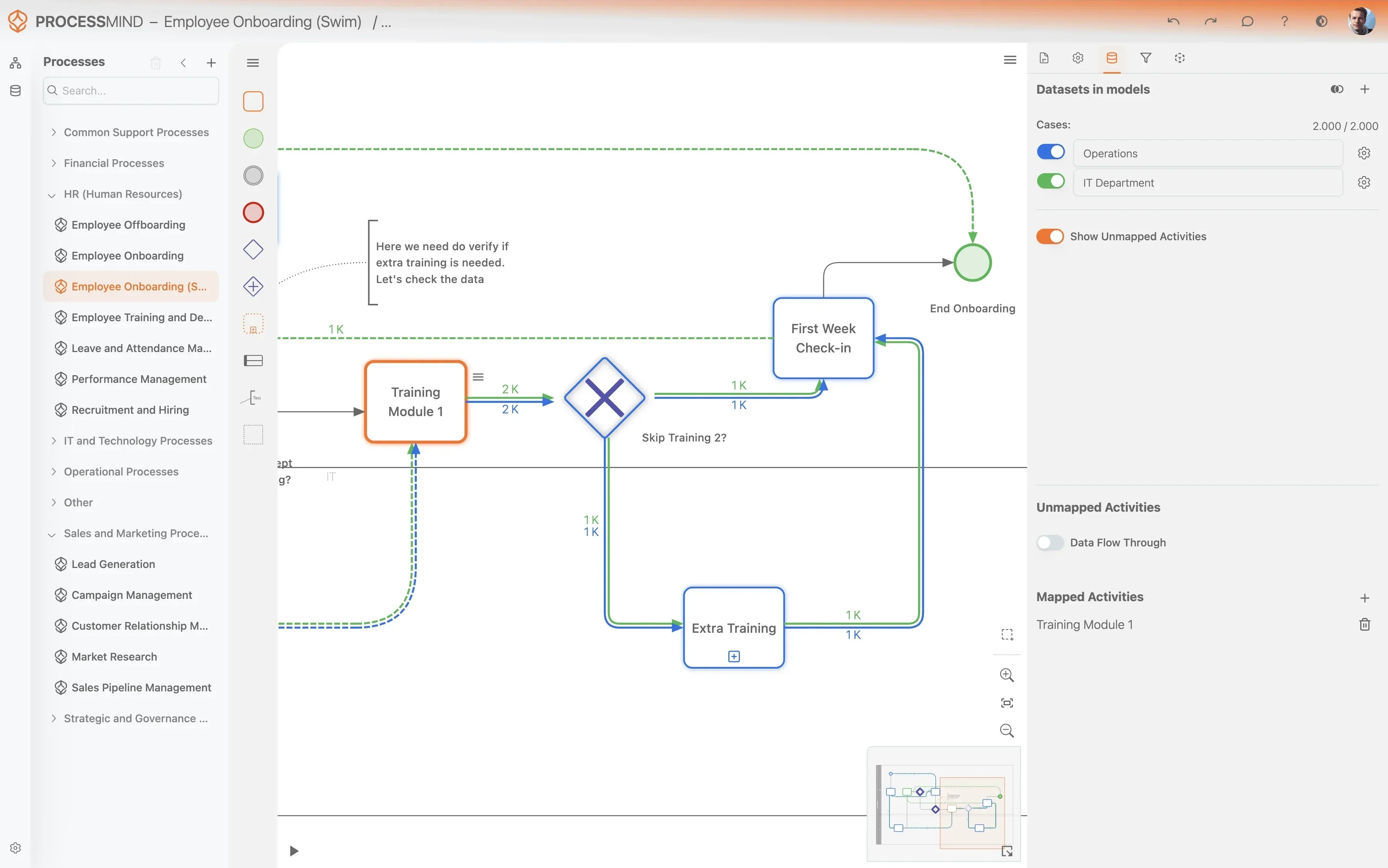
Explore the automatically generated dashboards and process maps, reviewing the AI-driven recommendations to understand bottlenecks and deviations in your service request flow.
Why it matters
Visualizing the actual process flow and identifying root causes helps pinpoint inefficiencies, compliance gaps, and areas for automation in Freshservice.
Expected outcome
Clear identification of critical bottlenecks, process variations, and data-backed improvement opportunities within your Service Request Management.
Implement Improvements
What to do
Prioritize the identified opportunities from your analysis. Apply these insights to refine your Freshservice workflows, reconfigure automation rules, and optimize agent assignments.
Why it matters
Translating insights into action directly leads to tangible improvements, such as faster resolution times and reduced manual effort for service requests.
Expected outcome
A set of concrete changes implemented in your Freshservice environment, targeting improved efficiency and service quality.
Monitor Your Process
What to do
Periodically re-upload updated Freshservice service request data to ProcessMind to track the impact of your implemented changes and monitor ongoing performance.
Why it matters
Continuous monitoring ensures that improvements are sustained and allows for proactive identification of new trends or emerging issues in your service request process.
Expected outcome
Ongoing visibility into the performance of your Service Request Management process and measurable KPI improvements over time.

TYPICAL OUTCOMES
Achieving Operational Excellence
These outcomes demonstrate the significant improvements organizations can realize by applying process mining to their Service Request Management workflows. By analyzing Freshservice data, businesses uncover inefficiencies and implement targeted optimizations that streamline operations and enhance user satisfaction.
Average reduction in end-to-end time
Process mining identifies bottlenecks, speeding up how quickly service requests are resolved from creation to completion, leading to more efficient service delivery.
Percentage of requests met within target
By highlighting frequent SLA breaches and their root causes, organizations can adjust processes and resources to consistently meet service level agreements, enhancing reliability.
Decrease in requests needing additional info
Pinpointing why requests are incomplete minimizes the need for agents to ask for more information, streamlining the process and reducing wasted effort.
Decrease in request reassignments
Understanding the reasons behind multiple agent reassignments allows for better initial routing and skill matching, reducing delays and agent frustration.
Fewer deviations from the ideal path
By identifying and eliminating non-standard process variations, organizations achieve greater consistency and predictability in service delivery, improving quality.
Increase in confirmed request resolutions
Improving the rate at which requestors confirm resolutions indicates more effective solutions and clearer communication, boosting overall customer satisfaction.
Specific results and improvements will vary depending on factors such as your organization's unique process complexity, data quality, and the scope of implementation. The examples provided represent typical benefits observed across various Service Request Management deployments.
Recommended Data
FAQs
Frequently asked questions
Process mining helps you visualize the actual flow of your service requests, identifying bottlenecks, deviations, and inefficiencies. It uncovers root causes for delays, SLA breaches, and rework, leading to data-driven optimization strategies. This approach enhances transparency and allows for continuous improvement.
You will typically need an event log containing the Service Request ID, timestamps for each activity, and the activity name itself. Additional attributes like agent, status, priority, and group can enrich the analysis and provide deeper insights into your process. This data is usually extracted via Freshservice APIs or database exports.
Initial insights can often be generated within a few weeks of data extraction and loading, allowing for quick identification of major pain points. Comprehensive analysis and actionable recommendations typically follow within one to three months, depending on the process complexity and data quality. This leads to faster, informed decision making.
Yes, process mining can precisely pinpoint where and why SLA breaches occur in your Service Request process. It identifies the specific activities, agents, or queues that contribute to delays, enabling targeted interventions to improve compliance. This helps you meet your service level agreements more consistently.
No, process mining is beneficial for organizations of all sizes looking to optimize their Service Request Management. Even smaller teams can gain significant insights into their workflows, identify quick wins, and improve service delivery efficiency using this approach. It scales to fit various operational needs.
You will need access to your Freshservice data, usually through API exports or direct database access, to extract the necessary event logs. A process mining tool, either cloud-based or on-premise, is then used to process and visualize this data. No extensive coding knowledge is typically required for tool operation.
By analyzing case flows and activity durations, process mining reveals imbalances in agent workload and inefficient routing patterns. This insight allows you to reallocate tasks more effectively, reduce reassignments, and improve overall agent efficiency and job satisfaction. It also identifies opportunities for automation.
Data quality is important, but process mining tools are often equipped to handle minor inconsistencies and can help identify data quality issues themselves. A dedicated data preparation phase is usually part of the project to ensure the analysis is based on reliable information. This process often improves future data integrity.
Boost Service Request Efficiency in Freshservice Today
End slow fulfillment and user frustration, achieve 70% automation.
No credit card required. Setup in minutes.