Improve Your Incident Management

Optimize Incident Resolution in ServiceNow Problem Management
The platform helps identify common bottlenecks that delay incident resolution. It uncovers inefficient workflows and steps that lead to missed service level agreements. By highlighting these areas, you can take targeted actions to streamline processes, improve efficiency, and boost overall satisfaction. This results in faster resolution times and better compliance.
Download our pre-configured data template and address common challenges to reach your efficiency goals. Follow our six-step improvement plan and consult the Data Template Guide to transform your operations.
Show detailed description
Why Optimizing Incident Management is Critical
Effective Incident Management is the backbone of reliable IT services. In today's fast-paced digital environment, every minute an incident remains unresolved can translate into significant business impact, affecting user productivity, customer satisfaction, and potentially revenue. Within ServiceNow, while robust tools exist, simply having a system does not guarantee efficiency. Many organizations struggle with incident resolution delays, frequent re-assignments, and a lack of transparency into why certain incidents take longer to resolve than others. These inefficiencies inflate operational costs, consume valuable support resources, and can lead to missed Service Level Agreements, damaging your organization's reputation and potentially incurring penalties. Understanding the true flow of your Incident Management process is the first step toward achieving operational excellence.
How Process Mining Illuminates Your ServiceNow Incident Flows
Process mining offers a powerful, data-driven approach to dissect and understand the actual execution of your Incident Management process within ServiceNow. Instead of relying on assumptions or anecdotal evidence, process mining extracts event logs directly from your ServiceNow data, particularly focusing on the incident table and its links to problem, problem_task, and known_error tables. It reconstructs the entire journey of each incident, from initial reporting to final closure, providing a visual map of all process variants. This end-to-end perspective allows you to see precisely where incidents are spending most of their time, identify unexpected detours, and uncover the root causes of delays. You can track crucial activities like "Incident Reported", "Diagnosis Initiated", "Transferred to Specialized Team", and "Resolution Applied/Tested" to understand how they truly unfold. This analytical power is essential for data-driven process optimization, transforming how you approach incident resolution.
Pinpointing Key Areas for Improvement in Incident Resolution
With process mining, you gain unprecedented clarity into areas ripe for process optimization. You can specifically target:
- Bottleneck Identification: Easily identify stages, groups, or agents where incidents consistently get stuck or experience prolonged delays, preventing swift resolution. For instance, is the initial categorization phase taking too long, or are handoffs between support tiers causing significant wait times?
- Process Variant Analysis: Discover and analyze non-standard paths that incidents take, understanding why some incidents deviate from the ideal flow and the impact of these deviations on cycle time and resource consumption. This helps in standardizing efficient practices.
- Rework Loops and Re-assignments: Visualize instances where incidents are frequently re-assigned or sent back to previous stages, indicating potential issues with initial diagnosis, knowledge base articles, or skill gaps within teams. This data can inform your ServiceNow Problem Management efforts by highlighting recurring issues that require deeper analysis and prevention.
- SLA Compliance Monitoring: Track actual performance against defined SLAs, not just at a summary level, but by drilling down into specific incident paths to understand why SLAs are being missed and identifying proactive measures.
- Automation Opportunities: Identify repetitive manual tasks or predictable decision points that can be automated within ServiceNow to accelerate resolution and reduce human error, thereby improving overall efficiency and reducing the incident cycle time.
Realizing Tangible Benefits: Faster Resolution, Higher Satisfaction
Applying process mining to your Incident Management in ServiceNow yields measurable improvements across your organization. By addressing identified bottlenecks and streamlining processes, you can expect:
- Reduced Incident Cycle Time: Significantly decrease the mean time to resolve (MTTR) incidents, getting your users back to productivity faster.
- Improved SLA Adherence: Consistently meet or exceed your service level agreements, enhancing trust and compliance.
- Lower Operational Costs: Optimize resource allocation and reduce wasted effort, leading to more cost-effective support operations.
- Enhanced User Satisfaction: Quicker and more efficient incident resolution directly translates to a better experience for your end-users and customers.
- Proactive Problem Management: The insights gained from analyzing incident patterns can directly feed into ServiceNow Problem Management, helping you identify and prevent recurring issues before they impact a wider user base.
- Data-Driven Decisions: Move from reactive troubleshooting to proactive, informed process improvement, fostering a culture of continuous optimization.
Begin Your Journey to Incident Management Excellence
Optimizing Incident Management is a continuous journey that starts with understanding your current state. By leveraging process mining with your ServiceNow data, you empower your teams with the insights needed to make impactful changes. This leads to faster incident resolution, reduced downtime, and improved user satisfaction, fundamentally transforming your IT service delivery. Embrace a data-driven approach to unlock the full potential of your Incident Management process.
The 6-Step Improvement Path for Incident Management
Download the Template
What to do
Get the Excel template designed specifically for Incident Management data extraction. This template ensures your data is structured correctly for analysis.
Why it matters
A standardized template prevents data inconsistencies and errors, laying a solid foundation for accurate process analysis and reliable insights.
Expected outcome
A ready-to-use Excel template with the correct column structure for Incident Management data.
Export Your Data
What to do
Extract 3-6 months of historical incident data from ServiceNow, focusing on relevant tables like 'incident' and 'problem'. Populate the downloaded template with this real-world information.
Why it matters
Accessing comprehensive historical data is crucial for identifying recurring patterns, understanding bottlenecks, and revealing the true efficiency of your incident handling process.
Expected outcome
A completed Excel template populated with 3-6 months of your organization's Incident Management data.
Upload Your Dataset
What to do
Securely upload your filled Incident Management data template to ProcessMind. The system will automatically process and prepare your dataset for analysis.
Why it matters
A quick and secure upload ensures your data is rapidly available for analysis, minimizing delays and accelerating your journey to process improvement.
Expected outcome
Your Incident Management data securely ingested and ready for visualization and in-depth analysis within ProcessMind.
Analyze Your Process
What to do
Explore the auto-generated dashboards, process maps, and performance metrics for your Incident Management process. Review AI-driven recommendations for potential improvements.
Why it matters
Visualizing your process flow and identifying hidden inefficiencies helps pinpoint exactly where resolution times can be reduced and service quality enhanced.
Expected outcome
A clear understanding of your Incident Management process performance, including bottlenecks and AI-identified optimization opportunities.
Implement Improvements
What to do
Prioritize the identified improvement opportunities, such as optimizing incident routing or streamlining resolution workflows in ServiceNow. Put these actions into practice.
Why it matters
Acting on data-driven insights directly leads to faster incident resolution, reduced operational costs, and improved satisfaction for your end-users.
Expected outcome
Concrete changes to your Incident Management process, based on insights, designed to improve efficiency and service delivery.
Monitor Your Process
What to do
Periodically re-upload fresh Incident Management data to ProcessMind. Track the impact of your implemented changes and observe trends in key performance indicators over time.
Why it matters
Continuous monitoring ensures that improvements are sustained and allows for proactive adjustments, fostering an ongoing culture of operational excellence.
Expected outcome
Measurable improvements in Incident Management KPIs, demonstrating the positive impact of your optimization efforts and sustained efficiency.
WHAT YOU WILL GET
Uncover Your Real Incident Resolution Journey
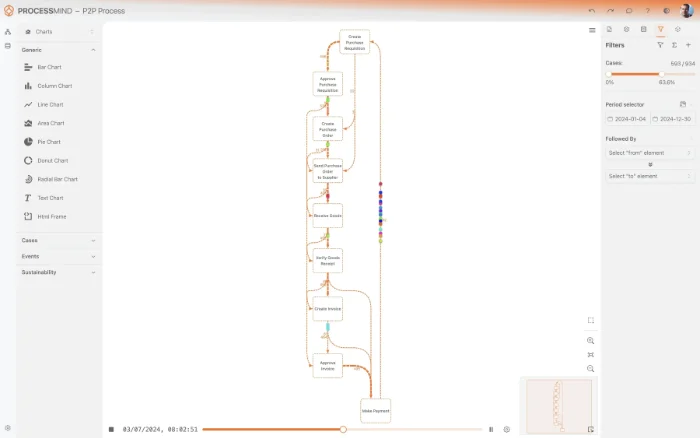
- Visualize actual incident resolution flows
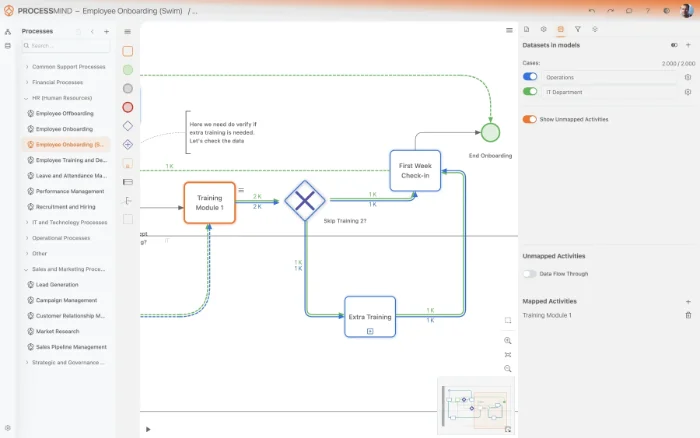
- Identify root causes of delays and reworks
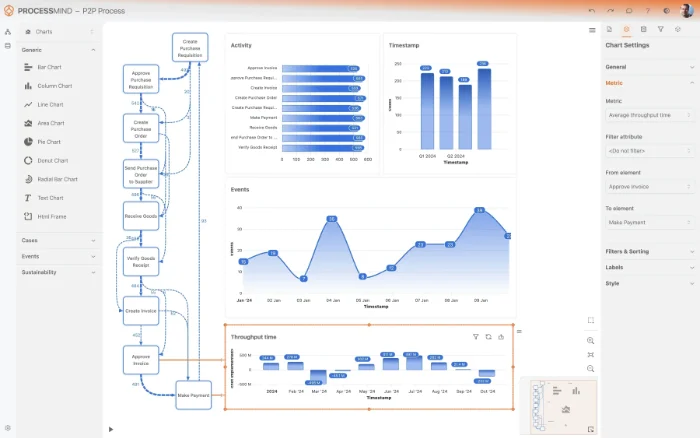
- Monitor SLA compliance and deviations
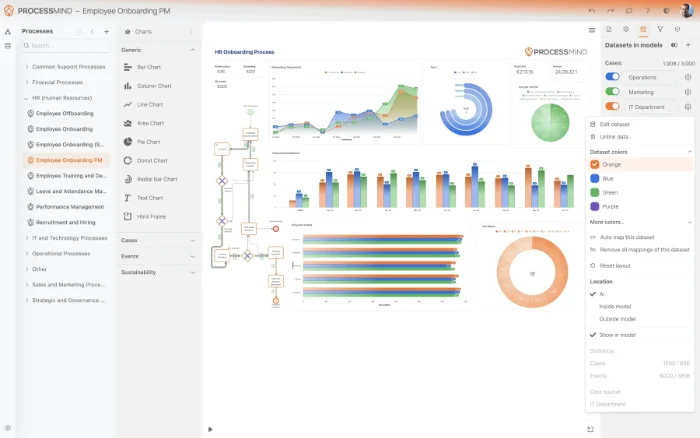
- Benchmark team and process performance
TYPICAL OUTCOMES
Realizing Efficiency Gains in Incident Management
By leveraging process mining on ServiceNow Problem Management data, organizations gain clear insights into their incident management workflows. These insights enable them to identify inefficiencies and implement targeted improvements, leading to tangible benefits.
Average reduction in resolution time
Process mining identifies bottlenecks and rework, allowing teams to streamline resolution paths and accelerate problem-solving, reducing overall incident cycle time.
Reduction in critical incident breaches
By pinpointing non-compliant paths and delays, organizations can proactively address issues affecting critical incidents, significantly reducing SLA breach rates.
Streamlining incident assignments
Process insights reveal excessive reassignments, enabling teams to optimize routing rules and improve first-contact resolution, minimizing handoffs and accelerating resolution.
Lower volume of repeated incidents
Process mining helps identify the root causes of recurring incidents, allowing for the implementation of permanent fixes and reducing the overall volume of repeat problems.
Faster communication and updates
By reducing communication lag and ensuring timely updates, organizations enhance the user experience during incident resolution, leading to higher satisfaction levels.
Results can vary significantly depending on the complexity of your incident management process and the quality of your operational data. The outcomes presented reflect common improvements realized by organizations utilizing process mining solutions.
Recommended Data
FAQs
Frequently asked questions
Process mining analyzes your Incident Management data from ServiceNow to reveal the actual process flow. It identifies bottlenecks, deviations from standard paths, and areas contributing to excessive resolution times or SLA breaches, providing data-driven insights for optimization.
To begin, you typically need incident logs containing at least incident ID, activity description, timestamp, and the agent or system responsible for each activity. Additional fields like incident category, priority, and assignment group can enrich the analysis. This data is usually extracted from the incident table and related tables in ServiceNow.
Initial insights can often be generated within a few weeks of data extraction and preparation, providing immediate value regarding bottlenecks and deviations. Deeper analysis and subsequent implementation of changes will naturally take longer, depending on the complexity of the identified issues and organizational agility.
You can expect to see reductions in incident resolution times, improved critical incident SLA compliance, and fewer incident reassignments. Process mining also helps in standardizing resolution paths and optimizing agent workload distribution, leading to a more efficient and consistent service.
The primary technical requirement is access to your ServiceNow instance for data extraction, typically via API or direct database access, depending on your setup and security policies. You will also need a process mining tool capable of ingesting, processing, and visualizing event log data.
Yes, process mining can effectively identify patterns of recurring incidents and highlight processes that frequently lead to the same issues. By visualizing the common paths and activities, it assists in pinpointing potential root causes that contribute to these repeated problems, facilitating permanent fixes.
While process mining is highly effective for complex processes, it can also provide significant value for smaller or less complex Incident Management workflows. The methodology scales well, offering insights regardless of the process size, though the depth of findings may vary.
Yes, typically some level of IT support or a ServiceNow administrator's involvement is required to ensure secure and efficient data extraction. They can help configure necessary access, create appropriate reports, or set up API integrations to retrieve the required incident log data.
Resolve Incidents Faster: Boost ServiceNow Efficiency Now
Reduce MTTR by 35% in ServiceNow. Pinpoint issues, boost satisfaction.
No credit card required. Start optimizing in minutes.