Improve Your Service Request Management

Select a process
Choose a process to continue working in your connected workspace.
Optimize Jira Service Request Management for Faster Resolution
Service Request Management often faces bottlenecks, impacting efficiency and compliance. Our solution helps you track the complete process flow, identify delays, and discover opportunities for optimization. This ensures swift resolution and improved customer satisfaction.
Download our pre-configured data template and address common challenges to reach your efficiency goals. Follow our six-step improvement plan and consult the Data Template Guide to transform your operations.
Show detailed description
Unlocking Efficiency: Why Optimize Service Request Management?
Service Request Management is a critical function for any organization, serving as the primary channel for users to access services, information, and support. In today's fast-paced environment, the efficiency and effectiveness of this process directly impact customer satisfaction, operational costs, and overall business agility. When operating within a robust system like Jira Service Management, you have the foundational tools, but the real challenge lies in ensuring that service requests flow smoothly from submission to resolution, free from unnecessary delays and rework.
Inefficient Service Request Management can lead to a cascade of negative consequences. Extended cycle times frustrate users, potentially leading to churn or decreased productivity. Bottlenecks cause backlogs, straining resources and increasing operational expenses. Furthermore, non-compliance with service level agreements (SLAs) can damage your reputation and incur penalties. Understanding the true journey of a service request, beyond what static reports show, is essential for continuous improvement and delivering exceptional service.
How Process Mining Transforms Service Request Analysis
Traditional reporting tools in Jira Service Management provide valuable metrics, but they often struggle to reveal the complete, end-to-end flow of your Service Request Management process. This is where process mining offers a revolutionary approach. By leveraging the comprehensive event log data already residing within your Jira Service Management system, process mining constructs an objective, data-driven map of your actual process.
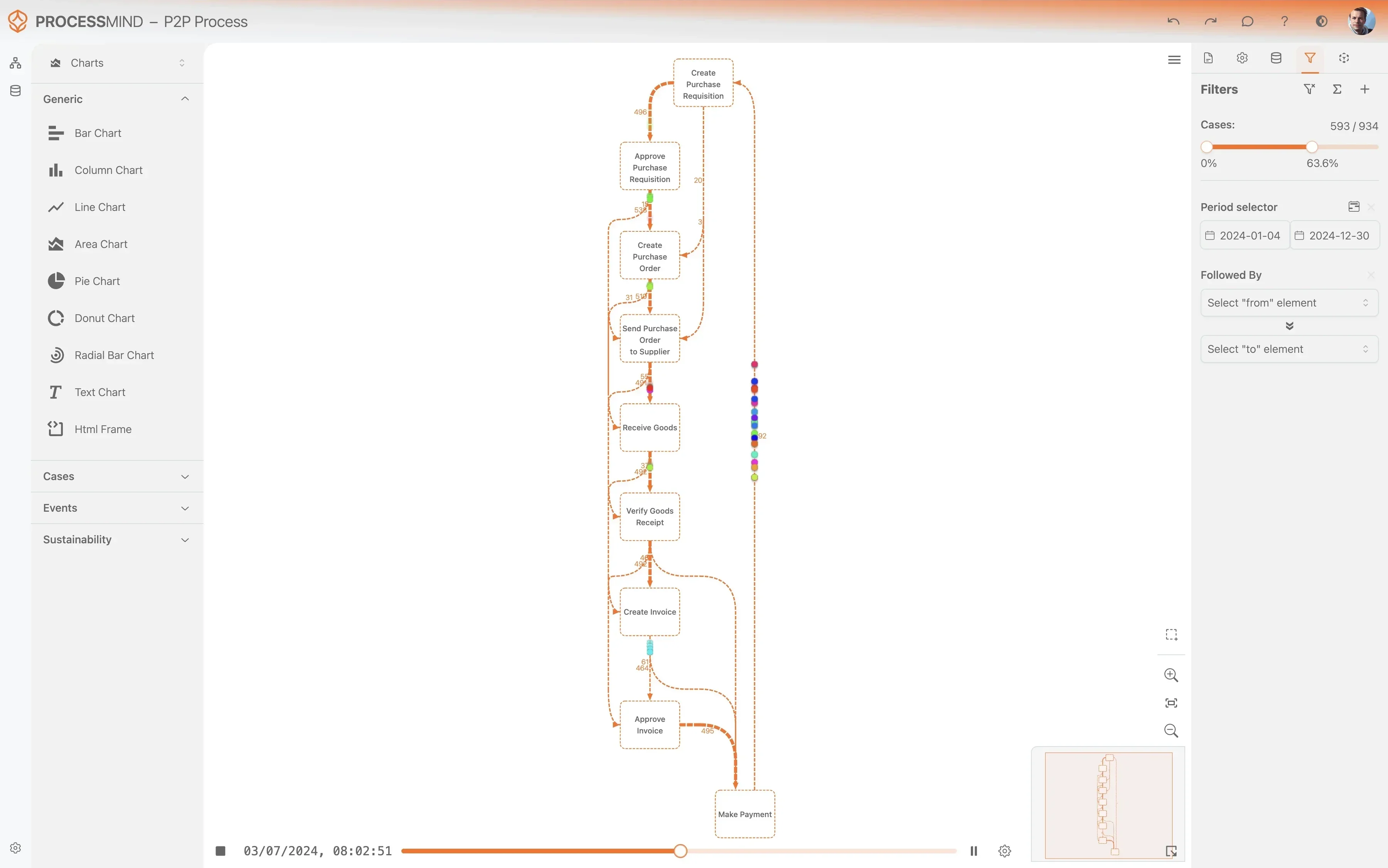
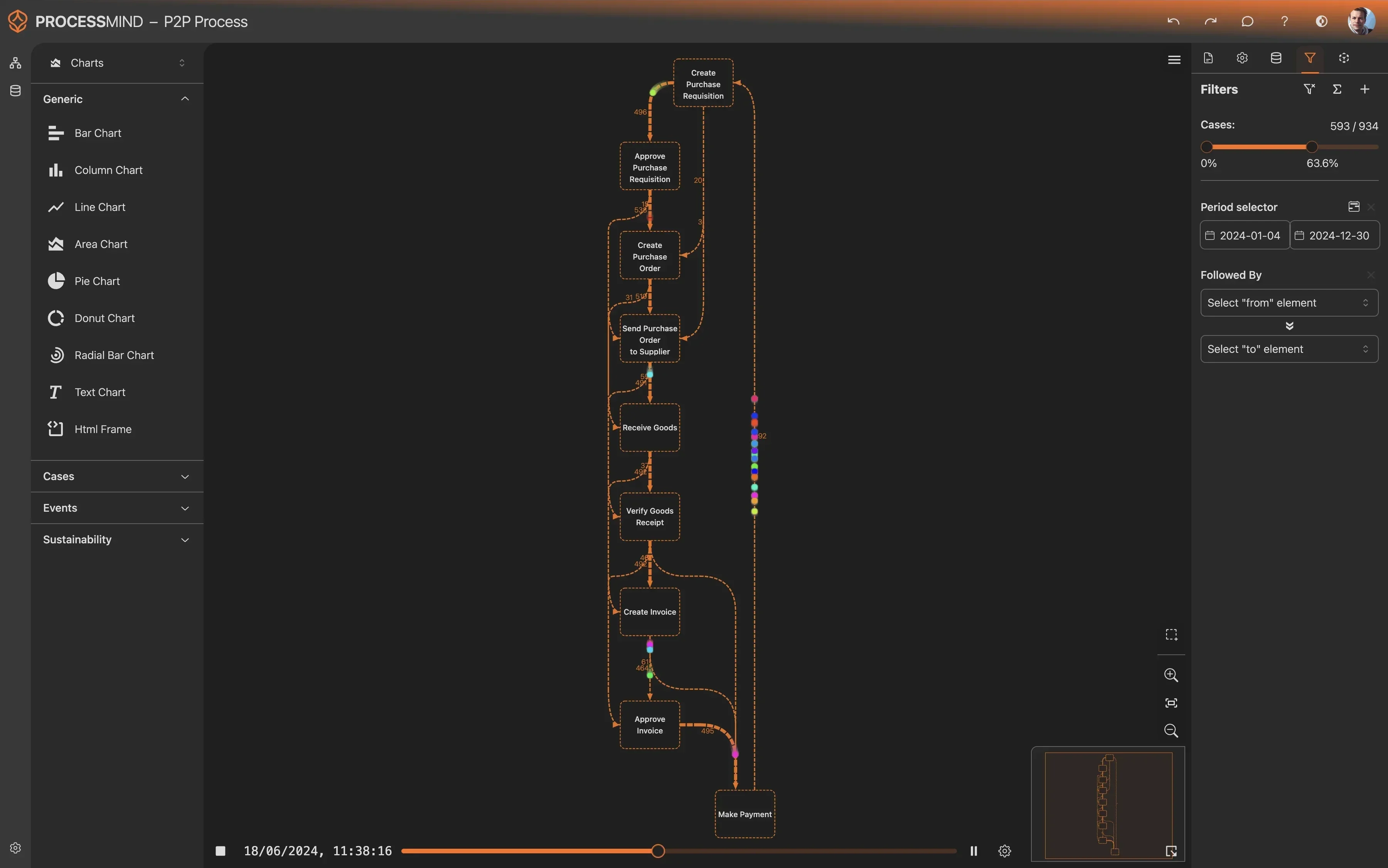
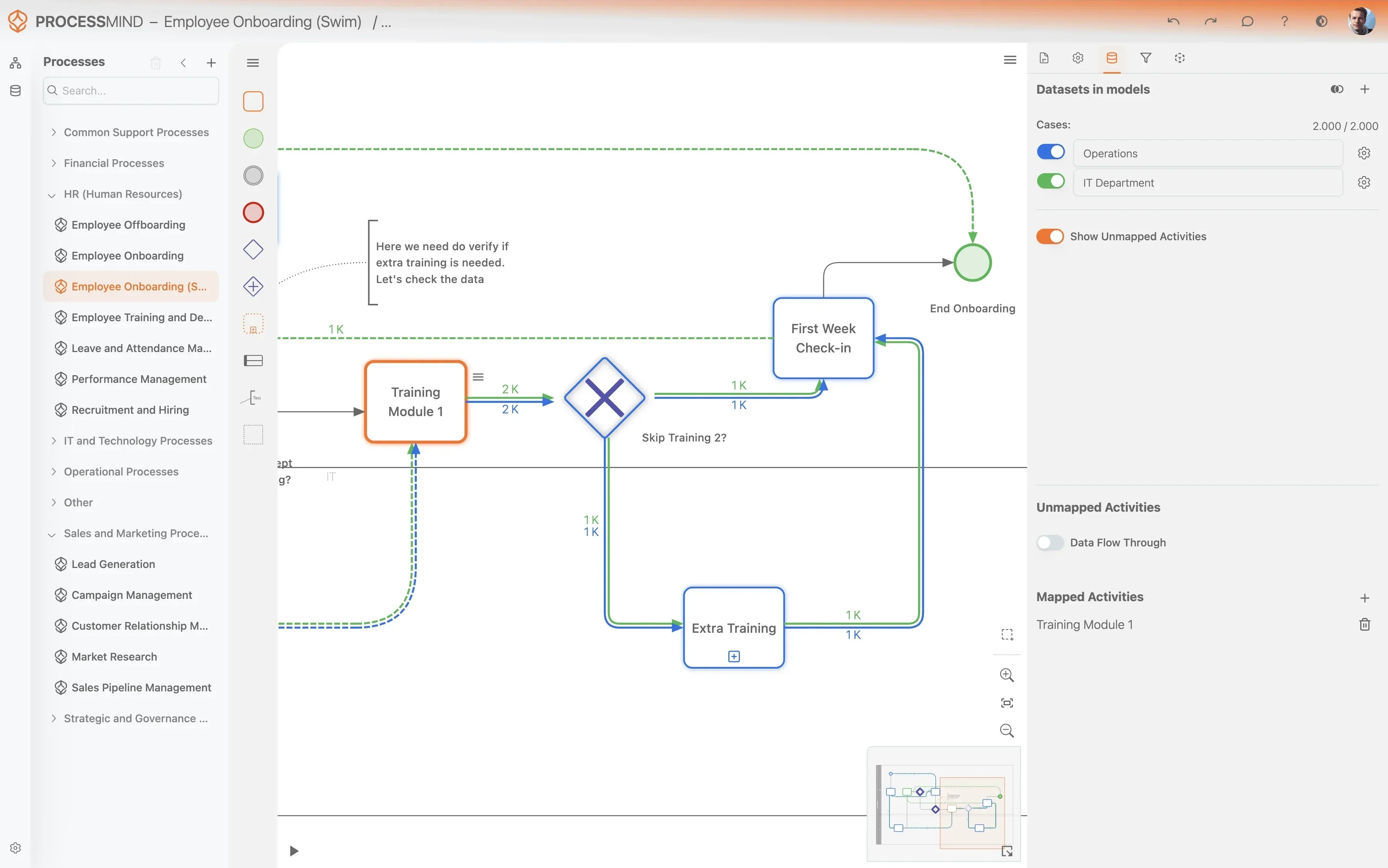
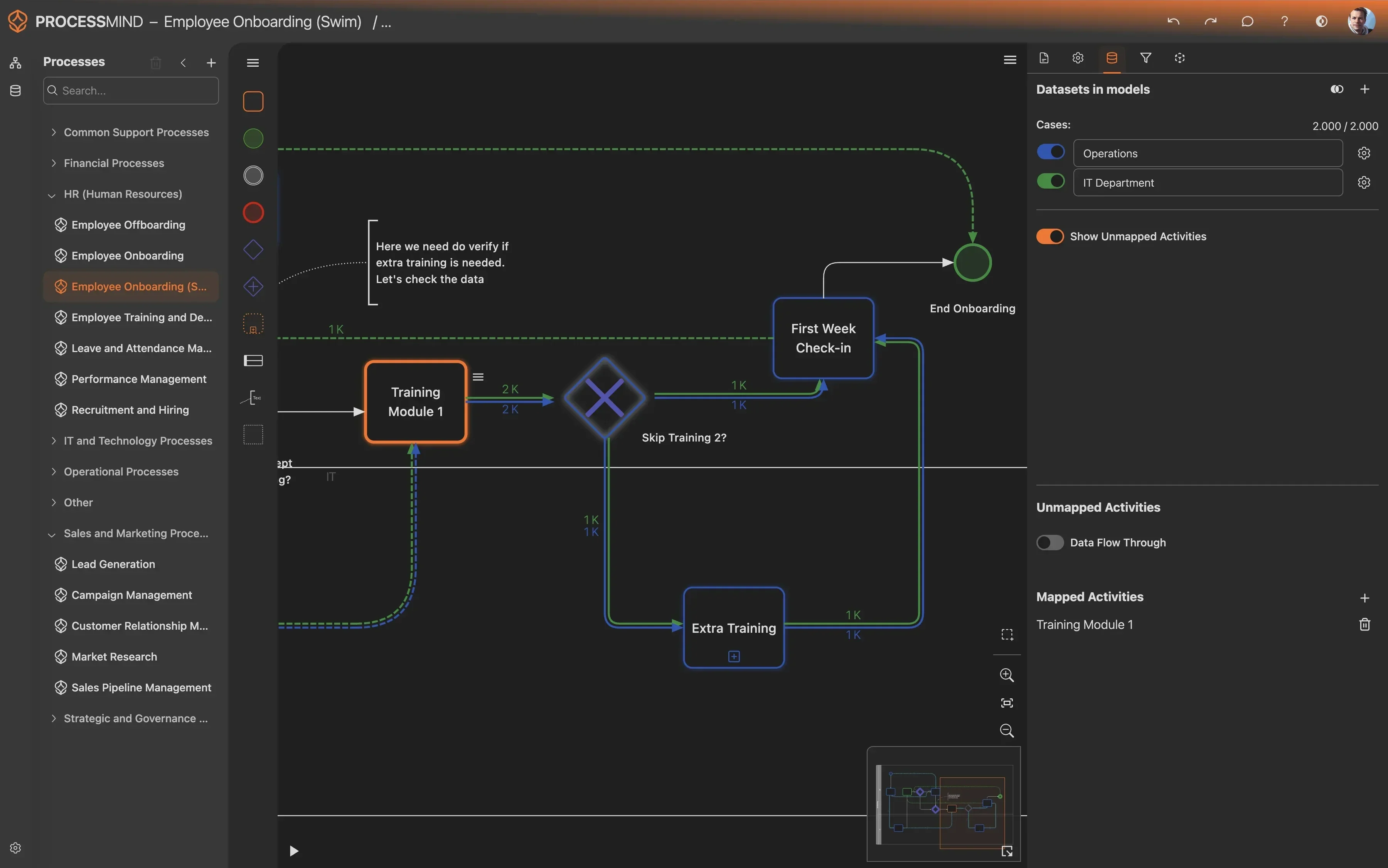
Process mining takes your Service Request ID as the case identifier and tracks every activity, such as "Service Request Created," "Service Request Triaged," "Information Requested from Requestor," or "Service Request Resolved." It visualizes the actual paths requests take, highlighting deviations from the ideal process, identifying where requests get stuck, and quantifying the time spent in each activity or transition. This allows you to move beyond assumptions and uncover hidden inefficiencies, rework loops, and unexpected variations that significantly impact your service request cycle time. You can analyze specific service types, agent performance, or request channels to pinpoint exactly how to improve Service Request Management.
Key Areas for Process Improvement
With process mining, you gain precise insights into several critical improvement areas within your Service Request Management process:
- Bottleneck Identification: Easily identify specific steps or transitions where service requests accumulate or experience the longest waiting times. For instance, you might discover that the "Internal Review Performed" activity frequently causes significant delays for certain request types.
- Rework and Deviations: Visualize common rework loops, such as requests repeatedly moving between "Solution Developed/Implemented" and "Internal Review Performed" or frequently requiring "Information Requested from Requestor." This reveals opportunities to streamline initial information gathering or improve solution quality.
- SLA Adherence Analysis: Pinpoint exactly which process paths or agents are contributing to SLA breaches. Understand if delays occur during prioritization, assignment, or resolution confirmation.
- Resource Allocation Optimization: Analyze agent workload and performance based on actual process execution, helping you balance assignments and identify training needs for specific activities.
- Automation Opportunities: Discover manual, repetitive tasks that, when analyzed through process flows, are prime candidates for automation within your Jira Service Management workflows, reducing human error and accelerating resolution.
Expected Outcomes of Process Optimization
Optimizing your Service Request Management process using process mining yields tangible, measurable benefits that directly impact your organization's bottom line and reputation. You can expect to:
- Reduce Service Request Cycle Time: By identifying and eliminating bottlenecks and rework, you will significantly decrease the average time it takes to resolve a service request, leading to faster service delivery.
- Enhance Customer Satisfaction: Swift and efficient resolution of requests directly translates into happier users and improved customer loyalty.
- Lower Operational Costs: Streamlining processes, reducing rework, and optimizing resource allocation will lead to substantial cost savings by minimizing wasted effort and maximizing efficiency.
- Improve Compliance and Governance: Ensure your service request processes consistently adhere to internal policies, industry regulations, and external SLAs, reducing risks and maintaining trust.
- Boost Team Productivity: Empower your agents with clearer processes and reduce time spent on inefficient activities, allowing them to focus on value-added tasks.
Getting Started with Your Optimization Journey
Embarking on the journey to optimize your Service Request Management process in Jira Service Management does not require complex technical expertise. Our approach is designed to guide you through leveraging your existing Jira data to gain unprecedented insights into your process performance. By applying process mining, you can transform your service delivery, moving from reactive problem-solving to proactive, data-driven improvement. Begin discovering how to improve Service Request Management today and unlock the full potential of your service operations.
The 6-Step Improvement Path for Service Request Management
Download the Template
What to do
Obtain the pre-configured Excel template tailored for Service Request Management data. This template provides the correct structure for your process data.
Why it matters
A standardized data structure is crucial for accurate analysis, ensuring all necessary information is captured consistently for meaningful insights.
Expected outcome
A clear, ready-to-use template for organizing your Service Request Management process data.
Export Your Data
What to do
Extract 3-6 months of historical Service Request data from Jira Service Management. Populate the downloaded template with your actual process events and attributes.
Why it matters
Leveraging historical data provides a realistic view of past performance, revealing recurring patterns, inefficiencies, and compliance gaps.
Expected outcome
A comprehensive dataset of your Service Request Management activities, ready for process mining analysis.
Upload Your Dataset
What to do
Securely upload your populated Excel template to the ProcessMind platform. The system will automatically prepare your data for analysis.
Why it matters
Effortless data ingestion ensures a quick start to your analysis, transforming raw data into an understandable process model without manual mapping.
Expected outcome
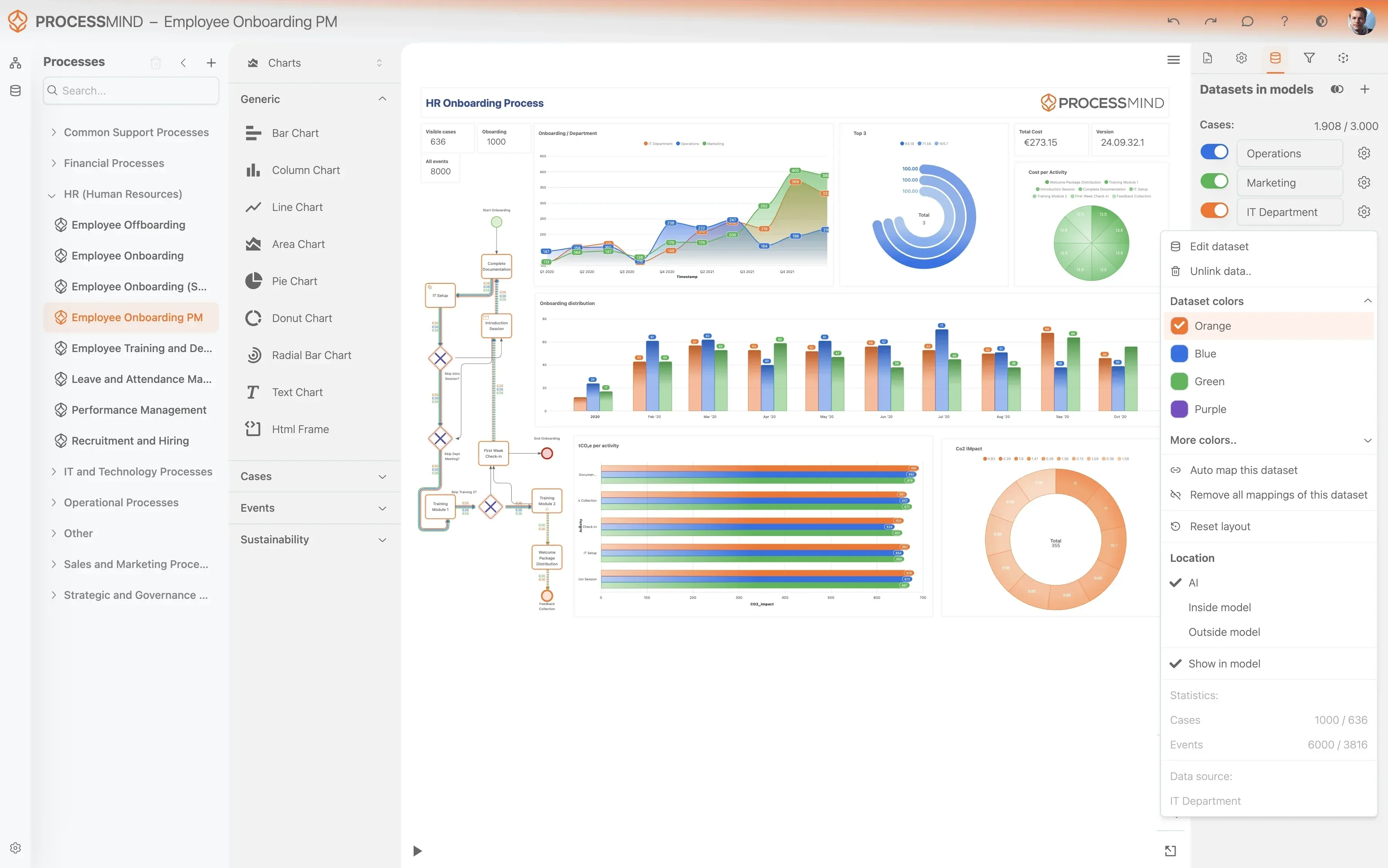
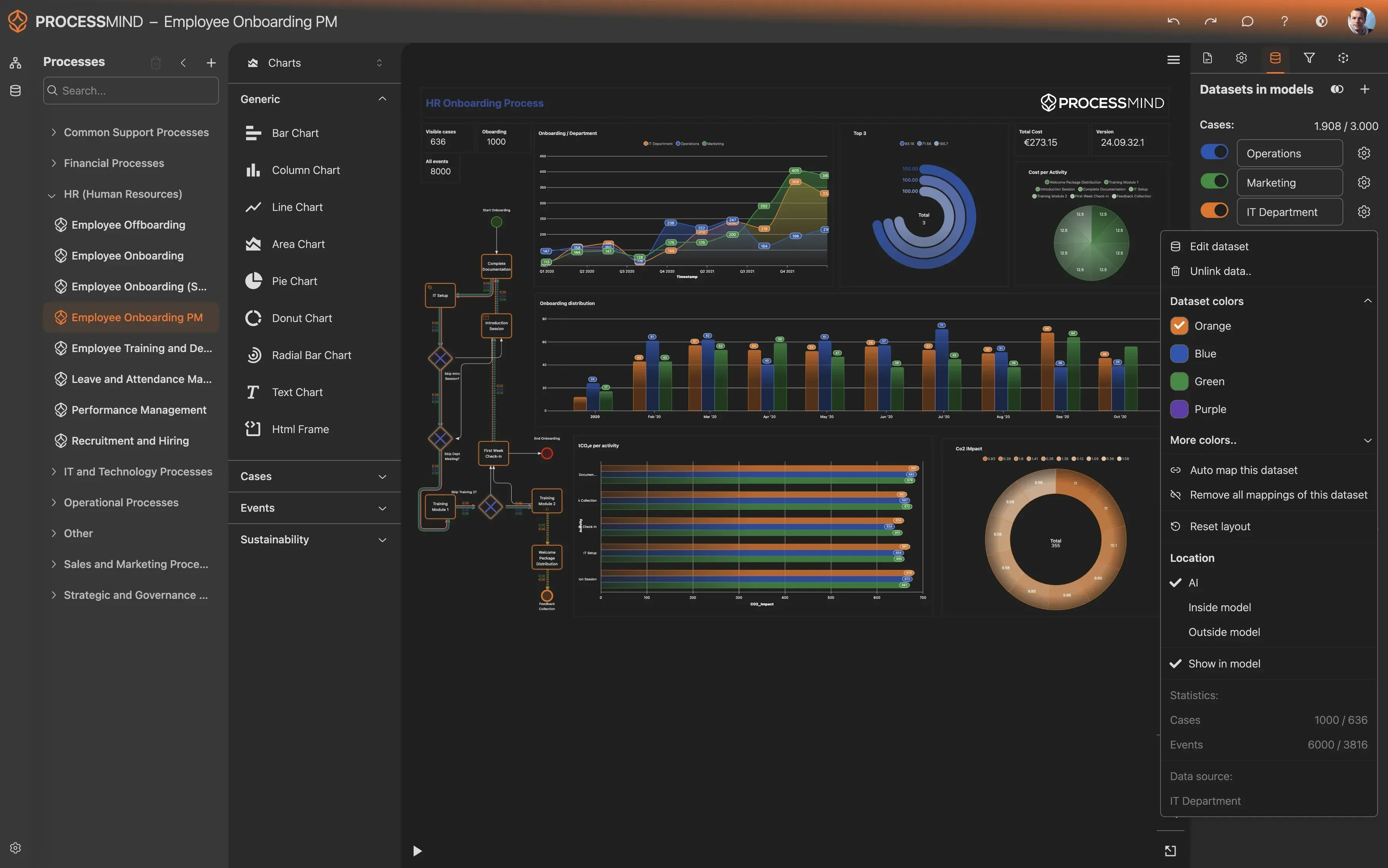
Your Service Request Management data processed and visualized within ProcessMind, forming an interactive process map.
Analyze Your Process
What to do
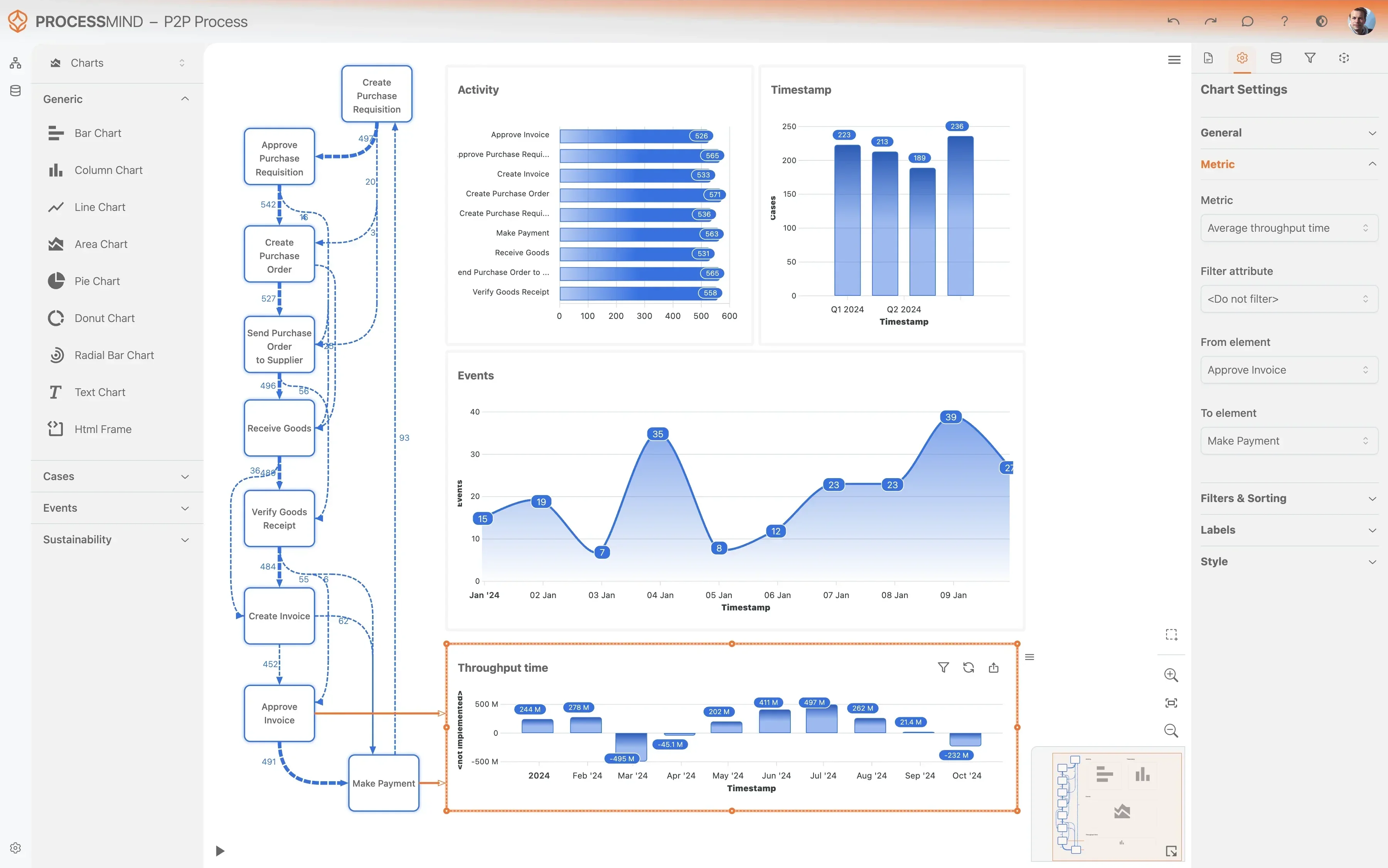
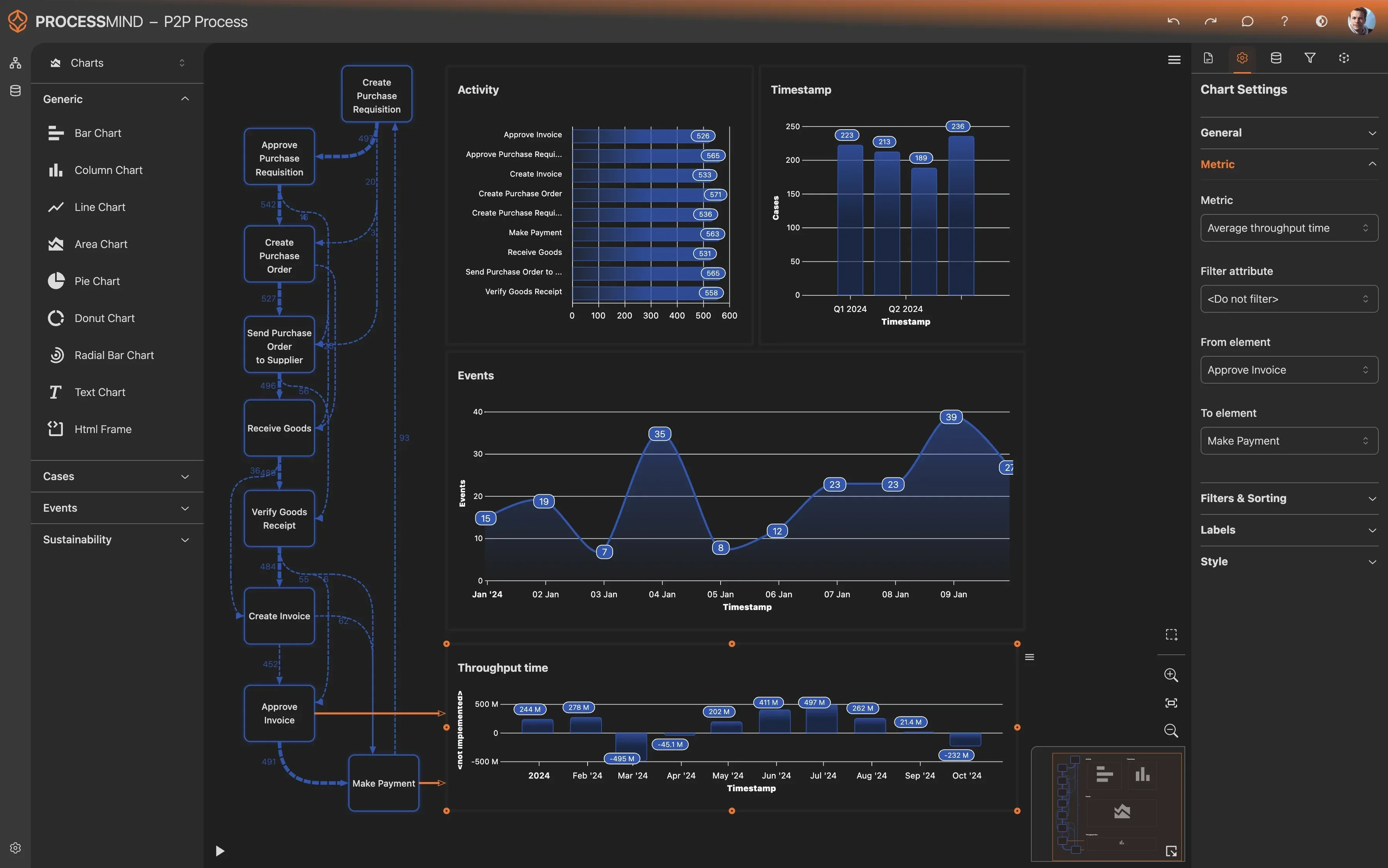
Explore the auto-generated dashboards to visualize your Service Request Management process flow. Identify bottlenecks, rework, and compliance deviations.
Why it matters
Gain deep insights into how service requests actually flow, not just how they should. Pinpoint exact areas for improvement to enhance efficiency.
Expected outcome
A clear understanding of your process's strengths and weaknesses, supported by data-driven insights and AI-driven recommendations.
Implement Improvements
What to do
Prioritize and execute the identified optimization opportunities, such as streamlining request triage or automating routine tasks within Jira Service Management.
Why it matters
Translating insights into action is key to realizing tangible benefits like faster resolution times, reduced operational costs, and improved agent experience.
Expected outcome
Strategic changes implemented in your Service Request Management process, targeting identified inefficiencies and pain points.
Monitor Your Process
What to do
Periodically re-export and upload updated Service Request data from Jira Service Management. Continuously track the impact of implemented changes over time.
Why it matters
Continuous monitoring ensures sustained improvements, allowing you to adapt to new challenges and maintain an optimized, high-performing service delivery.
Expected outcome
Ongoing performance tracking of your Service Request Management, with measurable KPI improvements and sustained operational excellence.
TYPICAL OUTCOMES
Real-World Improvements in Service Request Management
These outcomes illustrate the tangible benefits organizations can achieve by applying process mining to their Service Request Management workflows, particularly when analyzing Service Request ID data from systems like Jira Service Management. They highlight common areas of improvement identified through data-driven insights.
Reduced average cycle time
Process mining identifies bottlenecks and rework loops, streamlining the path from request creation to resolution, significantly cutting down the overall time. This means customers get their issues resolved quicker.
Increased compliance with service targets
By visualizing actual request paths against target SLAs, organizations can proactively address deviations and resource allocation issues, ensuring more requests meet their service commitments. This enhances service quality and customer trust.
Fewer issues needing re-addressing
Process mining reveals root causes for reopened requests, such as incomplete initial solutions or insufficient information gathering. Addressing these underlying issues reduces rework, saving agent time and improving customer satisfaction.
Quicker assignment to agents
Process mining uncovers delays in the initial triage and assignment phases, often due to manual steps or inefficient routing rules. Optimizing these steps ensures requests reach the right agent faster, speeding up the entire process.
Adherence to defined procedures
Process mining provides an x-ray view into how processes are actually executed, highlighting deviations from standard operating procedures. This allows for targeted interventions to improve compliance and reduce operational risks.
Actual results vary based on the specific process scope, organizational context, and data quality. These figures represent common improvements observed across various process mining implementations.
Recommended Data
FAQs
Frequently asked questions
Process mining visualizes the actual flow of your service requests, identifying deviations from expected paths and revealing hidden bottlenecks. It can pinpoint where requests get stuck, why resolution times are long, and where SLA breaches frequently occur within Jira Service Management.
You primarily need event log data, which typically includes the Service Request ID as the case identifier, an activity name, and a timestamp for each event. Additional attributes like agent, status changes, and resolution details can enrich the analysis. This data is usually exportable from Jira Service Management.
After data extraction and initial preparation, which can vary based on data volume and complexity, initial process maps and insights can often be generated within a few days to a couple of weeks. This phase quickly highlights major deviations and areas for improvement.
You can expect accelerated request resolution times, improved SLA adherence, and better resource allocation. Process mining helps reduce the volume of reopened requests and streamlines agent information gathering, leading to enhanced service quality.
Yes, absolutely. Process mining tools excel at visualizing actual process flows and identifying specific points where requests accumulate or take excessively long. This allows you to pinpoint exact activities or agent queues causing delays, such as in triage, approval, or vendor engagement stages.
While a basic understanding of your Jira Service Management data structure is helpful for extraction, modern process mining tools are designed to be user-friendly. Most platforms offer visual interfaces, and many vendors provide services to assist with initial setup and analysis.
Process mining allows you to compare your actual service request handling process against your defined ideal process model. It highlights every deviation, skip, or extra step, enabling you to identify non-compliant behaviors and enforce standard operating procedures. This ensures consistent service delivery and adherence to internal policies.
Technical requirements generally include access to your Jira Service Management instance for data extraction, a suitable environment for the process mining software, and potentially integration with existing data warehousing solutions. Cloud-based tools may simplify infrastructure needs.
Optimize Service Request Management in Jira Now
Achieve 70% automation and end slow fulfillment. Boost efficiency now!
No credit card required. Setup takes minutes.