Improve Your Hire to Retire - Employee Lifecycle

Optimize UKG Pro Hire to Retire for Peak HR Efficiency
The employee lifecycle can often hide complex inefficiencies, leading to increased operational costs and employee churn. Our platform helps you pinpoint exact process bottlenecks. This ensures a smoother journey from recruitment to offboarding, transforming your operations by understanding every step.
Download our pre-configured data template and address common challenges to reach your efficiency goals. Follow our six-step improvement plan and consult the Data Template Guide to transform your operations.
Show detailed description
Why Optimizing Your Hire to Retire Employee Lifecycle is Crucial
The Hire to Retire - Employee Lifecycle represents the complete journey of an individual within your organization, from the moment a job requisition is created until their final offboarding. This extensive process, often managed within comprehensive Human Capital Management, HCM, platforms like UKG Pro, involves numerous interconnected activities, departments, and systems. Inefficiencies at any stage, whether in recruitment, onboarding, talent management, or offboarding, can lead to significant operational costs, compliance risks, and a diminished employee experience. Without clear visibility into the actual execution of these processes, organizations struggle to pinpoint exact delays, understand rework loops, and identify compliance gaps. Optimizing this entire lifecycle is not just about cost reduction, it is about building a more efficient, engaging, and compliant workplace that attracts and retains top talent, directly impacting your business's bottom line and strategic goals.
How Process Mining Transforms UKG Pro Hire to Retire Optimization
Process mining offers a powerful, data-driven approach to truly understand your Hire to Retire - Employee Lifecycle as it unfolds in UKG Pro. By analyzing event logs from your UKG Pro modules, including HR, Payroll, Talent, and Workforce Management, process mining constructs an accurate, end-to-end visual model of every employee's journey. Using the "Employee ID" as a case identifier, it traces activities from "Job Requisition Created" through "Offer Accepted," "Employee Onboarded," "Performance Review Conducted," "Promotion Approved," and finally to "Offboarding Tasks Completed." This comprehensive view allows you to identify critical bottlenecks, uncover hidden deviations from standard processes, and pinpoint the root causes of delays. For instance, you can see precisely where "Background Check Initiated" consistently takes longer than expected, or why "Payroll Setup Completed" frequently experiences rework. This insight is crucial for understanding the true cycle time of each phase, enabling targeted process optimization efforts within your UKG Pro environment.
Key Improvement Areas Within the UKG Pro Employee Lifecycle
Applying process mining to your UKG Pro Hire to Retire process typically reveals several key areas ripe for improvement:
- Recruitment and Onboarding Efficiency: Identify delays in candidate sourcing, interview scheduling, offer approvals, or background checks. Pinpoint bottlenecks in new hire paperwork or delayed payroll setup, which can negatively impact the initial employee experience. Reducing the time from "Offer Extended" to "Employee Onboarded" can significantly improve your competitive edge.
- Talent Management and Development: Uncover inefficiencies in performance review cycles, ensuring timely feedback and development opportunities. Analyze the flow of promotions and role changes to streamline career progression paths. Understand why "Training Assigned" might be delayed after "Employee Onboarded," impacting productivity.
- Compliance and Risk Mitigation: Detect deviations from standard operating procedures for critical activities like "Payroll Setup Completed" or "Termination Initiated." Ensure that all compliance requirements, such as timely completion of "Background Check Initiated" or adherence to specific offboarding protocols, are consistently met across the organization. This reduces audit risk and legal exposure.
- Offboarding Process Streamlining: Analyze the efficiency and completeness of the offboarding process, from "Termination Initiated" to "Offboarding Tasks Completed." Ensure all necessary steps, including exit interviews and asset retrieval, are executed efficiently and compliantly, preserving the organization's reputation and minimizing risks.
Expected Outcomes of Hire to Retire Process Optimization
By leveraging process mining for your UKG Pro Hire to Retire - Employee Lifecycle, you can expect a range of measurable benefits. You will likely see a significant reduction in overall cycle time for key phases, from hiring to offboarding, leading to faster talent acquisition and a more agile workforce. Operational costs associated with manual rework, prolonged processes, and compliance penalties will decrease. Employee satisfaction and retention rates should improve due to a smoother, more transparent, and efficient employee journey. Ultimately, process optimization delivers enhanced HR operational efficiency, ensuring that your investment in UKG Pro yields maximum strategic value and positions your organization for sustained growth. This data-driven approach transforms how you manage your most valuable asset, your people.
Getting Started with Your UKG Pro Hire to Retire Optimization
Embarking on the journey to optimize your Hire to Retire - Employee Lifecycle in UKG Pro with process mining may seem complex, but the initial steps are straightforward. By focusing on your existing UKG Pro event data, you can quickly gain powerful insights without extensive manual analysis. This approach empowers you to move beyond assumptions and make data-backed decisions, ensuring that every improvement you implement is targeted and effective. Start today to unlock the full potential of your HR operations and create a truly exceptional employee experience. Discover how to reduce Hire to Retire - Employee Lifecycle cycle time and improve overall process efficiency with confidence.
The 6-Step Improvement Path for Hire to Retire
Download the Template
What to do
Get the pre-formatted Excel template designed for your Hire to Retire process data. This ensures your data from UKG Pro is structured correctly for analysis.
Why it matters
A standardized template is crucial for accurate and efficient data ingestion, preventing errors and speeding up your process analysis.
Expected outcome
A ready-to-use data template, tailored for UKG Pro's Hire to Retire process, is downloaded.
Export Your Data
What to do
Extract 3-6 months of historical employee lifecycle data directly from UKG Pro, covering activities from hiring to offboarding. Populate the downloaded template.
Why it matters
Using current and historical data provides a realistic view of your Hire to Retire process, revealing actual bottlenecks and performance patterns.
Expected outcome
A populated Excel template with comprehensive, anonymized historical Hire to Retire data from UKG Pro.
Upload Your Dataset
What to do
Upload your completed Hire to Retire data template to ProcessMind. The system will securely ingest your data and begin automatic preparation for analysis.
Why it matters
Secure data upload initiates the powerful process mining engine, transforming raw UKG Pro data into actionable insights without manual effort.
Expected outcome
Your Hire to Retire dataset is securely uploaded and being automatically processed, ready for immediate analysis.
Analyze Your Process
What to do
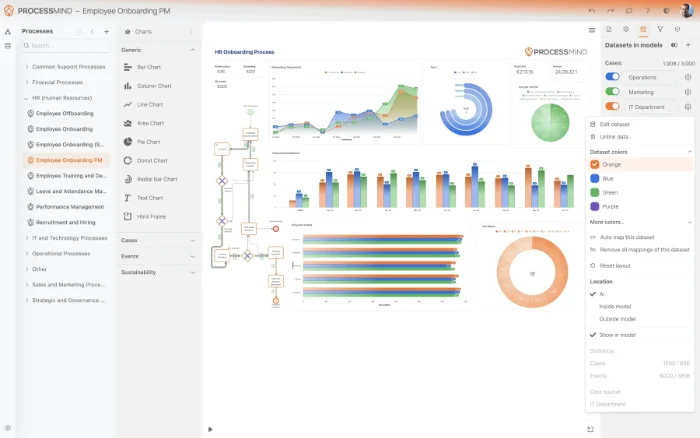
Explore interactive dashboards and visualize the end-to-end Hire to Retire journey. Leverage AI-driven recommendations to identify key improvement areas.
Why it matters
Gaining deep insights into your employee lifecycle, from recruitment to offboarding, helps uncover hidden inefficiencies, compliance risks, and areas for enhancing experience.
Expected outcome
A clear, visual understanding of your Hire to Retire process flow, with data-driven insights and actionable recommendations.
Implement Improvements
What to do
Based on the identified bottlenecks and opportunities, prioritize and implement changes within your UKG Pro configurations or HR operational procedures.
Why it matters
Translating insights into action directly addresses inefficiencies, leading to faster hiring, smoother onboarding, and improved employee retention within your organization.
Expected outcome
Concrete changes initiated in your Hire to Retire process, targeting areas like onboarding speed or performance review cycles.
Monitor Your Process
What to do
Periodically re-upload updated Hire to Retire data from UKG Pro to track the impact of your improvements and measure KPI changes over time.
Why it matters
Continuous monitoring ensures that implemented changes are effective and sustained, allowing for agile adjustments and ongoing optimization of the employee lifecycle.
Expected outcome
Ongoing visibility into your Hire to Retire process performance, confirming positive impacts and identifying new optimization targets.
WHAT YOU WILL GET
Uncover True Hire to Retire Journeys in UKG Pro
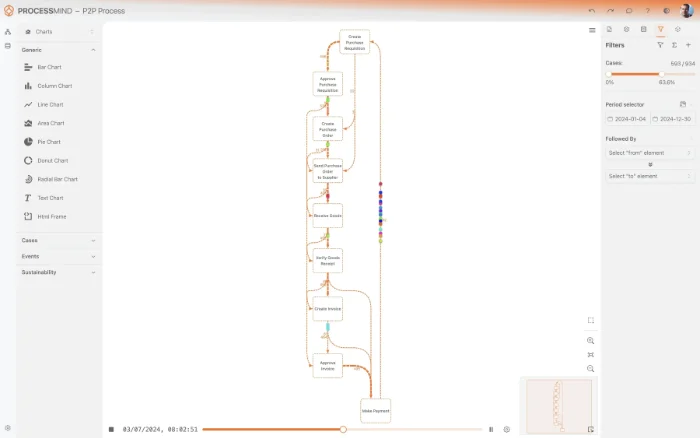
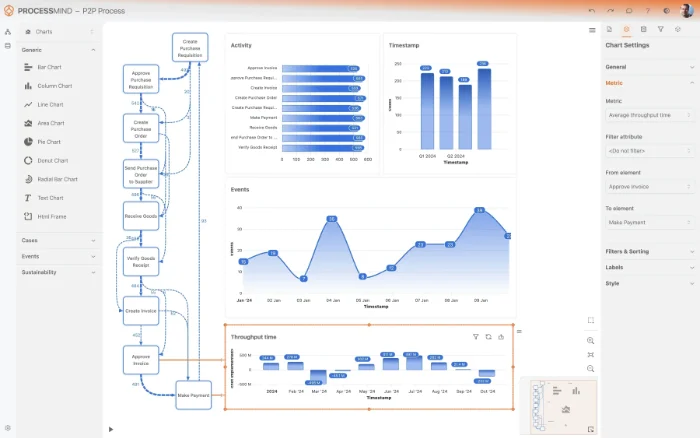
- Visualize actual Hire to Retire process flow
- Pinpoint UKG Pro bottlenecks and delays
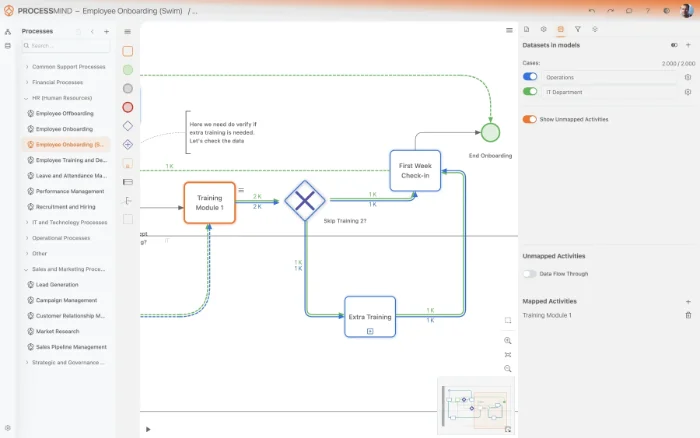
- Benchmark employee lifecycle variants
- Reduce churn and optimize HR costs
TYPICAL OUTCOMES
Typical Outcomes for Your Employee Lifecycle
These outcomes highlight the quantifiable improvements organizations typically experience by optimizing their Hire to Retire, Employee Lifecycle processes using UKG Pro, driven by data-backed insights.
Average reduction in time to hire
By identifying and removing bottlenecks in the hiring process, organizations can significantly reduce the time it takes to fill open positions, attracting top talent faster.
Faster new hire readiness for contribution
Streamlining onboarding processes ensures new employees are productive sooner, improving their initial experience and reducing administrative overhead.
Ensuring legal and operational adherence
Achieving near-perfect offboarding compliance mitigates legal risks, ensures data security, and standardizes tasks during employee departures.
Reduction in manual data corrections
Minimizing manual data errors and rework tasks in HR systems improves data integrity, reduces administrative burden, and prevents downstream issues.
Reduction in first-year employee churn
By identifying issues that lead to early departures, organizations can improve retention of new hires, saving on recruitment and training costs.
Results vary based on process complexity, data quality, and organizational specificities. These figures represent typical improvements observed across implementations focusing on the Hire to Retire, Employee Lifecycle.
Recommended Data
FAQs
Frequently asked questions
Process mining analyzes your actual process execution data from UKG Pro to reveal how your Hire to Retire process truly operates. It uncovers bottlenecks like delayed onboarding or protracted recruitment cycles, identifies compliance gaps in offboarding, and pinpoints unauthorized process variations. This helps you achieve goals like accelerating new hire readiness and standardizing performance reviews.
To begin, we need event log data from UKG Pro that captures each step of the employee lifecycle. This typically includes timestamps, activity names, and the employee ID as the case identifier for each event. Extracting this data usually involves reports or direct database queries to capture the sequence of actions.
While HR reports show aggregate metrics, process mining provides an X-ray view of your actual process flows within UKG Pro. It reveals deviations, rework loops, and bottlenecks that traditional reporting cannot, offering a deep understanding of why certain metrics are the way they are. This allows for targeted improvements, not just surface-level observations.
You can expect significant improvements such as accelerating new hire readiness by 25%, shortening recruitment cycles by 20%, and ensuring 100% offboarding compliance. Process mining identifies specific areas for optimization, leading to reduced manual errors, minimized manager transition disruption, and improved early employee retention by 15%.
The primary technical requirement is the ability to extract event log data from UKG Pro in a structured format, such as CSV or database tables. This data should include an employee ID, activity description, and timestamp for each event. We can assist with data connector setup and transformation to ensure compatibility with process mining tools.
Data security is paramount. We implement robust data handling protocols, often involving anonymization and strict access controls, to protect your sensitive employee information. The analysis focuses on process patterns, not individual employee data, ensuring privacy while delivering actionable insights.
Initial insights can often be generated within weeks once the necessary data from UKG Pro is extracted and prepared. A comprehensive analysis, including bottleneck identification and root cause analysis, typically takes 1-3 months. Implementation of identified improvements then follows, leading to measurable outcomes.
Yes, process mining is specifically designed to uncover the root causes of problems like high early tenure employee churn by visualizing the actual onboarding and early employment phases. It can also map out the exact paths and delays in internal mobility processes, allowing you to identify inefficiencies and streamline transitions.
Start Optimizing Your Hire to Retire Employee Lifecycle Today!
Reduce your Hire to Retire cycle time by 30% and boost HR efficiency.
No credit card required, quick setup.