Improve Your Warehouse Management

Select a process
Choose a process to continue working in your connected workspace.
Streamline Warehouse Management and Improve Performance
Our platform helps you uncover hidden inefficiencies and bottlenecks within your warehouse operations. Identify process variations, resource constraints, and areas causing delays, enabling you to optimize workflows and reduce operational costs. Gain clear insights into cycle times, compliance gaps, and the root causes of process deviations. This leads to faster order fulfillment and improved overall performance.
Download our pre-configured data template and address common challenges to reach your efficiency goals. Follow our six-step improvement plan and consult the Data Template Guide to transform your operations.
Show detailed description
The warehouse is the nerve center of your supply chain, a complex environment where every movement impacts efficiency and customer satisfaction. ProcessMind for Warehouse Management provides an unparalleled, comprehensive view of your entire operational flow, from the moment inbound deliveries arrive at your dock to the precise second outbound shipments leave your facility. By analyzing the complete journey of every order, item, and task, ProcessMind uncovers critical process-level insights, including hidden bottlenecks, potential compliance issues, and invaluable opportunities to streamline tasks and enhance productivity within your existing system. Regardless of your underlying ERP or source system, our platform visualizes the actual sequence of events, allowing you to clearly see how work truly flows. You will gain clarity on order fulfillment cycles, identify inventory discrepancies, optimize picking routes, and pinpoint the root causes of shipping delays, transforming raw event data into actionable intelligence.
Warehouse operations face a unique set of challenges that can severely impact profitability and service levels. These often include operational inefficiencies leading to high labor costs, inaccurate inventory counts causing stockouts or overstocking, slow order fulfillment times impacting customer satisfaction, compliance risks in handling specific goods, and suboptimal utilization of valuable human and equipment resources. ProcessMind directly addresses these pervasive issues by providing a data-driven lens into your operations. Our analysis helps you make informed decisions, optimize workflows, and significantly reduce operational costs. By understanding the true lead times for receiving, put-away, picking, packing, and shipping, you can enhance service levels, ensure better compliance with regulatory requirements, and allocate your resources more effectively. We empower you to quantify the impact of process variations and prioritize improvements based on their real-world effect.
Dive deeper into your warehouse processes to analyze deviations from standard operating procedures, identify rework loops, or uncover unnecessary steps that add no value. With ProcessMind, you can precisely measure the lead times for various activities, such as how long it takes from receiving an item to placing it in its final storage location, or the time elapsed between picking an order and its final dispatch. This level of detail allows for strategic optimization of both human labor and equipment utilization, revealing where automation could yield the highest return on investment. Begin your journey to a more efficient warehouse by connecting your data to ProcessMind. Our intuitive platform works seamlessly with data extracted from any of your source systems or ERP, providing a unified view of your operations. To get started quickly, leverage our comprehensive data template, designed to guide you in extracting the necessary event logs. Unlock the full potential of your warehouse operations and achieve peak performance, one process insight at a time.
The 6-Step Path to Optimize Warehouse Management
Connect & Discover Data
What to do
Extract event logs from your warehouse management system, ERP, or other data sources. Ensure data includes case IDs, activity names, and timestamps.
Why it matters
Laying the foundation with accurate and comprehensive data is crucial for reliable process analysis and identifying improvement opportunities.
Expected outcome
A unified, ready-to-analyze event log dataset representing your warehouse operations.
Map Your Current Process
What to do
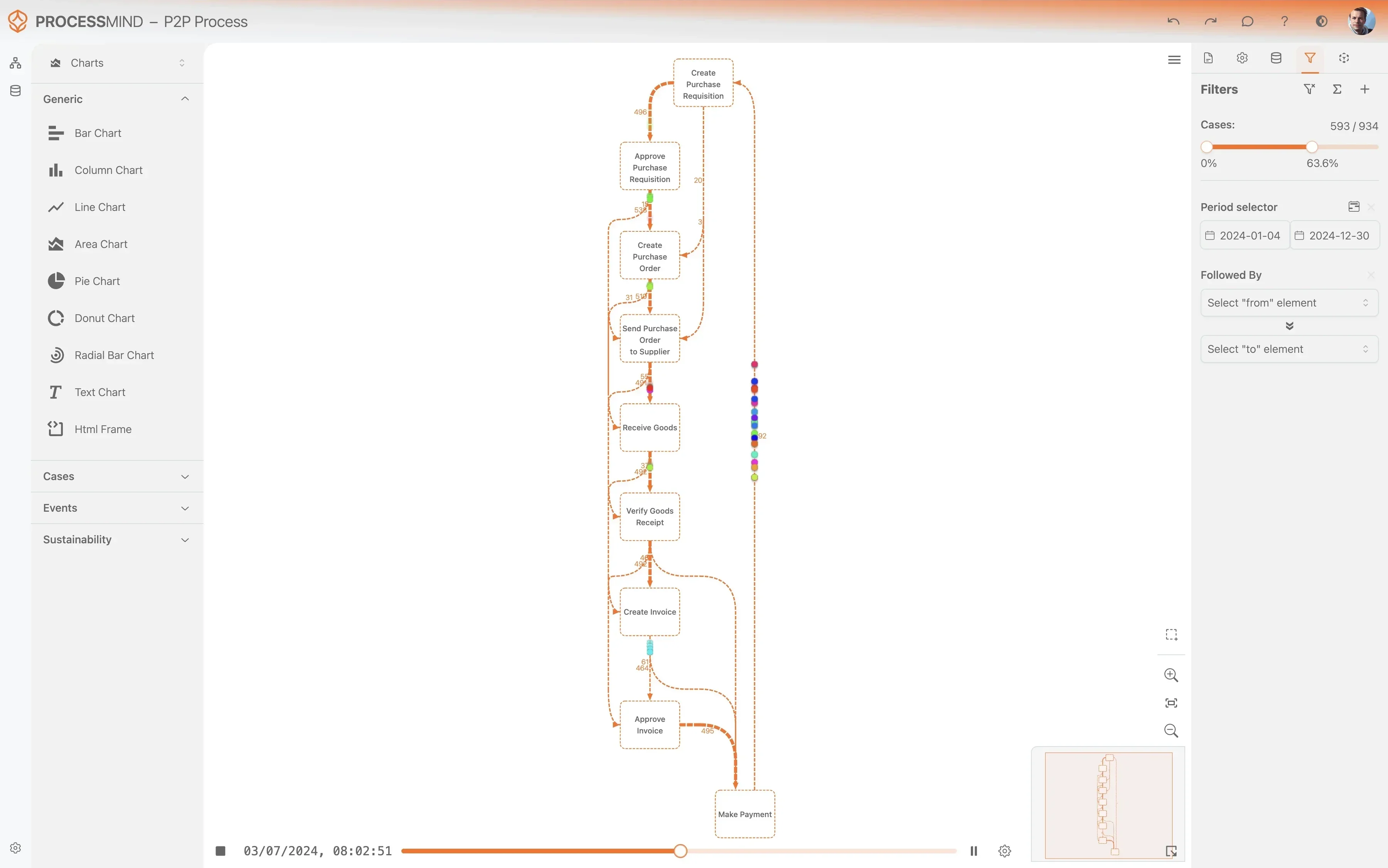
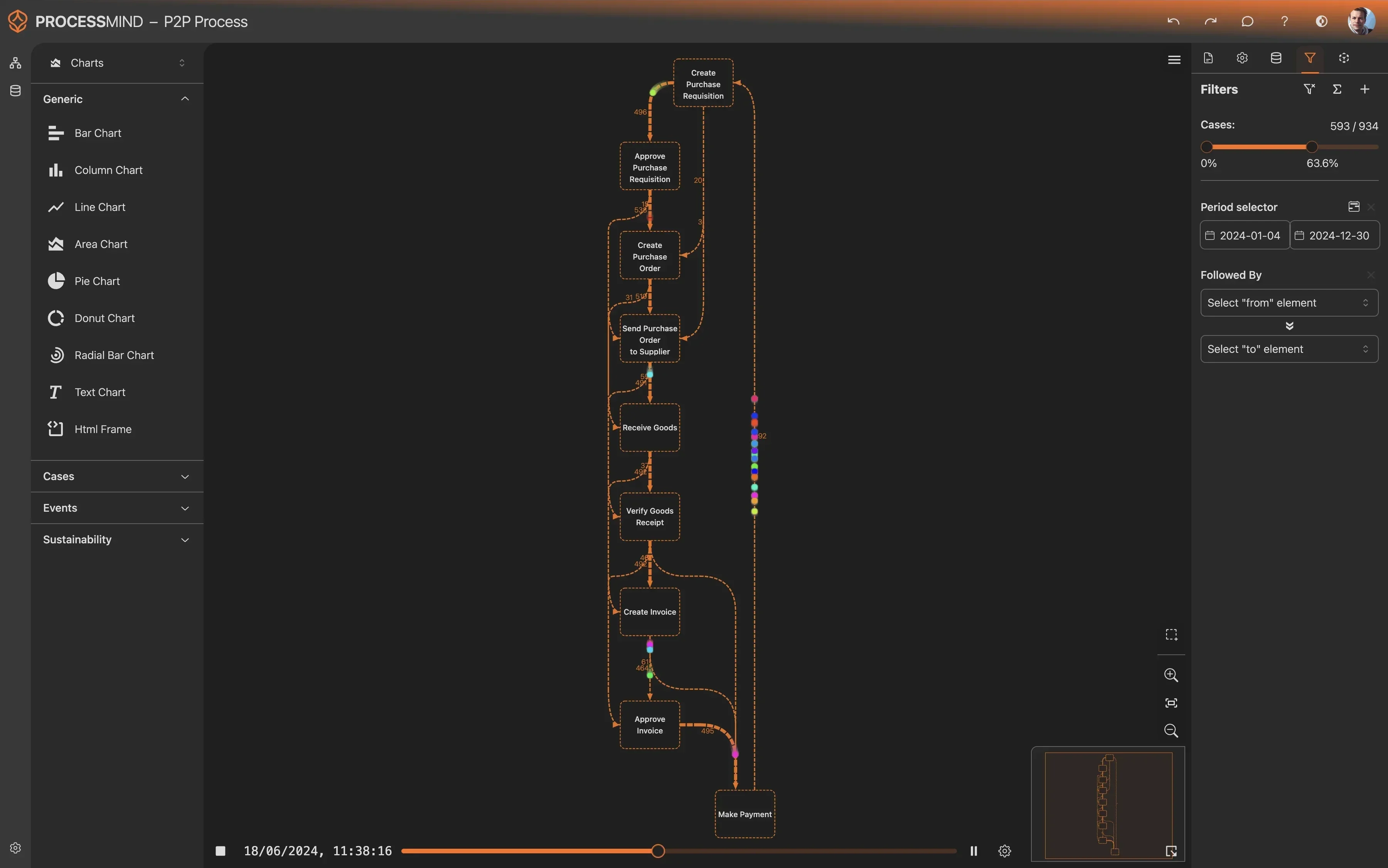
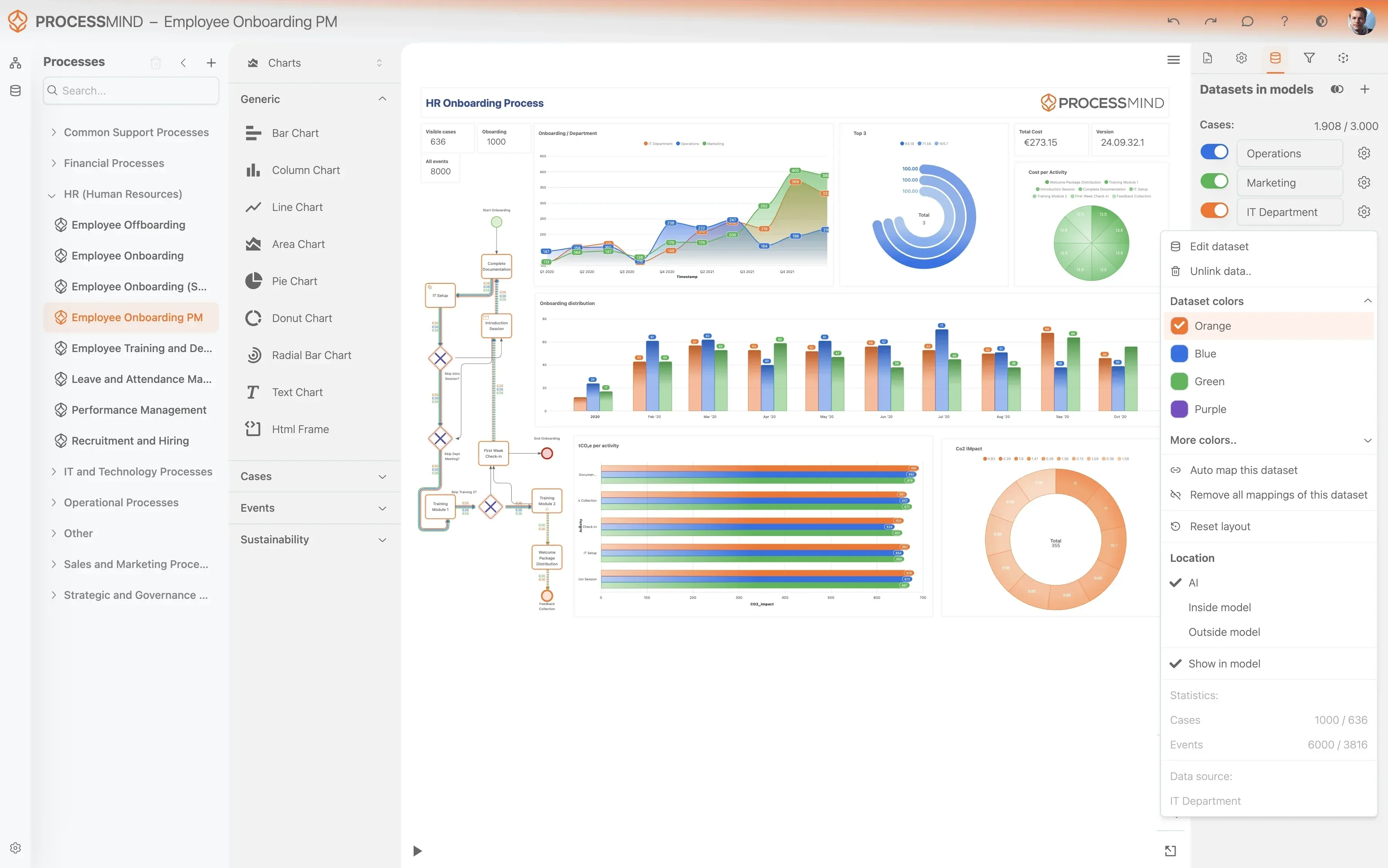
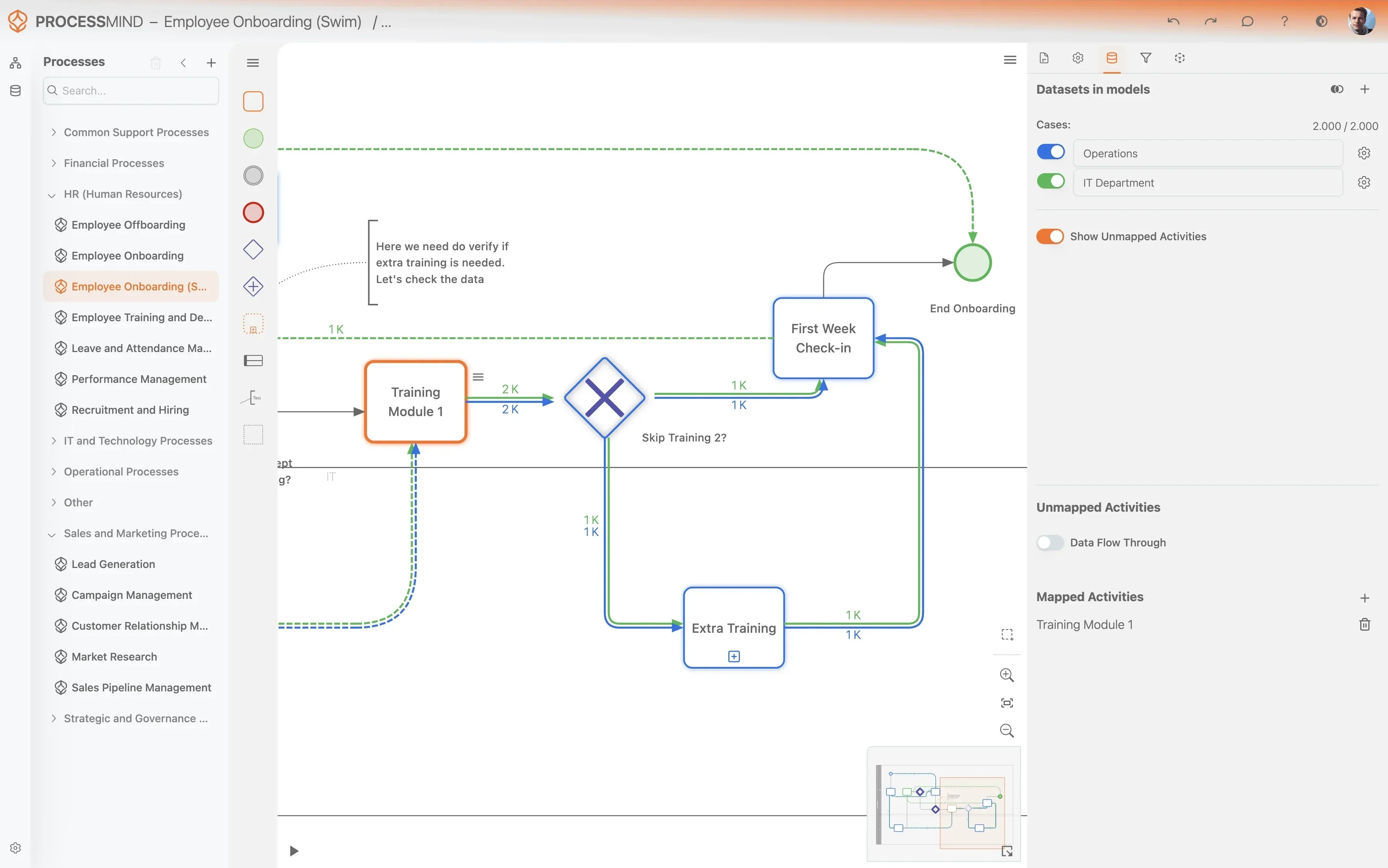
Visualize the end-to-end warehouse order journey using your extracted event data. Identify all variations and the most common paths taken.
Why it matters
A clear visual map reveals the actual flow of work, exposing deviations from standard operating procedures and highlighting hidden complexities.
Expected outcome
A comprehensive process map illustrating all activity sequences and their frequencies.
Identify Process Bottlenecks
What to do
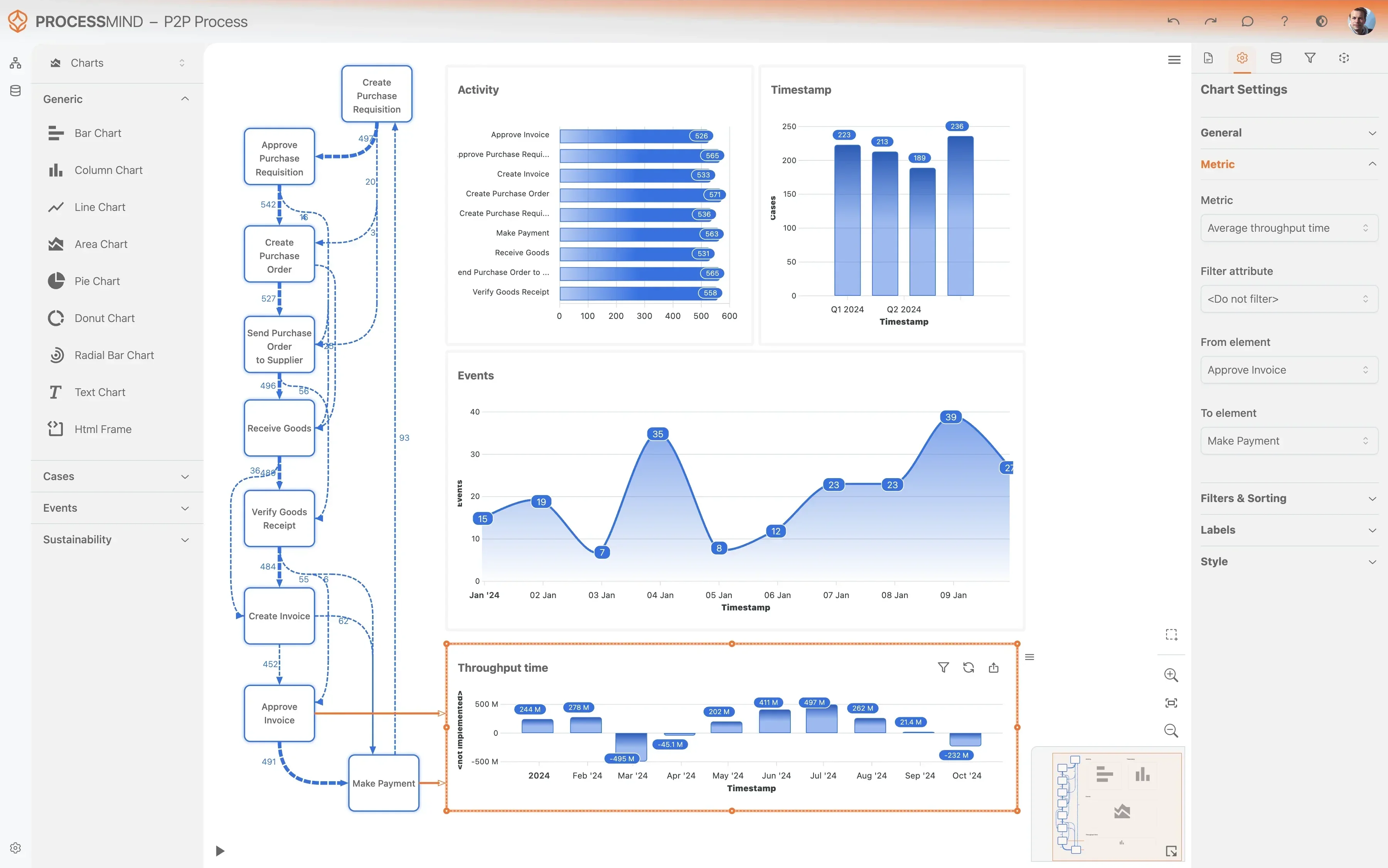
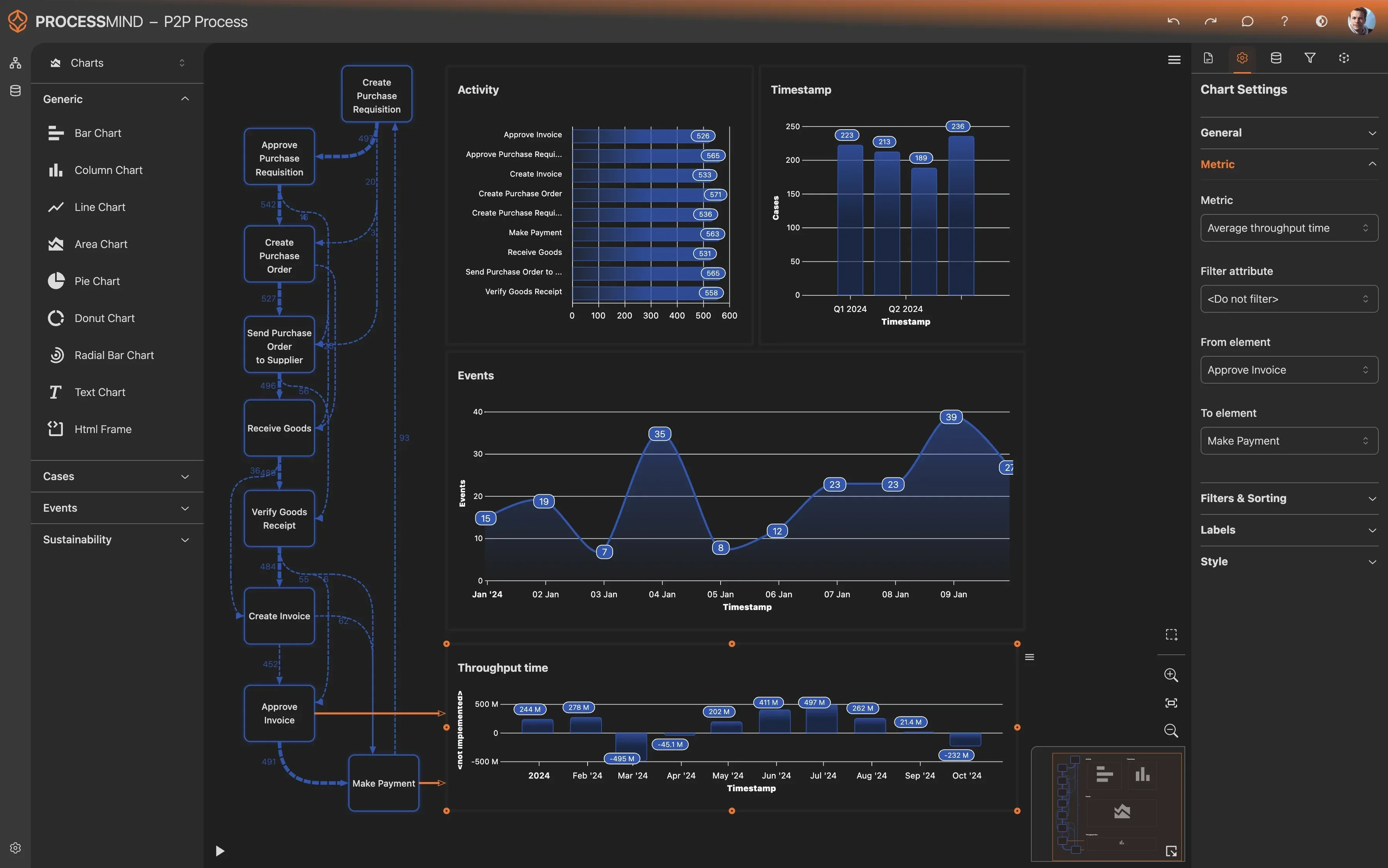
Analyze the process map to pinpoint activities or sequences with unusually long durations, high waiting times, or frequent rework loops.
Why it matters
Bottlenecks impede flow, increase lead times, and can lead to increased operational costs and reduced customer satisfaction across your operations.
Expected outcome
A list of specific process steps or transitions identified as critical bottlenecks.
Analyze Root Causes
What to do
Drill down into identified bottlenecks using filtering and variant analysis. Investigate influencing factors like specific product types, shifts, or equipment.
Why it matters
Understanding the underlying reasons for inefficiencies allows you to address problems at their source, preventing recurrence rather than just patching symptoms.
Expected outcome
A clear understanding of the causal factors contributing to each identified bottleneck.
Design Process Improvements
What to do
Based on root cause analysis, propose concrete process changes, technology enhancements, or resource reallocations. Model the impact of these changes.
Why it matters
Thoughtfully designed improvements lead to targeted, effective solutions that enhance efficiency, reduce costs, and improve service levels.
Expected outcome
A detailed plan of actionable improvements with predicted impacts on key performance indicators.
Monitor & Iterate for Success
What to do
Implement the designed improvements and continuously track their performance using your data. Establish alerts for deviations from new target metrics.
Why it matters
Continuous monitoring ensures that improvements stick and allows for further refinement, fostering a culture of ongoing optimization and adaptation.
Expected outcome
Sustainable process improvements and an adaptive feedback loop for continuous optimization.
TYPICAL RESULTS
Achieve Measurable Excellence in Warehouse Management
These outcomes showcase the significant operational and financial improvements organizations typically realize when optimizing their Warehouse Management processes. By leveraging process mining, companies gain actionable insights to streamline operations and enhance efficiency.
Average reduction in goods receipt and putaway time
Accelerate inventory availability by identifying and resolving bottlenecks in inbound processes, from dock arrival to putaway. This reduces stockout risks and improves overall supply chain flow.
Decrease in picking errors and associated rework
Pinpoint root causes of picking errors and implement targeted improvements, resulting in higher order accuracy and improved customer satisfaction. This directly lowers operational expenses.
Average reduction in end-to-end order cycle time
Streamline the entire order flow by identifying bottlenecks from order creation to completion. This enhances customer satisfaction and operational efficiency, getting products to customers faster.
Increase in effective utilization of warehouse staff and equipment
Analyze operator idle times and task handovers to optimize workforce deployment, ensuring resources are effectively utilized across the warehouse. This maximizes throughput and reduces operational costs.
Improvement in adherence to standard operating procedures
Identify and eliminate non-compliant process steps and rework loops, ensuring operations consistently follow predefined best practices. This reduces operational inconsistencies and compliance risks.
Results vary based on process complexity, data quality, and specific operational contexts. The figures presented here represent typical improvements observed across diverse warehouse management optimization initiatives.
Recommended Data
For customized data recommendations, choose your specific process.
FAQs
Frequently asked questions
Process mining analyzes event logs from your warehouse management system to visualize the actual flow of operations. It identifies critical bottlenecks, deviations from standard procedures, and areas of inefficiency, such as slow goods receipt or inefficient putaway. This data-driven view provides actionable insights for targeted optimization, reducing costs, and improving overall operational performance.
To initiate process mining, we primarily need event logs from your source system. This includes data points like a case identifier, such as a Warehouse Order ID, activity names describing each step, timestamps for when each activity occurred, and ideally, the resource involved. The goal is to capture the complete journey of each case through various stages.
Initial data extraction and model setup can typically take a few weeks, depending on data availability and complexity within your system. Once the process model is established, you can often start gaining immediate insights into your warehouse processes. Significant improvement initiatives based on these insights usually develop within 2-3 months.
You can expect significant improvements in key areas like accelerating goods receipt and putaway cycles, optimizing picking efficiency, and reducing overall order fulfillment time. Process mining helps increase inventory accuracy, minimize errors and rework, and ensure better compliance with defined processes. These insights lead to more efficient resource utilization and faster shipment dispatch.
By analyzing the timestamps and sequence of activities in your event logs, process mining precisely measures the duration of each process step and the waiting times between them. It visually highlights areas where work accumulates or processes stall, such as excessive delays at packing or staging, or slow goods receipt processing. This pinpoints the exact locations and causes of bottlenecks.
Yes, process mining is highly effective at identifying deviations from your defined standard operating procedures and compliance requirements. It visually compares the actual process flow, derived from event logs, against your ideal model. This allows you to quickly spot non-compliant activities or unauthorized shortcuts, helping you enforce a high level of compliance.
Data security is a paramount concern. When performing process mining, data is typically extracted and then anonymized or pseudonymized before being loaded into the process mining tool. Most reputable process mining platforms adhere to strict data security and privacy standards, ensuring your sensitive operational information remains protected throughout the analysis.
Unlike traditional business intelligence, which often shows what happened, process mining reveals how and why processes actually unfold, including all deviations and rework. It maps the end-to-end flow of each case, providing a holistic view of process execution rather than just aggregated metrics or static reports. This provides deeper, actionable insights into inefficiencies.
The primary technical requirement is read-only access to your warehouse management system's database or log files to extract event data. While some initial technical support is beneficial for data connection and setup, the process mining tools are designed for business users. They offer intuitive interfaces for analyzing process flows and monitoring key performance indicators, with training typically provided.
Unlock Peak Warehouse Performance Today
Identify bottlenecks, reduce costs, and accelerate fulfillment with data-driven insights.
No credit card required. Setup takes minutes.