Improve Your Transportation Management

Select a process
Choose a process to continue working in your connected workspace.
Optimize SAP Transportation Management for Faster, Lower-Cost Deliveries
Delays and unexpected costs can hinder efficient logistics operations. Our platform helps you pinpoint bottlenecks, identify root causes of inefficiencies, and optimize your entire shipment process. By understanding process variations, you can uncover hidden opportunities to reduce costs and boost customer satisfaction.
Download our pre-configured data template and address common challenges to reach your efficiency goals. Follow our six-step improvement plan and consult the Data Template Guide to transform your operations.
Show detailed description
Why Optimizing Your Transportation Management Process is Critical
In today's fast-paced global economy, efficient Transportation Management is not merely a logistical function, but a strategic imperative. Organizations leveraging SAP Transportation Management face constant pressure to reduce costs, accelerate delivery times, and enhance customer satisfaction, all while navigating complex supply chains and unexpected disruptions. Inefficient transportation processes can lead to significant financial drains, including increased freight costs, penalties for late deliveries, and elevated inventory holding costs. Beyond direct expenses, slow or unreliable deliveries directly impact customer trust and can damage your brand reputation. Gaining granular visibility into the true performance of your transportation operations, from the initial request to final delivery and payment, is essential for maintaining a competitive edge and ensuring sustained business growth.
How Process Mining Delivers Unprecedented Transparency
Process mining offers a revolutionary approach to understanding and improving your Transportation Management process within SAP Transportation Management. Instead of relying on assumptions or anecdotal evidence, process mining utilizes event logs from your SAP system to reconstruct the actual end-to-end flow of every shipment. This provides a digital twin of your process, visualizing every step, deviation, and delay a shipment experiences. By focusing on the 'Shipment' as the core case identifier, you can precisely track activities like "Transportation Request Received," "Shipment Planned," "Carrier Selected," "Shipment In Transit," "Customs Cleared," "Goods Delivered," and "Payment Processed." This detailed, objective view allows you to pinpoint where bottlenecks truly occur, identify non-compliant process paths, and reveal hidden reworks that prolong transportation cycle time and inflate costs. It goes beyond what standard reporting tools can provide, showing you the real journey of your goods.
Key Areas for Improvement in Your SAP Transportation Management
Leveraging process mining insights empowers you to target specific areas for process optimization within your SAP Transportation Management landscape:
- Optimize Carrier Performance: Analyze the actual performance of different carriers, identifying which ones consistently cause delays, incur extra costs, or deviate from planned routes. This allows for data-driven carrier selection and negotiation.
- Streamline Planning and Booking: Uncover inefficiencies in the "Shipment Planned" and "Shipment Booked" phases, reducing the time from request to confirmed shipment. This directly contributes to reducing overall transportation cycle time.
- Accelerate Customs Clearance: Identify common hold-ups in the "Customs Cleared" activity, understanding root causes such as missing documentation or procedural delays, to speed up international shipments.
- Enhance Delivery Reliability: Monitor the "Shipment In Transit" and "Delivery Scheduled" activities to proactively address potential delays and ensure goods arrive on time, improving customer satisfaction.
- Improve Freight Bill Accuracy: Analyze the "Freight Bill Audited" and "Payment Processed" steps to uncover discrepancies, reduce errors, and accelerate the financial settlement of transportation services.
- Reduce Transportation Cycle Time: Gain a holistic view of the entire process, identifying cumulative delays across multiple activities that extend the end-to-end transportation cycle time.
Measurable Outcomes for Your Business
Implementing process optimization strategies based on process mining insights in SAP Transportation Management yields tangible and measurable benefits:
- Significant Cost Reduction: By optimizing carrier selection, eliminating reworks, and improving billing accuracy, you can achieve substantial savings in freight costs and operational expenditures.
- Increased Operational Efficiency: Streamlined processes lead to faster planning, booking, and delivery, reducing the overall transportation cycle time and improving resource utilization.
- Enhanced Customer Satisfaction: More reliable and timely deliveries, combined with better communication, directly translate into higher customer loyalty and improved brand perception.
- Improved Compliance and Risk Management: Better visibility into deviations helps ensure adherence to regulatory requirements and internal policies, reducing compliance risks.
- Data-Driven Strategic Decisions: Move beyond intuition to make informed decisions about your logistics network, carrier partnerships, and operational strategies, ensuring continuous process improvement.
Getting Started with Your Transportation Management Optimization Journey
Embarking on your journey to optimize Transportation Management with process mining in SAP Transportation Management is more accessible than ever. This guide provides you with a structured approach, allowing you to leverage powerful analytical capabilities without needing prior process mining expertise. By focusing on your shipments and their complete journey, you can quickly uncover actionable insights and transform your logistics operations into a competitive advantage. Discover how to identify and resolve critical bottlenecks, reduce costs, and deliver an exceptional customer experience. Your path to a more efficient and cost-effective Transportation Management process begins here.
The 6-Step Improvement Path for Transportation Management
Download the Template
What to do
Obtain the specialized Excel template designed for SAP Transportation Management data. This template provides the correct structure for your process mining analysis.
Why it matters
Starting with the right data format ensures compatibility and accurate analysis, laying a solid foundation for your improvement journey.
Expected outcome
A structured Excel template ready for populating with your SAP TM process data.
Export Your SAP TM Data
What to do
Extract 3-6 months of historical shipment data from your SAP Transportation Management system. Populate the downloaded template with your real-world process events.
Why it matters
Comprehensive historical data reveals true process behavior, enabling you to identify recurring patterns, bottlenecks, and deviations in your transportation operations.
Expected outcome
A completed data template filled with relevant, anonymized process data from your SAP TM system.
Upload Your Dataset
What to do
Securely upload your filled data template to the ProcessMind platform. The system will automatically prepare your data for analysis.
Why it matters
A streamlined upload ensures your data is quickly and safely processed, minimizing setup time and allowing you to move swiftly to discovery.
Expected outcome
Your SAP TM process data successfully uploaded and undergoing automated analysis within ProcessMind.
Analyze Your TM Process
What to do
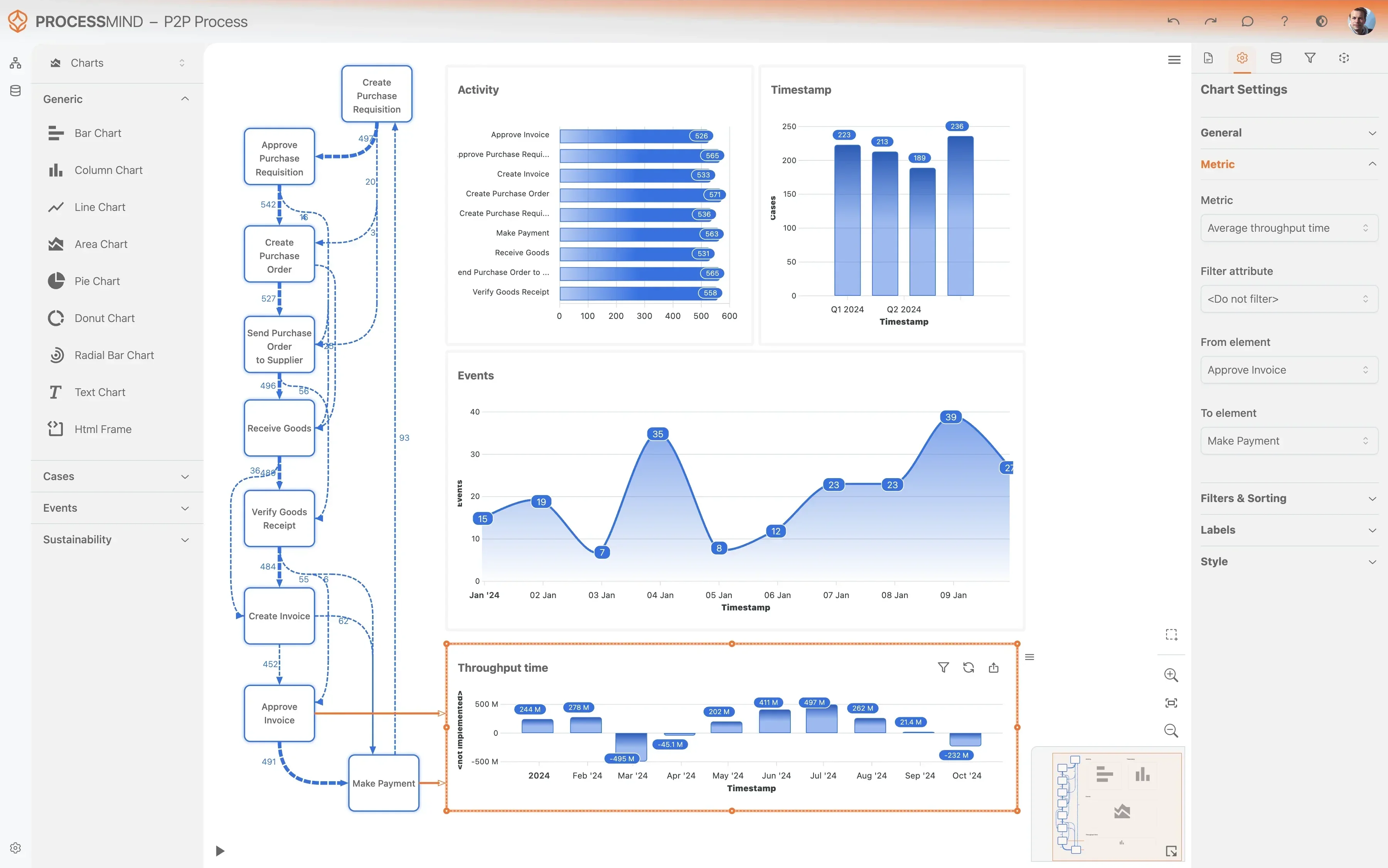
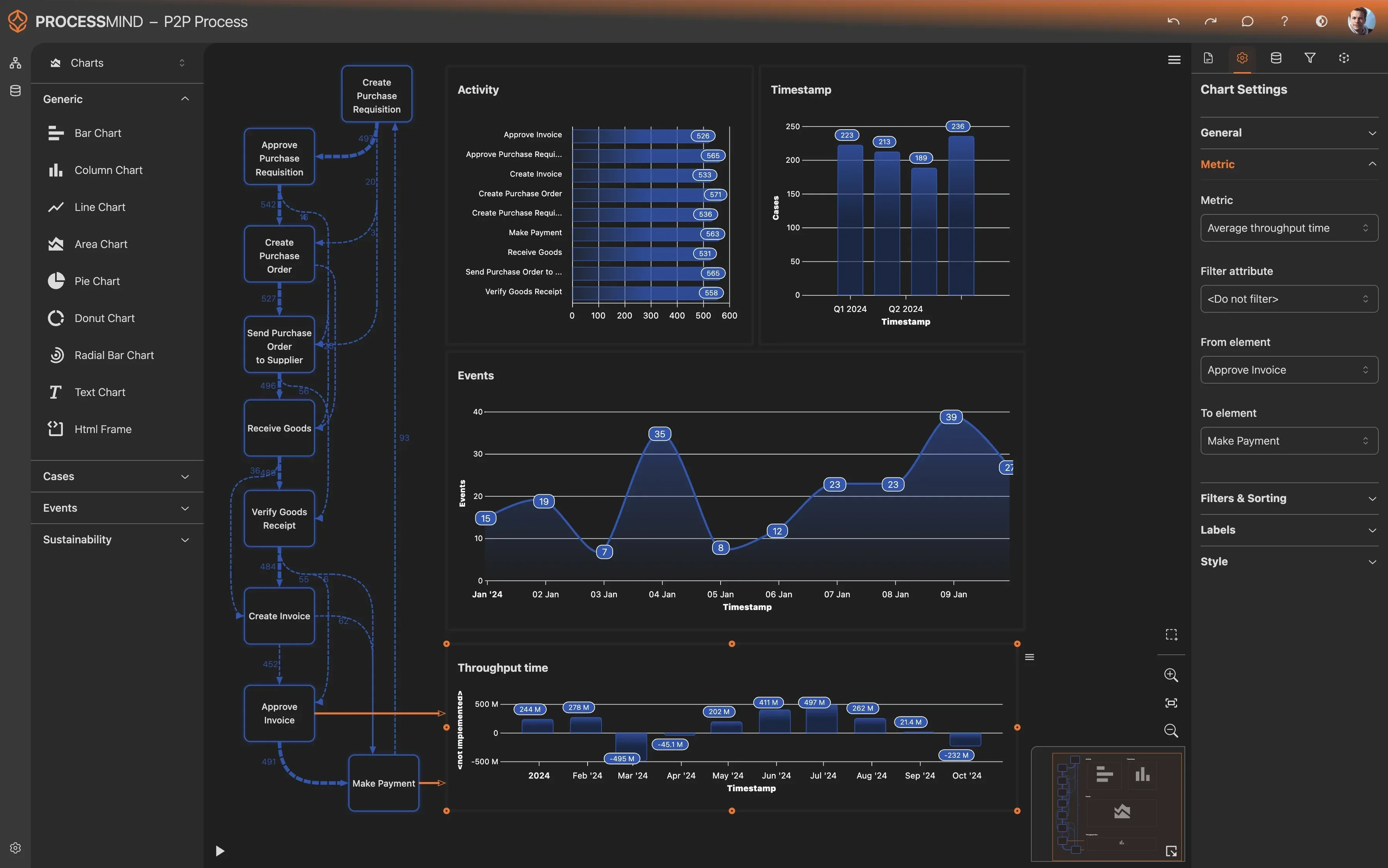
Explore auto-generated dashboards and process maps. Leverage AI insights to uncover inefficiencies, compliance issues, and optimization opportunities within your SAP TM processes.
Why it matters
Visual and intelligent analysis helps you pinpoint hidden bottlenecks, understand actual process variations, and identify root causes of delays or cost overruns.
Expected outcome
Clear visualizations of your transportation process and specific AI-driven recommendations for improvement.
Implement Improvements
What to do
Prioritize opportunities from your analysis, focusing on areas with the highest impact on efficiency, cost, or compliance. Develop and execute targeted action plans.
Why it matters
Translating insights into action directly addresses inefficiencies, leading to tangible enhancements in carrier performance, delivery times, and overall operational costs.
Expected outcome
Actionable plans implemented within your SAP TM operations, targeting specific process bottlenecks and deviations.
Monitor Your Progress
What to do
Periodically re-upload fresh data from SAP Transportation Management to track the impact of your implemented changes. Compare new insights against previous analyses.
Why it matters
Continuous monitoring ensures that improvements are sustained and allows for agile adjustments, driving ongoing optimization and measurable KPI enhancements.
Expected outcome
Quantifiable improvements in your SAP TM KPIs and a clear view of the long-term impact of your actions.
WHAT YOU WILL GET
Pinpoint SAP TM Bottlenecks, Boost Efficiency
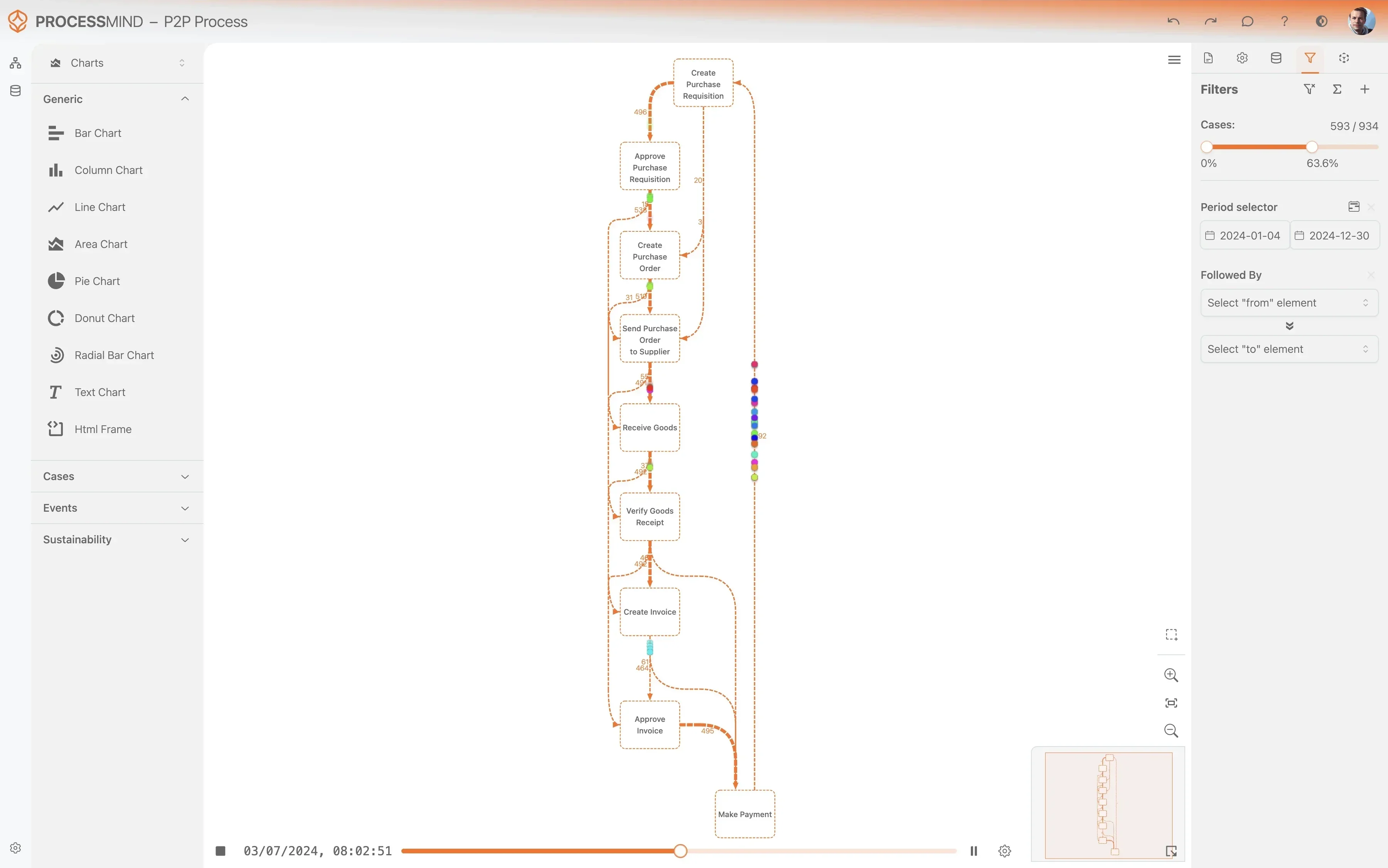
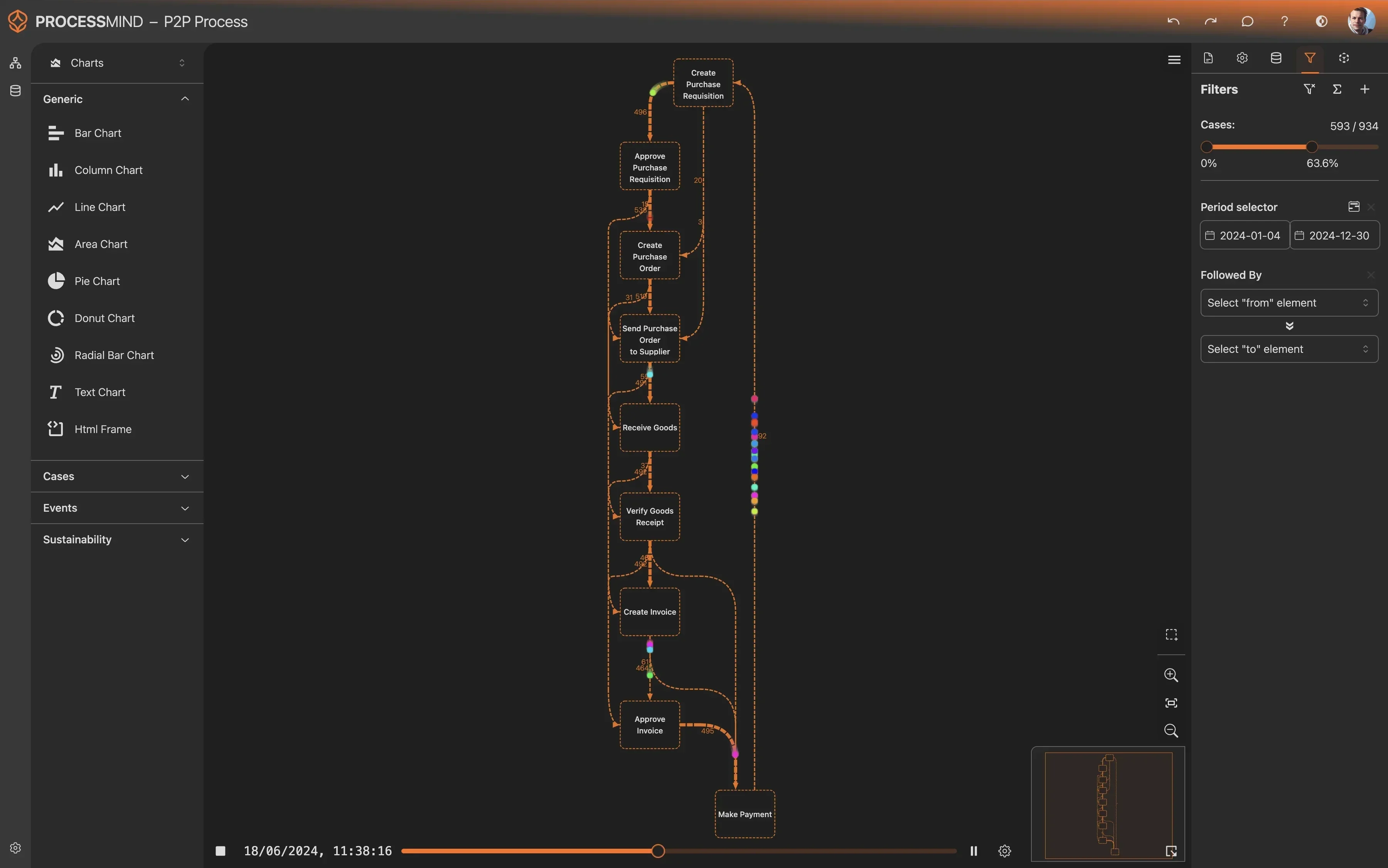
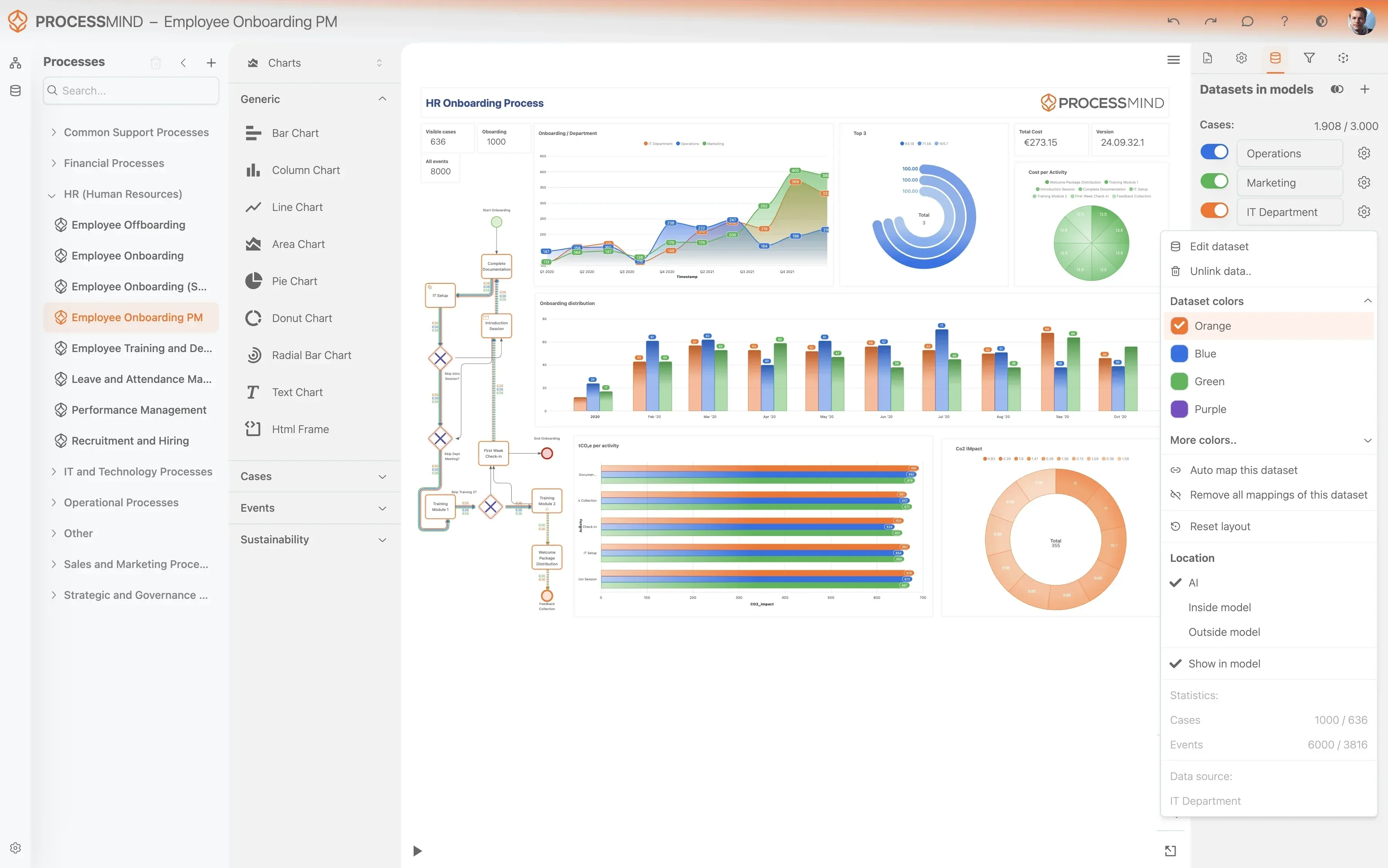
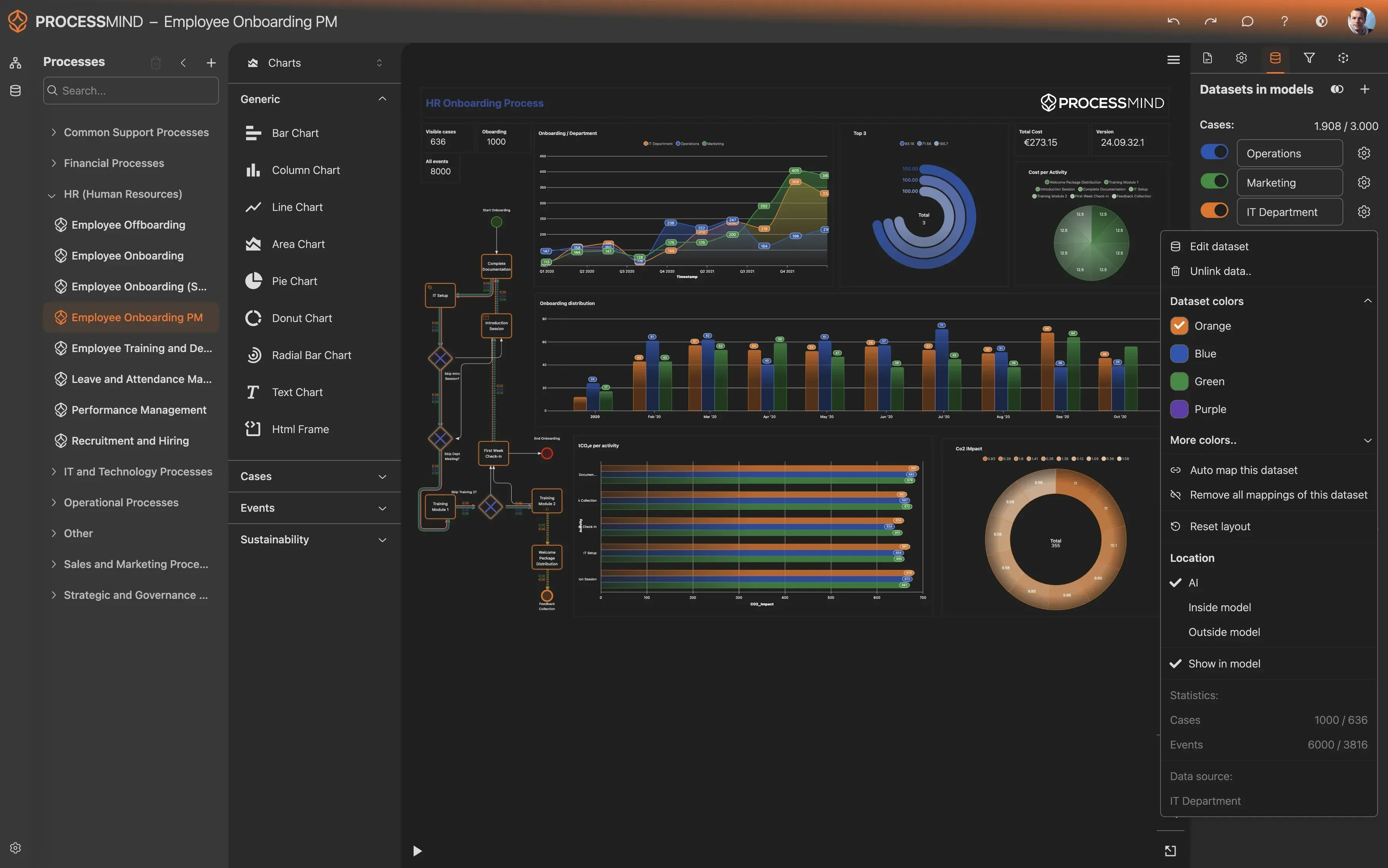
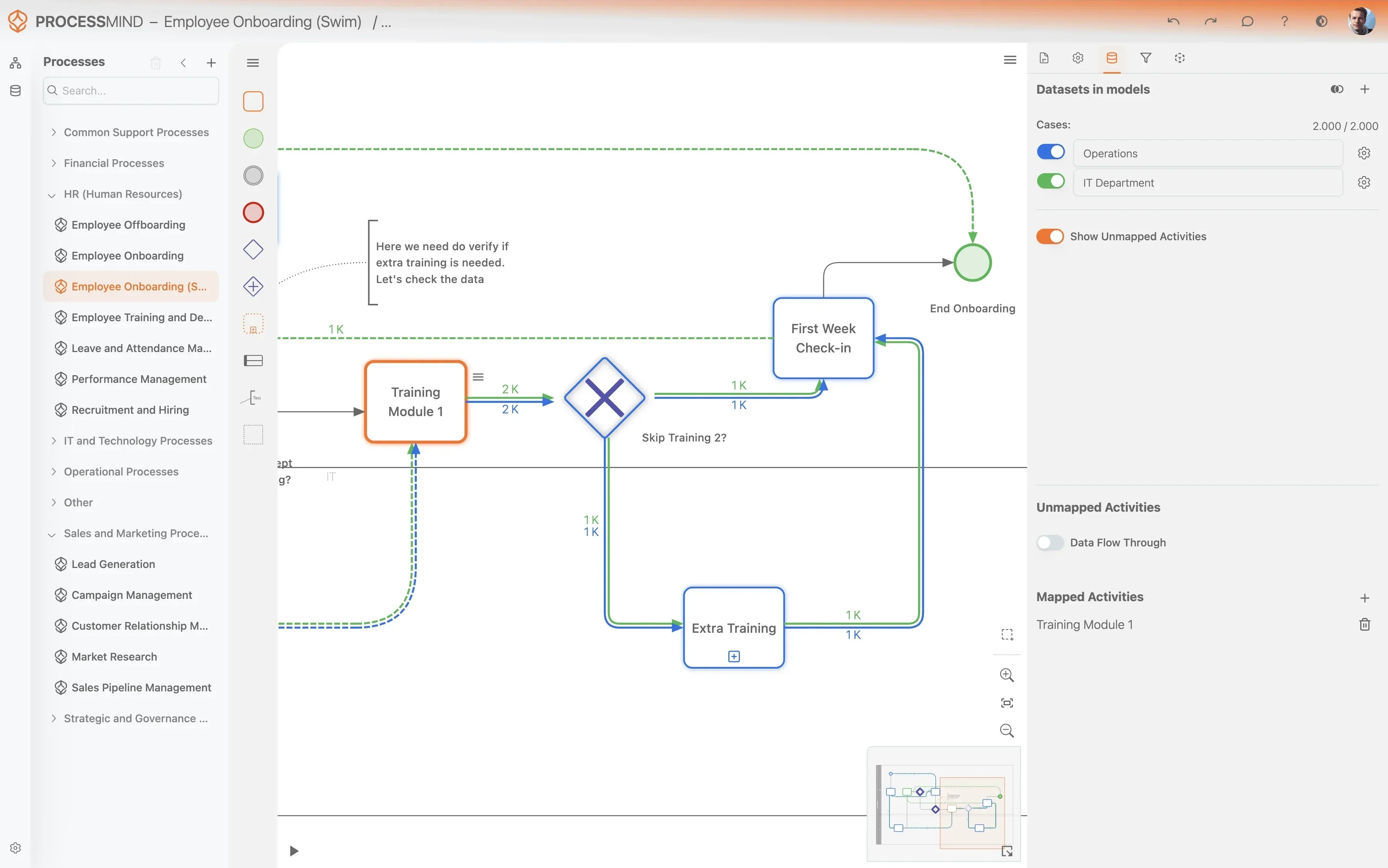
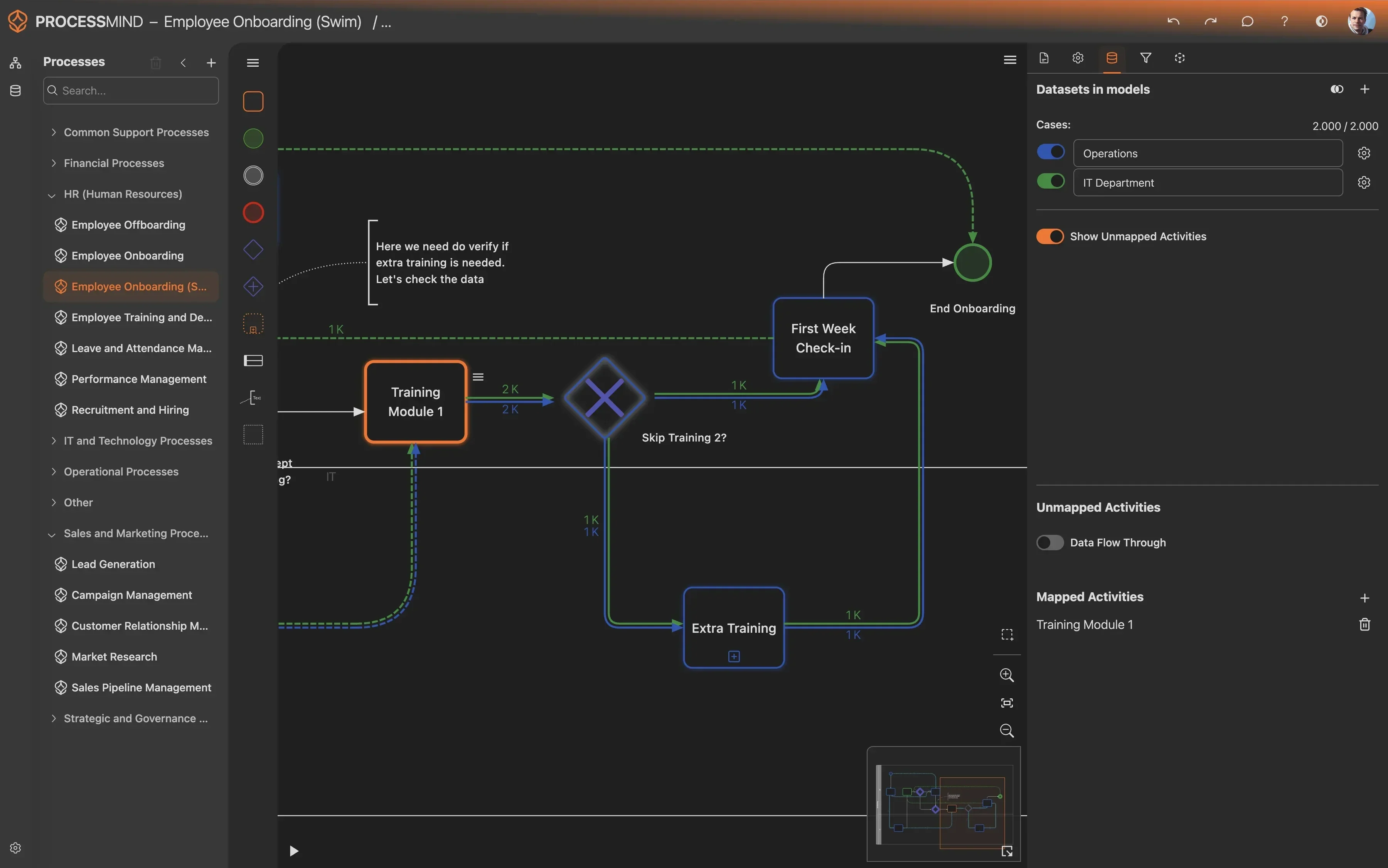
- Visualize your entire SAP TM process flow
- Identify shipment delays and bottlenecks
- Uncover hidden cost reduction opportunities
- Improve logistics efficiency and satisfaction
TYPICAL OUTCOMES
Tangible Results with SAP Transportation Management
By leveraging process intelligence, organizations using SAP Transportation Management can identify critical inefficiencies within their shipment processes. These insights drive data-backed decisions, leading to measurable enhancements in logistics operations.
Reduce average shipment planning time
Streamline your logistics operations by identifying and removing bottlenecks in the shipment planning phase, leading to quicker preparation and dispatch of goods. This efficiency translates to faster order fulfillment and improved supply chain responsiveness.
Increase percentage of successful deliveries
Enhance customer satisfaction and trust by consistently meeting delivery commitments. Process mining helps pinpoint the root causes of delays, enabling targeted interventions to improve your overall delivery performance.
Decrease unnecessary expedited shipping
Gain full visibility into your premium freight usage and identify opportunities to switch to more cost-effective standard shipping options. Optimizing freight choices directly impacts your bottom line, leading to significant cost savings.
Reduce average clearance duration
Minimize delays at border crossings by optimizing customs clearance activities. Faster processing reduces waiting times, improves throughput, and ensures goods reach their destination sooner, enhancing global supply chain fluidity.
Lower freight billing discrepancy rate
Improve financial accuracy and reduce costly disputes by identifying and correcting sources of freight billing discrepancies. This leads to smoother payment processes and stronger relationships with carriers.
Reduce claims for damaged shipments
Improve cargo handling and transit quality by pinpointing the stages in the shipment process where damage most frequently occurs. A reduction in damaged goods claims directly saves costs and enhances customer trust.
Results vary based on process complexity and data quality. These figures represent typical improvements observed across implementations.
Recommended Data
FAQs
Frequently asked questions
Process mining uses event data from your SAP TM system to visualize the actual flow of shipments, revealing bottlenecks, inefficiencies, and compliance gaps. It helps identify deviations from standard processes and uncovers the root causes of common problems like delays or cost overruns.
To perform process mining, we need event logs that include a case identifier, typically the Shipment ID, an activity or status change, and a precise timestamp for each event. This data is usually extracted from relevant SAP TM tables tracking freight orders, freight units, and their lifecycle statuses.
Initial process visualizations and high-level insights can typically be generated within a few weeks after successful data extraction and initial model setup. Deeper analysis, root cause identification, and actionable recommendations usually follow within two to three months, leading to measurable improvements.
Yes, absolutely. By analyzing the actual execution paths and timestamps, process mining identifies the exact points in the process where delays originate, leading to premium freight usage or missed delivery dates. This data-driven insight helps pinpoint causes like late planning, suboptimal carrier choices, or inefficient handovers.
The primary technical requirement is secure access to your SAP Transportation Management system for data extraction. This typically involves leveraging existing SAP tools or connectors to pull event logs. A suitable process mining platform, either on-premise or cloud-based, is also necessary for analysis.
Not at all. Process mining provides significant value regardless of the size or complexity of your transportation network. Even smaller, seemingly straightforward processes often harbor hidden inefficiencies that can be uncovered and optimized through data analysis, leading to substantial gains.
While high-quality data is beneficial, process mining can still be highly effective and even help identify data quality issues. Inconsistent data often manifests as process deviations, highlighting areas where data capture or system usage needs improvement. Initial analysis can provide value and guide data enhancement efforts.
Yes, process mining goes beyond mere visualization. It quantifies performance bottlenecks, identifies conformance gaps against ideal processes, and reveals the root causes of inefficiencies. These insights lead directly to data-backed, actionable recommendations for process optimization, automation opportunities, and training needs.
Successful process mining projects typically involve collaboration among several key teams. This includes business experts from transportation and logistics operations, IT specialists for data extraction and system access, and dedicated process improvement or analytics teams for interpreting results and driving change.
Eliminate Transportation Management Bottlenecks Today
Pinpoint inefficiencies, optimize routes, and reduce cycle time by 30%.
No credit card required. Setup in minutes.