Improve Your Credit Management & Collections

Select a process
Choose a process to continue working in your connected workspace.
Optimize Credit Management and Collections in SAP S/4HANA to Improve Cash Flow
Credit management and collections processes can be intricate, often resulting in delayed payments and extended Days Sales Outstanding. Our platform helps you identify hidden inefficiencies throughout your entire invoice lifecycle, from initial credit assessment to final payment posting. This enables you to streamline operations, minimize bad debt, and cultivate stronger customer relationships.
Download our pre-configured data template and address common challenges to reach your efficiency goals. Follow our six-step improvement plan and consult the Data Template Guide to transform your operations.
Show detailed description
Optimizing Your Credit-to-Cash Cycle with Process Mining
Managing your Credit Management & Collections in SAP S/4HANA is crucial for maintaining healthy cash flow and minimizing financial risk. However, the inherent complexity of financial processes, involving multiple departments and system interactions, often introduces inefficiencies that are difficult to pinpoint. Hidden bottlenecks can lead to prolonged Days Sales Outstanding, increased bad debt, and a negative impact on customer relationships. Without a clear, end-to-end view of your credit-to-cash cycle, identifying the root causes of these challenges becomes a significant hurdle. This is where process mining offers a transformative approach, moving beyond assumptions to data-driven insights. It helps you understand the actual journey of every invoice, from its initial credit assessment to final payment, providing the transparency needed for effective process optimization.
Unlocking Insights: How Process Mining Transforms Credit Operations
Process mining is a powerful methodology that uses event log data from your SAP S/4HANA system to reconstruct and visualize the real process flows. By treating each invoice number as a unique case identifier, process mining enables you to trace its complete lifecycle. This provides an unparalleled level of detail, allowing you to observe every activity, delay, and deviation that impacts your credit and collections efforts. You can identify exactly where invoices get stuck, why dunning procedures might be ineffective, or if credit limit approvals are consistently delayed. For instance, you can see if certain customer segments frequently experience late payments, or if specific collectors handle a disproportionate amount of high-risk accounts without adequate support. This data-driven perspective is essential for understanding the true performance of your Credit Management & Collections process in SAP S/4HANA, moving beyond subjective observations to verifiable facts.
Key Areas for Improvement in Credit Management & Collections
With process mining, you can pinpoint specific areas within your SAP S/4HANA Credit Management & Collections operations that require attention.
- Streamlining Credit Assessment and Approval: Analyze the time taken for credit limit requests and approvals. Identify bottlenecks, such as frequent reworks or approvals being stalled due to missing information, to accelerate the onboarding of new customers and manage existing customer risk more effectively.
- Enhancing Dunning and Collection Effectiveness: Evaluate the efficiency of your dunning procedures. Are reminders sent promptly? Are collection calls made at the optimal time? Process mining can reveal if dunning levels are skipped or if collectors are spending too much time on low-value accounts, helping you optimize resource allocation and improve response rates.
- Accelerating Dispute Resolution: Delays in resolving customer disputes directly impact payment cycles. By visualizing the dispute management process, you can identify the stages where disputes commonly stall, understand the reasons for these delays, and implement strategies to reduce resolution cycle time.
- Optimizing Cash Application and Payment Posting: Ensure that once payments are received, they are posted efficiently in SAP S/4HANA. Delays in cash application can lead to inaccurate overdue reporting and unnecessary dunning, impacting customer relations.
- Ensuring Compliance and Reducing Risk: Monitor adherence to internal credit policies and external regulations. Process mining can highlight instances where policies are bypassed or where collection activities deviate from standard procedures, helping you mitigate financial and reputational risks.
Tangible Outcomes: What You Can Achieve
Implementing process optimization strategies based on process mining insights delivers measurable benefits for your organization. You can expect a significant reduction in Days Sales Outstanding (DSO), leading to improved cash flow and liquidity. By streamlining operations, you will reduce operational costs associated with manual collection efforts and reworks, ultimately lowering your bad debt write-offs. Enhanced efficiency means your collection teams can focus on higher-value activities, improving overall productivity. Furthermore, a more transparent and responsive credit-to-cash cycle contributes to enhanced customer satisfaction by minimizing payment disputes and ensuring smoother transactions. You will gain a deeper understanding of your process performance, enabling continuous improvement and more strategic decision-making in your Credit Management & Collections within SAP S/4HANA.
Embarking on Your Optimization Journey
Understanding your Credit Management & Collections process from an invoice-centric perspective allows you to move beyond reactive problem-solving to proactive optimization. This approach provides you with the tools to implement targeted improvements, ensuring your SAP S/4HANA system supports an efficient and compliant credit-to-cash cycle. By leveraging these insights, you are well-equipped to drive continuous improvement, enhance financial health, and build stronger customer relationships. Start exploring how you can transform your credit operations today.
The 6-Step Improvement Path for Credit Management & Collections
Download the Template
What to do
Obtain the Excel template tailored for Credit Management & Collections data. This template provides the correct structure for your SAP S/4HANA transactional and master data.
Why it matters
A standardized data structure is crucial for accurate process analysis. It ensures all relevant data points are captured consistently for effective insights.
Expected outcome
A ready-to-use Excel template with predefined columns for your SAP S/4HANA credit data.
Export Your Data
What to do
Extract 3-6 months of historical credit and collections data from your SAP S/4HANA system. Populate the downloaded template with this real-world operational data.
Why it matters
Comprehensive historical data provides a robust foundation for identifying trends, bottlenecks, and root causes within your credit-to-cash cycle.
Expected outcome
A populated Excel template containing your historical Credit Management & Collections data, ready for analysis.
Upload Your Dataset
What to do
Securely upload your completed data template to the ProcessMind platform. The system will automatically prepare your data for analysis.
Why it matters
Timely and secure data ingestion is vital to quickly move from raw data to actionable insights, ensuring data privacy and integrity during the process.
Expected outcome
Your Credit Management & Collections data securely processed and available within ProcessMind for immediate exploration.
Analyze Your Process
What to do
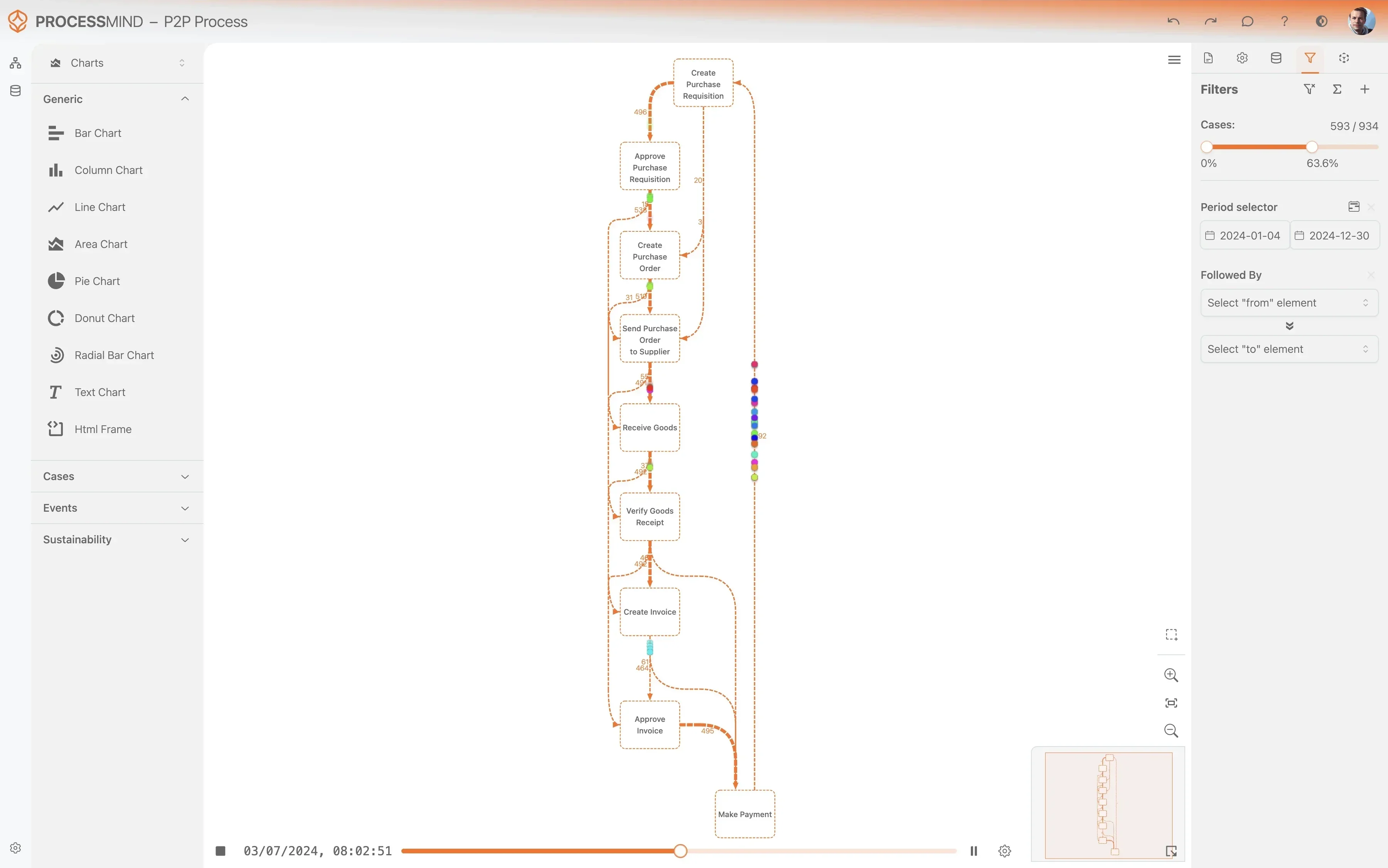
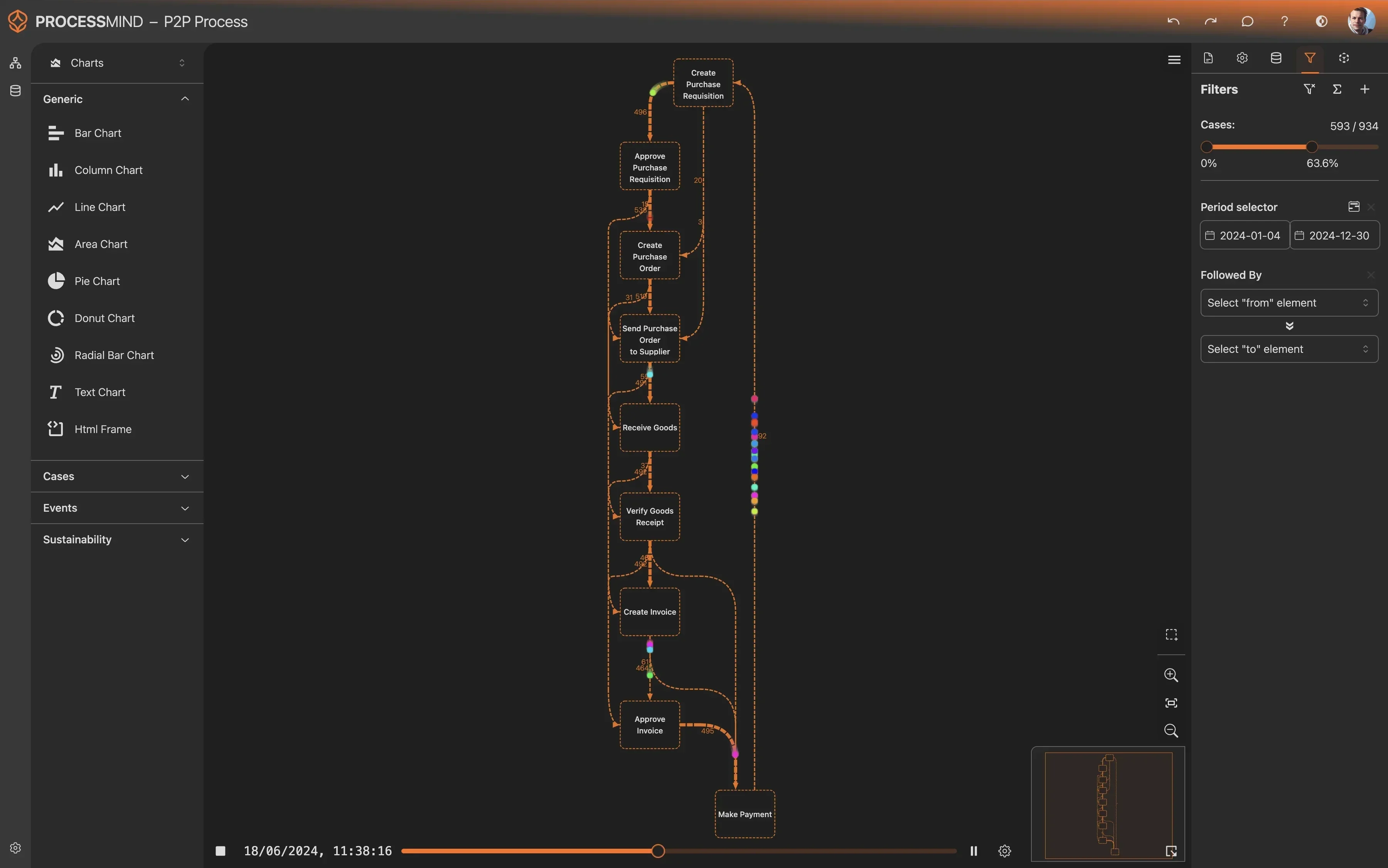
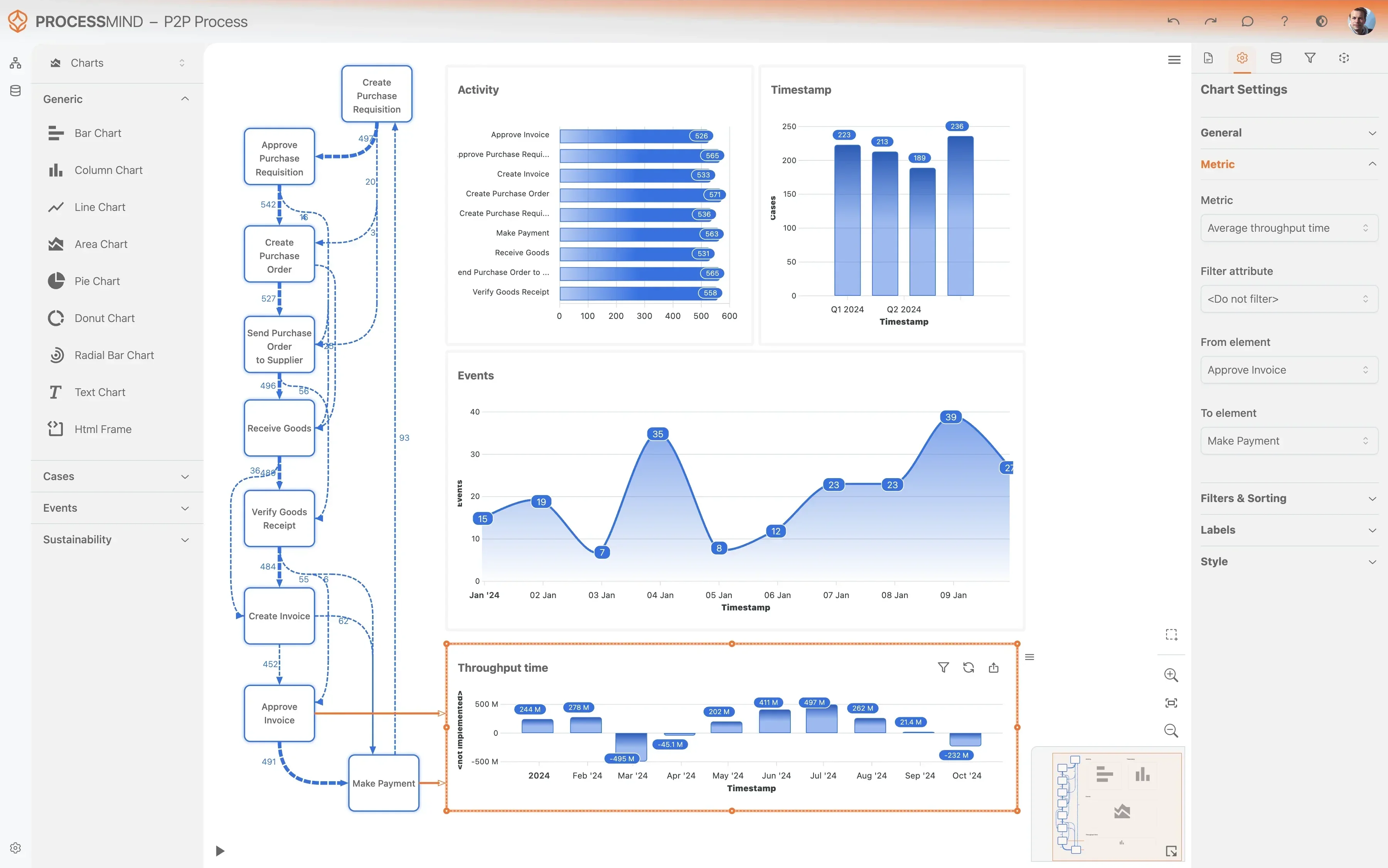
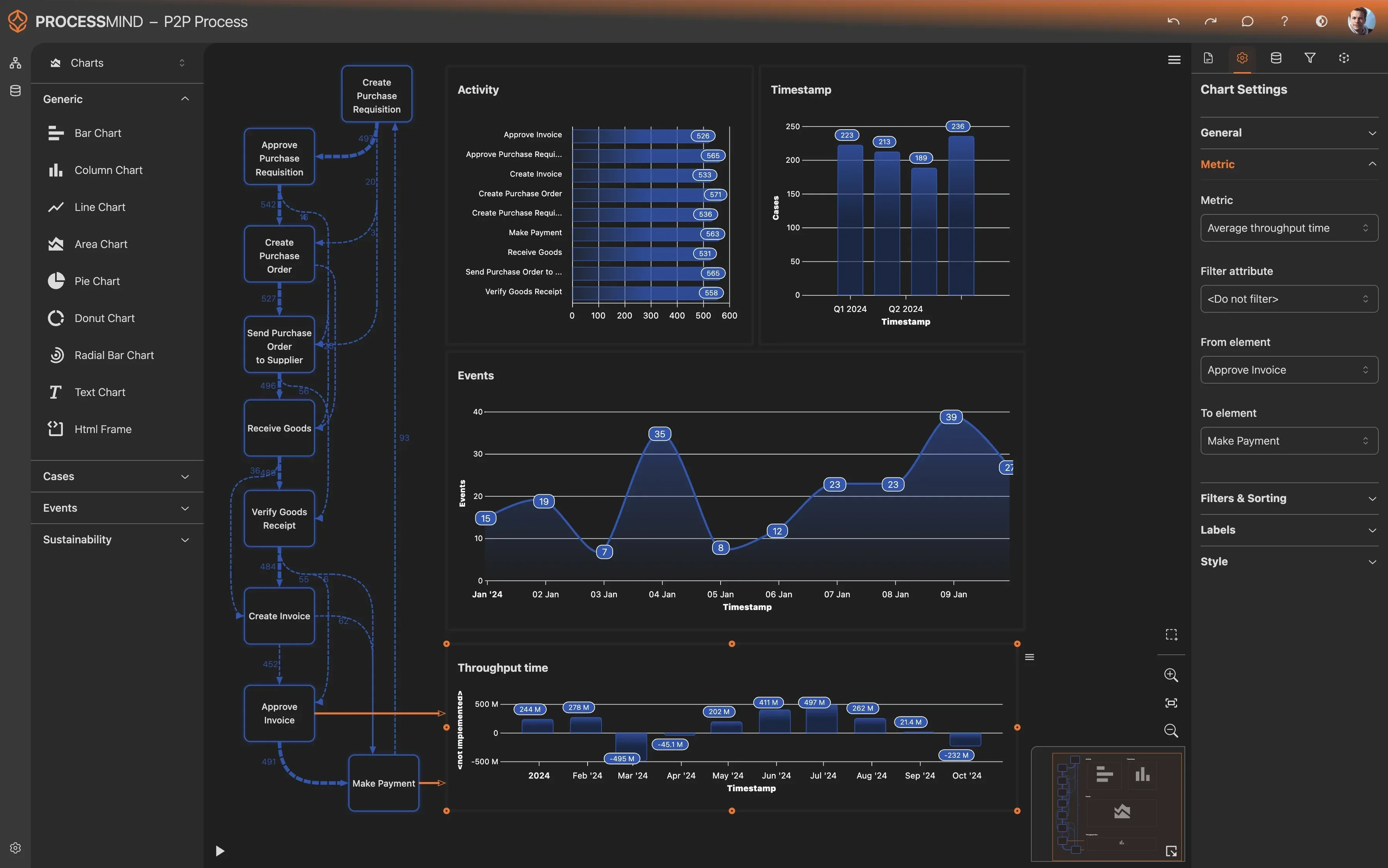
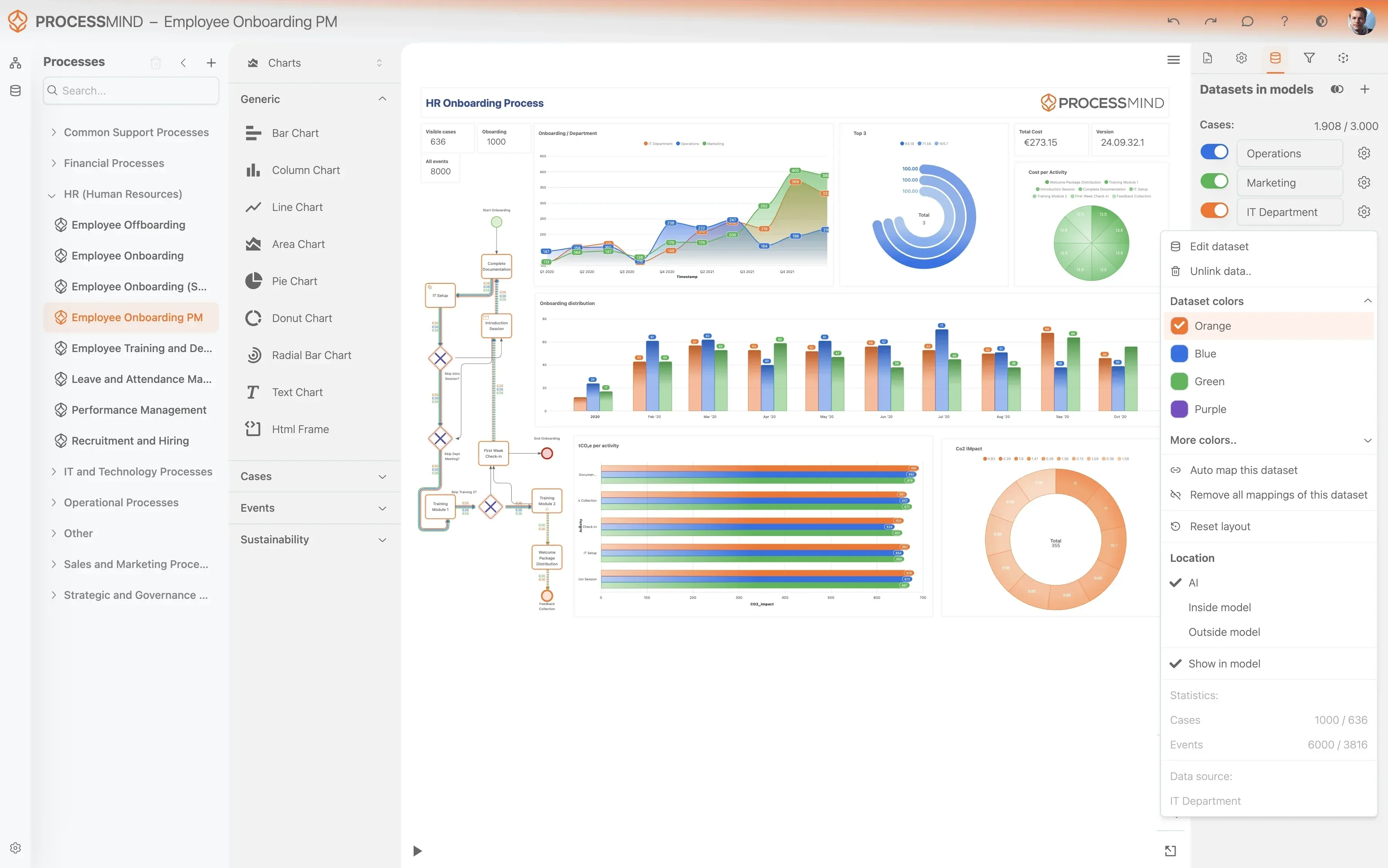
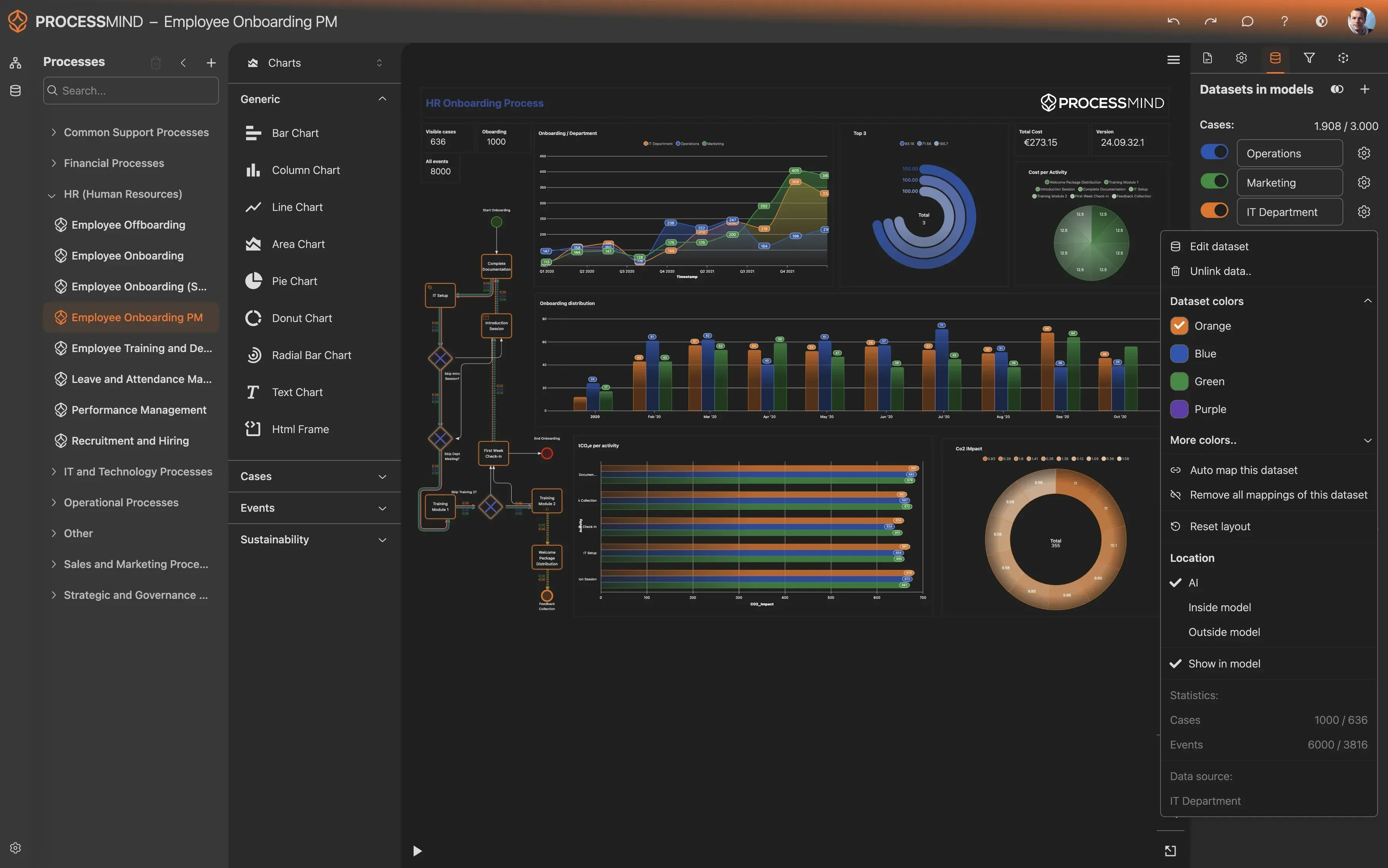
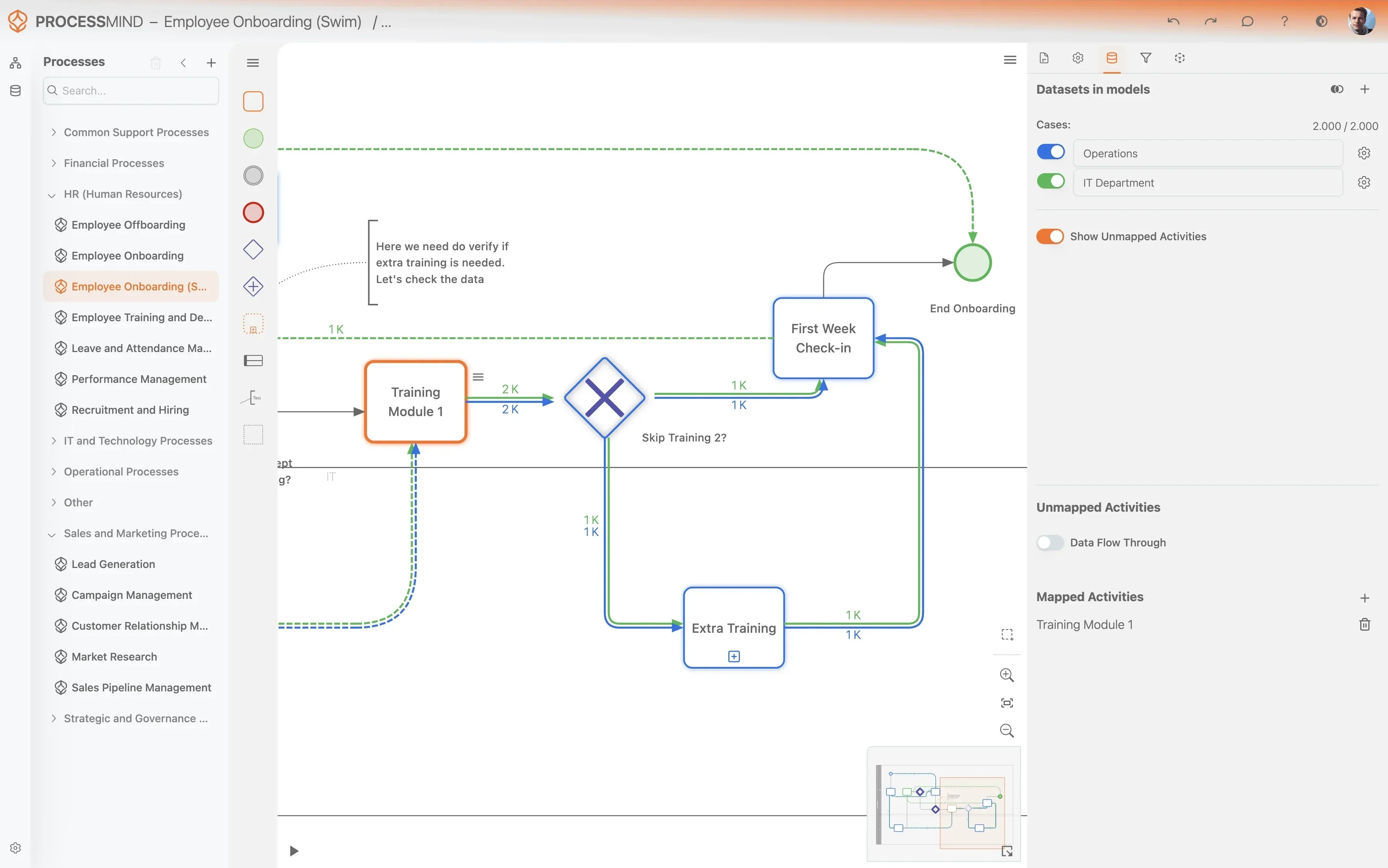
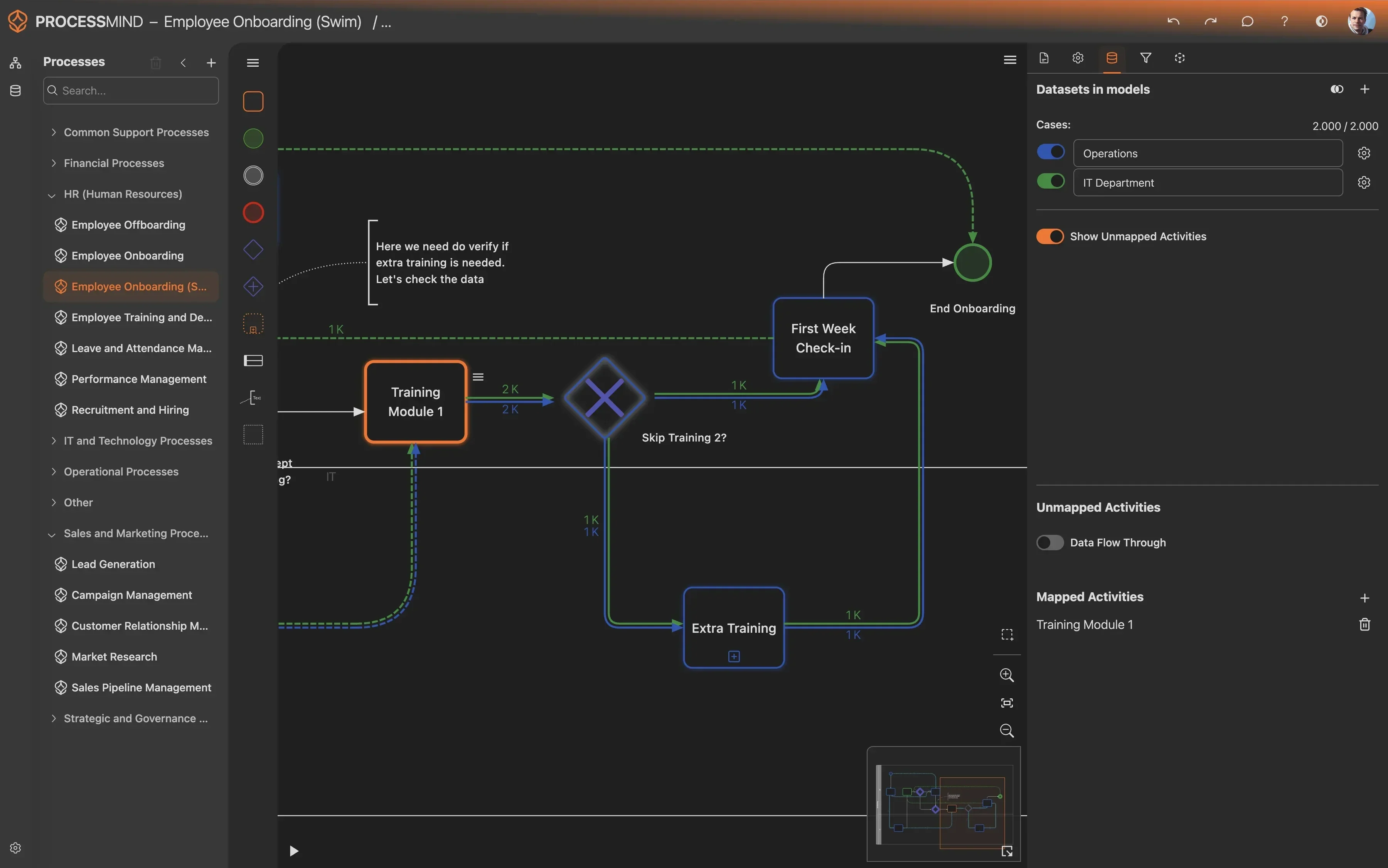
Explore the auto-generated dashboards and interactive process maps to visualize your Credit Management & Collections flow. Review AI-driven recommendations.
Why it matters
Gain deep visibility into your credit-to-cash process, uncovering inefficiencies, compliance gaps, and areas for automation to reduce DSO and bad debt.
Expected outcome
A clear understanding of process variations, bottlenecks, and data-backed recommendations for improving credit and collections.
Implement Improvements
What to do
Prioritize the identified opportunities from your analysis, then apply targeted changes to your Credit Management & Collections processes in SAP S/4HANA.
Why it matters
Transform insights into tangible actions that streamline operations, improve cash flow, and enhance customer relationships through better credit management.
Expected outcome
Concrete process changes initiated within your SAP S/4HANA system, targeting key areas for efficiency and compliance.
Monitor Your Process
What to do
Periodically re-upload fresh data from SAP S/4HANA to ProcessMind to continuously track the impact of your improvements and measure KPI changes.
Why it matters
Sustain process excellence by continuously monitoring performance, ensuring improvements are maintained, and adapting to new challenges in real-time.
Expected outcome
Ongoing tracking of Credit Management & Collections KPIs, demonstrating the quantifiable impact of implemented changes over time.
TYPICAL OUTCOMES
Realizing Significant Improvements in Credit Management
These outcomes represent the measurable benefits achieved by organizations that optimize their Credit Management & Collections processes, leveraging data-driven insights from process mining on their SAP S/4HANA systems.
Reduction in average cycle time
Streamline the credit assessment process to significantly reduce the time it takes to approve new credit limits, improving customer onboarding and sales velocity.
Decrease in uncollectible invoices
Identify and address the root causes of uncollectible invoices earlier in the collection cycle, leading to a direct reduction in financial losses from written-off debt.
Compliance with dunning policies
Ensure that all dunning procedures consistently follow established internal policies and regulatory requirements, minimizing risk and ensuring fair treatment of customers.
Higher collection call to payment rate
Optimize collection strategies by understanding which call approaches and timings yield the best results, leading to a higher conversion of collection efforts into received payments.
Average time to resolve disputes
Expedite the process of investigating and resolving invoice disputes by identifying bottlenecks and automating workflows, improving customer satisfaction and cash flow.
Results vary based on process complexity, data quality, and specific organizational goals. These figures represent typical improvements observed across various implementations.
Recommended Data
FAQs
Frequently asked questions
Process mining can pinpoint critical bottlenecks in credit approval, identify ineffective dunning strategies, and highlight reasons for high invoice disputes. It reveals the true execution of your processes, exposing delays, manual efforts, and compliance gaps that hinder efficiency and cash flow.
You primarily need event logs detailing activities related to each invoice, using the Invoice Number as the case identifier. This includes timestamps for each activity, the activity description, and the user or system performing it. Relevant tables would include those tracking credit decisions, dunning steps, payment postings, and dispute resolutions.
Once the data is extracted and loaded, initial process maps and insights can typically be generated within days or a few weeks. The speed depends on data readiness and the complexity of your SAP S/4HANA setup. Meaningful actionable insights usually follow shortly after the initial visualization.
You can accelerate credit approval cycles, increase dunning effectiveness, and significantly reduce invoice dispute volumes. Process mining helps clarify payment delay root causes, optimize collection call strategies, and minimize invoice write-offs, leading to better cash flow and reduced operational costs.
Data can be extracted using standard SAP connectors, custom reports, or direct database queries, depending on your system configuration and tool. The goal is to obtain an event log in a format that your process mining tool can consume. This typically involves identifying the relevant tables and fields that record process events.
Yes, process mining clearly visualizes the actual execution path of your dunning processes against defined rules and policies. It can instantly highlight deviations, missing steps, or incorrect sequences that could pose compliance risks. This allows you to proactively address inconsistencies and ensure adherence to regulations.
While understanding your Credit Management & Collections process is key, most process mining tools offer user-friendly dashboards and visualizations. These platforms are designed to make complex data understandable for business users, often requiring minimal technical expertise for interpretation. Data analysts or process experts can then delve deeper into specific findings.
The Invoice Number serves as the crucial case identifier, allowing the process mining tool to trace all related activities from a credit request to final payment or write-off. It links all events, such as dunning steps, payment postings, and dispute resolutions, back to a single process instance. Without a consistent case ID, the process flow cannot be accurately reconstructed.
Unlock Better Cash Flow: Optimize Credit Management & Collections Today
Pinpoint inefficiencies, reduce cycle time by 30% and boost your cash flow.
No credit card required. Setup in minutes.