Improve Your Employee Onboarding

Select a process
Choose a process to continue working in your connected workspace.
Optimize Employee Onboarding in Dynamics 365 HR
Efficient employee onboarding is crucial for new hire success. Our platform helps you uncover bottlenecks, delays, and inconsistencies that hinder smooth integration. Identify areas for improvement, streamline workflows, and ensure every new employee starts strong.
Download our pre-configured data template and address common challenges to reach your efficiency goals. Follow our six-step improvement plan and consult the Data Template Guide to transform your operations.
Show detailed description
Why Optimize Employee Onboarding in Microsoft Dynamics 365 Human Resources?
Employee Onboarding is more than just paperwork; it is a critical process that lays the foundation for a new hire's success and long-term retention within your organization. When managed effectively, it significantly accelerates productivity, fosters a positive company culture, and ensures compliance. However, inefficient onboarding processes, especially within complex systems like Microsoft Dynamics 365 Human Resources, can lead to substantial hidden costs. These include delayed time to productivity for new employees, increased early attrition rates due to poor experiences, and unnecessary administrative burden on HR and IT teams. Without clear visibility into the entire journey, identifying the root causes of delays, inconsistencies, or compliance gaps becomes a daunting task. Understanding the actual flow of your onboarding cases, from offer acceptance to full integration, is paramount to transforming a potentially disjointed experience into a smooth, efficient, and welcoming introduction to your company.
Unlocking Insights with Process Mining for Your Onboarding Process
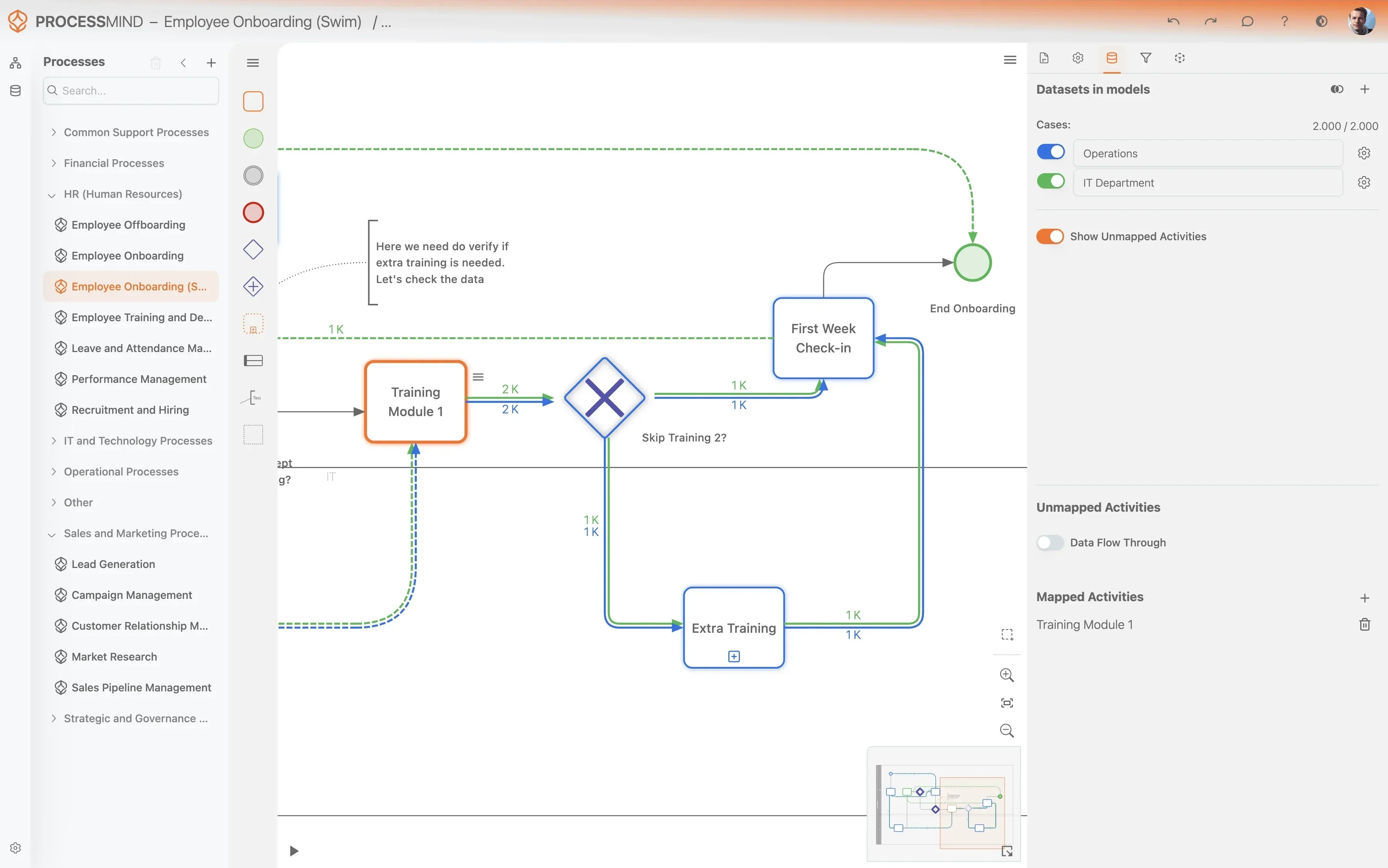
Process mining offers a powerful, data-driven approach to truly understand your Employee Onboarding process as it unfolds within Microsoft Dynamics 365 Human Resources. Instead of relying on assumptions or anecdotal evidence, process mining reconstructs the actual sequence of events from your system logs, providing an objective X-ray view of every "Onboarding Case." This end-to-end perspective allows you to visualize the real paths new hires take, identifying where the process deviates from its intended design. You can pinpoint specific activities that cause bottlenecks, observe unexpected loops, or discover delays in critical handoffs between departments, for example, between HR creating a profile and IT provisioning accounts. This detailed analytical capability is crucial for understanding why certain stages take longer than expected, enabling you to move beyond surface-level symptoms to address the underlying inefficiencies directly impacting your new hire experience.
Key Areas for Improvement in Your Onboarding Process
Applying process mining to your Employee Onboarding in Microsoft Dynamics 365 Human Resources often reveals several common areas ripe for optimization. For instance, you might discover significant delays between a "Background Check Completed" and "Pre-employment Paperwork Sent" activity, indicating a waiting period in HR operations. Another frequent bottleneck occurs between "Equipment Ordered" and "Equipment Delivered", or "IT Account Provisioning Initiated" and the account actually being active, leaving new hires unproductive on their first day. Furthermore, the analysis can highlight inefficiencies in assigning and tracking mandatory training, showing how long it truly takes for "Mandatory Training Assigned" to become "Mandatory Training Completed". By identifying these specific pain points, you can target your improvement efforts precisely, whether it involves streamlining internal communication protocols, automating manual steps within Dynamics 365 HR workflows, or clarifying departmental responsibilities.
Realizing Tangible Outcomes for a Better Onboarding Experience
Optimizing your Employee Onboarding process through process mining in Microsoft Dynamics 365 Human Resources yields a multitude of tangible benefits. Firstly, you can significantly reduce the overall onboarding cycle time, getting new employees productive faster. This direct impact translates into earlier contributions to your organization and a quicker return on your hiring investment. Secondly, by eliminating unnecessary delays and rework, you will achieve measurable cost savings in administrative resources and reduce the likelihood of early attrition. Thirdly, robust process analysis ensures greater compliance with internal policies and external regulations, as you can verify that all mandatory steps, like background checks and required training, are completed promptly and correctly. Ultimately, a streamlined, transparent, and efficient onboarding process dramatically enhances the new hire experience, leading to higher satisfaction, increased engagement, and improved long-term employee retention. Your new hires will feel valued and prepared, setting them up for success from day one.
Begin Your Onboarding Optimization Journey
Ready to transform your Employee Onboarding process in Microsoft Dynamics 365 Human Resources? This template and guide provide the framework you need to start. By leveraging the power of process mining, you can move beyond guesswork and gain real, actionable insights into your current state. Discovering how to improve Employee Onboarding no longer requires complex, time-consuming manual audits. Instead, you gain a clear, visual understanding of your process performance, allowing you to identify bottlenecks, optimize workflows, and reduce Employee Onboarding cycle time with confidence. Take the first step towards creating an onboarding experience that not only meets but exceeds expectations, fostering a successful start for every new team member.
The 6-Step Improvement Path for Employee Onboarding
Download the Template
What to do
Obtain the pre-configured Excel template from ProcessMind, designed to structure your Microsoft Dynamics 365 Human Resources onboarding data. This ensures a consistent data format.
Why it matters
Having the correct data structure from the start is crucial for accurate analysis, enabling ProcessMind to precisely interpret your onboarding process flows.
Expected outcome
A ready-to-use data template, perfectly aligned with ProcessMind requirements for Employee Onboarding.
Export Your Data
What to do
Extract 3-6 months of historical employee onboarding data from Microsoft Dynamics 365 Human Resources. Populate the downloaded ProcessMind template with your real-world activity logs.
Why it matters
Using recent, comprehensive data provides a realistic view of your current onboarding challenges, allowing for evidence-based improvement decisions.
Expected outcome
A populated data template containing detailed historical onboarding events and attributes from your system.
Upload Your Dataset
What to do
Upload your completed data template securely to ProcessMind. The system will automatically process and prepare your data for analysis, transforming raw logs into an actionable process model.
Why it matters
A quick and secure upload initiates the automated analysis, reducing manual effort and speeding up the time to insights about your onboarding process.
Expected outcome
Your Employee Onboarding data successfully uploaded and processed, ready for in-depth process mining analysis.
Analyze Your Process
What to do
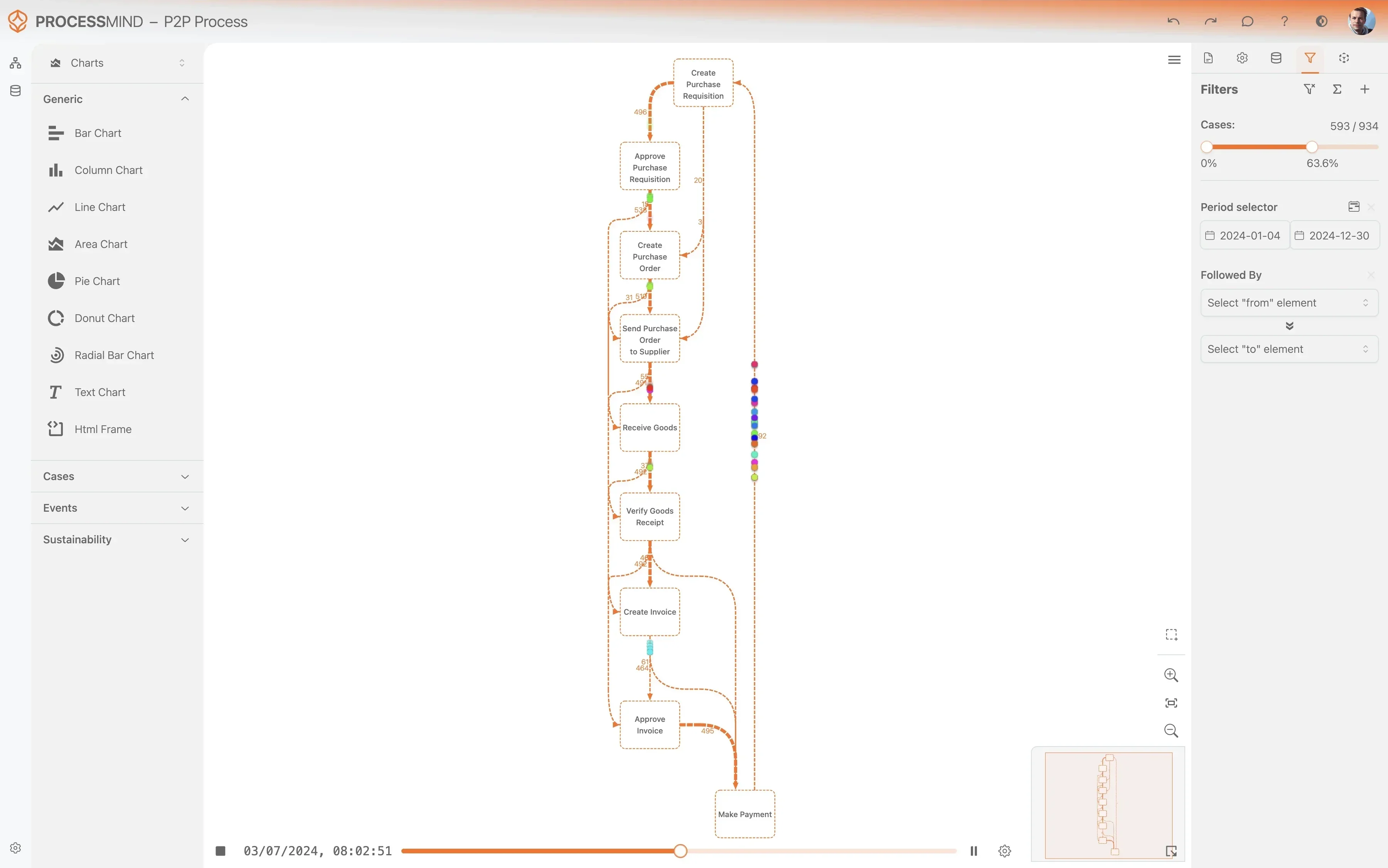
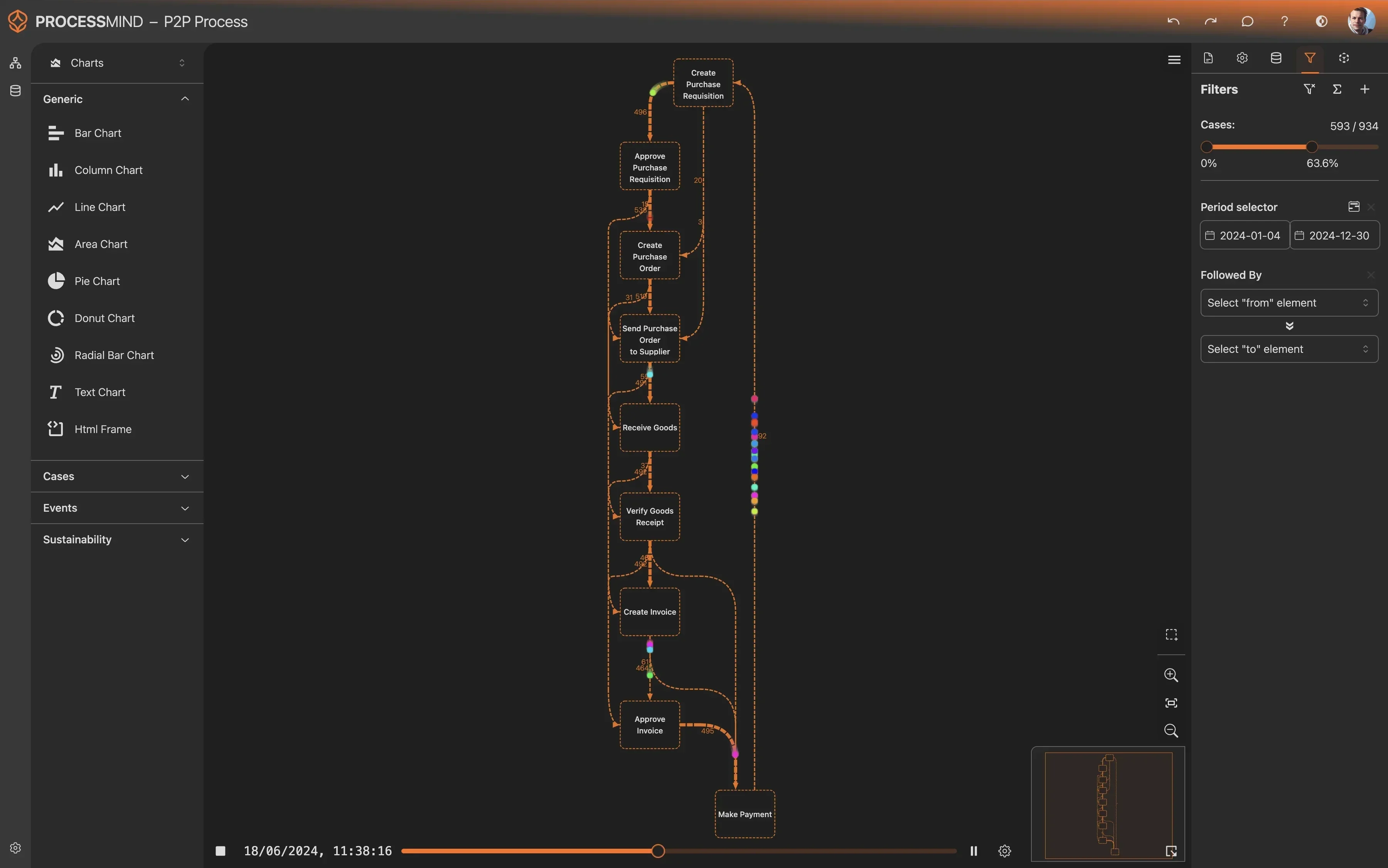
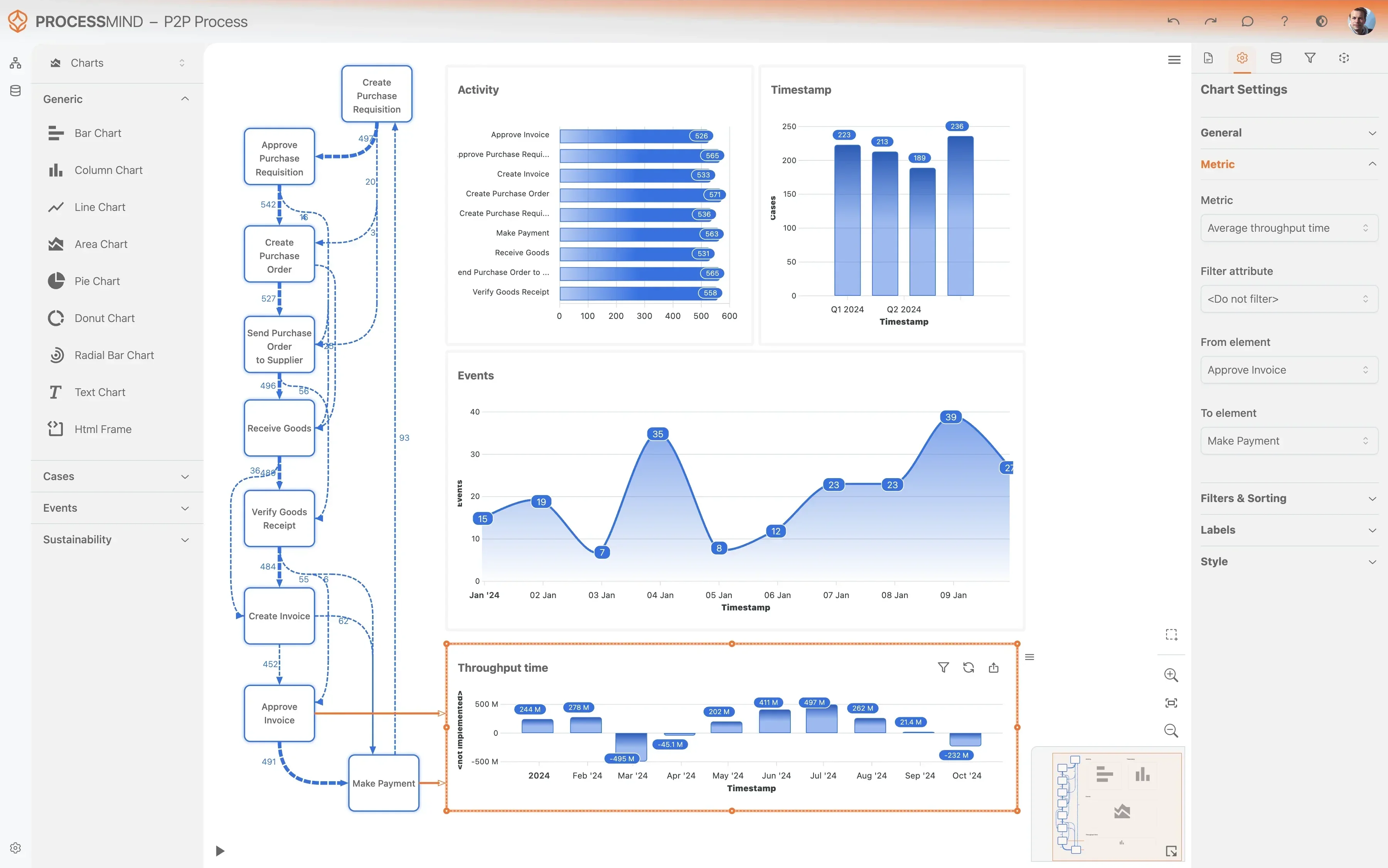
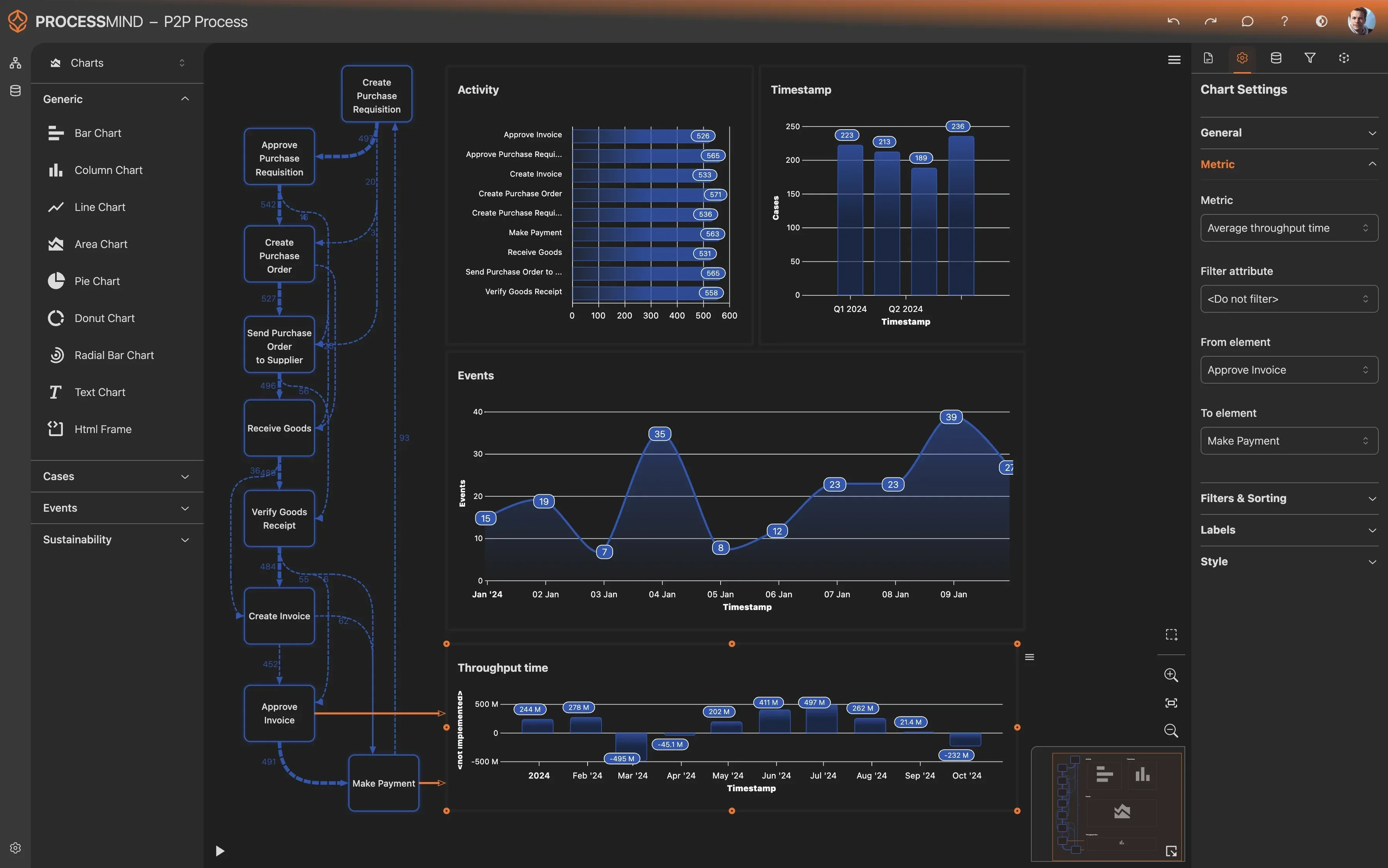
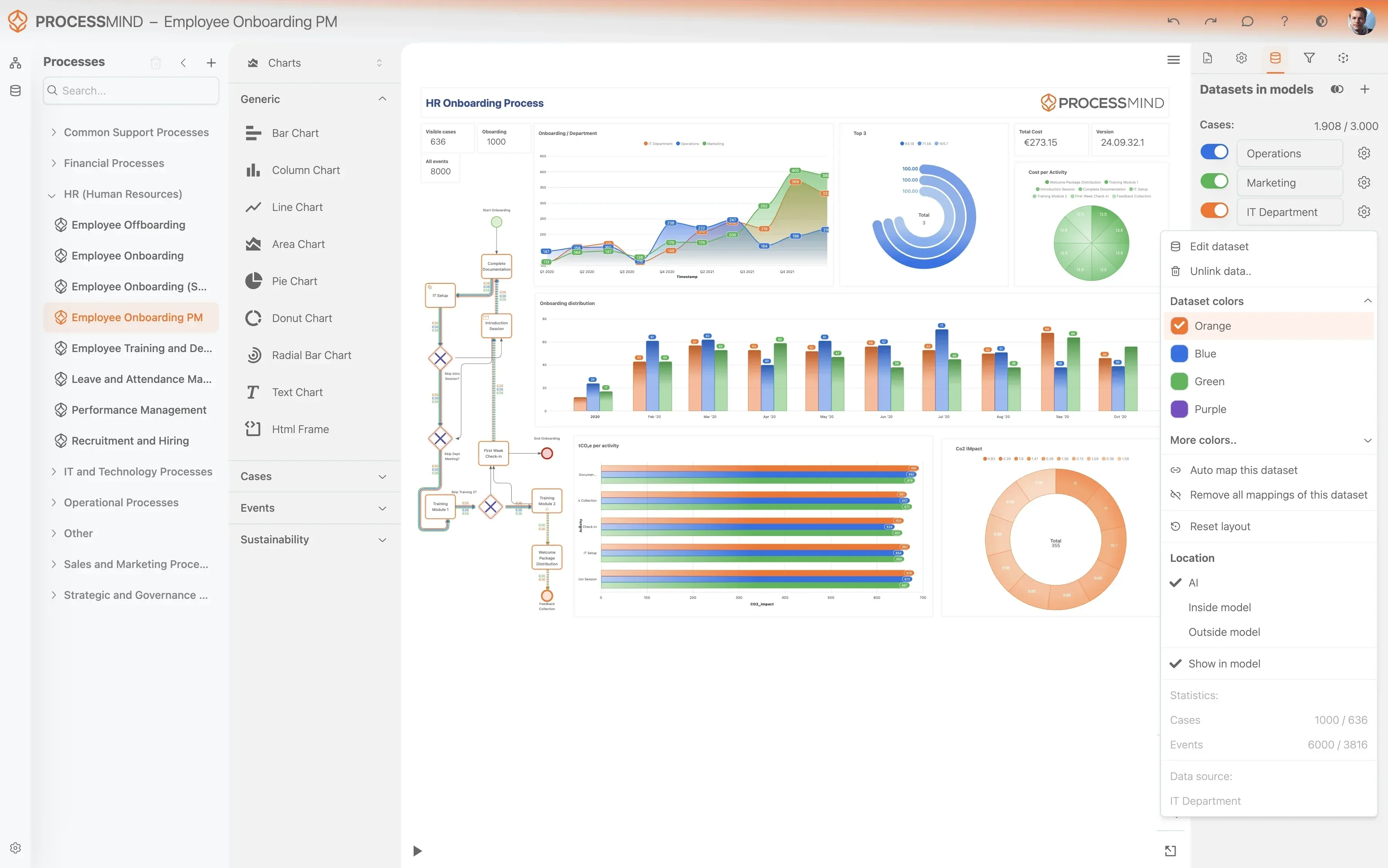
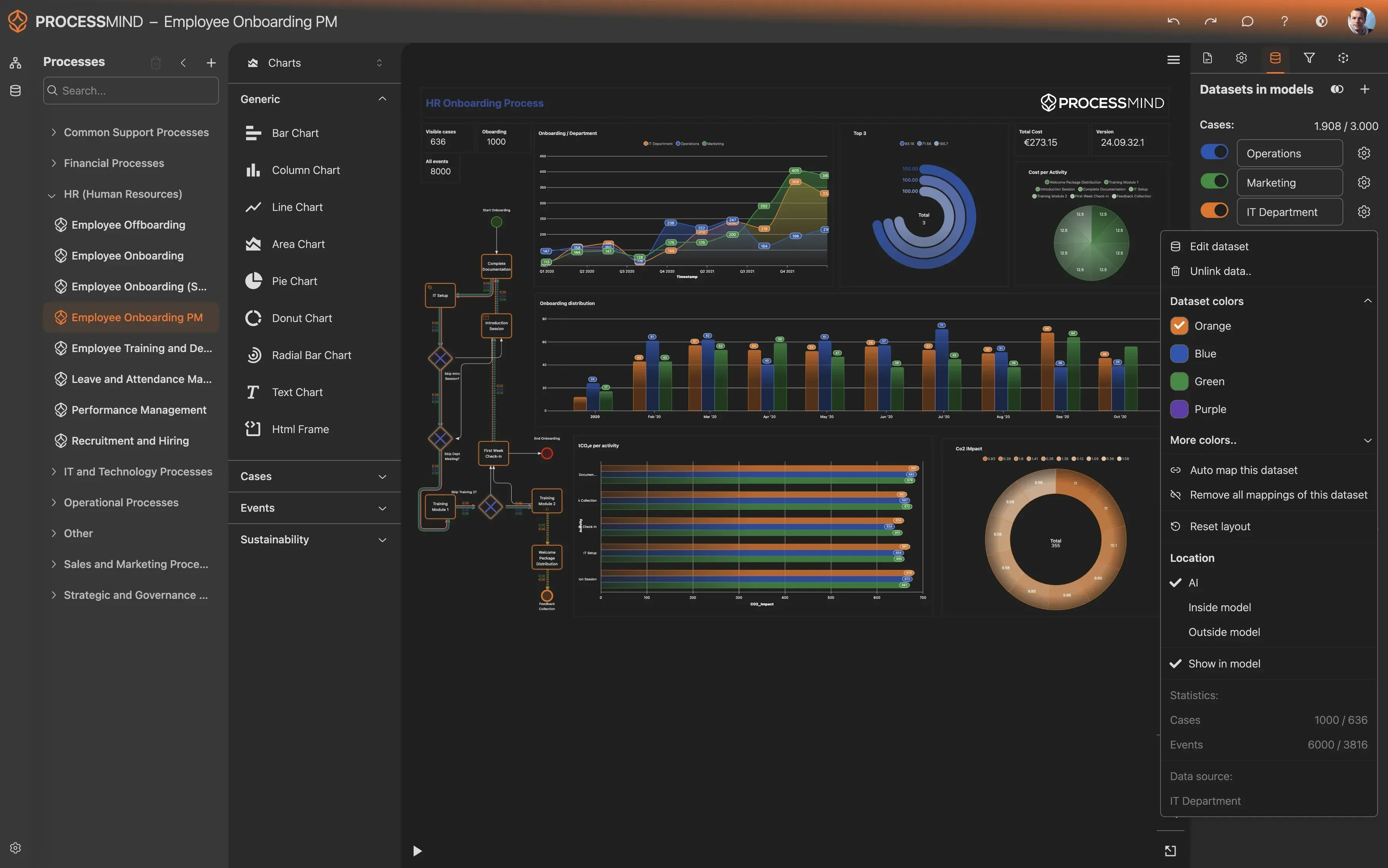
Explore the automatically generated dashboards and visual process maps in ProcessMind. Leverage AI-driven recommendations to identify bottlenecks, deviations, and compliance issues in your onboarding.
Why it matters
Gaining a clear, visual understanding of your onboarding journey helps pinpoint inefficiencies and areas where new hires experience delays or inconsistent experiences.
Expected outcome
Comprehensive insights into your Employee Onboarding process, including identified pain points and improvement opportunities.
Implement Improvements
What to do
Prioritize the identified improvement opportunities based on their impact and feasibility. Update workflows, task guides, or checklists within Microsoft Dynamics 365 Human Resources to address issues.
Why it matters
Acting on insights directly translates to a more efficient, compliant, and positive onboarding experience, reducing costs and improving new hire satisfaction.
Expected outcome
Specific actions taken to optimize the Employee Onboarding process within Microsoft Dynamics 365 Human Resources.
Monitor Your Process
What to do
Periodically re-upload new datasets from Microsoft Dynamics 365 Human Resources to ProcessMind. This allows you to continuously track the impact of your implemented improvements.
Why it matters
Ongoing monitoring ensures that improvements are sustained and allows for continuous optimization, adapting to changes and maintaining peak efficiency.
Expected outcome
Measurable improvements in key performance indicators for Employee Onboarding, demonstrating tangible business value over time.
TYPICAL OUTCOMES
Real-World Results: Optimizing Employee Onboarding
These outcomes highlight the tangible benefits organizations realize by applying process mining to their Employee Onboarding workflows. By identifying bottlenecks and automating manual steps, businesses can significantly enhance efficiency and employee experience within Microsoft Dynamics 365 Human Resources.
Average reduction in end-to-end cycle time
Process mining identifies and eliminates bottlenecks, significantly speeding up the entire onboarding process from offer acceptance to the 30-day check-in, helping new hires become productive faster.
Increase in process conformance
By pinpointing deviations from the standard onboarding process, organizations ensure consistent application of HR policies and reduce non-compliance risks, particularly for mandatory steps and due dates.
Reduction in repeated onboarding tasks
Process mining reveals the root causes of rework, such as manual data entry errors or incomplete documentation, leading to a smoother, more efficient, and error-free onboarding journey.
Average lead time reduction for IT setup
Streamlining the IT provisioning process ensures new employees receive their necessary equipment and system access much quicker, reducing frustration and enhancing their day-one readiness and productivity.
Greater consistency and satisfaction
By standardizing processes and eliminating delays, process mining directly contributes to a more positive and efficient onboarding journey, leading to happier and more engaged new hires from day one.
Individual results may vary based on your organization's specific process complexity, data quality, and implementation scope. The figures presented illustrate typical improvements observed across various deployments.
Recommended Data
FAQs
Frequently asked questions
Process mining identifies actual process flows, bottlenecks, and deviations from your intended onboarding path. It helps you understand where delays occur, why compliance issues arise, and how to standardize the new hire experience. This leads to more efficient, compliant, and satisfying onboarding journeys.
Process mining can pinpoint unacceptable delays, non-compliance with HR policies, and inconsistent new hire experiences. It reveals poor visibility into progress, manual errors, and inefficient resource allocation. You can address issues like mandatory training completion delays, IT provisioning delays, and suboptimal new hire satisfaction.
You primarily need event logs detailing each step of the onboarding process. This includes a case identifier, typically the Onboarding Case ID, an activity name for each step, and a timestamp for when each activity occurred. User or resource information for each activity is also valuable for deeper analysis.
You can expect to see the true end-to-end process flow, identify performance bottlenecks and rework loops, and uncover root causes for delays. Insights will also include deviations from standard processes, areas for automation, and opportunities to improve new hire satisfaction and compliance.
Data can be extracted from Dynamics 365 HR using various methods, such as direct database queries, data export functionalities, or API integrations. Often, a custom report or an integration tool is used to compile the event log data into a format suitable for process mining software.
The initial setup and data extraction typically take a few weeks, depending on data complexity and availability. Once data is prepared, initial analytical insights can often be generated within a few days to a week. Comprehensive analysis and solution identification may take several more weeks.
While some process mining tools are cloud-based, others may require specific server environments. Basic data engineering skills are beneficial for data extraction and transformation. However, many modern process mining platforms offer user-friendly interfaces, minimizing the need for deep technical expertise in analysis.
No, process mining is designed to be non-intrusive. It analyzes historical data exported from your Dynamics 365 HR system, rather than directly interacting with your live operational environment. This ensures your ongoing HR processes remain unaffected during the analysis.
Optimize Employee Onboarding: Boost Efficiency Today!
Achieve 95% compliance and a seamless new hire experience, starting today.
No credit card required. Setup takes minutes.