Improve Your Production Planning

Select a process
Choose a process to continue working in your connected workspace.
Optimize Production Planning in SAP ECC PP
Effective production planning is crucial, yet often hampered by unexpected delays and inefficient resource allocation. Our platform helps you identify exact bottlenecks, ensuring material availability and guiding you toward more efficient production workflows. By uncovering hidden inefficiencies, you can transform your operations and consistently meet your production targets.
Download our pre-configured data template and address common challenges to reach your efficiency goals. Follow our six-step improvement plan and consult the Data Template Guide to transform your operations.
Show detailed description
Why Optimizing Production Planning is Essential
Production Planning is the backbone of any manufacturing operation, dictating efficiency, cost-effectiveness, and ultimately, customer satisfaction. In systems like SAP ECC PP, the sheer volume of data and the complexity of interconnected processes can mask underlying inefficiencies. Without a clear, data-driven view, organizations often grapple with delayed production orders, suboptimal resource allocation, and frequent schedule disruptions. These issues lead to higher operational costs, missed delivery dates, and a decline in your competitive edge. Understanding the true flow of your production process, rather than just the planned ideal, is crucial for sustainable improvement and achieving your strategic manufacturing goals. Many companies struggle with how to improve Production Planning, and often overlook hidden process deviations that directly impact profitability.
How Process Mining Illuminates Your SAP ECC PP Workflows
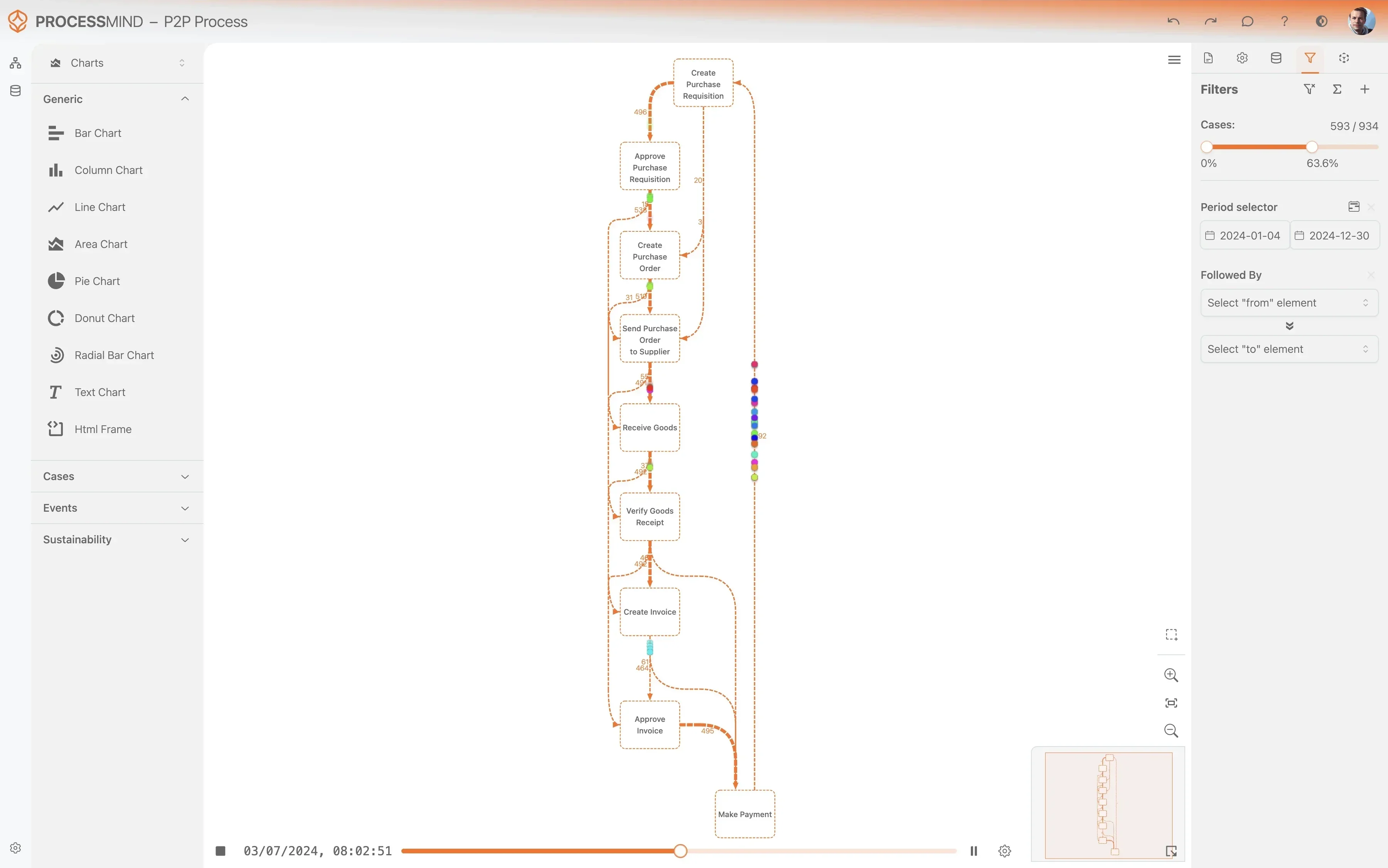
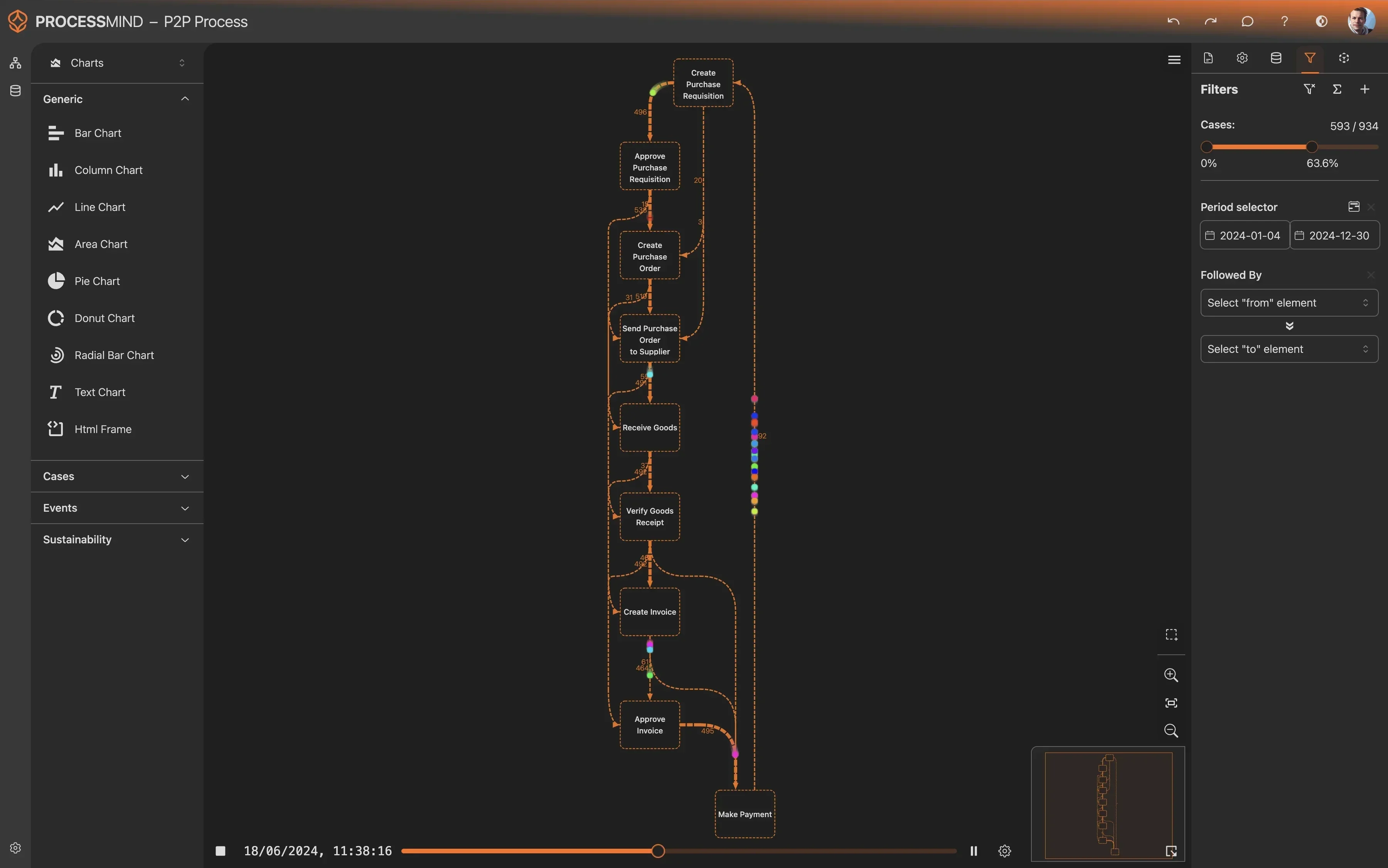
Process mining offers a powerful lens to analyze your Production Planning operations within SAP ECC PP. Unlike traditional reporting, which shows what happened, process mining reveals how it happened, visualizing the actual end-to-end journey of every production order. By extracting event data from SAP ECC PP tables, such as AFKO, AFPO, AUFK, COSS, and COSP, process mining reconstructs the precise sequence and timing of activities. This allows you to identify critical bottlenecks, measure actual cycle times for activities like "Material Requirements Planned" or "Resource Allocation Confirmed," and uncover deviations from your standard operating procedures. You can see where production orders are stalled, which plants or lines consistently underperform, and how frequently plans are adjusted. This data-driven approach gives you an objective understanding of your current state, empowering you to make informed decisions for process optimization.
Key Areas for Production Planning Improvement
Through process mining, several common areas for improvement in Production Planning processes within SAP ECC PP become apparent:
- Bottleneck Identification and Resolution: Pinpoint specific activities or resources that consistently cause delays, extending the overall production cycle time.
- Lead Time Reduction: Analyze the duration of each stage, from "Demand Forecast Received" to "Production Order Completed," to find opportunities to accelerate the entire process.
- Capacity Utilization Optimization: Understand actual resource usage versus planned, identifying underutilized assets or areas of overcapacity.
- Material Availability Management: Trace how material availability impacts scheduling and production start times, leading to better inventory and procurement strategies.
- Schedule Adherence Improvement: Quantify deviations from planned start and end dates, revealing root causes of delays and enabling more realistic planning.
- Process Standardization: Discover variations in how production orders are handled across different teams or products, allowing you to enforce best practices and reduce inconsistencies.
Expected Measurable Outcomes
Implementing insights gained from process mining in your SAP ECC PP Production Planning will lead to tangible, measurable benefits. You can expect a significant reduction in production cycle time, leading to faster delivery and improved customer satisfaction. Operational costs will decrease as inefficiencies are eliminated, and resource utilization becomes more effective. Improved material availability and capacity planning will enhance production throughput, allowing you to meet demand more consistently. Furthermore, greater transparency over your entire production process will lead to better compliance with internal and external regulations, and provide a clear path for how to reduce Production Planning cycle time. The ability to monitor key performance indicators continuously means your improvements are sustained over time, driving ongoing process optimization.
Getting Started with Production Planning Analysis
Embarking on a journey to optimize your Production Planning in SAP ECC PP no longer requires extensive manual analysis or specialized technical expertise. With the right process mining approach, you can quickly gain deep insights into your current operations, identify the most impactful areas for improvement, and implement changes that drive real business value. Leverage these tools to transform your Production Planning from a reactive function into a proactive, efficient, and highly optimized process.
The 6-Step Improvement Path for Production Planning
Download the Template
What to do
Access and download the pre-configured Excel template tailored for SAP ECC PP Production Planning data, ensuring you have the correct structure for your historical records.
Why it matters
A standardized template streamlines data collection and ensures consistency, laying the groundwork for accurate analysis and meaningful insights.
Expected outcome
A ready-to-fill Excel template structured for SAP ECC PP Production Planning data.
Export Your Production Data
What to do
Extract 3-6 months of historical production planning data from SAP ECC PP, focusing on tables like AFKO, AFPO, AUFK, COSS, and COSP, and populate the downloaded template.
Why it matters
Comprehensive historical data provides a robust foundation for identifying trends, bottlenecks, and areas for process optimization within your production.
Expected outcome
A completed Excel template containing 3-6 months of your SAP ECC PP Production Planning data.
Upload Your Dataset
What to do
Securely upload your populated Excel template to ProcessMind, initiating an automatic analysis of your Production Planning process data.
Why it matters
Effortless and secure data ingestion ensures your information is quickly processed, allowing you to move swiftly towards actionable insights without delay.
Expected outcome
Your SAP ECC PP Production Planning dataset successfully uploaded and ready for analysis in ProcessMind.
Analyze Production Planning
What to do
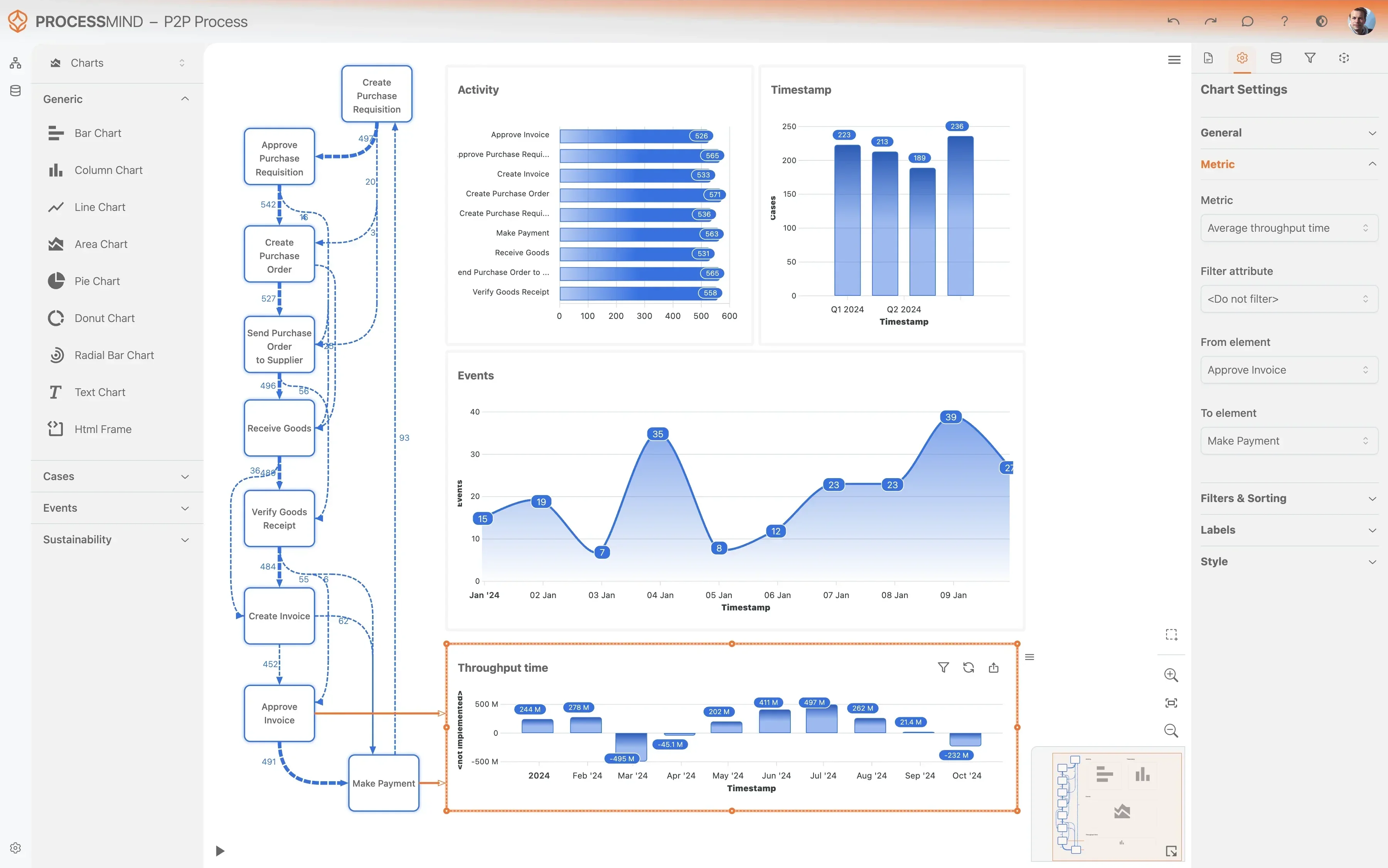
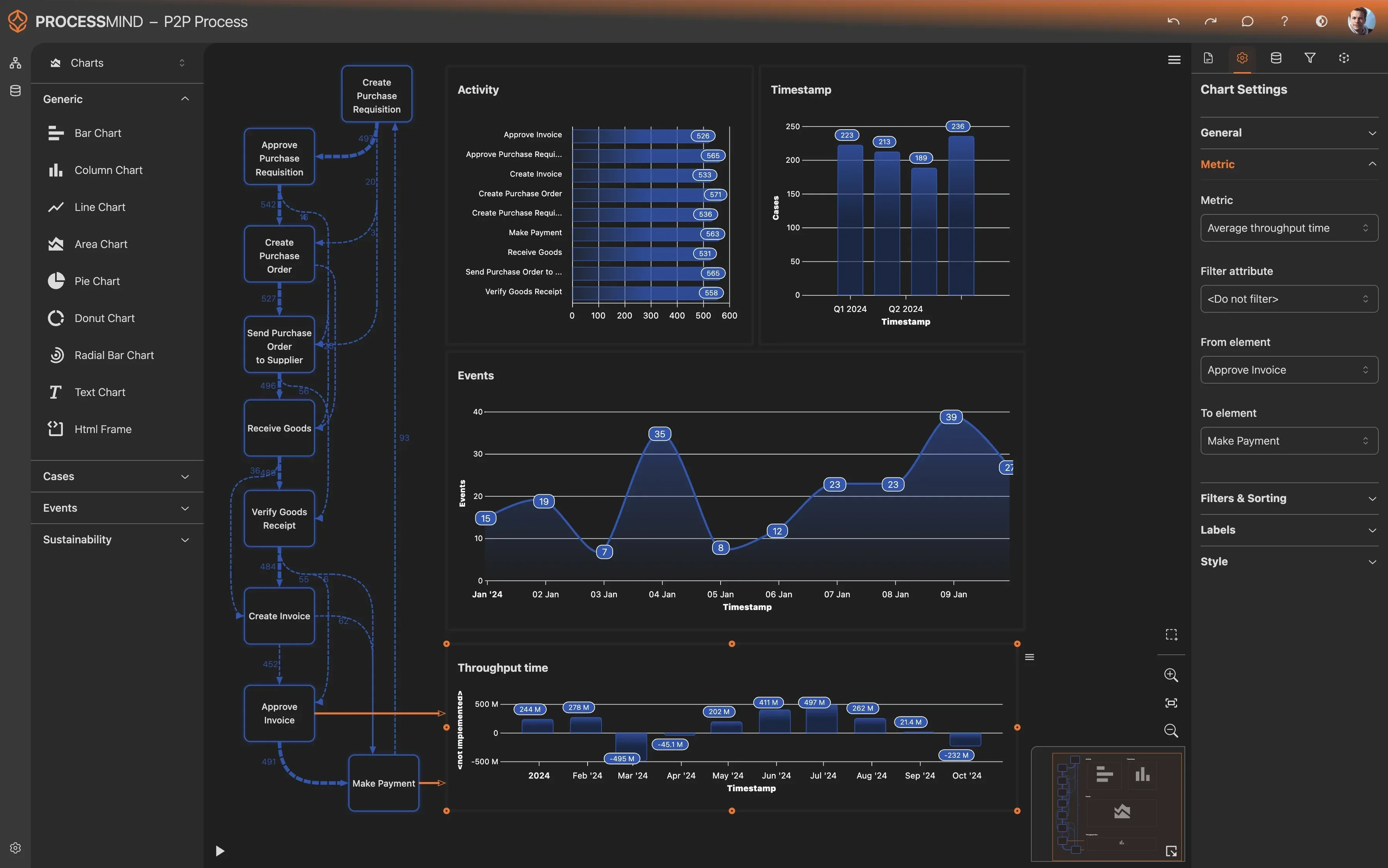
Explore the auto-generated dashboards and visual insights specific to your Production Planning process, leveraging AI-driven recommendations to pinpoint inefficiencies.
Why it matters
Gain deep visibility into your process flow, identify bottlenecks, resource allocation issues, and non-compliance, enabling data-driven decision making.
Expected outcome
Clear understanding of your Production Planning process, its bottlenecks, and potential improvement areas.
Implement Production Changes
What to do
Based on the insights and recommendations, prioritize and implement targeted improvements within your SAP ECC PP configuration or operational procedures.
Why it matters
Translating insights into action directly addresses inefficiencies, leading to optimized production schedules, reduced lead times, and enhanced resource utilization.
Expected outcome
Strategic process adjustments and operational changes implemented to enhance Production Planning efficiency.
Monitor Production Performance
What to do
Periodically re-upload updated Production Planning data from SAP ECC PP to ProcessMind to track the impact of implemented changes and measure progress.
Why it matters
Continuous monitoring ensures that improvements are sustained, new issues are promptly identified, and your production process remains optimized for peak performance.
Expected outcome
Tangible improvements in production KPIs, such as reduced lead times, increased output, and better schedule adherence.
WHAT YOU WILL GET
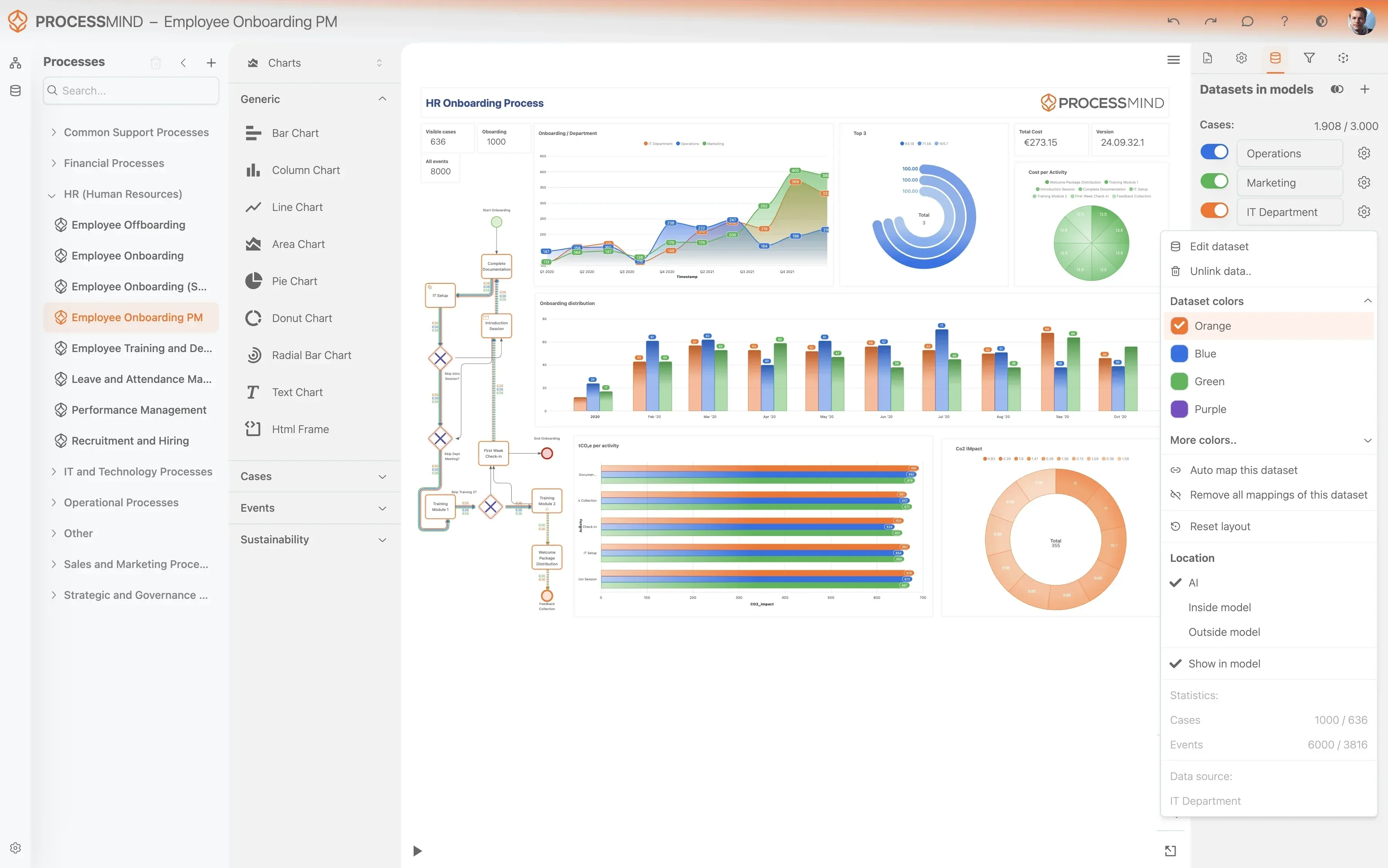
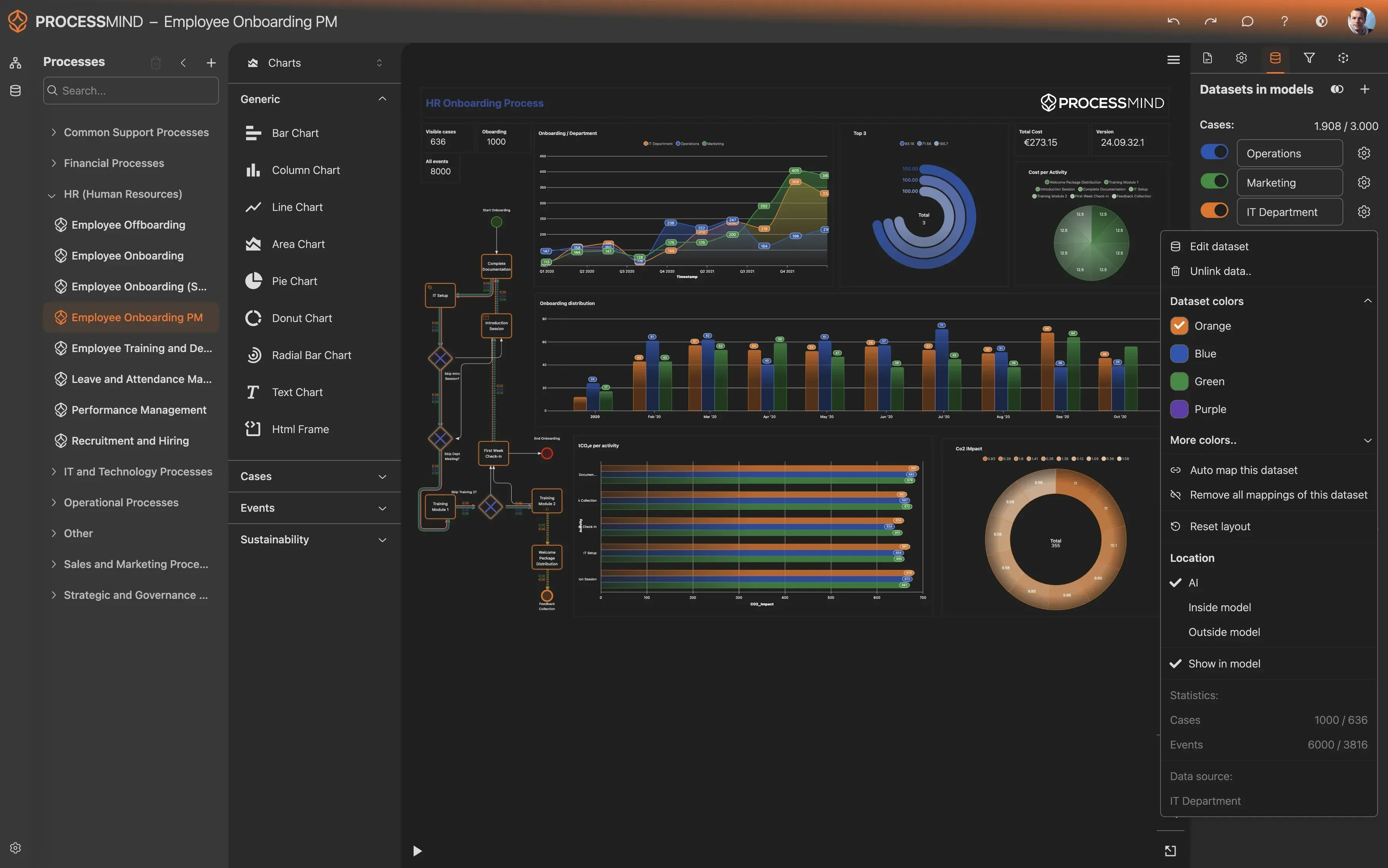
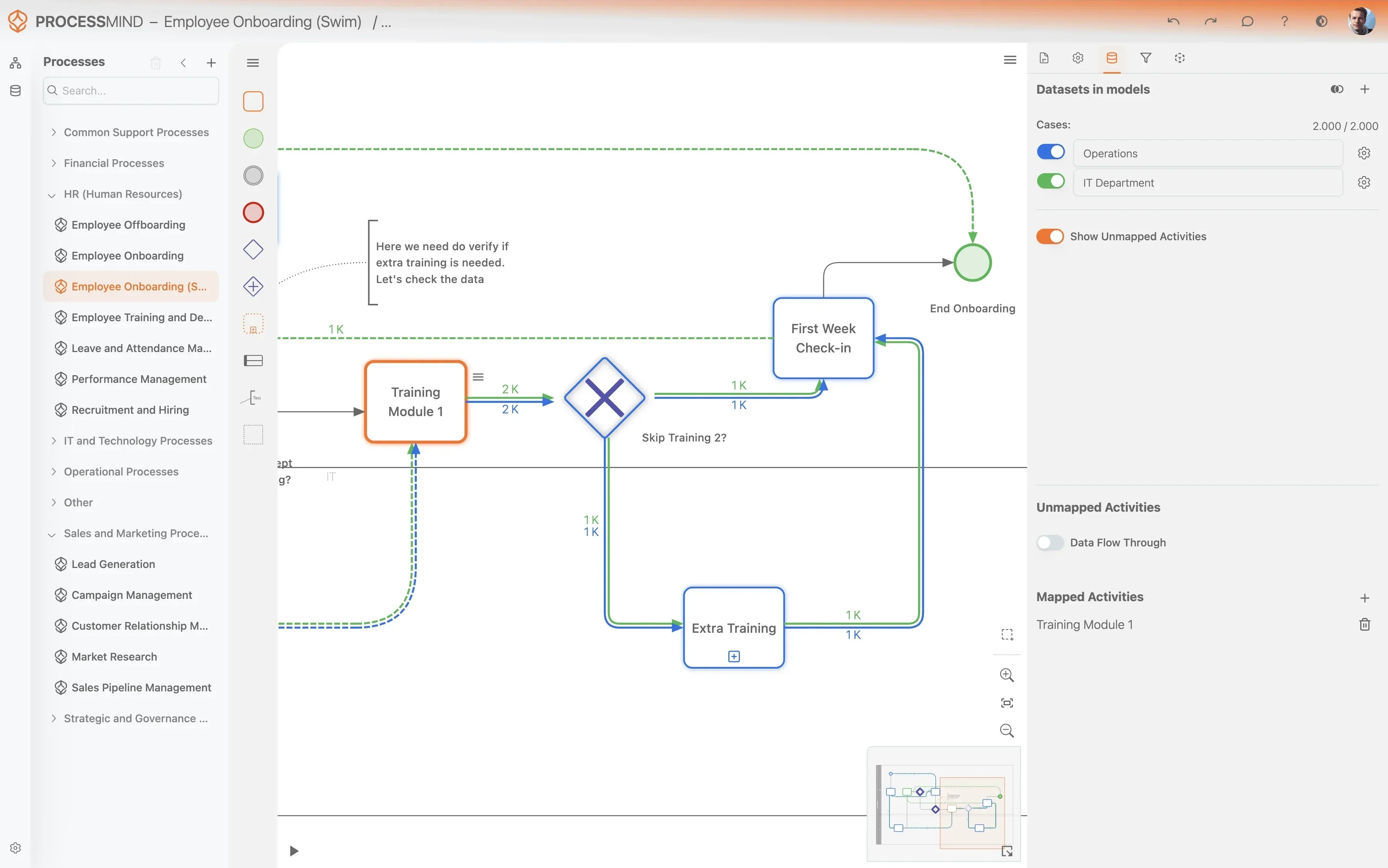
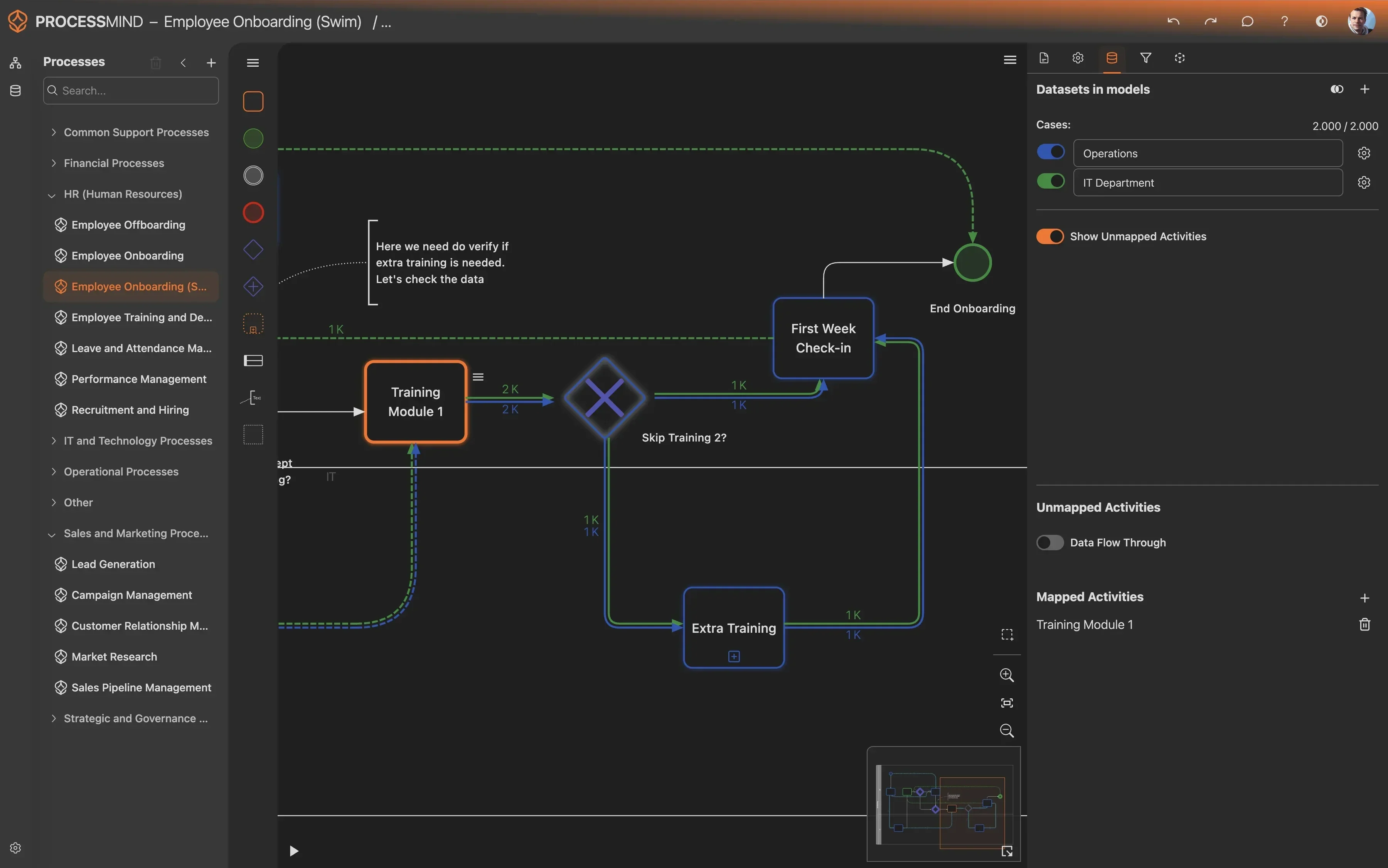
Uncover Production Planning Truths in SAP ECC PP
- Pinpoint exact production bottlenecks
- Optimize material availability and resource use
- Benchmark production variants effectively
- Track progress and achieve production targets
TYPICAL OUTCOMES
Real-World Improvements in Production Planning
These outcomes illustrate the tangible benefits organizations realize by optimizing their Production Planning processes within SAP ECC PP, identifying inefficiencies and bottlenecks through data-driven analysis.
Reduction in lead time for materials
Process mining identifies and removes bottlenecks in material procurement and internal logistics, ensuring production orders have materials ready sooner. This directly reduces idle time and accelerates production starts.
Average reduction in order release cycle
By streamlining administrative processes and approvals, organizations can significantly reduce the time from plan approval to production order release. This enables production to commence sooner.
Increase in on-time production starts and finishes
Process mining uncovers root causes of schedule deviations, allowing for proactive adjustments to planning and execution. This leads to more reliable production scheduling and improved delivery predictability.
Decrease in frequent production plan modifications
Understanding the triggers for plan adjustments helps stabilize initial planning, reducing the need for reactive changes. This improves operational stability and resource allocation.
Average reduction in total throughput time
Optimizing the end-to-end production execution, from release to completion, eliminates hidden delays and non-value-added steps. This results in faster production cycles and higher overall throughput.
Reduction in planned versus actual quantity variance
Identifying where and why planned quantities diverge from actual output allows for better planning and execution control. This ensures production consistently meets expected targets.
Results vary based on process complexity and data quality. These figures represent typical improvements observed across implementations focusing on SAP ECC PP Production Planning.
Recommended Data
FAQs
Frequently asked questions
Process mining visualizes the actual flow of your production orders, highlighting hidden delays, rework loops, and capacity bottlenecks. It can identify where material shortages occur, pinpoint inefficient resource utilization, and reveal discrepancies between planned and actual production. This allows you to understand deviations from your standard process and their impact.
You primarily need event logs, which capture key activities related to your production orders. This includes the production order number as the case identifier, activity names, timestamps for each activity, and the user or system responsible. Relevant tables could include AFKO, AFPO, JCDS, and MKPF, among others.
After successful data extraction and ingestion, initial process models and insights can often be generated within a few weeks. The timeline depends on data complexity and availability. These initial findings provide a foundational understanding for deeper analysis and identification of specific improvement opportunities.
You can expect to accelerate material availability, optimize resource utilization, and significantly improve production schedule adherence. Process mining helps reduce production order release times, enhances overall production efficiency, and aligns planned production with actual output. These improvements lead to better throughput and reduced operational costs.
Yes, process mining is highly effective in pinpointing the root causes of these issues. It can visualize the exact stages where material availability checks cause delays or where specific work centers become bottlenecks. By analyzing deviations and timing, it provides actionable insights to mitigate these problems.
While SAP ECC PP is a complex system, standard connectors and extraction methodologies exist to retrieve the required event log data. The initial setup requires careful planning to identify relevant tables and fields. Once configured, data extraction can often be automated for ongoing analysis.
You typically need a process mining software platform, which often includes data connectors for SAP systems. Users should have a basic understanding of data analysis and the Production Planning process itself. Some technical knowledge for data modeling and transformation may be beneficial.
Process mining creates a visual model of your actual process, which can be compared against your ideal or compliant process definition. It automatically highlights all deviations, bypasses, and unauthorized steps taken during production order execution. This allows for continuous monitoring and rapid identification of compliance breaches.
Optimize Production Planning Now for Peak Efficiency
Uncover inefficiencies, reduce cycle time by 30%, and meet targets.
No credit card required. Start optimizing today.