Improve Your Quality Management

Select a process
Choose a process to continue working in your connected workspace.
Optimize Quality Management in ETQ Reliance
Quality Management processes can often hide significant inefficiencies and compliance risks. Our platform helps you precisely track every step, from issue identification to resolution, revealing bottlenecks and opportunities for improvement. This allows you to streamline operations and enhance product quality by understanding your process better.
Download our pre-configured data template and address common challenges to reach your efficiency goals. Follow our six-step improvement plan and consult the Data Template Guide to transform your operations.
Show detailed description
Why Optimize Your Quality Management Process
Effective Quality Management is the backbone of any successful organization, directly impacting customer satisfaction, regulatory compliance, and profitability. In today's complex business environment, managing quality events, deviations, and corrective and preventive actions (CAPAs) within a robust system like ETQ Reliance is crucial. However, even with powerful platforms, processes can become convoluted, leading to hidden inefficiencies, costly delays, and compliance risks.
Without a clear, data-driven understanding of how your Quality Management processes actually flow, identifying the root causes of these issues becomes a challenge. You might suspect bottlenecks in investigations or slow CAPA implementation, but pinpointing exactly where, why, and how often these occur remains elusive. Unoptimized processes translate to longer cycle times for resolving quality events, increased operational costs due to rework, and potential harm to your brand reputation. Investing in process optimization for Quality Management is not just about efficiency, it is about safeguarding your business and continuously enhancing product or service quality.
How Process Mining Illuminates ETQ Reliance Quality Workflows
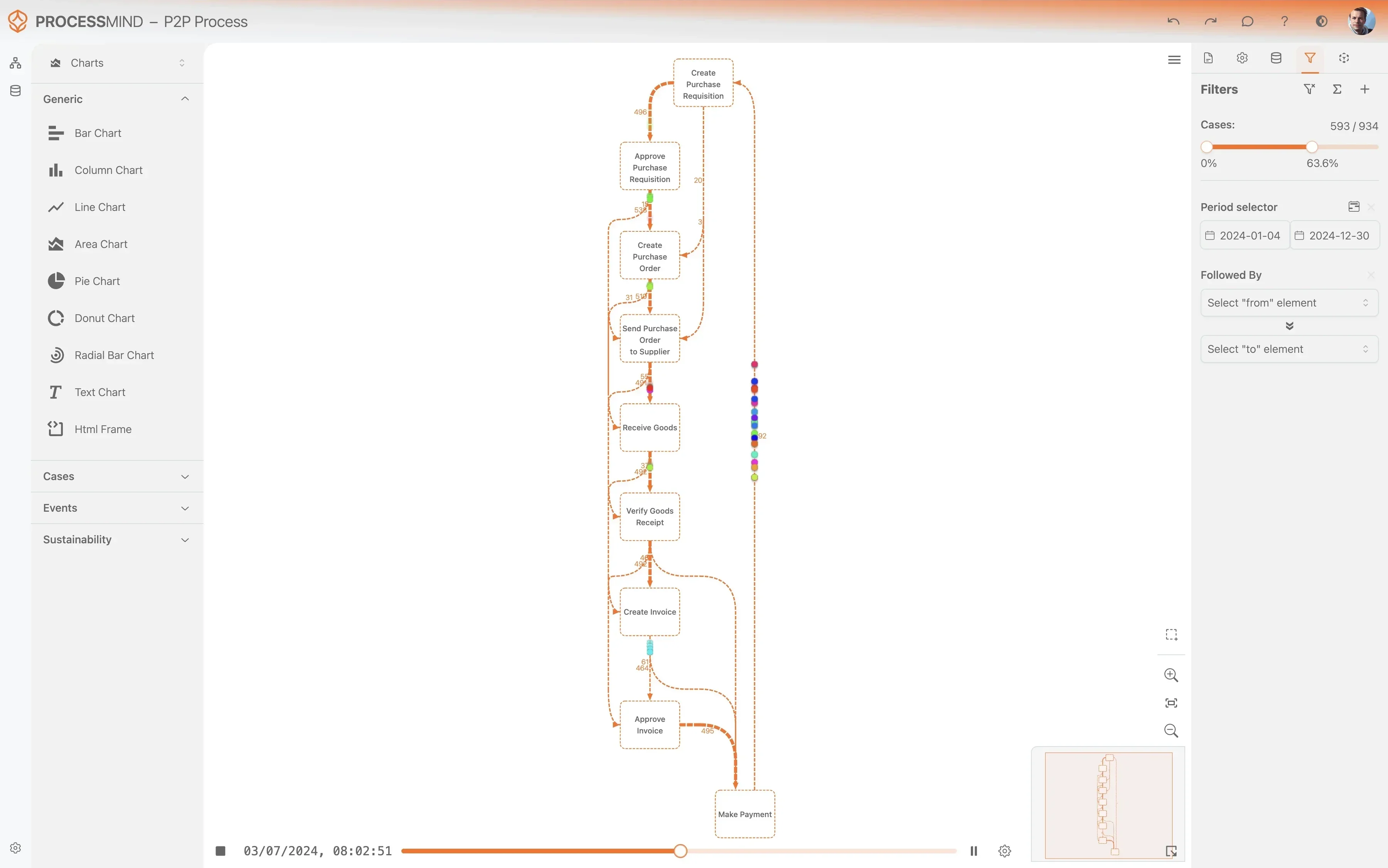
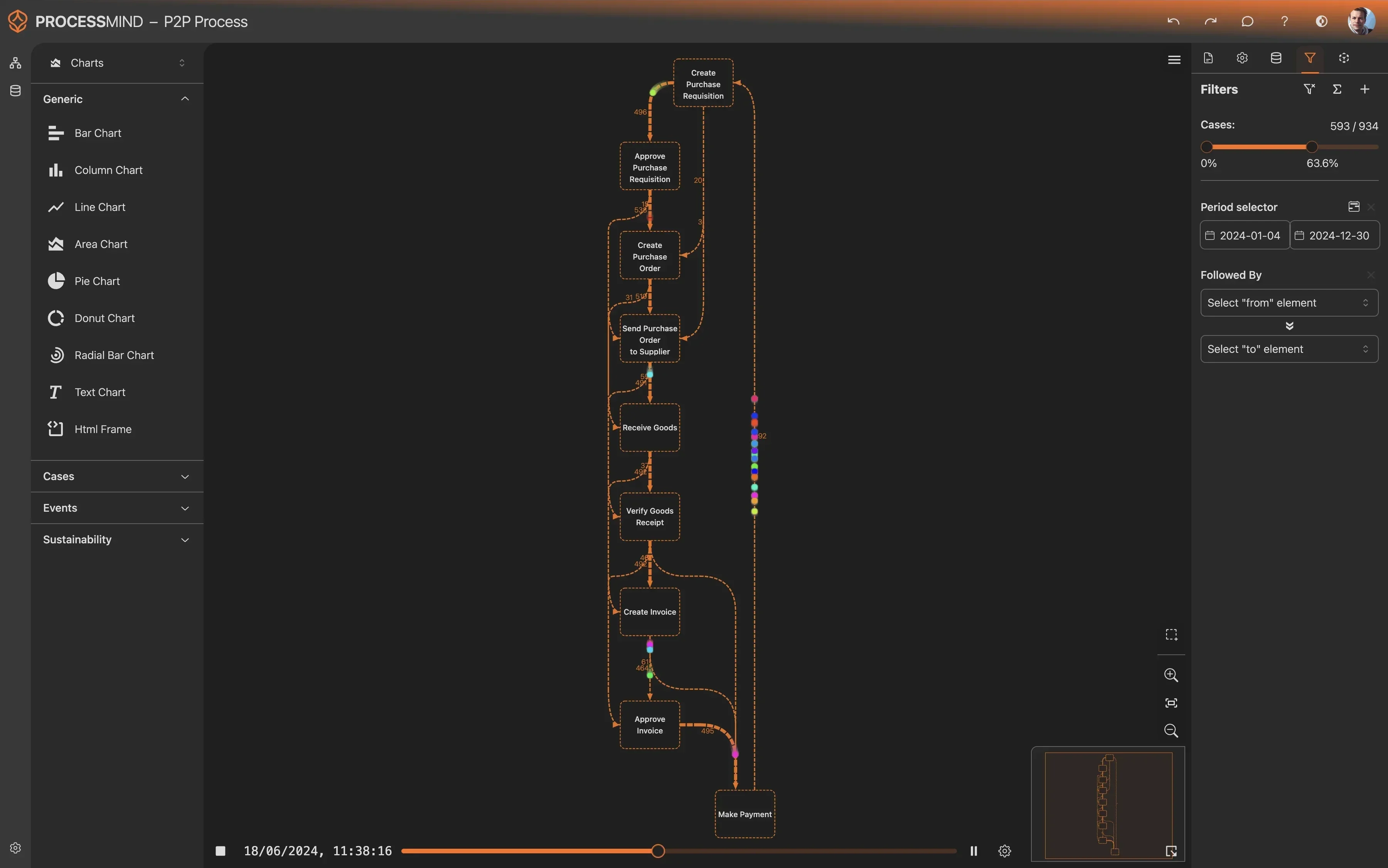
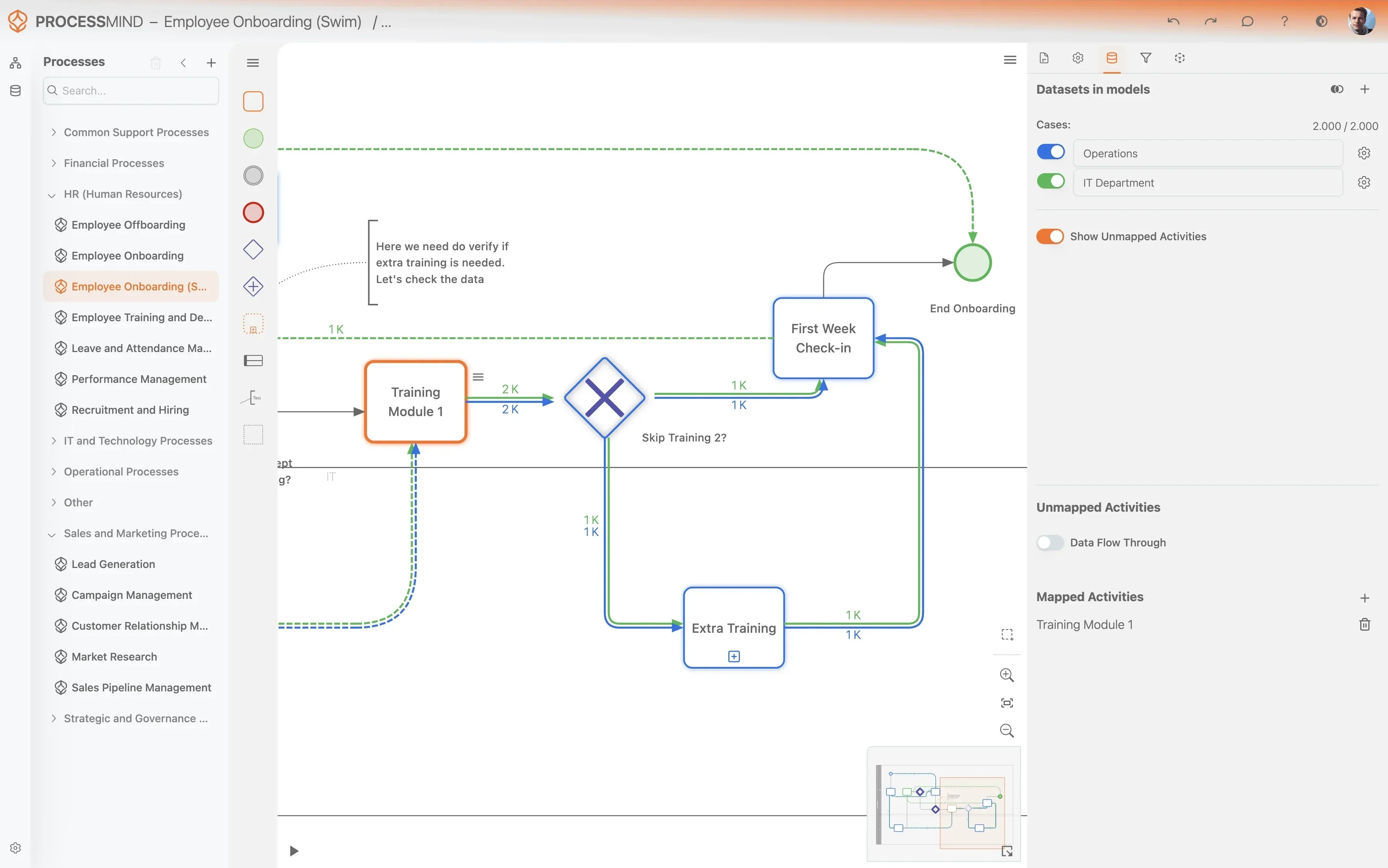
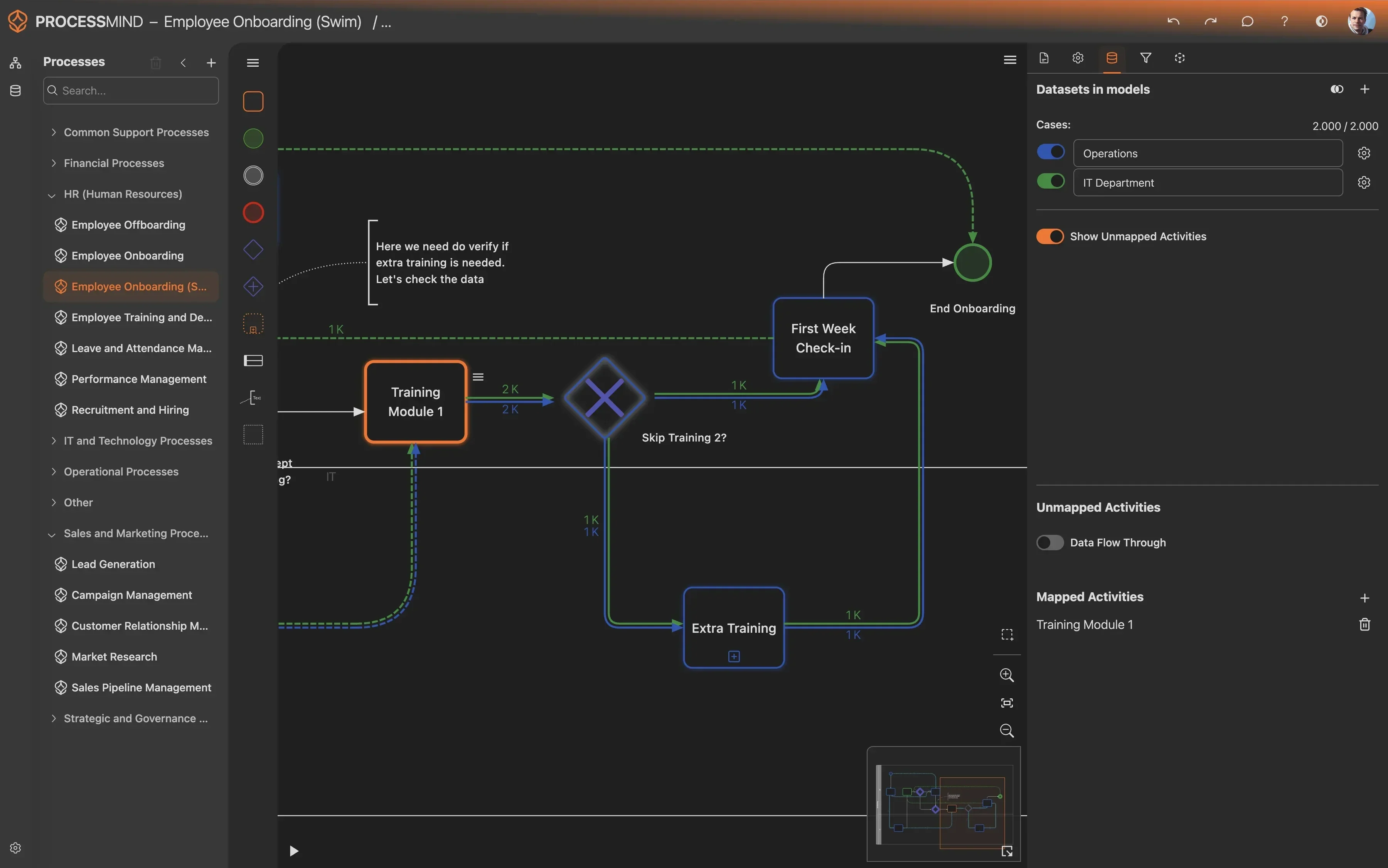
Process mining offers an unprecedented level of transparency into your Quality Management operations within ETQ Reliance. By leveraging event data from your system, it reconstructs the actual, end-to-end journey of every “Quality Event,” from its initial identification to final resolution. This perspective allows you to visualize the complete process flow, uncovering all variations, deviations, and rework loops that might be hidden beneath standard operating procedures.
For instance, process mining can show you precisely how long quality issues spend in
The 6-Step Improvement Path for Quality Management
Download the Template
What to do
Get the Excel template designed for Quality Management process analysis. This template provides the correct structure for your ETQ Reliance data, ensuring compatibility with ProcessMind.
Why it matters
Using a standardized template prevents data formatting errors, streamlines the data preparation process, and ensures your quality event data is ready for analysis.
Expected outcome
A ready-to-use Excel template, perfectly structured for your ETQ Reliance quality management data.
Export Your Data
What to do
Extract 3-6 months of historical quality event data directly from your ETQ Reliance system. Populate the downloaded template with this real-world data.
Why it matters
Analyzing a substantial dataset reveals recurring patterns and true bottlenecks in your quality management process, offering a comprehensive view of performance.
Expected outcome
A populated Excel template containing 3-6 months of actual quality event data from ETQ Reliance.
Upload Your Dataset
What to do
Securely upload your filled data template to the ProcessMind platform. The system will automatically ingest and prepare your Quality Management data for analysis.
Why it matters
A swift and secure upload process ensures your data is quickly transformed into actionable insights, minimizing delays in starting your improvement journey.
Expected outcome
Your ETQ Reliance quality management data securely processed and ready for automated analysis within ProcessMind.
Analyze Your Process
What to do
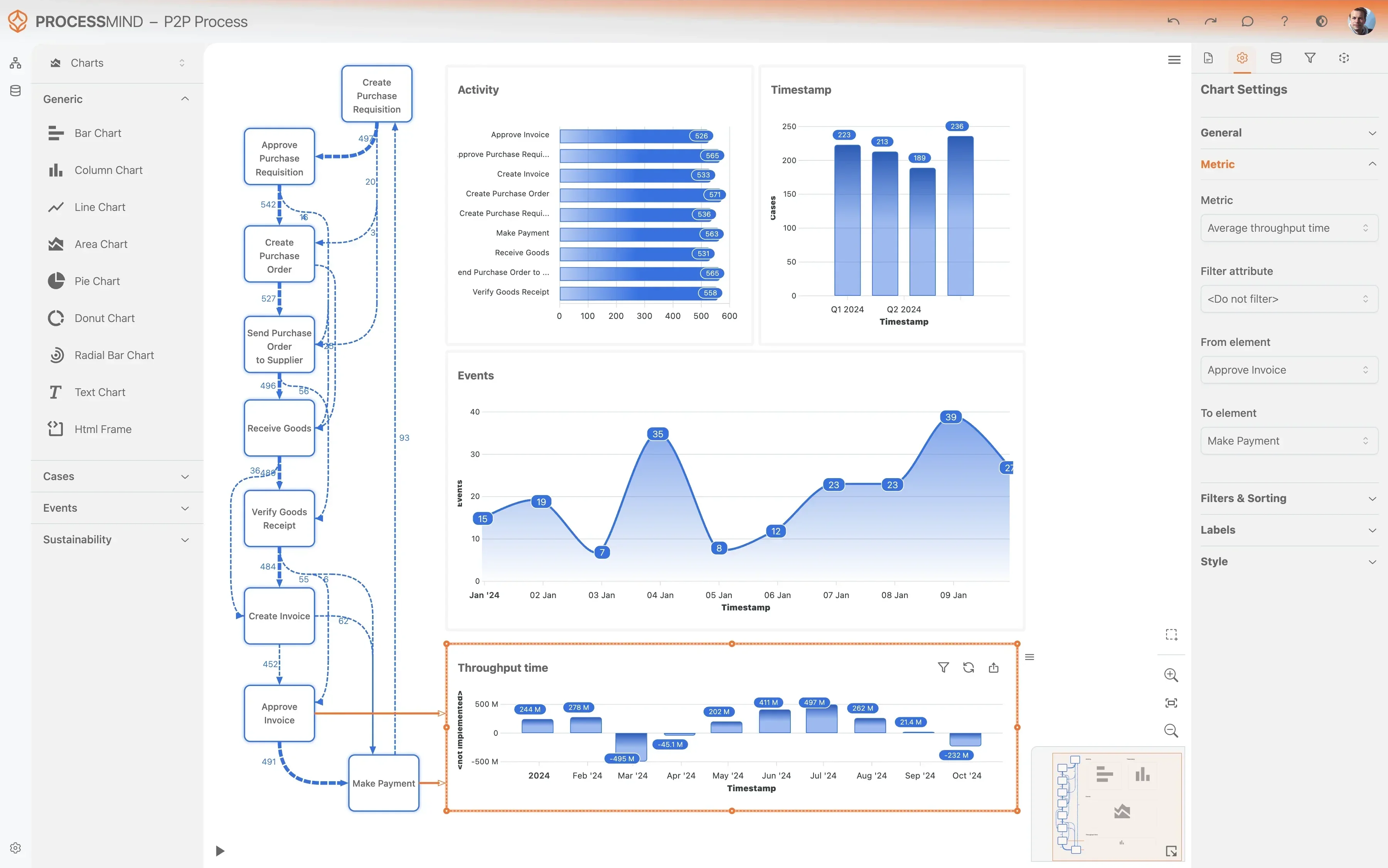
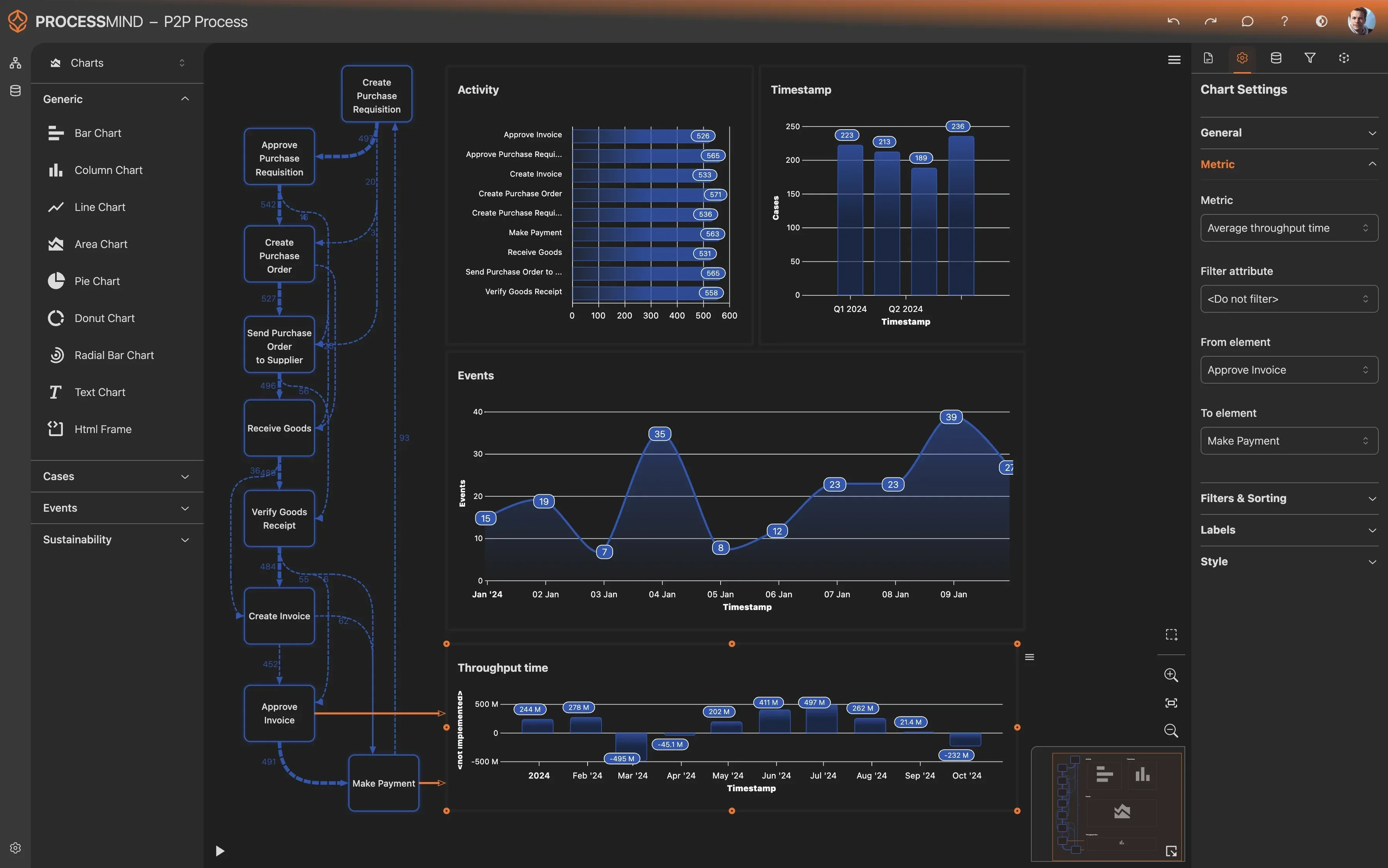
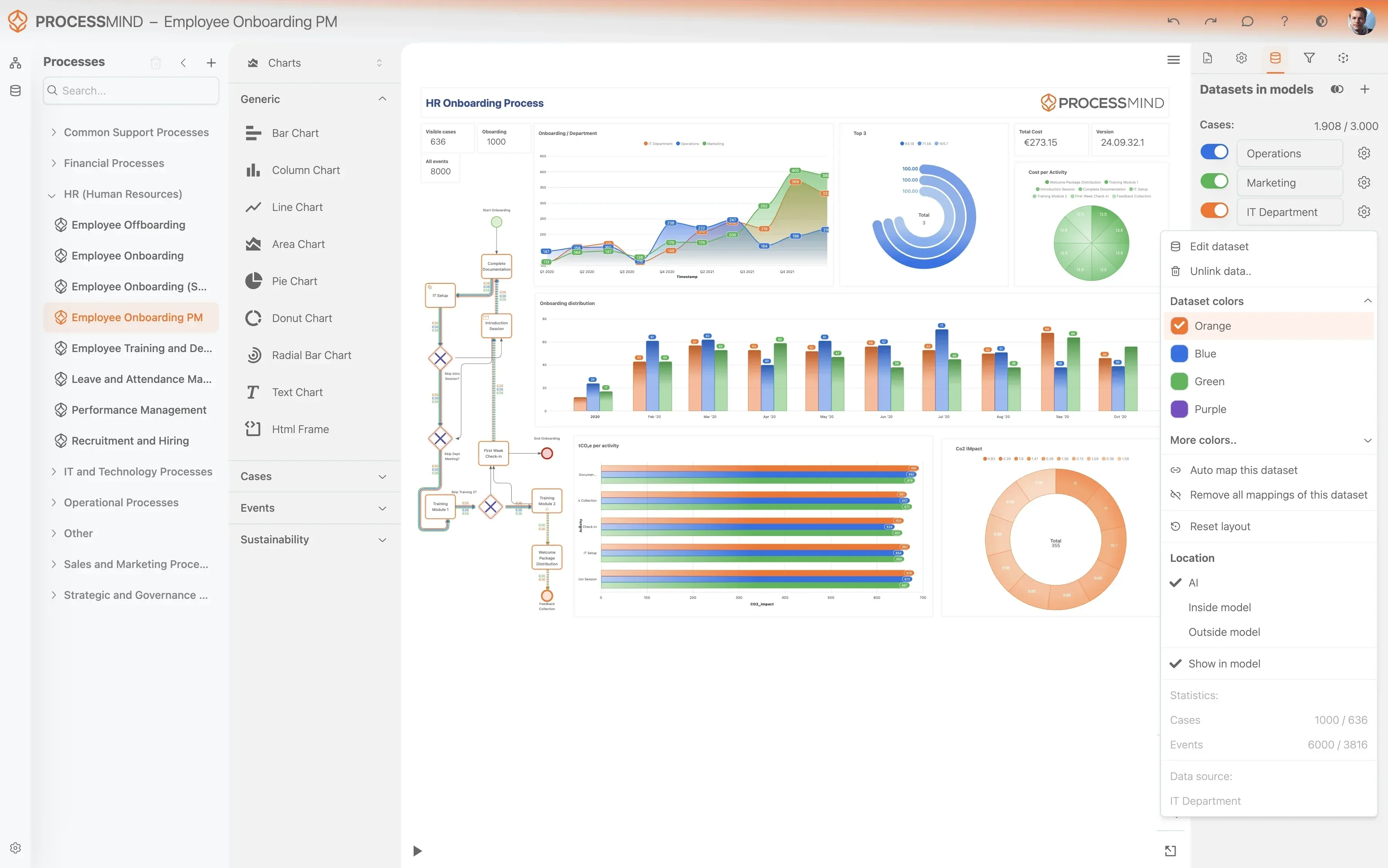
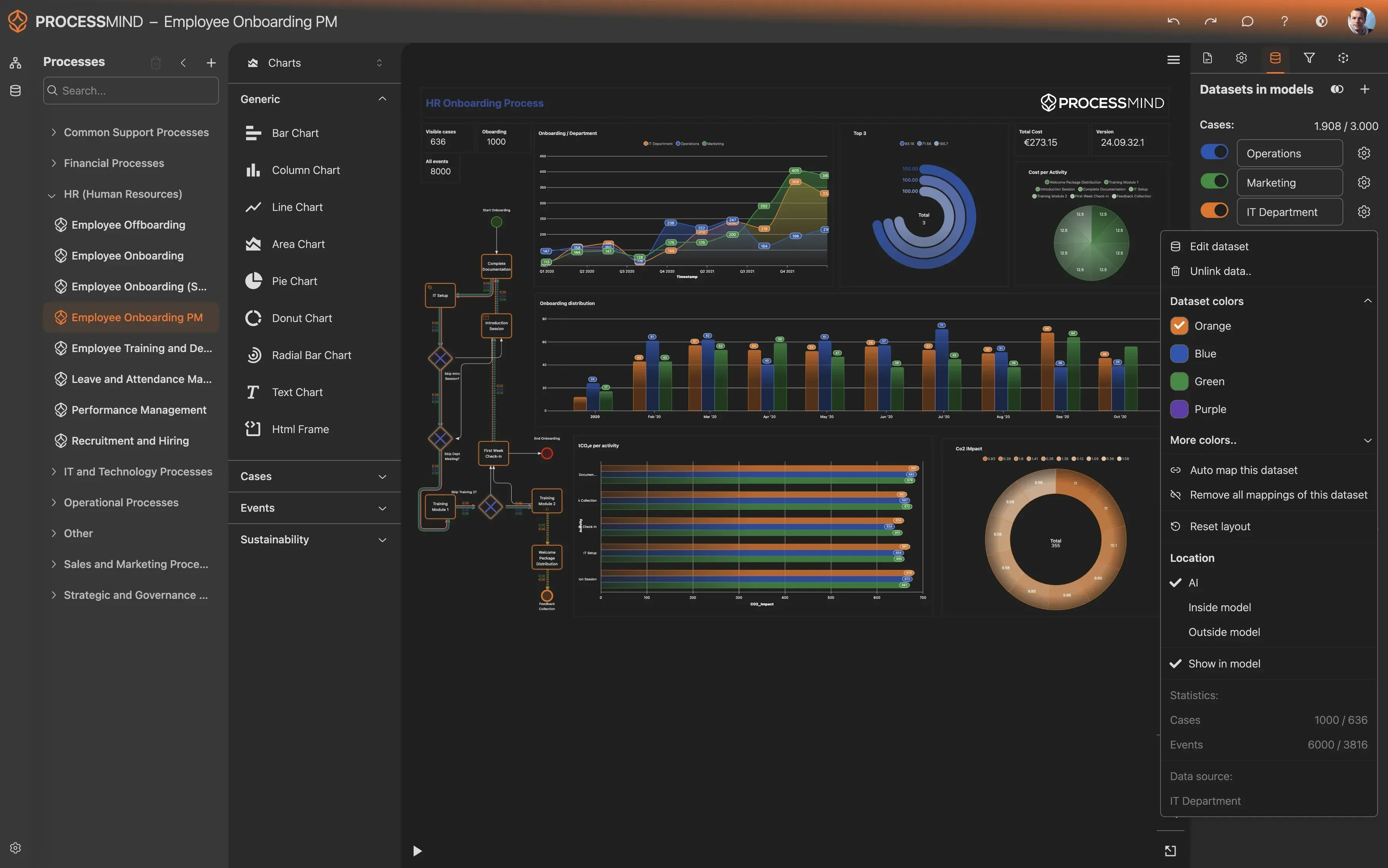
Explore the auto-generated dashboards and visual process maps for your Quality Management process. Review AI-driven recommendations for bottlenecks.
Why it matters
Visualizing the actual process flow uncovers inefficiencies, non-compliance issues, and hidden root causes, enabling data-driven decision making.
Expected outcome
Clear visual insights into your Quality Management process, highlighting key bottlenecks and improvement opportunities.
Implement Improvements
What to do
Prioritize identified improvement opportunities based on impact and feasibility. Implement targeted actions within your ETQ Reliance workflows to address these areas.
Why it matters
Acting on data-backed insights directly leads to more efficient quality event resolution, reduced non-conformances, and stronger compliance within ETQ Reliance.
Expected outcome
A clear action plan and initial implementations to optimize your ETQ Reliance Quality Management process.
Monitor Your Process
What to do
Periodically re-upload updated quality event data from ETQ Reliance to ProcessMind. Continuously track KPIs to measure the impact of your changes.
Why it matters
Ongoing monitoring ensures sustained process improvements, verifies the effectiveness of implemented changes, and supports continuous quality enhancement.
Expected outcome
A system for continuous tracking of Quality Management performance, demonstrating measurable improvements.
TYPICAL OUTCOMES
Achieve Enhanced Quality Management
These outcomes showcase the measurable improvements organizations realize when optimizing their Quality Management processes with process mining. By pinpointing inefficiencies and bottlenecks within Quality Events, businesses can achieve greater compliance, speed, and overall quality.
Quality event resolution
Process mining identifies bottlenecks, leading to faster investigation and closure of quality events, improving overall responsiveness.
Adherence to quality standards
By visualizing actual process flows against defined standards, organizations can identify and address deviations, ensuring stronger compliance.
Effectiveness of corrective actions
Pinpoint root causes of ineffective corrective and preventive actions, reducing the need for rework and repeated efforts, saving time and resources.
Initial issue assessment
Speed up the critical triage and prioritization phase for new quality events, ensuring timely attention to high-impact issues.
Validating CAPA outcomes
Increase the rate at which corrective and preventive actions are formally verified for effectiveness, ensuring true resolution and preventing recurrence.
Results are indicative and may vary. Actual improvements depend on specific factors like process complexity, data quality, and organizational context.
Recommended Data
FAQs
Frequently asked questions
Process mining helps identify bottlenecks in quality event resolution, streamline CAPA cycles, and ensure compliance within ETQ Reliance. It provides a visual map of your actual processes, highlighting deviations and areas for efficiency gains. This leads to faster resolution times and enhanced corrective action effectiveness.
You typically need event logs that include a case identifier, activity name, and timestamp for each step in your quality events. For ETQ Reliance, this translates to tracking 'Quality Event' as the case ID, along with relevant actions and their corresponding timestamps. Additional attributes, like resource or cost information, can enrich your analysis.
You can expect reduced quality event resolution times, improved CAPA effectiveness, and a significant decrease in compliance gaps. Process mining will reveal actionable insights to streamline workflows, optimize resource utilization, and accelerate initial issue prioritization. Many organizations see a 30% or more reduction in CAPA cycle times.
Initial setup and data extraction can take a few weeks, depending on data availability and the complexity of your ETQ Reliance configuration. The first insights often emerge within 4-6 weeks, providing a quick path to value realization. Continuous analysis then builds upon this foundation for ongoing optimization.
Yes, process mining is highly effective at identifying the root causes of slow analysis and extended CAPA cycle times. It visually maps the actual flow, revealing where delays occur, common rework loops, and bottlenecks in the process. This enables targeted improvements for faster resolution and reduced backlogs.
The primary technical requirement is secure access to your ETQ Reliance database or API for data extraction. Depending on your chosen process mining tool, an ODBC connection, direct database access, or the ability to export flat files (e.g., CSV) might be needed. Our experts can guide you through the specific integration steps.
By mapping the actual execution of your quality processes, process mining clearly highlights any deviations from standard operating procedures or regulatory requirements. This increased visibility allows you to proactively identify and address compliance gaps, strengthening adherence and minimizing uncontrolled process deviations.
While initial data extraction requires some IT involvement, process mining aims to reduce long-term workload by automating analysis and providing clear, actionable insights. It empowers Quality teams to make data-driven decisions more efficiently, reducing manual investigation time and optimizing resource utilization.
Optimize Quality Management Now: Reduce Cycle Time
Identify and eliminate bottlenecks, aiming to reduce cycle time by 30%.
No credit card required. Set up in minutes.