Improve Your Inventory Management

Select a process
Choose a process to continue working in your connected workspace.
Optimize Inventory Management in Manhattan Active Inventory
Many inventory operations struggle with common issues like frequent stockouts, excessive inventory, and slow movement of goods. Our platform helps you precisely identify the root causes of these inefficiencies within your processes. We provide clear guidance to implement practical improvements, leading to reduced operational costs, optimized stock levels, and improved fulfillment performance.
Download our pre-configured data template and address common challenges to reach your efficiency goals. Follow our six-step improvement plan and consult the Data Template Guide to transform your operations.
Show detailed description
Why Optimize Inventory Management in Manhattan Active Inventory?
Even with advanced systems like Manhattan Active Inventory, effective inventory management presents significant challenges for businesses aiming for peak operational efficiency. The complexities of global supply chains, fluctuating demand, and the need for precision across countless SKUs can lead to hidden inefficiencies that erode profitability. Inventory carrying costs, stockouts, excess inventory, and inefficient internal movements are not just minor inconveniences, they directly impact your bottom line and customer satisfaction.
Optimizing your inventory processes is not merely about reducing costs, it is about enhancing resilience, improving service levels, and ensuring that capital is not tied up in static assets. Understanding the true flow of inventory within your Manhattan Active Inventory system is crucial for identifying where these inefficiencies occur and for maintaining a competitive edge in today's dynamic market.
Unlocking Efficiency with Process Mining
Process mining offers a powerful, data-driven approach to dissecting and understanding your actual inventory processes within Manhattan Active Inventory. By focusing on the "Inventory Batch/Lot" as your case identifier, you gain a comprehensive, end-to-end view of each batch's journey, from its initial goods receipt to its eventual issue or consumption. This perspective moves beyond theoretical process maps, providing an accurate visual representation of every activity, decision point, and delay that occurs in reality.
You can uncover critical insights, such as unexpected deviations from standard put-away procedures, prolonged quality inspection times that delay stock availability, or inefficient internal transfers that add unnecessary cycle time. Process mining highlights where manual interventions are frequent, where bottlenecks consistently occur, and where processes diverge from compliance standards. This enables you to pinpoint the exact root causes of problems, rather than making assumptions. For instance, you might discover that specific warehouse locations consistently experience delays in put-away completion, or that certain SKU categories frequently undergo inventory adjustments due to recurring discrepancies.
Key Areas for Improvement and Optimization
Applying process mining to your Manhattan Active Inventory data can reveal numerous opportunities for improvement across your inventory lifecycle:
- Put-away Efficiency: Analyze the time taken from goods receipt to stock being fully available in its designated location. Identify delays, unnecessary movements, or non-compliant storage practices.
- Internal Transfer Lead Times: Optimize the flow of goods within your warehouse. Pinpoint reasons for prolonged transfers between bins or zones, ensuring products reach their picking locations faster.
- Picking and Packing Performance: Streamline your order fulfillment by identifying bottlenecks in picking routes, packing stations, or dispatch processes. Reduce the overall cycle time for orders.
- Inventory Accuracy and Adjustments: Understand the triggers and frequency of inventory counts and adjustments. Identify recurring discrepancies and their root causes, such as poor receiving practices or incorrect system entries.
- Return Goods Processing: Evaluate the efficiency of handling returns. Reduce the time stock spends in quarantine or awaiting re-shelving, improving your ability to re-sell or dispose of items quickly.
These insights empower you to make targeted changes that lead to substantial operational improvements and help you continuously improve Inventory Management.
Achieving Tangible Outcomes
By leveraging process mining to optimize your Inventory Management in Manhattan Active Inventory, you can expect a range of tangible benefits that directly impact your business performance:
- Reduced Carrying Costs: By optimizing stock levels, minimizing excess inventory, and accelerating inventory turnover.
- Minimized Stockouts: Improving inventory accuracy and streamlining fulfillment processes leads to better stock availability.
- Faster Order Fulfillment: By eliminating bottlenecks in picking, packing, and dispatch, you significantly reduce customer lead times. This directly addresses "how to reduce Inventory Management cycle time".
- Enhanced Operational Efficiency: Streamlining workflows reduces manual effort, improves labor utilization, and optimizes warehouse space.
- Improved Compliance: Ensure adherence to internal policies and external regulations, especially concerning quality checks, hazardous material handling, or expiration date management.
- Data-Driven Decision Making: Move away from gut feelings and make informed choices based on actual process execution data.
Getting Started with Your Inventory Optimization Journey
Embarking on your inventory optimization journey with process mining offers a clear path to transforming your operations. You no longer need to guess where inefficiencies lie; instead, you can rely on factual process data to guide your improvements. This approach provides clarity, actionable insights, and a framework for continuous improvement. Take the first step towards a more efficient, cost-effective, and compliant inventory management system powered by data from your Manhattan Active Inventory environment. Unlock the full potential of your supply chain and discover how to improve Inventory Management today.
The 6-Step Improvement Path for Inventory Management
Download the Template
What to do
Access the pre-built Excel template specifically designed for Inventory Management data, ensuring your initial data collection is structured correctly for ProcessMind.
Why it matters
A standardized template streamlines data preparation, reducing errors and saving time, which is crucial for accurate process analysis from the start.
Expected outcome
A structured Excel template, ready to be populated with your Manhattan Active Inventory data.
Export Your Data
What to do
Extract 3-6 months of historical inventory transaction data from Manhattan Active Inventory, then accurately populate the downloaded ProcessMind template.
Why it matters
Comprehensive historical data provides a robust foundation for identifying recurring patterns, bottlenecks, and areas for significant efficiency gains in your inventory flow.
Expected outcome
A completed ProcessMind data template, filled with your recent Inventory Management activity from Manhattan Active Inventory.
Upload Your Dataset
What to do
Securely upload your populated ProcessMind Excel template to the ProcessMind platform. The system will then automatically begin processing your data.
Why it matters
A secure and efficient upload process ensures your sensitive inventory data is handled with care and quickly prepared for in-depth analysis.
Expected outcome
Your Inventory Management data successfully ingested and ready for analysis within the ProcessMind platform.
Analyze Your Process
What to do
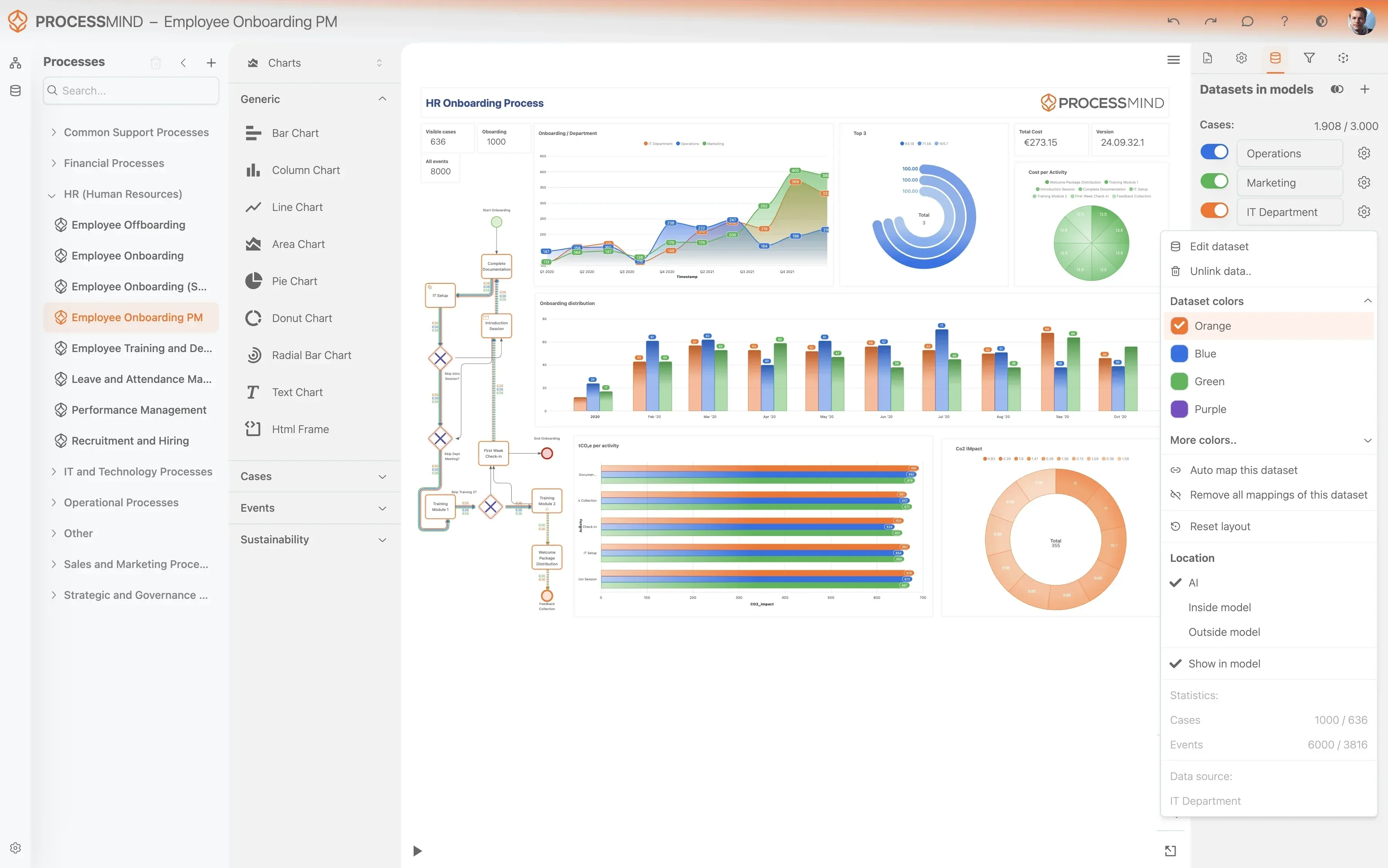
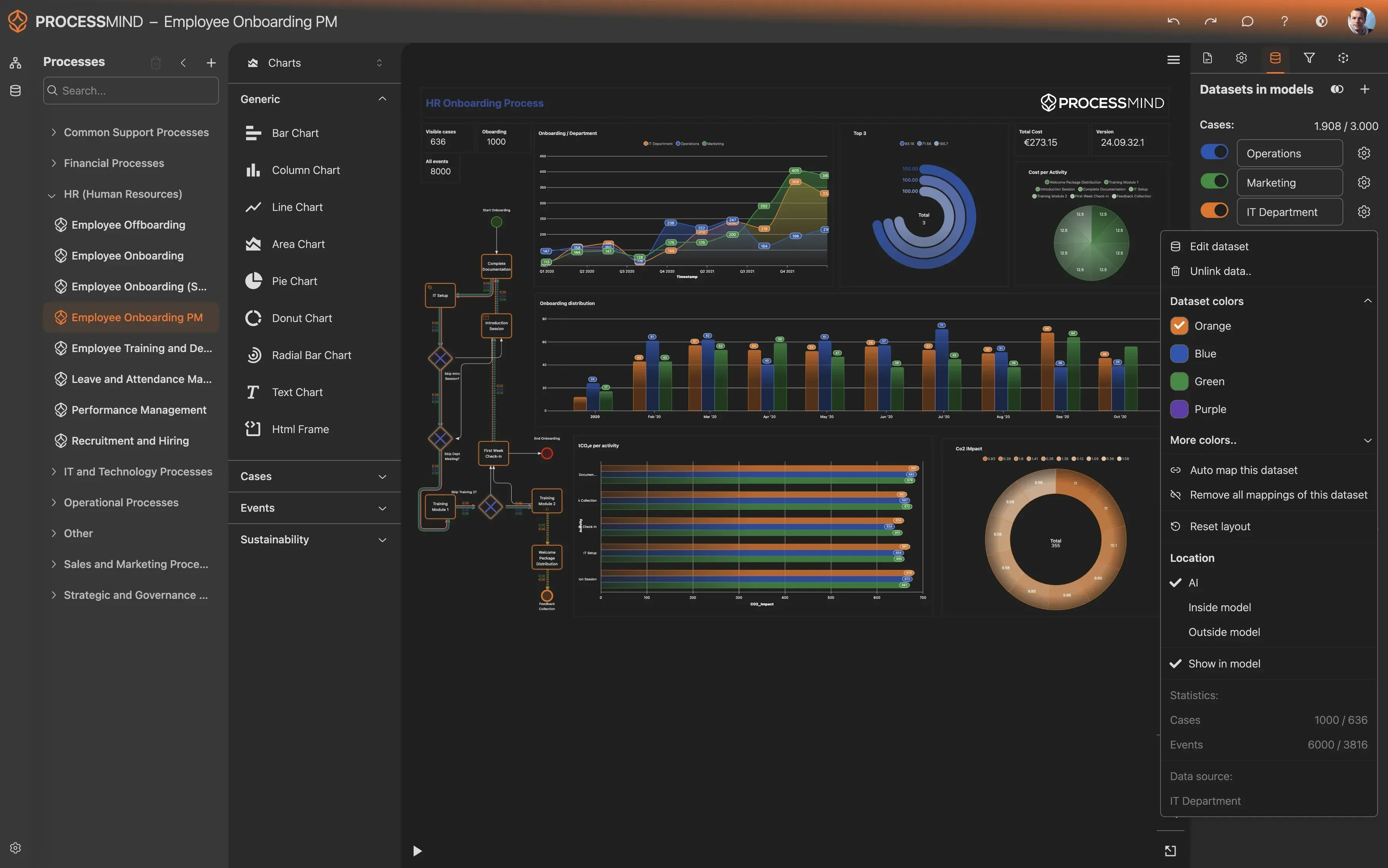
Explore auto-generated dashboards and interactive visualizations of your Inventory Management process. Review AI-driven recommendations for optimization opportunities.
Why it matters
Visualizing end-to-end process flows quickly highlights inefficiencies, compliance issues, and areas where inventory moves slower than expected, impacting costs.
Expected outcome
A clear understanding of your Inventory Management process bottlenecks, deviations, and data-backed improvement recommendations.
Implement Improvements
What to do
Prioritize and implement the identified opportunities to enhance inventory accuracy, reduce carrying costs, and optimize warehouse operations.
Why it matters
Acting on insights directly leads to tangible improvements, such as reduced stockouts, optimized storage utilization, and more efficient goods movement within Manhattan Active Inventory.
Expected outcome
Actionable changes applied to your Inventory Management workflows, targeting specific inefficiencies highlighted by ProcessMind.
Monitor Your Process
What to do
Periodically re-upload updated Inventory Management data from Manhattan Active Inventory to ProcessMind to track the impact of your implemented changes.
Why it matters
Continuous monitoring ensures that improvements are sustained, new issues are promptly detected, and your inventory processes remain optimized for peak performance.
Expected outcome
Clear visibility into the progress of your Inventory Management KPIs and confirmation of the value delivered by your optimization efforts.
WHAT YOU WILL GET
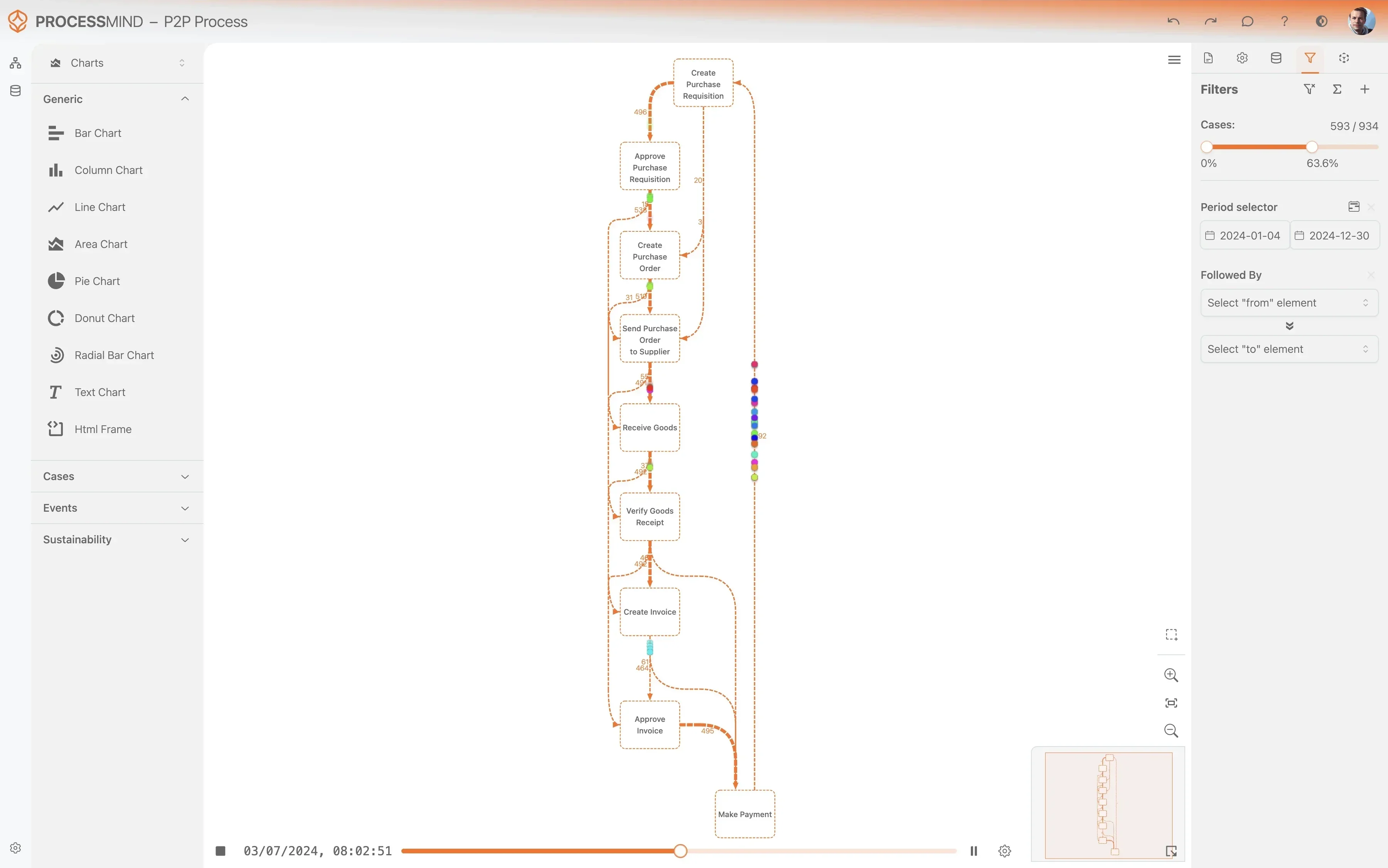
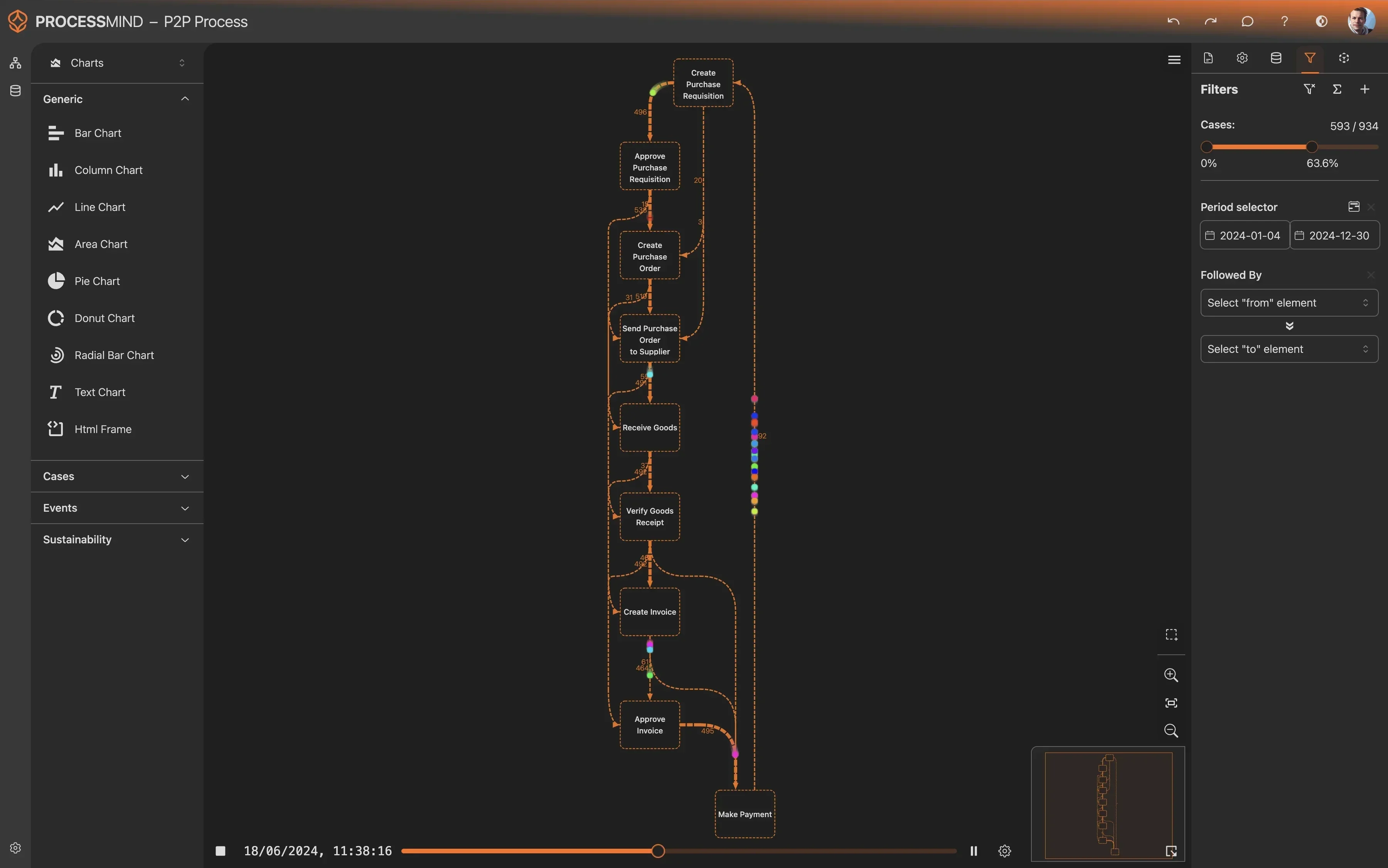
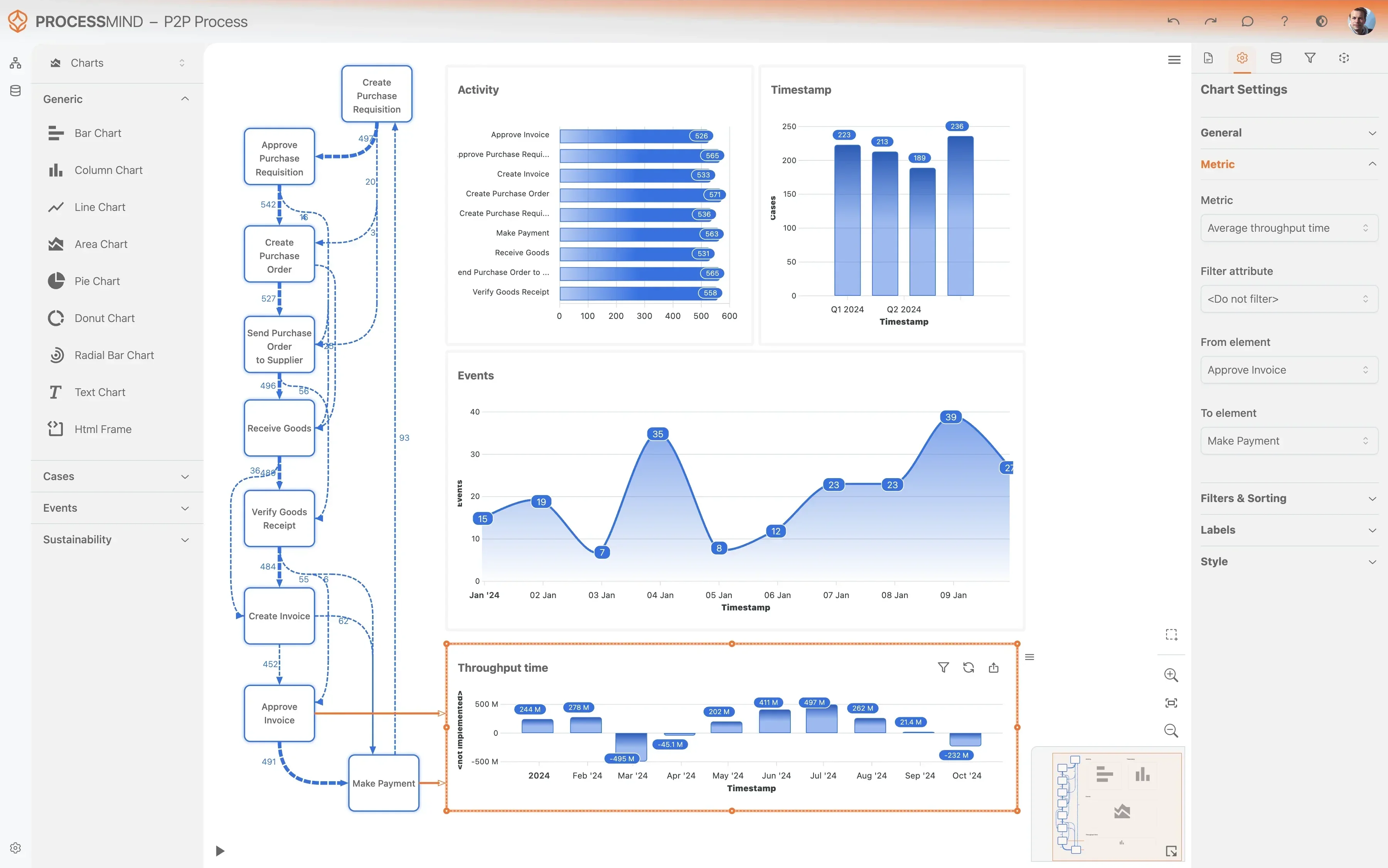
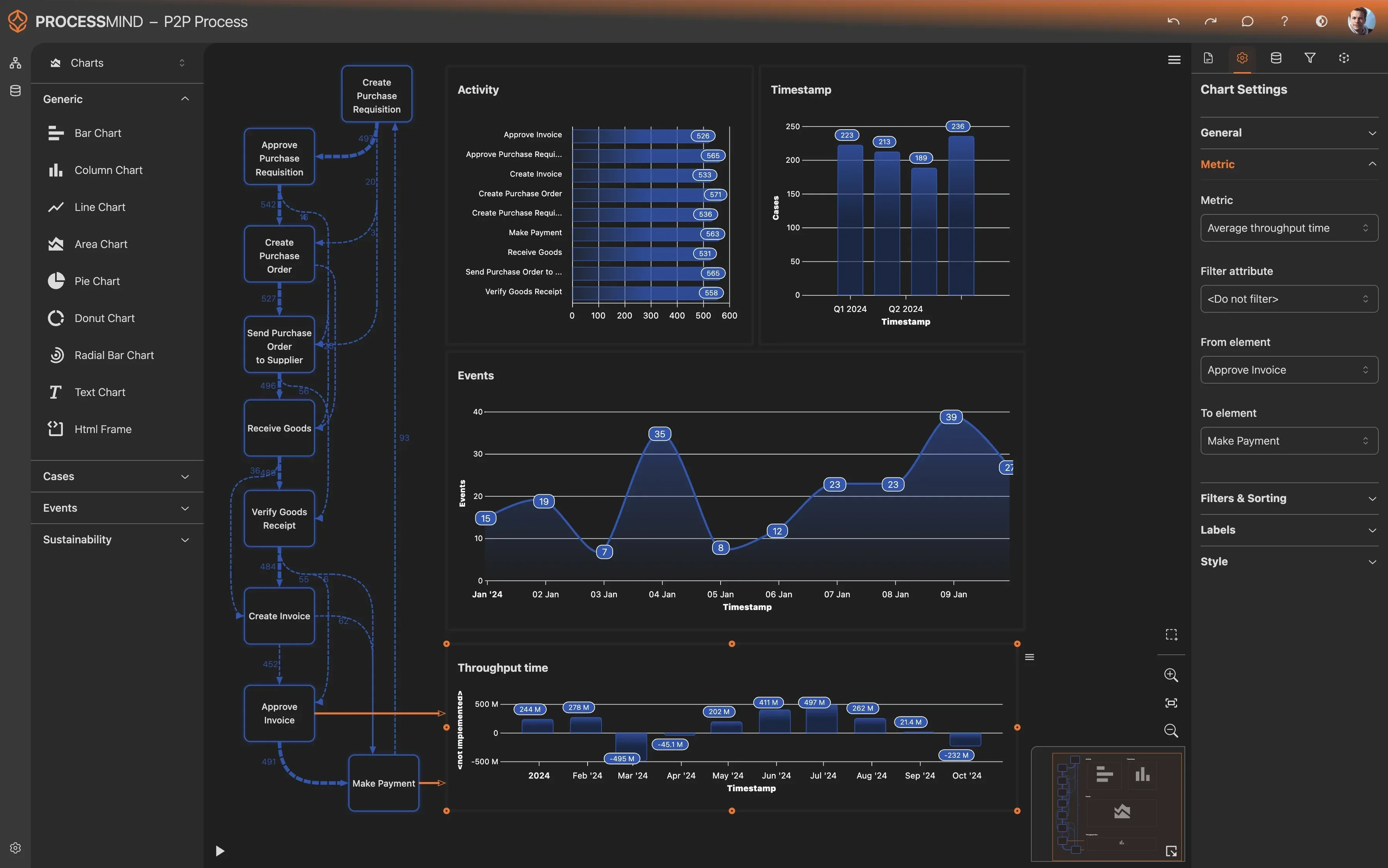
Pinpoint Inventory Inefficiencies and Boost Flow
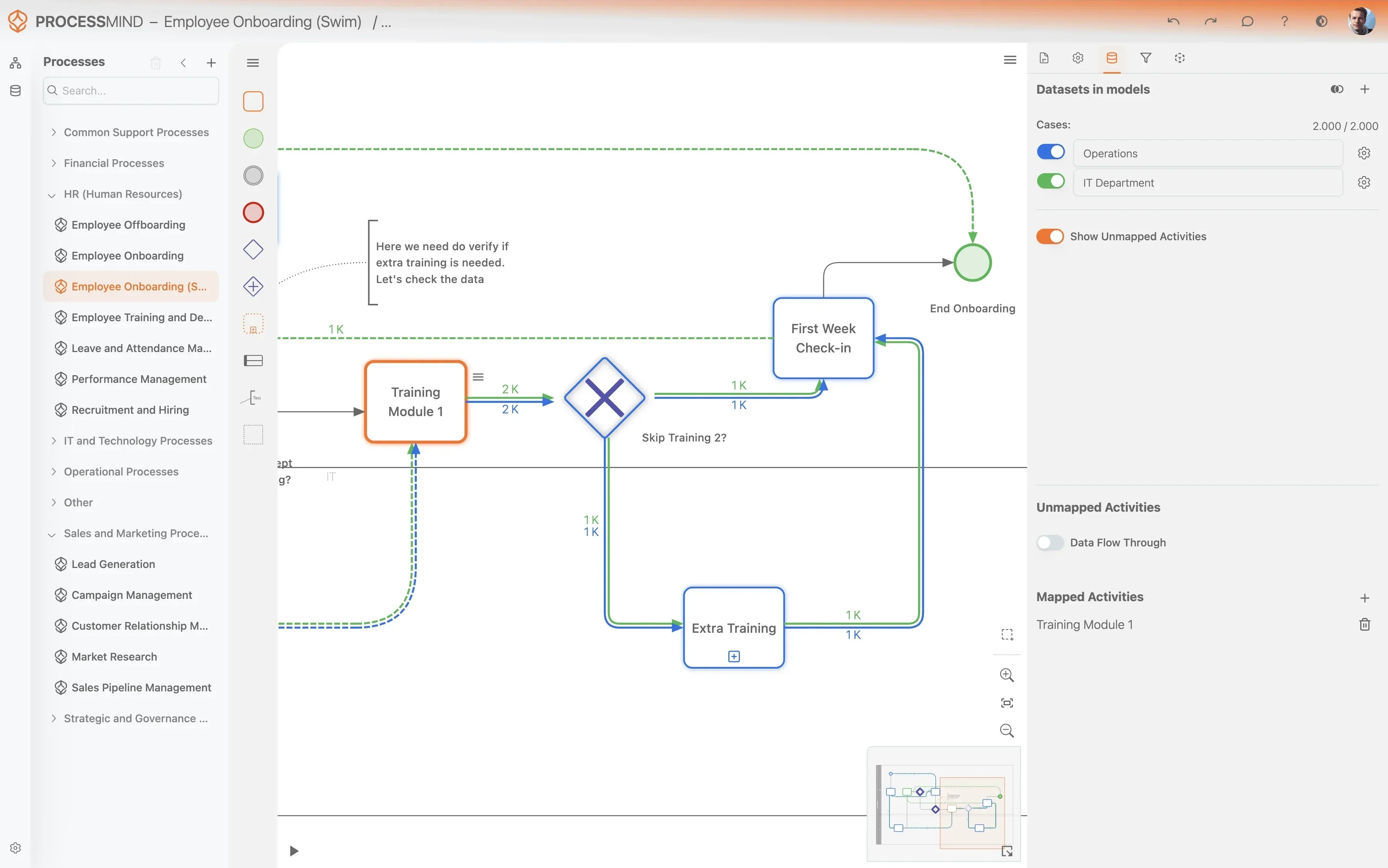
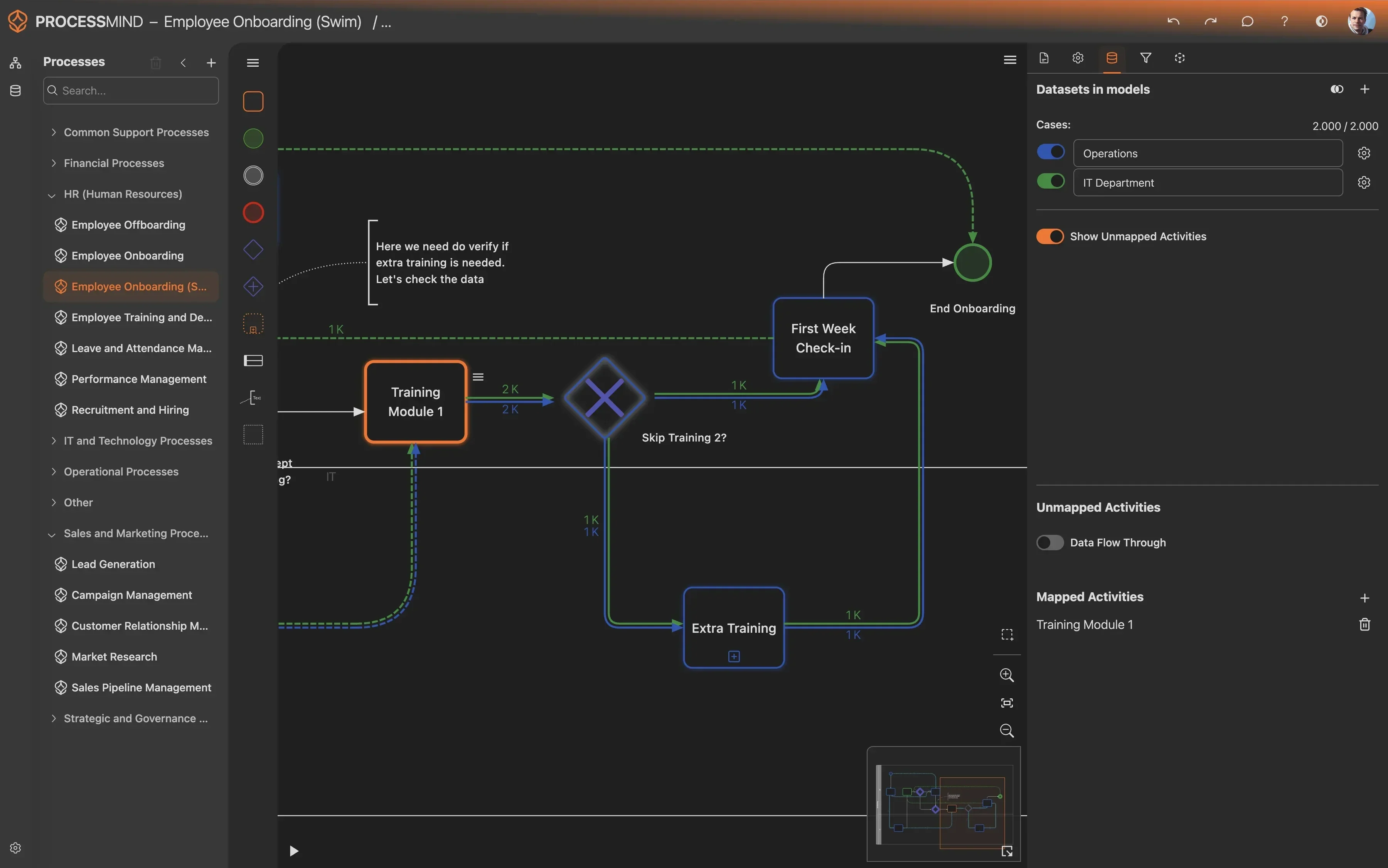
- Visualize actual inventory process flows
- Identify stockout risks and excess inventory
- Pinpoint inefficient inventory movements
- Optimize stock levels for cost reduction
TYPICAL OUTCOMES
Realizing Inventory Management Excellence
These outcomes illustrate the significant improvements organizations typically realize by leveraging process mining to optimize their Inventory Management processes within Manhattan Active Inventory.
Average cycle time reduction
Organizations experience quicker movement of received goods to storage locations, reducing staging area congestion and improving stock availability for picking.
Reduction in manual adjustments
Pinpointing root causes of inventory errors drastically reduces the need for manual adjustments, leading to more accurate stock records and fewer operational disruptions.
Reduction in average stock dwell time
By identifying slow-moving or excess inventory, companies can reduce carrying costs, free up warehouse space, and improve cash flow by optimizing stock holding periods.
Average picking cycle time reduction
Analyzing picking routes and processes leads to faster order fulfillment, reducing labor costs and improving customer satisfaction through quicker delivery times.
Reduction in waste
Understanding the causes of damaged or expired goods allows organizations to implement preventative measures, significantly reducing costly inventory write-offs and improving profitability.
Reduction in picking rejections
Identifying discrepancies between system and physical stock prevents situations where items are believed to be available but are not, improving order fulfillment reliability and customer trust.
Results vary based on process complexity and data quality. These figures represent typical improvements observed across implementations.
Recommended Data
FAQs
Frequently asked questions
Process mining helps you visualize the actual flow of your inventory operations, revealing hidden bottlenecks and inefficiencies. It can identify where delays occur, such as in stock put-away or quality inspection, and highlight deviations from ideal processes. This data-driven insight enables targeted improvements to accelerate operations and reduce costs.
To begin, you typically need event logs containing a case identifier, activity, and timestamp for each inventory event. For Inventory Management, the "Inventory Batch/Lot" can serve as the case identifier. Relevant data includes movements, adjustments, put-aways, picks, and quality checks.
You can expect significant improvements such as accelerated stock put-away, reduced inventory discrepancy adjustments, and optimized inventory holding levels. Process mining helps streamline picking routes, eliminate false stockout incidents, and minimize costly inventory scrappage rates, leading to overall operational efficiency and cost savings.
The initial setup and data connection phase can take a few weeks, depending on data availability and complexity. Once data is flowing, the first insights and actionable recommendations can often be generated within 1-2 months. Continuous monitoring then provides ongoing optimization opportunities.
The primary requirement is access to your Manhattan Active Inventory data, typically via database exports, APIs, or data warehouse connections. You'll need a way to extract the event logs in a structured format suitable for process mining tools. No direct integration with the Manhattan Active Inventory system itself is usually needed for the analysis phase.
Yes, process mining excels at identifying the actual paths and deviations that lead to problems. By analyzing event data, it can pinpoint specific process steps or sequences contributing to discrepancies, stockouts, or delays. This provides a factual basis for root cause analysis and targeted solutions.
Absolutely, process mining can track the full journey of an inventory batch or lot through all stages. This includes put-away, picking, internal transfers, returns processing, and quality inspections. By seeing the end-to-end flow, you can optimize interconnected processes.
In addition to bottleneck identification, process mining helps enforce compliance with operational procedures and detect fraudulent activities. It also provides objective data for performance benchmarking and supports continuous improvement initiatives. You gain a transparent view of process variations and their impact.
Optimize Inventory Management, Reduce Costs Now
Eliminate bottlenecks and cut cycle time by 30%. Start seeing results today.
No credit card required. Setup in minutes.