Improve Your Software Development Lifecycle

Select a process
Choose a process to continue working in your connected workspace.
Optimize Your ServiceNow DevOps SDLC for Faster Delivery
Many development lifecycles hide inefficiencies that lead to delays and missed deadlines. Our platform helps you precisely pinpoint these bottlenecks, whether in the initial stages or during final delivery. Discover how to streamline your process, accelerate time-to-market, and achieve higher software quality, ensuring smoother operations.
Download our pre-configured data template and address common challenges to reach your efficiency goals. Follow our six-step improvement plan and consult the Data Template Guide to transform your operations.
Show detailed description
Why Optimizing Your Software Development Lifecycle is Crucial
The Software Development Lifecycle, or SDLC, is the backbone of innovation and competitive advantage for many organizations. In today's fast-paced digital landscape, the ability to deliver high-quality software quickly and efficiently is paramount. Even with robust tools like ServiceNow DevOps, which expertly integrates ITSM with CI/CD pipelines, inherent process inefficiencies can linger unnoticed. These hidden bottlenecks lead to missed deadlines, budget overruns, and a decline in software quality, directly impacting your customer satisfaction and market position.
The cost of an inefficient SDLC extends beyond financial implications. It includes wasted developer effort on rework, delayed feature releases, and potential compliance risks when critical quality gates are bypassed. Understanding the true flow of work within your development process, rather than relying solely on assumptions or reported statuses, is essential for unlocking its full potential. By taking a data-driven approach to process optimization, you empower your teams to focus on value creation, accelerate innovation, and maintain a competitive edge.
How Process Mining Illuminates Your SDLC
Process mining offers a powerful lens to view and understand the complete Software Development Lifecycle within your ServiceNow DevOps environment. It transforms event log data, automatically collected from activities like "Development Item Created," "Code Review Performed," "QA Testing Completed," and "Deployed to Production," into an objective, end-to-end process map. This capability allows you to:
- Gain True Visibility: Discover the actual, as-is process flow, revealing every step and transition a development item takes from its inception to deployment. This often uncovers surprising deviations from your documented or intended process.
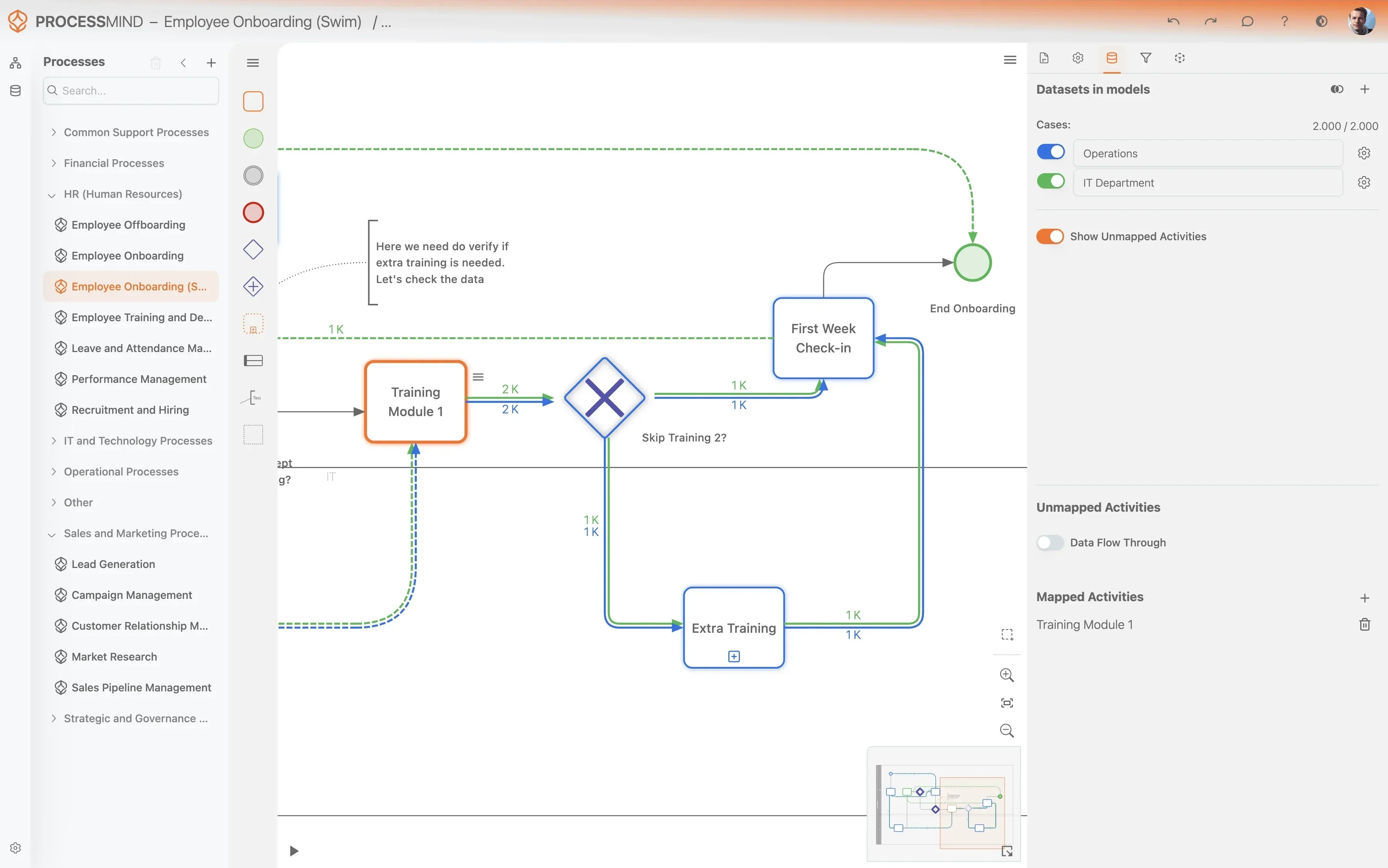
- Pinpoint Bottlenecks: Precisely identify where delays occur. Is it a slow handoff between development and testing, an overloaded code review stage, or prolonged user acceptance testing? Process mining highlights the exact activities and stages causing the most significant holdups in your development cycle time.
- Analyze Process Variants: Understand all the different paths development items follow. You can easily spot rework loops, skipped approval steps, or unauthorized workarounds that impact efficiency and quality. This helps you standardize best practices.
- Measure Cycle Times Accurately: Get precise measurements for the duration of individual activities, the time between stages, and the overall end-to-end development item lifecycle. This data is critical for setting realistic expectations and identifying areas for speed improvement.
- Ensure Compliance and Quality: Verify adherence to established quality gates and regulatory requirements. For example, confirm that all critical steps like "Unit Testing Performed" or "User Acceptance Testing Approved" are consistently executed before release, reducing the risk of defects and audit failures.
Key Areas for SDLC Improvement
By applying process mining to your ServiceNow DevOps data, you can target specific areas for impactful improvement across your Software Development Lifecycle:
- Reduce Rework and Looping: Identify common activities or stages that frequently lead back to earlier steps, such as repeated "Development Started" after "QA Testing Started." This often indicates issues with initial requirements, design clarity, or quality assurance processes.
- Optimize Handoffs and Waiting Times: Analyze the idle time between critical activities, like the delay from "Development Completed" to "Integration Testing Started." Streamlining these handoffs can significantly reduce overall cycle time.
- Streamline Quality Gates: Ensure that critical checks, like "Code Review Performed," are efficient and effective. Identify if reviews are taking too long or if items are progressing without proper scrutiny, impacting the final software quality.
- Improve Resource Allocation and Workload Balancing: Understand which teams or individuals are consistently overloaded or underutilized within specific stages, impacting the flow of work. This insight supports better resource planning for future development items.
- Accelerate Deployment Readiness: Pinpoint delays in the final stages, such as "Prepared for Release" to "Deployed to Production." Optimizing these steps is crucial for faster time-to-market.
Expected Outcomes of SDLC Process Optimization
Through data-driven insights from process mining, you can achieve tangible benefits for your Software Development Lifecycle:
- Faster Time-to-Market: Significantly reduce the overall development cycle time, enabling quicker delivery of features and updates to your customers.
- Increased Operational Efficiency: Eliminate wasteful activities, optimize resource utilization, and reduce manual effort, leading to a leaner and more agile development process.
- Enhanced Software Quality: Minimize defects and re-work by reinforcing quality gates and identifying root causes of recurring issues, resulting in more robust and reliable software.
- Improved Compliance and Governance: Ensure consistent adherence to internal policies and external regulations, mitigating risks and improving audit readiness.
- Reduced Development Costs: Lower expenses associated with delays, inefficient resource use, and the high cost of fixing defects later in the lifecycle.
- Data-Driven Decision Making: Equip your leadership with objective insights to make informed strategic decisions about process improvements, technology investments, and resource planning.
Getting Started with SDLC Process Mining
Ready to transform your Software Development Lifecycle? Exploring process mining with your ServiceNow DevOps data is the first step toward a more efficient, compliant, and accelerated development pipeline. This powerful approach provides clear, actionable insights, empowering you to move beyond assumptions and make data-backed decisions that drive real improvement. Begin your journey to optimize your SDLC, reduce bottlenecks, and deliver higher quality software faster than ever before.
The 6-Step Improvement Path for Software Development Lifecycle
Download the Template
What to do
Get the pre-configured Excel template designed for Software Development Lifecycle data from ServiceNow DevOps to ensure your data is structured correctly.
Why it matters
A standardized data structure is crucial for accurate process mining analysis, providing a reliable foundation for identifying improvements.
Expected outcome
An Excel template ready to be populated with your ServiceNow DevOps development data.
Export Your Data
What to do
Extract 3-6 months of historical development item data directly from your ServiceNow DevOps instance, then populate the downloaded template with this information.
Why it matters
Historical data provides a comprehensive view of past performance, allowing you to identify recurring issues and establish a baseline for future improvements.
Expected outcome
A populated Excel template containing all necessary Software Development Lifecycle events and attributes from your system.
Upload Your Dataset
What to do
Securely upload your completed data template to the ProcessMind platform. The system will automatically ingest and prepare your Software Development Lifecycle data for analysis.
Why it matters
Rapid and secure data ingestion ensures quick access to insights, minimizing setup time and allowing you to focus on process improvement.
Expected outcome
Your ServiceNow DevOps Software Development Lifecycle data successfully loaded and processed, ready for deep analysis.
Analyze Your Process
What to do
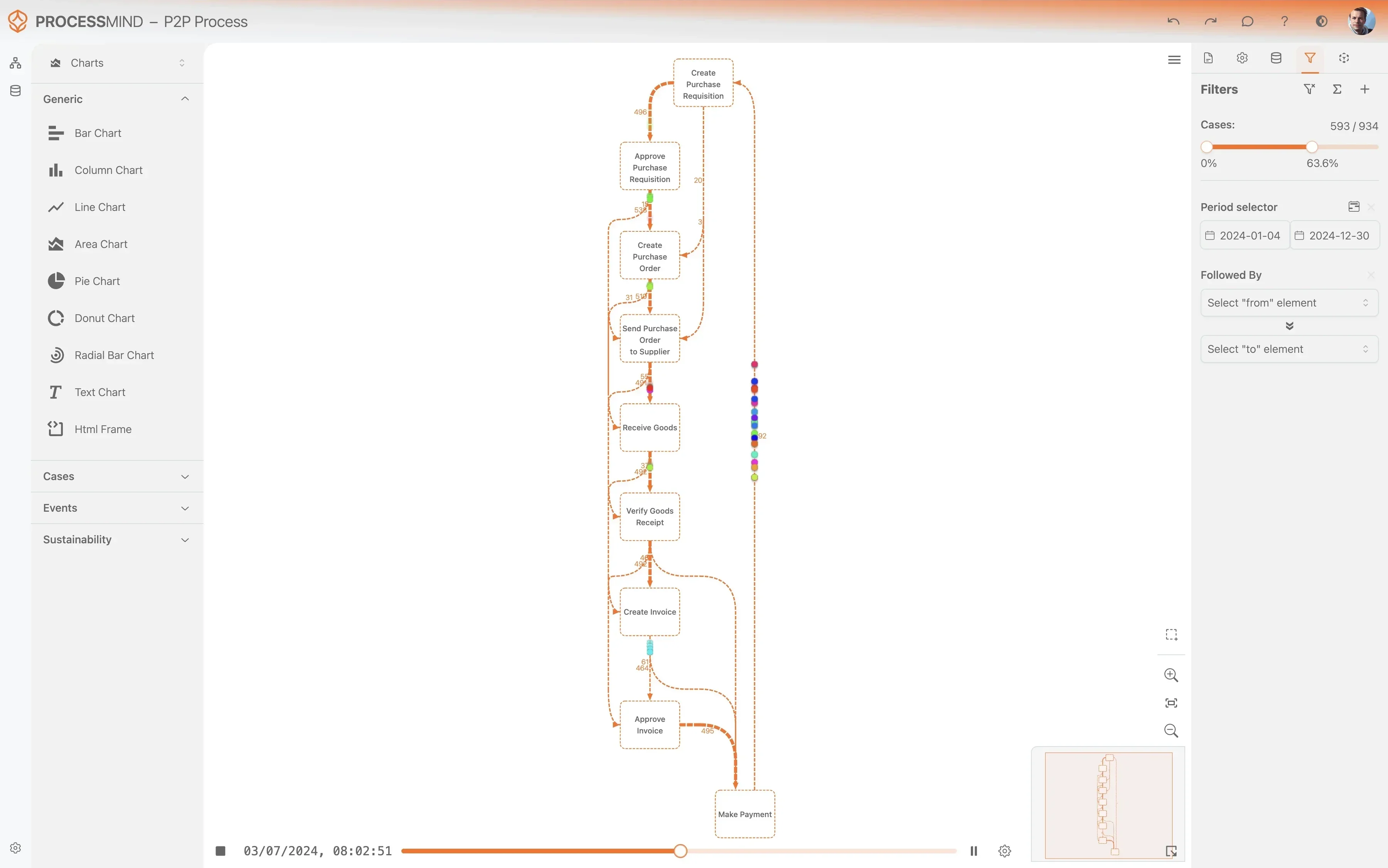
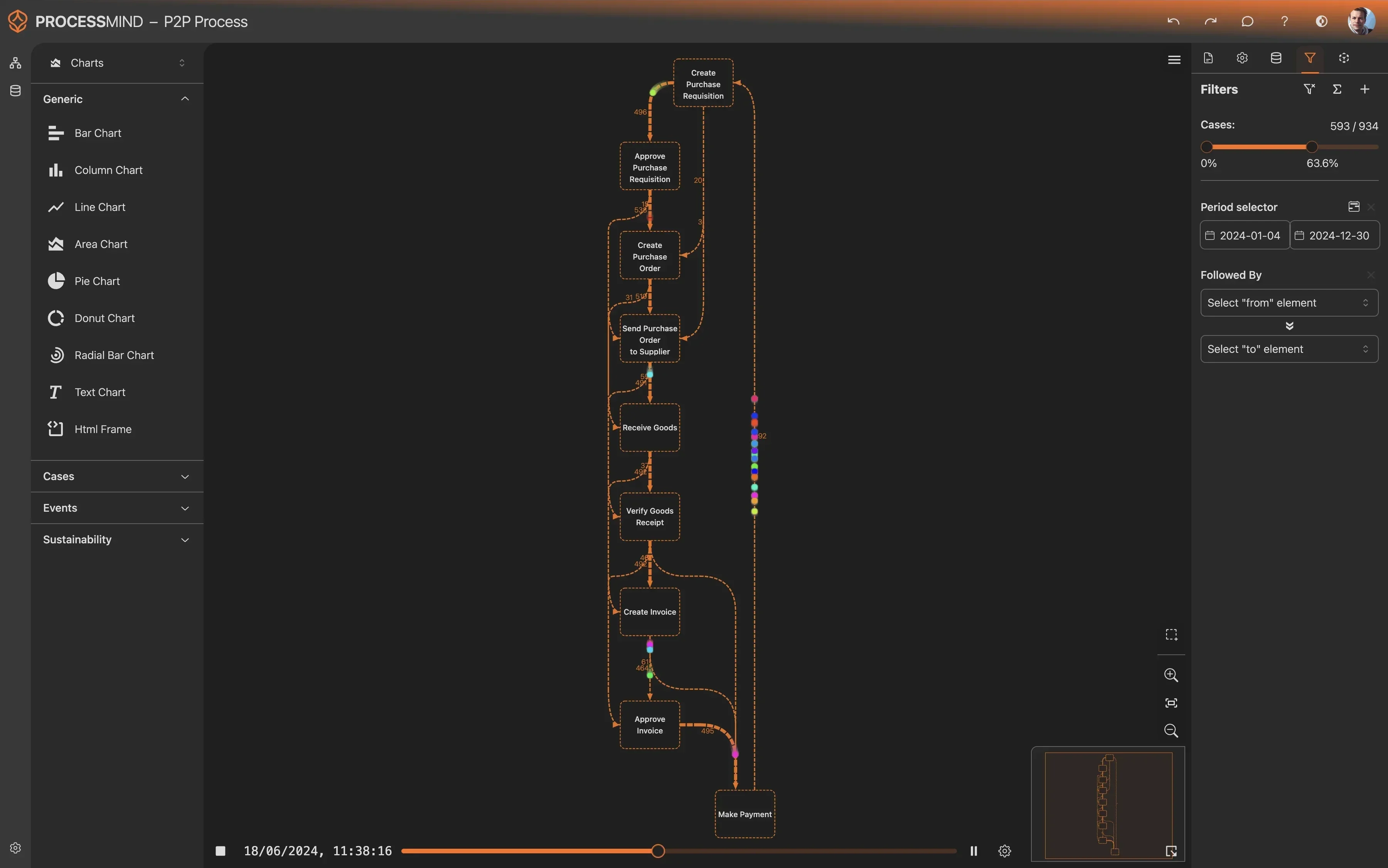
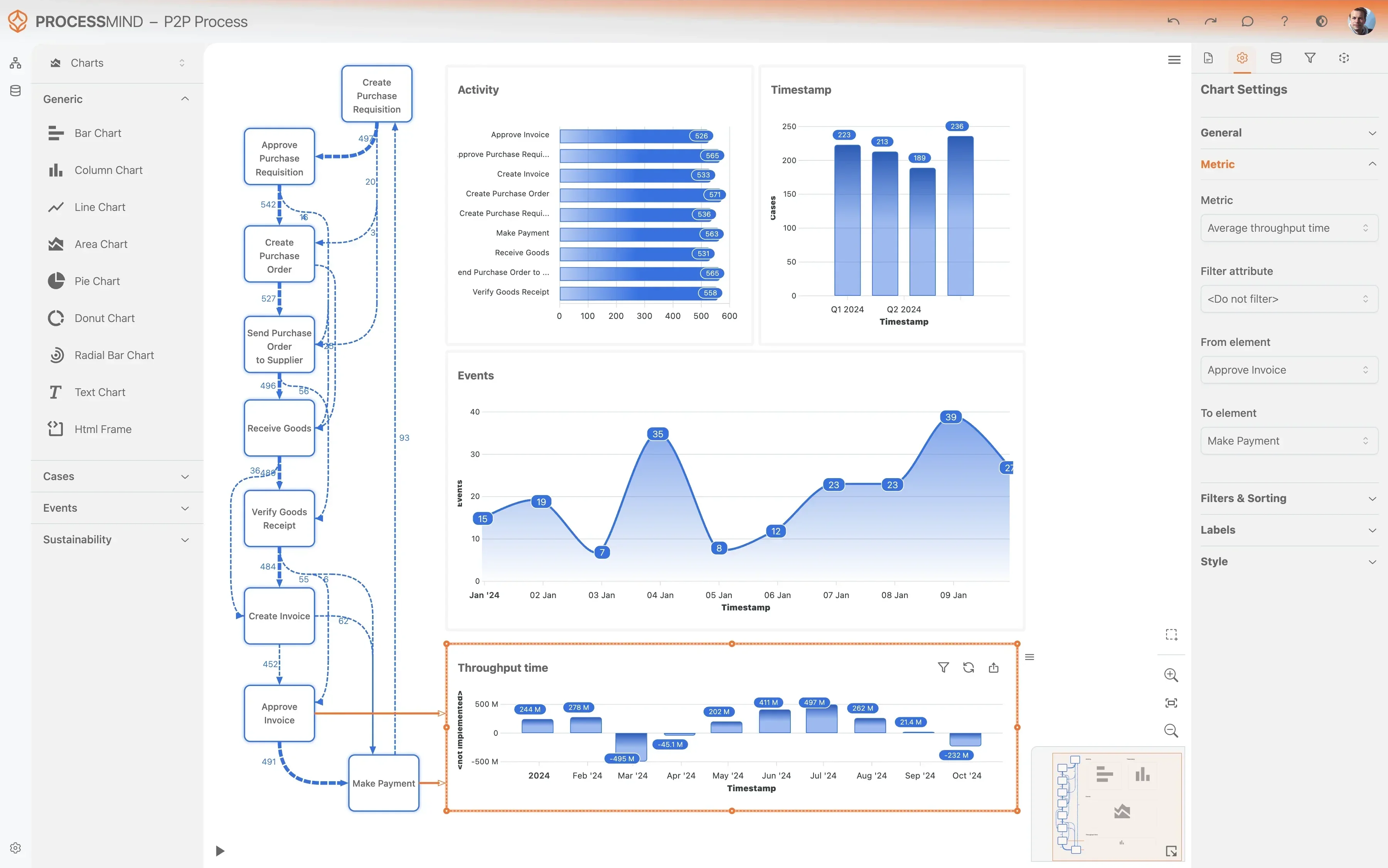
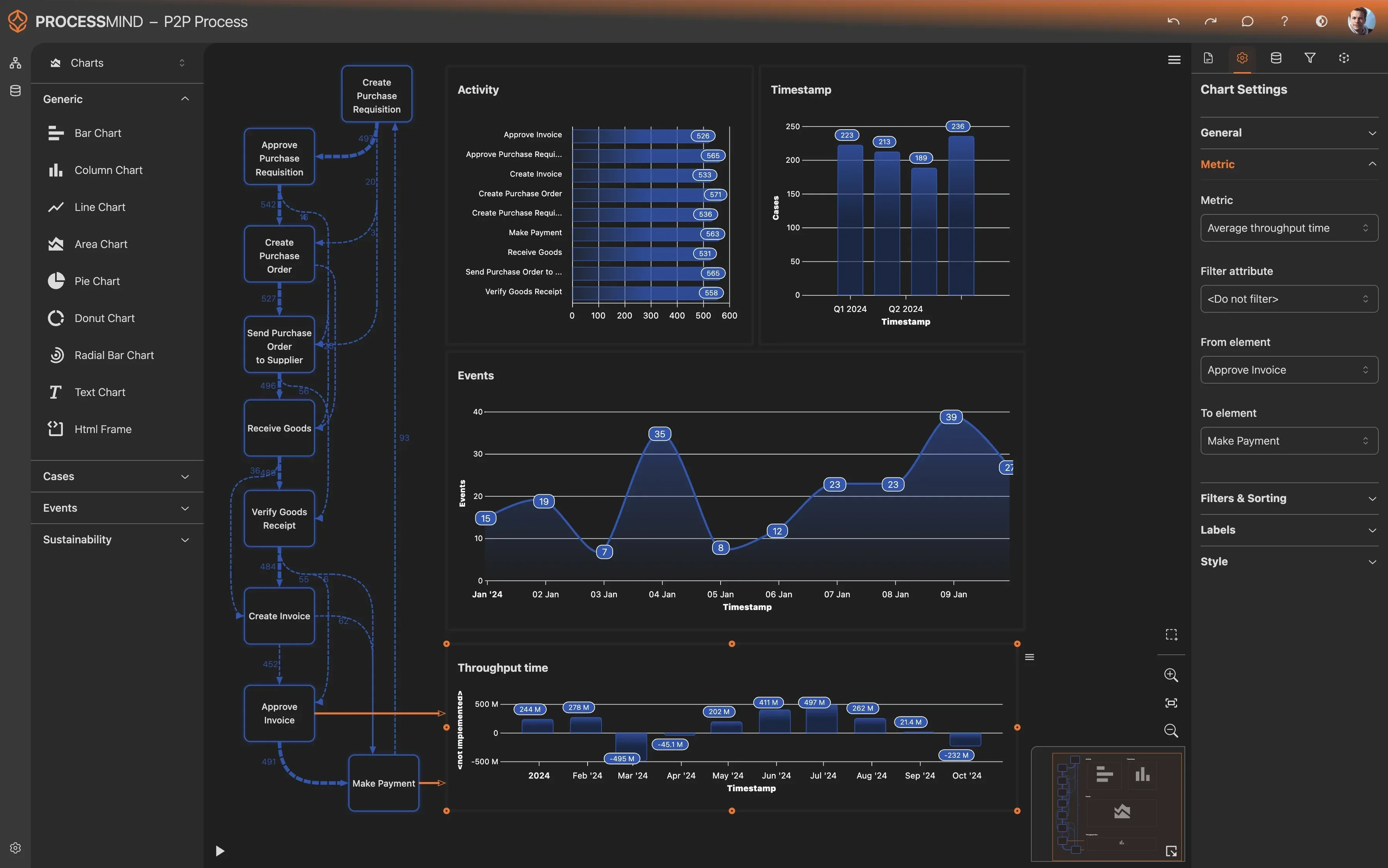
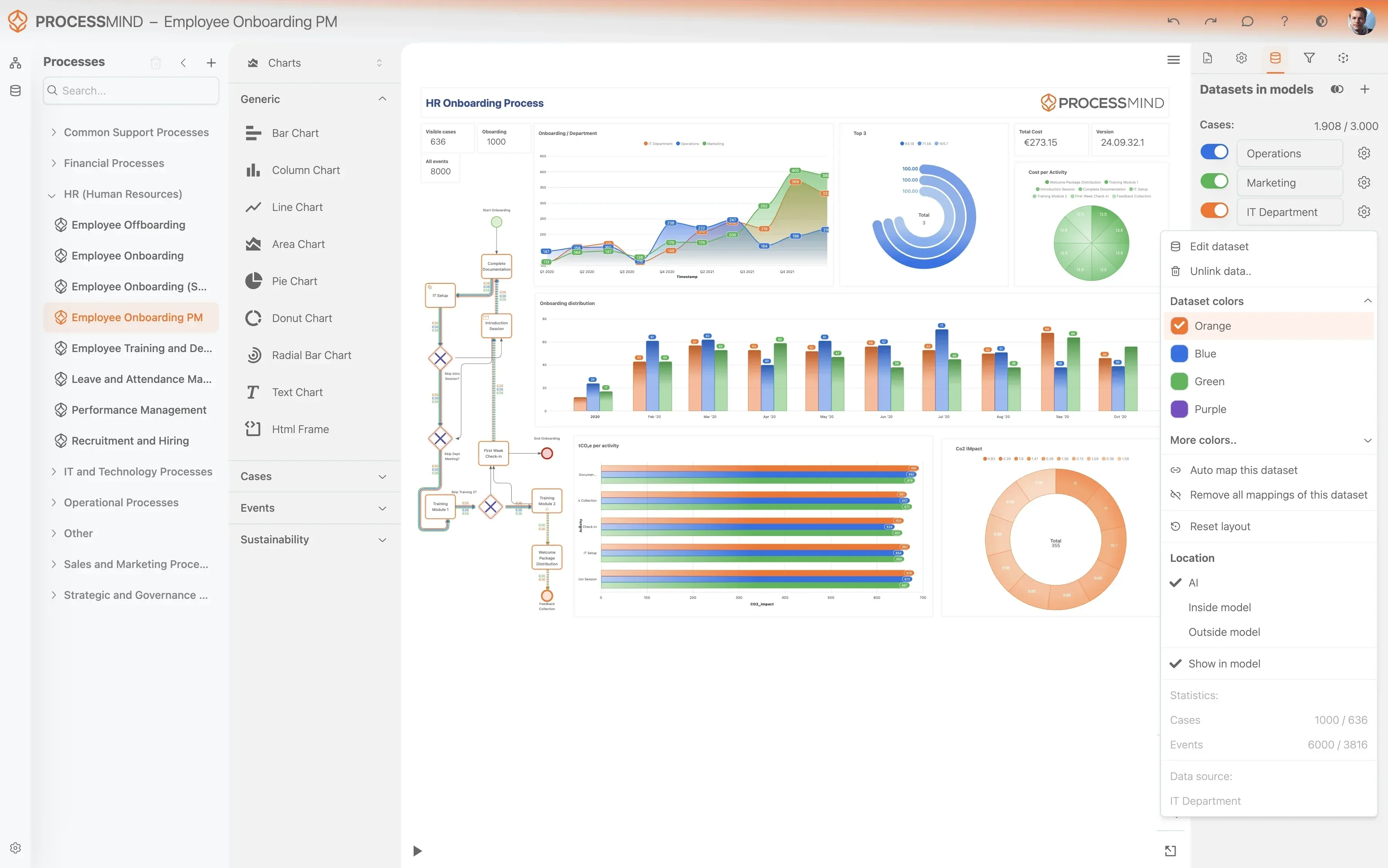
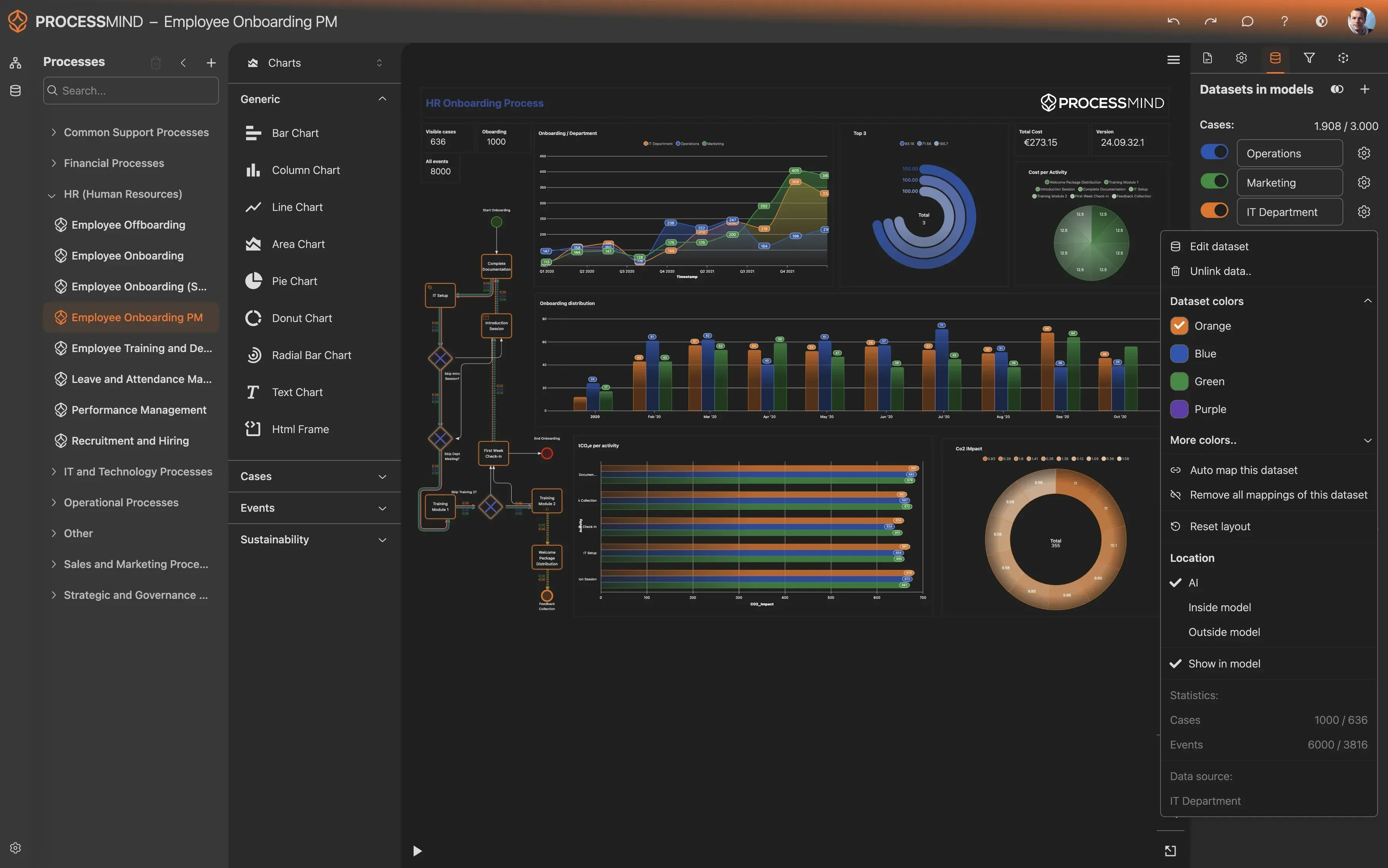
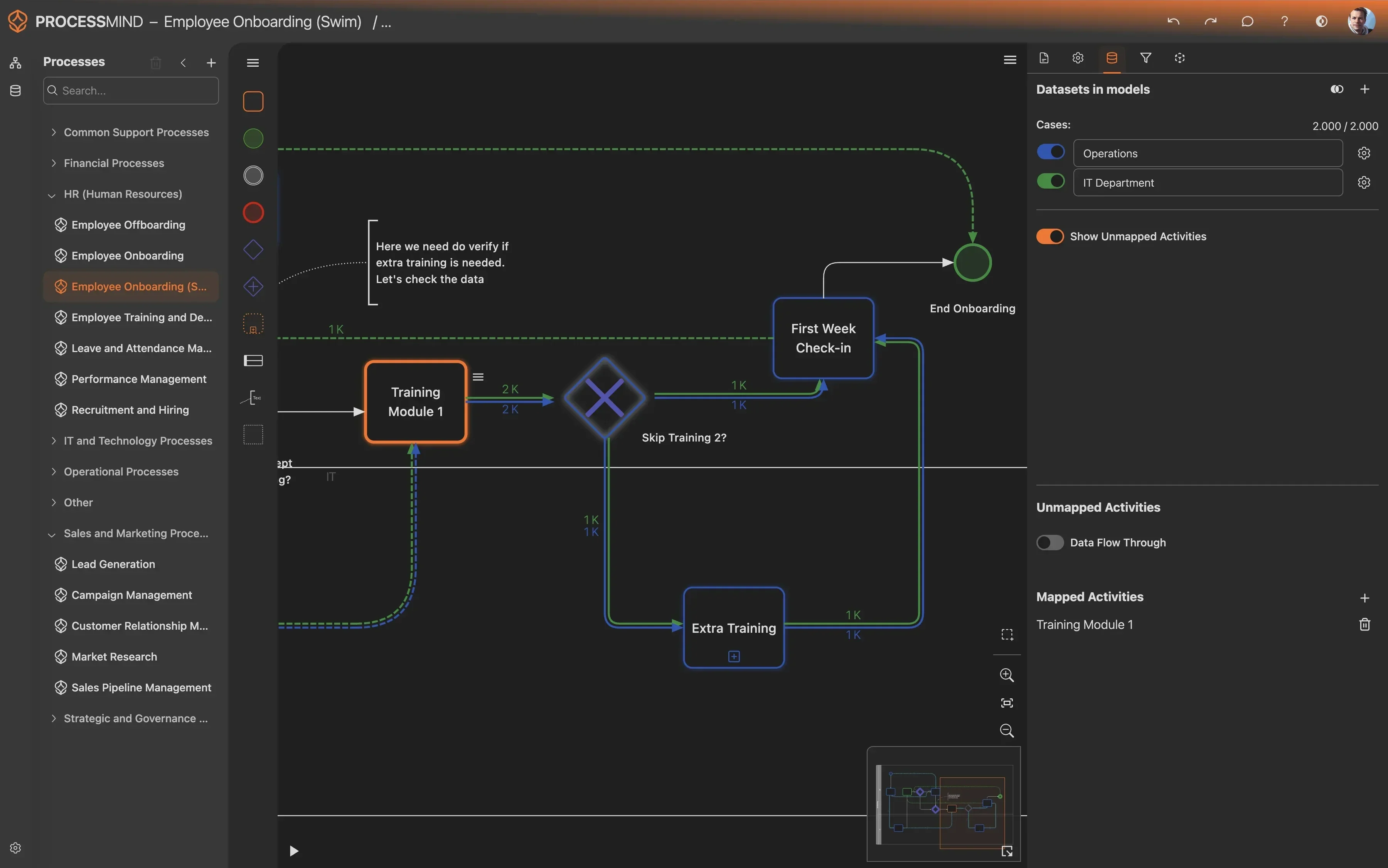
Explore the auto-generated dashboards and visual process maps for your Software Development Lifecycle. Leverage AI-driven recommendations to pinpoint bottlenecks and deviations.
Why it matters
Visualizing your entire development flow reveals hidden inefficiencies and compliance gaps, providing data-backed insights to drive informed decision-making.
Expected outcome
A clear understanding of your current Software Development Lifecycle performance, including key bottlenecks and areas for improvement.
Implement Improvements
What to do
Prioritize the identified improvement opportunities, such as optimizing specific stages or automating manual steps in your ServiceNow DevOps workflow, and put them into action.
Why it matters
Acting on insights directly leads to tangible benefits like faster development cycles, reduced rework, and enhanced software quality, delivering real business value.
Expected outcome
Strategic changes implemented within your Software Development Lifecycle, targeting improved efficiency and quality.
Monitor Your Process
What to do
Periodically re-upload updated Software Development Lifecycle data from ServiceNow DevOps to track the impact of your changes and measure improvements in key performance indicators.
Why it matters
Continuous monitoring ensures that improvements are sustained and allows for agile adjustments, fostering a culture of ongoing optimization and measurable success.
Expected outcome
Measurable improvements in Software Development Lifecycle KPIs, validating the effectiveness of your implemented changes over time.
YOUR KEY INSIGHTS
Uncover SDLC Insights, Optimize Delivery Now
- Visualize end-to-end SDLC in ServiceNow DevOps
- Pinpoint bottlenecks in dev, test, and deploy
- Accelerate time-to-market and delivery speed
- Improve software quality with data-driven insights
TYPICAL OUTCOMES
Measurable Gains in Software Delivery
These outcomes showcase the tangible benefits organizations realize by optimizing their Software Development Lifecycle processes using insights from ServiceNow DevOps. By identifying bottlenecks and inefficiencies, teams can achieve faster delivery and higher quality software.
Average reduction in end-to-end time
Pinpoint and remove bottlenecks across the entire software development lifecycle, significantly cutting down the time from concept to deployment.
Reduction in re-entry to previous stages
Identify root causes of rework after QA and UAT completion, improving quality and reducing wasted development effort and associated costs.
Adherence to standard SDLC models
Automatically monitor deviations from defined SDLC processes, ensuring better governance and preparing your team for audits with confidence.
Time reduction for critical features
Optimize paths for high-priority development items, ensuring critical features reach production faster and meet strategic business objectives.
Reduction in post-deployment issues
Identify patterns leading to deployment failures, proactively addressing issues to ensure smoother releases and higher system stability.
Results vary based on the specific Software Development Lifecycle processes, organizational structure, and data quality. The figures presented illustrate typical improvements observed across various implementations.
Recommended Data
FAQs
Frequently asked questions
Process mining visualizes the actual flow of your SDLC, identifying deviations from standard processes, pinpointing excessive delays in development stages, and highlighting rework loops after QA or UAT. It helps uncover hidden inefficiencies and resource bottlenecks that impact feature delivery.
For effective SDLC process mining, you'll need data related to development items, their status changes, assignees, timestamps, and associated events within ServiceNow DevOps. Key fields include a case identifier like 'Development Item ID', activity names, and precise timestamps for each activity. This data forms the event log necessary for analysis.
Once the data is extracted and prepared, initial insights can often be generated within a few days to a week. The exact timeline depends on data volume, complexity, and the quality of the initial data extraction. Subsequent deeper analysis and optimization recommendations follow after these initial discoveries.
Process mining precisely maps the sequence and duration of all activities, allowing you to identify stages with excessive delays or unexpected loops, such as frequent rework after QA. By visualizing these bottlenecks and deviations, you can pinpoint root causes and implement targeted improvements to streamline the flow and reduce unnecessary repetitions.
Absolutely. Process mining creates an undeniable, data-driven visual record of your actual process execution, making it easy to identify deviations from standard operating procedures. This granular visibility helps ensure compliance with internal policies and regulatory requirements, significantly strengthening your audit readiness by providing clear evidence of process adherence.
No, process mining is a non-invasive analytical technique. It relies on extracting historical event data from your ServiceNow DevOps system without interfering with live operations or developer workflows. The analysis happens independently, providing insights without disruption to your team's daily tasks.
While some understanding of your ServiceNow DevOps data model is beneficial for initial data extraction, most modern process mining tools are designed for business users. They offer intuitive interfaces for analysis, and many vendors provide services for data connectors and initial setup.
Data extraction from ServiceNow DevOps can be performed using standard API integrations, direct database queries, or exporting reports. The goal is to collect event logs containing case IDs, activity names, and timestamps for each development item's journey. Many process mining platforms offer pre-built connectors or guidance for this extraction.
Don't Delay: Optimize Your Software Development Lifecycle Today
Pinpoint inefficiencies to reduce your SDLC cycle time by 30% or more.
No credit card required, start optimizing today