Improve Your Problem Management

Select a process
Choose a process to continue working in your connected workspace.
Improve Problem Management with Process Mining
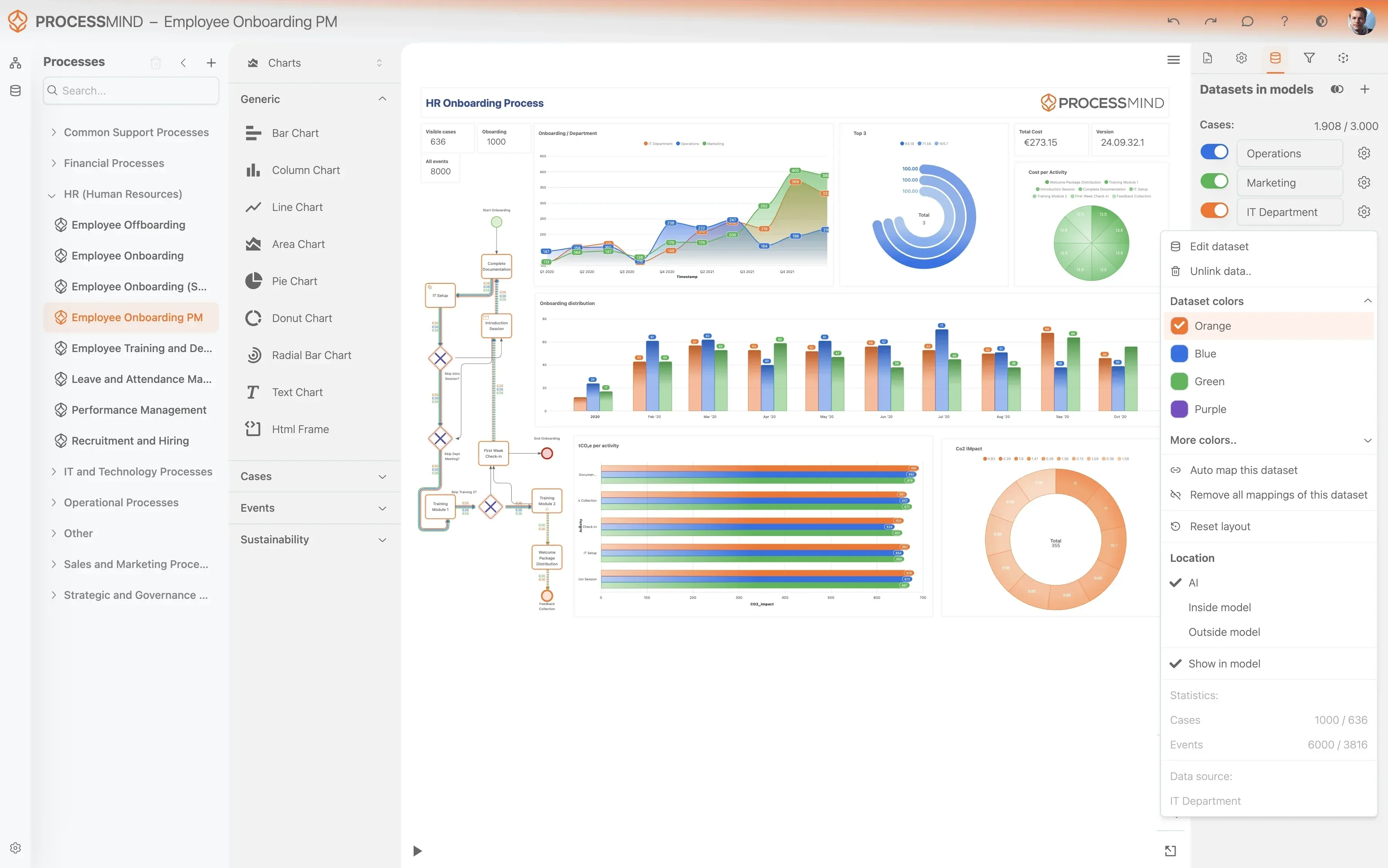
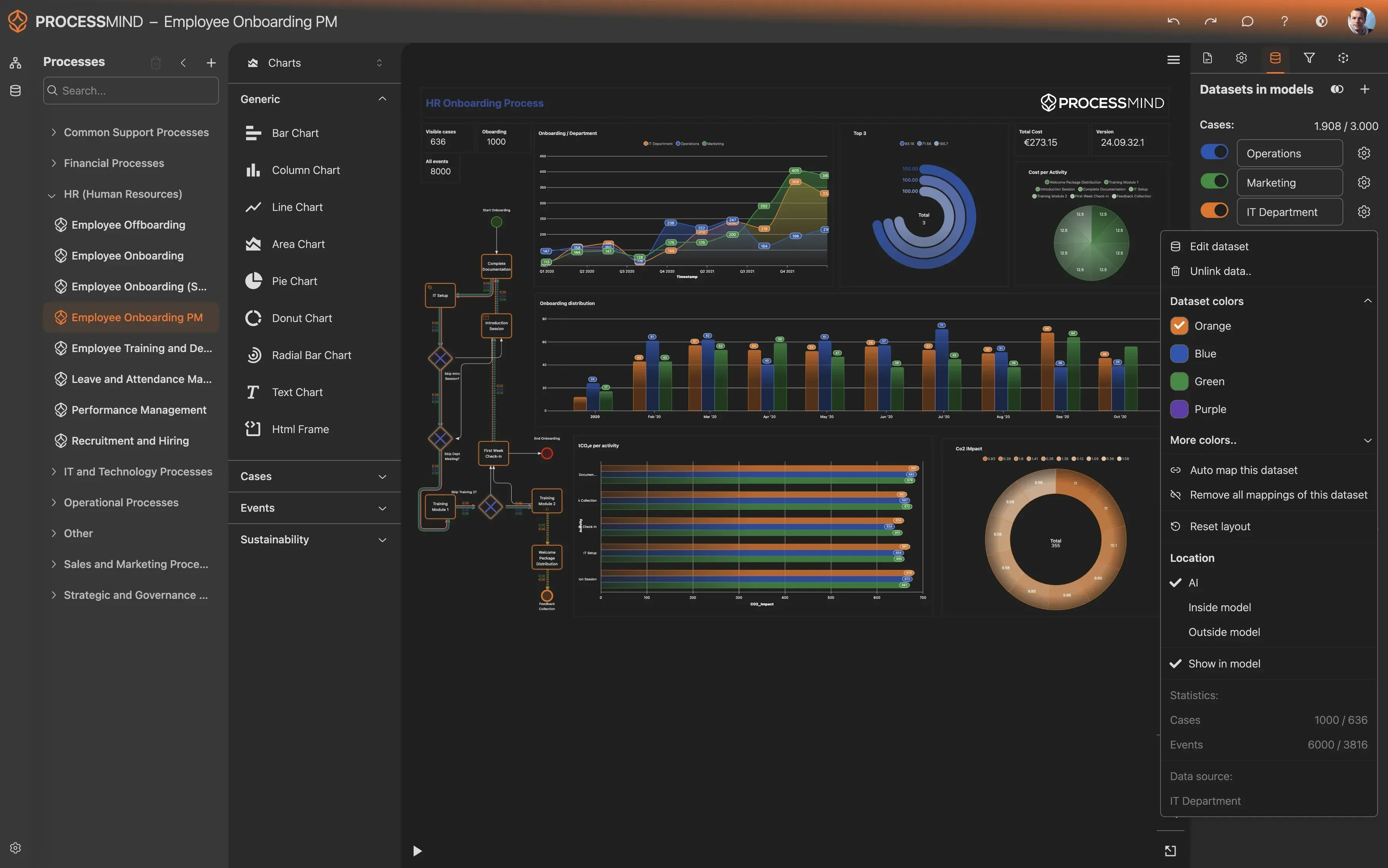
ProcessMind helps you uncover hidden inefficiencies in your Problem Management process. Easily identify bottlenecks, repetitive tasks, and prolonged resolution times that impact service quality. Our platform provides clear insights into process deviations and areas for improvement, enabling data-driven optimization. Gain a comprehensive understanding of your problem resolution lifecycle, from identification to closure, regardless of your source system.
Download our pre-configured data template and address common challenges to reach your efficiency goals. Follow our six-step improvement plan and consult the Data Template Guide to transform your operations.
Show detailed description
Mastering Problem Management is crucial for maintaining operational stability and delivering exceptional service. Process mining for Problem Management offers an unparalleled, complete, and end-to-end view of how problems are truly identified, investigated, and resolved within your organization. It allows you to move beyond anecdotal evidence and discover the actual pathways your problem records take, from initial detection through to final resolution and verification. This deep analytical capability reveals critical insights into bottlenecks that delay resolution, uncovers non-compliant process deviations, and highlights significant opportunities for automation across your entire workflow. Regardless of your underlying ERP, ITSM, or any other source system, ProcessMind extracts the event data to reconstruct the reality of your operations, providing an objective, data-driven understanding that is system-agnostic and universally applicable to your unique Problem Management process.
The Problem Management process often grapples with several common challenges, regardless of the system used. These include prolonged root cause analysis, frequent reoccurrence of known problems, inefficient handoffs between teams, and a general lack of visibility into the true cycle time of problem resolution. Organizations struggle with understanding why certain problems take longer to resolve, where resources are being misallocated, or if established standard operating procedures are actually being followed in practice. ProcessMind directly addresses these pain points by providing detailed process maps and performance metrics derived directly from your operational data. You can precisely identify where delays occur, pinpoint the exact steps that add no value, and expose variations that lead to suboptimal outcomes. This clarity empowers you to streamline operations, reduce Mean Time To Resolution (MTTR), improve resource utilization, and ensure that your Problem Management process actively contributes to service stability, not just reacting to incidents.
Analyzing your Problem Management process with ProcessMind delivers tangible benefits that translate into improved efficiency, reduced costs, and enhanced service quality. By gaining an empirical understanding of your process, you can make informed decisions to optimize workflows, eliminate redundant steps, and prioritize automation initiatives that will have the greatest impact. This leads to a significant reduction in recurring problems, fewer service disruptions, and ultimately, higher customer satisfaction. Furthermore, identifying and addressing compliance gaps proactively minimizes risk and ensures adherence to internal policies and external regulations. To begin uncovering these powerful insights, our platform is designed for seamless integration with your existing data landscape. You can start by leveraging our comprehensive data template, which guides you through extracting the necessary event logs from your system, ensuring a smooth and rapid onboarding experience. ProcessMind is committed to helping you transform your Problem Management from a reactive necessity into a proactive, optimized, and highly efficient operation.
The 6-Step Improvement Guide for Problem Management
Connect & Discover Data
What to do
Connect your data source, such as your ERP or service management system, to extract relevant Problem Record activity logs. Ensure all necessary event data, including timestamps and case IDs, are imported for analysis.
Why it matters
This foundational step ensures you have a complete and accurate dataset, providing the basis for understanding the actual flow and performance of your Problem Management process.
Expected outcome
A comprehensive and accurate dataset of Problem Management activities is ready for analysis.
Map Problem Mgmt Process
What to do
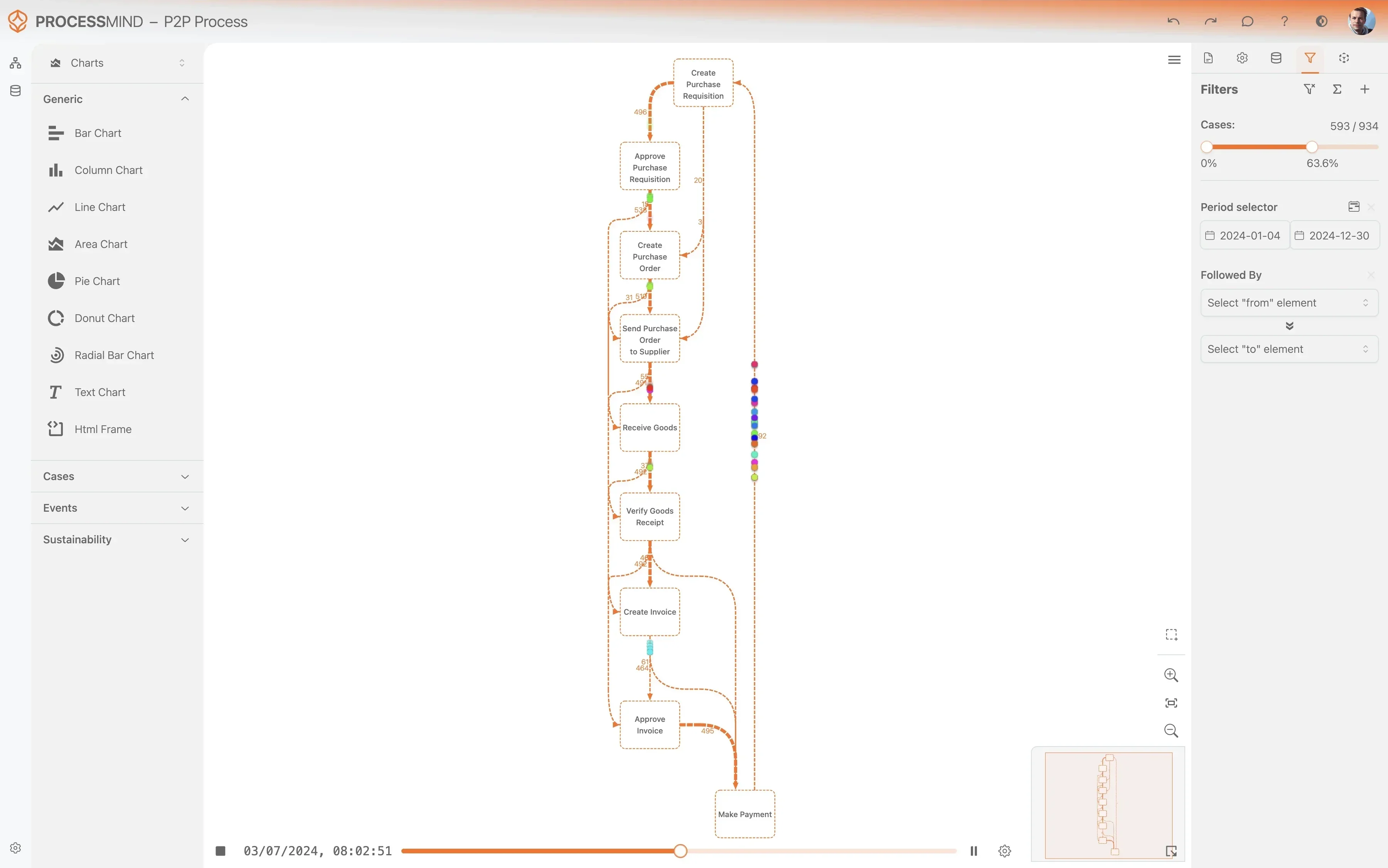
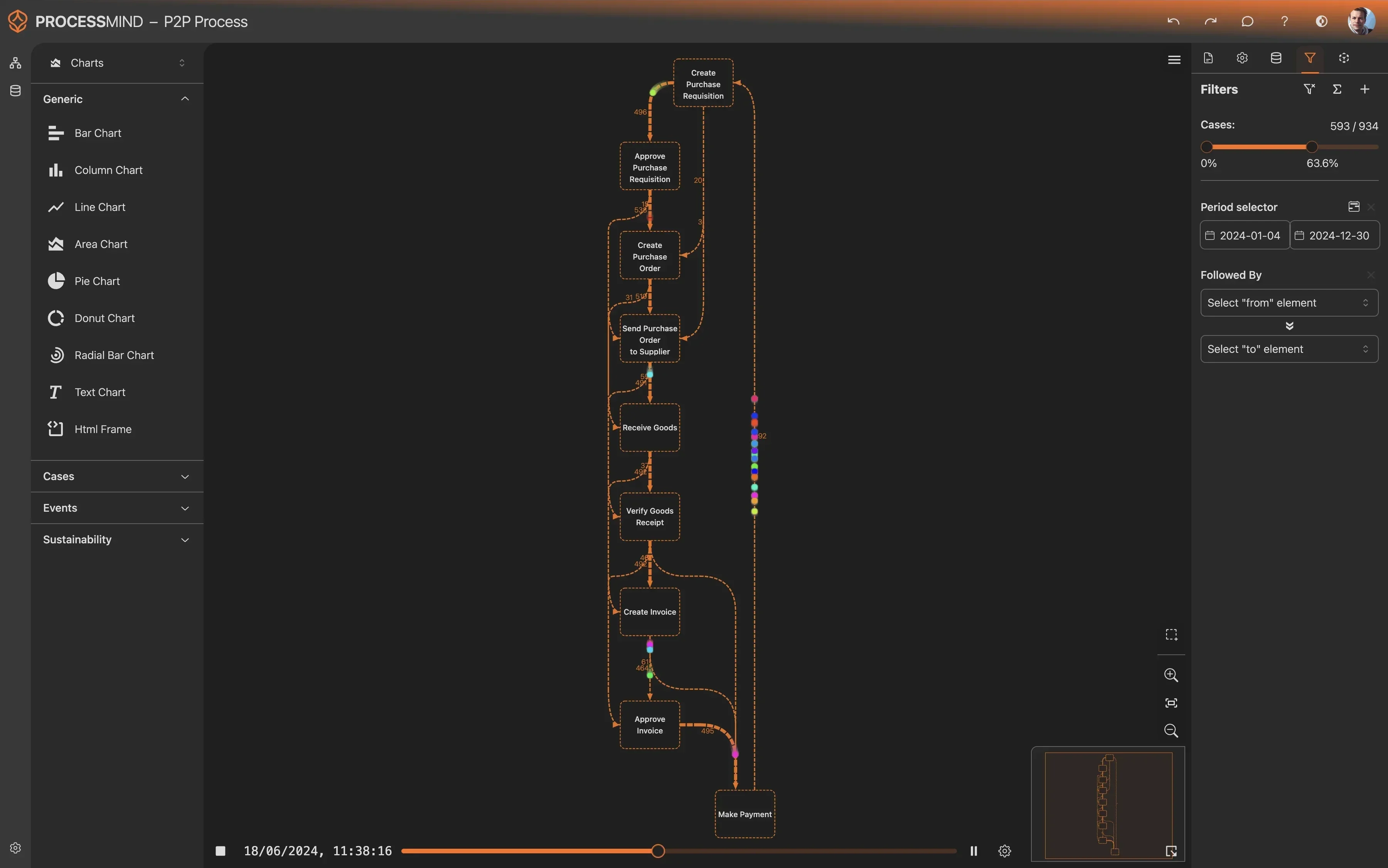
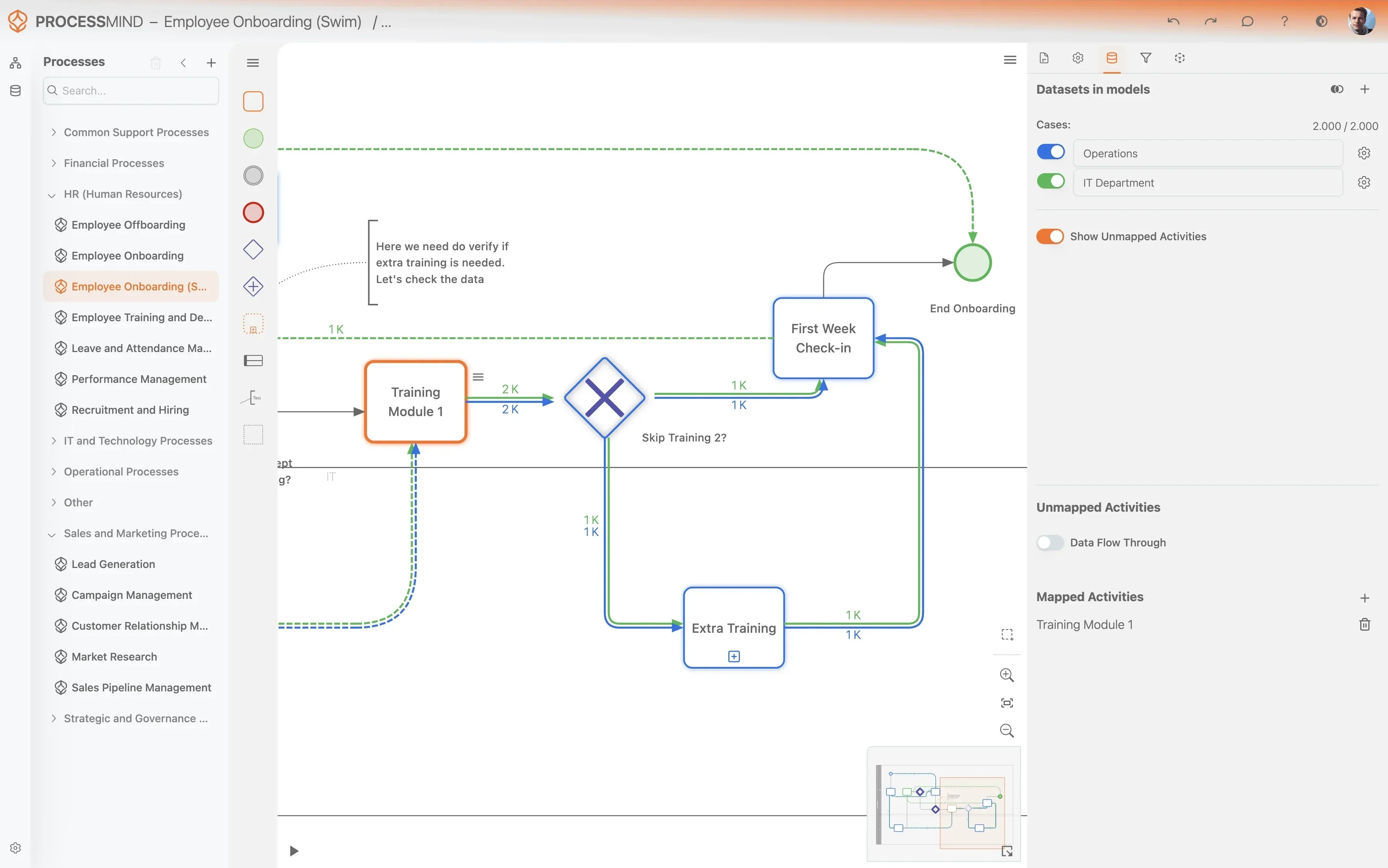
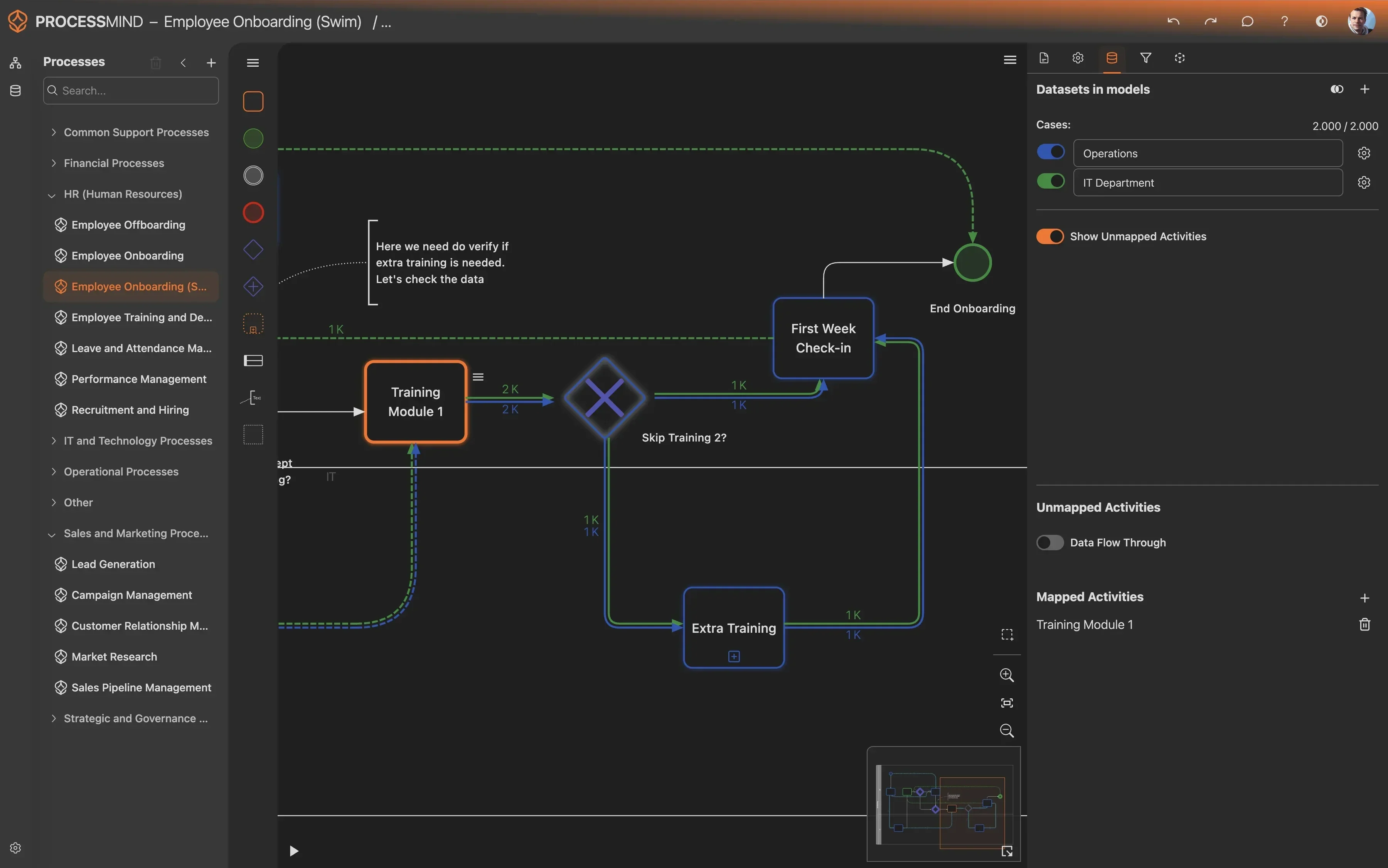
Visualize the end-to-end Problem Management process using the discovered data. Identify all unique paths and variations from problem identification to resolution and closure.
Why it matters
Understanding the actual process flow, not just the documented one, reveals hidden complexities, deviations, and rework loops that impact efficiency and problem resolution times.
Expected outcome
A clear, data-driven visual representation of your Problem Management process.
Identify Process Bottlenecks
What to do
Pinpoint specific activities or transitions where Problem Records frequently get delayed or stalled. Focus on long waiting times between key steps or repeated handoffs.
Why it matters
Locating bottlenecks highlights areas causing significant delays in problem resolution, directly impacting service quality, customer satisfaction, and operational costs.
Expected outcome
Key choke points and areas of inefficiency in the Problem Management process are identified.
Analyze Root Causes
What to do
Investigate the underlying reasons for the identified bottlenecks and deviations. Use filtering and drill-down capabilities to explore attributes like problem type, assignee, or affected service.
Why it matters
Understanding the 'why' behind process issues allows for targeted interventions, moving beyond superficial fixes to address the core problems affecting efficiency and quality.
Expected outcome
Causal factors for process delays, rework, and deviations are clearly understood.
Design Process Improvements
What to do
Based on root cause analysis, propose concrete changes to optimize the process. This could involve automation, role adjustments, or revised workflows within your system.
Why it matters
This step translates insights into actionable strategies, leading to a more streamlined, efficient, and effective Problem Management process that delivers tangible benefits.
Expected outcome
A well-defined plan for implementing process changes, with expected impacts on performance metrics.
Monitor & Iterate
What to do
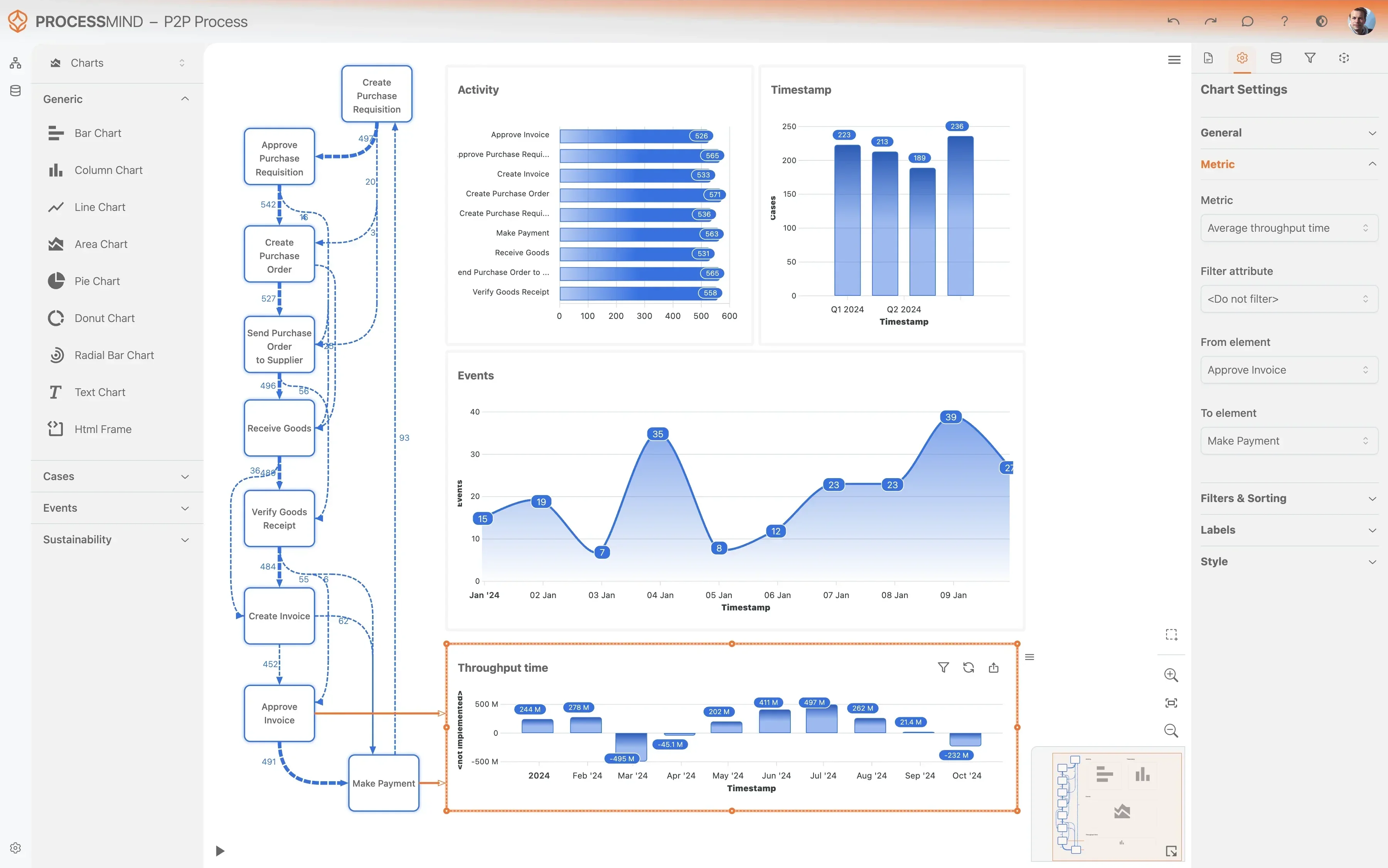
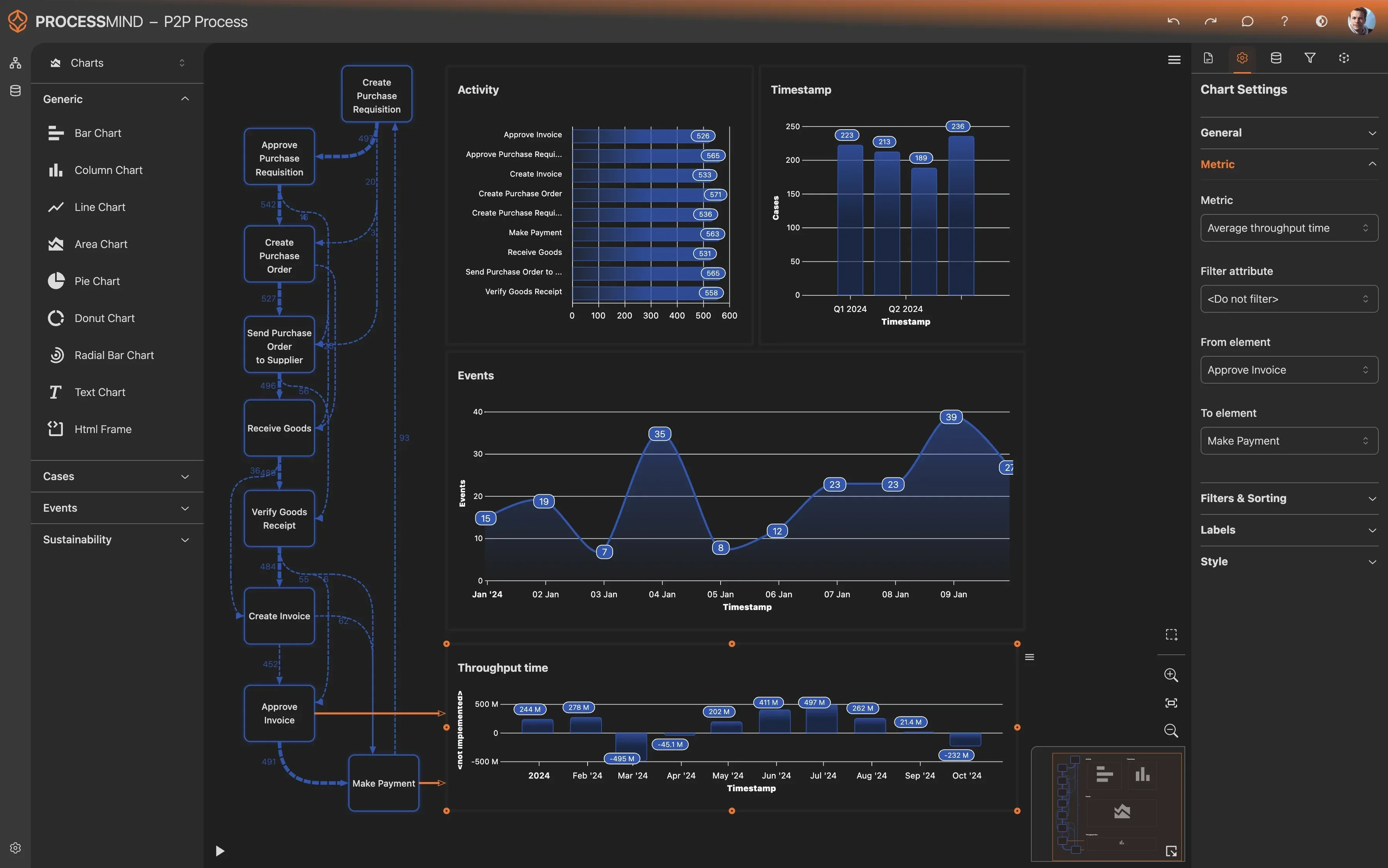
Continuously track the performance of the improved Problem Management process using dashboards. Compare current metrics against baseline data and adjust as needed.
Why it matters
Ongoing monitoring ensures that improvements are sustained, new issues are quickly detected, and the process continues to evolve for optimal performance over time.
Expected outcome
Sustained process improvements and a framework for continuous optimization of Problem Management.
TYPICAL OUTCOMES
Realizing Value with Problem Management Process Mining
These outcomes illustrate the tangible improvements organizations realize by applying process mining to their Problem Management workflows. By gaining data-driven insights, teams can identify bottlenecks, streamline resolution processes, and prevent recurring issues more effectively.
Average reduction in investigation time
Streamlining the path from investigation start to root cause identification allows technical teams to focus on permanent fixes rather than prolonged diagnosis, reducing critical service interruptions.
Reduction in problem record reassignments
Identifying bottlenecks in initial routing ensures that problem records reach the correct experts immediately, preventing wasted effort and delays across multiple support groups.
Better compliance for critical problems
Real-time visibility into stalled problem records helps management intervene before service level agreement targets are missed, ensuring consistent service delivery to the business.
Lower problem reopen rates
Validating resolutions before closure ensures that underlying issues are truly fixed, preventing the costly cycle of investigations restarting after a supposed fix and improving overall stability.
Faster publication of temporary solutions
Accelerating the publication of temporary workarounds significantly reduces the impact of ongoing incidents on end users, minimizing business disruption while the long-term solution is developed.
Reduction in related service desk tickets
Efficiently identifying and resolving root causes, and publishing permanent fixes, helps prevent new incidents from clogging the service desk and reduces the total cost of support.
Results vary based on process complexity, data quality, and the specific implementation strategy. These figures represent typical improvements observed across various Problem Management implementations.
Recommended Data
For customized data recommendations, choose your specific process.
FAQs
Frequently asked questions
Process mining visualizes the actual path of every problem record, revealing deviations from standard workflows and identifying hidden bottlenecks. It provides a data-driven view of your process, helping teams optimize efficiency and improve resolution times.
You typically need an event log containing a unique case identifier, a timestamp for each activity, and a description of the activity. Key attributes like status changes, assigned groups, priority, and category provide richer context for deeper analysis.
Initial insights can often be generated within a few days to a few weeks, once data extraction from your source system is established. The first phase focuses on connecting to the system and mapping primary process changes to create a baseline model.
Process mining highlights specific stages where investigations stall by quantifying the duration of each transition. It pinpoints resource gaps or missing information that prolong the investigative phase. This data-driven approach replaces anecdotal evidence with factual evidence of where delays occur.
By mapping every transition, process mining identifies records that bounce repeatedly between support groups without resolution. This helps managers recognize unclear group ownership or situations where specific teams lack the resources to handle certain problem types. Such insights enable process redesign and better resource allocation.
Process mining identifies the root causes of SLA breaches by showing the exact path of records that failed to meet targets. You can compare compliant versus non-compliant records to see if specific support groups or problem types are more prone to delays. This enables targeted interventions to ensure priority problems are handled within required timeframes.
By analyzing the linkage between incident and problem records, process mining identifies patterns where issues are repeatedly addressed with workarounds rather than permanent fixes. This visibility helps prioritize high-impact solutions that eliminate entire clusters of recurring support tickets.
Standard reports provide snapshots and aggregated metrics, but they often miss the actual journey of a problem record. Process mining reveals the specific transitions, loops, and deviations that occur between those metrics. It shows exactly where and why a process is stalling, complementing standard reporting with a deeper, longitudinal view for true optimization.
Elevate Your Problem Management, Start Now
Uncover inefficiencies and resolve issues faster with data-driven insights.
No credit card required, set up in minutes.