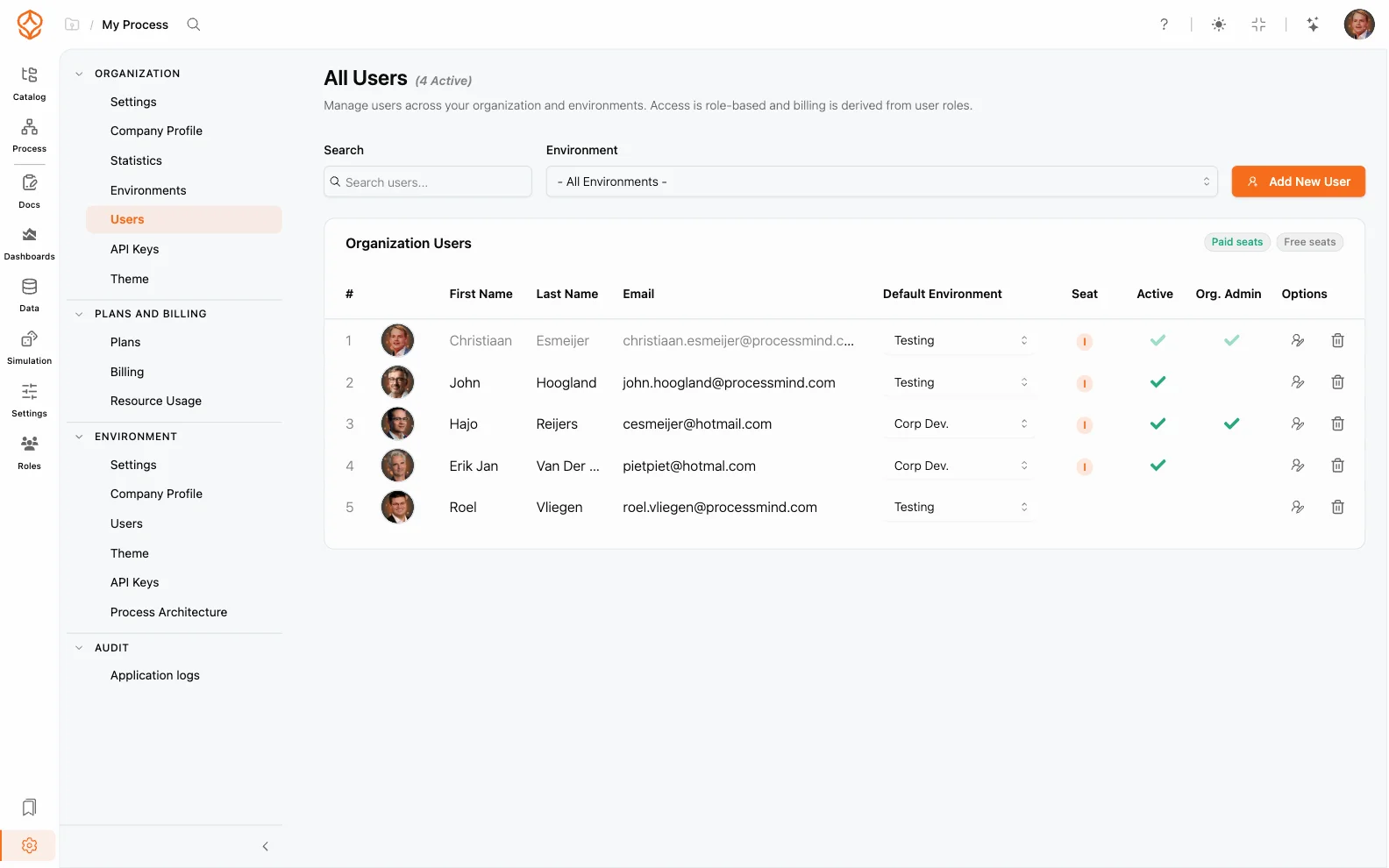
Viewer users are read-only members of your organization. They can browse the Process Portal, open published models, read documentation, and export documents, but they cannot model, edit, or manage anything. Viewers are free and never count against your modeling seats: self-serve plans include up to 10 free portal viewers per paid seat, and Enterprise agreements can enable unlimited viewer access.
How Viewer Users Work
- Read-only by design: viewers see exactly what you publish and nothing else. There is no edit mode for them.
- Only published content: drafts and in-review processes stay invisible until you publish them.
- Only filled-in content: empty documentation sections and unassigned roles are hidden, so viewers never see incomplete work.
- Exports included: viewers can download published documentation as Word (.docx), copy it as Markdown, or print it.
A viewer never needs modeling permissions, and viewing does not count against your modeling seats.
What Viewers Can Do
- Browse the catalog: search and filter published processes by folder, level, or name.
- Open process models: view the published model read-only: zoom, pan, and explore, but no changes.
- Read documentation: read the rendered sections, including the RACI matrix.
- Export documents: download as Word, copy as Markdown, or print to PDF.
What Viewers Cannot Do
- Edit models or documentation.
- Publish or change the status of a process.
- See unpublished work: anything in Draft or Under Review is hidden.
- Manage users, roles, or settings.
Setting Up Viewer Users
- Publish your processes first. A process only becomes visible to viewers after it passes your governance workflow.
- Grant viewer access: in your organization or environment settings, add users with the Portal Viewer seat.
- Have them sign in: a Portal Viewer signs in to ProcessMind and lands in the portal, where only published processes are visible. Access comes from the seat, not from a per-process link, so you can revoke it by removing the seat.
Controlling Access
- Per organization or environment: decide who can see your published processes at the organization or environment level.
- Editors and viewers: editors can model, document, and manage; viewers can only read published content.
- Role-based navigation: viewers see the departments and functions you have made available to them.
Keeping the Portal Current
Because viewers always see the latest published version, your portal stays accurate without extra work:
- Publish a new version after you approve changes, and viewers see it immediately.
- Unpublish a process to remove it from the portal while you rework it.
- Check quality before publishing: use the quality badge so what you share is complete and consistent.