On This Page

Process Variants

Process Intelligence Process Intelligence Available with a Process Intelligence seat or higher. Only seats on this plan or a higher one can use this feature. Compare plans Available with a Process Intelligence seat or higher

Not every case follows the same path. A process variant is a distinct sequence of activities that a case can follow. Most orders go through “Order Created → Invoice Sent → Payment”, while a smaller group skips or repeats steps. Understanding your variants is the key to spotting unnecessary complexity and opportunities for standardization.

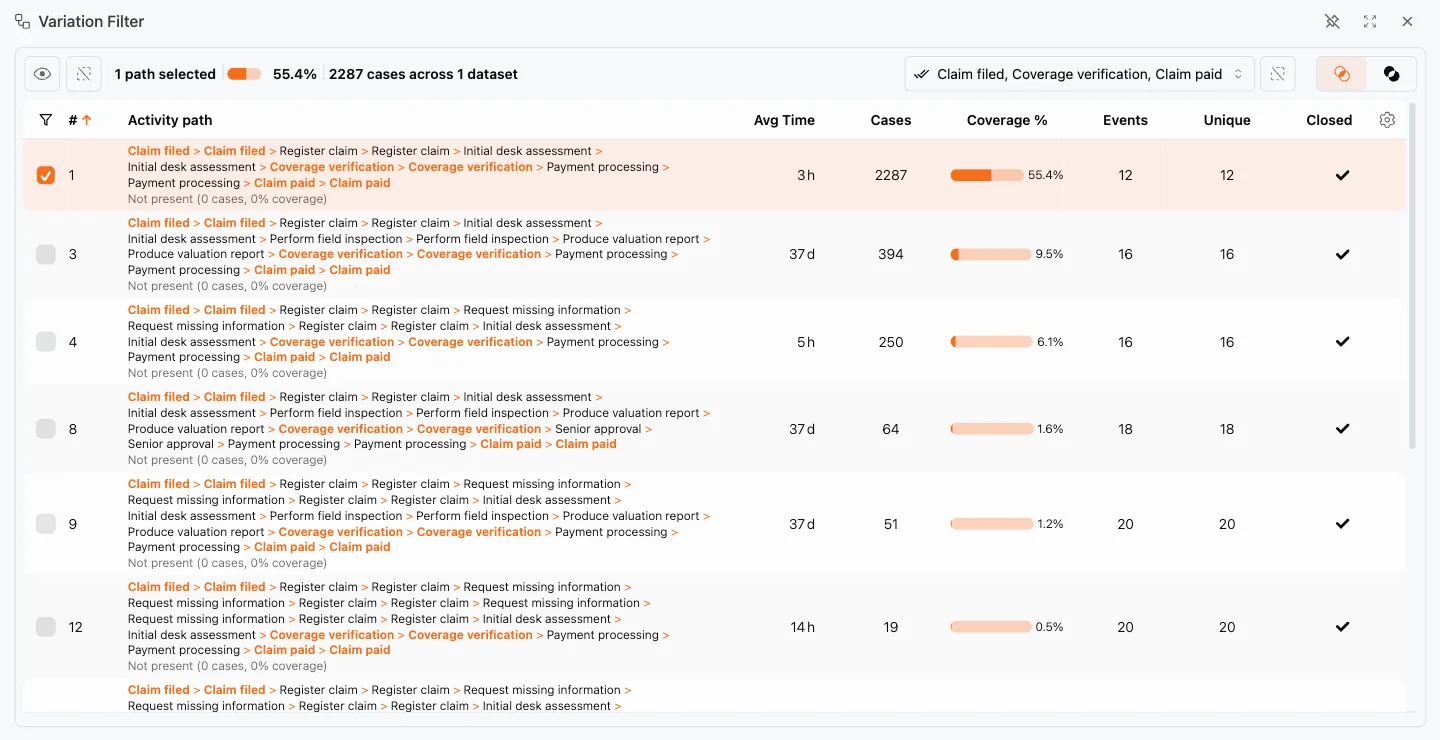
ProcessMind process variants list with case counts and coverage

Identifying Variants

ProcessMind groups the cases in your dataset by the sequence of activities they follow. The list of variants is part of the variation filter:

  1. Open a dashboard for your dataset in the Analyzing Processes area.
  2. Open the variation filter to see the list of variants ordered by how many cases follow them.
  3. Review the variant statistics: each variant shows the number of cases, its coverage percentage, average time, and more.

The variants that cover the bulk of your cases are your happy path; the long tail represents exceptions and special handling.

Comparing Variant Performance

Variants often differ dramatically in time:

  • Spot the slow variants: the same activity sequence may take twice as long when resources or timing differ.
  • Compare coverage: see which variants are rare outliers versus the main flow.
  • Drill into cases: open the case explorer to see exactly what happens inside a variant.

Finding the Root Cause of Deviations

Once you know which variants matter, ask why they exist:

  • Look at attributes: filter variants by region, product, or customer type using filters.
  • Compare with your model: use conformance checking to see which variants deviate from your intended process.
  • Watch the animation: replay variants with process animation to understand the flow.

Acting on Your Insights

Use your variant analysis to drive improvement:

  • Standardize the happy path to make it the default.
  • Automate repetitive steps in high-volume variants.
  • Model the target process and test it with simulation before rolling it out.