On This Page

Governance & Publishing

Process Architecture Process Architecture Available with a Process Architecture seat or higher. Only seats on this plan or a higher one can use this feature. Compare plans Available with a Process Architecture seat or higher

Governance is about making sure your processes are accurate, approved, and accessible to the right people. ProcessMind gives you publishing workflows, review and approval steps, and clear status tracking so your process landscape stays under control.

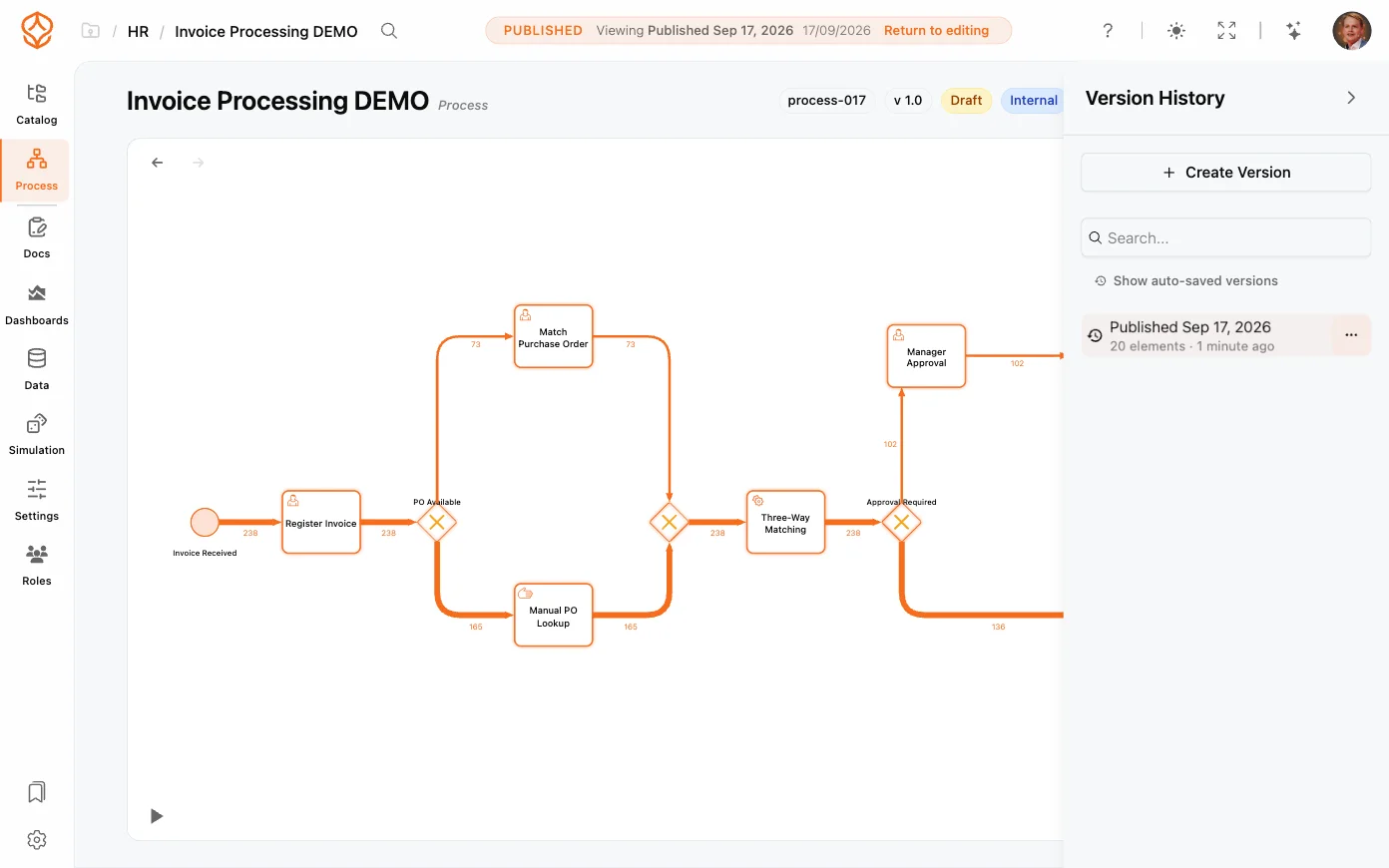
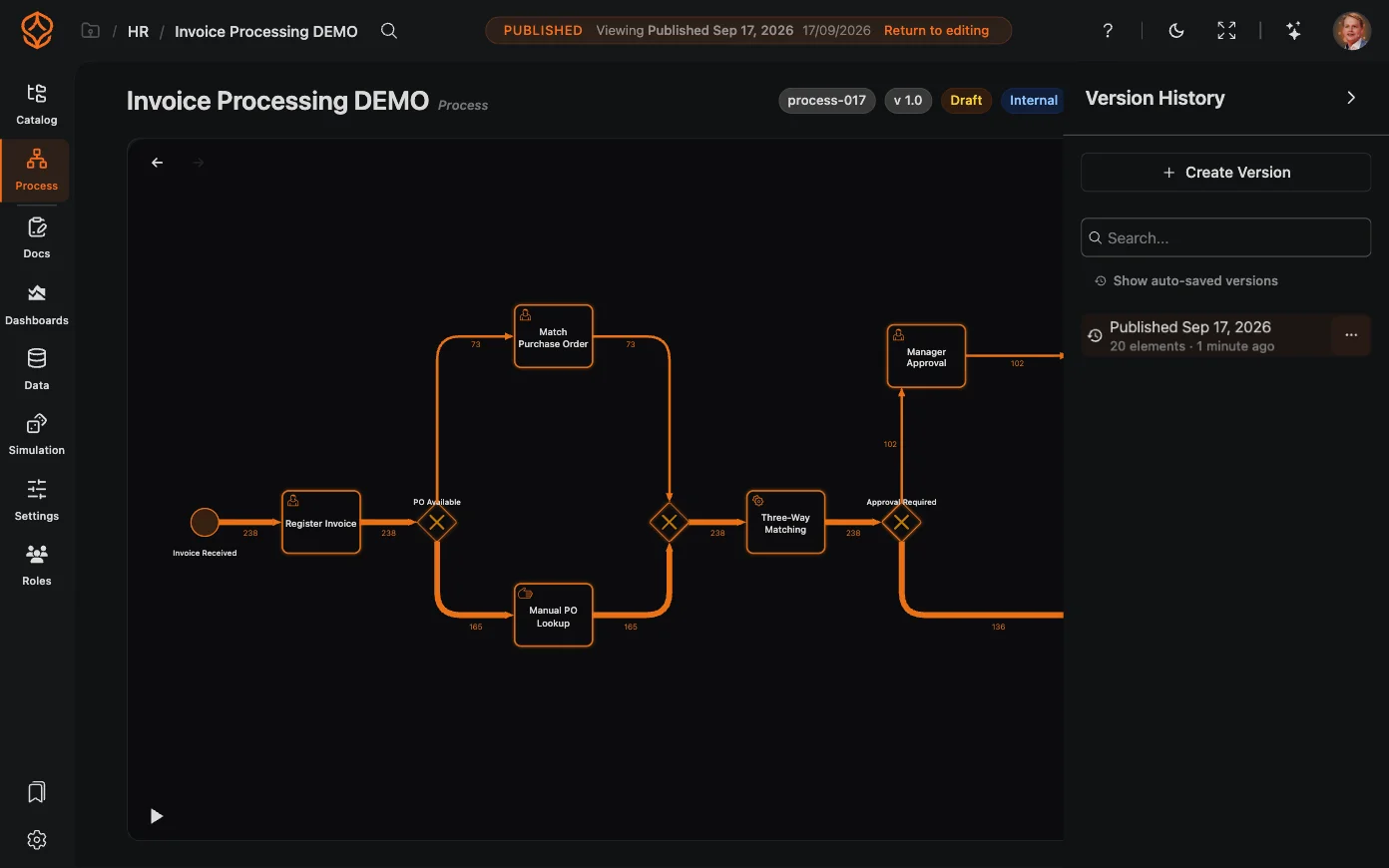
ProcessMind process publishing history and status controls

Process Lifecycle & Status

Every process has a status that reflects where it is in its lifecycle:

  • Draft: work in progress, only visible to editors.
  • Under Review: submitted for review or approval.
  • Approved: has passed review; publish it to make it visible to viewer users.
  • Retired: no longer active.
  • Archived: kept for reference.

The catalog shows the status of every process, so you can see at a glance what is current, what is being reviewed, and what is outdated.

Requesting and Approving a Review

Review and approval keep control of what reaches viewer users:

  1. Open the process menu (⋯) in the catalog or on the model page and choose Request Review. The process moves to Under Review and the owner is notified.
  2. The reviewer opens the same menu and chooses Approve Review. The Approve Review dialog shows which process is being approved.
  3. Optionally give the approval a Version name, and tick Publish after approval if the process should go live right away.
  4. Click Approve: the status becomes Approved, and with the checkbox ticked a published version is created in the same step.

Reviewers find their work through the Needs my review filter in the catalog, which lists the processes waiting on them. Reviewers should check the model, the documentation, and the RACI matrix before approving.

Publishing a Process

Publishing decides what viewer users see in the Process Portal:

  1. Finish modeling and documenting your process, and have it reviewed if your organization requires it.
  2. Open the process menu and choose Publish (or Publish version on an entry in the version history).
  3. Confirm in the dialog: publishing creates a version snapshot of the current model and makes it visible to viewer users.
  4. To take a process offline again, choose Unpublish. The published version is removed and viewers no longer see the process; the model itself is untouched.

When a published version exists, the version bar on the model page offers View published version to inspect exactly what viewers see, and Return to editing to go back to the working model.

Keeping the Landscape Healthy

  • Review published processes regularly and update or archive them when they change.
  • Use the quality badge to spot models that need attention before they are published.