On This Page

Process Mining

Process Intelligence Process Intelligence Available with a Process Intelligence seat or higher. Only seats on this plan or a higher one can use this feature. Compare plans Available with a Process Intelligence seat or higher

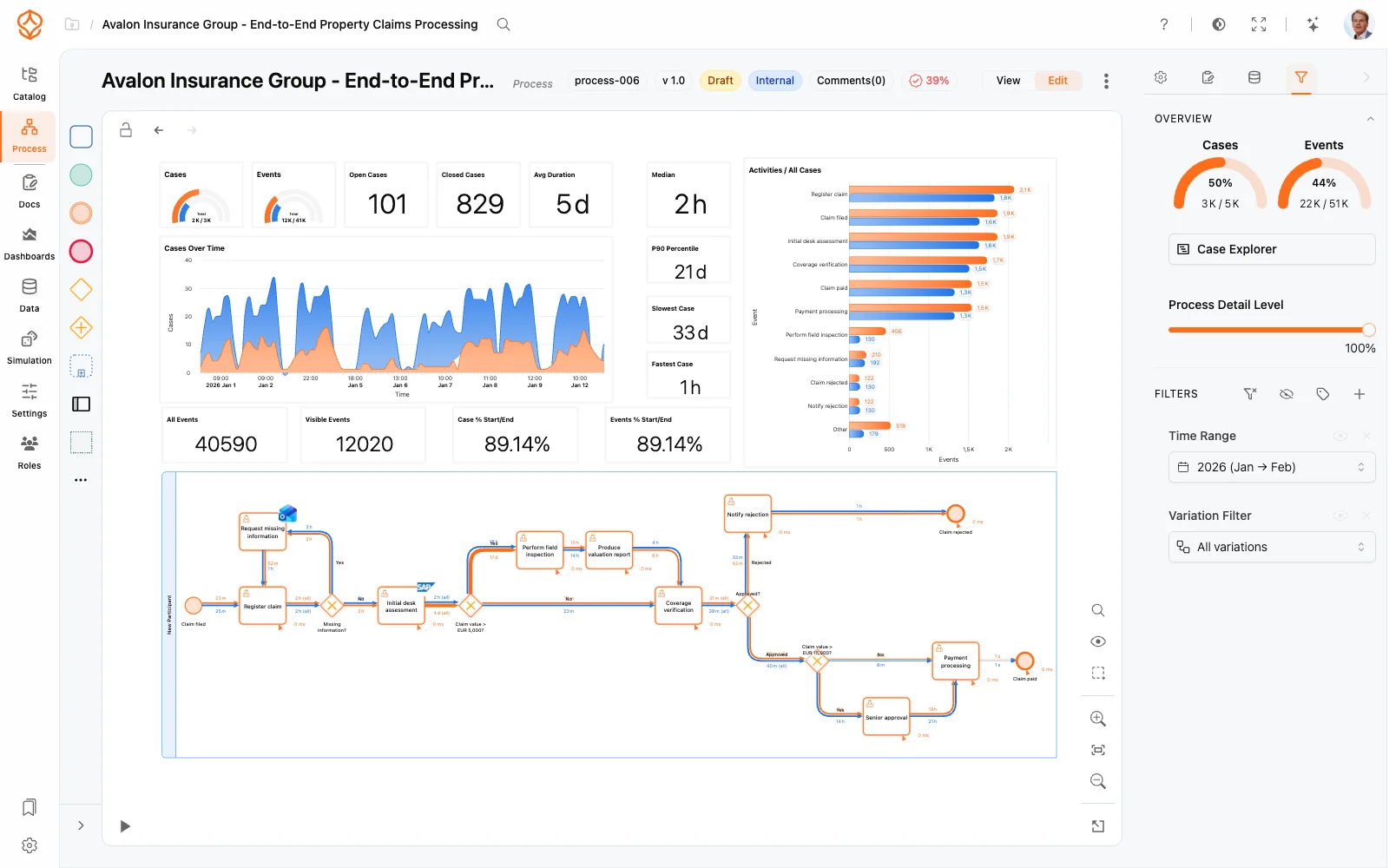
Process mining reconstructs your actual business process from the event log data your systems already record. Instead of relying on how your process is supposed to look, ProcessMind discovers what is happening in practice, including the shortcuts, rework, and exceptions that never made it into the model.

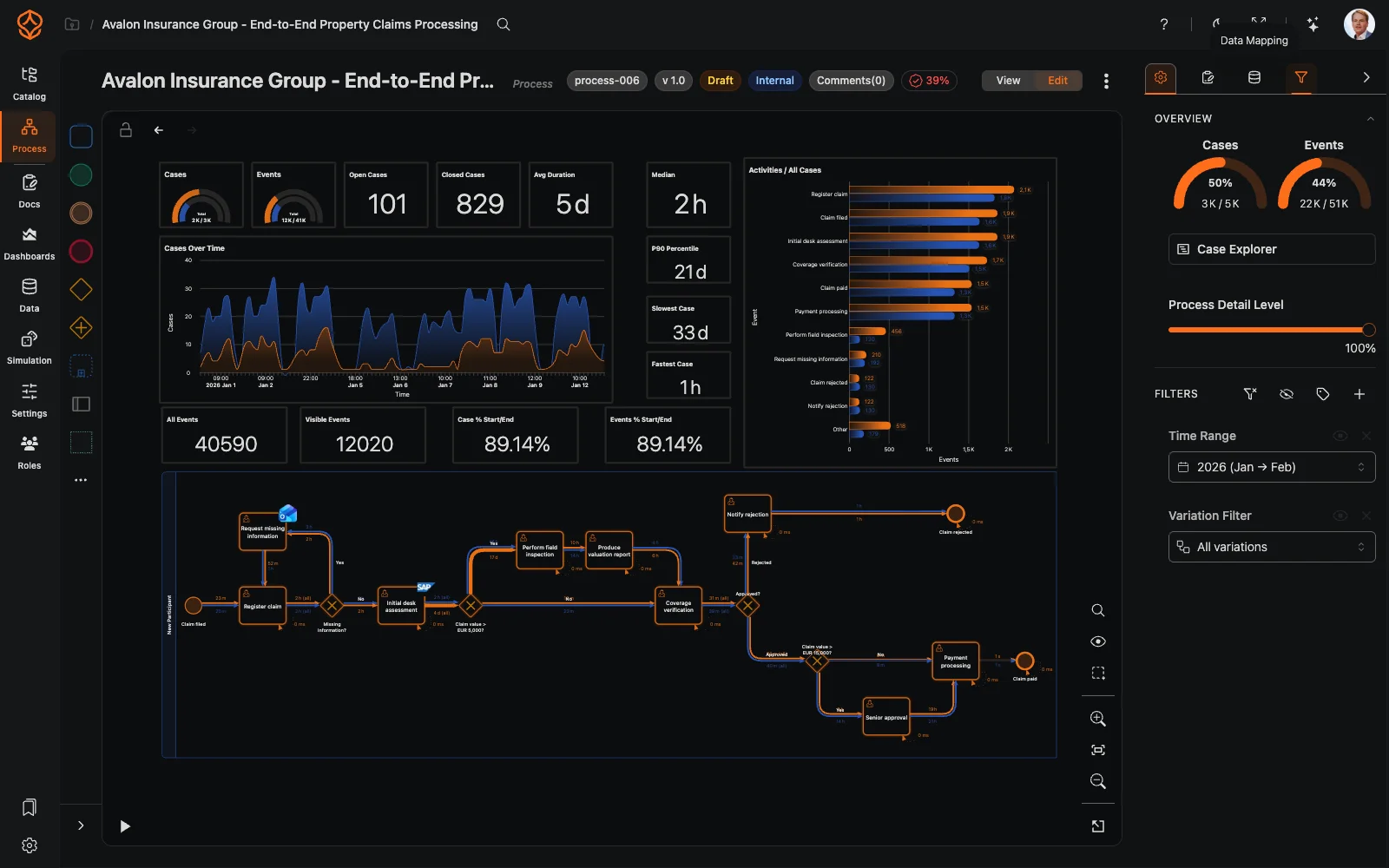
ProcessMind discovered process map from an event log showing the real flow

The Mining Pipeline

Mining starts with your event data and ends with an interactive process map:

  1. Upload your data: import a CSV or XLSX event log, following the supported data formats.
  2. Map your columns: tell ProcessMind which columns hold your case ID, activity, and timestamps in configuring your dataset.
  3. Mine the process: ProcessMind derives a process model from the sequence of activities in your data.

Mining Your Model

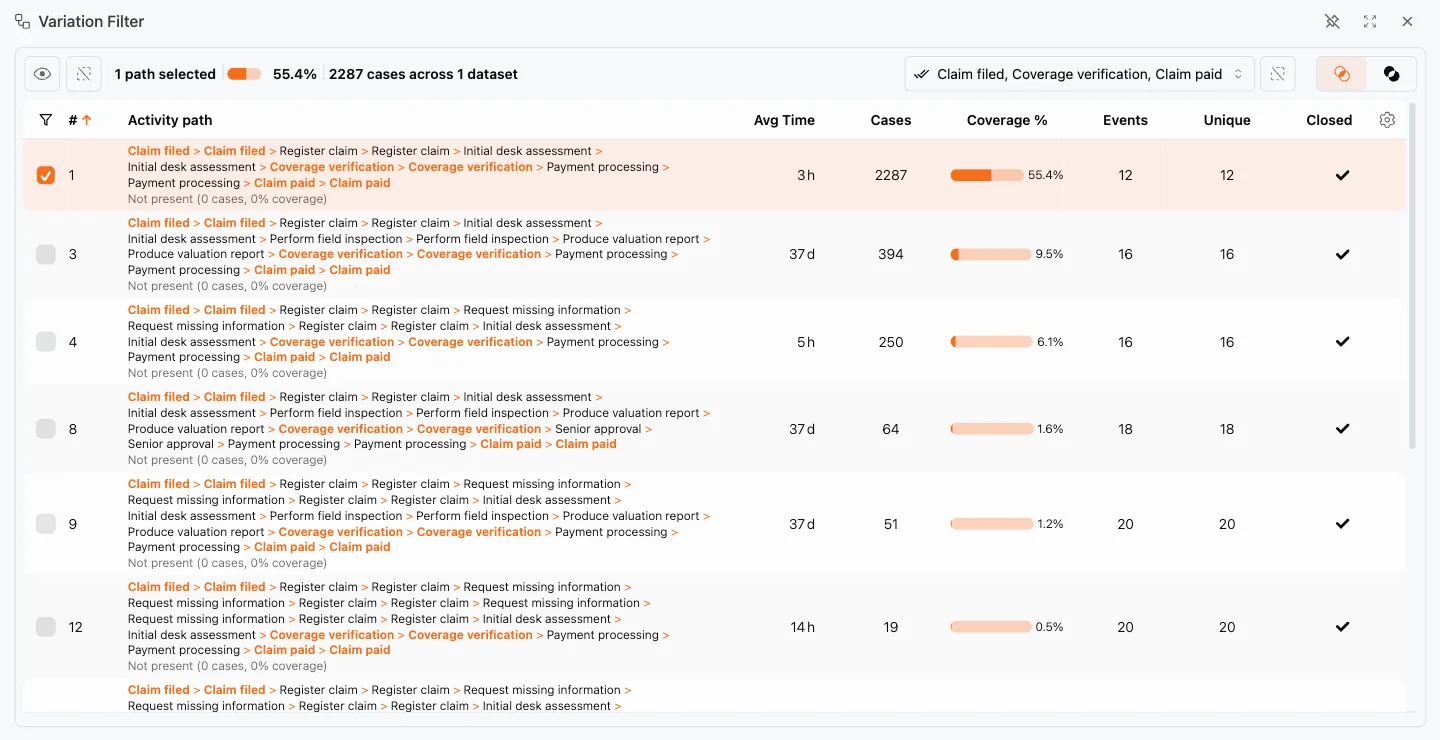
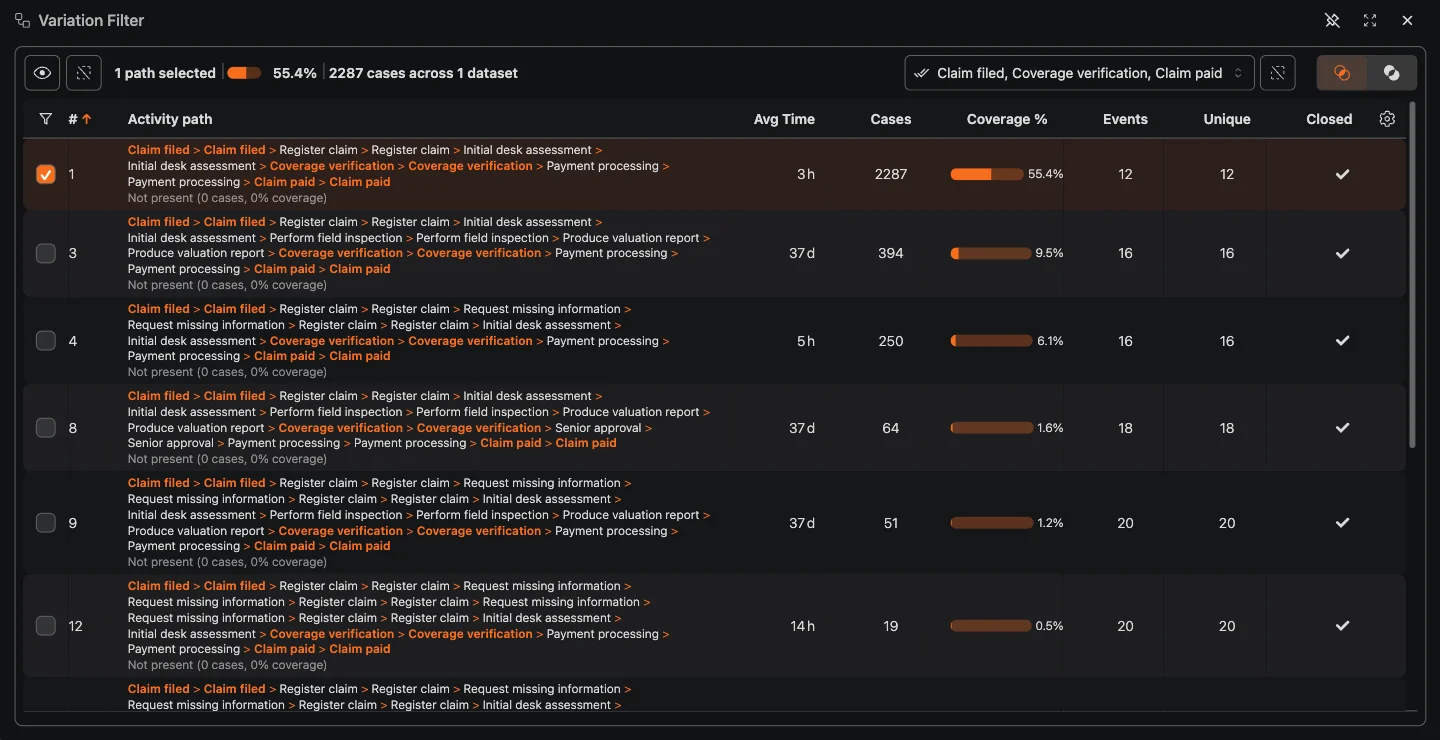
ProcessMind analysis view with variants after mining

Once your dataset is mapped, ProcessMind builds a model that reflects the real flow of work:

  • Activities become the building blocks of the process.
  • Connections show which activities happen after which, weighted by frequency.
  • Frequency and performance are captured for every transition, so you can see where cases spend time.

Explore the resulting map with the process graph and drill into individual cases with the case explorer.

Refining Your Discovery

A mined model is a starting point, not an endpoint:

  • Focus on the essentials by filtering out infrequent behavior.
  • Group related work into higher-level activities so the model stays readable.
  • Animate the flow with process animation to watch the process unfold over time.

Mining a Model You Already Have

When a process already has a model on the canvas and mapped flow data, you can rebuild it from what the data actually does:

  1. Open the process menu (⋯) on the model page or in the catalog and choose Mine Model from Flow Data. The same dialog opens from the mapping panel’s dataset menu under Auto Layout Model.
  2. Pick the miner that suits your log: Directly-Followed-By miner for precise, classic results, Simple Miner for a compact model, or AI Miner for messy or incomplete data.
  3. Set how strict the result is: Exclusive gateway policy (No, Auto, or Full XOR gateways) and Parallel gateway policy (No, Limited, or Full parallel gateways).
  4. Click Mine Model: the canvas is rebuilt from your mapped data.

The dialog also covers plain layout: choose Horizontal or Vertical and click Update to rearrange the existing model without re-mining. Mining replaces the model structure, so create a version first if you may want the current shape back.

From Discovery to Simulation

Because your mined model is based on real behavior, it is a good foundation for forecasting. Use the discovered process as input for simulation to test changes before you implement them, and explore scenarios with what-if analysis.

Frequently asked questions