Getting Started with ProcessMind
Choose your path: Foundation, Architecture, or Intelligence. Set up your account and start improving processes in minutes.
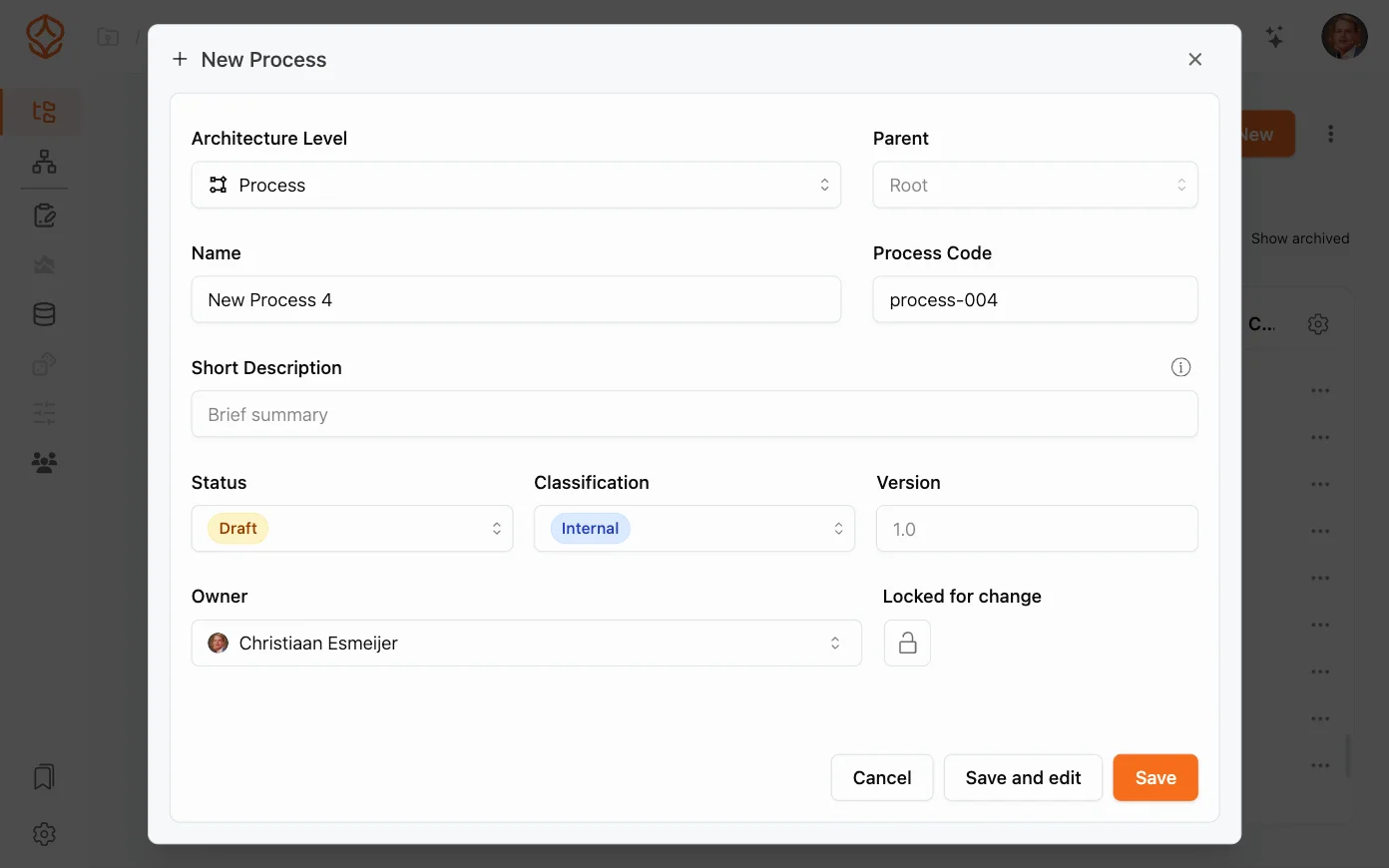
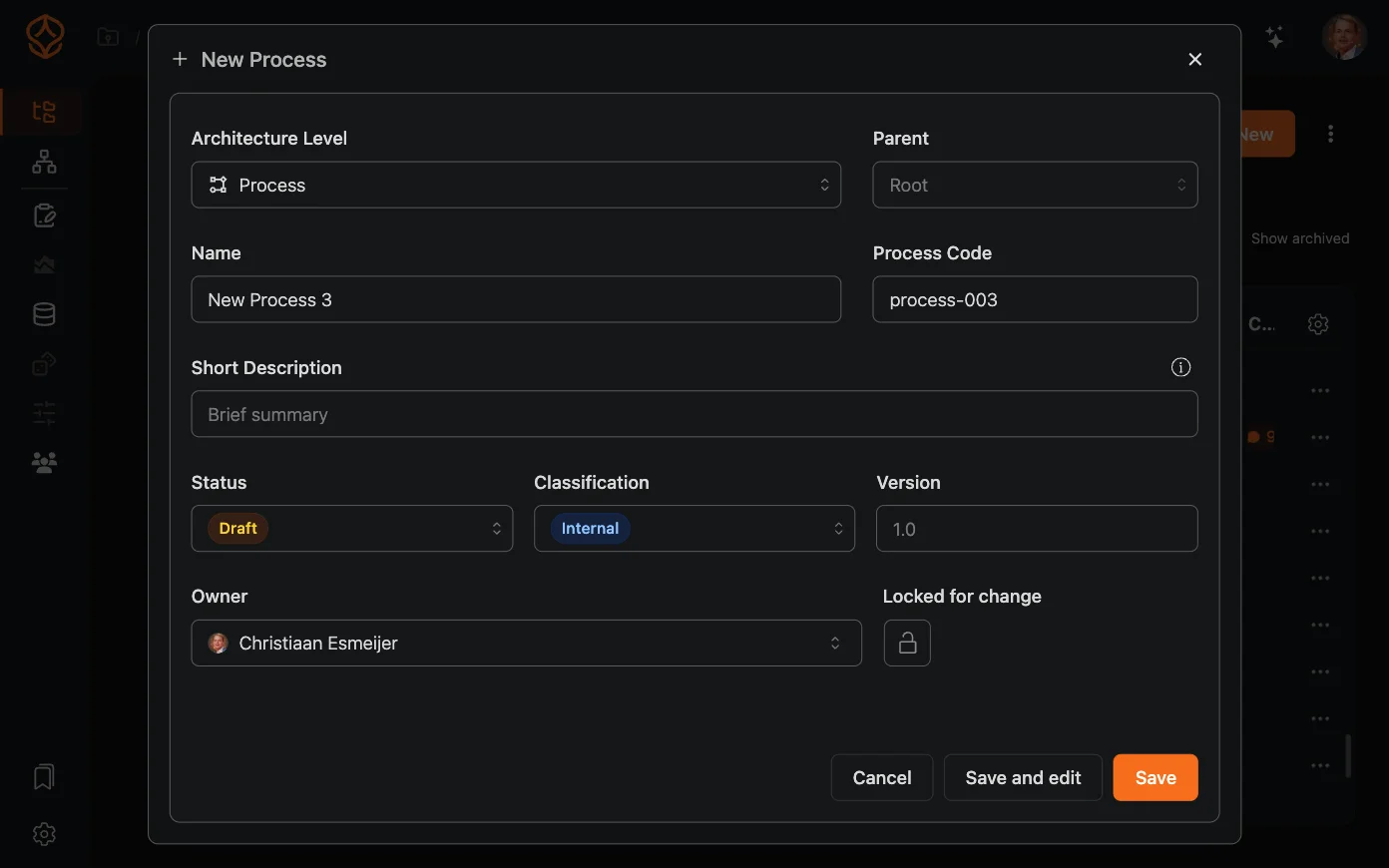
Start in the Process Catalog and click New in the upper-right corner. ProcessMind opens a dialog where you can enter the process’s basic information:
Click Save to create the process and return to the catalog. This creates a process placeholder, so you can continue adding more processes before modeling them. Click Save and edit to create the process and open it immediately in the start wizard. The wizard lets you choose how to continue, including manual modeling, importing a model, generating a model, or starting from process-mining data. See Create, Upload, or Generate Your Process Model for details on each path.
After choosing a modeling path, you enter the modeling canvas and can build your process using BPMN 2.0 elements. If you do not have a workspace yet, start a free trial to follow along.
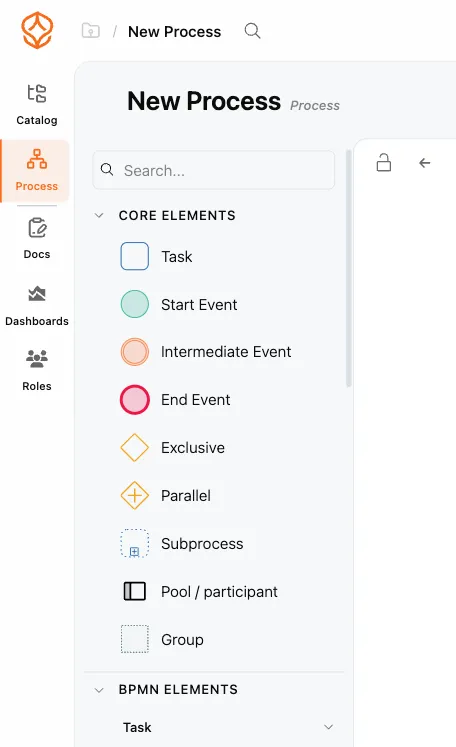
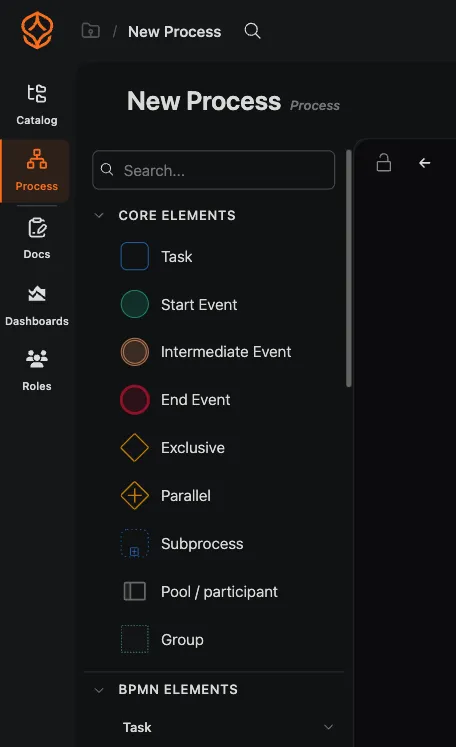
The modeling options are located on the left-hand side of the screen.
You can choose from several palettes:
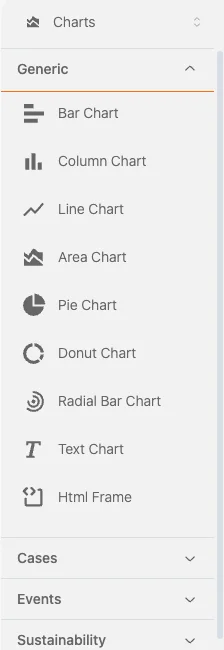
The sidebar can be collapsed to a compact icon-only mode, and you can use the search box to quickly find elements by name.
You can only convert an element if the new type is compatible with the incoming and outgoing connections; incompatible options are automatically hidden.
When you select an element, the right-hand panel displays configuration options.
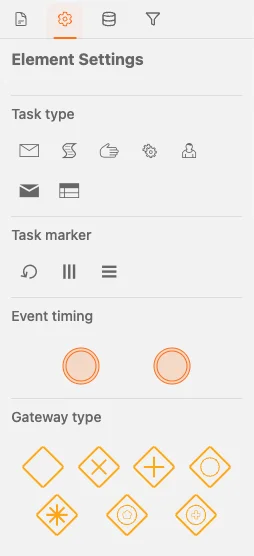
You can:
To delete an element, select it and press Delete or use the trash icon in the context menu.
All available actions for a selected element are shown in its context menu.
Get instant access with no credit card and no waiting. Turn the way your organization works into clear, connected process designs.
Build your process architecture, define ownership and controls, and align roles and responsibilities across every level.
Start your free trial and create one reliable foundation for governing, managing, and continuously improving your processes.
We use cookies to improve your experience, personalize content, and analyze traffic. Anonymous page measurement happens without them; analytics consent adds an identifier that links your visits. By clicking "Accept All," you consent to our use of cookies.