Integrating ProcessMind with Six Sigma
A practical introduction to Six Sigma and Lean Six Sigma (DMAIC)
Lean Six Sigma combines Lean manufacturing and Lean enterprise principles with Six Sigma. It removes waste, including non-value-added processes and activities, and reduces variation to improve quality and predictability. By addressing inefficiencies and defects, it improves process speed, quality, and cost while bringing your processes closer to consistent, reliable performance.
Lean Principles focus on value stream mapping and waste reduction, so every process step delivers customer value.
Six Sigma uses a data-driven approach. Its DMAIC methodology, Define, Measure, Analyze, Improve, and Control, helps you improve processes systematically by removing defects and reducing variation.
Lean Six Sigma provides a broad lean process improvement approach. It combines Six Sigma quality improvement with Lean speed and efficiency, making it useful for organizational improvement and customer satisfaction.
How to apply it?
This guide combines Six Sigma with process mining, design, and simulation to improve processes. These methods support every stage of the DMAIC process and create a reliable, data-driven, iterative DMAIC Lean Six Sigma improvement cycle.
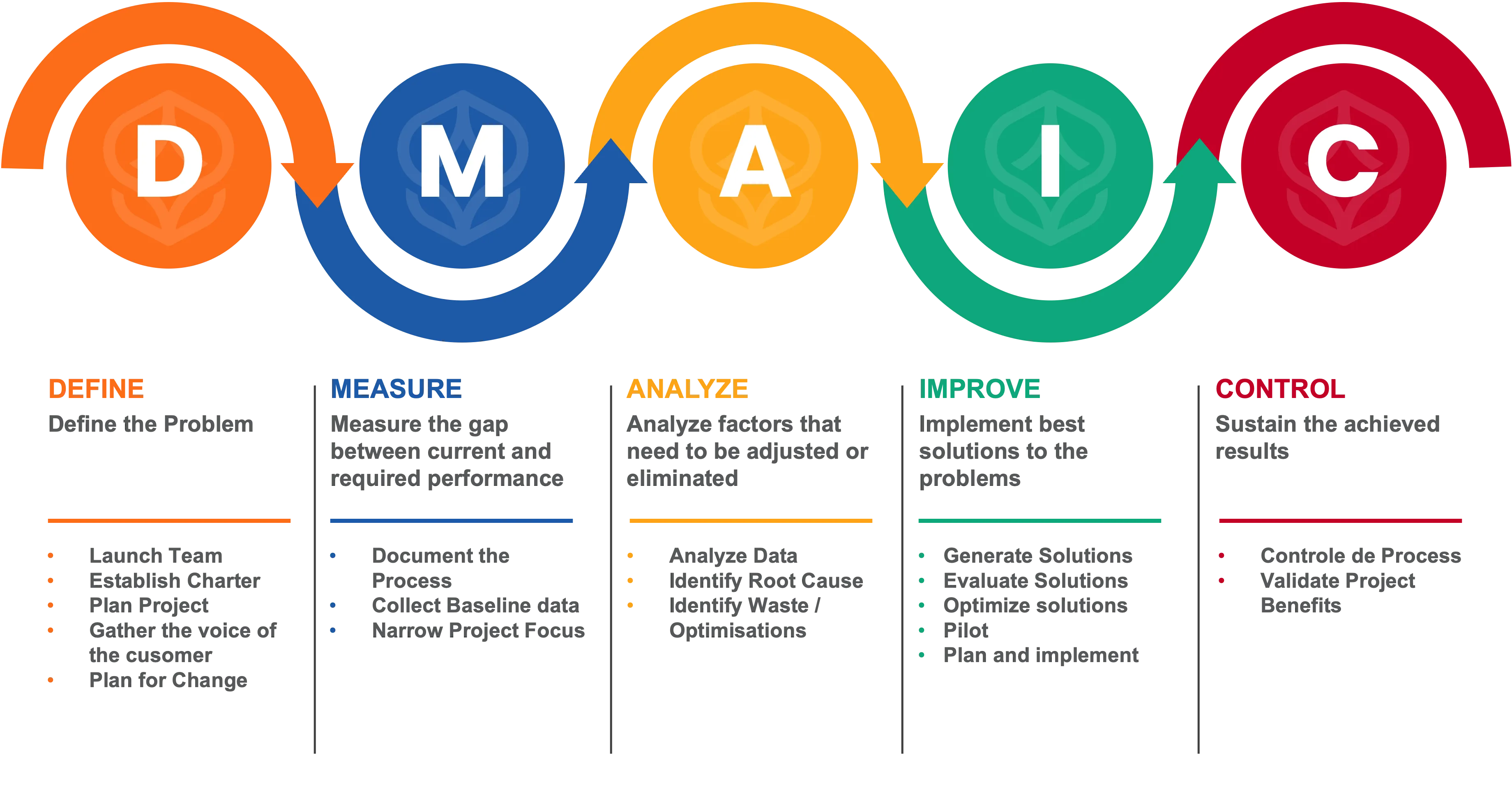
1. Define Phase
- Objective: Define the high-level scope, objectives, and key metrics for your process improvement project.
- Process Mining: Use exploratory process mining tools to understand your current processes. Analyze historical data to identify performance metrics, variations, and workflow issues.
- Process Design: Start developing potential redesigns or modifications to address inefficiencies. Use process mapping and BPMN diagrams to visualize possible changes.
- Capability: Visualize your current processes clearly so you can set precise improvement objectives. Use detailed maps and diagrams to create a complete view of the workflow.
2. Measure Phase
- Objective: Collect data to establish a baseline for process performance.
- Process Mining: Use detailed process mining techniques to measure current process performance accurately. Focus on metrics that align with your project objectives. Extract and analyze data from multiple sources to understand the flow and efficiency of your current processes.
- Process Design: Refine your process redesigns using insights from the collected data. Focus on measurable aspects so you can assess each change quantitatively. Use BPMN diagrams to map the redesigns and visualize potential improvements.
- Process Simulation: Run basic simulations to predict how minor process adjustments could affect key metrics. This shows the potential impact of changes before you implement them.
- Capability: Establish an accurate measurement and baseline for the current process. This gives you a reliable foundation for detailed analysis and the next phases.
3. Analyze Phase
- Objective: Analyze process performance data in depth to identify the root causes of inefficiencies and variation.
- Process Mining: Use advanced process mining techniques to find the root causes of deviations, bottlenecks, and inefficiencies in the workflow. Analyze process data in detail to determine where issues occur and why.
- Process Design & Process Simulation: Develop detailed models of potential solutions or redesigns. Use process simulation to test how these changes could affect performance across multiple scenarios and constraints. This lets you assess the impact of proposed changes before implementation.
- Capability: Identify root causes and test hypothetical solutions through simulation. This ensures that your proposed changes rely on solid data and receive a thorough impact assessment.
4. Improve Phase
- Objective: Implement the selected process improvements and validate their effectiveness.
- Process Mining: Monitor process changes in a live environment and collect immediate feedback on their impact. Real-time data shows how the changes affect the workflow and helps you identify unexpected issues.
- Process Design & Process Simulation: Finalize the process redesign using the analysis and simulation results. Use simulations to refine and optimize your implementation strategy so the changes deliver the intended improvements. Create detailed BPMN diagrams to map the new process flow, then use process modeling tools to test different scenarios.
- Capability: Monitor improvements continuously and adjust your strategy based on immediate data feedback. This keeps the process efficient and helps you make necessary changes quickly.
5. Control Phase
- Objective: Sustain improvements over time and keep the process within the desired performance thresholds.
- Process Mining: Monitor the process continuously after implementation to confirm that improvements hold and identify regressions quickly. Use advanced process mining tools to track performance metrics and detect deviations from expected results.
- Process Simulation: Run regular “what-if” simulations to identify future improvements proactively and respond to changing business needs or external factors. This helps you maintain process efficiency and effectiveness over time.
- Capability: Monitor performance over the long term and improve it through iterative simulations. This phase sustains the gains from the improvement phase and helps the process adapt to new challenges and opportunities.
Conclusion
Combining Six Sigma with process mining, process design, and process simulation gives you a comprehensive approach to business process management. Each method contributes distinct strengths, helping you achieve and sustain strong performance. This structured, data-driven approach can improve processes, increase efficiency, reduce costs, and strengthen your competitive position.
Our SaaS process insights product combines process mining, process design, and process simulation to support business process management. You get tools for Process Modeling, BPM, workflow operations, and process improvement. With our software, you can monitor, analyze, and optimize workflows to improve efficiency and productivity.
Where to Find More Information:
- ASQ (American Society for Quality): Find extensive resources, including training and certification information on Lean Six Sigma principles. (asq.org).
- Lean Six Sigma Institute: Find training, certification, and resources focused on Lean Six Sigma methodologies. (leansixsigmainstitute.org).
- Certifications: Consider pursuing a Lean Six Sigma certification, from Green Belt to Black Belt, to build hands-on expertise in lean continuous improvement.
- Books: Consider foundational texts such as “The Lean Six Sigma Pocket Toolbook” by Michael L. George et al. and “Lean Six Sigma For Dummies” by John Morgan and Martin Brenig-Jones.
- Online Courses: Platforms such as Coursera, Udemy, and LinkedIn Learning offer Lean Six Sigma courses for different experience levels.
These resources can give you a solid foundation in Lean Six Sigma principles, tools, and applications. Whether you are new to the concept or want to deepen your expertise, they can help you understand and implement effective business process management strategies.
With our SaaS process insights product, you can map, monitor, and optimize your workflows. This can improve operational efficiency, support better decisions, and strengthen your competitive position.