Improve Your Hire to Retire - Employee Lifecycle

Optimize Hire to Retire in UKG Pro for Enhanced Employee Experience
Our platform helps you identify hidden delays and bottlenecks across the entire employee journey. Pinpoint areas where processes deviate from the optimal path, ensuring compliance and a smoother experience for your team. Uncover opportunities to streamline operations and enhance overall HR efficiency.
Download our pre-configured data template and address common challenges to reach your efficiency goals. Follow our six-step improvement plan and consult the Data Template Guide to transform your operations.
Show detailed description
Why Optimize Your Hire to Retire Employee Lifecycle in UKG Pro
The Hire to Retire, H2R, Employee Lifecycle represents the entire journey of an employee within your organization, from their initial application to their eventual departure. Managing this complex lifecycle effectively is crucial for business success, impacting everything from talent acquisition and employee satisfaction to operational costs and compliance. While UKG Pro offers a robust platform for managing HR data and processes, the underlying end-to-end process flow can still harbor inefficiencies, hidden bottlenecks, and compliance risks that aren't immediately visible through standard reporting.
Inefficiencies in the H2R process can lead to significant business challenges. Delays in the hiring process can mean lost talent and prolonged vacancies, impacting productivity. A disjointed onboarding experience can result in early employee attrition, increasing recruitment costs. Ineffective performance management cycles can hinder professional development and lead to disengaged employees. Finally, non-compliant or inefficient offboarding processes can create legal risks and damage your employer brand. Understanding and optimizing the Hire to Retire - Employee Lifecycle is essential for fostering a positive employee experience, reducing operational overhead, and ensuring your HR functions contribute strategically to business goals.
How Process Mining Uncovers H2R Bottlenecks
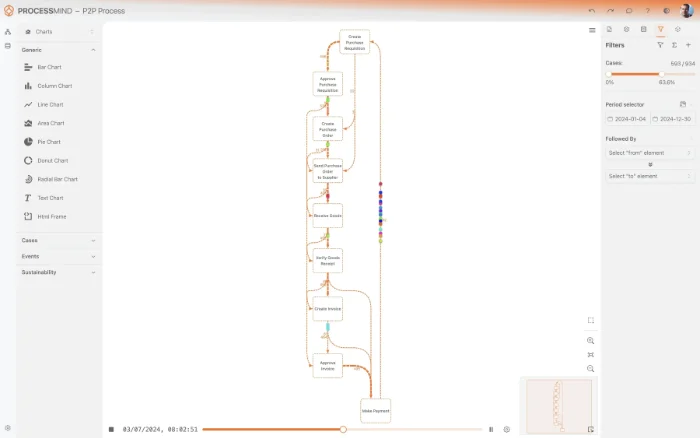
Process mining provides a powerful, data-driven approach to analyzing your Hire to Retire - Employee Lifecycle within UKG Pro. Instead of relying on assumptions or anecdotal evidence, process mining uses event log data directly from your UKG Pro system to reconstruct the actual sequence of activities for every employee journey. By leveraging the Employee ID as the case identifier, we can trace individual employees through every step, from "Job Requisition Created" to "Offboarding Tasks Completed." This allows you to visually map the complete process flow, identify all existing process variants, and pinpoint exactly where delays and deviations occur.
This perspective enables you to answer critical questions: What is the true Hire to Retire cycle time? Where are the longest wait times between activities, such as "Offer Extended" and "Offer Accepted," or between "Employee Onboarded" and "Payroll Setup Completed"? Which departments or managers experience consistently longer recruitment or promotion cycles? Process mining reveals the specific root causes of these inefficiencies, allowing you to move beyond superficial symptoms and implement targeted process optimization strategies. It helps you understand how employees actually move through their lifecycle, rather than just how they are supposed to.
Key Improvement Areas Identified Through H2R Process Mining
Applying process mining to your UKG Pro data for the Hire to Retire - Employee Lifecycle helps you focus on several critical areas for improvement:
- Recruitment Efficiency: Reduce the time from job requisition creation to offer acceptance by identifying and eliminating delays in sourcing, interviewing, and background checks. This directly addresses how to reduce Hire to Retire - Employee Lifecycle cycle time in the initial stages.
- Onboarding Effectiveness: Streamline the onboarding process, ensuring all necessary tasks, like payroll setup and training assignments, are completed promptly, leading to faster time-to-productivity for new hires.
- Performance Management & Development: Optimize the cadence and completion of performance reviews, ensuring timely feedback and development opportunities. Identify if employees are missing critical training assignments.
- Internal Mobility & Career Progression: Analyze the process for promotions and role changes, identifying any friction points that might hinder employee growth and retention.
- Offboarding Compliance & Smoothness: Ensure all termination and offboarding tasks are completed efficiently and compliantly, minimizing risks and protecting your organization's reputation.
By seeing the real process flow, you can identify rework loops, unnecessary steps, or bottlenecks related to specific users or departments within your UKG Pro environment.
Expected Outcomes of Optimizing Your H2R Process
By undertaking process optimization of your Hire to Retire - Employee Lifecycle using UKG Pro data, you can anticipate a range of measurable benefits:
- Reduced Overall Cycle Times: Significantly shorten the end-to-end time of the H2R process, from initial hire to final offboarding, and improve specific stage-gate cycle times.
- Lower HR Operational Costs: Streamline processes, reduce manual effort, and reallocate resources more effectively, leading to substantial cost savings.
- Enhanced Employee Experience: A smoother, more efficient lifecycle contributes to higher employee satisfaction, engagement, and retention rates.
- Improved Compliance: Ensure all HR activities adhere strictly to regulatory requirements and internal policies, reducing legal and audit risks.
- Increased Productivity: Faster hiring and onboarding mean new employees contribute sooner, while optimized internal processes keep existing employees focused and productive.
- Data-Driven Decision Making: Empower HR leaders with concrete, factual insights to make informed decisions about process redesign and technology utilization within UKG Pro.
Getting Started with Hire to Retire Process Optimization
Embarking on this journey to optimize your Hire to Retire - Employee Lifecycle with process mining is a strategic investment in your HR operations and your workforce. By leveraging your existing UKG Pro data, you can quickly gain unprecedented transparency into your processes. This approach provides the concrete evidence needed to drive meaningful change, improve efficiency, and create a better experience for every employee. Start leveraging your data to uncover how to improve Hire to Retire - Employee Lifecycle, reduce bottlenecks, and drive measurable impact today. This detailed analysis will equip you with the knowledge to refine your processes and maximize the value of your UKG Pro investment.
The 6-Step Improvement Path for Hire to Retire - Employee Lifecycle
Download the Template
What to do
Access and download the pre-configured Excel template for the Hire to Retire process, designed to capture relevant data from Ukg Pro.
Why it matters
This ensures your data is structured correctly from the start, enabling accurate and efficient analysis in ProcessMind.
Expected outcome
A standardized data template ready to be populated with your Ukg Pro employee lifecycle data.
Export Your Data
What to do
Extract 3-6 months of historical employee lifecycle data from Ukg Pro, including activities and attributes, and populate the downloaded template.
Why it matters
Using recent, comprehensive data provides a realistic view of your current processes, highlighting actual inefficiencies and compliance gaps.
Expected outcome
A complete and accurate dataset within the template, reflecting your organization's Hire to Retire process history.
Upload Your Dataset
What to do
Securely upload your populated Excel template to ProcessMind. Our system automatically processes and prepares your data for analysis.
Why it matters
This step initiates the automated analysis, transforming raw Ukg Pro data into actionable process insights without manual effort.
Expected outcome
Your Hire to Retire data ingested and ready for exploration within the ProcessMind platform.
Analyze Your Process
What to do
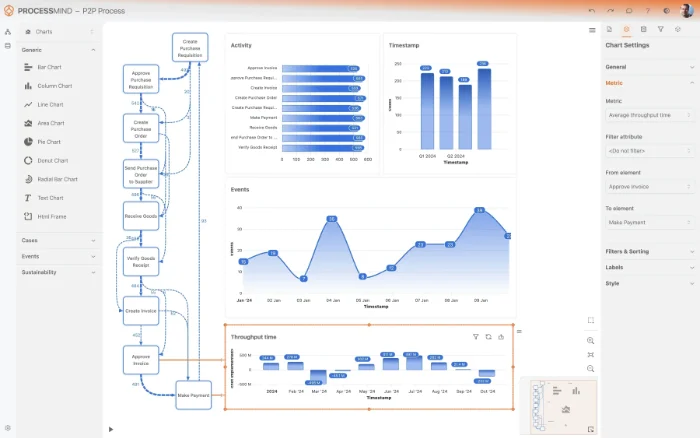
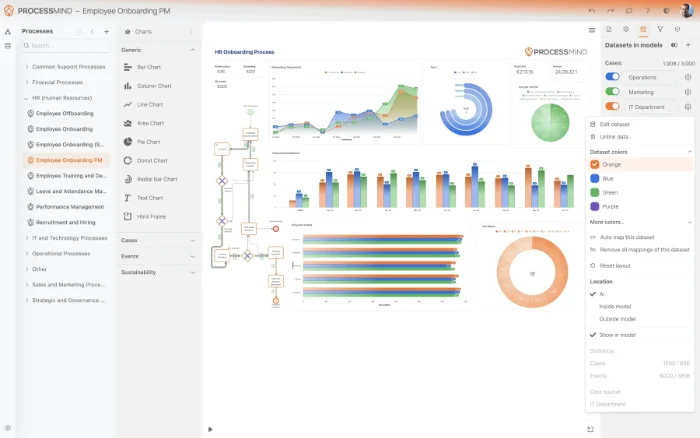
Explore the auto-generated dashboards and interactive process maps. Leverage AI-driven insights to identify bottlenecks, deviations, and compliance risks.
Why it matters
Understanding the true 'as-is' process flow and pinpointing specific areas of friction is crucial for targeted, impactful improvements in HR operations.
Expected outcome
A clear understanding of your Hire to Retire process, including key performance indicators, inefficiencies, and root causes.
Implement Improvements
What to do
Prioritize the identified opportunities from ProcessMind's recommendations. Develop and execute concrete action plans to optimize your Hire to Retire process in Ukg Pro.
Why it matters
Taking action on data-driven insights directly leads to improved employee experience, reduced operational costs, and enhanced HR efficiency.
Expected outcome
Strategic changes implemented within your Ukg Pro processes, addressing identified bottlenecks and improving overall flow.
Monitor Your Process
What to do
Periodically re-upload fresh data from Ukg Pro to ProcessMind to track the impact of your changes and measure KPI improvements over time.
Why it matters
Continuous monitoring ensures sustained process health, helps adapt to new challenges, and verifies the long-term effectiveness of your optimizations.
Expected outcome
Ongoing visibility into your Hire to Retire process performance, confirming improvements and identifying new areas for refinement.
WHAT YOU WILL GET
Uncover UKG Pro Hire to Retire Process Secrets
- Visualize end-to-end UKG Pro H2R flow
- Pinpoint hidden delays in recruitment, onboarding
- Identify compliance risks and process variations
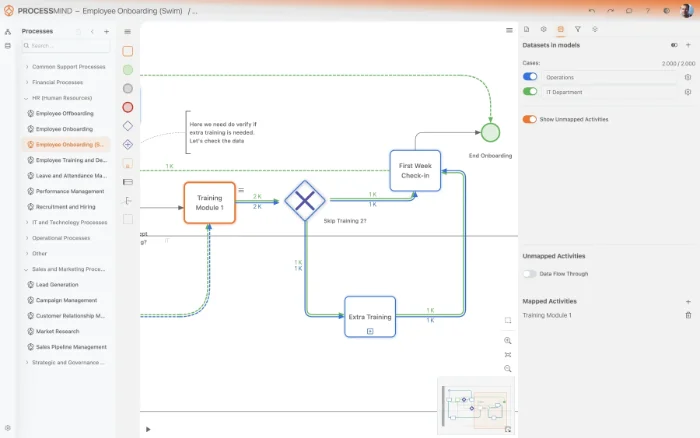
- Optimize employee experience from hire to retire
TYPICAL OUTCOMES
Transforming the Employee Lifecycle
These outcomes showcase the measurable improvements organizations typically achieve by applying process mining to their Hire to Retire, Employee Lifecycle, processes. Through data-driven analysis of employee journeys within UKG Pro, businesses gain critical insights to streamline operations and enhance the overall employee experience.
Average reduction in candidate-to-hire time
Organizations typically reduce the time it takes to hire new employees, from job requisition to offer acceptance. This helps fill critical roles quicker and reduces operational overhead.
Improvement in performance review completion rates
Process mining identifies bottlenecks and non-compliant paths in performance review processes, leading to a significant increase in on-time completions. This ensures regular feedback and development for employees.
Decrease in manual payroll adjustments
By uncovering root causes of payroll discrepancies, organizations can significantly cut down on manual adjustments post-payroll setup. This saves time, reduces costs, and improves payroll accuracy.
Average reduction in promotion processing time
Streamline the internal promotion process, from initiation to approval, by identifying and eliminating delays. This improves employee morale and allows talent to grow into new roles more efficiently.
Achieve near 100% background check adherence
Process mining helps identify gaps in background check processes, leading to an increase in compliant hirings and mitigating regulatory risks. This ensures all new hires meet required standards.
Actual results may vary depending on the specific complexities of your Hire to Retire process, data quality, and organizational context. The improvements presented here illustrate common benefits observed across various implementations.
Recommended Data
FAQs
Frequently asked questions
Process mining identifies actual process paths, revealing bottlenecks in areas like hiring, onboarding, and promotions. It helps you pinpoint delays, reduce manual adjustments in payroll, and ensure compliance with background checks. This leads to accelerated hiring cycles and more standardized offboarding processes. Ultimately, it drives efficiency and better employee experiences.
You'll primarily need event log data from UKG Pro. This includes the Employee ID as the case identifier, distinct activity names, and corresponding timestamps for each step in the employee lifecycle. Key data points like application received, interview scheduled, offer accepted, or offboarding initiated are crucial.
Initial insights can often be generated within a few weeks after data extraction and preparation are complete. The speed largely depends on data availability and the complexity of your current data infrastructure. Deeper analysis and actionable recommendations typically follow within a couple of months, leading to tangible improvements.
Yes, process mining is highly effective for compliance management. By visualizing every process path, it can identify instances where critical steps, like background checks, are missed or performed out of sequence. This provides clear, data-driven evidence to address non-compliance and prevent future occurrences.
While UKG Pro typically stores structured data, some level of data preparation and transformation is often required for optimal process mining. This involves standardizing activity names, handling missing values, and ensuring accurate timestamp formats. Our tools and experts can assist with this process to ensure data quality.
Yes, process mining goes beyond problem identification by providing a data-driven foundation for improvement. It highlights inefficiencies and then, through advanced analysis, can simulate potential changes and predict their impact. This supports making informed decisions to optimize processes, like accelerating hiring or streamlining onboarding.
Traditional reporting tells you "what happened", often showing aggregates or snapshots of HR metrics. Process mining, however, focuses on "how it happened", visualizing the actual flow and sequence of events. It uncovers hidden variations and bottlenecks that standard BI dashboards might miss, offering deeper, actionable insights into process execution.
Optimizing manager transitions ensures continuity and reduces disruption during leadership changes, which is vital for team stability. Process mining can identify delays in handovers, incomplete task transfers, or communication gaps that prolong the transition. Streamlining this process can significantly improve employee morale and maintain productivity levels.
Transform Your Hire to Retire - Employee Lifecycle Today
Pinpoint inefficiencies and reduce cycle time by 30% with our solution.
No credit card required, setup in minutes