Improve Your Hire to Retire - Employee Lifecycle

Optimize Employee Lifecycle from Hire to Retire in Adp Workforce
Our solution helps you visualize and analyze every step of your employee journey. It helps pinpoint bottlenecks, identify redundant steps, and uncover deviations from desired workflows. This process identifies inefficiencies that lead to delays and compliance challenges. Begin your journey to a more streamlined and efficient HR process today.
Download our pre-configured data template and address common challenges to reach your efficiency goals. Follow our six-step improvement plan and consult the Data Template Guide to transform your operations.
Show detailed description
Why Optimize Your Employee Lifecycle in Adp Workforce?
The employee lifecycle, from initial hire to eventual retirement or departure, represents a fundamental and complex set of processes within any organization. When managed effectively, it fosters a positive employee experience, ensures compliance, and drives operational efficiency. However, without clear visibility, organizations often face significant challenges, including prolonged recruitment times, inefficient onboarding, inconsistent performance management, and non-compliant offboarding procedures. These inefficiencies can lead to increased operational costs, higher employee turnover, and potential regulatory risks. Within a system like Adp Workforce, where a multitude of activities and data points converge, understanding the true flow of these processes is paramount for strategic HR management and overall business health.
Optimizing your Hire to Retire - Employee Lifecycle isn't just about making things faster, it's about creating a coherent, compliant, and supportive journey for every individual. When processes are opaque, bottlenecks can hide in plain sight, causing delays in critical activities like background checks, payroll setup, or even timely promotions. This not only impacts the employee experience but also strains HR resources, diverting attention from strategic initiatives to manual firefighting. Identifying and resolving these inefficiencies is crucial for retaining top talent, reducing administrative overhead, and ensuring your organization remains agile and competitive.
How Process Mining Illuminates Your Hire to Retire Journey
Process mining offers a powerful, data-driven approach to truly understand how your Hire to Retire - Employee Lifecycle processes operate within Adp Workforce. Instead of relying on assumptions or anecdotal evidence, process mining reconstructs the actual journey of each employee, using event logs from your Adp Workforce system. This means you can visualize every step an employee takes, from "Job Requisition Created" to "Offboarding Tasks Completed," revealing the real-world paths, variations, and deviations from your intended process flow.
By analyzing activities like "Offer Extended," "Background Check Initiated," "Performance Review Conducted," or "Termination Initiated," process mining can pinpoint exact moments of delay, rework, or non-compliance. It helps answer critical questions: Are offers being accepted quickly or are there significant delays? How long does it actually take to onboard a new employee into all necessary systems? Are performance reviews happening on schedule for all departments? This deep visibility allows you to discover hidden bottlenecks in recruitment, assess the effectiveness of your onboarding programs, monitor career progression, and evaluate the efficiency of your offboarding procedures. This comprehensive view is essential for knowing "how to improve Hire to Retire - Employee Lifecycle" effectively.
Pinpointing Key Improvement Areas for Enhanced HR Operations
Applying process mining to your Adp Workforce data will highlight specific areas ripe for optimization across the entire employee lifecycle. You'll gain the insights needed to target improvements such as:
- Streamlining Recruitment and Onboarding: Identify delays in candidate sourcing, interview scheduling, offer approvals, and background checks. Optimize the sequence of onboarding tasks to ensure new hires are productive sooner. Reduce the overall "Hire to Retire - Employee Lifecycle cycle time" at the start.
- Optimizing Performance and Development: Analyze the consistency and timeliness of performance reviews, training assignments, and promotion processes. Uncover patterns that hinder career progression or lead to employee dissatisfaction.
- Ensuring Compliance and Consistency: Detect deviations from standard operating procedures for critical activities like salary adjustments, role changes, or terminations. Ensure that all necessary steps are followed to maintain regulatory compliance and reduce risk.
- Improving Offboarding Efficiency: Understand the actual time taken for exit interviews, asset recovery, and final payroll processing. Identify bottlenecks that cause delays or create administrative burdens during an employee's departure.
By understanding these specific areas, you can implement targeted changes, whether through automation, policy adjustments, or improved training for HR teams and managers.
Realizing Measurable Outcomes and Strategic Benefits
The power of process optimization in your Hire to Retire - Employee Lifecycle, driven by insights from Adp Workforce, translates into tangible business benefits:
- Reduced Cycle Times: Significantly decrease the time from job requisition to hire, and from hire to full productivity. You will see direct improvements in "how to reduce Hire to Retire - Employee Lifecycle cycle time" across all stages.
- Cost Savings: Minimize manual effort, reduce overtime for HR staff, and lower costs associated with prolonged vacancies and high turnover.
- Enhanced Compliance: Ensure adherence to internal policies and external regulations, reducing the risk of fines and legal challenges. You will have a clear audit trail of all actions.
- Improved Employee Experience: Create a smoother, more supportive journey for employees, leading to higher satisfaction, engagement, and retention rates.
- Data-Driven Decision Making: Equip HR leaders with concrete data to make informed strategic decisions about resource allocation, policy changes, and technology investments.
These outcomes empower your organization to transform HR from a reactive administrative function into a proactive, strategic partner driving business success.
Beginning Your Hire to Retire Process Optimization Journey
Understanding and improving your Hire to Retire - Employee Lifecycle within Adp Workforce is a continuous journey that starts with gaining true process visibility. Process mining offers an objective lens to see your operations as they truly are, not as you imagine them to be. By leveraging this powerful analytical tool, you can move beyond guesswork and implement data-backed improvements that deliver real, measurable value. Embrace the opportunity to optimize your employee journey, enhance operational efficiency, and build a more robust, compliant, and employee-centric HR function.
The 6-Step Path to Optimize Your Hire to Retire Process
Download the Template
What to do
Download the pre-configured Excel data template designed specifically for your Hire to Retire process from Adp Workforce data. This ensures your data is correctly structured for analysis.
Why it matters
Having the right data structure from the start is crucial for accurate process mapping and identifying improvement areas without manual data cleaning.
Expected outcome
A ready-to-use Excel template tailored for Hire to Retire, ensuring data consistency.
Export Your Data
What to do
Extract 3-6 months of historical employee lifecycle data from your Adp Workforce system. Populate the downloaded template with this real-world operational data.
Why it matters
Analyzing historical data provides a realistic view of past performance, revealing recurring patterns, inefficiencies, and compliance gaps in the employee journey.
Expected outcome
A populated data template reflecting several months of your Hire to Retire process activities.
Upload Your Dataset
What to do
Securely upload your filled Hire to Retire data template to ProcessMind. The platform will automatically initiate the analysis of your employee lifecycle process.
Why it matters
Quick and secure data ingestion ensures that you can rapidly move from data collection to insight generation, accelerating your improvement journey.
Expected outcome
Your Hire to Retire data processed and ready for in-depth process mining analysis.
Analyze Your Process
What to do
Explore the auto-generated dashboards, process maps, and performance insights for your Hire to Retire journey. Leverage AI-driven recommendations to pinpoint bottlenecks.
Why it matters
Visualizing the actual employee journey uncovers hidden delays, compliance risks, and inefficient handoffs, providing data-backed evidence for change.
Expected outcome
Clear understanding of process variations, bottlenecks, and areas for efficiency gains.
Implement Improvements
What to do
Prioritize and implement the identified opportunities to streamline hiring, onboarding, and employee development within Adp Workforce based on the insights gained.
Why it matters
Translating insights into action leads to tangible improvements in employee experience, reduces HR operational costs, and ensures better compliance.
Expected outcome
Strategic changes implemented in your Hire to Retire process within Adp Workforce.
Monitor Your Process
What to do
Periodically re-upload fresh data from Adp Workforce to track the impact of your implemented changes. Continuously measure key performance indicators over time.
Why it matters
Ongoing monitoring ensures that improvements are sustained and allows for continuous optimization, adapting to evolving business needs and employee expectations.
Expected outcome
Sustained process improvements, measurable KPI gains, and a culture of continuous optimization.
WHAT YOU WILL GET
Uncover Hidden Insights in Your Employee Lifecycle
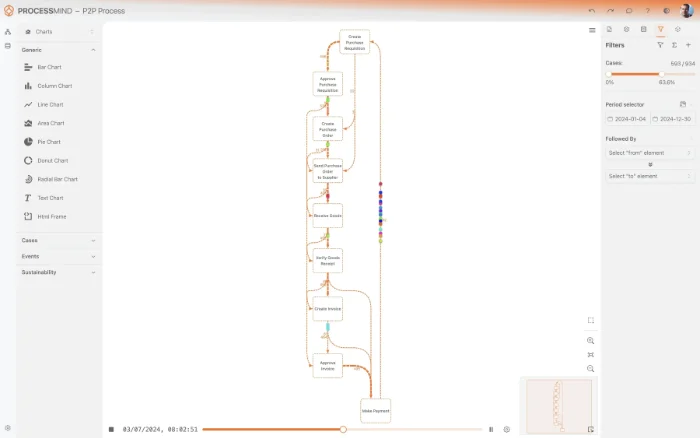
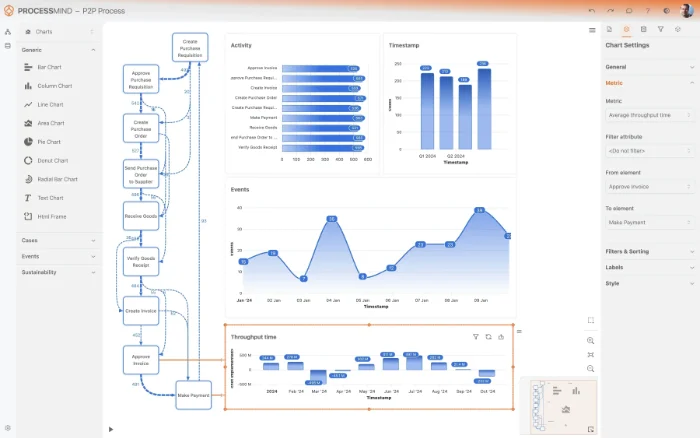
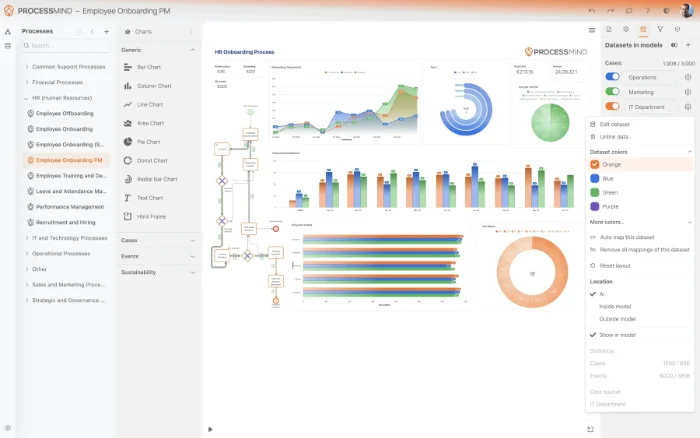
- Visualize your complete employee lifecycle.
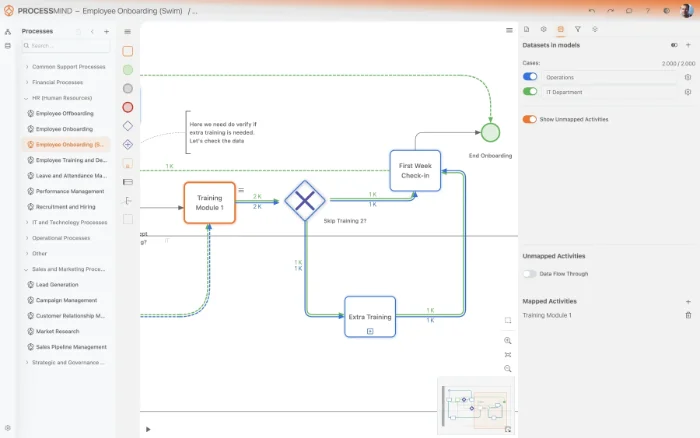
- Pinpoint delays in onboarding and transitions.
- Identify compliance risks in ADP Workforce.
- Optimize resource allocation across HR tasks.
TYPICAL OUTCOMES
Optimized Employee Lifecycle Outcomes
These outcomes illustrate the tangible benefits organizations realize by applying process mining to their Hire to Retire cycle, identifying bottlenecks and inefficiencies in employee journeys within systems like ADP Workforce.
Time-to-Fill reduction
Accelerating the hiring process means critical roles are filled more quickly, reducing productivity gaps and associated recruitment costs.
Reduced cycle time variance
Creating a consistent and efficient onboarding experience improves new hire satisfaction and accelerates their time to full productivity.
Timely performance reviews
Ensuring performance reviews are completed on time supports employee development, improves feedback cycles, and aligns with HR compliance standards.
Reduced manual exceptions
Minimizing manual interventions and exceptions in HR processes leads to significant cost savings and allows HR teams to focus on strategic initiatives.
Improved employee retention
Understanding and addressing the root causes of early employee departures can significantly reduce rehiring costs and improve overall workforce stability.
While results can vary based on process complexity and data quality, these figures represent typical improvements observed across various implementations.
Recommended Data
FAQs
Frequently asked questions
Process mining visualizes the actual flow of your employee lifecycle, from hiring to offboarding, using event logs from ADP Workforce. It helps identify bottlenecks in hiring, inconsistencies in onboarding, and delays in performance reviews. This detailed insight allows you to pinpoint areas for efficiency gains and compliance improvements.
We primarily need event logs that capture each step and its associated timestamp for every employee, identified by a unique employee ID. This includes data points like application received, offer extended, hire date, onboarding task completion, promotion, performance review, and termination. The more detailed the event log, the richer the process insights.
Data extraction typically involves using ADP Workforce's reporting tools or APIs to export event logs. Depending on your ADP setup and permissions, this can be done by generating custom reports or utilizing data connectors. We provide guidance on identifying the right data fields and formats for a successful extraction.
You can expect to uncover opportunities to accelerate new hire time-to-fill, standardize onboarding, and ensure timely performance reviews. Process mining also helps in streamlining internal role changes, strengthening offboarding compliance, and identifying key drivers of employee turnover. Ultimately, it leads to reduced manual HR intervention and improved HR service delivery.
No, process mining goes beyond traditional reporting. While reporting shows you 'what' happened, process mining reveals 'how' and 'why' processes actually execute, uncovering deviations, bottlenecks, and rework that static reports often miss. It provides a visual, data-driven X-ray of your entire Hire to Retire process flow.
The initial data extraction and preparation phase usually takes a few weeks, depending on data availability and complexity. The analysis itself can then be completed within another 2-4 weeks, leading to actionable insights and recommendations. Overall, you can expect to move from data to insights in approximately 4-8 weeks.
Your team will primarily need expertise in understanding your ADP Workforce data structures and access permissions for data extraction. While process mining tools are user-friendly, having someone familiar with HR processes and data governance will be beneficial for interpreting the findings and implementing changes.
Yes, by analyzing the historical paths of employees who left the organization, process mining can highlight common sequences of events or specific process stages that correlate with turnover. This might include inconsistent training assignments, delayed promotions, or specific role changes, providing data-backed insights into turnover drivers.
Optimize Your Hire to Retire Employee Lifecycle Today
Reduce cycle time by 30% and eliminate HR bottlenecks fast.
No credit card required. Free 14-day trial.