Improve Your Incident Management

Optimize Incident Management in Bmc Helix for Faster Resolution
Our platform helps you uncover bottlenecks and deviations that delay resolution and impact service quality. Easily identify where processes are slowing down, leading to extended wait times and lower user satisfaction. Gain insights into rework loops and unnecessary steps that consume valuable resources, allowing you to streamline operations and enhance efficiency. Transform your approach to achieve faster, more consistent outcomes.
Download our pre-configured data template and address common challenges to reach your efficiency goals. Follow our six-step improvement plan and consult the Data Template Guide to transform your operations.
Show detailed description
Why Optimize Incident Management in Bmc Helix?
Incident Management is the backbone of stable IT operations, directly impacting user productivity and overall business continuity. In complex environments, particularly within robust systems like Bmc Helix, inefficiencies in this critical process can cascade into significant problems. Delayed incident resolution leads to increased downtime for end-users, affecting their ability to perform daily tasks and ultimately reducing customer satisfaction. Beyond the immediate impact, inefficient incident handling in Bmc Helix can incur substantial operational costs due to prolonged investigative efforts, unnecessary escalations, and repeated reworks. Without clear visibility into the actual flow, organizations struggle to meet stringent service level agreements, risking penalties or reputational damage. Optimizing Incident Management is not merely about fixing technical issues faster, it is about streamlining the entire support ecosystem, ensuring that every reported incident, identified by its unique Incident ID, moves swiftly and correctly towards resolution.
Unlocking Deeper Insights with Process Mining for Bmc Helix Incidents
Process mining offers a transformative approach to understanding and improving your Incident Management process within Bmc Helix. Unlike traditional reporting, which shows aggregated metrics, process mining reconstructs the actual end-to-end journey of every incident based on event logs. This granular visibility reveals the true process flow, exposing deviations from standard operating procedures, identifying where incidents get stuck, and highlighting instances of rework or unnecessary handoffs. By tracing each Incident ID from its initial report to final closure, you can precisely identify bottlenecks in the resolution cycle time. For example, you might discover that incidents frequently bounce between two specific support groups, or that a particular approval step consistently adds days to the resolution timeline. This data-driven perspective empowers you to move beyond assumptions, pinpointing the exact points of friction and inefficiency that are hindering your Incident Management performance in Bmc Helix.
Key Areas for Improvement in Incident Management
Applying process mining to your Bmc Helix Incident Management data uncovers specific opportunities for process optimization:
- Bottleneck Identification: Pinpoint precisely where incidents spend the most time, whether it is during diagnosis, investigation, or waiting for user confirmation. Understanding these delays is crucial for reducing overall incident cycle time.
- Rework and Handoff Analysis: Identify frequent reassignments or instances where incidents are passed back and forth between teams. These reworks often indicate a lack of clear ownership, insufficient initial diagnosis, or inadequate knowledge sharing.
- SLA Adherence Gaps: Discover which specific process steps or team handoffs are most often associated with Service Level Agreement breaches. This allows you to target interventions where they will have the most impact on compliance.
- Deviation from Standard Paths: Visualize how often incidents deviate from the intended, most efficient path. Understanding these common deviations helps in refining standard operating procedures and training.
- Resource Allocation Insights: Gain clarity on which teams or agents are handling specific types of incidents and where resources might be over- or under-utilized, informing better resource planning.
Tangible Outcomes of Optimized Incident Management
By leveraging process mining to optimize your Incident Management process in Bmc Helix, you can expect to achieve several measurable benefits. The most immediate outcome is faster incident resolution, directly leading to reduced downtime for users and improved operational efficiency. This enhancement in cycle time translates into significant cost savings by minimizing the time and resources spent on each incident. Furthermore, streamlining the process helps in improving SLA compliance, ensuring that your organization meets its service commitments and avoids potential penalties. Ultimately, a more efficient and effective Incident Management process leads to a marked increase in user satisfaction, as issues are resolved more promptly and predictably. You will gain a clear understanding of
The 6-Step Improvement Path for Incident Management
Download the Template
What to do
Download the pre-configured Excel template specifically designed for Incident Management. This template guides you in structuring your data correctly for optimal analysis.
Why it matters
A structured template ensures your data aligns with process mining requirements, saving time and preventing errors in later analytical stages.
Expected outcome
A ready-to-use template that ensures your BMC Helix Incident Management data is prepared correctly.
Export Your Data
What to do
Export 3-6 months of historical Incident Management data directly from BMC Helix. Carefully populate the downloaded template with your actual process information.
Why it matters
Using recent, real-world data provides a truthful representation of your process, enabling accurate identification of improvement opportunities.
Expected outcome
A comprehensive dataset of your Incident Management process, populated into the standardized template.
Upload Your Dataset
What to do
Upload your completed data template to ProcessMind. Our secure platform automatically initiates the analysis once your dataset is received.
Why it matters
Uploading your data triggers an automated, secure analysis, quickly transforming raw data into actionable insights without manual effort.
Expected outcome
Your Incident Management data securely uploaded and undergoing initial processing within ProcessMind.
Analyze Your Process
What to do
Explore the auto-generated dashboards and insights tailored for Incident Management. Utilize AI-driven recommendations to pinpoint process bottlenecks.
Why it matters
Gain clarity on process variations, identify root causes of delays, and uncover hidden bottlenecks, leading to faster incident resolution.
Expected outcome
A clear understanding of your Incident Management process performance, key inefficiencies, and AI-suggested improvements.
Implement Improvements
What to do
Prioritize and implement the identified opportunities for improvement within your Incident Management process. Focus on the most impactful changes first.
Why it matters
Taking action on insights translates directly into tangible benefits, such as reduced incident resolution times and improved service delivery.
Expected outcome
Strategic changes implemented in your Incident Management process, addressing previously identified inefficiencies.
Monitor Your Process
What to do
Periodically re-upload updated data from BMC Helix to track the progress of your implemented changes. This ensures continuous optimization.
Why it matters
Consistent monitoring validates the effectiveness of your improvements and allows you to measure KPI improvements over time, maintaining efficiency.
Expected outcome
Sustained process optimization, with measurable improvements in Incident Management KPIs and ongoing performance tracking.
YOUR DISCOVERIES
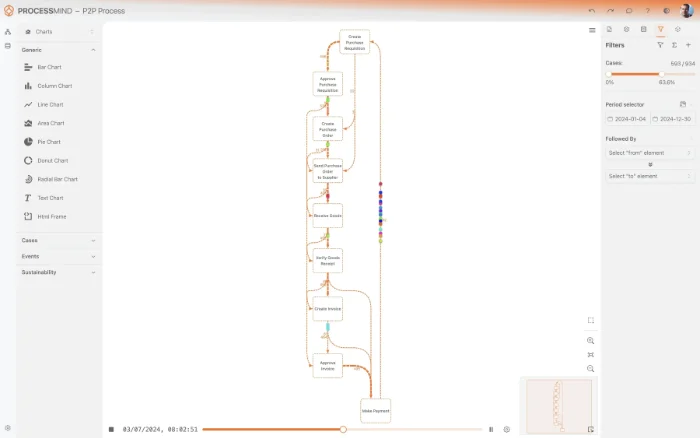
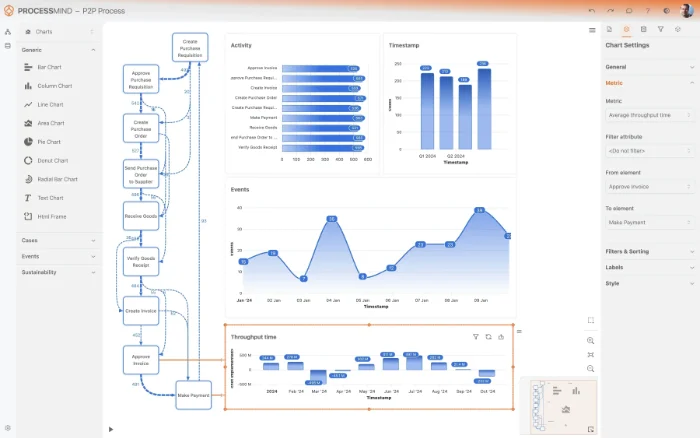
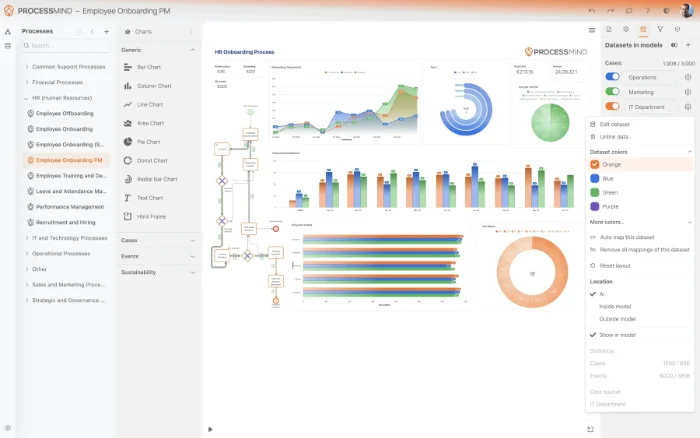
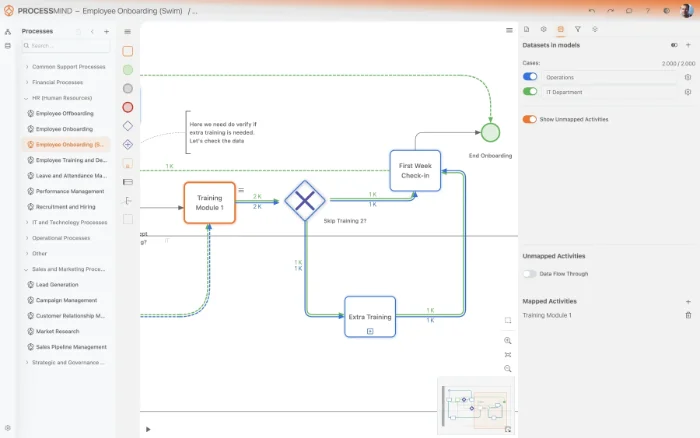
Uncover Incident Management Bottlenecks Visually
- Visualize actual incident paths in BMC Helix
- Pinpoint exact resolution delays and bottlenecks
- Identify non-compliant incident handling
- Track resolution time improvements over time
TYPICAL OUTCOMES
Achieving Excellence in Incident Resolution
These outcomes highlight the significant improvements organizations achieve by leveraging process mining to analyze and optimize their Incident Management workflows. By uncovering hidden inefficiencies, organizations can streamline resolution processes and enhance service delivery.
Average reduction in resolution time
By identifying and eliminating bottlenecks, organizations significantly cut down the time it takes to resolve incidents, leading to quicker service restoration and improved user satisfaction.
Decrease in critical incident non-compliance
Pinpointing the root causes of SLA breaches, especially for critical incidents, allows for targeted interventions that ensure adherence to service agreements and minimize business impact.
Savings from reduced inefficient handoffs
Process mining reveals unnecessary reassignments and rework loops, such as incident re-openings, enabling organizations to streamline workflows and reduce operational costs associated with inefficient incident handling.
Better adherence to standard procedures
By visualizing actual process flows against predefined models, organizations can identify and rectify deviations, ensuring all incidents, especially high-priority ones, are handled according to established guidelines and regulations.
Increased positive feedback and trust
Understanding the user's journey, from initial report to final confirmation, allows for improvements in communication and resolution quality, leading to a significant boost in user confidence and satisfaction.
Results vary based on organizational context, process complexity, and data quality. These figures reflect typical improvements observed across diverse process mining implementations in Incident Management.
Recommended Data
FAQs
Frequently asked questions
Process mining visualizes the actual flow of your incident management, revealing bottlenecks like frequent SLA breaches on critical incidents or prolonged resolution times. It identifies deviations from standard processes, excessive reassignments, and inaccurate categorizations that hinder efficiency.
You will primarily need incident activity logs, including the Incident ID as the case identifier, activity type, timestamp of each event, and the user or system responsible. Additional attributes like incident priority, category, and assignment group are valuable for richer analysis.
Initial discovery and high-level insights can often be generated within a few weeks after data extraction and preparation are complete. Comprehensive analyses, leading to specific optimization opportunities and actionable recommendations, typically emerge within 1 to 3 months, depending on the complexity of your data and project scope.
Beyond the ability to extract historical incident data from BMC Helix, you will need access to a process mining software platform. Expertise in data engineering for extraction and transformation, along with process analysis skills, are essential to effectively interpret the findings and drive improvements.
Traditional reporting provides static, aggregated views of metrics, often based on predefined assumptions about the process. Process mining, conversely, visually reconstructs the complete, actual process flow directly from event logs, uncovering hidden variations, unexpected paths, and true bottlenecks that reports cannot reveal.
You can expect significant improvements such as reduced critical incident SLA breaches, accelerated overall incident resolution times, and a decrease in incident reassignments and re-openings. These lead to enhanced service quality, improved operational efficiency, and better resource utilization.
No, process mining is a non-intrusive analytical approach. It operates by analyzing historical data exports from your BMC Helix system, meaning it does not require any modifications to your live production system, configurations, or ongoing incident management processes.
Yes, process mining is highly effective in identifying the root causes of re-opened incidents by tracing their full lifecycle. It reveals common patterns, specific steps, or teams associated with re-opening, enabling targeted interventions to improve first-time resolution and verification processes.
Optimize BMC Helix Incident Management Today!
Reduce your MTTR by 35%, prevent recurring incidents, and boost satisfaction.
No credit card required, get started in minutes.