
Subscribe to our Newsletter
You can unsubscribe at any time. For more information please review our Privacy Policy.


Combine process modeling with process mining to improve business efficiency and transparency. Process modeling gives you a clear visual view of your workflows. Process mining uses event data to identify bottlenecks, variations, and opportunities for improvement.
Benefits of Combining Process Modeling and Process Mining
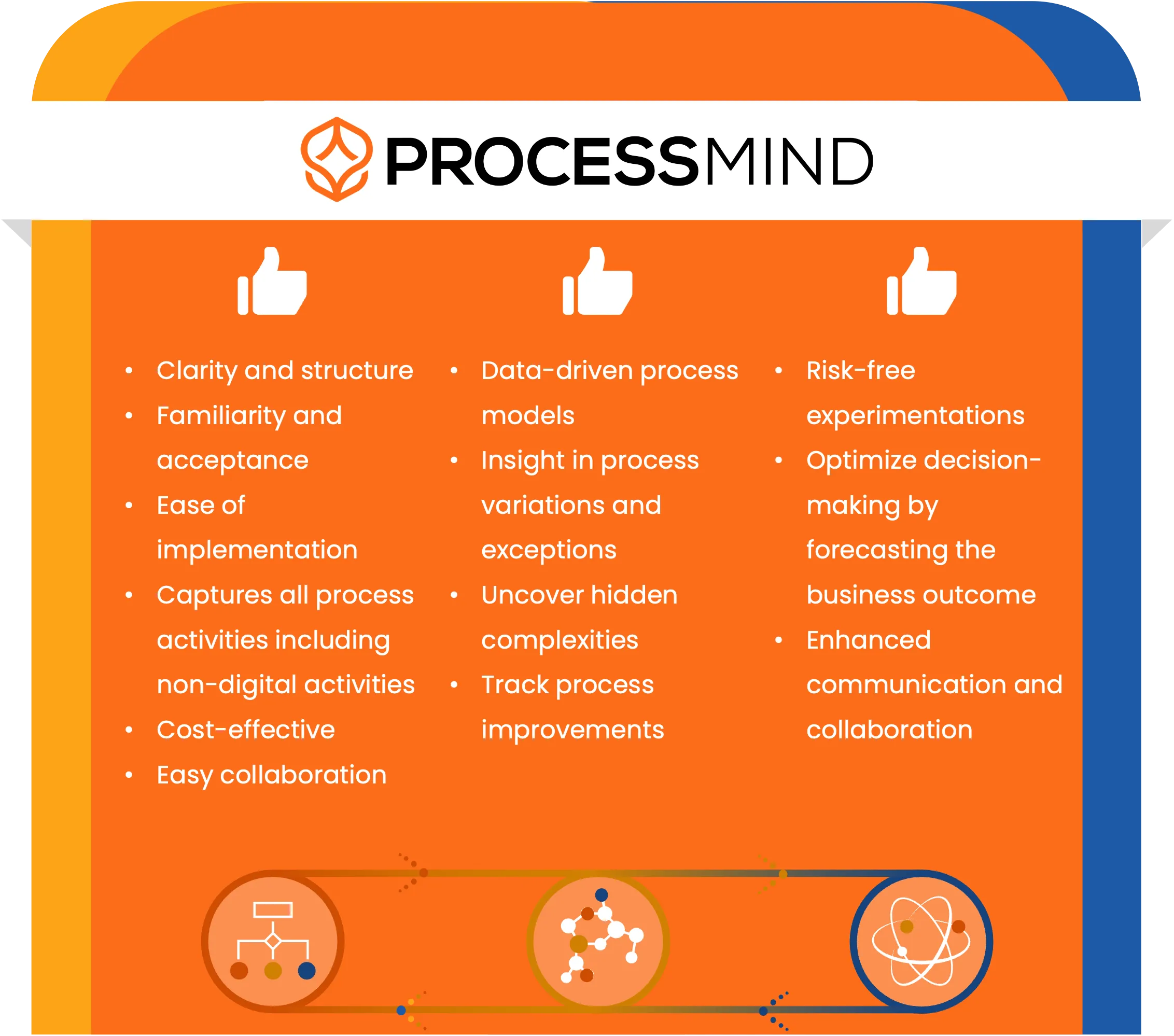
- Deeper Process Understanding: Process modeling gives you a structured, human-centered view of your processes that is easy to communicate. Process mining analyzes real-world data to uncover deviations, bottlenecks, and hidden patterns that a manual model may miss.
- Data-Driven Improvement: Process mining helps you validate your process models against day-to-day operations. You can identify improvement opportunities using actual performance data, leading to more effective optimization efforts.
- Enhanced Decision-Making: Combined insights from process modeling and process mining help you make informed decisions about resource allocation, automation opportunities, and process redesign.
- Improved Communication and Collaboration: Process modeling and process mining both improve transparency by showing you how work actually gets done. This supports better communication and collaboration across teams.
How They Work Together
- Start with Process Modeling: Use BPMN diagrams to define your intended process flow.
- Use Process Mining: Analyze data from IT systems to discover how the process actually runs and compare it with your model.
- Analyze the Differences: Compare your model with the mining results to find discrepancies and opportunities to improve.
- Simulate the Future: Use process simulation to explore different scenarios and choose the best course of action.
- Refine and Optimize: Use insights from modeling, mining, and simulation to revise your model and improve workflow efficiency.
Turning the Loop into Continuous Improvement
The five steps above are not a one-off project. Each pass through the loop produces the evidence for your next change:
- Small changes are low-risk. A single adjustment can be tested, measured, and rolled back if it does not help.
- Decisions are data-driven. Process mining shows what actually happens; process simulation predicts what would happen. You do not have to guess.
- Improvements compound. Regular small gains across a process add up to significant efficiency over time.
To get started, pick one process, measure its current performance (throughput time, cost, rework), and fix the bottleneck that holds up the rest. Test the change with a What-If Analysis before you apply it, then measure again and repeat. For a more structured improvement cycle, see our guide to Lean Six Sigma and DMAIC.
Traditional Approach: Pros and Cons
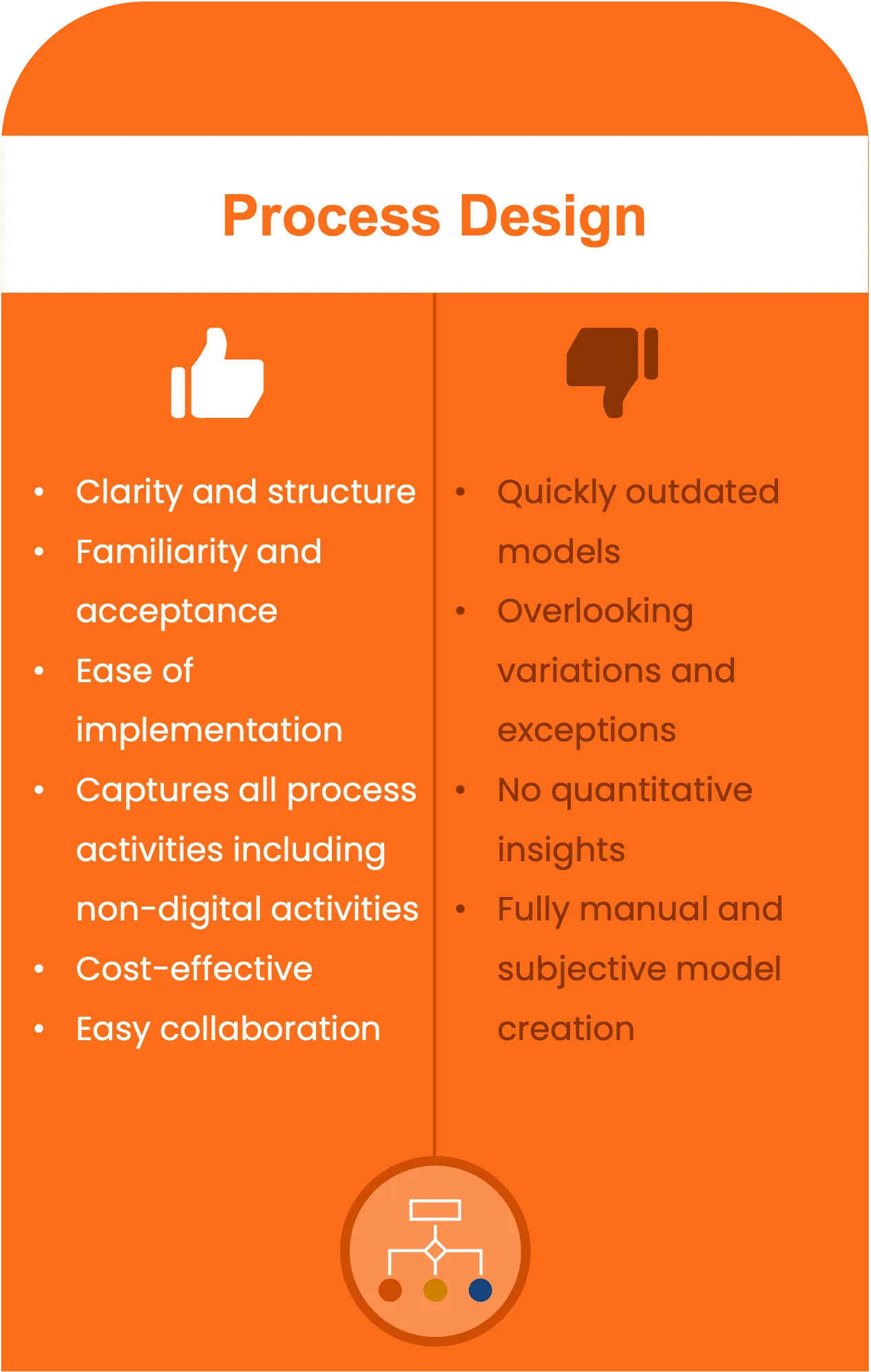
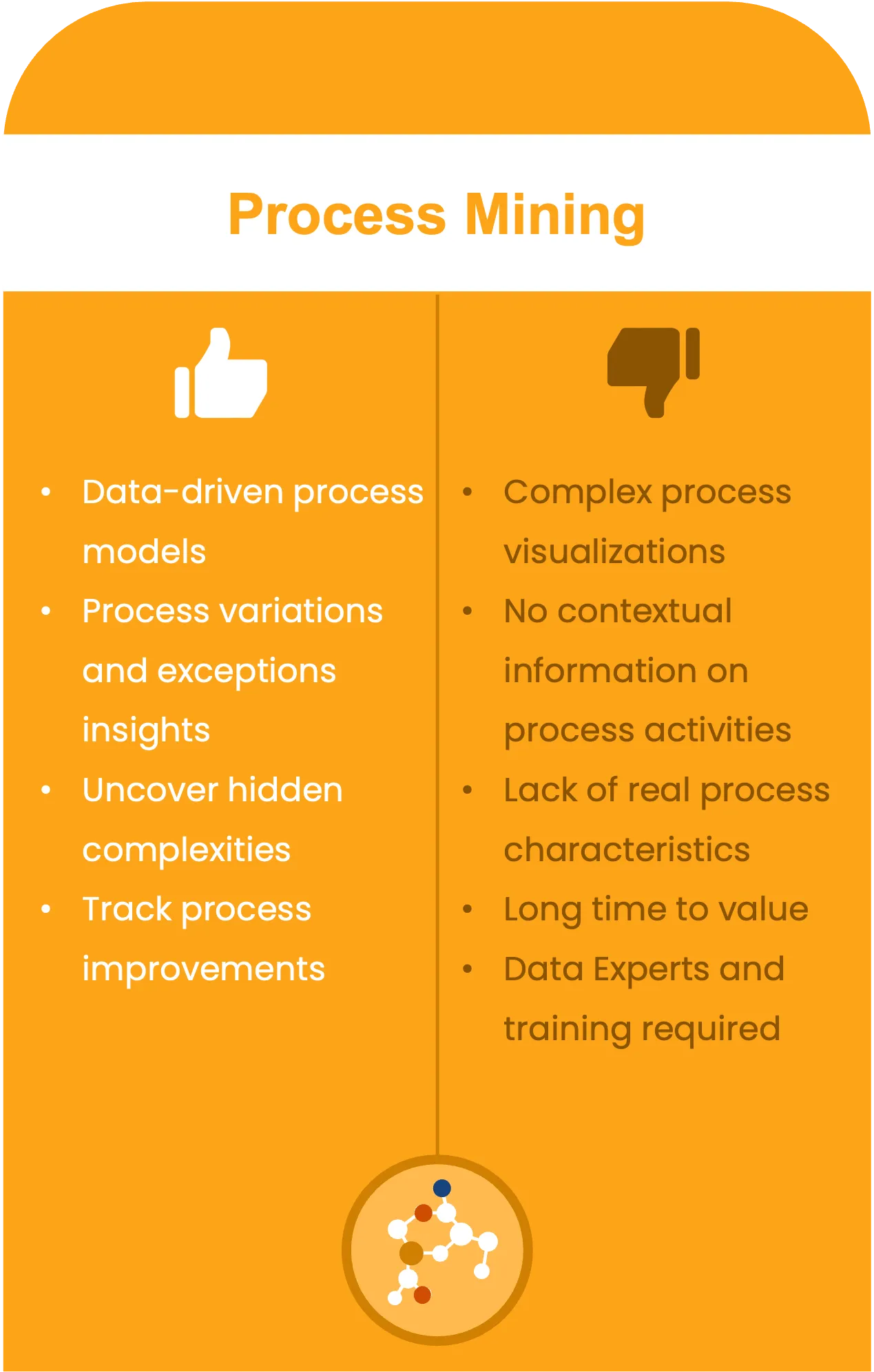
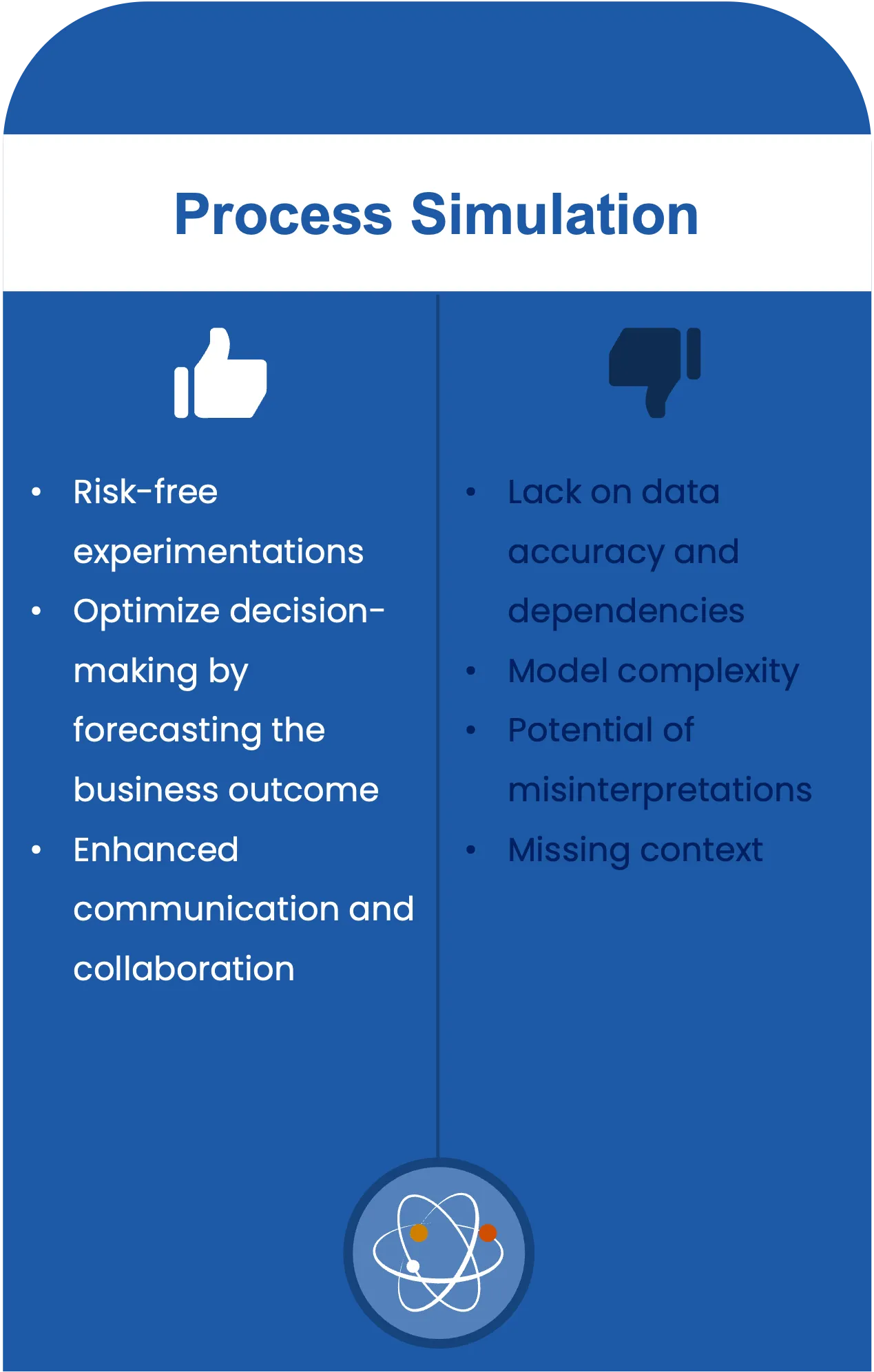
ProcessMind combines process mining, process design, and process simulation in one platform, giving you a complete view of your business processes. This approach bridges the gap between your ideal and actual processes, helping you identify key elements and make informed decisions that improve efficiency.
Related Blog Posts
Design better processes. Build a connected architecture. Stay in control.
Get instant access with no credit card and no waiting. Turn the way your organization works into clear, connected process designs.
Build your process architecture, define ownership and controls, and align roles and responsibilities across every level.
Start your free trial and create one reliable foundation for governing, managing, and continuously improving your processes.