Process Architecture: Structure, Ownership and Governance
Process architecture gives you a clear structure for organizing processes, assigning ownership and managing change. Connect strategy to execution with a shared hierarchy that reflects how your organization works.
Model Your First Hierarchy LevelNo credit card required · Works in your browser · BPMN 2.0 compliant

Configurable levels of process architecture
A typical framework runs five; each level breaks the one above it into a more detailed view of how your organization works.
-
Process groups
The organization’s highest-level process groups.
Organization overview
-
Major processes
The major processes within those groups.
Value-stream structure
-
Activities & subprocesses
The activities or subprocesses that make up a process.
Process decomposition
-
Tasks & decisions
The tasks and decisions within those activities.
Operational logic
-
Detailed steps
The detailed steps used to complete a task.
Execution detail
From organization-wide structure to the exact steps used to complete the work.
A Practical Approach
Build a Process Architecture You Can Govern
Set the hierarchy
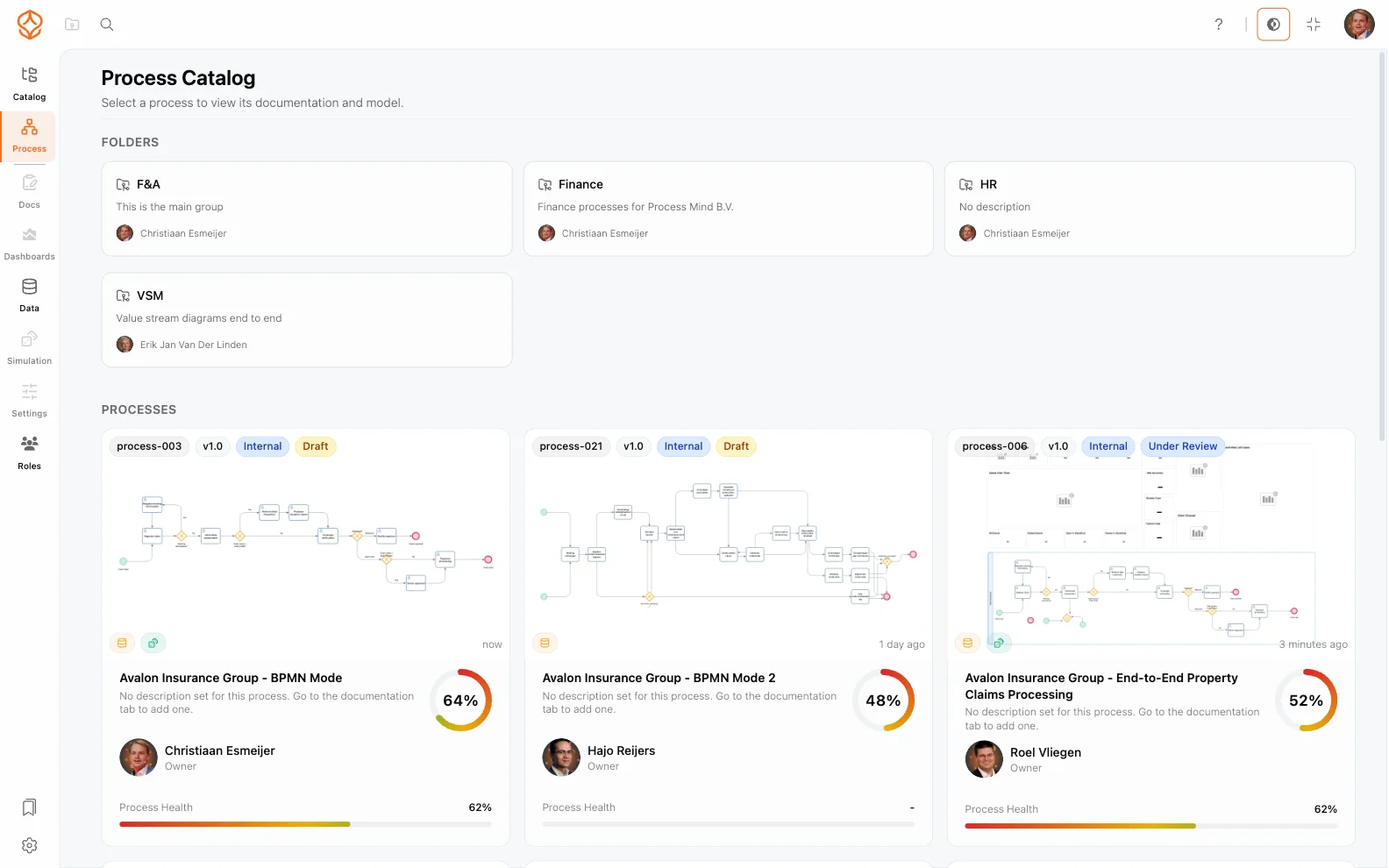
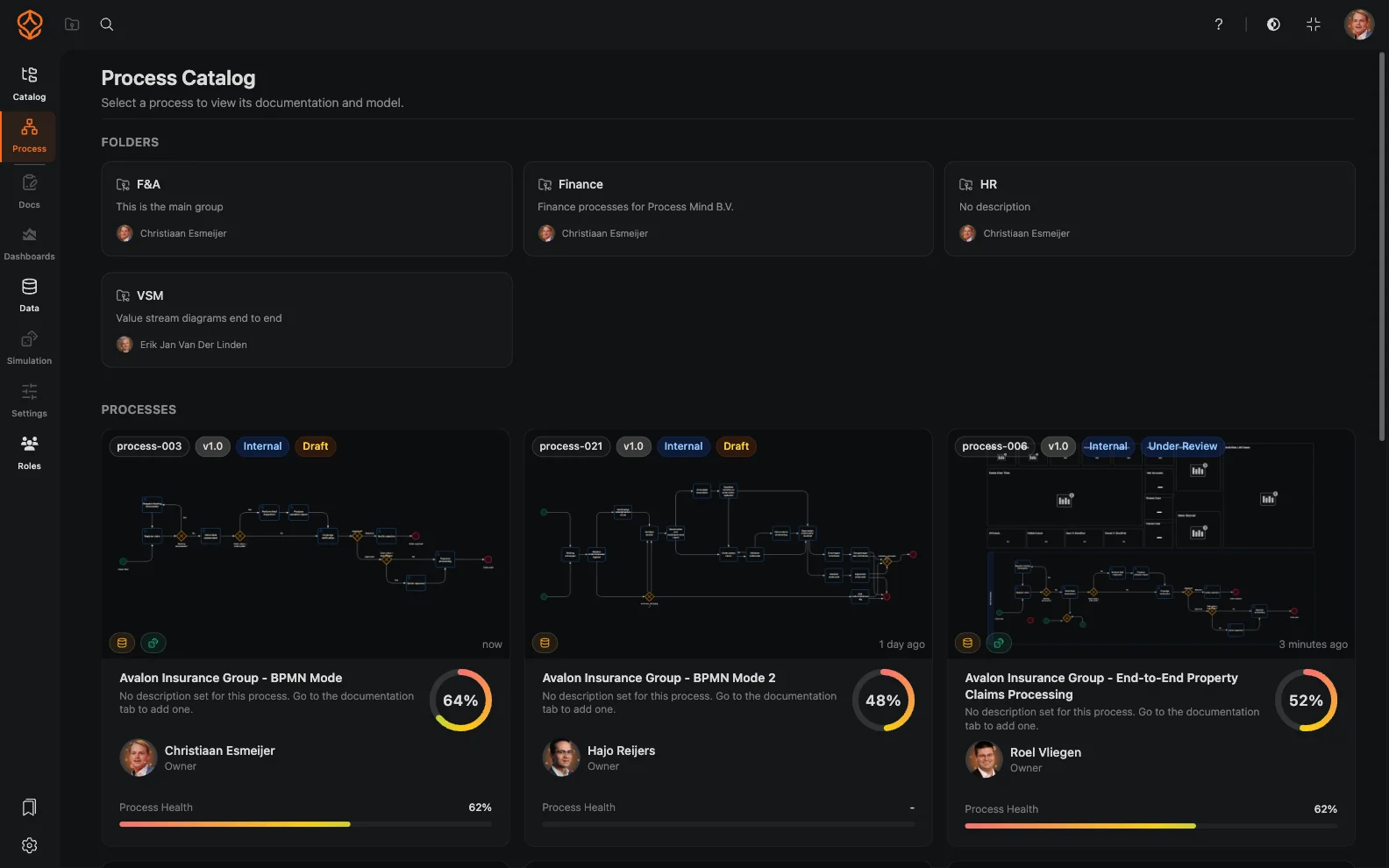
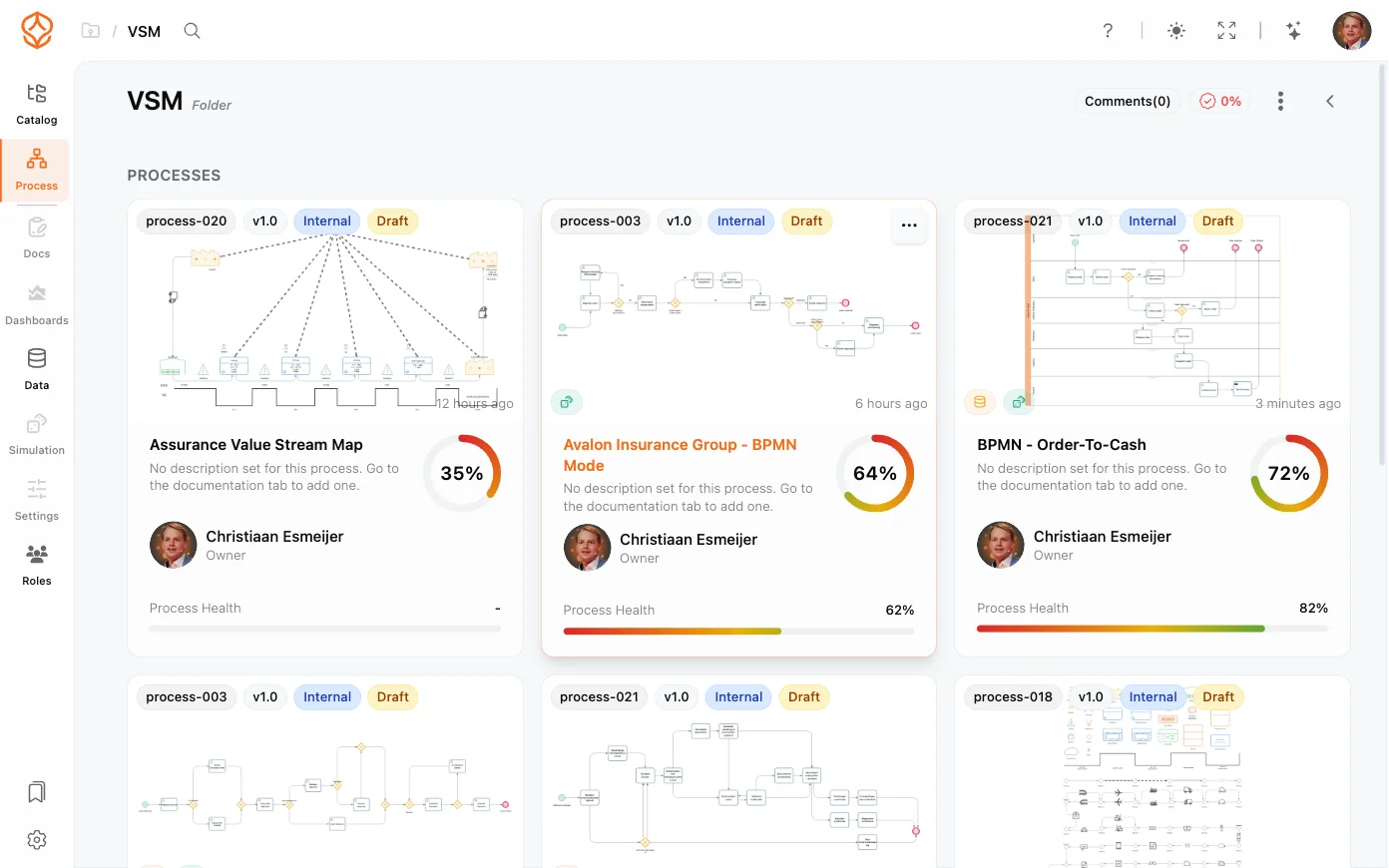
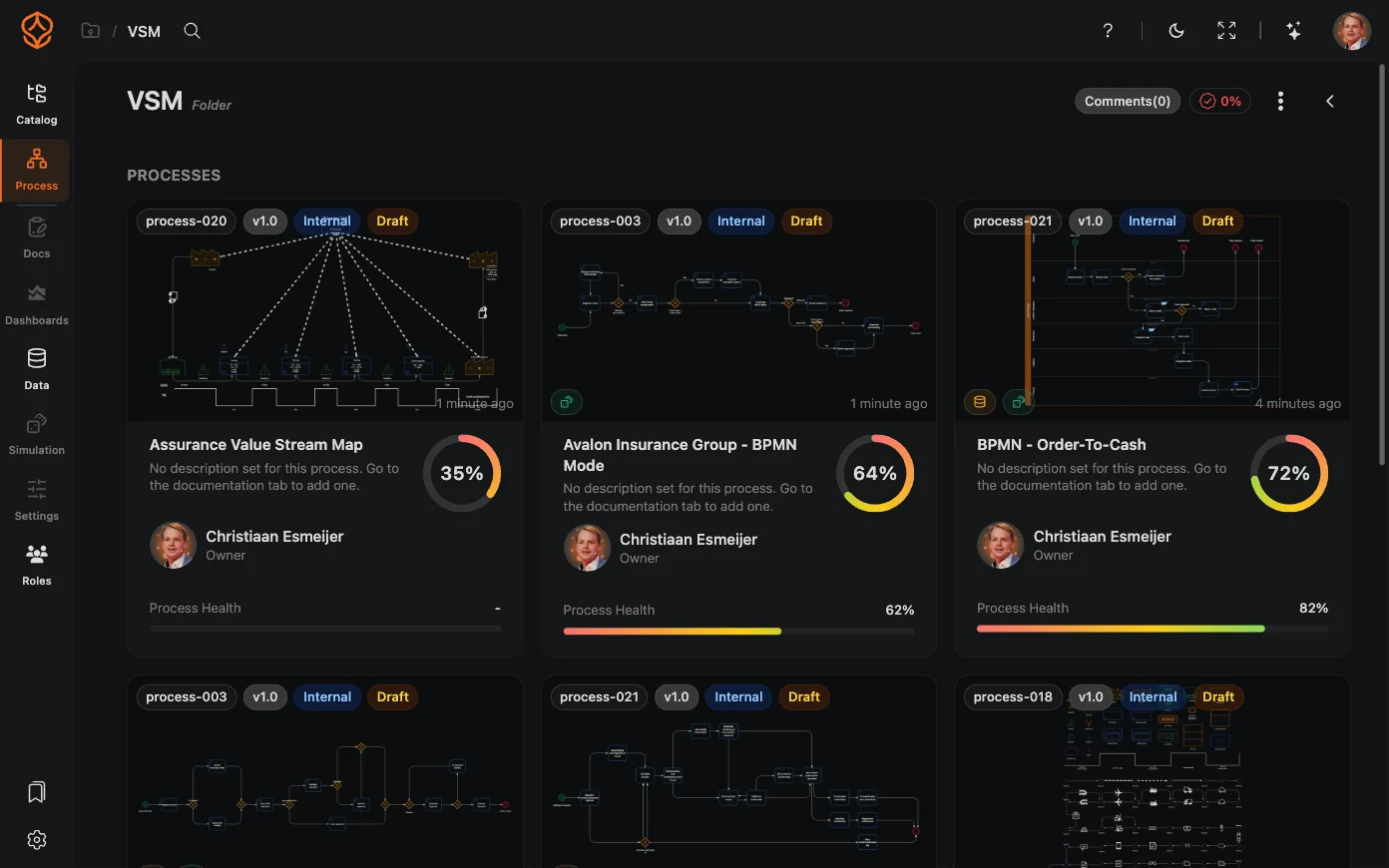
Organize processes into a set of consistent, configurable levels, from the broadest view of the organization to the detailed steps of individual work. The levels provide a shared structure for navigating from an organization-wide overview to the exact work performed.
- Use the same definitions across teams so everyone can navigate the hierarchy consistently.
- Link related processes when work crosses organizational or functional boundaries.
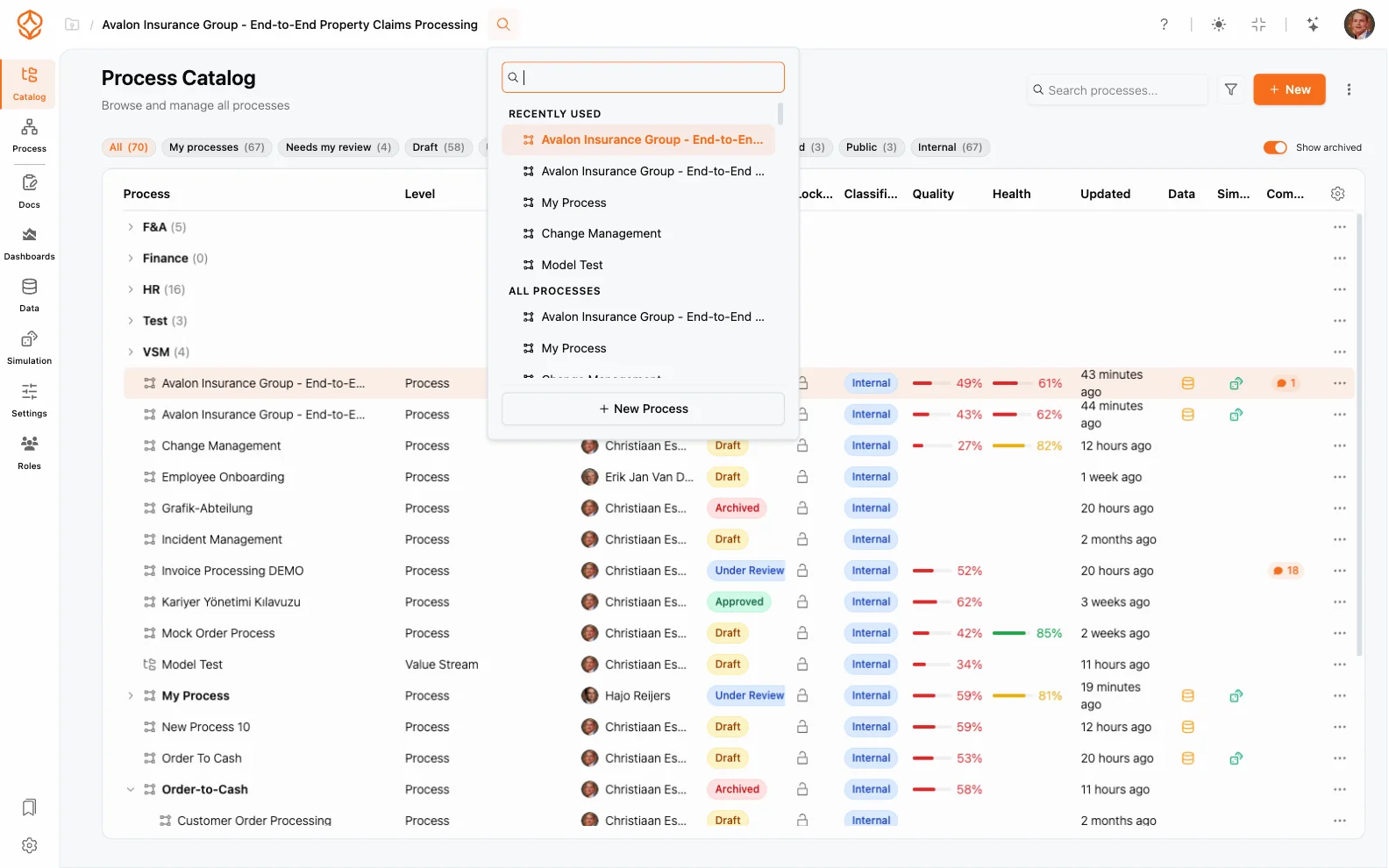
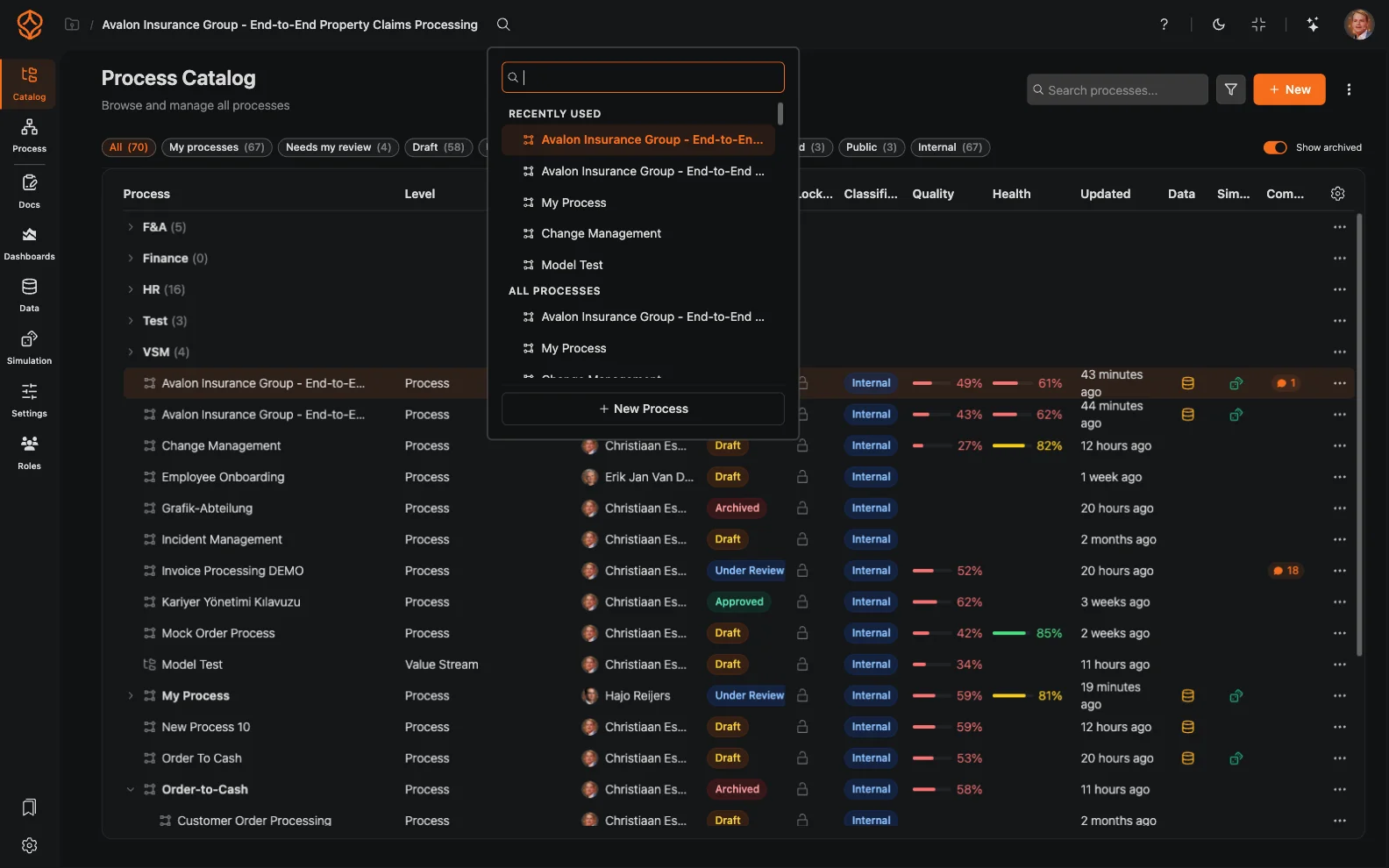
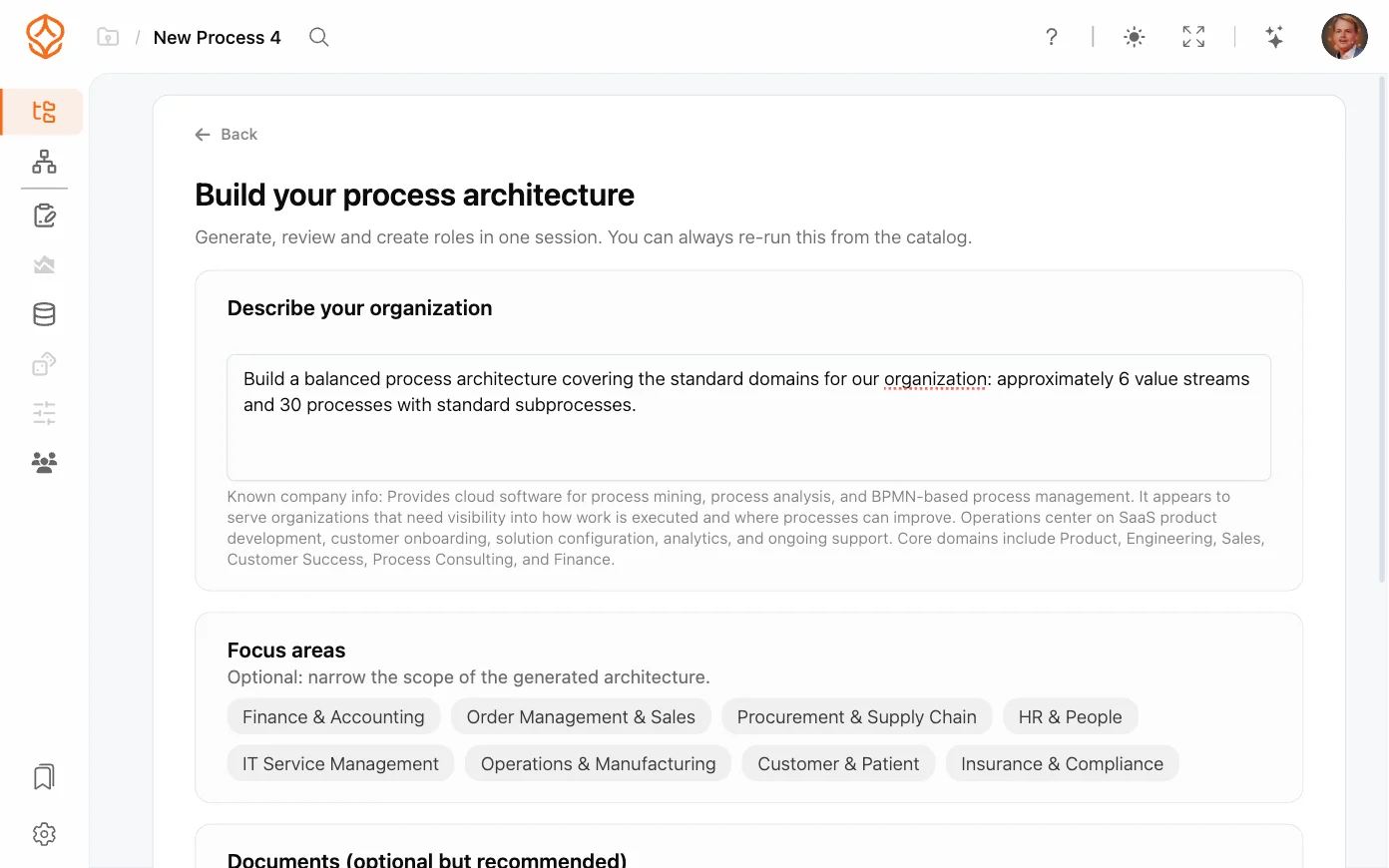
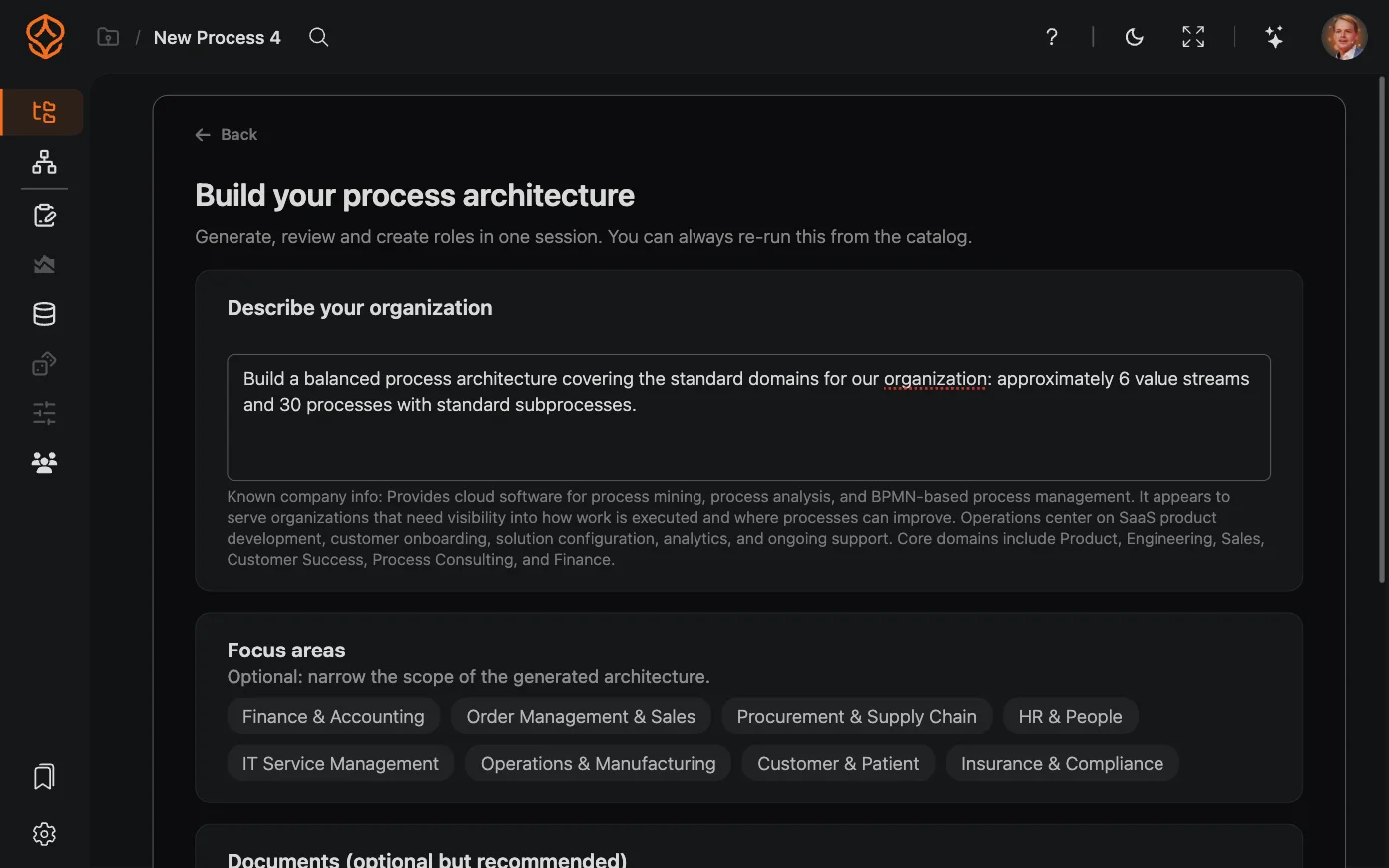
Connect strategy to execution
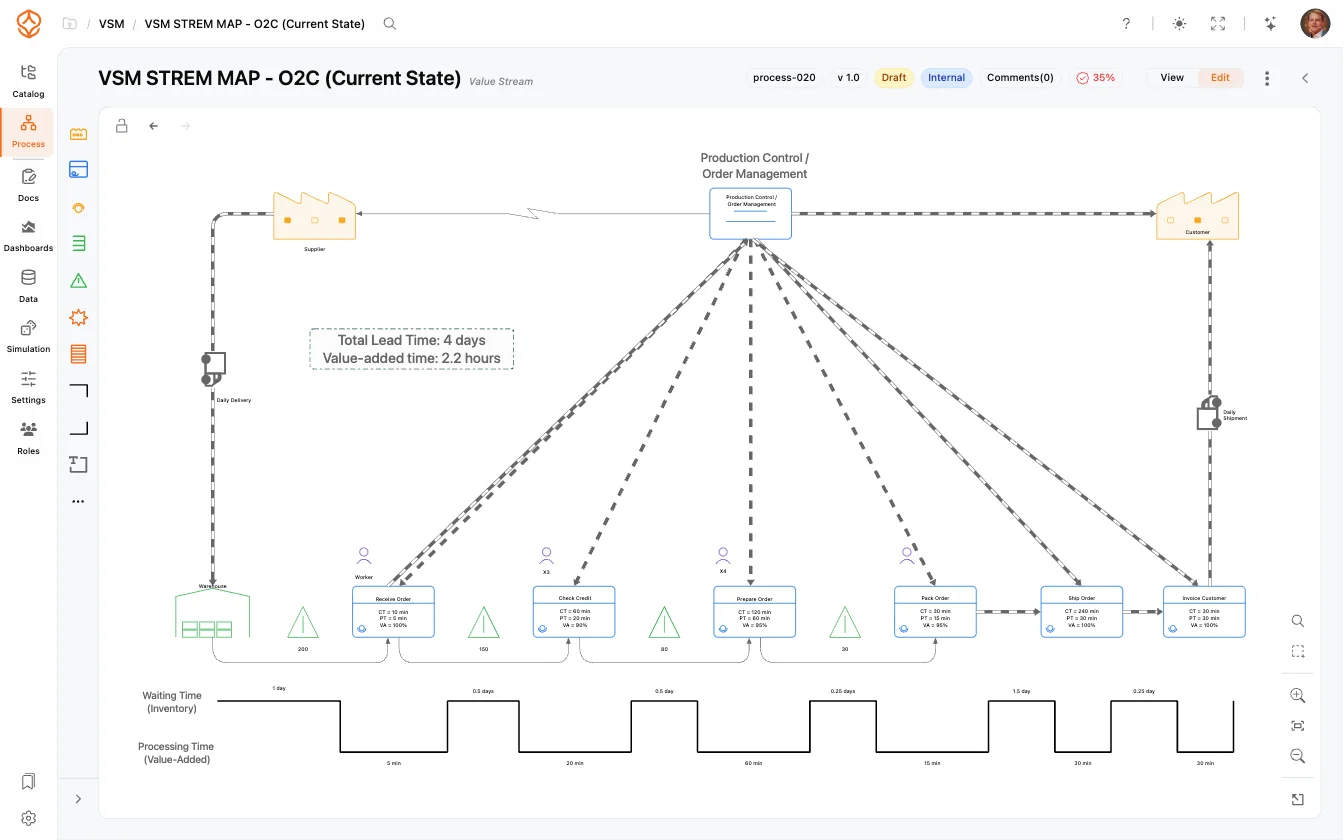
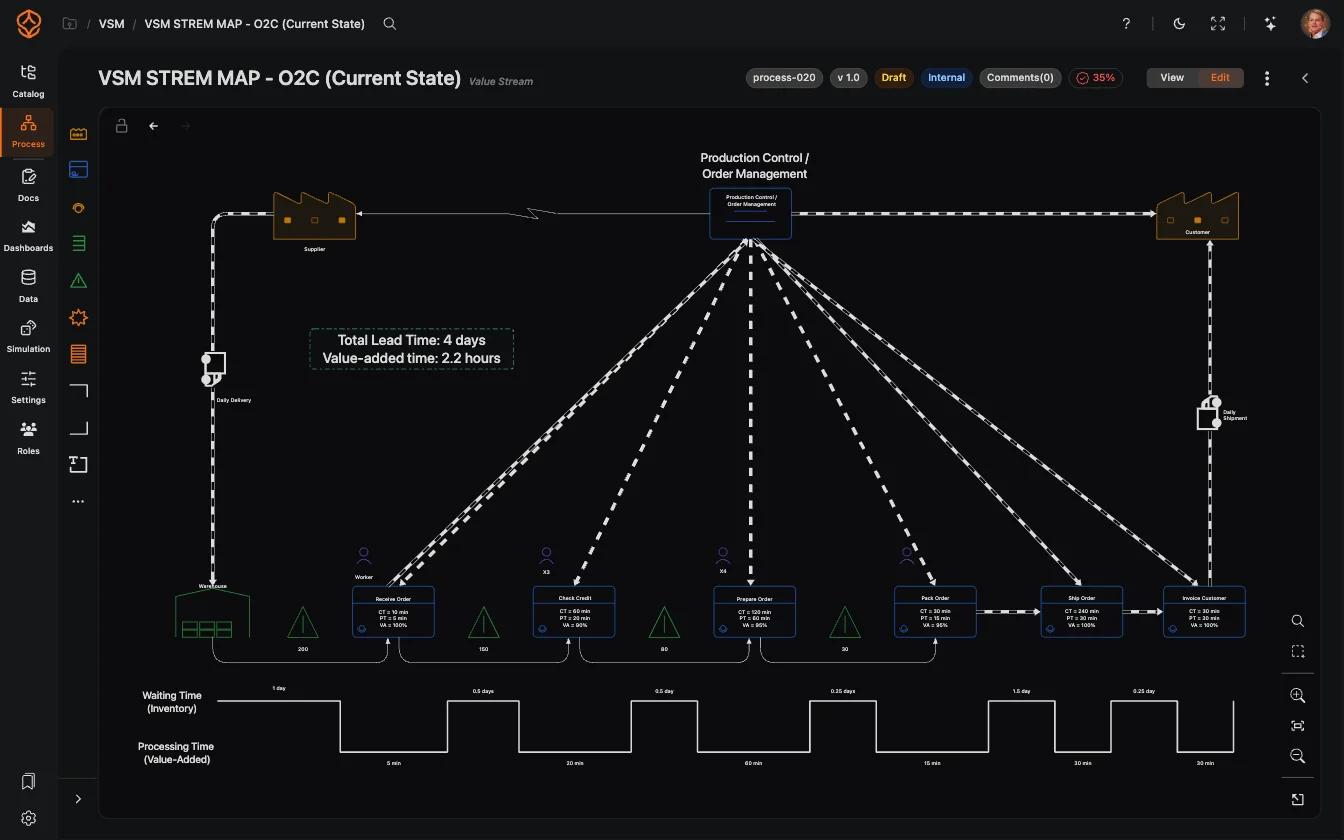
Show how organizational goals relate to capabilities and operational processes.
- Start with the outcomes and capabilities your organization needs.
- Map the processes that support those capabilities.
- Identify where processes depend on one another or cross team boundaries.
- Use the map to discuss priorities and clarify the impact of proposed changes.
Define ownership and change control
Clarify who maintains each process and how changes are handled.
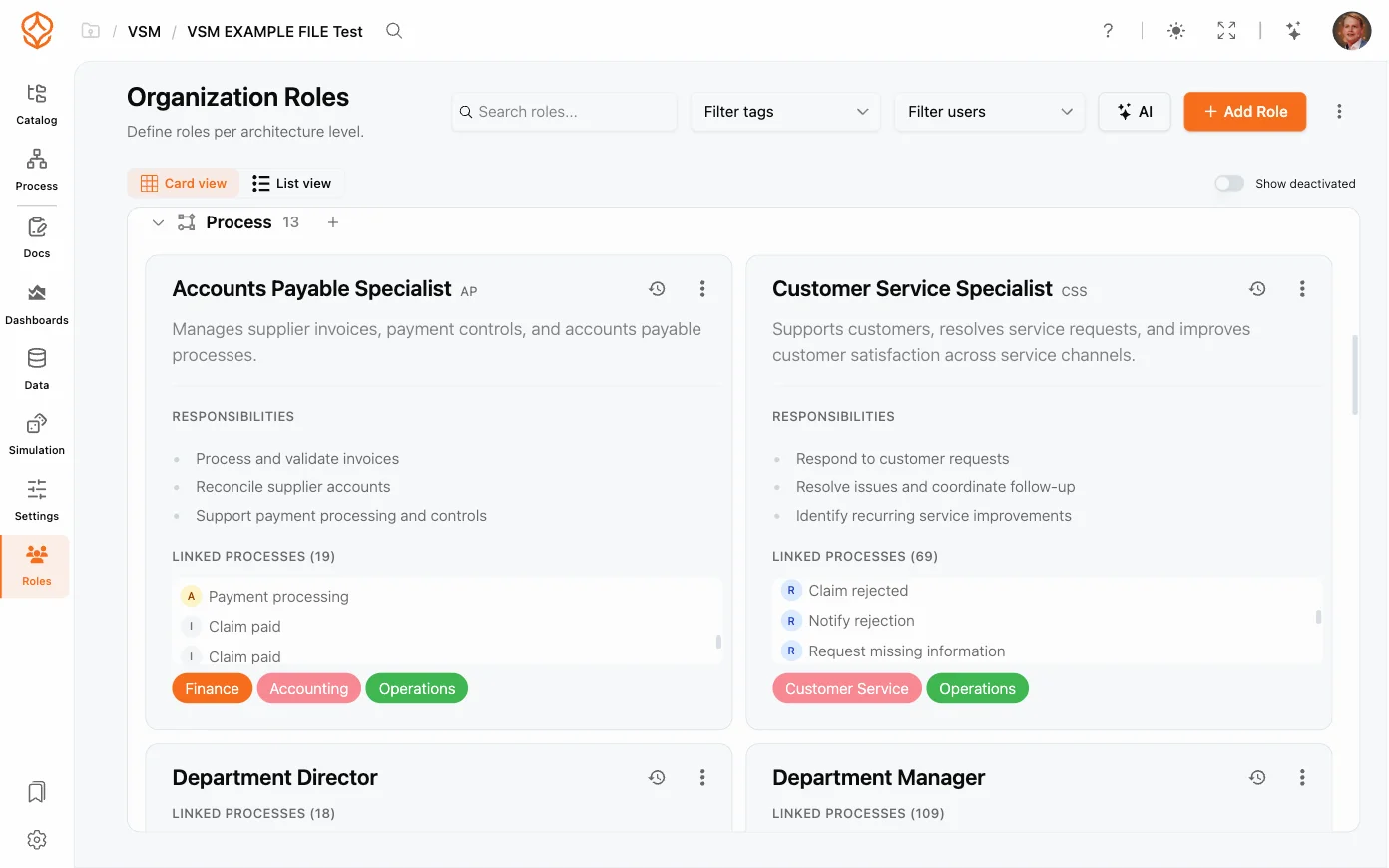
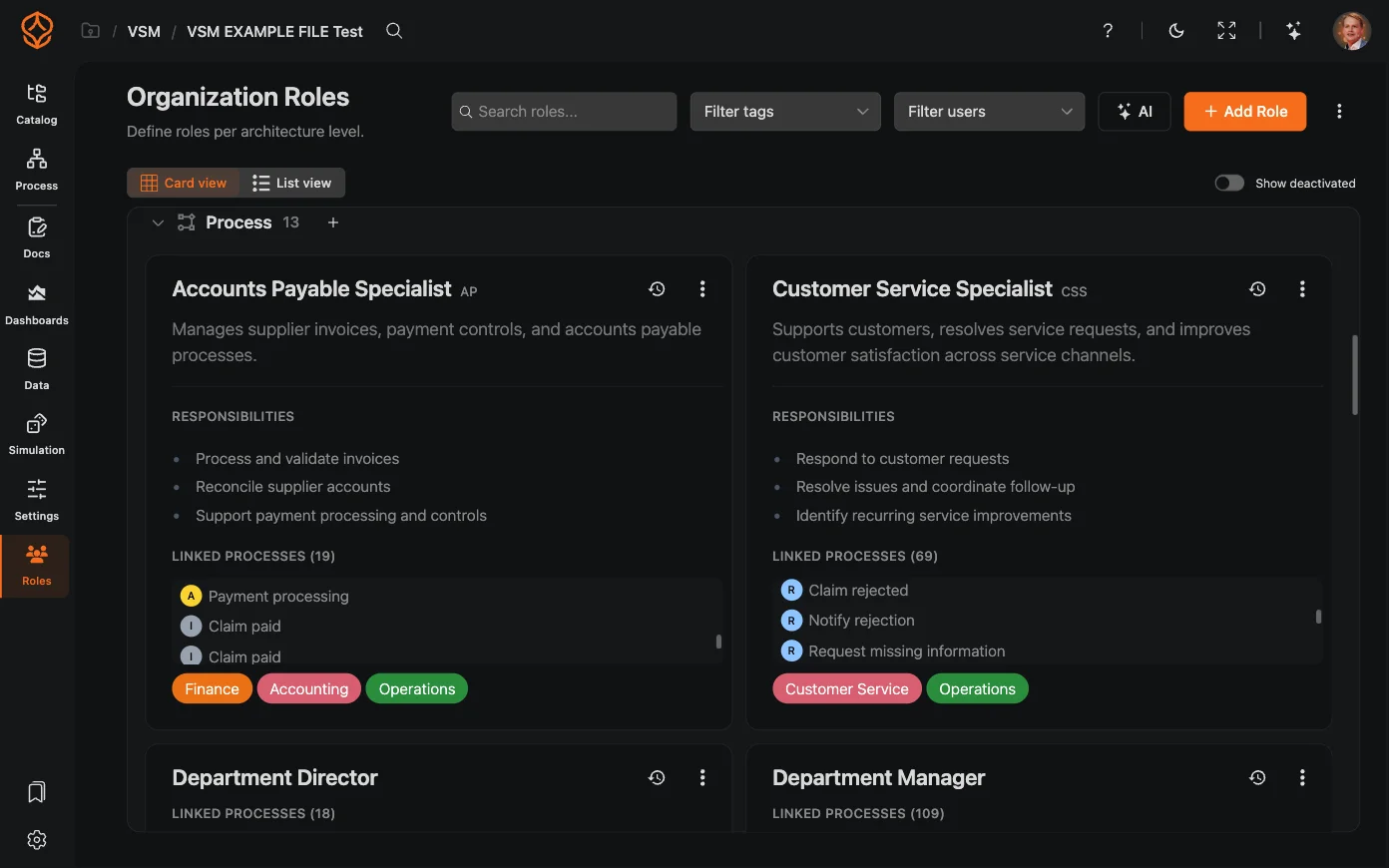
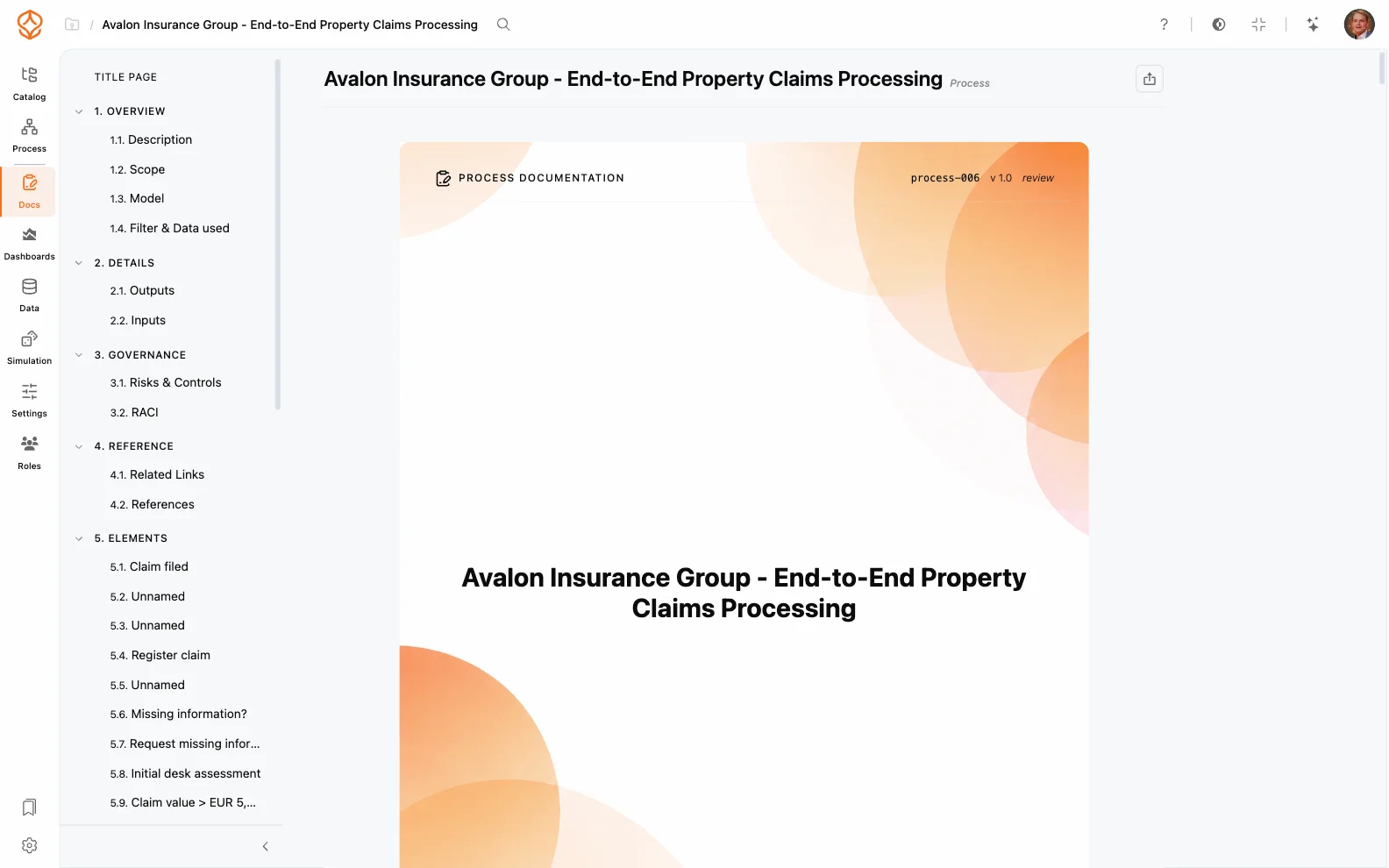
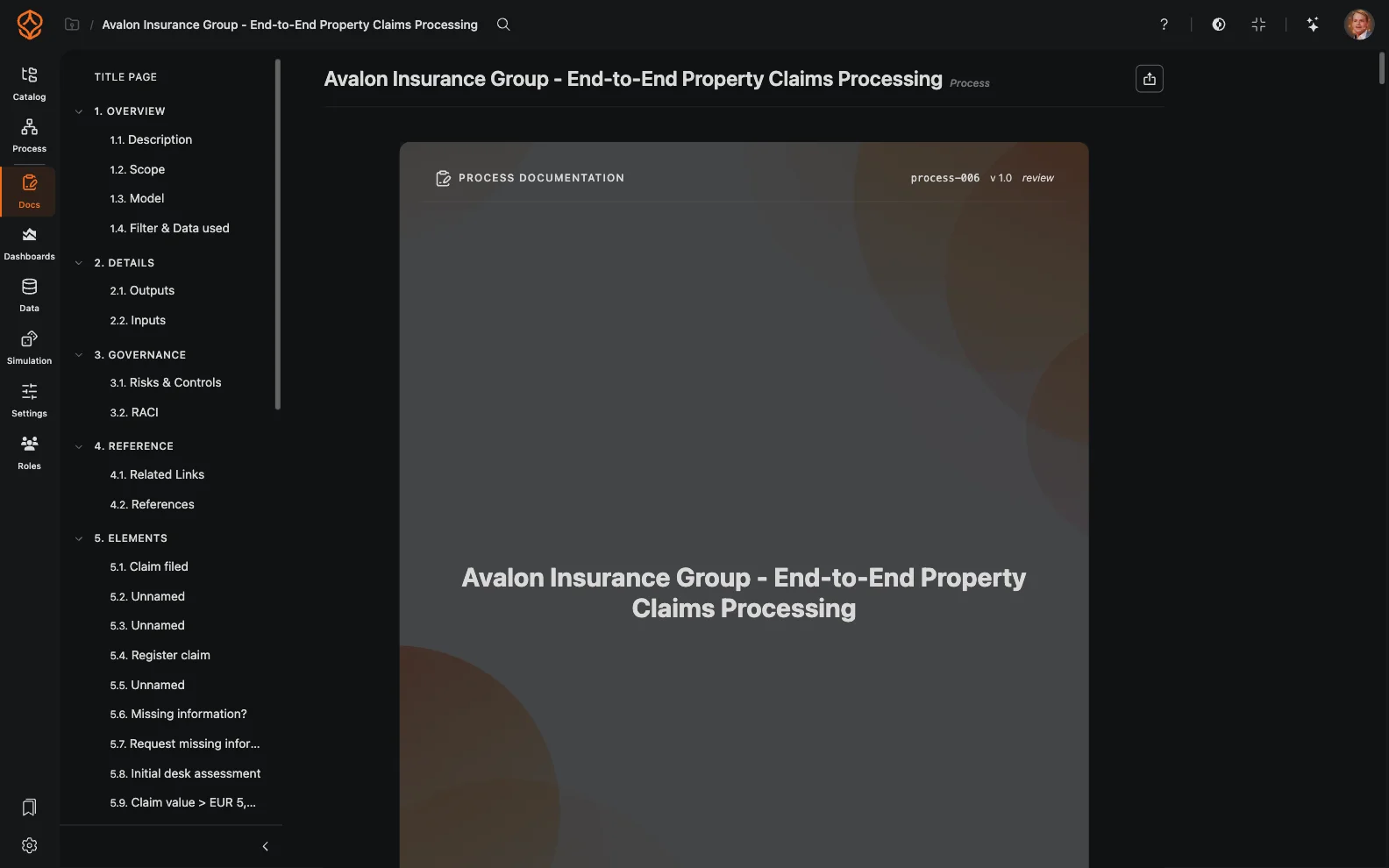
- Assign process owners accountable for keeping models current.
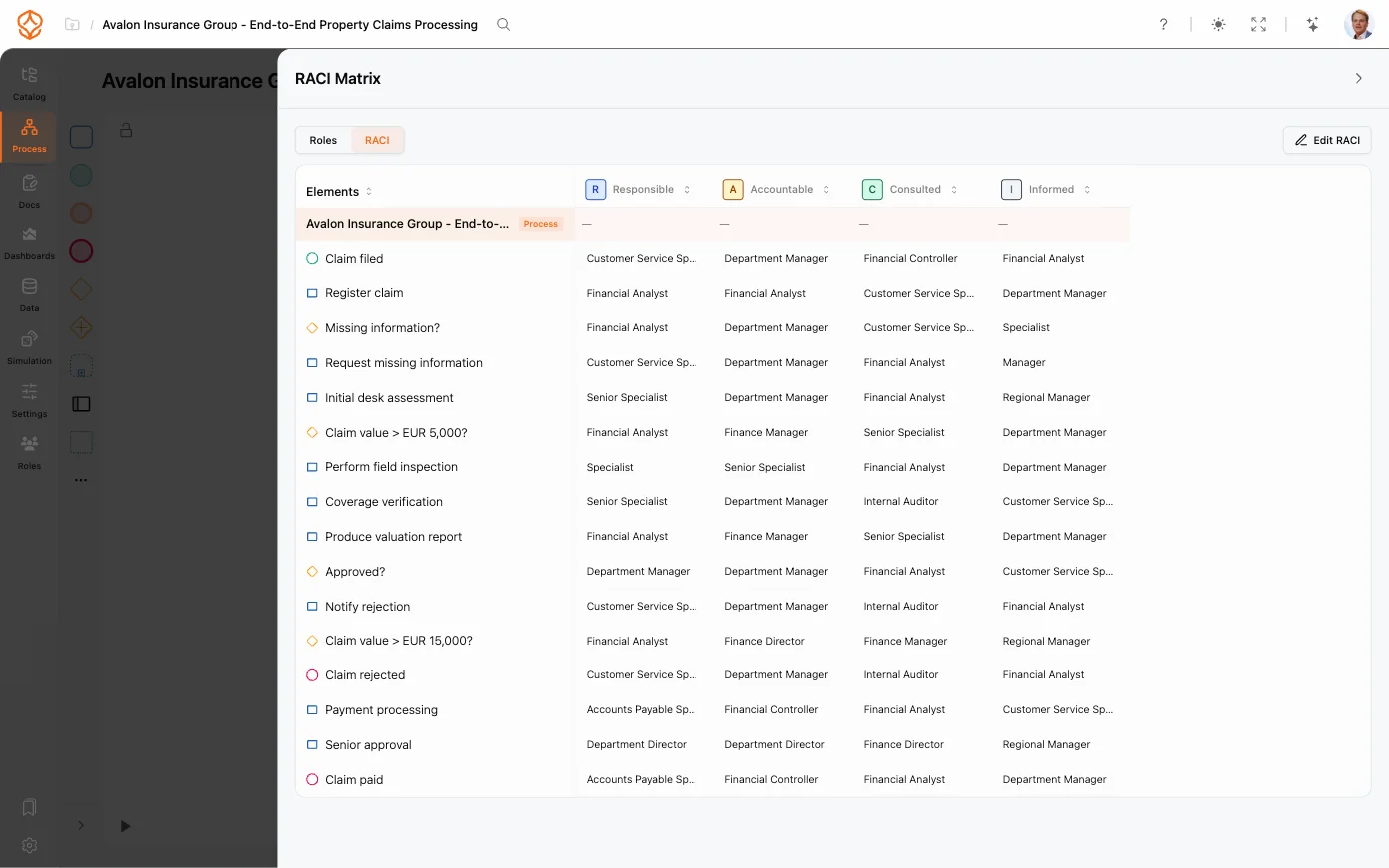
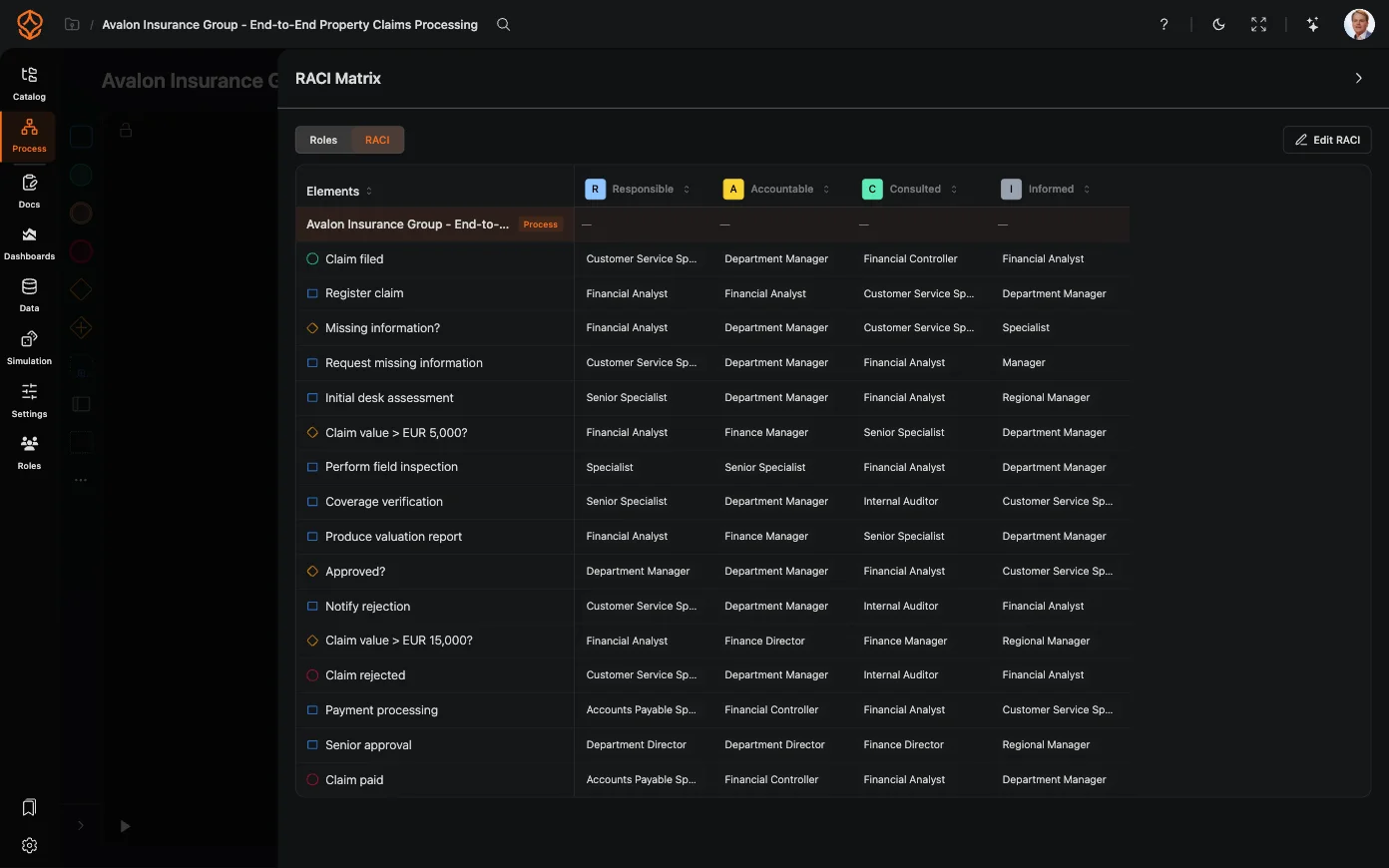
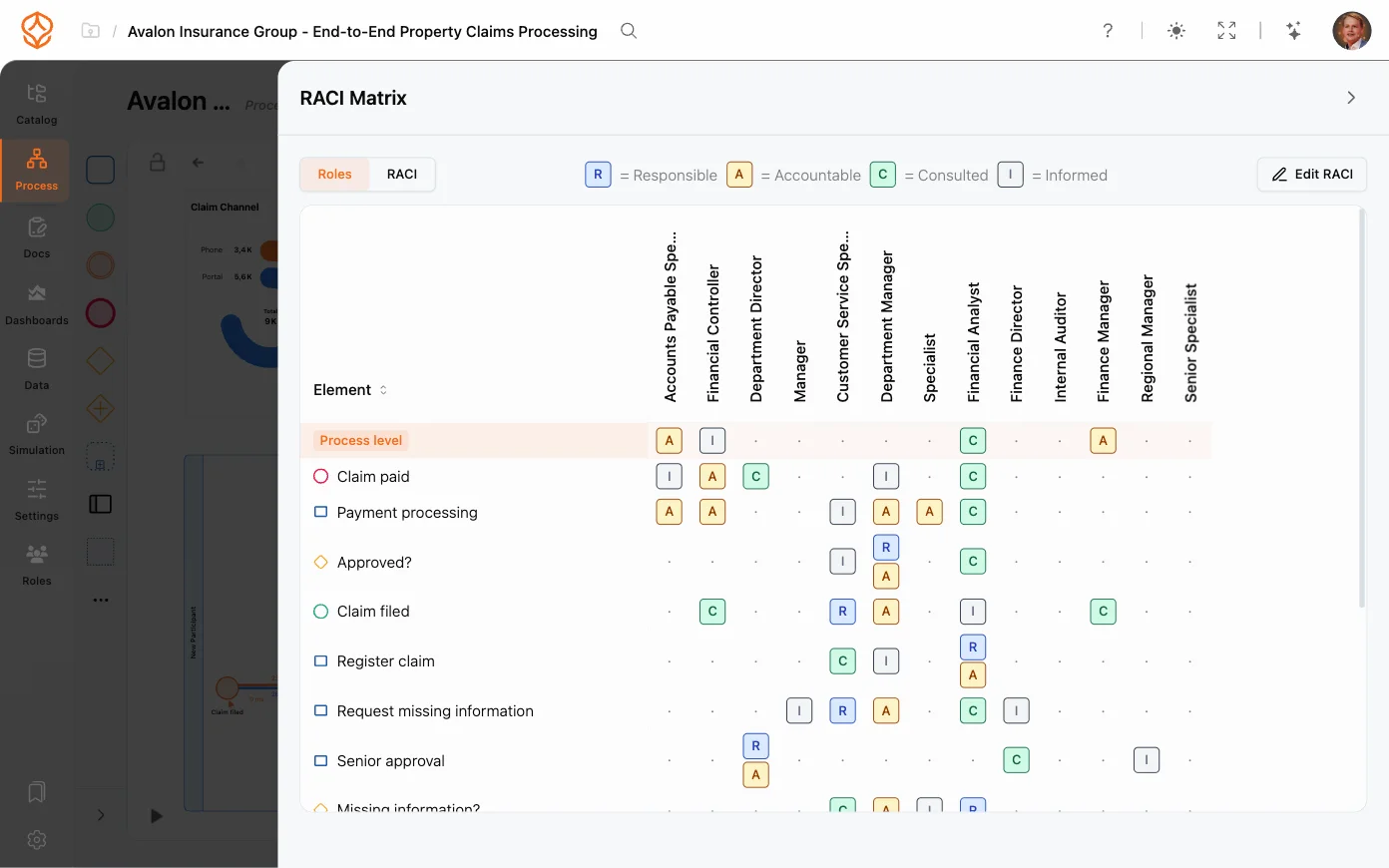
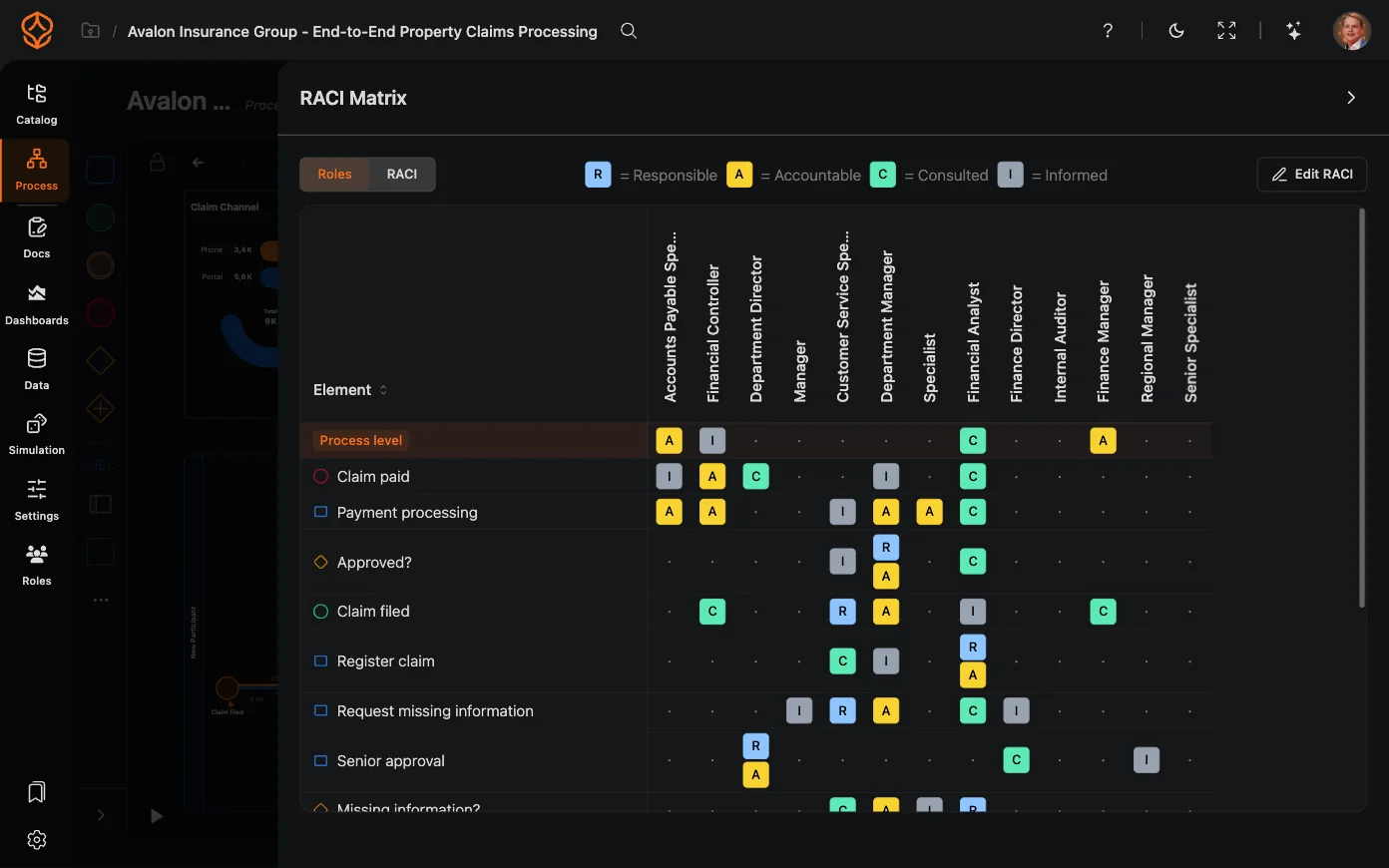
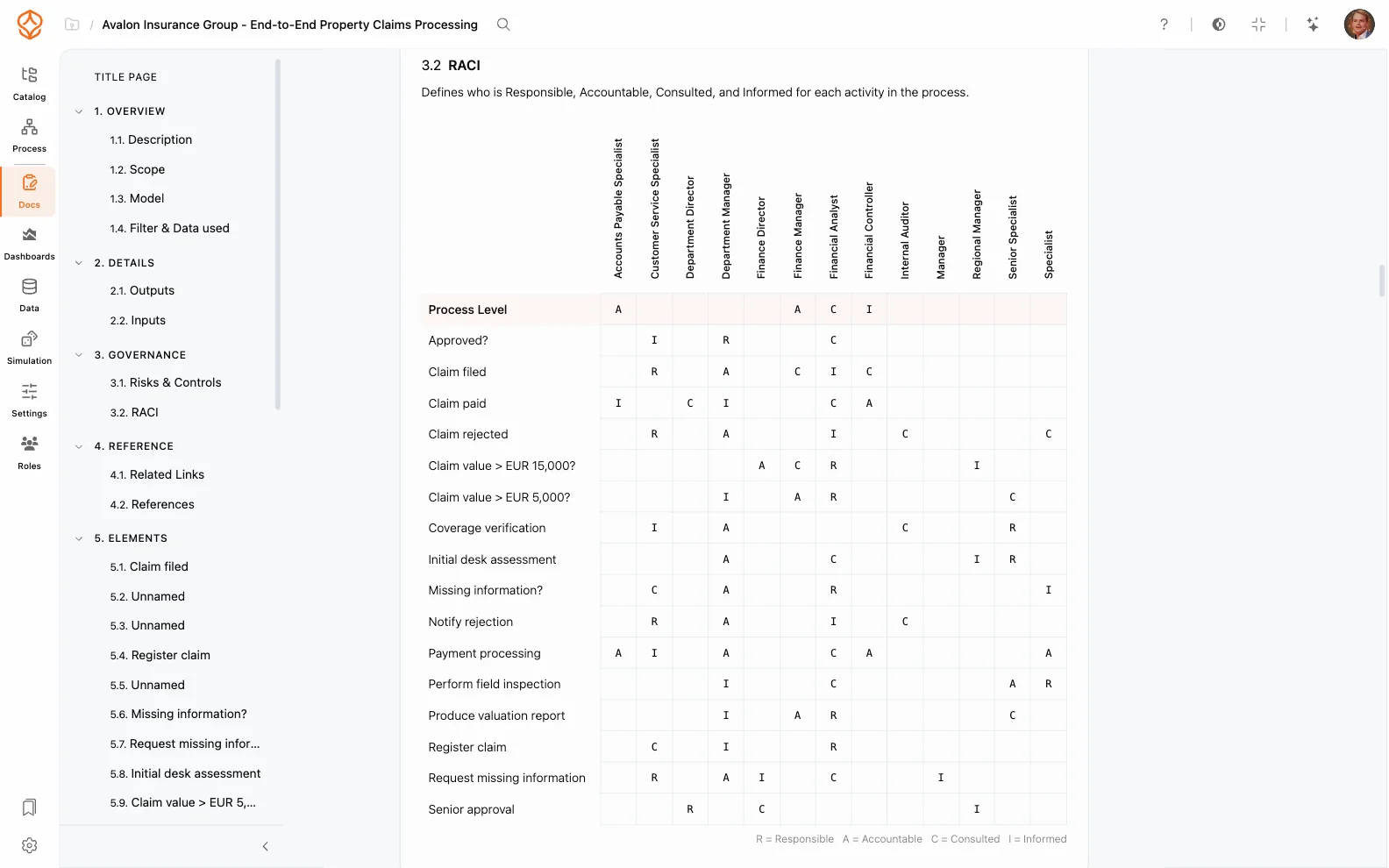
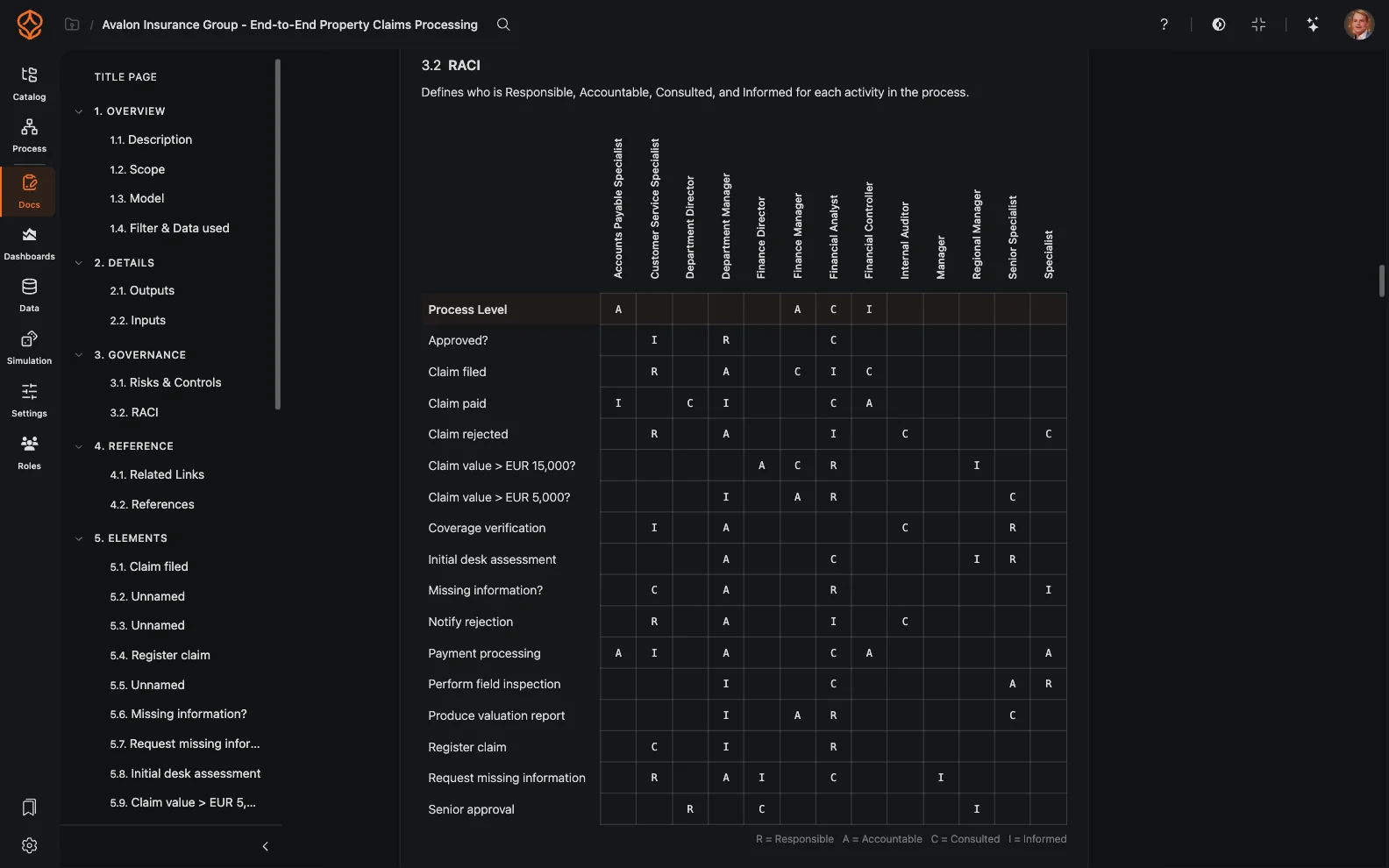
- Use a RACI matrix to define who is responsible, accountable, consulted and informed.
- Set review and approval steps that fit your governance needs.
- Record decisions and version changes so teams can see what changed.
- Establish review cycles and criteria for retiring or updating process documentation.
Keep process documentation connected
Link supporting documentation to the process it describes.
- Attach procedures, work instructions and reference materials to process models.
- Keep ownership and process context visible alongside supporting documents.
- Review documentation when the related process changes.
- Use a RACI overview to clarify roles within the process.
Make the architecture accessible
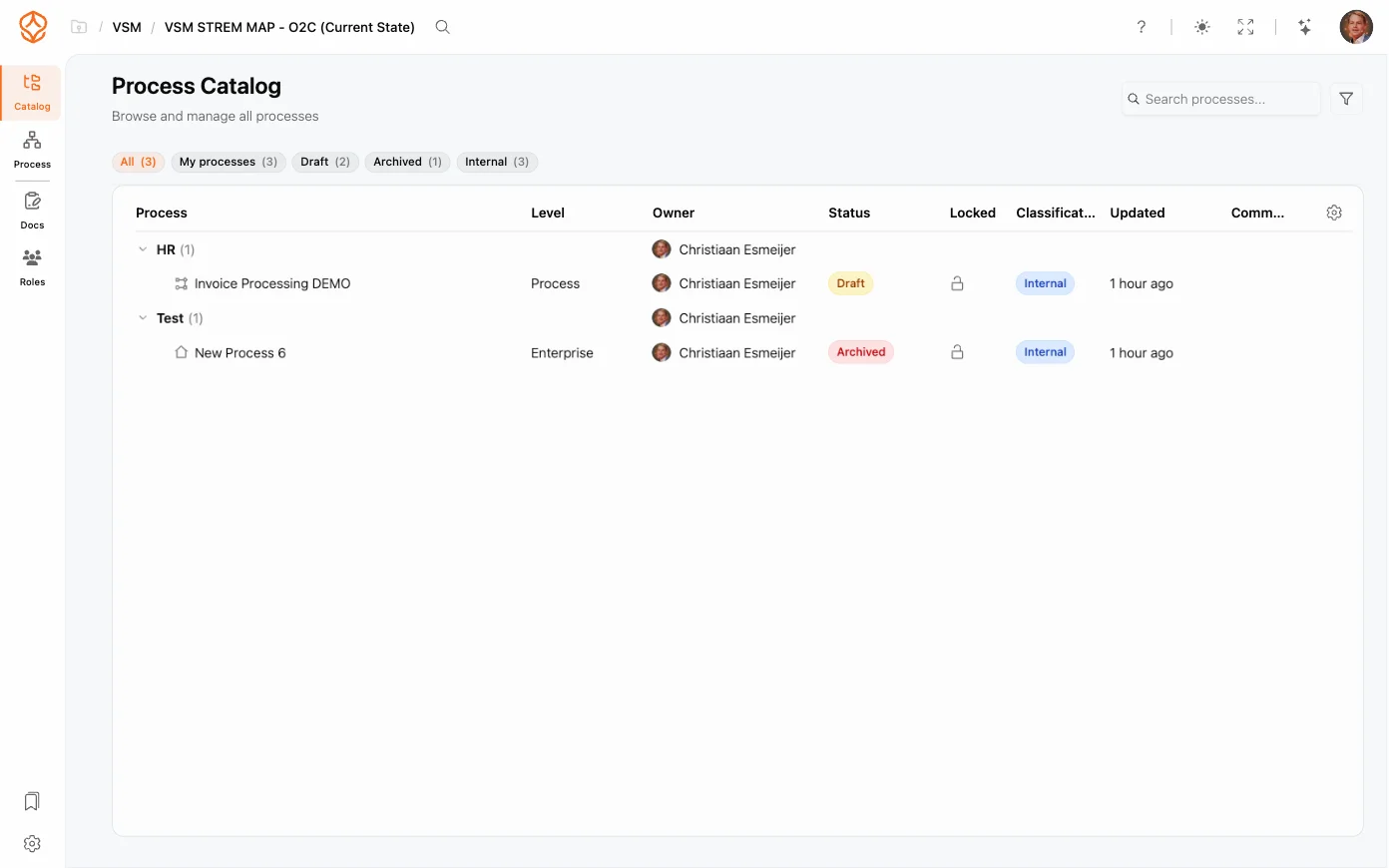
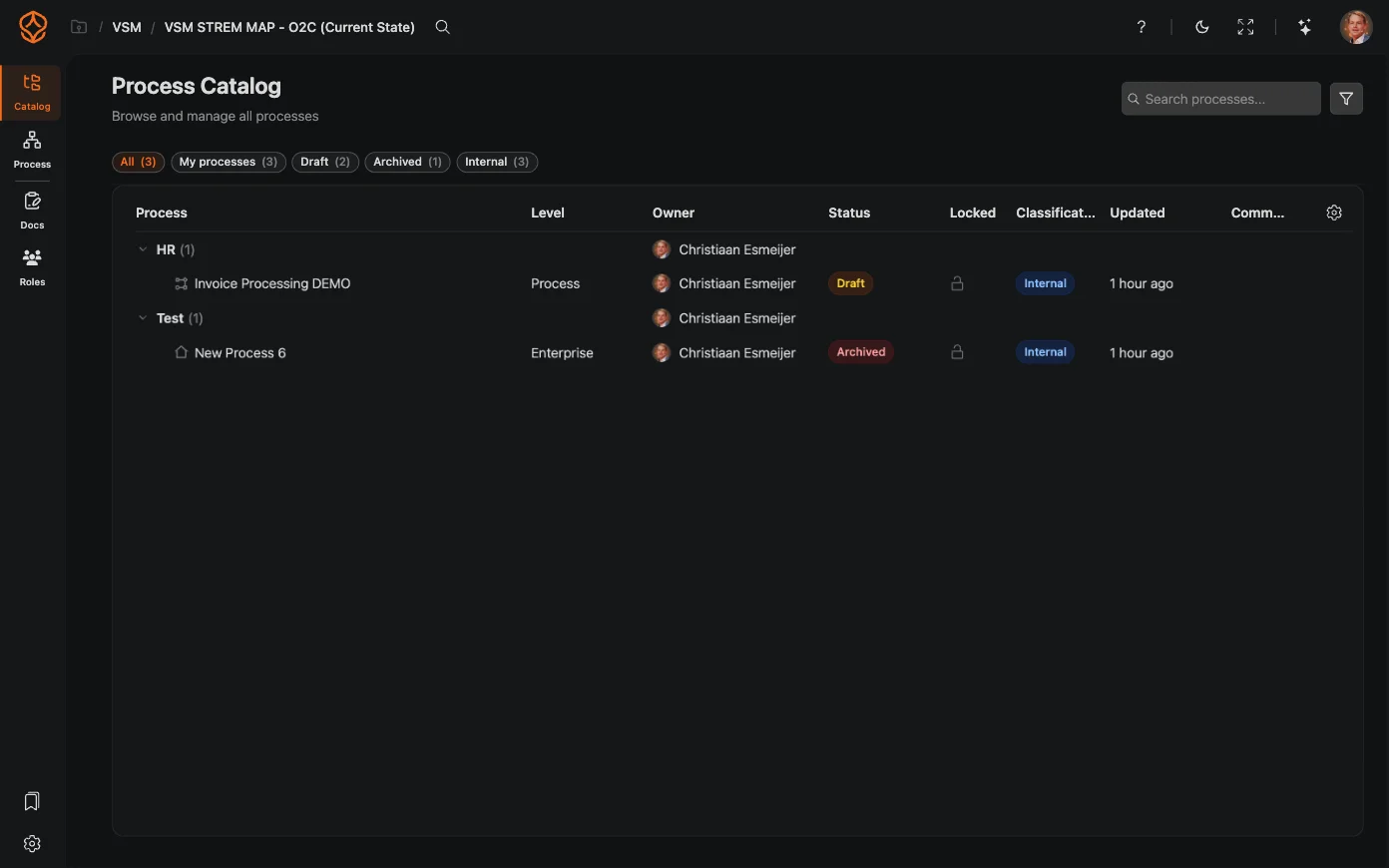
Help people find the processes relevant to their work.
- Organize process information by department or function.
- Connect process models with procedures and policies.
- Make ownership and current process context easy to find.
- Publish process information where stakeholders can access it.
- Give teams a shared reference for process questions and updates.
Set access and documentation rules
Define who can view or maintain process information.
- Set roles and permissions for projects and processes.
- Establish how process changes are recorded and reviewed.
- Keep process models and supporting documentation exportable.
- Align access rules with your organization’s governance approach.
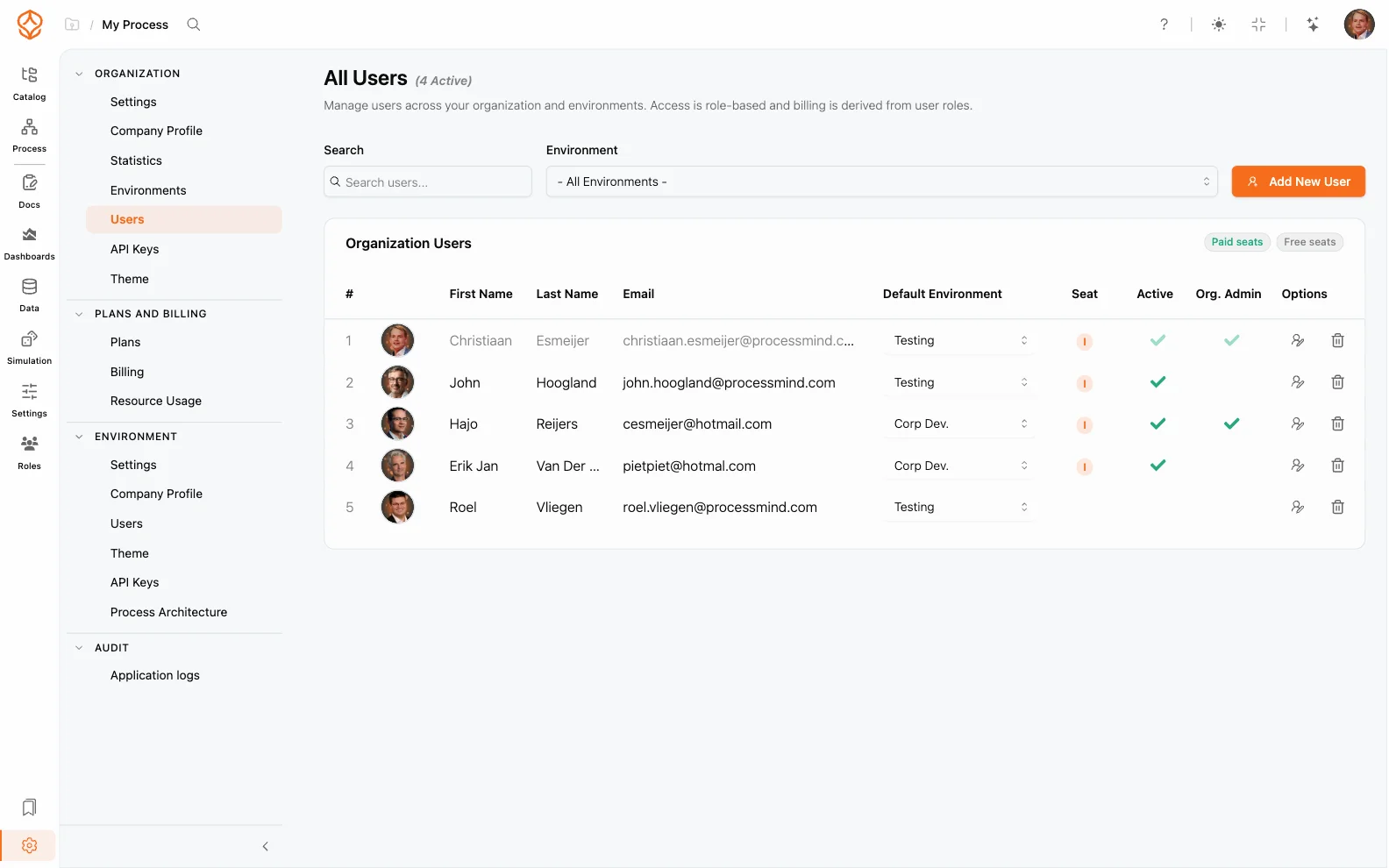
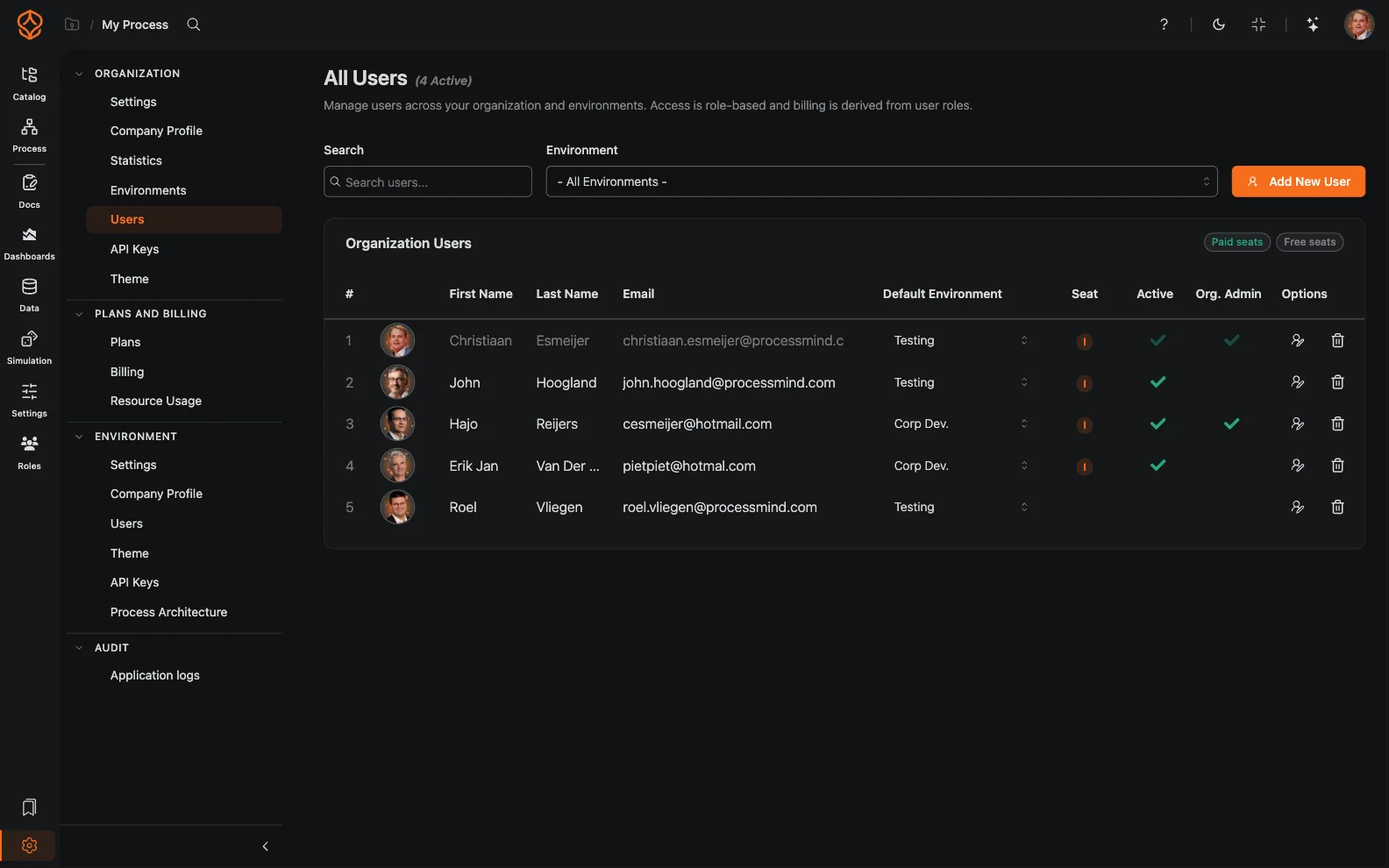
Build your enterprise blueprint
Individual processes create more value when they fit into a coherent architecture. Define your process landscape, governance model, and ownership structure. Align workflows with your business strategy and compliance requirements. Connect individual diagrams in a living enterprise model that guides transformation.Process Foundation
Model and document your processes to give teams clarity and a shared understanding.
Process Architecture
Define and manage your process landscape to align operations with strategy and compliance.
Process Intelligence
Use data and AI to understand performance, anticipate outcomes, and improve continuously.
Process Foundation
Model and document your processes to give teams clarity and a shared understanding.
Process Architecture
Define and manage your process landscape to align operations with strategy and compliance.
Process Intelligence
Use data and AI to understand performance, anticipate outcomes, and improve continuously.
A shared approach to organizing and governing processes
Problems Process Architecture Helps Solve
Process Architecture Principles
From scattered information to a shared structure
A Clearer Way to Organize Process Knowledge
Diagrams stored in separate folders
People search across files to understand how processes relate.
A connected process hierarchy
Organize processes in a navigable structure with clear relationships.
Diagrams stored in separate folders
People search across files to understand how processes relate.
A connected process hierarchy
Organize processes in a navigable structure with clear relationships.
Ownership known by a few people
When process knowledge stays in people’s heads, responsibilities are unclear.
RACI and process ownership
Make roles and accountability clear across the process architecture.
Ownership known by a few people
When process knowledge stays in people’s heads, responsibilities are unclear.
RACI and process ownership
Make roles and accountability clear across the process architecture.
Changes handled informally
Teams may not know which version is current or who approved a change.
Defined governance and change control
Set clear expectations for reviews, approvals and process updates.
Changes handled informally
Teams may not know which version is current or who approved a change.
Defined governance and change control
Set clear expectations for reviews, approvals and process updates.
Documentation disconnected from models
Supporting material can be hard to find or keep aligned with process changes.
Process models with linked documentation
Keep process context and supporting information together.
Documentation disconnected from models
Supporting material can be hard to find or keep aligned with process changes.
Process models with linked documentation
Keep process context and supporting information together.
Process information hard to find
People rely on colleagues to find the right process reference.
A shared process reference
Give stakeholders a consistent way to find process information.
Process information hard to find
People rely on colleagues to find the right process reference.
A shared process reference
Give stakeholders a consistent way to find process information.
Strategy and operations discussed separately
It can be hard to see which processes support organizational goals.
Strategy linked to capabilities and processes
Show how operational processes connect to strategic intent.
Strategy and operations discussed separately
It can be hard to see which processes support organizational goals.
Strategy linked to capabilities and processes
Show how operational processes connect to strategic intent.
Models without operational evidence
A process design alone does not show how work runs in practice.
Architecture connected to process analysis
Use process mining and analysis to compare documented processes with operational data.
Models without operational evidence
A process design alone does not show how work runs in practice.
Architecture connected to process analysis
Use process mining and analysis to compare documented processes with operational data.
Next Level
Compare Your Architecture with How Work Runs
Process Foundation
Model and document your processes to give teams clarity and a shared understanding.
Process Architecture
Define and manage your process landscape to align operations with strategy and compliance.
Process Intelligence
Use data and AI to understand performance, anticipate outcomes, and improve continuously.
Frequently asked questions
Model Your First Hierarchy Level
Choose a process area, agree on what belongs at the first level and identify its owner. Then build from your own process list in ProcessMind. Start your free trial and put the approach into practice.