Process Intelligence Platform
Use process intelligence tools for Process Mining, KPI dashboards, conformance checking, and simulation. Improve processes with evidence from your data.
Start Process Mining Free Watch the demoNo credit card required · Connect in minutes · Get your first insight fast

What's Included
All Architecture Features, Plus Intelligence & Optimization
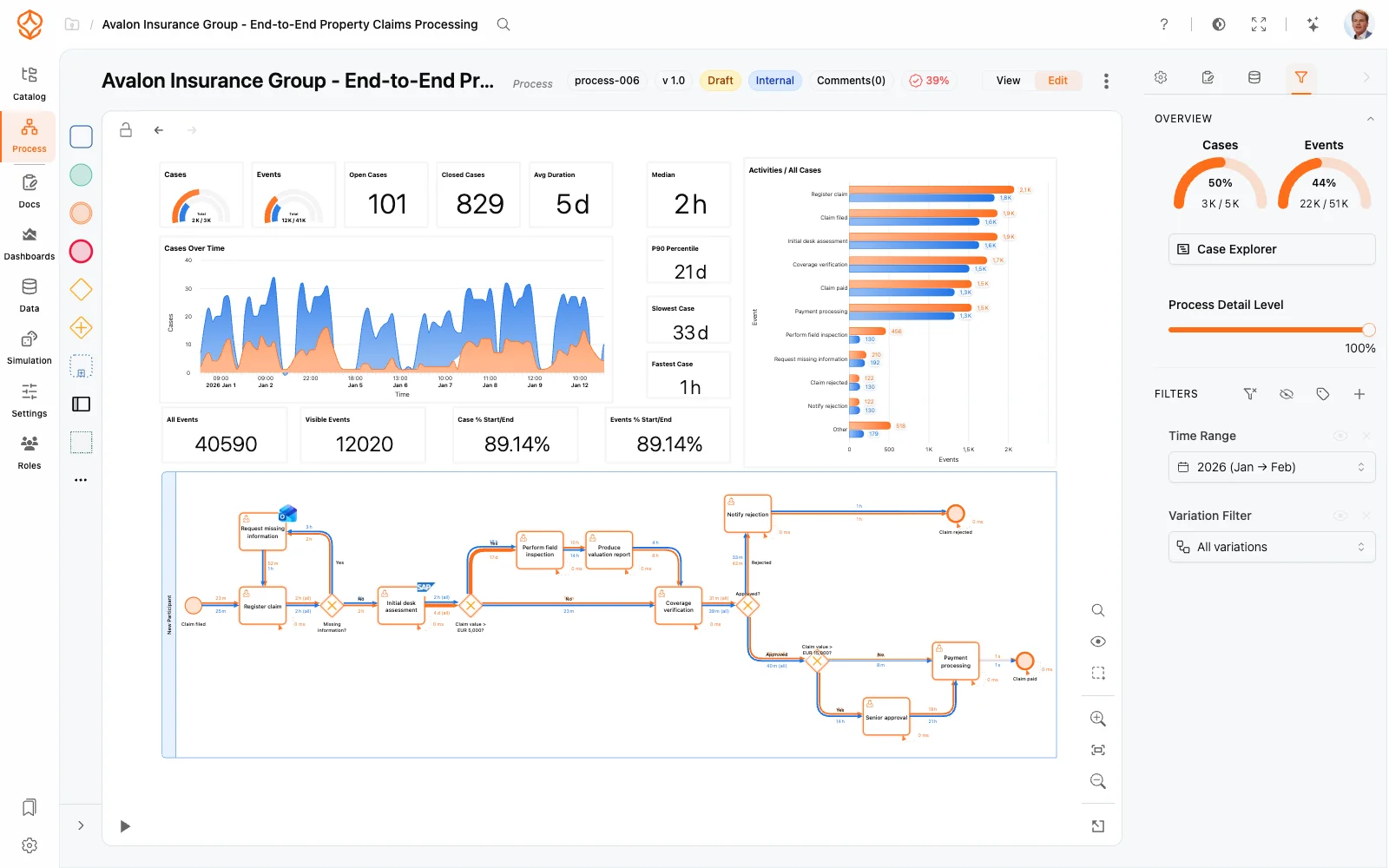
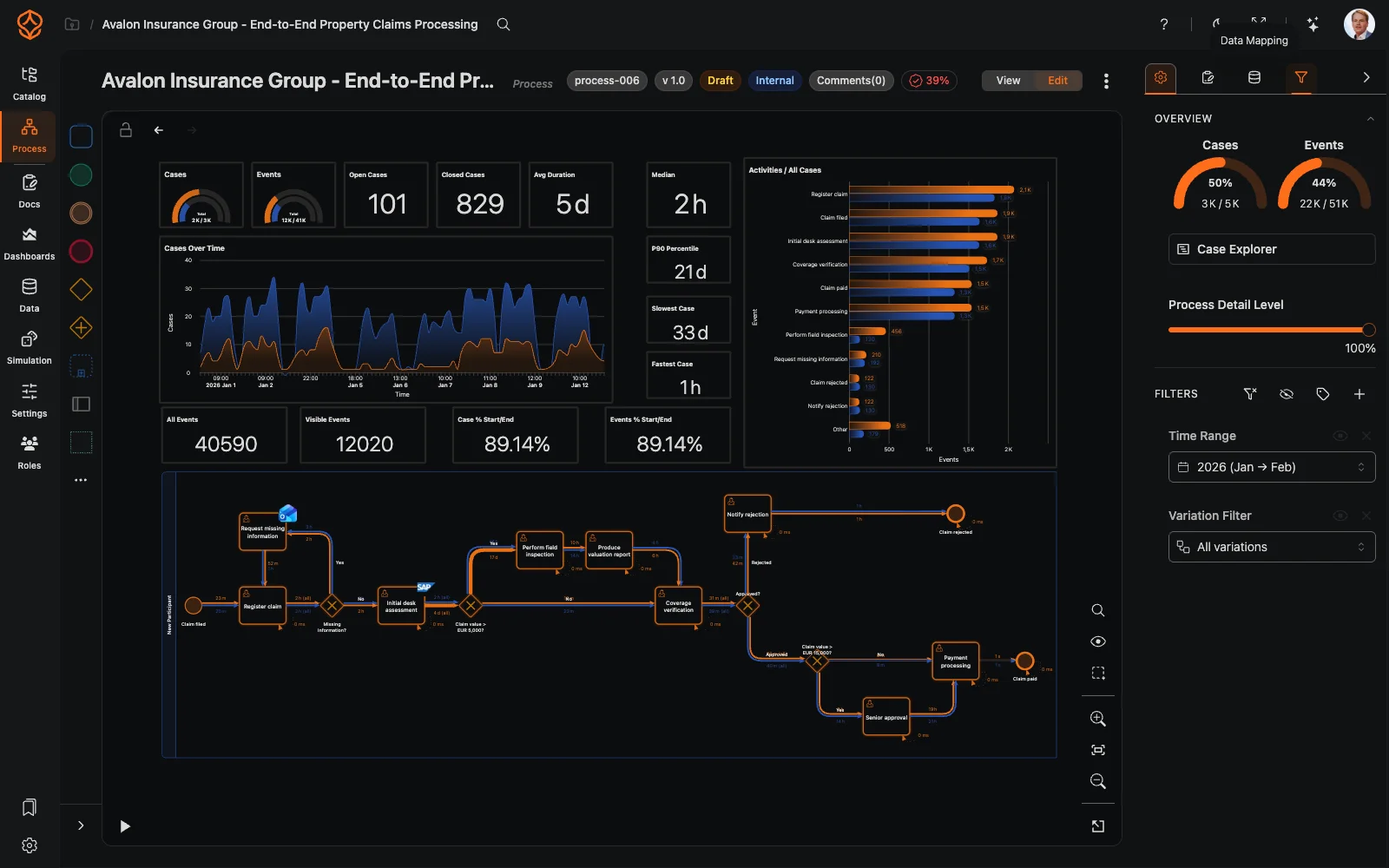
See what's really happening
Discover how your processes actually run using data from your existing systems.
- Multiple advanced mining engines detect parallelism, loops, and hidden patterns.
- Automatically discover processes from event logs.
- Connect to any data source: ERP, CRM, databases, CSV, Excel.
- AI-powered data structure detection, field mapping, and data-quality checks with mapping confidence.
- Overlay multiple datasets in color and re-mine in one click when data changes.
AI-assisted optimization
Use AI to identify opportunities and recommend improvements.
- AI-generated operational insights and optimization recommendations.
- Built-in AI assistant for analysis, modeling, and documentation tasks.
- Out-of-the-box insights backed by 200+ data templates.
- Detect anomalies and identify automation opportunities.
- Data expression language for custom calculated attributes.
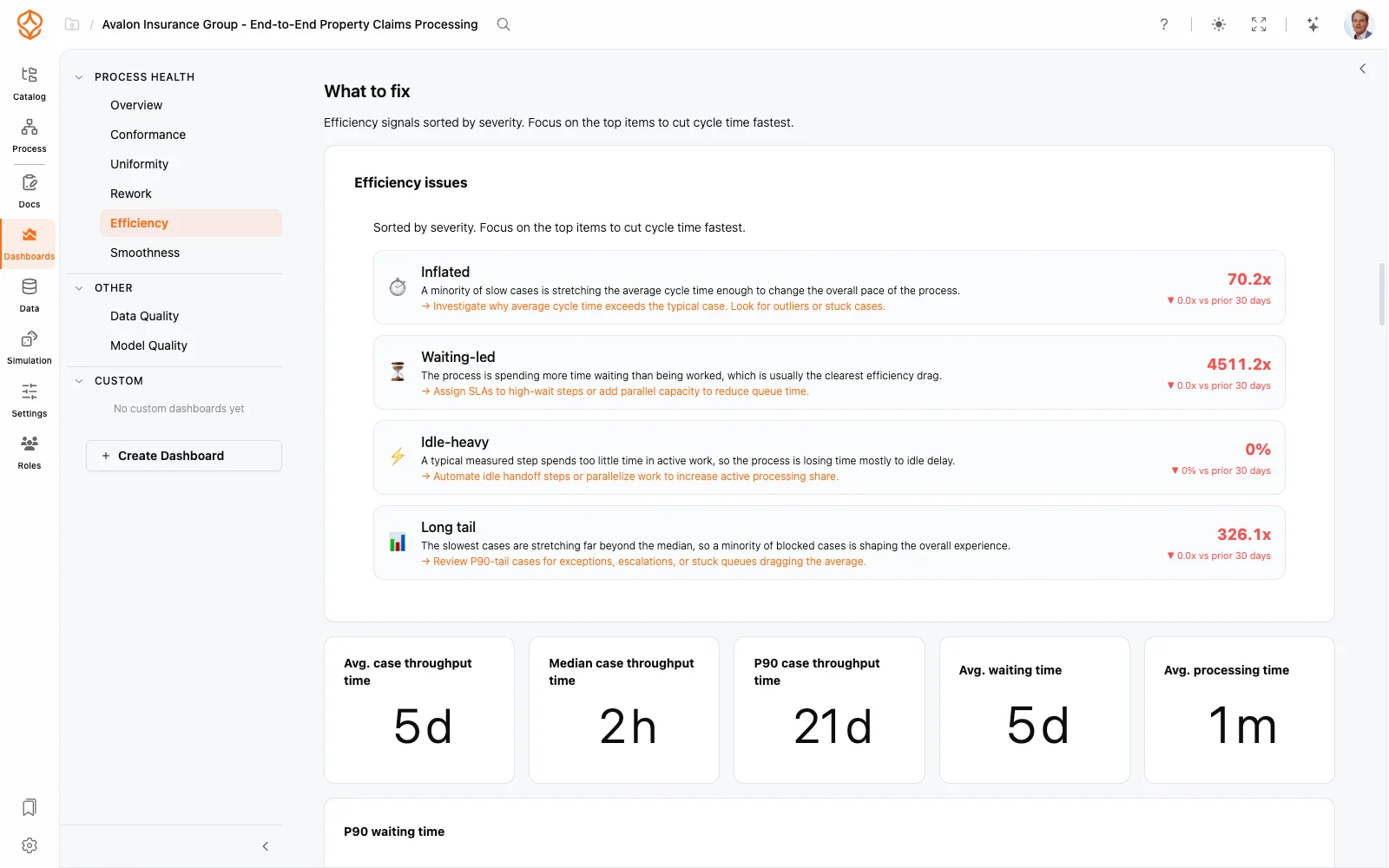
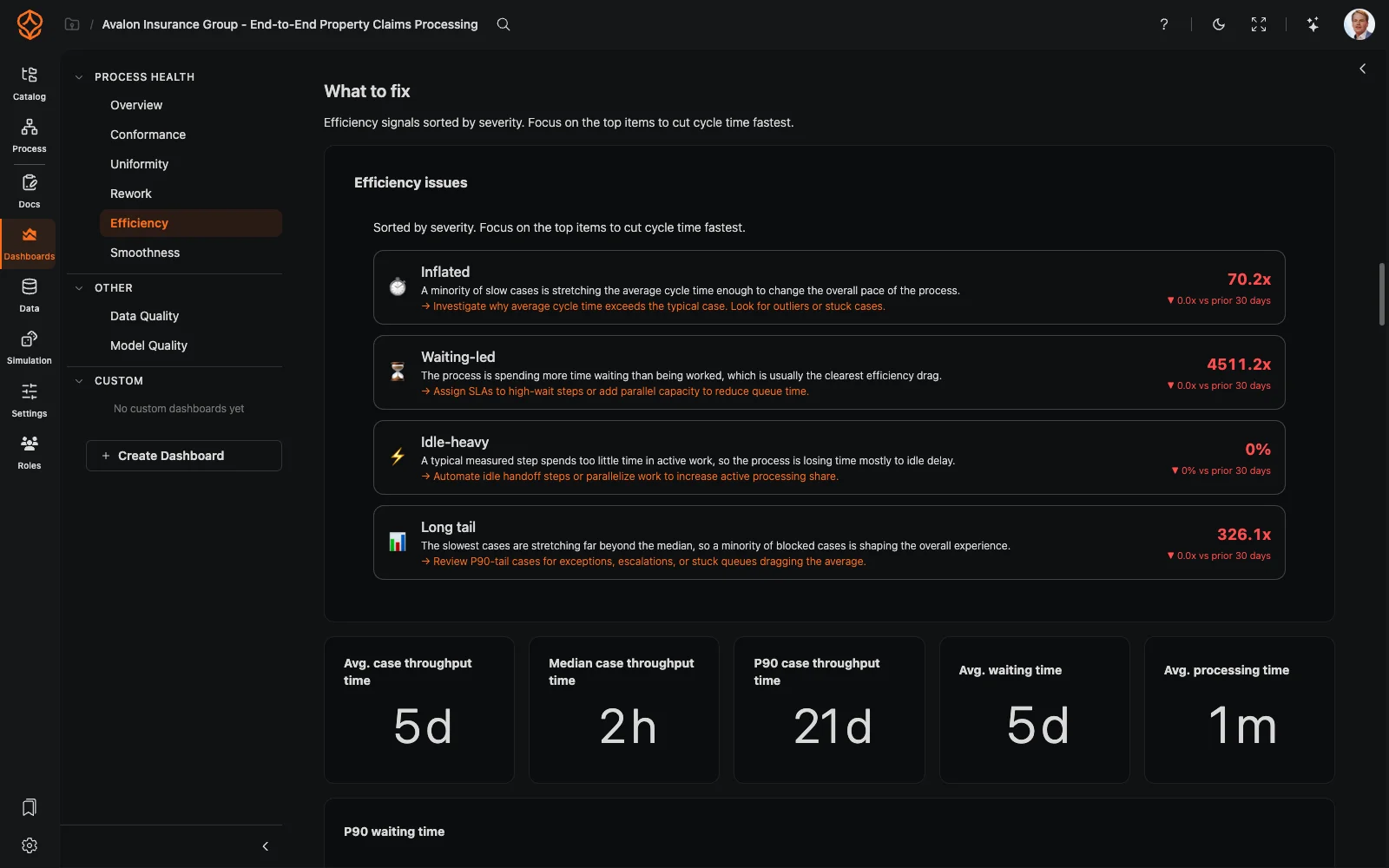
Compare reality with your design
Compare designed processes with how work actually happens.
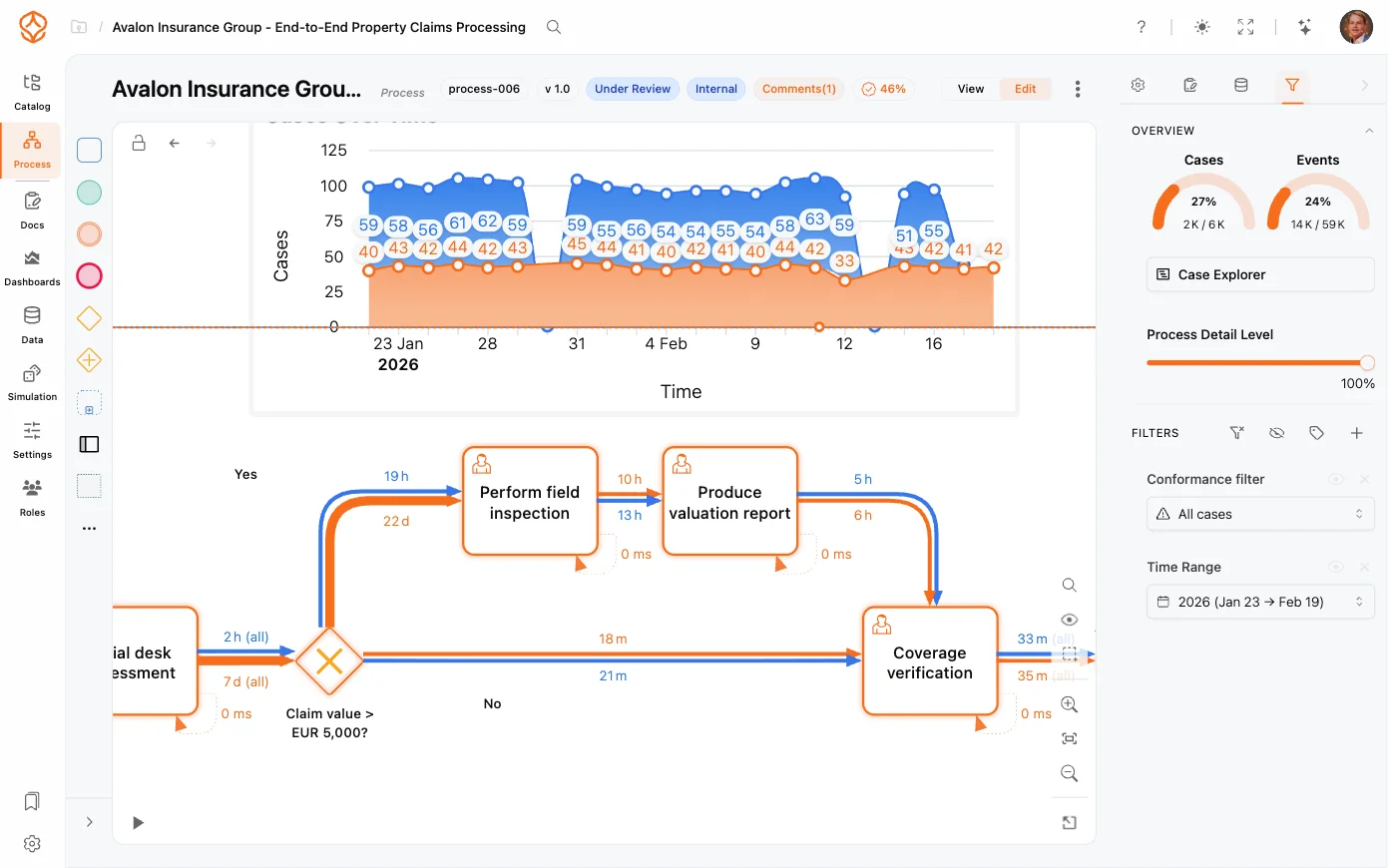
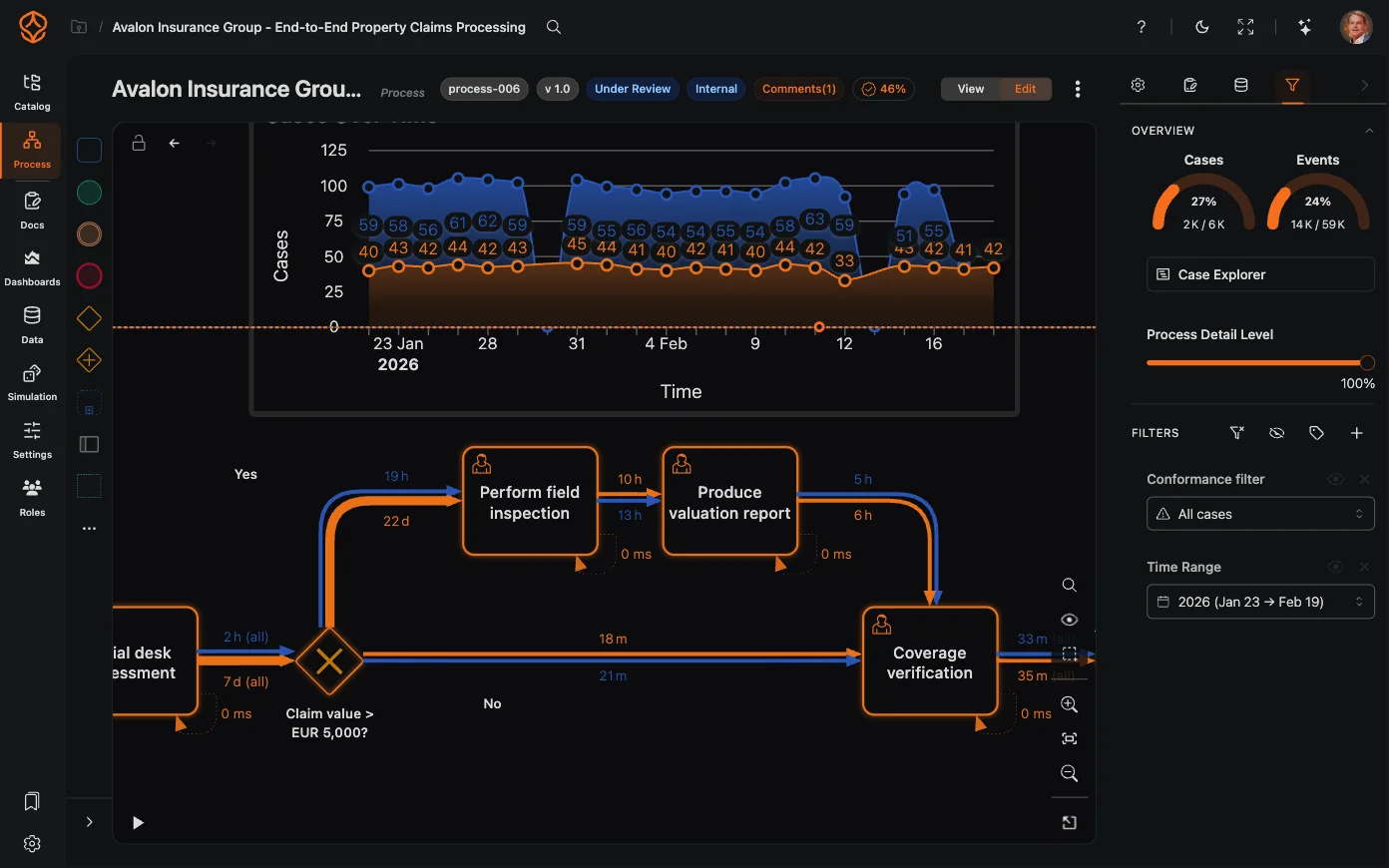
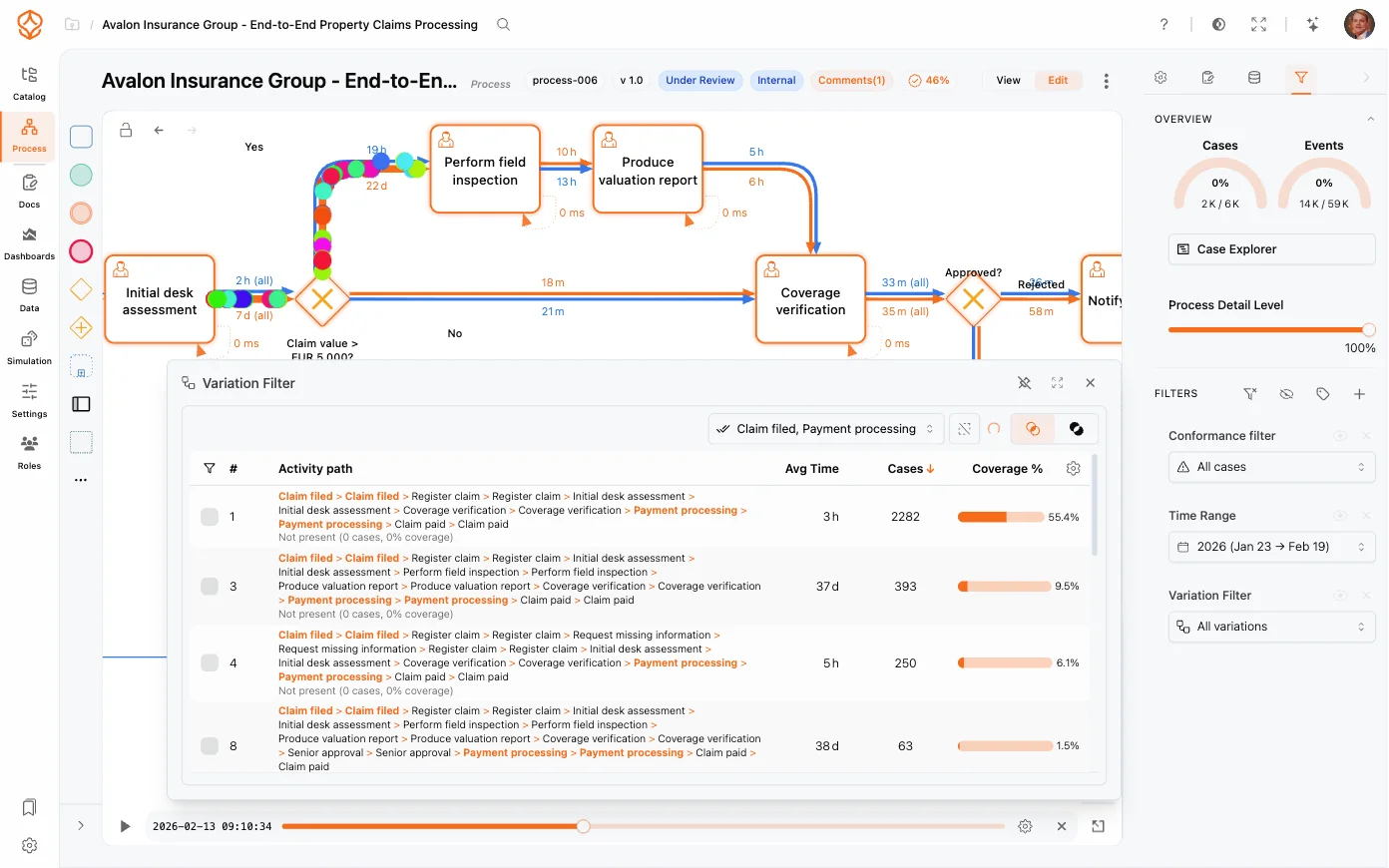
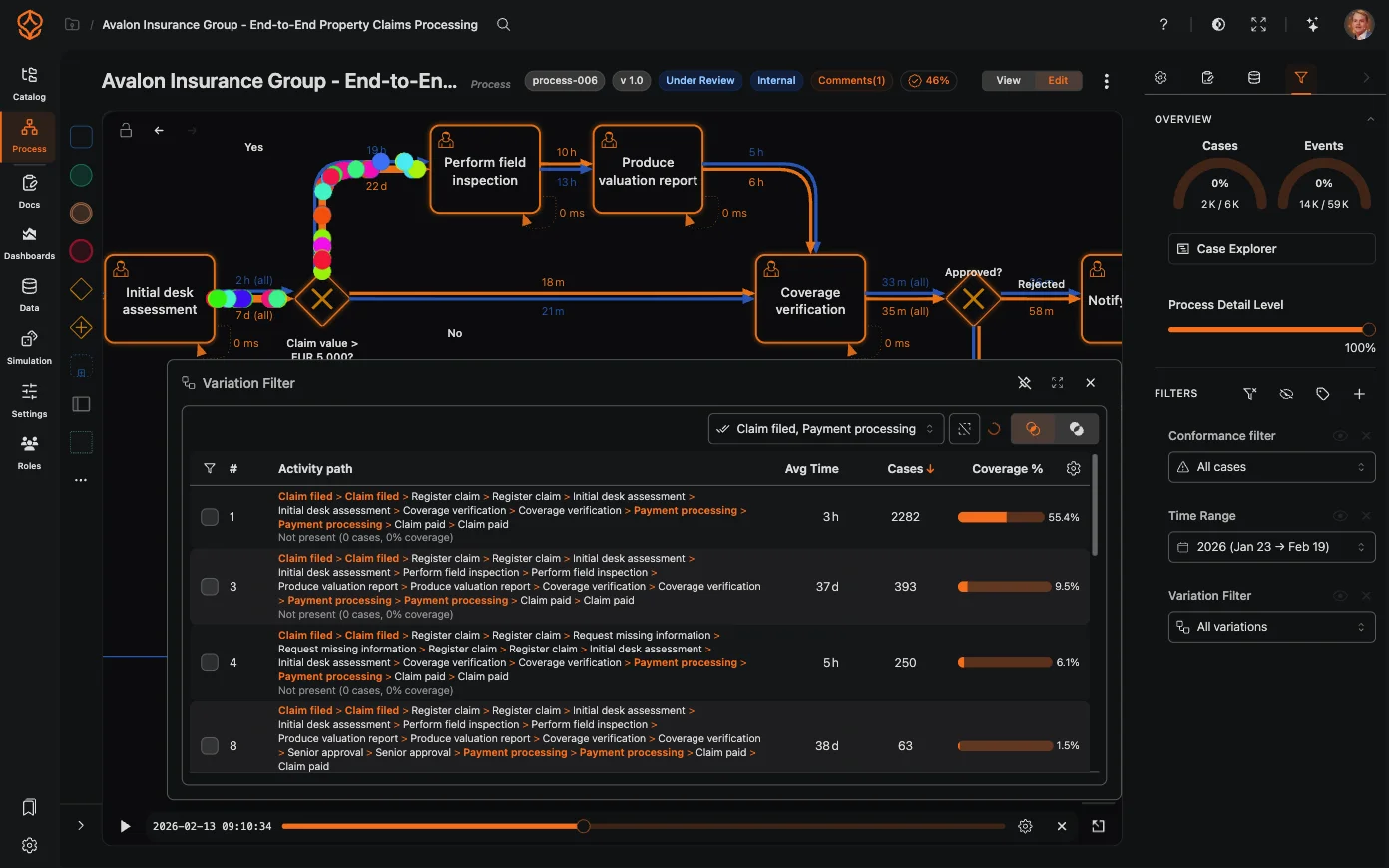
- Conformance checking identifies deviations and compliance gaps.
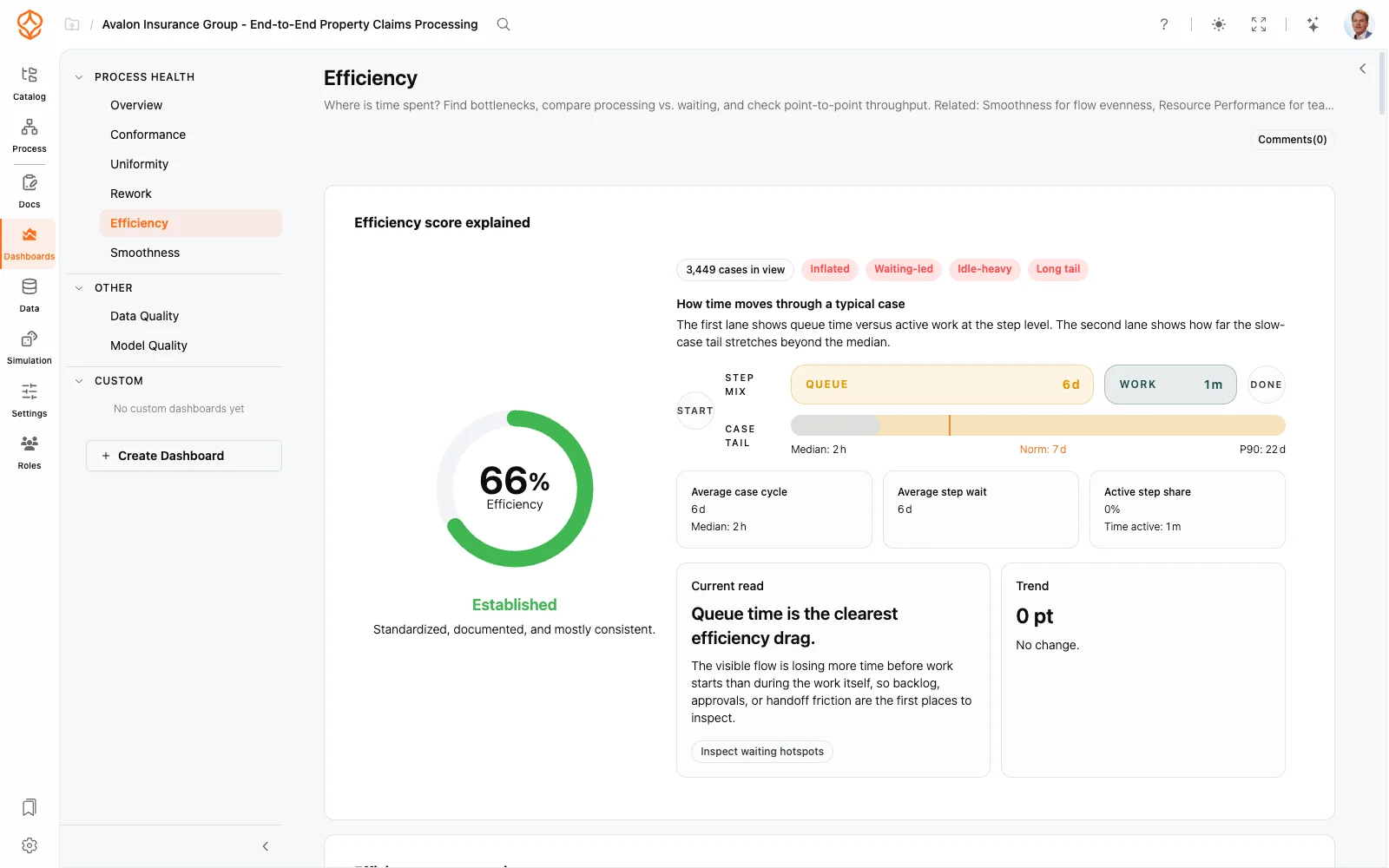
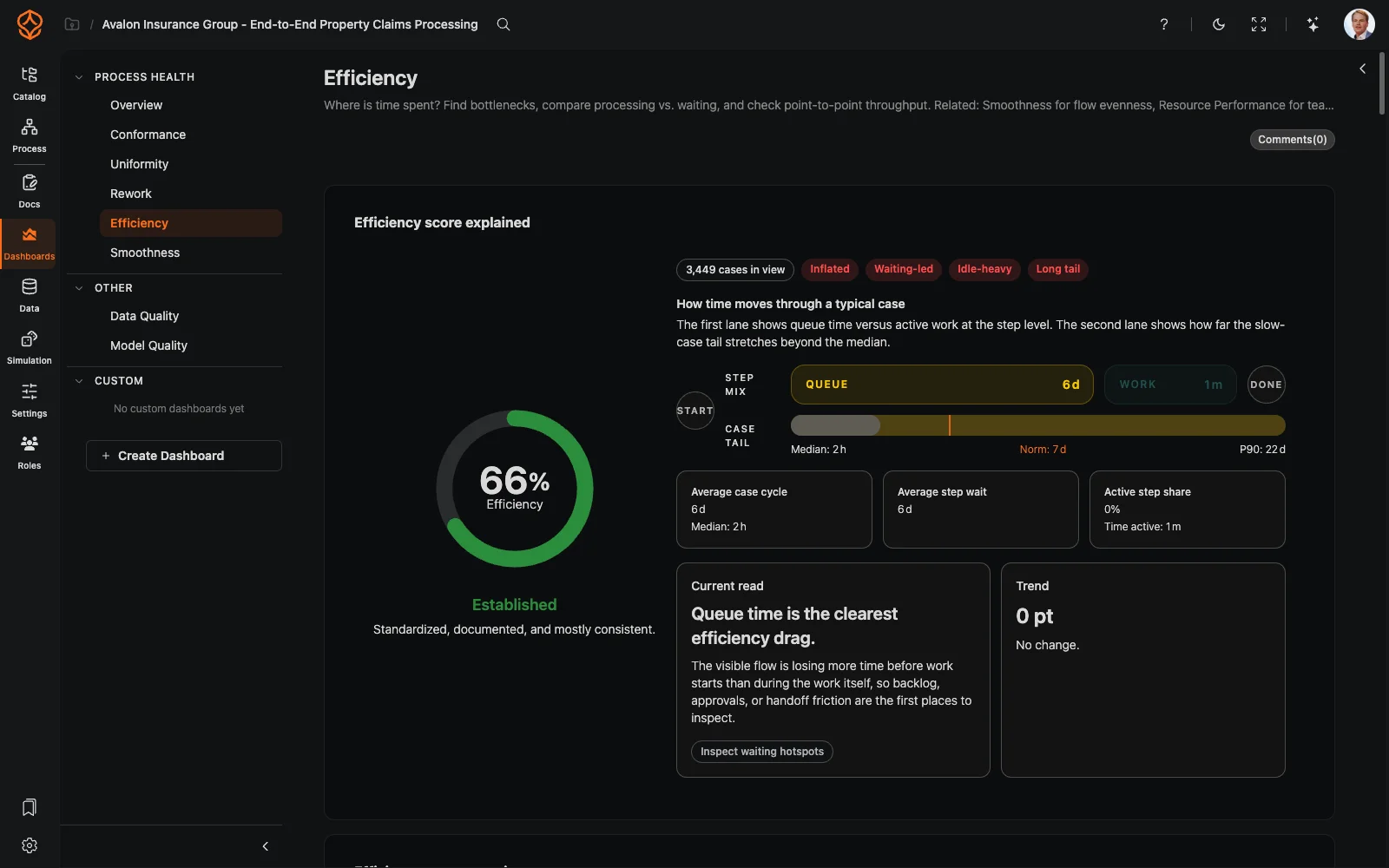
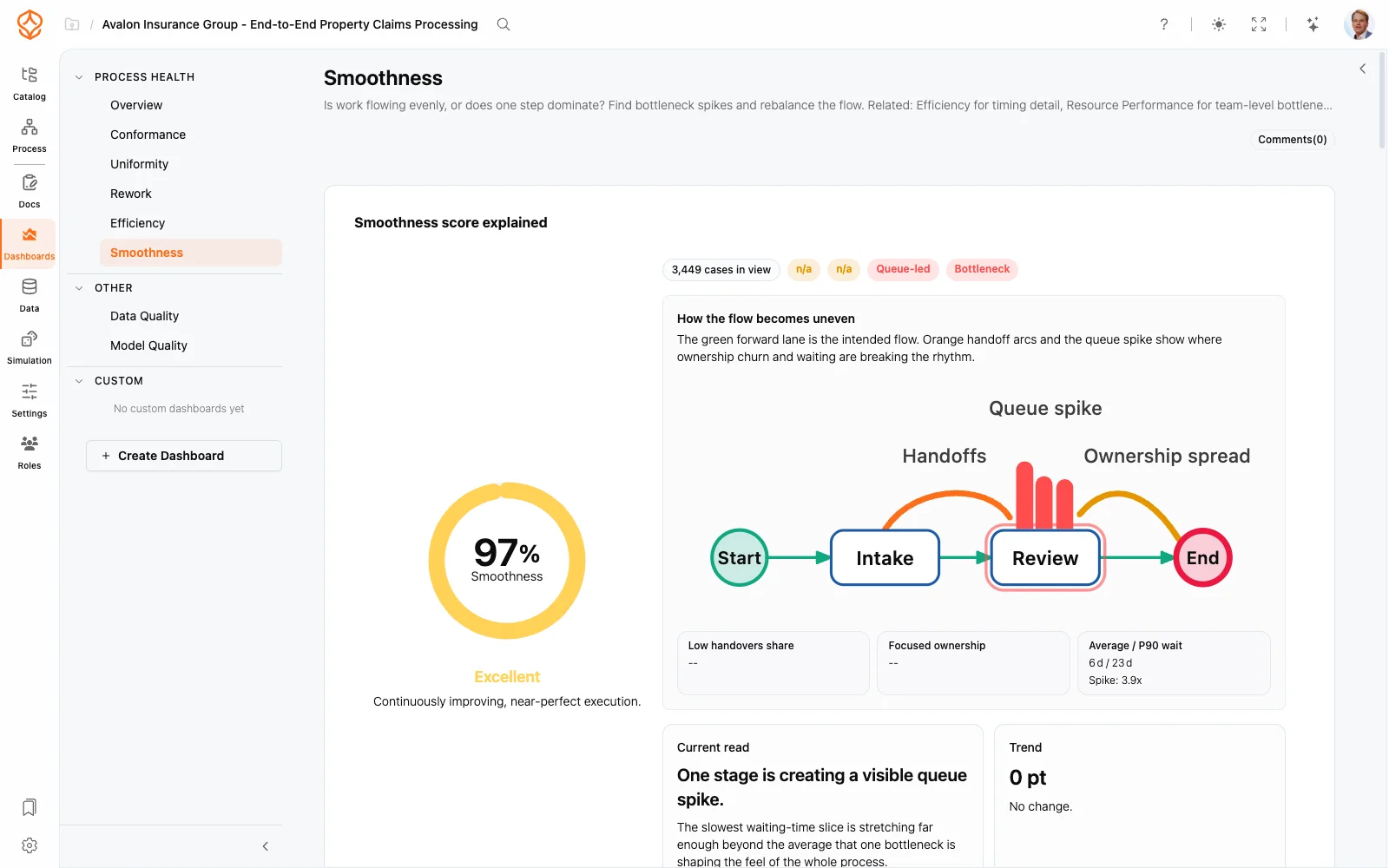
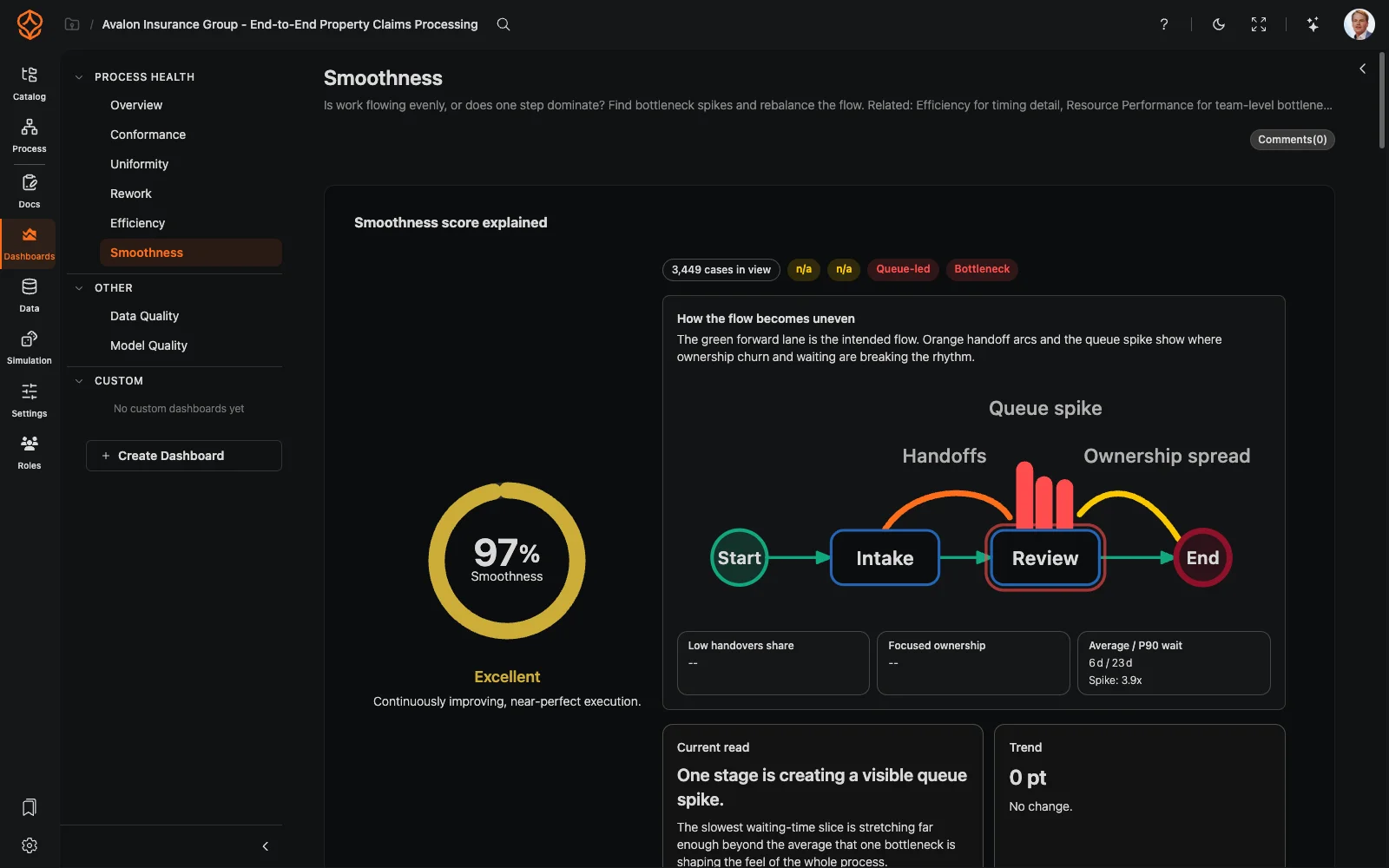
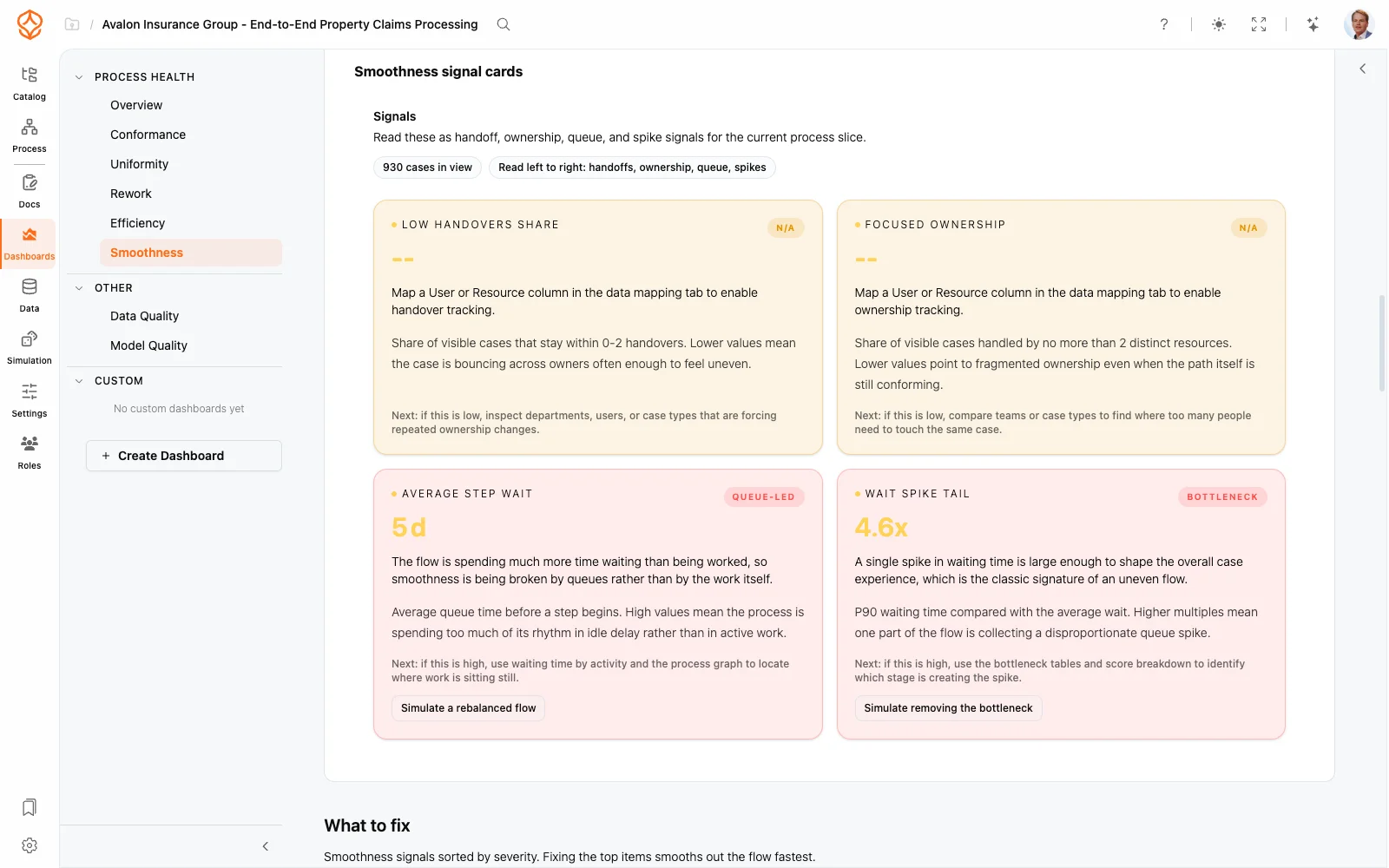
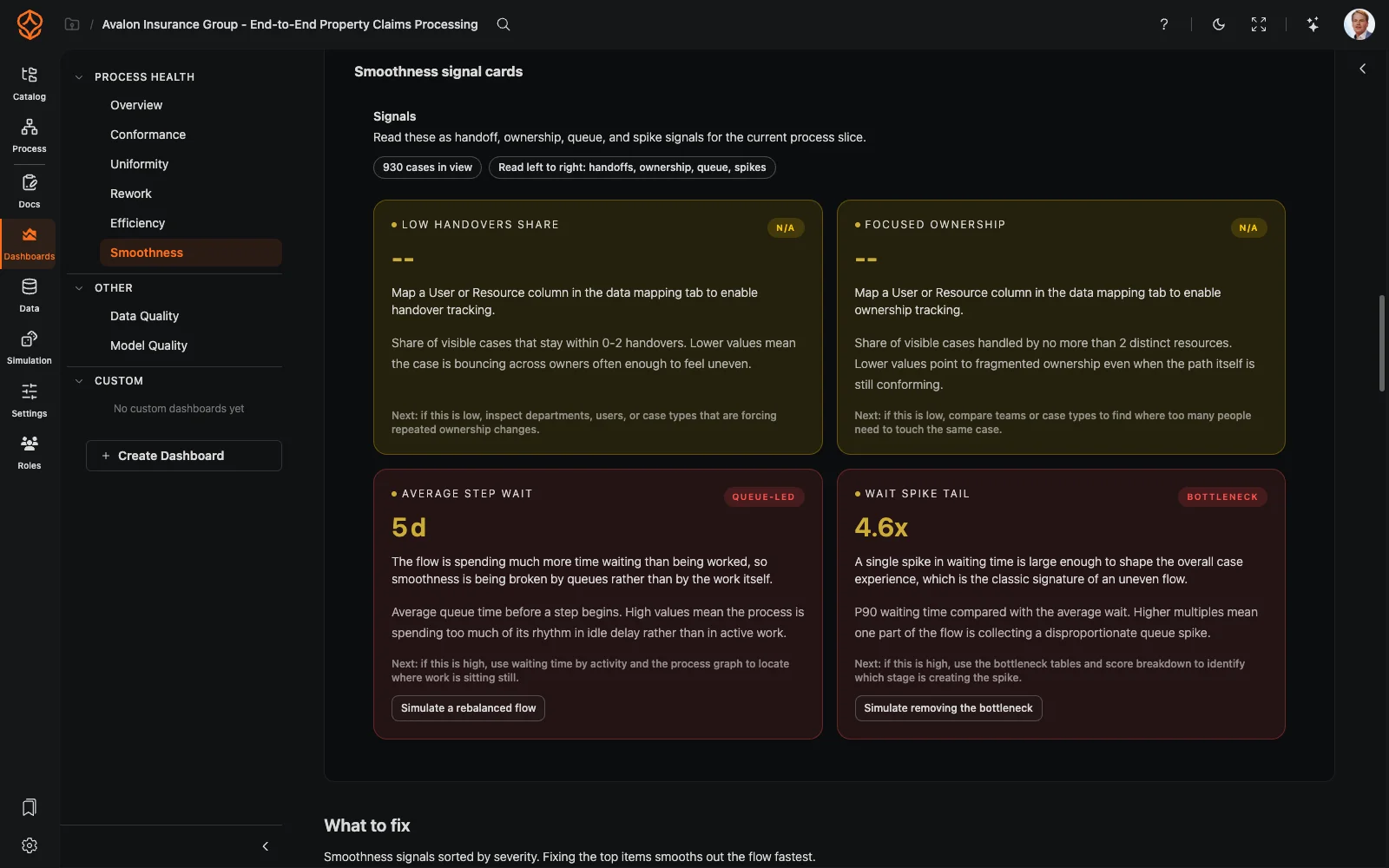
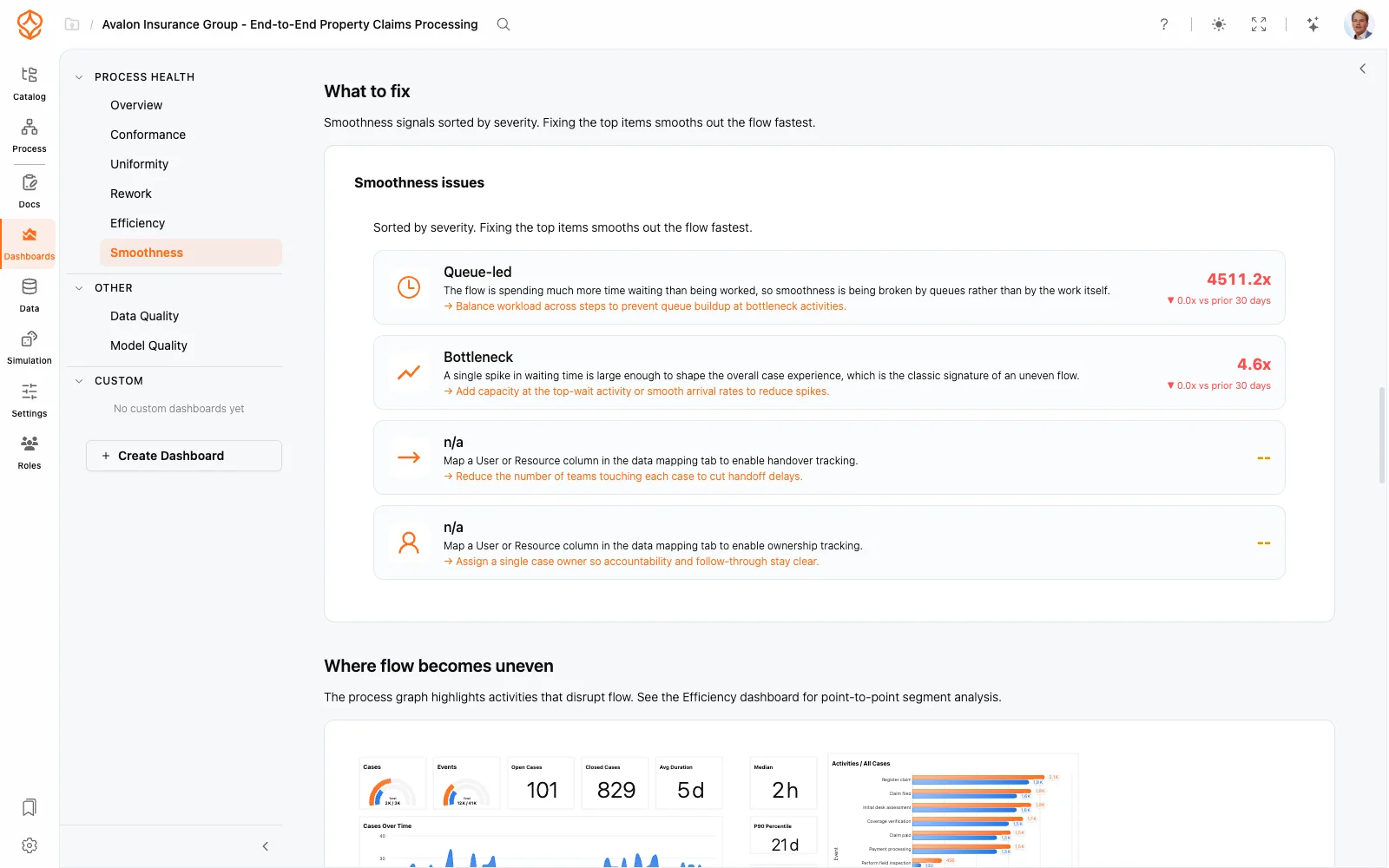
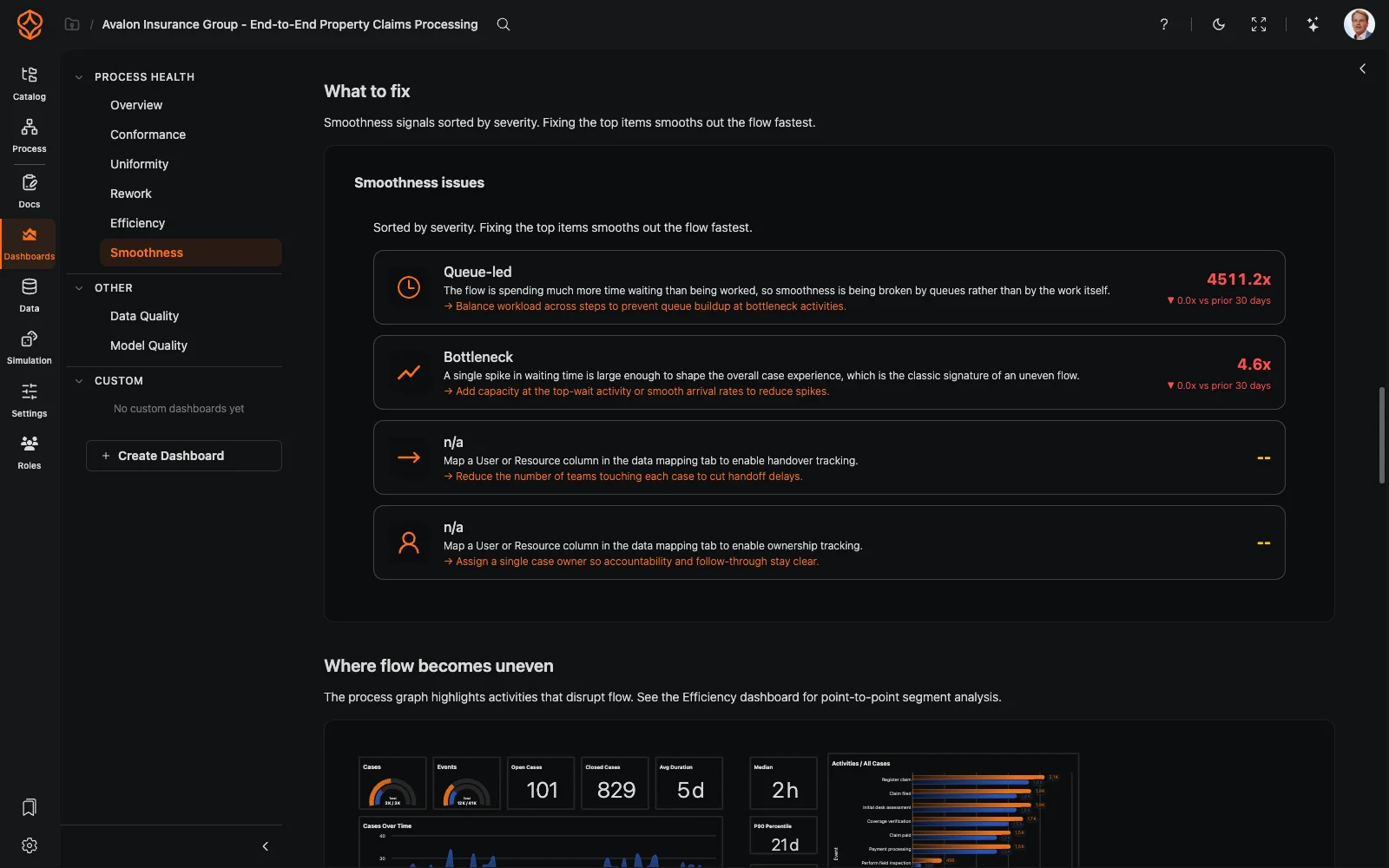
- Bottleneck & variant analysis reveals inefficiencies.
- Process animation replays operations over time.
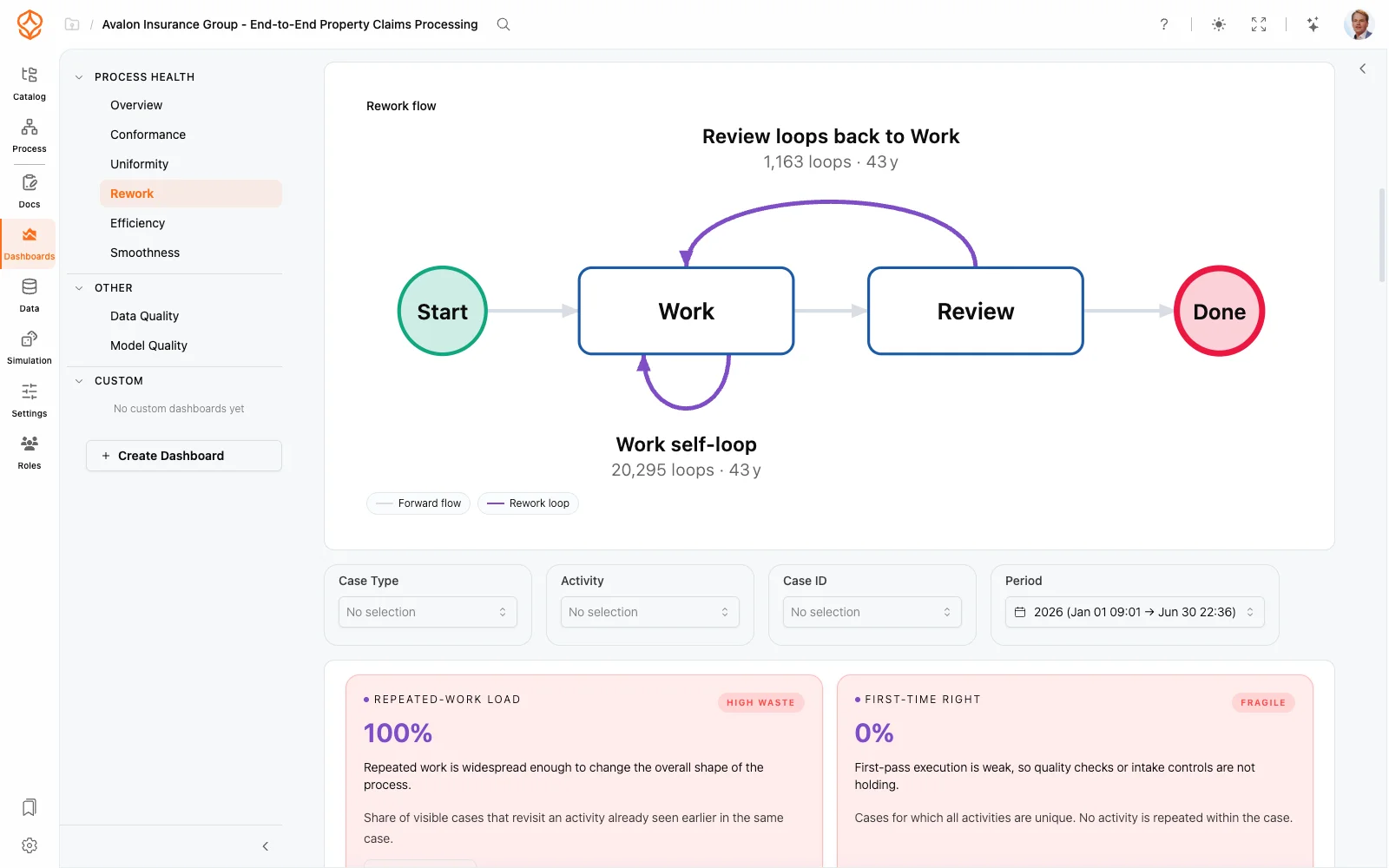
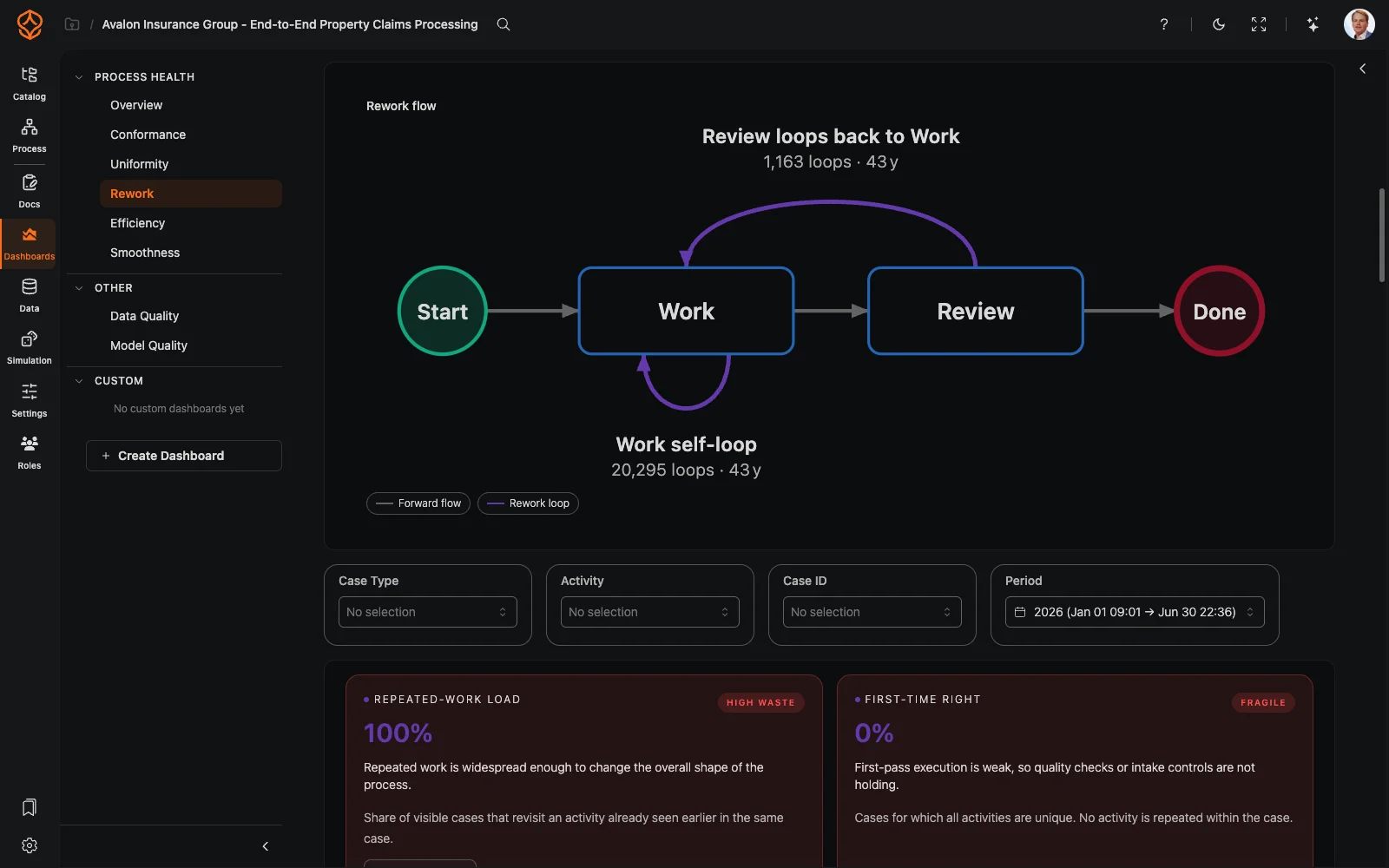
- Identify rework, deviations, and throughput issues.
Test before you deploy
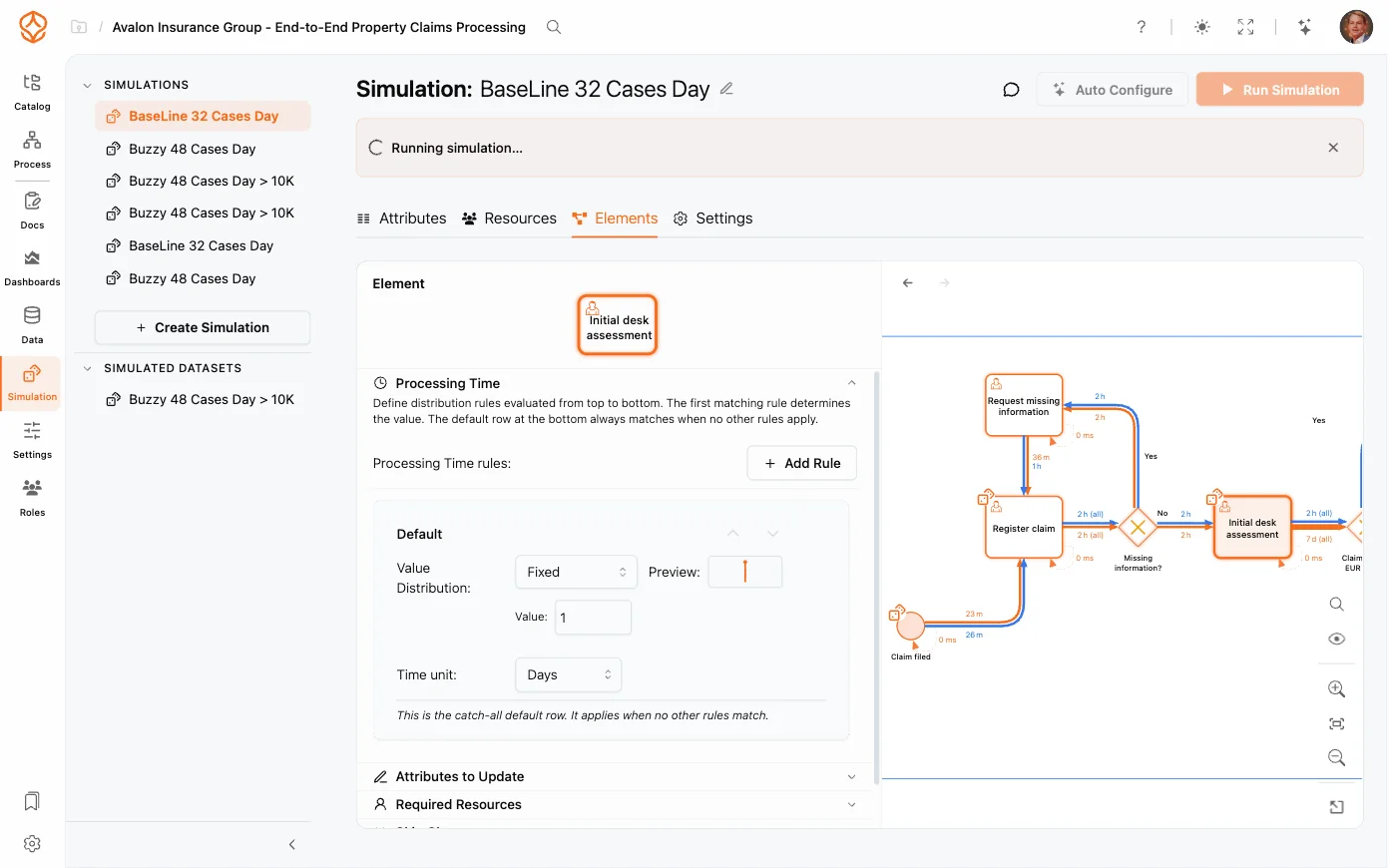
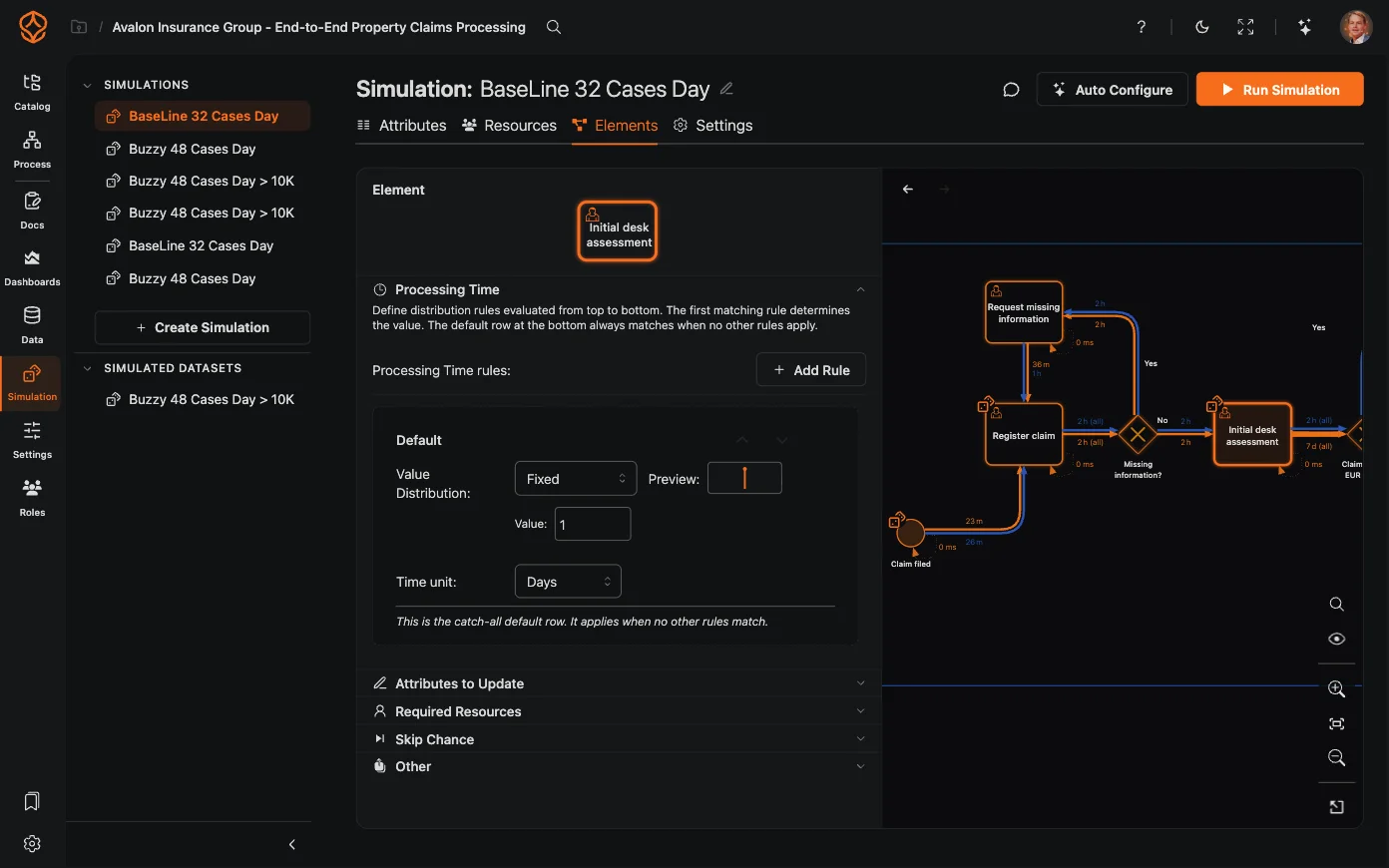
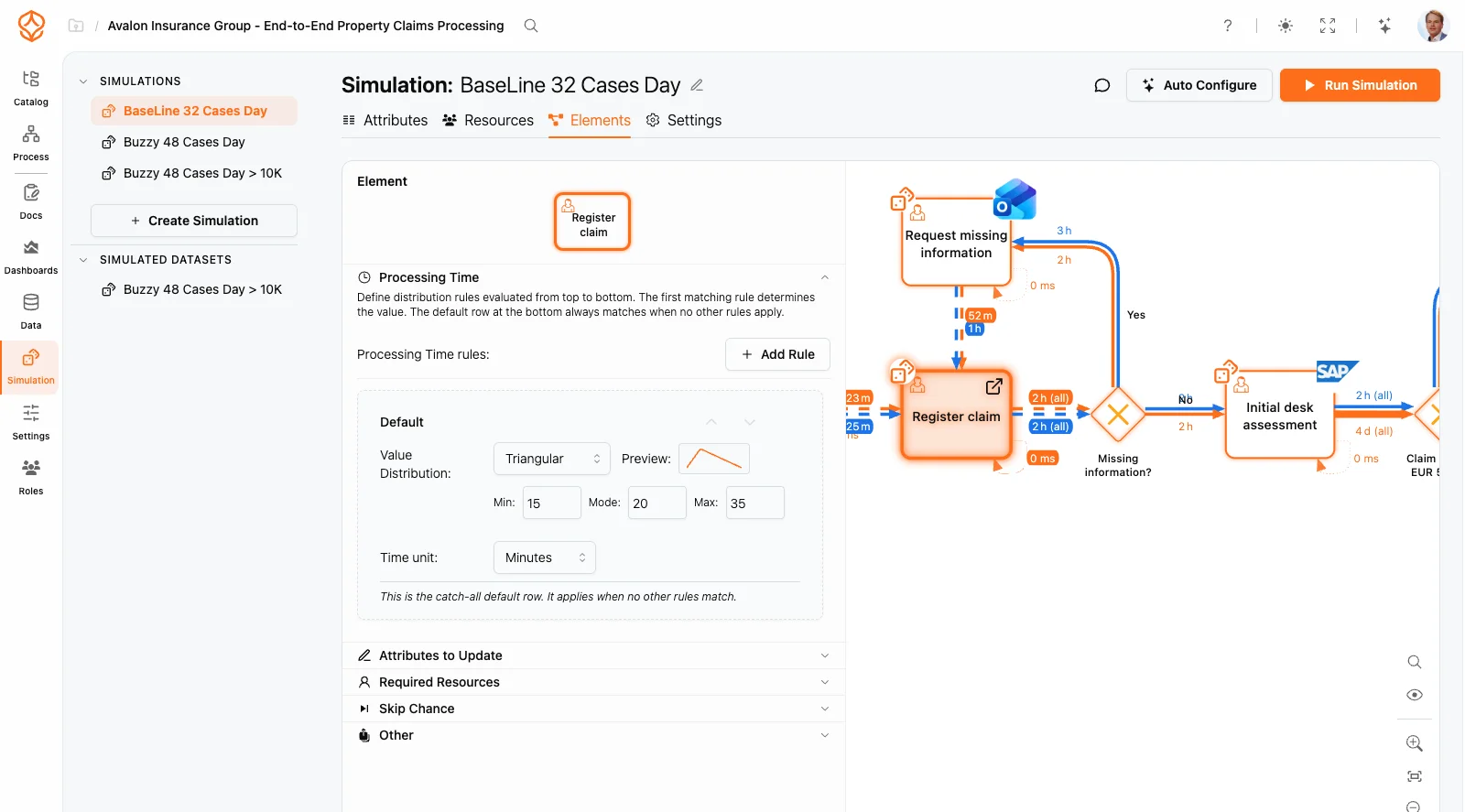
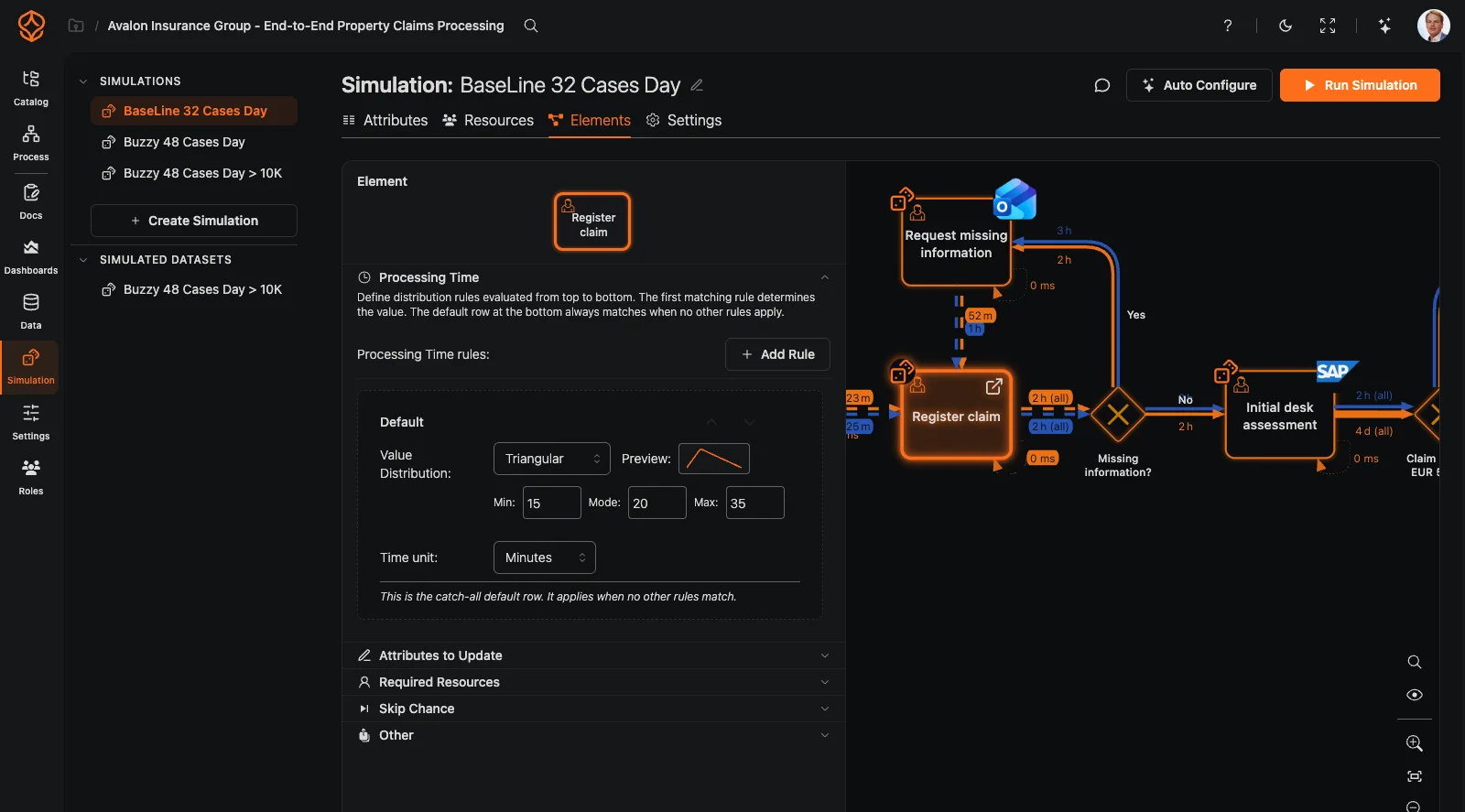
Use industry-standard simulation to explore future operational scenarios.
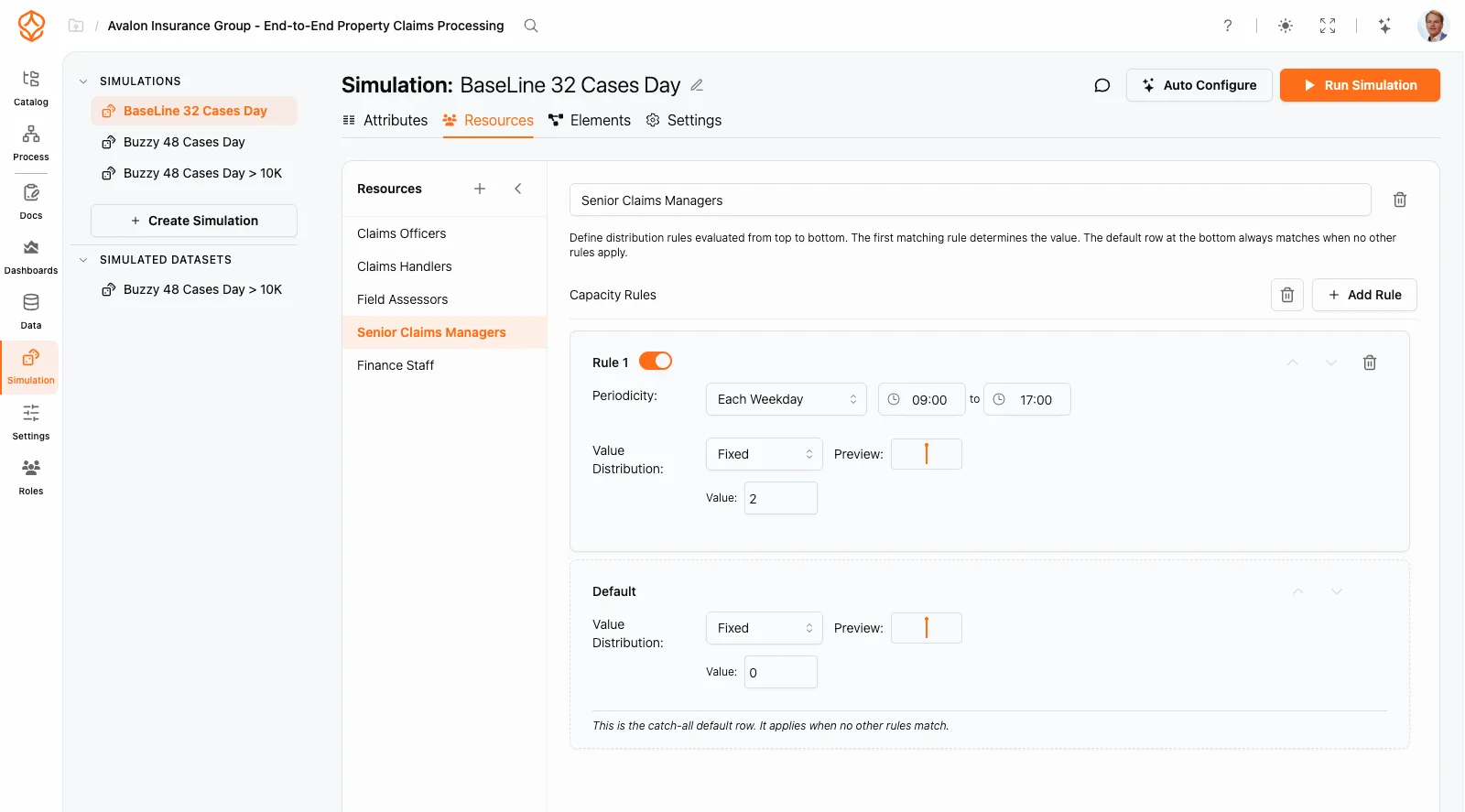
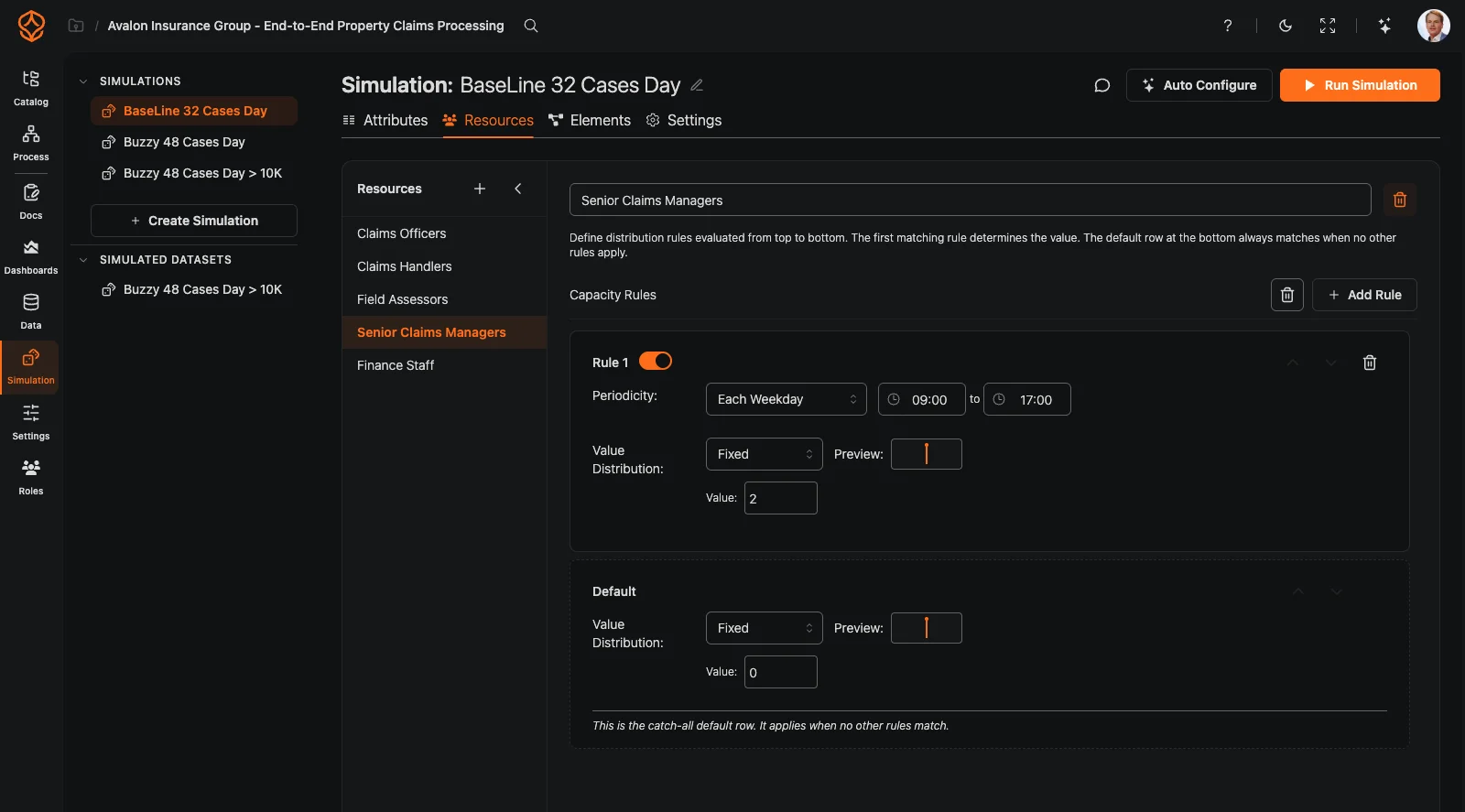
- Resource & capacity modeling for staffing and workload.
- AI-generated simulation settings from mining data.
- Date ranges and warm-up periods for stable scenario comparisons.
- Compare simulation results with actual results to validate improvements.
- Explore what-if scenarios without putting operations at risk.
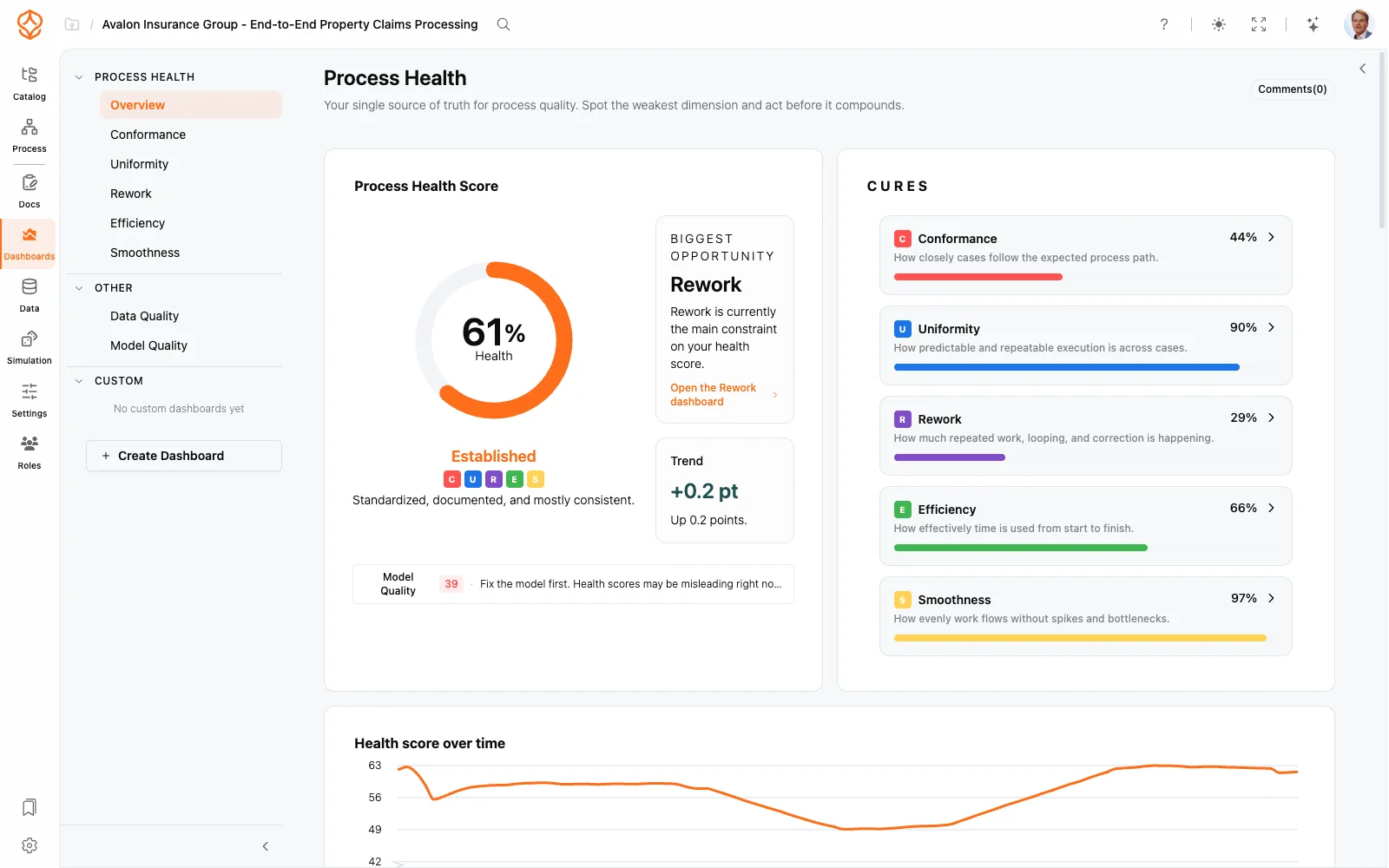
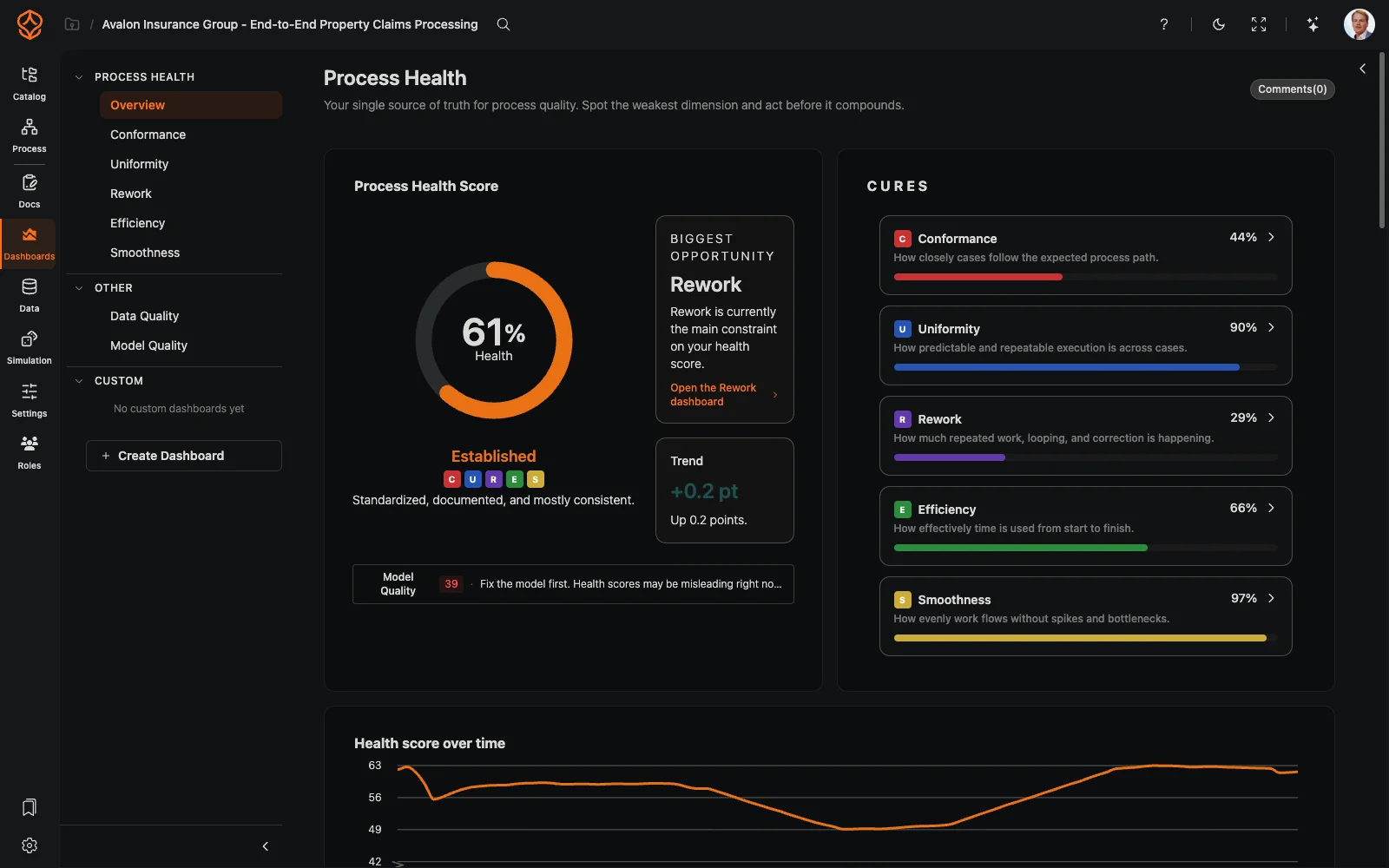
Track what matters
Track operational KPIs and monitor process performance.
- Track throughput, cycle times, SLA breaches, workload, and rework.
- Custom KPIs & charts tailored to your organization.
- Drill down from any chart to the individual cases behind it.
- Use advanced filters to focus your analysis on the segments that matter.
- Duplicate a custom dashboard you built, and export as PNG.
- Sustainability metrics for carbon impact and environmental KPIs.
- Monitor performance in real time to support continuous improvement.
Connect your systems
Connect ProcessMind to your enterprise systems.
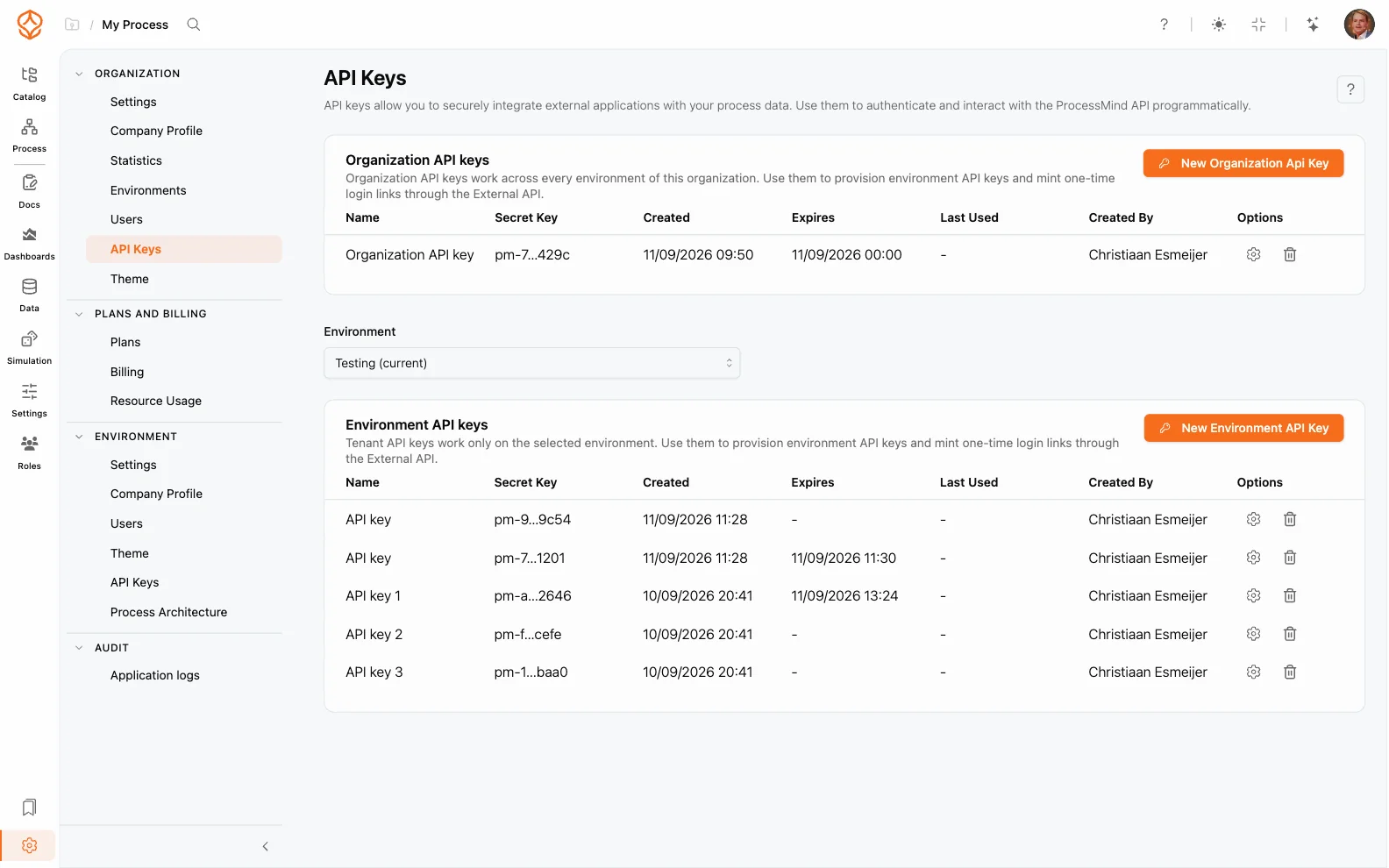
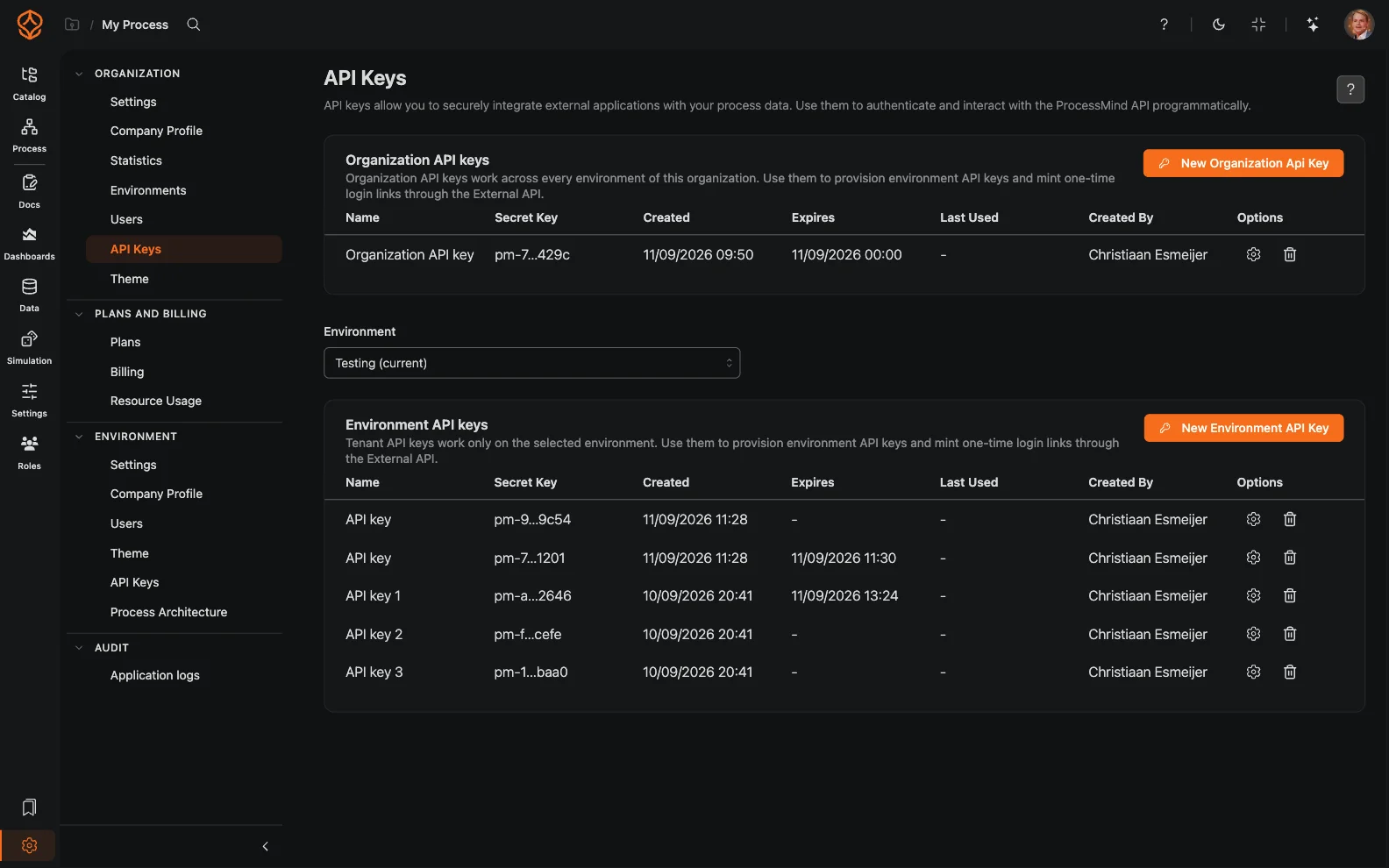
- REST and Data API on every plan, metered, for programmatic access to your processes and data.
- Data ingestion API for automated event data import, from Process Intelligence up.
- Simulation API for triggering scenarios programmatically.
- Guidance and data templates for SAP, Salesforce, ServiceNow, and more.
For Leaders: Build the Business Case
Turn process insights into decisions you can take to executives.
- Quantify efficiency, cost, and cycle-time impact using evidence from real process data.
- Use simulation to compare options before committing budget.
- Share clear outcomes with stakeholders and decision-makers.
- Estimate potential returns with the ROI calculator and align investment with expected value.
Drive continuous excellence
Move beyond static documentation to data-driven process management. Use Process Mining to see how work flows and where bottlenecks occur. Simulate changes before implementation to assess outcomes and reduce risk. Use AI to surface insights and recommendations that help you address operational issues early.Process Foundation
Model and document your processes to give teams clarity and a shared understanding.
Process Architecture
Define and manage your process landscape to align operations with strategy and compliance.
Process Intelligence
Use data and AI to understand performance, anticipate outcomes, and improve continuously.
Process Foundation
Model and document your processes to give teams clarity and a shared understanding.
Process Architecture
Define and manage your process landscape to align operations with strategy and compliance.
Process Intelligence
Use data and AI to understand performance, anticipate outcomes, and improve continuously.
Mine. Design. Simulate. Compare. Implement.
The Intelligence Loop
Connect data, insight, and action in a continuous loop to make better process decisions and guide transformation with confidence.
Mine
Use historical data to understand current performance and event data to discover how your process actually runs.
Design
Model the future-state process and refine improvements using operational insights.
Simulate
Simulate proposed changes across different scenarios to predict outcomes and performance.
Compare
Compare simulated results with actual results to assess impact, reduce uncertainty, and verify outcomes.
Implement
Roll out improvements with a clear business case and defined expected outcomes.
Process Intelligence
The Intelligence Gap
The difference
ProcessMind vs. Traditional Process Analysis
Weeks of manual analysis
Spend time collecting and analyzing data across multiple tools.
Minutes with automated discovery
Automatically extract and analyze data to reveal process insights in minutes.
Weeks of manual analysis
Spend time collecting and analyzing data across multiple tools.
Minutes with automated discovery
Automatically extract and analyze data to reveal process insights in minutes.
Based on interviews and assumptions
Rely on subjective input that may be incomplete or inaccurate.
Based on actual system data
Use real event data to see how your processes actually run.
Based on interviews and assumptions
Rely on subjective input that may be incomplete or inaccurate.
Based on actual system data
Use real event data to see how your processes actually run.
Deploy and hope
Make changes without knowing their potential impact.
Simulate before deployment
Test and validate changes in a simulated environment before taking action.
Deploy and hope
Make changes without knowing their potential impact.
Simulate before deployment
Test and validate changes in a simulated environment before taking action.
Generic best practices
Apply generic recommendations that may not fit your context.
AI-generated, context-specific
Get recommendations tailored to your process.
Generic best practices
Apply generic recommendations that may not fit your context.
AI-generated, context-specific
Get recommendations tailored to your process.
ROI often measured over longer cycles
Wait longer for results with manual processes and limited visibility.
Time to value depends on your data and scope
Get results faster with automation and continuous insights.
ROI often measured over longer cycles
Wait longer for results with manual processes and limited visibility.
Time to value depends on your data and scope
Get results faster with automation and continuous insights.
Maturity Levels
You've Reached the Top of the Maturity Journey
Process Foundation
Model and document your processes to give teams clarity and a shared understanding.
Process Architecture
Define and manage your process landscape to align operations with strategy and compliance.
Process Intelligence
Use data and AI to understand performance, anticipate outcomes, and improve continuously.
Frequently Asked Questions
Ready to See What's Really Happening?
Connect your data and find insights in minutes. No credit card required.